The decentralized finance (DeFi) landscape on Ethereum Mainnet has crossed a significant threshold with the official rollout of multicollateral margin on Synthetix. In what industry participants are viewing as a structural evolution for on-chain derivatives, Ether (ETH) has officially gone live as the platform’s first non-USDT collateral asset. For the first time in the history of the Ethereum network, traders can utilize native ETH as direct collateral to execute and manage perpetual futures contracts on Layer 1 without being forced to liquidate their underlying stack.
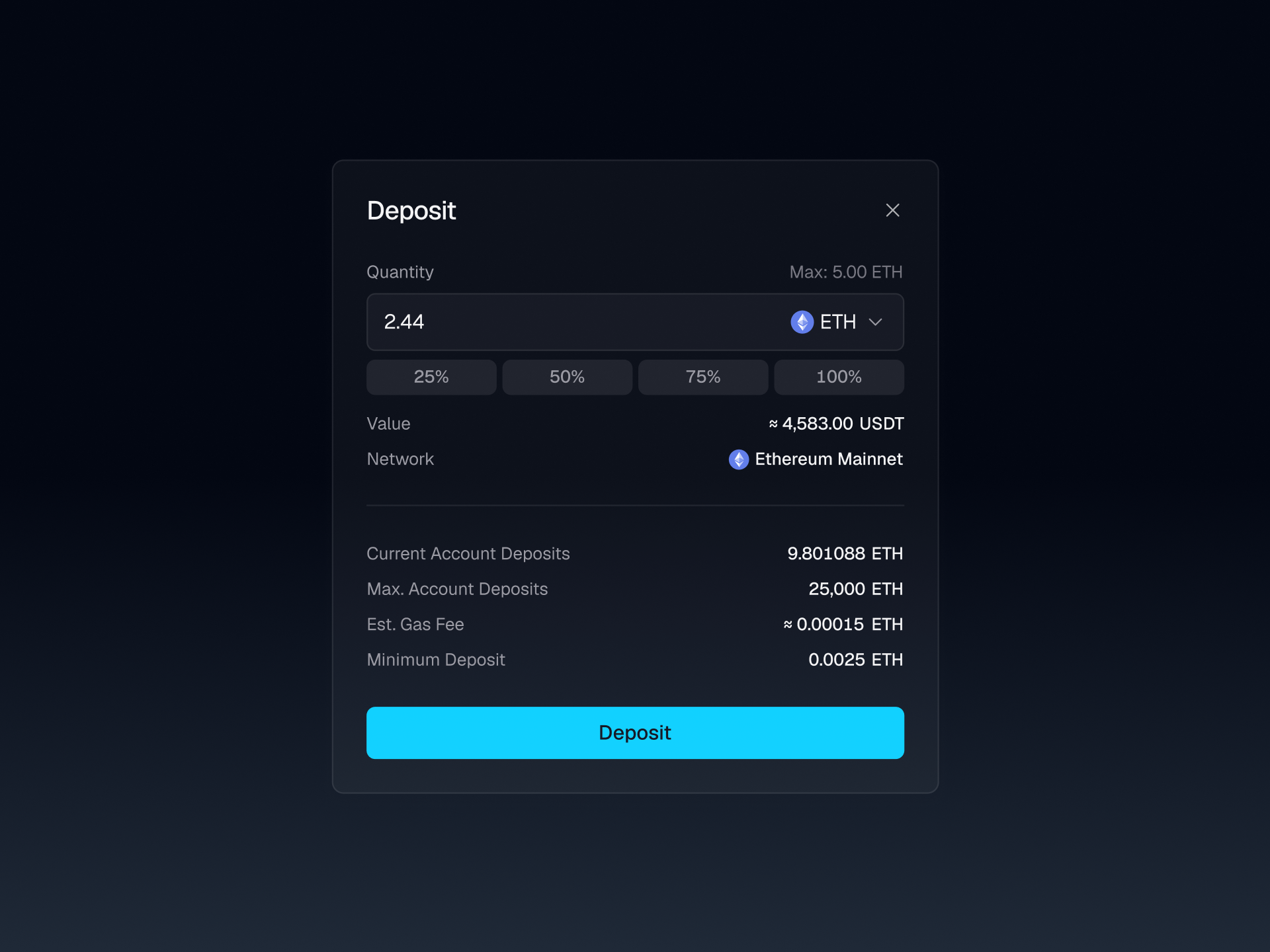
This architectural upgrade allows market participants to deposit ETH directly into a unified multicollateral margin account, backing perpetual positions settled in USDT while retaining continuous exposure to the asset. By integrating native ETH margin directly into its Ethereum Mainnet infrastructure, Synthetix aims to bridge the gap between long-term holding strategies and active derivatives trading, eliminating the friction of wrapping, bridging, or selling core crypto assets to access liquidity.
Background Context and the Evolution of Margin Accounts
To understand the weight of this deployment, one must examine the operational hurdles historically associated with decentralized perpetual exchanges (perp DEXs). For years, trading perpetuals on-chain typically required users to deposit stablecoins—predominantly USDT or USDC—to serve as margin and settlement currency. While this model simplified liquidation engines and risk management for protocols, it introduced severe capital inefficiencies for users who held bullish macro convictions on volatile assets like ETH.
If an investor held a substantial long-term position in ETH but wanted to hedge market downturns, capture basis spreads, or trade directional momentum using leverage, they traditionally faced a choice: sell their spot ETH for stablecoins, triggering potential taxable events and sacrificing upside price appreciation, or utilize fragmented, convoluted lending and borrowing loops across third-party money markets.
Synthetix’s multicollateral margin framework addresses this inefficiency by unifying disparate asset types under a single risk engine. Rather than forcing a separation between capital preservation and active trading, the system allows ETH and USDT to work cooperatively within the same account infrastructure.
Mechanics of Native ETH Margin and Risk Parameters
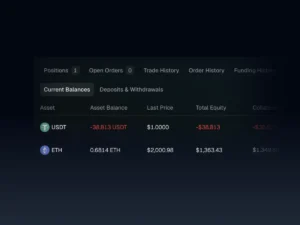
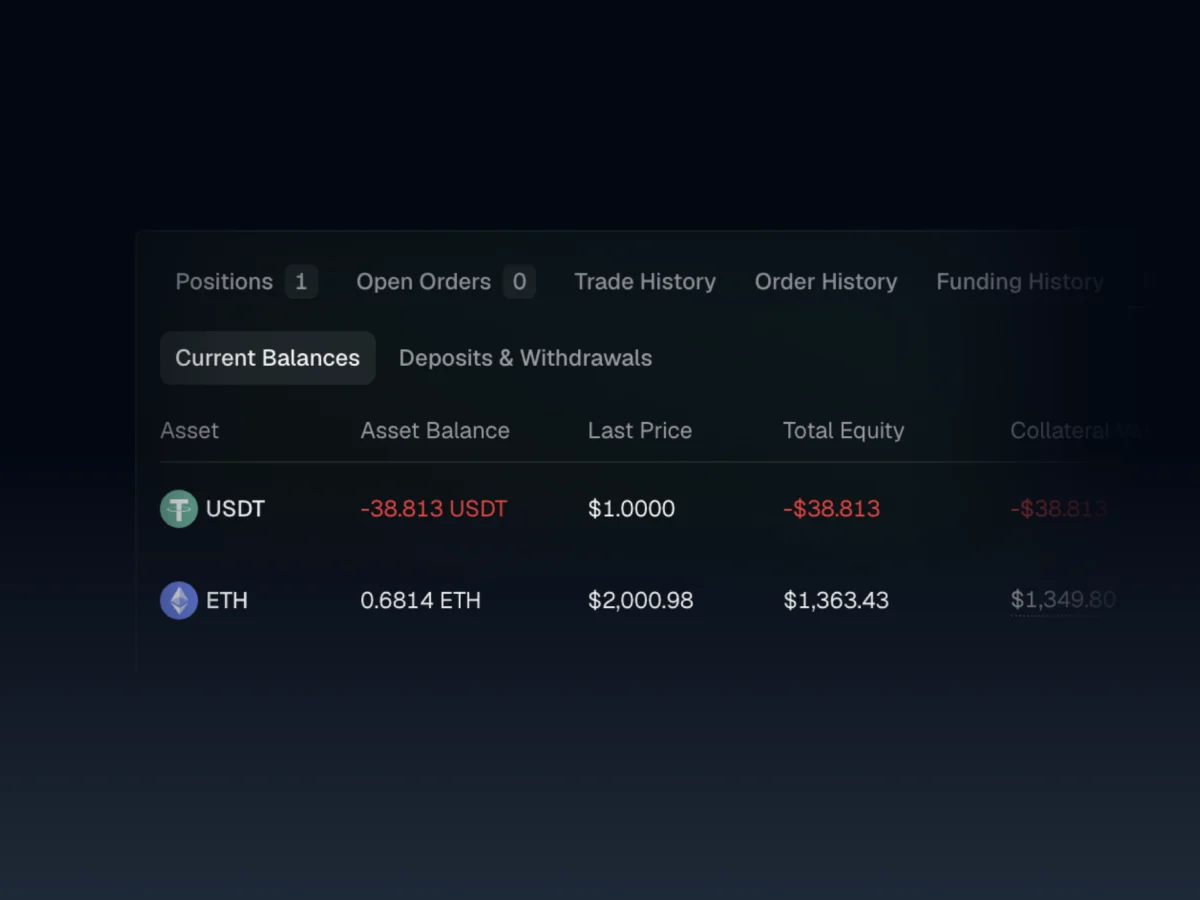
The operational mechanics of the new feature are designed to maintain systemic solvency while maximizing flexibility for the trader. When a user deposits ETH into Synthetix, the protocol evaluates the asset using its live index price, adjusted by a predefined risk discount commonly referred to as a "haircut." This calculation yields the account’s active Collateral Value, representing the exact portion of the deposited ETH that contributes toward maintaining open positions.
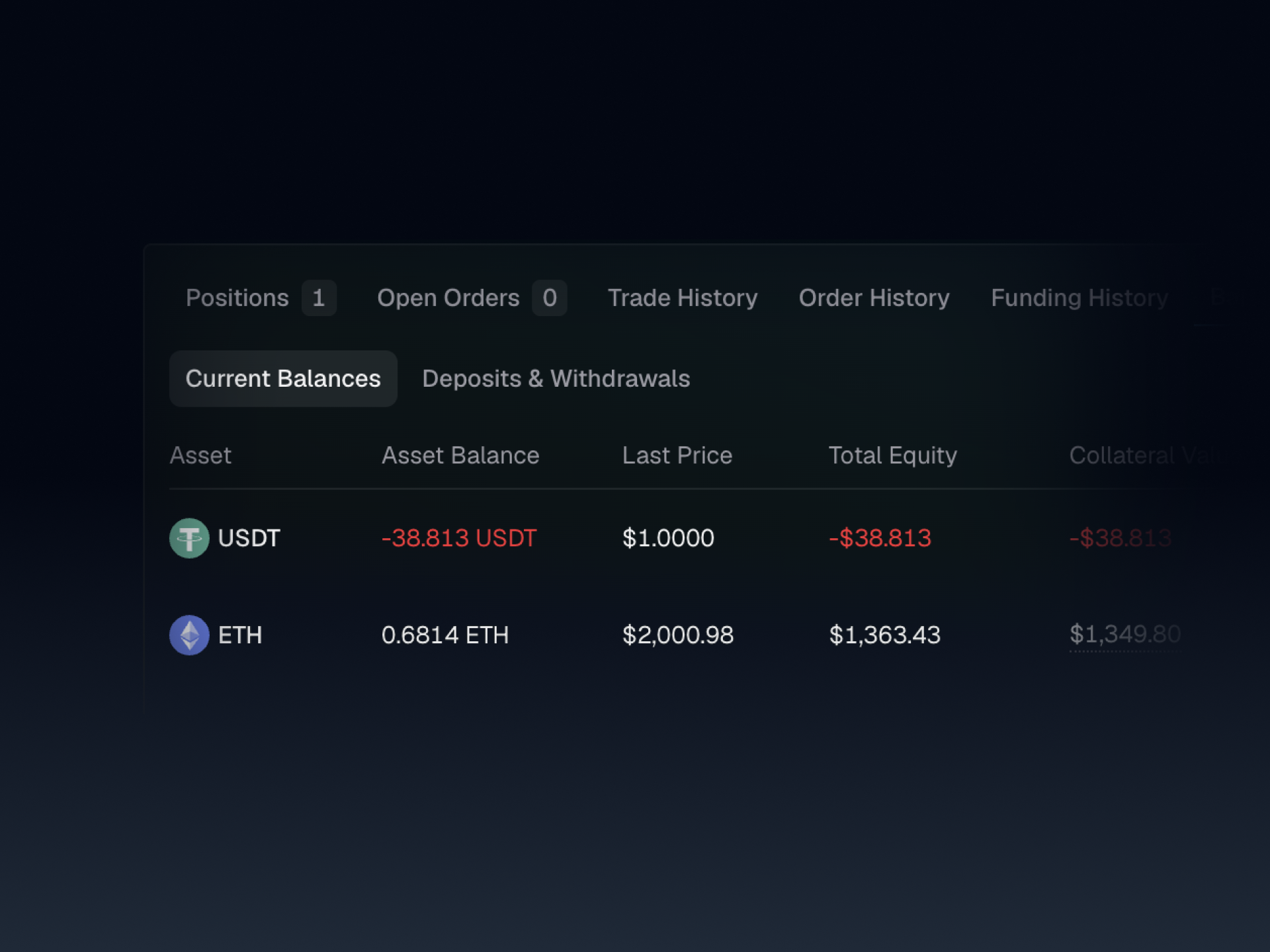
Because the exchange’s underlying markets settle in USDT, all trading fees, funding payments, and realized profit and loss (PnL) continue to be denominated in USDT. Consequently, if a user trades using solely ETH collateral without an active USDT balance, their account’s USDT balance can legally and intentionally enter a negative state while positions remain open. This negative balance is fully secured by the underlying ETH collateral. Traders retain the flexibility to clear this negative balance at any time by utilizing the protocol’s internal swap feature to convert a portion of their ETH directly into USDT.
However, this architecture introduces specific risk dynamics that participants must monitor closely. Because ETH collateral is continuously marked to market against its live index price, a sudden depreciation in the price of ETH will directly contract the account’s margin buffer, even if the user’s open perpetual positions remain entirely unchanged. To safeguard the protocol against cascading liquidations, Synthetix employs an automated safety mechanism: if a user’s USDT debt exceeds permitted threshold limits relative to their collateral value, the system can automatically convert a fraction of the deposited ETH into USDT to restore account solvency. Industry analysts recommend maintaining a conservative margin buffer well above minimum requirements to navigate intraday market volatility safely.
Unlocking Institutional-Grade Strategies: The Basis Trade
The introduction of ETH as multicollateral margin fundamentally streamlines one of the most prominent institutional strategies in the digital asset sector: the basis trade. Historically, executing a delta-neutral basis trade—simultaneously holding a spot asset and shorting its corresponding perpetual future to capture funding rates—required complex, multi-step orchestration across lending protocols and derivative platforms.
With the new Synthetix framework, traders can deposit ETH as margin and simultaneously open an equivalent short ETH perpetual position within the same unified account. The collateral value and the position’s PnL move inversely, largely neutralizing directional price risk while allowing the trader to steadily accumulate funding payments. Market structure analysts note that by reducing the friction of executing basis trades, liquidity providers and arbitrageurs can maintain tighter convergence between spot and perpetual prices, ultimately benefiting all exchange participants through enhanced market efficiency and tighter spreads.
Tapping into Billions in Idle Capital
The broader market implications of this integration extend far beyond individual trading strategies. Industry data indicates that well over $100 billion in idle ETH sits dormant across the Ethereum ecosystem, largely locked in staking contracts, cold storage, or passive holding wallets. By enabling native ETH to function as productive margin capital directly on Layer 1, Synthetix has positioned itself to tap directly into this vast pool of dormant liquidity.
Financial technologists evaluating the rollout emphasize the compounding effects of native L1 composability. Unlike Layer 2 solutions or alternative layer-one networks that require bridging assets and fragmenting liquidity, Synthetix operates natively on Ethereum Mainnet. This ensures that every trade, settlement, and collateral management action remains anchored to the primary security guarantees of the Ethereum blockchain.
Should Synthetix capture even a modest fraction—such as 10%—of the average monthly derivatives volume currently handled across competing venues, the resulting increase in on-chain economic activity could ignite a powerful flywheel effect for the broader Ethereum ecosystem. High-volume derivatives trading generates consistent protocol revenue, drives demand for block space, and enhances the overall composability of the decentralized finance stack, making underlying infrastructure assets exponentially more valuable.
Future Roadmap: Beyond USDT and ETH
While ETH represents the inaugural non-USDT asset supported on the platform, protocol developers have confirmed that the underlying multicollateral infrastructure was explicitly engineered for scalability. Future updates are slated to introduce a wider array of collateral types, including various yield-bearing assets and liquid staking tokens (LSTs), further compounding the capital efficiency available to traders.
As the digital asset derivatives market matures, platforms that successfully bridge the gap between holding core assets and utilizing them as margin are expected to capture disproportionate market share. With multicollateral margin now fully operational, Synthetix has established a new benchmark for capital efficiency on Ethereum Mainnet, signaling a shift toward more integrated, asset-native financial infrastructure.