The decentralized finance landscape on Ethereum Mainnet underwent a significant structural evolution today with the official rollout of multicollateral margin on Synthetix. For the first time in the history of the Ethereum network, traders can utilize native Ether (ETH) directly as collateral to trade perpetual swaps (perps) on Layer 1. Historically restricted to stablecoins such as USDT for margin requirements, market participants can now deposit ETH, maintain their core exposure to the asset, and execute sophisticated trading strategies from a unified multicollateral account without ever leaving the primary execution layer.
This development marks a milestone for the Synthetix protocol, which settles all trades directly on Ethereum Mainnet. By aligning the platform’s settlement layer with its accepted margin assets, developers hope to bridge a long-standing disconnect in decentralized derivatives trading: forcing users to liquidate or wrap their primary layer-one holdings to gain exposure to perpetual contracts.
Background and Historical Context
The introduction of multicollateral margin addresses a fundamental capital inefficiency that has persisted across decentralized exchange (DEX) infrastructure since the inception of automated market makers and decentralized derivatives. In the early stages of DeFi, protocols relied heavily on single-collateral models, predominantly utilizing USD-pegged stablecoins like USDC or USDT to simplify risk calculations and liquidation mechanics. While this conservative approach protected protocols during periods of high volatility, it imposed an opportunity cost on traders who held long-term convictions in volatile layer-one assets like ETH.
To participate in perpetual markets, bullish investors were frequently required to sell a portion of their ETH stack for stablecoins or navigate complex, fragmented bridging and wrapping mechanisms. These friction points not only created taxable events for users but also alienated a massive pool of idle capital resting natively on the Ethereum blockchain. Over successive market cycles, the total value locked in native ETH has grown exponentially, surpassing hundreds of billions of dollars. Synthetix’s new infrastructure seeks to tap directly into this multi-billion-dollar liquidity reservoir, positioning Ethereum Mainnet as a more competitive venue against high-throughput Layer 2 networks and centralized alternatives.
Mechanics of Native ETH Margin
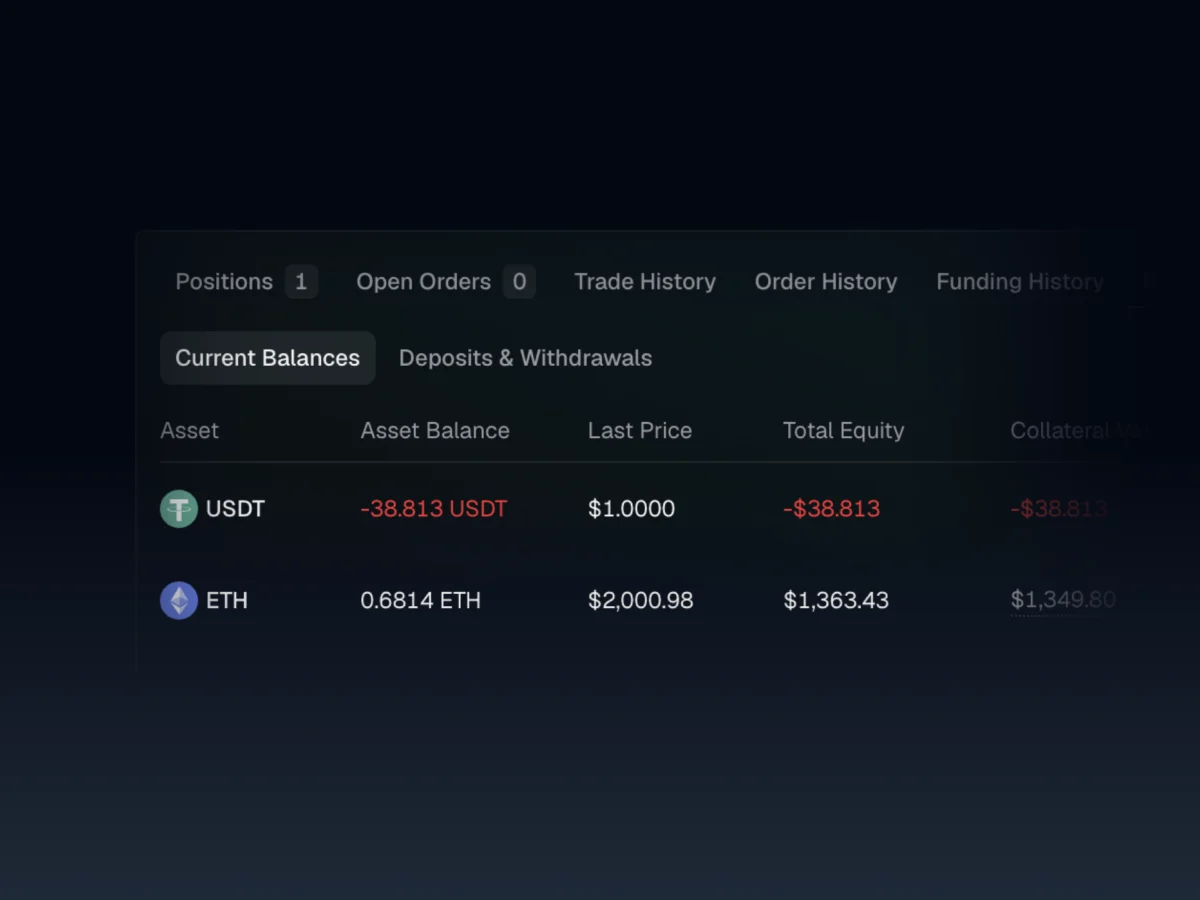
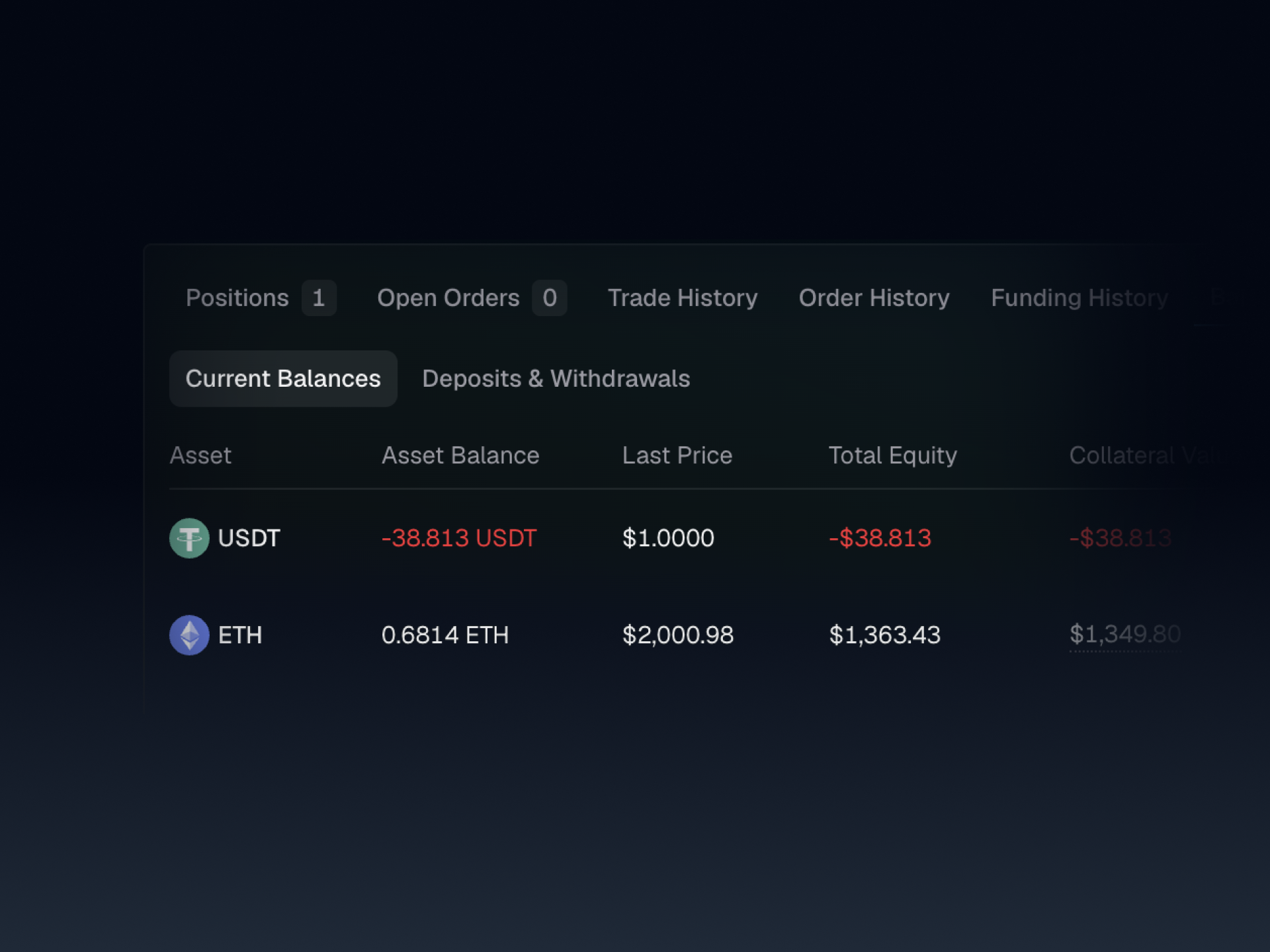
The newly deployed system introduces a streamlined workflow designed to maximize capital efficiency. When a user deposits ETH into Synthetix, the protocol evaluates the asset using its live index price. To account for potential price fluctuations and mitigate systemic risk, the platform applies a risk discount, commonly referred to as a haircut. The resulting figure represents the user’s Collateral Value, which dictates the total margin available to back open positions.
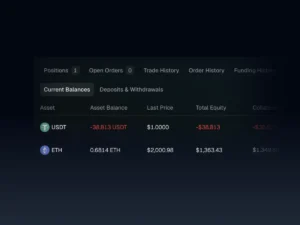
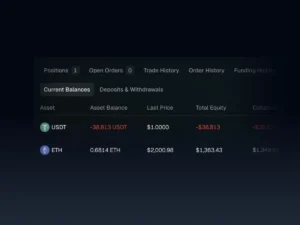
Because Synthetix perpetual markets settle transactions in USDT, operational metrics such as trading fees, funding rates, and realized profit and loss (PnL) continue to be denominated in the stablecoin. Consequently, a trader utilizing ETH collateral without holding an active USDT balance may observe a negative USDT balance while their positions remain open. This functionality is intentional; the negative stablecoin balance is secured entirely by the underlying ETH collateral. Users maintain the flexibility to clear this balance at any time by executing an internal account swap, converting a portion of their deposited ETH into USDT directly within the interface.
Furthermore, the protocol incorporates automated safety measures to maintain solvency. Because ETH is subject to market volatility, a sharp decline in the price of Ether will reduce a user’s total margin capacity, even if the open perpetual positions remain static. If a user’s accumulated USDT debt exceeds the protocol’s mandated risk thresholds, automated liquidation or auto-conversion mechanisms may trigger, selling a portion of the collateral to cover the deficit. Protocol developers strongly encourage active monitoring and voluntary debt management to avoid automated interventions.
Enhancing DeFi Strategies: The Basis Trade
Market analysts have pointed out that the integration of native ETH margin significantly optimizes one of the foundational trading strategies within decentralized finance: the basis trade. Traditionally, executing a cash-and-carry or basis trade on-chain required acquiring stablecoins, depositing them as margin, shorting perpetual contracts, and managing separate spot exposure.
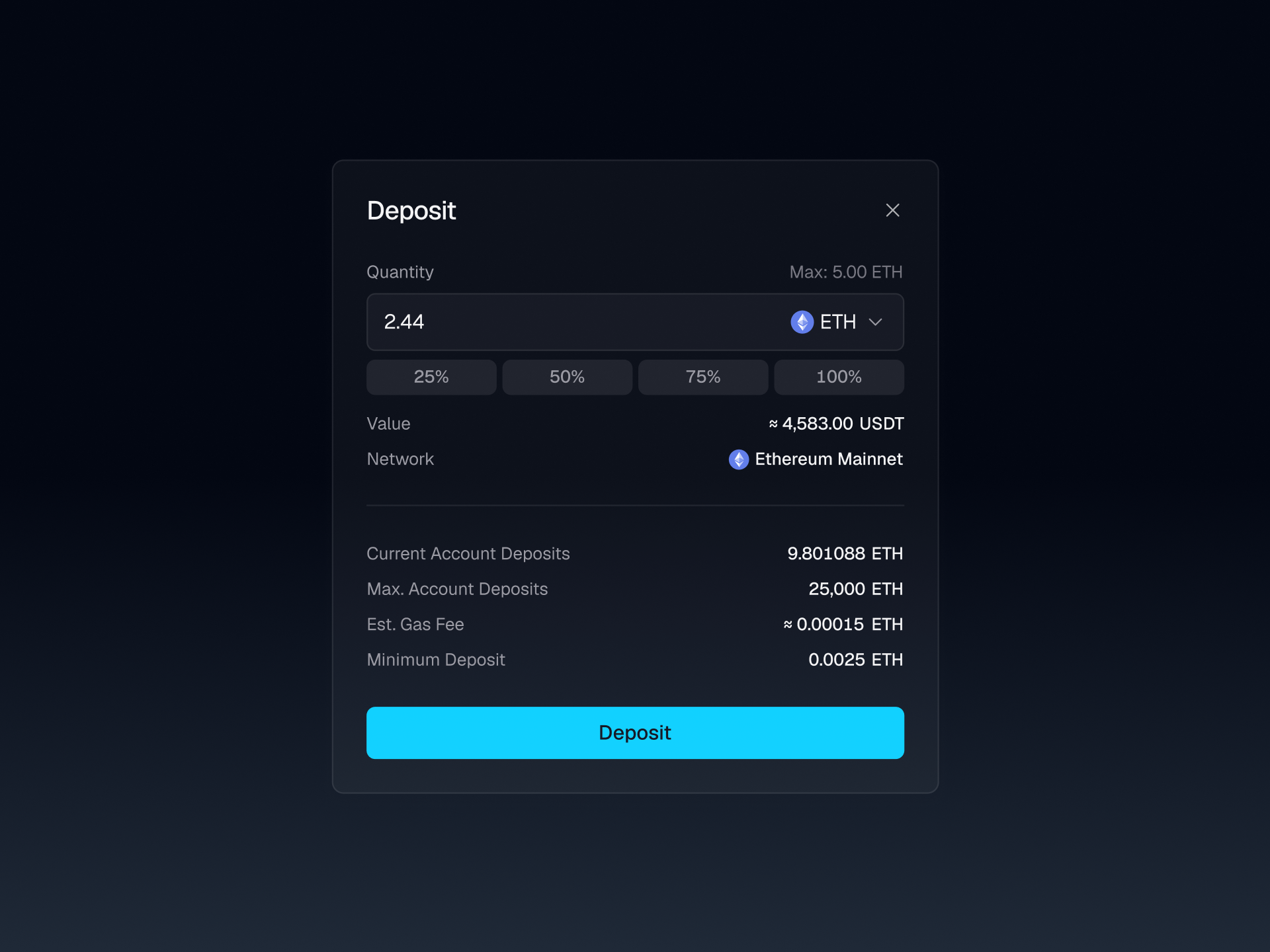
With the deployment of multicollateral margin, a trader can deposit spot ETH directly as collateral and concurrently open a short ETH perpetual position of equivalent size. This combination creates a delta-neutral position where the spot collateral value and the perpetual position PnL offset one another during directional market movements. Meanwhile, the trader collects regular funding payments from the short perpetual contract.
Financial engineers note that by lowering the operational friction of executing basis trades, overall market efficiency improves. As institutional and retail arbitrageurs find it easier to capture funding rate discrepancies, order books tend to tighten, leading to reduced slippage and more competitive pricing for all participants utilizing the exchange.
Ecosystem Implications and Future Roadmap
The launch of ETH as the first non-USDT collateral asset is explicitly designed as a foundational phase for a broader multi-asset roadmap. Synthetix engineering teams have confirmed that the underlying architecture has been built to scale, with additional collateral types—including various yield-bearing assets—scheduled for integration in subsequent updates.
Industry observers have evaluated the broader macroeconomic implications of bringing native L1 collateral into derivatives trading. Observers suggest that if Synthetix captures a meaningful percentage of current monthly derivatives volume, the resulting transaction throughput, fee generation, and network activity could stimulate a flywheel effect across the broader Ethereum ecosystem. Increased transactional demand on Mainnet enhances economic security, drives higher utilization of the underlying blockspace, and increases the composability value of assets locked within decentralized finance primitives.
Statements and Community Reception
While specific executive commentary accompanying the release emphasized the technical milestone of operating entirely on Ethereum L1, broader reactions from the decentralized finance community have focused on utility and capital retention. DeFi researchers have underscored that keeping capital resident on the base layer reduces reliance on external bridges, which have historically represented significant security vulnerabilities within the cross-chain ecosystem.
Market participants have also welcomed the transparency of the deployment, noting that comprehensive documentation regarding minimum deposits, maximum account caps, and asset-specific risk parameters is readily accessible via the protocol’s official knowledge base. Users seeking further assistance or technical clarification have been directed to engage with community support channels directly through the interface.
As the platform moves past its initial deployment phase, attention will turn toward the adoption rate of ETH margin among professional trading desks and retail users alike. With billions of dollars in dormant ETH capital now eligible to serve as productive margin, the success of this rollout may serve as a bellwether for how decentralized derivatives protocols handle multi-asset risk management in increasingly sophisticated market environments.