The ongoing ideological and financial tug-of-war between traditional precious metals advocates and corporate cryptocurrency pioneers has intensified following a sharp digital asset market correction. Prominent gold proponent Peter Schiff has renewed his vocal criticism of Bitcoin, seizing upon a moment where Michael Saylor’s corporate treasury vehicle, Strategy, saw its aggregate average purchase price move perilously close to the live market value of the cryptocurrency. This rare convergence has sparked renewed financial commentary across global markets, bringing long-standing debates regarding store-of-value assets, corporate balance sheet engineering, and the comparative historical returns of Bitcoin versus gold back into sharp focus.
The market dynamics driving this renewed scrutiny unfolded during a turbulent week of trading across global financial centers. According to comprehensive market data from Brave New Coin, Bitcoin (BTC) was changing hands at approximately $75,955, carrying a total market capitalization of roughly $1.5 trillion alongside a 24-hour trading volume of $22.1 billion. The leading digital asset experienced mild downward pressure, posting a 0.16% loss over 24 hours, a 1.89% decline over a seven-day window, and an 8.62% pullback over the preceding 30 days. This downward drift was sufficient to compress the valuation margin of the world’s largest corporate holder of digital assets, shifting focus directly onto the firm’s cost basis and long-term viability thesis.
Strategy Treasury Holdings Approach Break-Even Territory
The recent price contraction has brought Strategy’s monumental Bitcoin treasury dangerously close to its aggregate acquisition cost. This precarious financial positioning stems from a sustained, multi-year accumulation strategy that has steadily increased the firm’s exposure to the volatile digital asset class through continuous capital raises, equity offerings, and convertible debt arrangements.
According to an official Securities and Exchange Commission (SEC) filing published on November 2, Strategy’s treasury portfolio stood at a staggering 849,327 BTC as of November 1. This milestone was reached following the company’s latest documented acquisition of 811 BTC, purchased for approximately $65.5 million. The regulatory filing revealed a cumulative historical acquisition cost of $64.08 billion for the entire treasury chest, translating to an average purchase price of $75,451 per Bitcoin, inclusive of all associated transaction fees, administrative expenses, and capital deployment costs.

When measured against the November 7 market price of $75,955, the total valuation of Strategy’s 849,327 BTC holdings sat at approximately $64.51 billion. This left the company with a remarkably narrow unrealized gain of roughly $428 million, representing an uncomfortably slim margin of about 0.67% above its aggregate cost basis. For a corporate treasury designed to capture exponential long-term appreciation, operating this close to the break-even threshold during a market correction underscores the sheer volatility inherent in maintaining a multi-billion-dollar digital asset reserve.
Chronology of a Corporate Accumulation Strategy
To fully grasp the magnitude of Strategy’s current position, one must examine the timeline of its unorthodox financial transformation. The journey began in August 2020, when the enterprise—then operating under the name MicroStrategy—shocked the traditional corporate landscape by announcing an initial treasury allocation of 21,454 BTC acquired for $250 million. Executive Chairman Michael Saylor championed the move as a necessary defense against macroeconomic monetary inflation, casting Bitcoin as the ultimate corporate treasury reserve asset.
Over the subsequent six years, this initial experiment evolved into an aggressive, systematic accumulation campaign. Rather than relying solely on operating cash flow, the company utilized sophisticated financial engineering, repeatedly tapping capital markets through senior convertible notes and common stock issuances to fund continuous, multi-million-dollar Bitcoin purchases. Throughout bull markets and severe crypto winters alike, the firm doubled down on its thesis, steadily scaling its holdings toward the 850,000-coin milestone.
However, this aggressive dollar-cost averaging and scaling across varying market cycles created a heavily weighted average acquisition price of $75,451. Consequently, when macroeconomic headwinds and sudden market pullbacks drive spot prices down, the entire corporate edifice finds itself tethered closely to its historical expenditure line, providing critics with ample empirical ammunition to question the structural soundness of the accumulation model.
Peter Schiff Challenges Saylor’s Long-Term Return Projections

Capitalizing on the narrowing margin between market prices and Strategy’s cost basis, Peter Schiff took to social media platform X to launch a fresh wave of sarcasm and critique directed at Bitcoin advocates and Michael Saylor. Schiff’s commentary homed in on the stark divergence between Saylor’s lofty long-term performance expectations and the meager unrealized gains currently reflected on the company’s balance sheet.
The friction largely centers on Saylor’s publicly stated projections regarding Bitcoin’s long-term trajectory. During a prominent CoinDesk interview on December 19, 2025, the Strategy executive chairman articulated a remarkably bullish outlook, stating, "I expect Bitcoin will appreciate about 30% a year for the next 20 years." While financial analysts widely understand that such remarks represent a macro-level directional thesis rather than a binding corporate financial guarantee or yield promise, critics have eagerly weaponized these projections against the reality of near-term price stagnation.
Market observers note an important distinction between Bitcoin’s raw spot-market performance and Strategy’s actual corporate equity returns. The company’s $75,451 average purchase price reflects a weighted mathematical average of hundreds of discrete transactions executed across vastly different market regimes over six years. Furthermore, the financial health of Strategy as a publicly traded entity is influenced heavily by its debt service obligations, share dilution resulting from ongoing equity offerings, and broader capital structure costs. Therefore, a spot price hovering near the company’s cost basis does not unilaterally invalidate the firm’s operational model, but it vividly illustrates the acute vulnerability of leveraged corporate crypto strategies during prolonged consolidation phases.
The Gold Versus Bitcoin Investment Performance Debate
At the core of Schiff’s persistent critique lies his unyielding advocacy for physical gold as a superior, battle-tested store of value. Reviving historical performance comparisons, Schiff argued that investors allocating capital to precious metals rather than following Saylor’s digital asset playbook would have achieved substantially superior, risk-adjusted returns over the exact same multi-year timeline.
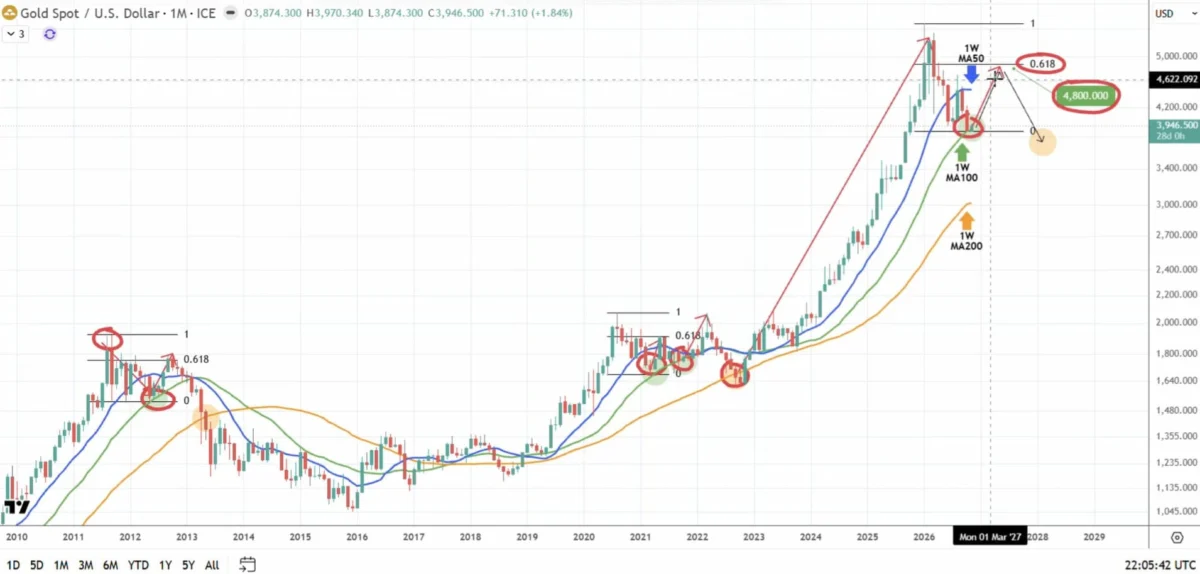
A granular look at historical pricing data provides necessary context for this ongoing debate. When MicroStrategy announced its historic maiden Bitcoin purchase on August 11, 2020, physical gold closed near $1,915.79 per ounce. By November 6, 2026, spot gold had ascended to approximately $4,070.59 per ounce, marking an impressive cumulative appreciation of roughly 112.5% over the six-year span.

Conversely, Bitcoin traded at a closing price of approximately $11,410.53 on August 11, 2020. Evaluated against its November 7, 2026 price of $75,955, the leading cryptocurrency delivered a staggering nominal price appreciation of approximately 566%. On a pure asset-to-asset basis, Bitcoin’s percentage gains heavily outpace those of gold over the six-year timeline as a whole. However, because Strategy’s multi-billion-dollar treasury was accumulated dynamically across multiple peaks and valleys rather than as a single lump-sum investment in August 2020, the company’s realized performance trajectory looks markedly different from simple spot-price mathematics.
Supporters of precious metals argue that gold offers lower volatility, an unbroken thousands-year monetary history, and a reliable hedge against geopolitical instability without the systemic risks associated with digital network protocols or corporate debt financing. On the other hand, digital asset proponents maintain that Bitcoin’s programmatic scarcity, decentralization, and superior annualized growth over extended time horizons justify its position as the premier financial innovation of the modern era.
Geopolitical Crosswinds and US Midterm Election Fallout
Schiff’s critique extended beyond pure portfolio math into the realm of domestic politics and macroeconomic sentiment. Following the conclusion of the United States midterm elections on November 3, 2026, the vocal gold bug sought to draw a direct correlation between Bitcoin’s recent price weakness and the political shifting of power in Washington, D.C.
According to consensus reporting by the Associated Press, the November midterm elections resulted in the Democratic Party securing legislative control of both chambers of Congress, establishing a major political realignment ahead of the new congressional session slated for January 2027. Schiff framed this electoral outcome as a sharp rebuke of the political standing of President Donald Trump—whom critics and supporters alike have frequently labeled "the Bitcoin president"—arguing that the shift in legislative power would curtail the executive branch’s capacity to enact favorable, crypto-centric regulatory frameworks.
Financial markets demonstrated tangible sensitivity around the election window. Bitcoin experienced heightened intraday volatility, briefly dipping below the $76,000 threshold on November 3 before staging a modest relief rally toward $78,000 on November 4. Despite this recovery, buying momentum stalled out before reclaiming the psychologically vital $80,000 level, leaving the asset class exposed to renewed selling pressure. This political friction intersected with broader macroeconomic headwinds, including persistent valuation corrections across major technology equities, shifting institutional risk appetites, and fluctuating spot-ETF inflows.
Implications for Corporate Treasuries and Future Market Dynamics
As the dust settles on the latest market pullback, the broader financial community is left weighing the implications of Strategy’s precarious cost-basis proximity. While Michael Saylor and his executive team have repeatedly expressed unwavering conviction in their long-term accumulation mandate, the reality of operating a leveraged, multi-billion-dollar corporate balance sheet anchored to a highly volatile asset class remains a high-stakes financial experiment.
For retail investors and institutional market participants alike, the episode serves as a powerful reminder of the cyclical nature of digital asset markets. Whether Bitcoin can summon the requisite demand to decisively break away from corporate acquisition cost thresholds—and whether upcoming macroeconomic catalysts, Federal Reserve policy adjustments, or shifting regulatory tides can propel BTC back toward upward price discovery—will dictate the next chapter of this corporate treasury saga. Until then, traditionalists like Peter Schiff will continue to utilize every market retracement to champion gold and challenge the foundational thesis of the digital asset revolution.