• Home
Crypto Gohan
keep your memories alive
Japanese & Asian Crypto Markets

MynaWallet Launches Digital Asset Wallet Integrating Japan My Number Card for Seamless Crypto and Stablecoin Management

by Neng Nana July 21, 2026
written by Neng Nana

MynaWallet Inc. officially announced the general release of its innovative digital asset wallet application, MynaWallet, on July 21, 2026, marking a significant milestone in the integration of national identification infrastructure with decentralized finance. Available for download on both the Apple App Store and Google Play, the application leverages Japan’s "My Number Card" system to provide a streamlined, secure gateway for users to manage stablecoins, cryptocurrencies, and non-fungible tokens (NFTs). By utilizing the Near Field Communication (NFC) capabilities of modern smartphones, the app allows users to perform identity verification and execute transactions through a simple physical tap of their government-issued ID card, effectively lowering the barrier to entry for blockchain technology across all age demographics in Japan.

The launch comes at a pivotal moment for the Japanese digital economy, as the government continues to push for "on-chain finance" as a core pillar of its national growth strategy. MynaWallet distinguishes itself by being a non-custodial wallet—meaning users retain full control over their private keys—while simultaneously offering a user experience that mimics the simplicity of traditional fintech apps. The integration of the Public Key Infrastructure (JPKI) stored on the My Number Card’s IC chip ensures that the wallet meets rigorous security and "Know Your Customer" (KYC) standards without the cumbersome manual processes typically associated with opening digital asset accounts.

Technical Innovation: JPKI and Account Abstraction

At the core of MynaWallet’s functionality is the sophisticated use of the Japanese Public Key Infrastructure (JPKI). When a user taps their My Number Card against their smartphone, the app accesses the electronic certificate stored on the card’s IC chip to verify the user’s identity. This method provides a higher level of security than traditional photo-based ID verification, as it relies on encrypted government hardware rather than visual inspection.

Furthermore, MynaWallet incorporates "Account Abstraction," a technical standard based on the Ethereum Improvement Proposal (EIP-4337). This technology allows the wallet to function as a smart contract rather than a simple pair of cryptographic keys. For the end-user, this translates to several high-utility features that have historically been missing from the Web3 ecosystem:

  1. Rapid Onboarding: Users can set up a fully functional, secure wallet in as little as 60 seconds by combining the JPKI verification with "Passkeys"—a biometric authentication method (such as FaceID or fingerprint scanning) that eliminates the need for users to memorize or store complex 12-word seed phrases.
  2. Social and ID-Based Recovery: One of the greatest risks in the crypto space is the loss of access to one’s wallet. MynaWallet addresses this by allowing users to recover their accounts using their My Number Card. If a device is lost or a passkey is compromised, the user can re-verify their identity using their physical ID card to regain control of their digital assets.
  3. Sponsored Transactions: Traditionally, every blockchain transaction requires "gas" (a fee paid in the network’s native token). MynaWallet utilizes a "Paymaster" system allowed by EIP-4337, where the company or a third-party sponsor can cover these fees. MynaWallet Inc. has stated that for basic usage within certain limits, they will subsidize gas fees, allowing users to send and receive assets without needing to hold a balance of native tokens like Ethereum (ETH) or Polygon (POL).

A Chronology of Development and Strategic Partnerships

The general release of MynaWallet is the culmination of years of research and pilot programs aimed at bridging the gap between public infrastructure and private blockchain innovation. In September 2023, the project gained international recognition when it was selected for the "ERC-4337 Account Abstraction Grant Round" by the Ethereum Foundation. This grant provided the necessary resources to develop the recovery and gas-less transaction mechanisms that are now central to the app.

Following the research phase, MynaWallet Inc. entered into a strategic partnership with Mitsui Sumitomo Card in January 2026. This collaboration focused on a "Tap-to-Pay" verification trial using the JPYC stablecoin—a digital currency pegged to the Japanese Yen. The trial successfully demonstrated that the My Number Card could be used not just for identity, but as a trigger for instant, compliant blockchain payments in a retail environment.

The current 2026 launch supports six major Ethereum-compatible (EVM) chains. While the company has not listed all six in the initial announcement, the architecture is designed for multi-chain interoperability, allowing users to track their asset history and balances across different ecosystems within a single interface. The company has confirmed plans to progressively add more supported chains and assets based on user demand and regulatory approvals.

Government Alignment: The "Honebuto" Policy and Beyond

The timing of MynaWallet’s release is closely aligned with the Japanese government’s "Basic Policy on Economic and Fiscal Management and Reform 2026," often referred to as the "Honebuto" (Big-Bones) policy. Approved by the Cabinet on the same day as MynaWallet’s launch, the 2026 policy explicitly includes the "promotion of on-chain finance" as a national growth strategy.

The government’s vision involves the widespread adoption of tokenized deposits and stablecoins to modernize the payment landscape and improve the efficiency of financial transfers. By utilizing the My Number Card—which has now been issued to over 100 million citizens—MynaWallet provides the necessary hardware-software link to make this policy a reality for the average person.

In the public sector, MynaWallet is being positioned as a tool for local governments. Potential use cases include the distribution of digital regional currencies and the direct payout of government subsidies via stablecoins. Because the wallet is tied to a verified national ID, it ensures that government funds are delivered accurately to the intended recipients, reducing administrative overhead and preventing fraud.

Real-World Applications: The Lawson Pilot and MynaPay

The utility of MynaWallet is already being tested in the retail sector. Starting in early August 2026, the major convenience store chain Lawson will begin a pilot program at its "Takanawa Gateway City" location in Minato-ku, Tokyo. This trial will allow customers to use JPYC stablecoins for over-the-counter purchases.

MynaWallet Inc. is also developing a dedicated payment service called "MynaPay." This service will support both QR code payments and NFC "Tap" payments. The goal of MynaPay is to create a seamless bridge between a user’s digital asset holdings and their daily spending habits. For merchants, this system offers the potential for lower transaction fees compared to traditional credit card networks and instant settlement via stablecoins.

Broader Impact and Market Implications

The launch of MynaWallet represents a paradigm shift in how digital assets are perceived in Japan. For years, the sector was hampered by complex user interfaces and security concerns that alienated non-technical users. By integrating the national ID card, MynaWallet effectively "normalizes" crypto assets, treating them as another component of a citizen’s digital life, alongside their health insurance and tax information.

Industry analysts suggest that this integration could lead to a surge in Web3 participation among the elderly and younger populations. The elderly, who may struggle with the complexities of private key management, can now rely on a familiar physical card for security. Conversely, younger users benefit from a mobile-first, "gas-less" experience that feels as intuitive as popular social media or payment apps.

However, the success of MynaWallet will depend on continued trust in the My Number system and the robustness of the underlying blockchain networks. While the non-custodial nature of the wallet protects users from exchange-level collapses (like the FTX incident of 2022), it still requires users to maintain the physical security of their ID card and their smartphone.

As MynaWallet Inc. moves forward, the company plans to expand its ecosystem by inviting third-party developers to build decentralized applications (dApps) that can interact with the MynaWallet identity layer. This could lead to a new generation of "verified" dApps for voting, healthcare, and secure communications, all anchored by the security of Japan’s national identity infrastructure.

The release of MynaWallet is not merely the launch of a new app; it is the implementation of a sophisticated financial infrastructure that could serve as a global blueprint for how sovereign nations can integrate decentralized technologies into the daily lives of their citizens. With the support of both the central government and major financial institutions, MynaWallet is poised to become the definitive "super-app" for the Japanese Web3 era.

July 21, 2026 0 comment
0 FacebookTwitterPinterestEmail
Japanese & Asian Crypto Markets

KOMPETE Revolutionizes the Web3 Gaming Landscape with a Multi-Genre Sports and Action Metaverse Ecosystem

by Laily UPN July 21, 2026
written by Laily UPN

The digital entertainment industry is currently witnessing a transformative shift as the boundaries between traditional gaming and blockchain technology continue to blur. At the forefront of this evolution is KOMPETE, an ambitious all-in-one sports and action gaming platform developed by Modernize Games. Designed as a comprehensive "metaverse" ecosystem—though the developers often prefer to highlight its utility as a high-performance gaming hub—KOMPETE offers a unique proposition: a single, unified avatar that players can use across a diverse array of competitive game modes, ranging from high-stakes battle royales to professional-grade basketball simulations.

By prioritizing a "fun-first" philosophy, KOMPETE aims to solve one of the most persistent challenges in the Web3 space: the onboarding of traditional gamers who are often deterred by complex blockchain barriers. Through its free-to-play model and sophisticated technical infrastructure, the platform is positioning itself as a bridge between the multi-billion dollar mainstream gaming market and the burgeoning decentralized economy.

KOMPETE|複数ゲームを提供するオンラインメタバースの概要

A Unified Vision for the Modern Metaverse

The core innovation of KOMPETE lies in its "DNA" system, which allows players to create a highly customizable, persistent avatar. Unlike traditional gaming ecosystems where a player’s progress and identity are locked within a single title, KOMPETE’s infrastructure ensures that a player’s character, skills, and cosmetic assets are transferable across every game mode within the platform.

This unified approach is powered by Unreal Engine 5, ensuring that the visual fidelity and mechanical responsiveness meet the high standards of contemporary AAA titles. The development team, Modernize Games, has focused heavily on the concept of "cross-mode progression." As players participate in different activities, they earn experience points (XP) that contribute to their overall account level, unlocking new items and abilities that enhance their presence within the broader ecosystem.

Diversified Gameplay: The Four Pillars of KOMPETE

To appeal to a wide demographic, KOMPETE has launched with four primary game modes, each designed to compete with established titles in their respective genres.

KOMPETE|複数ゲームを提供するオンラインメタバースの概要

Battle Royale: Tactical Survival

The Battle Royale mode in KOMPETE features a 15-player tactical experience where participants are divided into three-man squads. Set on a sprawling, meticulously designed island, the mode emphasizes team synergy and environmental awareness. Unlike the 100-player lobbies seen in titles like Fortnite or Apex Legends, KOMPETE’s 15-player format is designed for faster, more intense sessions with a focus on high-fidelity combat and strategic maneuvering. The goal is simple yet demanding: be the last team standing.

Kart Racing: Combat on Wheels

The Kart Racing mode introduces a chaotic, item-based competitive racing experience. Supporting up to 15 players, this mode is also built on a team-based structure (3-man teams). Victory is determined by the first player to cross the finish line, but the path to the podium is filled with offensive and defensive items, such as missiles and shields. This mode requires teams to balance roles, with some players focusing on speed while others act as "enforcers" to disrupt the opposition.

Social Deduction: Psychological Warfare

Taking inspiration from popular "Among Us" or "Mafia" style mechanics, the Social Deduction mode pits 7 Civilians and 1 Guard against a hidden Thug. The Thug must eliminate the other players without being identified, while the Civilians and the Guard must complete objectives and use logic to uncover the traitor. This mode highlights the platform’s focus on social interaction and community engagement, providing a psychological contrast to the high-octane action of the other modes.

KOMPETE|複数ゲームを提供するオンラインメタバースの概要

Basketball: High-Fidelity Sports Simulation

Perhaps the most technically impressive mode is the 3-on-3 Basketball simulation. To ensure a realistic experience, the developers utilized advanced motion capture technology to record pro-level athletes. The mode supports a "first to 21 points" match format and features deep mechanics for shooting, dunking, and defensive play. Given the CEO’s background in professional sports gaming, this mode is a cornerstone of the platform’s competitive identity.

The Web3 Economy and the $KOMPETE Token

While KOMPETE is fully playable as a traditional game, its integration with blockchain technology provides an optional layer of digital ownership and economic participation. The ecosystem is fueled by the $KOMPETE token, an ERC-20 asset that facilitates transactions within the game’s marketplace.

Tokenomics and Utility

The $KOMPETE token is currently tradable on decentralized exchanges such as UniSwap under the contract address: 0x1E0b2992079B620AA13A7c2E7c88D2e1E18E46E9. The token serves several critical functions:

KOMPETE|複数ゲームを提供するオンラインメタバースの概要
  1. Marketplace Currency: Players use $KOMPETE to buy and sell NFT-based cosmetics in the "Bazaar."
  2. Tournament Rewards: High-ranking players on the global leaderboards and winners of organized tournaments can earn $KOMPETE as a performance-based reward.
  3. Early Access Incentives: Holding the token often grants community members early access to new builds and exclusive in-game events.

The "Bazaar" and NFT Integration

The "Bazaar" is KOMPETE’s proprietary NFT marketplace. Here, players can trade skins, equipment, and other cosmetic items. Crucially, the developers have maintained a strict "no pay-to-win" policy. NFTs in KOMPETE are purely cosmetic or utility-based (such as tickets for specific events) and do not provide statistical advantages in competitive gameplay. This decision is vital for maintaining the integrity of the game as a potential esport.

To further lower the barrier to entry, the platform has implemented a "Web2.5" onboarding strategy. Players can purchase items using traditional credit cards through the in-game shop. These items can later be "minted" into NFTs if the player chooses to move them onto the blockchain, allowing casual users to enjoy the game without ever interacting with a crypto wallet until they are ready.

Technical Infrastructure and Cross-Platform Strategy

One of the most ambitious aspects of KOMPETE is its commitment to a seamless cross-platform experience. The gaming industry is increasingly moving toward a model where players expect to access their favorite titles regardless of hardware, and Modernize Games has built KOMPETE with this reality in mind.

KOMPETE|複数ゲームを提供するオンラインメタバースの概要

The platform is currently available on PC and mobile devices (iOS and Android), with a roadmap that includes full integration for next-generation consoles like the PlayStation 5 and Xbox Series X/S. The implementation of cross-play ensures a unified player pool, which is essential for maintaining short matchmaking times and a vibrant competitive scene.

Unreal Engine 5 and Realism

By utilizing Unreal Engine 5, KOMPETE leverages cutting-edge features such as Nanite and Lumen to provide high-end lighting and geometry. This technical choice is not merely aesthetic; it allows for more complex environments and smoother animations, which are critical for the precision required in shooting and sports genres.

Leadership and Development Philosophy

The success of KOMPETE is largely attributed to the vision of its parent company, Modernize Games, and its CEO, Justin. Justin brings a rare pedigree to the Web3 space, having previously been a professional gamer in high-profile titles such as NBA2K, Madden, and Fortnite. This experience is evident in the game’s mechanics, which prioritize "gameplay feel" over speculative economic features.

KOMPETE|複数ゲームを提供するオンラインメタバースの概要

Beyond his gaming background, the leadership team has a proven track record in business, with the CEO previously overseeing ventures that generated millions in revenue. This combination of competitive gaming insight and business acumen has allowed the team to expand to over 20 full-time developers, ensuring a steady stream of updates and content.

Chronology of Development and Future Roadmap

The journey of KOMPETE has been marked by a transparent development cycle and consistent milestones:

  • 2022-2023: Initial development and the launch of the $KOMPETE token. Early playtests for the Battle Royale and Kart Racing modes were conducted with the community.
  • Late 2023: Introduction of the Social Deduction mode and the first public demonstrations of the Basketball mode using motion-capture data.
  • 2024 (Current Phase): Focus on mobile optimization and the expansion of the Bazaar marketplace. The team is actively refining the cross-play infrastructure to prepare for console launches.
  • 2025 and Beyond: The roadmap includes the addition of more game modes (such as golf or soccer), the launch of seasonal "Pro Leagues," and the full integration of the ecosystem onto major console storefronts.

Broader Impact and Industry Implications

KOMPETE represents a significant case study in the maturation of the blockchain gaming sector. The first generation of Web3 games often suffered from lackluster gameplay and an over-reliance on "Play-to-Earn" mechanics that proved unsustainable. KOMPETE shifts the narrative toward "Play-and-Earn," where the primary value proposition is the entertainment itself, with blockchain serving as an invisible layer that provides security and ownership.

KOMPETE|複数ゲームを提供するオンラインメタバースの概要

Industry analysts suggest that if KOMPETE successfully navigates the transition to consoles, it could become a major competitor to established "walled garden" platforms like Roblox or Fortnite. By offering a decentralized alternative where players truly own their digital identities, KOMPETE is not just building a game; it is building a blueprint for the next generation of the digital economy.

The platform’s ability to attract both crypto enthusiasts and mainstream gamers will be the ultimate litmus test for its success. However, with its high-quality graphics, diverse game modes, and veteran leadership, KOMPETE is uniquely positioned to lead the charge into a new era of interactive entertainment. As the platform continues to evolve, it remains a project to watch for anyone interested in the intersection of technology, sports, and competitive gaming.

July 21, 2026 0 comment
0 FacebookTwitterPinterestEmail
Japanese & Asian Crypto Markets

The Evolution and Economic Impact of Crypto Assets: A Comprehensive Guide to Digital Finance in the Web3 Era

by Azzam Bilal Chamdy July 21, 2026
written by Azzam Bilal Chamdy

The global financial landscape is currently undergoing a seismic shift as traditional centralized systems converge with the decentralized possibilities offered by Web3.0 technologies, at the heart of which lie crypto assets. Formerly referred to as "virtual currencies," these digital assets have evolved from niche experimental protocols into significant financial instruments that demand a rigorous understanding of their technological foundations, historical milestones, and inherent market risks. In Japan, the transition in legal terminology from "virtual currency" to "crypto assets" (angō shisan) reflects a broader international effort to categorize these instruments not merely as alternatives to legal tender, but as a distinct class of digital property backed by cryptographic security.

【3分でわかるWeb3.0講座】暗号資産とは?特徴や歴史をわかりやすく解説

The Technological Paradigm: Decentralization and Blockchain Integrity

Unlike traditional fiat currencies, which are issued by central banks and managed through commercial financial institutions, crypto assets operate on a decentralized framework. This system removes the necessity for a "trusted third party," such as a bank or a government clearinghouse. The fundamental technology enabling this autonomy is the blockchain—a distributed ledger that records transactions across a vast network of computers.

In a traditional banking environment, transactions are processed during business hours, and the system is susceptible to downtime, maintenance, or centralized failure. Conversely, blockchain-based crypto assets function 24/7, 365 days a year. Because the ledger is distributed, no single entity has the authority to alter or delete transaction history. Once a block of data is verified and added to the chain, it becomes computationally nearly impossible to modify. This transparency ensures that every transaction is publicly verifiable, significantly reducing the risk of fraudulent "double-spending" or unauthorized alterations by a central administrator.

【3分でわかるWeb3.0講座】暗号資産とは?特徴や歴史をわかりやすく解説

The removal of the middleman does more than just ensure constant uptime; it fundamentally changes the cost structure and speed of global value transfer. However, this independence places the burden of security and accuracy directly on the user, a factor that contributes to the high-risk profile often associated with the sector.

A Chronological History of Crypto Assets

The trajectory of crypto assets is defined by several key eras, beginning with the ideological foundations laid during the 2008 global financial crisis and leading to the diverse ecosystem of "Ethereum killers" and utility tokens seen today.

【3分でわかるWeb3.0講座】暗号資産とは?特徴や歴史をわかりやすく解説

2008–2009: The Genesis of Bitcoin

In October 2008, an individual or group operating under the pseudonym Satoshi Nakamoto published a whitepaper titled "Bitcoin: A Peer-to-Peer Electronic Cash System." This document proposed a solution to the "double-spending problem" without relying on a central authority. On January 3, 2009, the Bitcoin network went live with the mining of the "genesis block." Initially, Bitcoin was viewed as a medium of exchange for peer-to-peer transactions, aiming to provide financial sovereignty to individuals.

2015: The Advent of Programmable Money

While Bitcoin proved that digital scarcity and decentralized transfers were possible, its scripting language was intentionally limited for security reasons. In 2015, Vitalik Buterin and a team of developers launched Ethereum. This marked the second generation of crypto assets by introducing "smart contracts"—self-executing contracts with the terms of the agreement directly written into lines of code. Ethereum transformed crypto assets from simple "digital gold" into a programmable platform for decentralized applications (dApps), decentralized finance (DeFi), and non-fungible tokens (NFTs).

【3分でわかるWeb3.0講座】暗号資産とは?特徴や歴史をわかりやすく解説

2020–Present: The Rise of High-Performance Blockchains

As Ethereum grew in popularity, the network faced significant congestion, leading to slow transaction speeds and exorbitant "gas fees" (transaction costs). This created a market gap for "Layer 1" competitors, often dubbed "Ethereum Killers." Among the most prominent is Solana (SOL), launched in 2020. Solana utilized a unique consensus mechanism called Proof of History (PoH) to achieve speeds of up to 65,000 transactions per second at a fraction of a cent per transaction. However, this era also highlighted the "blockchain trilemma"—the difficulty of achieving decentralization, security, and scalability simultaneously—as high-speed networks like Solana occasionally faced stability and security trade-offs compared to the more battle-tested Ethereum.

Comparative Data: Market Volatility and Performance

One of the most significant barriers to the mainstream adoption of crypto assets as a stable store of value is their extreme price volatility. When compared to traditional stock indices, such as Japan’s Nikkei 225, the price action of crypto assets is characterized by aggressive "boom and bust" cycles.

【3分でわかるWeb3.0講座】暗号資産とは?特徴や歴史をわかりやすく解説

Data analyzing the five-year period between 2018 and 2023 reveals a stark contrast in market behavior. For instance, Bitcoin experienced a cumulative growth of approximately 498% during certain intervals, characterized by steep, mountain-like peaks and deep valleys. In contrast, the Nikkei 225, while influenced by global events such as the 2020 COVID-19 pandemic, maintained a relatively smoother trajectory. While the Nikkei 225 might fluctuate by 1-2% in a typical day, it is not uncommon for major crypto assets to swing 10-20% within the same timeframe.

This volatility is driven by several factors, including the relatively small market capitalization of crypto assets compared to global equity markets, the influence of speculative retail trading, and the lack of traditional valuation metrics. For investors, this means that while the potential for high returns is substantial, the risk of significant capital loss is equally prevalent, necessitating a strategy that involves only "surplus funds" rather than essential savings.

【3分でわかるWeb3.0講座】暗号資産とは?特徴や歴史をわかりやすく解説

Critical Risks and Operational Challenges

The decentralized nature of crypto assets necessitates a "self-custody" mindset, which introduces risks that do not exist in the traditional banking sector. Professional analysts and regulatory bodies highlight three primary areas of concern for participants in the Web3 ecosystem.

1. Irreversible Remittance Errors

In a traditional bank transfer, a mistake in the recipient’s account number can often be rectified through a "request for reversal" (kumimodoshi) facilitated by the bank. In the world of crypto assets, transactions are processed via alphanumeric strings known as "addresses." If a user sends funds to an incorrect address or uses the wrong blockchain network (e.g., sending Bitcoin to an Ethereum address), the assets are typically lost forever. There is no central help desk or "undo" button. Industry experts recommend a "copy-paste" approach and performing small "test transactions" before moving significant sums.

【3分でわかるWeb3.0講座】暗号資産とは?特徴や歴史をわかりやすく解説

2. Systematic Fraud and Social Engineering

The complexity and novelty of crypto assets make them a fertile ground for scams. Regulatory agencies, such as Japan’s Consumer Affairs Agency (CAA), have issued numerous warnings regarding fraudulent schemes. Common tactics include:

  • Direct Message (DM) Scams: Fraudsters posing as "successful investors" on social media platforms like X (formerly Twitter) or Instagram, promising guaranteed monthly returns.
  • Initial Investment Fraud: Encouraging victims to "invest" large sums in unknown or fake tokens that cannot be liquidated.
  • Phishing: Creating fake exchange websites to steal a user’s private keys or "seed phrases."

The CAA emphasizes that there is "no such thing as a guaranteed profit" in crypto assets. Any solicitation promising "absolute" returns is a hallmark of a fraudulent operation.

【3分でわかるWeb3.0講座】暗号資産とは?特徴や歴史をわかりやすく解説

3. Security vs. Scalability Trade-offs

Investors must also navigate the technical health of the assets they hold. While Ethereum is praised for its high security and decentralization, its high costs make it impractical for micro-transactions. Conversely, while Solana offers low fees and high speed, its history of network outages suggests a higher operational risk. Understanding these trade-offs is essential for anyone looking to utilize crypto assets beyond mere speculation.

Official Responses and Regulatory Frameworks

Governments and financial regulators have moved swiftly to bring order to the crypto market. In Japan, the Financial Services Agency (FSA) requires all crypto asset exchange service providers to be registered and to comply with strict Anti-Money Laundering (AML) and Know Your Customer (KYC) protocols. These regulations are designed to protect consumers from exchange collapses—similar to the Mt. Gox or FTX incidents—by requiring the segregation of customer assets from company assets.

【3分でわかるWeb3.0講座】暗号資産とは?特徴や歴史をわかりやすく解説

Despite these protections, regulators continue to stress that crypto assets are not legal tender. Their value is not guaranteed by any government or central bank, and they remain subject to the whims of market demand. The official stance of most developed economies is one of "cautious innovation": encouraging the development of blockchain technology while maintaining a rigorous defensive posture against financial crime and consumer exploitation.

Broader Impact and Future Implications

The integration of crypto assets into the global economy extends far beyond simple trading. We are entering a phase of "Tokenization," where real-world assets—such as real estate, fine art, and intellectual property—are represented as digital tokens on a blockchain. This process increases liquidity and allows for fractional ownership, potentially democratizing access to previously exclusive investment classes.

【3分でわかるWeb3.0講座】暗号資産とは?特徴や歴史をわかりやすく解説

Furthermore, the role of "Tokens" in Web3.0 governance is becoming increasingly important. Decentralized Autonomous Organizations (DAOs) use crypto assets to grant voting rights to community members, allowing for a more democratic form of corporate and project management. As these use cases mature, the focus is likely to shift away from the "price" of Bitcoin and toward the "utility" of the underlying networks.

In conclusion, while the world of crypto assets offers a glimpse into the future of a borderless, 24/7 financial system, it remains a "frontier market" fraught with volatility and technical pitfalls. Education is the most effective tool for risk mitigation. By understanding the history of these assets, the mechanics of blockchain technology, and the stringent warnings issued by regulatory bodies, individuals can navigate the Web3.0 era with a balance of innovation and prudence. The next evolution of this space will likely involve the refinement of "Tokens," a topic that continues to define the boundary between traditional finance and the decentralized future.

July 21, 2026 0 comment
0 FacebookTwitterPinterestEmail
Japanese & Asian Crypto Markets

LemFi Secures 53 Million Dollars in Series B Funding to Accelerate Global Expansion as Remittance Volume Reaches 1 Billion Dollars Monthly

by Ali Ikhwan July 21, 2026
written by Ali Ikhwan

The London-based financial services platform LemFi, specifically designed to serve the needs of immigrant communities, has successfully closed a $53 million Series B funding round. This significant capital injection, led by Highland Europe, marks a pivotal moment for the four-year-old fintech as it seeks to solidify its position in the increasingly competitive global remittance market. The round also saw participation from a robust cohort of existing investors, including Left Lane Capital, Palm Drive Capital, and Y Combinator, alongside new entry Endeavor Catalyst. This latest round brings LemFi’s total funding to approximately $85 million, providing the company with the necessary resources to scale its operations, enhance its product suite, and navigate the complex regulatory landscapes of international finance.

The emergence of LemFi as a major player comes at a time when the global remittance landscape is undergoing a profound transformation. For many emerging market economies, these personal transfers have evolved from supplemental income into a critical economic lifeline. According to research published by the World Bank in its Migration and Development Brief, remittance inflows to low- and middle-income countries (LMICs) surpassed $669 billion in 2023. In several of these nations, remittances now represent a double-digit percentage of the Gross Domestic Product (GDP), often outpacing Foreign Direct Investment (FDI) and official development assistance as the primary source of foreign exchange.

The Evolution of the Remittance Market

The remittance sector has historically been dominated by traditional banks and physical money transfer agents like Western Union and MoneyGram. Despite the rapid rise of digital-first challengers, these legacy institutions still command over 60% of the market share. However, the high fees and slow processing times associated with traditional banking corridors have created a massive opportunity for agile fintech startups.

LemFi entered this space in 2020, founded by CEO Ridwan Olalere and CFO Rian Cochran. The duo previously worked together at OPay, an African fintech unicorn, where they gained firsthand experience in scaling financial services within emerging markets. Their vision for LemFi was rooted in the specific challenges faced by the "Global South" diaspora—immigrants from Africa, Asia, and Latin America living in North America and Europe who struggle with the friction of sending money back home.

Since its inception, LemFi has demonstrated an aggressive growth trajectory. What began as a service primarily focused on the Nigerian diaspora in North America has expanded into a multi-currency platform serving over 1 million active users. These users rely on LemFi to move capital into 20 "send-to" countries, including major remittance recipients like India, China, Pakistan, Kenya, and Nigeria. On the "send-from" side, the company has expanded its footprint to 27 markets across North America and Europe.

Strategic Growth and Monthly Transaction Milestones

The scale of LemFi’s operations has reached a new order of magnitude in 2024. In April 2023, the company reported an annual transaction volume of approximately $2 billion. In a recent disclosure, CEO Ridwan Olalere confirmed that the platform is now processing $1 billion in payment volume every month. This represents a sixfold increase in annualized volume within just over a year.

A significant driver of this surge has been LemFi’s successful entry into the Asian corridor. Launched less than a year ago, the Asian market now accounts for $160 million of the company’s monthly Total Payment Volume (TPV), maintaining a month-on-month growth rate of 30%. This rapid adoption highlights the underserved nature of the Asian diaspora market, where users are often forced to choose between expensive formal channels or unregulated informal networks.

The company’s ability to double its user base, revenue, and transaction frequency over a two-year period was a primary factor in attracting Highland Europe. As a growth-stage investment firm, Highland Europe typically backs startups that have already surpassed €10 million in annualized revenue and demonstrated a clear path toward sustainable scaling. The fact that the Series B round closed in just four months suggests a high degree of investor confidence in LemFi’s unit economics and operational model.

Security as a Competitive Differentiator

In the high-stakes world of international money transfers, security and trust are the primary currencies. Remittance senders are disproportionately targeted by financial criminals; recent industry reports indicate that individuals sending money abroad are nearly four times more likely to fall victim to fraud than the general banking population.

LemFi has positioned its aggressive fraud detection capabilities as a core pillar of its value proposition. According to Olalere, keeping fraud rates low is not just a security measure but a pricing strategy. "Fraud can significantly drive up costs. Higher costs often mean passing them on to customers through additional fees," Olalere noted. By maintaining an industry-leading low fraud rate, LemFi is able to offer more competitive foreign exchange (FX) spreads and lower transaction fees, which are the company’s primary revenue streams.

This focus on security has fostered a high degree of brand loyalty. Internal data from LemFi reveals that approximately 70% of the company’s earliest customers from 2020 remain active on the platform today. Furthermore, 60% of its total customer base engages with the app on a yearly basis. This high retention rate, coupled with a referral-heavy acquisition model, has allowed LemFi to grow organically within tight-knit immigrant communities, reducing the need for excessive marketing spend.

European Expansion and Regulatory Navigation

The latest funding coincides with a major push into the European market. Last week, LemFi announced a strategic partnership with Modulr, a leading provider of embedded finance orchestration. This partnership allows LemFi to utilize Modulr’s infrastructure to kickstart its European operations immediately.

However, the company is also pursuing its own regulatory independence. LemFi is in the final stages of acquiring a firm based in the Republic of Ireland, which will provide the necessary licenses to operate autonomously across the European Economic Area (EEA). Olalere expects these licenses to be secured as early as next month.

The complexity of global financial regulation remains one of the steepest hurdles for fintechs. Each "send-to" and "send-from" market requires a unique set of compliance protocols, Anti-Money Laundering (AML) checks, and Know Your Customer (KYC) standards. LemFi’s strategy involves building an adaptable technological stack that can "plug and play" into different regional payment schemes. This modular approach allows the firm to enter new markets with localized services—such as integrating with mobile money platforms like M-Pesa in Kenya or UPI in India—without rebuilding its core architecture from scratch.

Broader Economic Implications and Future Outlook

The rise of platforms like LemFi has broader implications for global financial inclusion. For decades, the high cost of remittances—averaging around 6% to 7% of the transfer amount globally—has been criticized by the United Nations as a barrier to poverty reduction. By leveraging technology to drive these costs down toward the Sustainable Development Goal (SDG) target of 3%, fintechs are effectively increasing the net capital flowing into developing economies.

With the new $53 million injection, LemFi intends to expand its workforce, which currently stands at over 300 employees distributed across North America, Europe, Africa, and Asia. The funds are also earmarked for "hyper-localized" service improvements, ensuring that the platform caters to the specific financial nuances of each immigrant community it serves.

As LemFi scales, it enters a phase of "co-opetition" with traditional banks. While it competes for market share, it also relies on the global banking infrastructure for final settlements. However, its trajectory suggests a shift in power. If LemFi continues its current growth rate, it may soon join the ranks of Remitly and Zepz as a dominant force in the $600 billion+ remittance industry.

For the millions of immigrants who form the backbone of the global labor market, the continued success of such platforms means more than just a cheaper app; it represents a more equitable way to support families and invest in the future of their home countries. As Olalere concluded, the focus for the remainder of the year will be Europe, with the goal of being present in every major market where significant immigrant populations reside. Given the current momentum, LemFi appears well-positioned to turn that vision into a global reality.

July 21, 2026 0 comment
0 FacebookTwitterPinterestEmail
Crypto Mining & Infrastructure

Optimizing Bitcoin Mining Efficiency Through Dynamic Frequency and Voltage Profiling in Advanced ASIC Firmware

by Azzam Bilal Chamdy July 21, 2026
written by Azzam Bilal Chamdy

The operational landscape of Bitcoin mining has shifted from a race for raw computing power to a sophisticated exercise in energy efficiency and marginal utility. At the heart of this evolution is the relationship between frequency and voltage within Application-Specific Integrated Circuit (ASIC) hardware, a pairing that defines the "profile" of a miner. A profile represents a specific configuration where the clock speed (frequency) of the mining chips is matched with a corresponding electrical pressure (voltage) to ensure stable operation. For modern mining enterprises, the ability to manipulate these variables through custom firmware like LuxOS has become a critical factor in maintaining profitability amidst fluctuating energy costs and the periodic "halving" of Bitcoin block rewards.

In the context of a standard Bitmain Antminer S19j Pro, the factory default setting typically operates at a frequency of 545 MHz, yielding a hashrate of approximately 104 Terahashes per second (TH/s). However, the performance of these machines is not static. By reducing the frequency by 25 MHz to a level of 520 MHz, the output drops to roughly 99 TH/s. A further reduction to 495 MHz brings the output to 94 TH/s. While a lower hashrate may seem counterintuitive to the goal of mining, the relationship between frequency and voltage is non-linear; as frequency increases, the voltage required to maintain chip stability must also increase, often leading to a disproportionate rise in power consumption and heat generation.

The Technical Mechanics of Frequency and Voltage

To understand the necessity of custom profiles, one must examine the physics of the silicon chips themselves. Every ASIC miner is subject to the "silicon lottery," a term used by engineers to describe the inherent variability in chip quality during the manufacturing process. Even within the same production batch, some chips can achieve higher frequencies at lower voltages than others. This variability is recorded in the machine’s Electrically Erasable Programmable Read-Only Memory (EEPROM) nameplate.

Advanced firmware solutions like LuxOS do not apply a generic template across a fleet of miners. Instead, the software reads the unique data from each machine’s EEPROM to generate a customized "profile ladder." For instance, a unit that shipped from the factory with a baseline of 13.4V and 545 MHz will have its underclocking and overclocking steps calculated relative to those specific figures. A different unit of the same model that required 13.6V to reach that same 545 MHz at the factory will have a different ladder entirely. This individualized approach ensures that each machine operates at its peak efficiency curve, preventing stable chips from being held back by "weaker" counterparts on the same hashboard.

ASIC Overclocking & Underclocking: LuxOS Profiles

The Economic Necessity of Granular Control

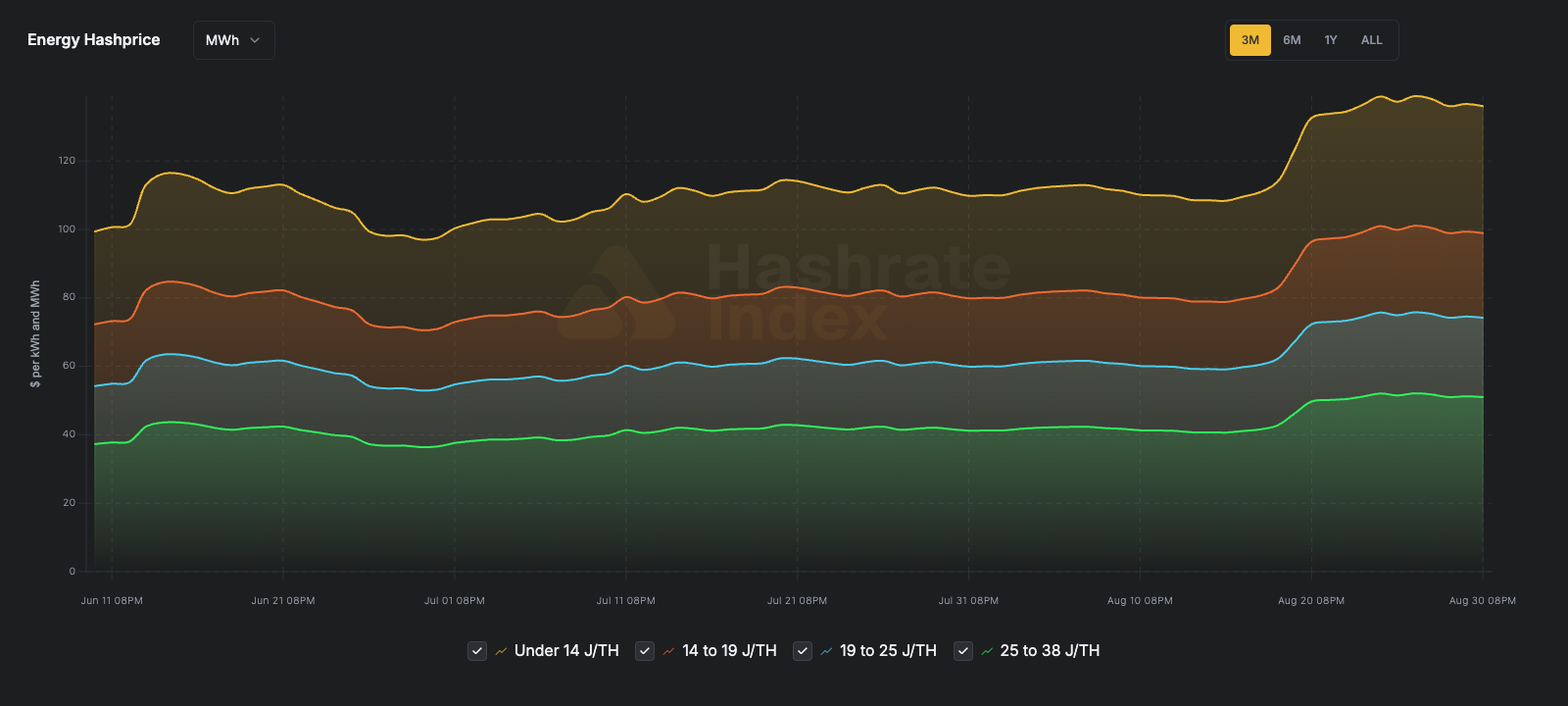
The primary driver for adjusting these profiles is the "hashprice"—a metric that represents the expected value of 1 TH/s of hashing power per day. When the hashprice is high, typically during a Bitcoin price rally, miners are incentivized to "overclock" their machines. By increasing the frequency and voltage, they can squeeze additional hashrate out of their existing hardware. While this reduces the energy efficiency (measured in Joules per Terahash), the increased revenue from the additional Bitcoin mined often outweighs the higher electricity bill.

Conversely, when the hashprice drops—either due to a decrease in Bitcoin’s market price or an increase in network difficulty—miners must pivot toward efficiency. Underclocking allows a miner to significantly reduce power consumption. Because the heat generated by an ASIC is a function of the square of the voltage, even small reductions in voltage can lead to massive gains in thermal efficiency and a reduction in the "wear and tear" on the hardware. This allows older, less efficient machines to remain "in the money" long after they would have been forced offline under stock settings.

Strategic Operational Shifts and Fleet Management

For industrial-scale mining operations, managing thousands of machines manually is an impossibility. This has led to the development of automated systems like AutoTuner. When an operator selects a new profile—moving, for example, from a 104 TH/s profile to a 110 TH/s profile—the firmware does not simply jump to a new voltage. It triggers a recalibration sequence. The AutoTuner monitors the error rates and stability of the individual chips at the new frequency, fine-tuning the voltage to the lowest possible point that maintains a stable hashrate.

This level of automation enables "dynamic mining," a strategy where a fleet’s power consumption can be adjusted in real-time. In regions with volatile energy markets or demand-response programs, miners can underclock their machines during peak energy hours to save on costs or provide stability to the electrical grid, then overclock during off-peak hours when electricity is cheap and abundant. This flexibility transforms a mining data center from a static load into a responsive asset for energy grid operators.

Safety Protocols and Hardware Longevity

A common concern within the mining community is whether the aggressive manipulation of factory settings leads to hardware failure. Expert analysis suggests that underclocking is universally beneficial for hardware longevity. By running at lower voltages, the chips operate at lower temperatures, reducing the rate of electromigration and thermal expansion stress on the solder joints.

ASIC Overclocking & Underclocking: LuxOS Profiles

Overclocking, however, carries inherent risks. Pushing a machine beyond its thermal limits can lead to chip degradation or power supply unit (PSU) failure. To mitigate this, modern firmware includes safety "guardrails." If a machine reaches a certain temperature threshold or if the PSU cannot provide the requested wattage, the firmware will automatically downstep the profile to a safer level. This "fail-safe" mechanism allows miners to explore the upper limits of their hardware’s performance without the risk of permanent damage.

The Broader Impact on the Mining Industry

The shift toward software-defined mining has profound implications for the global hashrate and the decentralization of the network. By extending the profitable lifespan of hardware, custom firmware reduces the electronic waste generated by the industry. Machines like the S19 series, which might have been considered obsolete following the 2024 halving, can remain competitive through aggressive underclocking.

Furthermore, the data-driven approach to mining is attracting more institutional capital. Investors are no longer looking for "cowboy" operations that run machines until they burn out; they are looking for sophisticated energy arbitrageurs who use tools like LuxOS to manage their risk. The ability to predict and control the Joules-per-Terahash (J/TH) efficiency of a fleet allows for more accurate financial modeling and more robust bottom lines.

Chronology of Firmware Development

The evolution of ASIC control can be traced through several distinct eras:

  1. The Locked Era (2013-2017): Early ASICs featured rigid, factory-locked firmware. Miners had almost no control over frequency or voltage.
  2. The SSH and Manual Era (2018-2020): Technically proficient miners began using Secure Shell (SSH) access to manually "mod" settings, though this was risky and lacked automation.
  3. The Optimization Era (2021-Present): The rise of professional firmware companies introduced features like AutoTuning, EEPROM-based profiling, and remote fleet management interfaces (such as Luxor’s Commander).

As the industry moves forward, the integration of firmware with financial derivatives is expected to be the next frontier. Miners may soon be able to link their machine profiles directly to hashrate forward contracts, automatically adjusting their hardware’s performance to meet the specific delivery requirements of a financial hedge.

ASIC Overclocking & Underclocking: LuxOS Profiles

Conclusion and Future Outlook

The transition of Bitcoin mining into a highly specialized sector of the global energy and compute markets is nearly complete. The "profile ladder" is no longer just a technical feature; it is a fundamental tool for economic survival. By leveraging the specific characteristics of each machine’s silicon and automating the optimization process, miners can navigate the volatile waters of the Bitcoin economy with precision.

As hardware manufacturers like Bitmain, MicroBT, and Canaan continue to release more powerful machines with smaller nanometer chips, the role of firmware will only grow. The complexity of managing heat and power at the 3nm and 2nm levels will require even more granular control. In this environment, the winners will be those who can most effectively bridge the gap between the physical reality of the hardware and the digital demands of the Bitcoin network. Through the intelligent application of frequency and voltage profiling, the mining industry is proving that it can be as efficient and adaptable as any other high-tech sector in the world.

July 21, 2026 0 comment
0 FacebookTwitterPinterestEmail
Crypto Mining & Infrastructure

Iran Intensifies Crackdown on Illegal Cryptocurrency Mining Amidst Escalating Energy Crisis and National Power Shortages

by Pevita Pearce July 21, 2026
written by Pevita Pearce

The Iranian government has significantly escalated its efforts to dismantle illegal cryptocurrency mining operations across the country, reporting the discovery and closure of 9,404 clandestine mining farms over the past five months. This aggressive enforcement comes as the Islamic Republic grapples with a deepening energy crisis that has led to widespread power outages, water shortages, and domestic social unrest. According to statements from regional energy officials, the crackdown is a direct response to the immense strain that unauthorized digital asset extraction places on the national power grid, particularly during the high-demand summer months.

Kambiz Nazerian, the head of the Tehran Electricity Distribution Company, confirmed during a recent press briefing that the majority of these energy-intensive devices were located within various districts of the capital city, Tehran. The scale of the seizures highlights the pervasive nature of underground mining in Iran, where heavily subsidized electricity costs have created a lucrative, albeit illicit, environment for crypto-enthusiasts and organized networks alike. The Iranian media outlet Iran International reported that the most recent wave of enforcement followed a summer of debilitating blackouts that forced the government to prioritize residential and essential industrial power over the burgeoning digital economy.

The Economic Drivers of Iranian Crypto Mining

The surge in cryptocurrency mining within Iran is not a random phenomenon but a result of a unique confluence of economic factors. As an oil-rich nation with the world’s second-largest natural gas reserves, Iran provides some of the most heavily subsidized electricity in the world. This low-cost energy profile makes the country a magnet for Proof-of-Work (PoW) mining, which requires vast amounts of computational power and, consequently, electricity. For many Iranians, mining Bitcoin and other digital assets has become a primary method of preserving wealth and generating income in an economy crippled by international sanctions and high inflation.

By "exporting" electricity in the form of mined Bitcoin, individuals and entities can bypass traditional financial sanctions and access global liquidity. However, this private gain often comes at a public cost. The state-run energy provider, Tavanir, has frequently pointed out that the surge in demand from both licensed and unlicensed miners has outpaced the country’s infrastructure capacity, leading to a precarious balance between energy production and consumption.

Chronology of Enforcement and Policy Shifts

The Iranian government’s relationship with cryptocurrency has been characterized by a cycle of tentative legalization followed by strict crackdowns. To understand the current situation, one must look at the timeline of events over the last two years:

Over 9,000 Crypto Mining Farms Seized In Iran To Combat Electricity Crisis | Bitcoinist.com
  • Early 2021: Iranian authorities detected and seized approximately 45,000 application-specific integrated circuit (ASIC) machines. These devices, specifically designed for mining, were found to be using subsidized electricity through unauthorized connections.
  • May 2021: Following a series of major blackouts in major cities, the Iranian government announced a blanket four-month ban on all cryptocurrency mining. This ban included even those operations that had obtained legal licenses from the Ministry of Industry, Mine, and Trade.
  • March 2022: Data from the Cambridge Bitcoin Electricity Consumption Index (CBECI) revealed that Iran accounted for roughly 7.5% of the global Bitcoin hashrate, placing it among the top mining hubs globally.
  • June 2022: A massive police operation resulted in the confiscation of 7,000 illegal mining machines in a single month. This operation signaled a shift toward more militarized enforcement of energy regulations.
  • August 2022: Officials confirmed that over the preceding 18 months, at least 1,620 mining operations had been shut down, which collectively consumed an estimated 250 megawatts of power—enough to supply a medium-sized city.
  • Present Day: The recent report of 9,404 farms being shuttered in a five-month window marks the most intensive period of enforcement to date.

Exploitation of Public Infrastructure and Subsidies

A particularly contentious aspect of the illegal mining landscape in Iran is the location of these farms. Investigations by the Tehran Electricity Distribution Company and local police have revealed that many miners set up their operations in public or religious institutions. Mosques and schools, which receive free or heavily subsidized electricity from the government, have frequently been used as covers for large-scale mining rigs.

This exploitation of social infrastructure has sparked public outrage, as citizens face rolling blackouts while public buildings are utilized for private profit. Furthermore, reports from Iranian media suggest that these operations are not merely the work of hobbyists. Large, influential networks and several Chinese investment groups have been identified as major players in the Iranian mining scene. These groups often utilize sophisticated setups to hide their energy signatures, making detection difficult for standard utility monitoring systems.

Comparative Global Context: Kosovo and Beyond

Iran is not alone in its struggle to balance the digital economy with grid stability. The source content notes that regions like Kosovo have also implemented total bans on cryptocurrency mining following similar electricity crises. In 2022, Kosovo’s government halted all mining activities as energy prices skyrocketed across Europe, and the country faced its worst power shortages in a decade.

Unlike Kosovo, which relies heavily on aging coal plants and imports, Iran’s crisis is one of management and infrastructure maintenance. Despite its vast fossil fuel reserves, Iran’s power plants suffer from a lack of investment and modernization due to sanctions, making them unable to handle the sudden spikes in demand caused by the "always-on" nature of crypto mining rigs. The comparison underscores a growing global trend where governments are forced to choose between the high-tech promise of blockchain industries and the fundamental necessity of a stable power grid.

Official Responses and Regulatory Pressure

Kambiz Nazerian and other energy officials have maintained a firm stance: until the grid can be stabilized and a more transparent regulatory framework is established, illegal mining will be treated as a criminal offense against the state’s resources. The Ministry of Energy has incentivized citizens to report illegal mining activities, offering rewards to whistleblowers who help identify unauthorized connections.

Tavanir, the state power company, has also implemented more rigorous monitoring of industrial and commercial zones. In some cases, the government has even resorted to cutting off power to licensed mining platforms during peak hours to prevent a total collapse of the grid. This "stop-and-start" approach has frustrated legal operators, who argue that the lack of consistency in government policy makes long-term investment impossible.

Over 9,000 Crypto Mining Farms Seized In Iran To Combat Electricity Crisis | Bitcoinist.com

Broad Impact and Long-term Implications

The implications of this crackdown extend beyond the immediate seizure of hardware. For the global cryptocurrency market, the reduction in Iran’s hashrate contributes to the ongoing redistribution of mining power. Following China’s total ban on mining in 2021, miners migrated to the United States, Kazakhstan, and Iran. As Iran now tightens its grip, the hashrate is likely to continue its migration toward regions with more stable regulatory environments and renewable energy surpluses.

Domestically, the energy crisis remains a "ticking time bomb" for the Iranian government. The blackouts have previously triggered national protests, with citizens demanding better infrastructure and an end to corruption within the energy sector. By blaming cryptocurrency miners for the outages, the government may be attempting to deflect criticism from systemic failures in the power grid. However, if the blackouts continue despite the removal of nearly 10,000 mining farms, the authorities may face a more difficult narrative to maintain.

Furthermore, the environmental impact cannot be ignored. Much of Iran’s electricity is generated through natural gas and low-quality fuel oil (mazut), which contributes significantly to air pollution in cities like Tehran. The intensive energy consumption of mining rigs exacerbates this environmental strain, adding an ecological dimension to the government’s enforcement motivations.

As the September deadline for the lifting of current mining restrictions approaches, the industry remains in a state of flux. While the government seeks to harness the economic potential of blockchain technology, the immediate priority remains the prevention of a total energy blackout. The coming months will determine whether Iran can successfully integrate digital asset mining into its national economy or if the industry will remain a permanent target of state police and energy regulators. For now, the 9,404 shuttered farms stand as a testament to a nation struggling to reconcile its digital ambitions with its physical limitations.

July 21, 2026 0 comment
0 FacebookTwitterPinterestEmail
Crypto Mining & Infrastructure

Grayscale Launches Bitcoin Miners ETF MNRS to Provide Targeted Exposure to Digital Asset Infrastructure

by Lina Irawan July 21, 2026
written by Lina Irawan

Grayscale Investments, the world’s largest digital currency asset manager, has officially expanded its product suite with the launch of the Grayscale Bitcoin Miners ETF (Ticker: MNRS). This new exchange-traded fund is designed to offer investors specialized exposure to the companies responsible for maintaining the security and integrity of the Bitcoin network. According to the firm’s official announcement, the fund tracks a proprietary index that measures the financial performance of global companies that derive the majority of their revenue from Bitcoin mining activities. This move signals a significant evolution in Grayscale’s strategy as it transitions from a trust-based model to a comprehensive ETF provider, catering to a growing demand for thematic investments within the digital asset ecosystem.

The introduction of MNRS comes at a pivotal time for the cryptocurrency industry. Following the landmark approval of spot Bitcoin ETFs in early 2024, the investment landscape has shifted from basic asset access to more nuanced, infrastructure-focused products. By launching a miners-specific ETF, Grayscale is positioning itself to capture capital from investors who seek to capitalize on the "pick and shovel" aspect of the blockchain industry. While direct Bitcoin ownership offers exposure to the asset’s price volatility, investing in miners provides a different risk-reward profile, often characterized by operational leverage and correlation with the underlying network’s health and difficulty adjustments.

The Strategic Vision Behind the Grayscale Bitcoin Miners ETF

David LaValle, Global Head of ETFs at Grayscale, emphasized that the MNRS ETF is built to provide a rules-based, transparent gateway into the mining sector. In a press release accompanying the launch, LaValle noted that Bitcoin miners serve as the "backbone" of the network. He explained that as Bitcoin adoption increases globally, the companies providing the computational power to secure the blockchain are uniquely positioned for growth. The MNRS fund is passively managed, meaning it tracks an index rather than relying on active day-to-day trading decisions by a fund manager. This structure is intended to offer a lower-cost, predictable way for investors to gain exposure to the sector’s evolution.

The timing of this launch is particularly noteworthy given the recent "halving" event in the Bitcoin network, which occurred in April 2024. The halving, a pre-programmed event that occurs every four years, reduced the block reward for miners from 6.25 BTC to 3.125 BTC. This reduction in revenue typically forces a period of consolidation and efficiency upgrades within the industry. By launching MNRS in the post-halving environment, Grayscale is offering investors a way to bet on the survivors—the most efficient and well-capitalized mining operations that can remain profitable despite the lower issuance of new tokens.

Understanding the Bitcoin Mining Ecosystem and Market Dynamics

To understand the value proposition of the MNRS ETF, it is essential to look at the role of Bitcoin miners in the broader financial landscape. Unlike traditional software companies, Bitcoin miners are industrial-scale operations that require significant capital expenditure in specialized hardware, known as Application-Specific Integrated Circuits (ASICs). These machines perform the complex mathematical calculations required to validate transactions and secure the network through a process known as Proof of Work (PoW).

The profitability of these firms is determined by three primary factors: the price of Bitcoin, the network’s hash rate (the total computational power securing the network), and the cost of electricity. Grayscale’s new ETF targets companies that have successfully optimized these variables. On its official website, Grayscale highlights that Bitcoin miners historically exhibit a high, positive long-term correlation with the price of Bitcoin. When the price of the "crypto king" rises, miners often see disproportionately higher revenue growth and expanded gross margins, which can lead to significant outperformance compared to the spot price of the asset itself.

However, the mining sector also faces unique challenges, including regulatory scrutiny regarding energy consumption and the ongoing race for hardware efficiency. In recent years, many leading miners have begun diversifying their operations into High-Performance Computing (HPC) and Artificial Intelligence (AI) data centers. This pivot allows them to utilize their existing power infrastructure for non-crypto purposes during periods of low Bitcoin prices, providing a hedge against market volatility. The MNRS ETF, by tracking a proprietary index, aims to capture these multifaceted growth drivers.

A Chronology of Grayscale’s Market Evolution

The launch of MNRS is a key milestone in a multi-year journey for Grayscale. For over a decade, the firm was primarily known for the Grayscale Bitcoin Trust (GBTC), which was the primary vehicle for institutional Bitcoin exposure before the advent of spot ETFs. The transition of GBTC into an ETF in January 2024 marked a turning point, allowing the firm to compete in the low-fee, high-liquidity environment of the New York Stock Exchange and Nasdaq.

Since then, Grayscale has aggressively expanded its "thematic" ETF lineup. This includes products focused on privacy-centric protocols, decentralized finance (DeFi), and now, the physical infrastructure of the network. The MNRS ETF is part of a broader trend where asset managers are moving beyond "Beta" exposure (the asset price) to "Alpha" opportunities (sector-specific growth). This chronological shift reflects the maturation of the crypto market, moving from a speculative niche into a structured asset class with various sub-sectors that require specialized investment tools.

Comparative Analysis: MNRS and the Competitive Landscape

The Grayscale Bitcoin Miners ETF enters a competitive market already populated by several established products. Existing funds such as the Valkyrie Bitcoin Miners ETF (WGMI) and the Bitwise Crypto Industry Innovators ETF (BITQ) have already attracted significant assets by offering similar exposure. However, Grayscale’s entry is expected to bring a new level of liquidity and institutional credibility to the space.

One of the distinguishing features of MNRS is its reliance on a proprietary, index-tracked methodology. While some mining ETFs include auxiliary companies like chip manufacturers (Nvidia or AMD), MNRS focuses specifically on firms that obtain the vast majority of their revenue directly from the mining process. This provides a "purer" play on the mining cycle. At the time of its debut, MNRS was trading at approximately $26.64 per share. Market analysts will be closely watching the fund’s expense ratio and tracking error—the difference between the fund’s performance and its underlying index—to see how it stacks up against its rivals.

Supporting Data: Hash Rate and Global Mining Trends

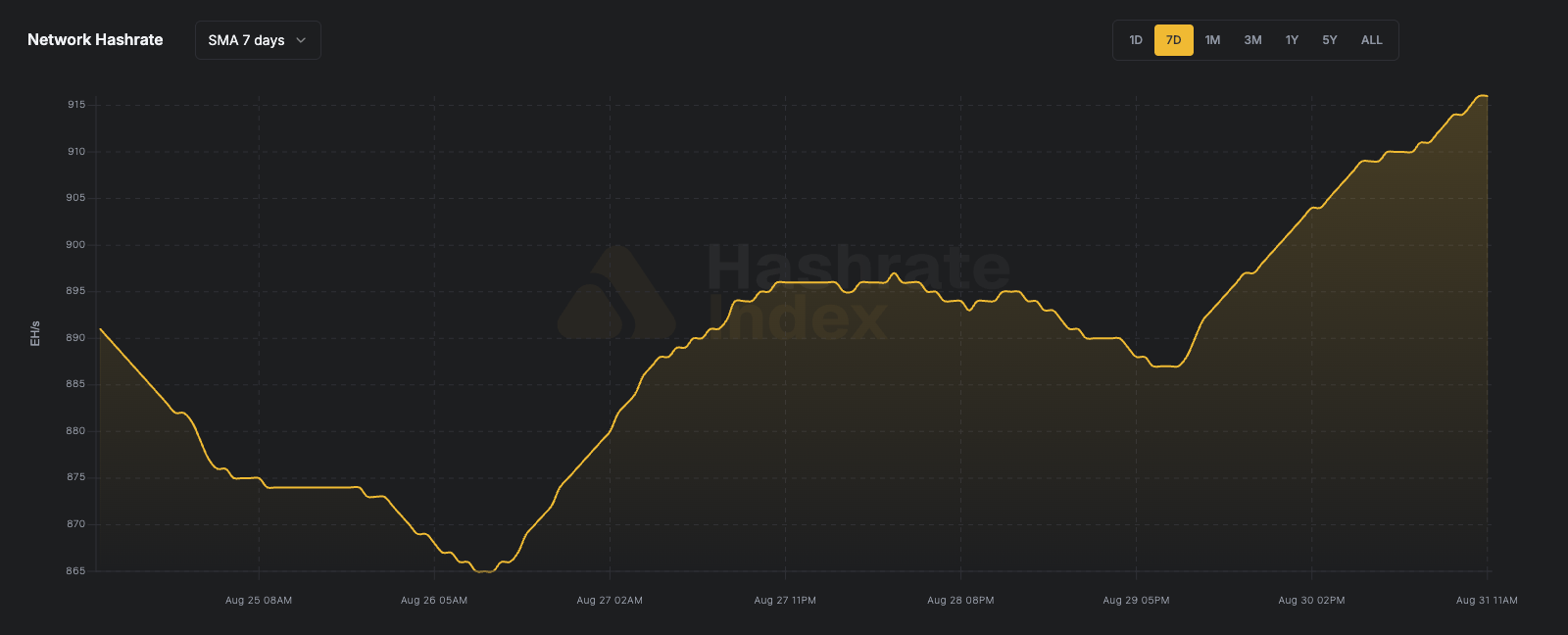
The fundamentals of the mining industry support the rationale for a dedicated ETF. As of early 2025, the Bitcoin network hash rate has continued to reach all-time highs, despite the reduction in block rewards. This indicates that miners are continuing to invest in more efficient hardware, such as the latest S21 models from Bitmain. Furthermore, the geographic distribution of mining has stabilized, with the United States remaining a dominant hub for public mining companies like Marathon Digital Holdings (MARA), Riot Platforms (RIOT), and CleanSpark (CLSK).

Data from the Cambridge Bitcoin Electricity Consumption Index (CBECI) suggests that the industry is also becoming increasingly sustainable, with a growing percentage of mining operations powered by renewable energy sources or stranded gas. For institutional investors who are constrained by Environmental, Social, and Governance (ESG) mandates, an ETF like MNRS provides a way to gain exposure to the sector through companies that are often at the forefront of energy innovation.

Broader Implications for the Cryptocurrency Industry

The launch of MNRS is more than just a new product for Grayscale; it is a signal of the continued institutionalization of the entire digital asset class. When major asset managers create specialized tools for specific sub-sectors, it validates the long-term viability of that industry. For the mining sector, this means easier access to capital markets, potentially lowering the cost of capital for firms looking to expand their operations.

Furthermore, the existence of a robust miners ETF provides a vital tool for market participants to hedge their positions. Institutional miners and large-scale holders can use MNRS to manage risk, while retail investors can use it to gain "leveraged" exposure to Bitcoin bull runs without the complexities of managing individual stocks or options contracts.

As the Bitcoin network approaches its next decade of existence, the role of miners will only become more critical. They are the gatekeepers of transaction finality and the guarantors of the network’s decentralization. By providing a transparent and accessible investment vehicle for this sector, Grayscale is helping to bridge the gap between traditional finance and the decentralized future.

Conclusion and Future Outlook

The Grayscale Bitcoin Miners ETF (MNRS) represents a strategic bet on the long-term growth of the Bitcoin infrastructure. By offering a passively managed, index-tracked fund, Grayscale is providing investors with a sophisticated way to play the Bitcoin market. While the risks associated with the mining industry—including regulatory changes, energy costs, and Bitcoin price volatility—remain significant, the potential for high-margin growth during bullish cycles continues to attract interest.

As the fund begins trading, its performance will serve as a barometer for investor sentiment toward the "backbone" of the digital economy. In an era where Bitcoin is increasingly viewed as "digital gold," the companies that mine this gold are becoming an essential component of a diversified modern portfolio. Grayscale’s latest offering ensures that as the industry evolves, investors have the tools necessary to evolve alongside it, capturing the opportunities presented by the ever-changing landscape of blockchain technology.

July 21, 2026 0 comment
0 FacebookTwitterPinterestEmail
Global Cryptocurrency News

CFTC Self-Reporting Guidelines Could Change Crypto Enforcement Incentives

by Asro July 21, 2026
written by Asro

The advisory, published on the CFTC’s official channels, delineates clear pathways for civil penalty reductions. It outlines the specific conditions under which entities can expect mitigation, emphasizing the importance of not just admitting wrongdoing, but actively assisting the regulatory process and rectifying the underlying issues. While not exclusively tailored for the crypto industry, the guidance’s explicit inclusion of "digital commodity markets" underscores its direct relevance to a sector that has often cited regulatory ambiguity as a significant operational challenge. This distinction is crucial: the CFTC is not crafting a special set of rules for digital asset firms but rather extending a universally applicable policy, making the enforcement landscape more predictable for all regulated entities.

A New Era of Structured Enforcement for Digital Assets

The introduction of these guidelines marks a significant moment in the evolving regulatory narrative surrounding digital assets. For years, the cryptocurrency industry has navigated a complex and often unpredictable legal environment, characterized by a patchwork of state and federal regulations, and frequently, by enforcement actions that followed alleged violations rather than preceding them with clear preventative frameworks. The CFTC, as the primary regulator for derivatives markets and with jurisdiction over "digital commodities," has been at the forefront of this push for clarity and enforcement.

Historically, the CFTC has taken a firm stance against unregistered trading platforms, illegal derivatives offerings, and market manipulation within the digital asset space. Notable enforcement actions include the multi-billion dollar settlement with Binance for operating an unregistered derivatives exchange and failing to implement proper KYC/AML controls, charges against BitMEX for similar transgressions, and the pursuit of decentralized autonomous organizations (DAOs) like Ooki DAO for operating an illegal trading platform. In these instances, the CFTC often acted after significant alleged misconduct had occurred, resulting in substantial penalties and widespread industry disruption. The new advisory seeks to alter this dynamic by providing a strong incentive for firms to come forward before regulatory intervention becomes punitive and public.

The Rationale Behind Self-Reporting Frameworks

Enforcement policy is not merely about meting out punishment; it is fundamentally about shaping incentives and fostering a culture of compliance. If firms perceive that the outcome of self-reporting a violation is identical to being discovered later through an investigation, there is little motivation to voluntarily disclose. Conversely, if there are tangible benefits, such as significantly reduced penalties or a more favorable resolution, firms are far more likely to invest in internal detection mechanisms and come forward proactively. This is the core logic underpinning penalty mitigation frameworks.

Regulators, including the CFTC, aim to achieve several objectives through such policies:

  1. Early Detection and Prevention of Harm: By incentivizing self-reporting, regulators hope to uncover misconduct earlier, potentially preventing it from escalating, impacting more users, or destabilizing markets.
  2. Resource Efficiency: Voluntary disclosures can streamline investigations, reducing the time and resources regulators must expend on discovery and evidence gathering.
  3. Promotion of Internal Controls: The existence of a self-reporting framework encourages firms to develop robust internal compliance programs, monitoring systems, and governance structures capable of identifying potential breaches.
  4. Fairness and Transparency: Clear guidelines reduce uncertainty for regulated entities, allowing them to make informed decisions about disclosure and remediation, and ensuring a more predictable enforcement environment.

This approach is not unique to the CFTC. The U.S. Department of Justice (DOJ), for instance, has long maintained similar policies, such as its Corporate Enforcement Policy under the Foreign Corrupt Practices Act (FCPA), which offers significant benefits, including declinations to prosecute, for companies that voluntarily disclose, cooperate, and remediate. The Securities and Exchange Commission (SEC) also considers cooperation and self-reporting as mitigating factors in its enforcement actions. The CFTC’s advisory aligns with this broader governmental trend towards encouraging corporate accountability through defined incentives.

Specifics of the Advisory: Pillars of Mitigation

The CFTC’s guidance outlines three primary pillars for penalty mitigation:

  1. Self-Reporting: This involves voluntarily disclosing a violation to the CFTC before the agency becomes aware of it through other means. The timing and completeness of the disclosure are critical. Firms that report only after misconduct is obvious, incomplete, or already under investigation are unlikely to receive the same level of benefit.
  2. Cooperation: This entails providing substantial assistance to the CFTC’s investigation. This can include providing relevant documents, making employees available for interviews, assisting in identifying culpable individuals, and refraining from obstructing the investigation. True cooperation requires transparency and a willingness to facilitate the regulatory process.
  3. Remediation: This refers to the corrective actions taken by the firm to address the violation and prevent its recurrence. Remediation might involve improving internal controls, firing or disciplining responsible employees, implementing new training programs, or compensating harmed customers. The CFTC will assess the effectiveness and sincerity of these remedial efforts.

The extent of penalty reduction will depend on the firm’s adherence to these pillars, as well as the seriousness of the violation itself. The advisory explicitly states that self-reporting may reduce penalties but does not erase the violation entirely, nor does it guarantee immunity. For severe misconduct, such as market manipulation or outright fraud that causes significant harm, while reporting might mitigate the penalty, substantial liability will likely remain.

Implications for the Digital Asset Sector

For crypto firms, the CFTC’s advisory is particularly relevant given the sector’s unique characteristics and ongoing regulatory challenges. The digital asset landscape is characterized by:

  • Rapid Innovation and Complexity: New products, services, and technological advancements emerge constantly, often outpacing existing regulatory frameworks. Firms frequently operate across diverse business lines, including derivatives trading, spot markets, custody, lending, staking, decentralized finance (DeFi) integrations, and token listings, each with distinct regulatory considerations.
  • Jurisdictional Ambiguity: The ongoing debate about whether certain digital assets constitute "securities" (under SEC purview) or "commodities" (under CFTC purview) creates inherent uncertainty for businesses. Even within the CFTC’s domain, the exact boundaries of its authority, particularly concerning spot markets, can be subject to interpretation.
  • Global Nature: Many crypto firms operate across multiple jurisdictions, making compliance with disparate national and international regulations a formidable task.

In this environment, compliance failures can inadvertently occur in areas where rules are still developing or where firms misjudge the boundary of CFTC jurisdiction. The self-reporting framework provides a stronger incentive for these firms to proactively identify such problems internally and bring them to regulators before they escalate into full-blown enforcement actions.

Legal analysts and compliance officers within the crypto industry are likely to view this advisory as a welcome, albeit cautious, step towards greater clarity. "This guidance offers a concrete pathway for firms to mitigate potential enforcement risks," noted one legal expert specializing in digital assets, "It shifts the equation from ‘hope we don’t get caught’ to ‘if we find a problem, here’s how we can work with the regulator to minimize impact.’ This strengthens the business case for investing in robust compliance infrastructure."

For crypto derivatives platforms, market makers, brokers, and digital commodity firms, the advisory means that discovering a breach now comes with clearer guidance on how voluntary disclosure might be treated. This can profoundly influence internal board decisions, legal strategy, and the overall internal reporting culture. It may also encourage firms to document their remediation efforts more meticulously, knowing that regulators will scrutinize not just the admission of a problem, but also the effectiveness of the solutions implemented. For example, a crypto firm might need to demonstrate enhanced market surveillance tools, improved customer protection mechanisms, more stringent leverage controls, refined reporting processes, or strengthened product governance frameworks.

Not a "Get Out of Jail Free" Card

It is critical to understand that the CFTC’s advisory is not a "free pass" or a mechanism for firms to escape accountability for serious misconduct. The guidance is designed to encourage better behavior and proactive compliance, not to create loopholes for bad actors. Firms engaged in market manipulation, misleading customers, or violating fundamental derivatives rules will still face significant consequences.

The precise benefit of self-reporting will depend on a multitude of factors, including:

  • Timing: Was the report made truly voluntarily and promptly upon discovery, or only after an impending investigation became apparent?
  • Completeness: Was the disclosure comprehensive and truthful, or did it attempt to conceal aspects of the misconduct?
  • Cooperation: Did the firm genuinely assist the investigation, or did it obstruct or delay the process?
  • Remediation: Were the corrective actions meaningful and effective in preventing future violations?
  • Seriousness of the Breach: The nature and extent of the harm caused by the violation will heavily influence the ultimate penalty. For instance, a technical reporting error might receive significantly greater mitigation than a deliberate scheme to defraud customers.

This emphasis on the nuances of disclosure and remediation underscores the paramount importance of internal compliance systems. A firm cannot self-report a problem it cannot detect. Therefore, robust monitoring, comprehensive audit trails, effective risk controls, and strong governance processes become integral components of the enforcement equation. Firms that have invested in these areas will be in a far better position to identify and address issues proactively, aligning with the spirit of the new CFTC guidelines.

Broader Regulatory Shift and Future Outlook

The CFTC’s advisory is part of a broader, discernible shift in the approach to crypto regulation. While enforcement actions will undoubtedly continue, there is a clear movement towards a more structured, framework-driven regulatory environment. Agencies are increasingly moving from purely reactive, headline-grabbing actions to proactive consultations, issuance of guidelines, and the establishment of clearer compliance expectations.

This shift, while not always embraced by an industry often wary of regulation, provides a degree of predictability that was previously lacking. It means that market participants are receiving more explicit information about how regulators will judge conduct, what constitutes acceptable practice, and the pathways for mitigating risks when problems arise. For serious firms committed to long-term growth and institutional adoption, this structured approach can be immensely useful. It creates a more mature enforcement environment where cooperation and remediation are recognized and valued, rather than being treated as irrelevant in the face of a violation.

For the crypto sector, the signal is unequivocal: robust compliance infrastructure is no longer optional; it is a foundational requirement for sustainable operation. The CFTC is extending an incentive to come forward early, but it is simultaneously reinforcing the message that digital commodity markets operate within a well-defined regulatory perimeter. Companies that internalize this message and proactively adapt their operations, governance, and risk management systems will likely be better prepared for the next phase of institutional crypto adoption and a more regulated future. This advisory serves as a tangible step towards fostering a more accountable and transparent digital asset ecosystem, benefiting both market participants and consumers.

July 21, 2026 0 comment
0 FacebookTwitterPinterestEmail
Bitcoin & Core Networks

MicroStrategy’s Billion-Dollar Cash Reserves Fuel Saylor’s Defense Amid Share Sale and Bitcoin Purchase Controversy

by Dwi Wanna July 21, 2026
written by Dwi Wanna

MicroStrategy, the prominent business intelligence firm turned corporate Bitcoin titan, is once again at the center of a heated debate regarding its aggressive cryptocurrency acquisition strategy and its implications for shareholder value. The company’s cash reserves, reportedly nearing an unprecedented $1 billion, have emerged as a pivotal element in Executive Chairman Michael Saylor’s robust defense of recent share sales and subsequent Bitcoin purchases, actions that have drawn criticism from some market analysts. This financial milestone not only underscores the company’s increasing liquidity but also provides a strategic buffer as it navigates the volatile cryptocurrency market and its unique corporate structure.

The Genesis of the Controversy: Share Sales and Bitcoin Acquisitions

The current dispute gained traction following a series of financial maneuvers by MicroStrategy that commenced in early June. On June 8, the company filed an 8-K report with securities regulators, disclosing the sale of more than 1.4 million shares of its MSTR common stock, generating approximately $181 million in capital. This capital raise was executed through an at-the-market (ATM) offering, a common mechanism for public companies to raise funds periodically by selling shares directly into the open market. While such offerings are not unusual for MicroStrategy, which frequently leverages equity to expand its Bitcoin holdings, the timing coincided with other activities that heightened investor scrutiny.

Adding to the complexity, the same week saw MicroStrategy executives selling approximately $15 million worth of their personal shares. The company publicly attributed these sales to meeting tax obligations, a standard practice for executives whose compensation often includes stock options or restricted stock units that become taxable upon vesting. However, the optics of both the company and its leadership offloading shares within a short timeframe inevitably raised concerns among investors already closely monitoring MSTR’s stock performance.

Further compounding the unease, reports surfaced that MicroStrategy had sold 32 Bitcoin in the preceding week. This particular transaction stood out, as MicroStrategy has famously championed a "Bitcoin-only" treasury strategy, with sales being exceptionally rare and typically only for operational purposes or minor adjustments. While 32 Bitcoin represents a minuscule fraction of its vast holdings, any deviation from its stated accumulation strategy tends to send ripples through the investor community, prompting questions about the company’s long-term commitment or short-term liquidity needs.

The perceived "selling activity" on multiple fronts sharpened existing concerns around the stock. Critics questioned whether these moves signaled a shift in strategy or underlying financial pressure. However, MicroStrategy swiftly pivoted back to its core mission. On the following Monday, the company announced a significant Bitcoin purchase, acquiring 1,550 BTC for approximately $101 million, at an average price of $65,332 per coin. This acquisition brought the company’s total Bitcoin holdings to an impressive 845,256 BTC, solidifying its position as the largest corporate holder of the digital asset.

The Disputed Metric: BTC Yield vs. Total Shareholder Accretion

At the heart of the current debate lies the interpretation of shareholder value in a company whose primary asset is Bitcoin. Bitcoin analyst Matthew Kratter initiated the public discussion on the social media platform X, arguing that MicroStrategy’s own data indicated a detrimental outcome for shareholders after the recent capital raise. Kratter’s argument centered on a metric he termed "BTC Yield," which he defined as tracking the change in Bitcoin held per outstanding share.

Saylor Pushes Back Against Dilution Accusations After New Bitcoin Bet

He pointed to an updated company chart that showed Bitcoin holdings at 843,706 BTC (before the latest purchase) while the number of diluted shares outstanding had climbed to 384,180. Kratter contended that the share count had increased at a faster rate than the Bitcoin count, thereby diluting the Bitcoin ownership for existing shareholders. In his view, this implied that shareholders were worse off, as their proportional stake in the company’s underlying Bitcoin assets had diminished.

Michael Saylor, a vocal proponent of Bitcoin and MicroStrategy’s strategy, quickly and directly dismissed Kratter’s claim. Saylor took to X, asserting that "BTC Yield measures the increase in BTC per share, not total shareholder accretion." He elaborated that this metric, by its very definition, does not account for cash or any other non-Bitcoin assets the company holds. Saylor emphasized that the transaction in question not only added 1,550 Bitcoin to MicroStrategy’s balance sheet but also significantly bolstered its USD reserves by $100 million.

According to Saylor, when both of these assets – the newly acquired Bitcoin and the increased cash reserves – are factored into the equation, the deal was unequivocally "accretive" to shareholders, not dilutive. Accretion, in this context, refers to an increase in the company’s overall value per share, taking into account all assets and liabilities. Saylor’s argument posits that while the Bitcoin per share might have temporarily decreased due to an increase in share count, the total enterprise value per share improved due to the net increase in both valuable assets (Bitcoin and cash). This perspective shifts the focus from a singular asset metric to a more comprehensive assessment of the company’s financial health and future capacity for value creation.

MicroStrategy’s Unique Bitcoin Strategy: A Brief History

To fully appreciate the nuances of this debate, it’s essential to understand MicroStrategy’s unparalleled corporate pivot. In August 2020, under the leadership of then-CEO Michael Saylor, MicroStrategy announced its groundbreaking decision to adopt Bitcoin as its primary treasury reserve asset, replacing its traditional cash holdings. This move was driven by Saylor’s conviction that Bitcoin offered a superior store of value compared to fiat currencies, which he viewed as susceptible to inflation and devaluation.

Since then, MicroStrategy has embarked on an aggressive accumulation strategy, utilizing various financial instruments, including convertible notes, senior secured notes, and at-the-market equity offerings, to raise capital specifically for purchasing Bitcoin. This strategy has transformed MicroStrategy into a de facto Bitcoin exchange-traded fund (ETF) for many investors, offering a publicly traded vehicle to gain exposure to Bitcoin without directly owning the cryptocurrency. Saylor himself has become one of the most prominent and vocal advocates for Bitcoin, frequently appearing in interviews and on social media to champion its benefits.

This unique corporate structure means MicroStrategy’s stock performance is highly correlated with Bitcoin’s price movements. However, it also means the company faces constant scrutiny regarding its financial engineering and the impact of its capital-raising activities on existing shareholders. The debate over metrics like "BTC Yield" highlights the challenge of valuing a company that operates on the frontier of traditional finance and the nascent digital asset economy.

A Chronology of Recent Events

  • Week of June 1, 2026: MicroStrategy reportedly sells 32 Bitcoin, an unusual move for the company, sparking minor investor concern.
  • June 8, 2026: MicroStrategy files an 8-K with the SEC, disclosing the sale of over 1.4 million MSTR shares for approximately $181 million through an ATM offering.
  • June 8, 2026: MicroStrategy shareholders approve semi-monthly dividends on its STRC preferred stock, underscoring the company’s need for reliable liquid reserves.
  • Same week (leading up to June 8): MicroStrategy executives sell approximately $15 million worth of their own shares, attributing the sales to tax obligations.
  • June 9, 2026 (Monday): MicroStrategy announces a new Bitcoin purchase, acquiring 1,550 BTC for $101 million at an average price of $65,332 per coin. This brings the total holdings to 845,256 BTC.
  • June 9, 2026 (or shortly after): Michael Saylor responds to Matthew Kratter’s "BTC Yield" criticism on X, arguing that total shareholder accretion, including cash reserves, makes the transaction accretive.
  • Ongoing: The company’s cash reserves approach $1 billion, providing a significant financial cushion.

The Billion-Dollar Buffer: Strategic Importance of Cash Reserves

Saylor Pushes Back Against Dilution Accusations After New Bitcoin Bet

The accumulation of nearly $1 billion in cash reserves is a significant development for MicroStrategy, extending beyond the immediate debate on dilution. In a company deeply intertwined with the volatile cryptocurrency market, a substantial cash buffer offers multiple strategic advantages:

  1. Operational Stability: While MicroStrategy’s primary focus is Bitcoin, it remains a software company with ongoing operational costs, including research and development, sales, marketing, and administrative expenses. A robust cash position ensures the company can meet these obligations without being forced to sell Bitcoin during unfavorable market conditions.
  2. Strategic Flexibility: Access to liquid reserves provides MicroStrategy with the flexibility to seize opportunities, whether for further Bitcoin acquisitions if prices dip, or for potential investments in its core software business. It also allows the company to weather market downturns without immediate financial strain.
  3. Dividend Payouts: The significance of the cash cushion is further highlighted by the recent approval of semi-monthly dividends on its STRC preferred stock by MicroStrategy shareholders on June 8. Sustaining these regular payouts requires reliable access to liquid reserves. Without sufficient cash, the company might face pressure to generate revenue through its software business or, in a worst-case scenario, liquidate a portion of its Bitcoin holdings, which would contradict its long-term strategy.
  4. Market Confidence: A strong balance sheet, characterized by substantial cash reserves, can instill greater confidence among investors, lenders, and creditors. It signals financial prudence and resilience, even as the company pursues an aggressive and unconventional treasury strategy. It helps to mitigate perceptions of excessive risk-taking.

Financial Metrics and Shareholder Value Debate

MicroStrategy now holds an impressive 845,256 Bitcoin, valued at nearly $52 billion at current market prices (assuming a Bitcoin price of approximately $61,500 based on the provided chart). The company’s year-to-date performance figures continue to reflect its growth: BTC Yield for the year stands at 12.8%, indicating the growth in Bitcoin per share over the period, while BTC Gain YTD registers an increase of 86,328 Bitcoin in its holdings.

However, these metrics are subject to ongoing interpretation. The "Bitcoin per share" metric, while useful for tracking direct exposure, doesn’t capture the entirety of MicroStrategy’s financial position. The debate over whether recent capital raises are "accretive" or "dilutive" underscores the complexity of valuing companies with such a unique treasury strategy.

When a company issues new shares, it inherently increases the denominator in per-share metrics. If the value added by the capital raised (in this case, $101 million in Bitcoin and $100 million in cash) is proportionally greater than the dilution caused by the new shares, then the transaction is considered accretive to overall shareholder value. If the value added is less, it’s dilutive. Saylor’s argument hinges on the inclusion of the $100 million in USD reserves as a valuable asset that enhances the company’s total enterprise value, thereby making the transaction accretive despite a potential temporary dip in Bitcoin per share. This perspective aligns with a broader financial analysis that looks at the overall health and future prospects of the company, rather than isolating a single asset.

Market Perception and Future Outlook

The market’s perception of MicroStrategy remains divided. Enthusiastic Bitcoin maximalists often view MSTR as a highly efficient and leveraged way to invest in Bitcoin, trusting Saylor’s long-term vision. Skeptics, however, point to the inherent volatility of Bitcoin, the risks associated with a highly concentrated asset strategy, and the potential for dilution through continuous equity raises. The company’s stock, MSTR, typically experiences significant price swings, mirroring Bitcoin’s volatility but often with an added premium or discount based on market sentiment and company-specific news.

The ongoing discussions about metrics like BTC Yield highlight the need for clearer, standardized methods to evaluate companies that adopt unconventional treasury strategies. As more corporations explore holding digital assets, the financial industry will likely develop more sophisticated frameworks to assess their value creation.

Moving forward, MicroStrategy’s ability to maintain its growth trajectory, manage its capital structure effectively, and continue to accumulate Bitcoin without unduly diluting shareholder value will be critical. The nearly $1 billion cash reserve offers a significant strategic advantage, providing stability and flexibility in a dynamic market. However, the company will face continued scrutiny from analysts and investors, who will meticulously weigh the benefits of Bitcoin accumulation against the potential costs of capital raises and the broader implications for long-term shareholder returns. The narrative of MicroStrategy will continue to be a fascinating case study in corporate innovation, financial engineering, and the evolving landscape of digital asset integration.

July 21, 2026 0 comment
0 FacebookTwitterPinterestEmail
Bitcoin & Core Networks

Zcash (ZEC) Navigates Critical $550-$580 Resistance Zone as Bulls Aim for Sustained Breakout

by Asep Darmawan July 21, 2026
written by Asep Darmawan

The cryptocurrency Zcash (ZEC) is currently positioned at a pivotal technical juncture, with market participants keenly observing whether buyers can successfully transform the formidable $550–$580 bear supply zone into a robust support level. This critical area, which has historically acted as a ceiling for price appreciation, now represents the immediate challenge for ZEC following a period of steady recovery from recent lows. The outcome of this encounter is expected to dictate the asset’s near-term directional trajectory, with analysts emphasizing the necessity of a convincing volume surge to confirm any sustained breakout.

Current Market Dynamics and the $550-$580 Hurdle

Zcash’s price action reflects a market that has demonstrated resilience and regained upward momentum after experiencing a prior correction. However, this recovery now confronts a significant supply region, clearly delineated across both 4-hour and daily timeframes. While the overarching trend for ZEC has shown signs of improvement, a comprehensive review of technical indicators suggests a prevailing sentiment of caution among traders. Many are awaiting definitive confirmation signals before committing to positions anticipating a further ascent. The $550-$580 range is not merely a psychological barrier but a confluence of technical resistance points, making its breach a prerequisite for a more aggressive bullish continuation.

Analyst Perspectives: The Resistance Challenge

Prominent crypto analyst @0xWhaleHL recently underscored the significance of the $550-$580 zone, noting that ZEC underwent a correction subsequent to retesting the lower boundary of this bear supply area. The analyst highlighted that ZEC currently remains beneath the floor of its 4-hour supply zone, concurrently trading within a broader daily supply region. The accompanying Binance perpetual futures chart, referenced by the analyst, further illustrates this challenge by overlaying the 200-period Exponential Moving Average (EMA) on both 4-hour and daily charts. This, alongside weekly and monthly reference levels and precisely defined supply and demand zones, paints a comprehensive picture of the current market structure. According to @0xWhaleHL’s analysis, these overlapping resistance levels are collectively acting to suppress upside momentum, solidifying the $550-$580 band as the most crucial obstacle for bulls to surmount before any substantial breakout can materialize.

Analyst Perspectives: The Bullish Foundation

Zcash (ZEC) Price Prediction: Can Buyers Flip the $550–$580 Bear Supply Zone Into Support?

Despite the immediate resistance, another respected market analyst, Leo524, maintains a constructive outlook on ZEC’s price action. Leo524 posits that Zcash continues to exhibit a healthy, underlying bullish structure, characterized by the consistent formation of higher lows. Following its previous decline, buyers have demonstrated a robust defense of the key $440-$480 demand zone, preventing further downside. "As long as this area holds, the bullish structure remains valid," Leo524 articulated, adding that concrete confirmation of a continued uptrend would require "a clean break above the current resistance area."

This perspective suggests that even if ZEC experiences minor pullbacks, as long as it respects the $440-$480 support, the broader bullish thesis remains intact. A successful breakout above the $550-$580 resistance, ideally supported by strong trading volume and a daily close above this level, could pave the way for ZEC to target higher price levels, specifically $621 and subsequently $688. Leo524 also advised patience, noting that a healthy pullback into support before an eventual breakout could, in fact, strengthen the overall setup by allowing for a re-accumulation phase, rather than weakening it. Conversely, a definitive loss of the $440-$480 demand zone would effectively invalidate the current bullish structure, shifting market attention back towards potential downside risks and a re-evaluation of ZEC’s short-to-medium term prospects.

Understanding Zcash: A Pioneer in Privacy

To fully appreciate the significance of ZEC’s current technical battle, it’s essential to understand its fundamental value proposition. Zcash, launched in October 2016, is a decentralized cryptocurrency that prioritizes user privacy and selective transparency. It was created by Zooko Wilcox-O’Hearn and is developed by the Electric Coin Company (ECC). Unlike Bitcoin, where all transactions are publicly viewable on the blockchain, Zcash offers users the option to conduct "shielded" transactions using zero-knowledge proofs (specifically, zk-SNARKs). This cryptographic breakthrough allows users to prove that a transaction is valid without revealing sensitive information such as the sender, recipient, or amount involved.

This privacy feature positions Zcash as a vital tool for individuals and entities seeking to protect their financial data, making it appealing for various use cases, from corporate treasuries to personal financial sovereignty. Over the years, Zcash has undergone several significant upgrades, including the "Sapling" upgrade in 2018, which significantly improved the efficiency of shielded transactions, and the "Halo" upgrade (part of NU5 in 2022), which eliminated the need for a trusted setup, enhancing the protocol’s security and decentralization. The ongoing development and commitment to cutting-edge cryptography underscore Zcash’s long-term potential, contributing to the underlying value that traders consider during technical analysis.

Broader Market Context and Privacy Coin Sentiment

Zcash’s performance is not isolated from the broader cryptocurrency market. The past year has seen fluctuating sentiments across digital assets, influenced by macroeconomic factors, regulatory developments, and shifts in investor risk appetite. Privacy coins, in particular, often face unique scrutiny due related to potential misuse, though their utility for legitimate privacy remains a strong argument for their existence. Zcash, Monero (XMR), and Dash (DASH) are among the most prominent privacy-focused cryptocurrencies, each employing different methods to achieve anonymity.

Zcash (ZEC) Price Prediction: Can Buyers Flip the $550–$580 Bear Supply Zone Into Support?

In periods of heightened regulatory uncertainty or increased demand for digital anonymity, privacy coins can experience surges in interest. Conversely, broader market downturns or specific regulatory crackdowns can suppress their prices. ZEC’s recent recovery aligns with a general uptick observed in many altcoins, suggesting a renewed appetite for risk assets within the crypto ecosystem. However, sustained growth for ZEC will likely depend on its ability to not only overcome technical resistance but also navigate the evolving landscape of privacy regulations and maintain its competitive edge in a niche yet important sector of the crypto market. Its current market capitalization of approximately $9 billion, coupled with over $500 million in 24-hour trading volume, indicates sufficient liquidity and investor interest to support significant price movements, should a decisive technical break occur.

Technical Landscape: Oscillators and Moving Averages

A detailed examination of TradingView’s latest technical overview for ZEC presents a nuanced and somewhat balanced picture. The overall indicators summary currently sits at "Neutral," implying that neither bullish nor bearish forces hold an overwhelming advantage across various timeframes. This equilibrium suggests a period of consolidation where buyers and sellers are closely matched, leading to indecisive price action.

Momentum indicators further reinforce this cautious stance. The Relative Strength Index (RSI 14), a popular oscillator that measures the speed and change of price movements, is classified as neutral. A neutral RSI reading (typically between 40 and 60) indicates that the asset is neither overbought nor oversold, leaving room for movement in either direction without immediate pressure for a reversal. Similarly, the Stochastic %K (14,3,3), Commodity Channel Index (CCI 20), Moving Average Convergence Divergence (MACD 12,26), and Williams %R (14) all reflect neutral readings. The absence of strong buy or sell signals from this group of oscillators suggests that short-term price momentum is currently lacking a clear dominant force. In such a scenario, traders often turn their attention to price action, volume, and key support/resistance levels as the primary determinants of the next significant move.

In contrast to the neutral oscillator readings, moving averages paint a more optimistic picture for ZEC. TradingView’s broader technical assessment assigns a "Strong Buy" bias to moving averages. This favorable alignment suggests that ZEC’s current price is trading above several key trend-following indicators, including commonly monitored 10, 20, 30, 50, 100, and 200-period Exponential Moving Averages (EMAs) and Simple Moving Averages (SMAs). While specific numerical values for these moving averages were not provided in the original data, their collective "Strong Buy" signal implies that, despite the short-term consolidation beneath resistance, the medium-term trend continues to favor buyers. Moving averages often act as dynamic support levels during uptrends and dynamic resistance during downtrends. A price consistently above these averages indicates underlying strength and sustained buying pressure over longer periods. This divergence between short-term momentum (neutral oscillators) and medium-term trend (bullish moving averages) highlights the current tension in the market, where a crucial decision point is imminent.

Furthermore, pivot point levels, though listed without specific numerical values, remain important reference points for traders. These levels, derived from previous high, low, and closing prices, serve as potential areas where price action might reverse or accelerate. They will be closely watched in conjunction with the $550-$580 resistance zone for confirmation of breakouts or rejections.

Potential Scenarios and Price Targets

Zcash (ZEC) Price Prediction: Can Buyers Flip the $550–$580 Bear Supply Zone Into Support?

The technical outlook for Zcash remains constructively biased, yet confirmation is still paramount before a more robust bullish continuation can be firmly established. The immediate focus for traders and analysts alike is squarely on the $550-$580 resistance area, which has been identified by multiple sources as the key determinant.

Bullish Scenario: A successful breach of the $550-$580 resistance, characterized by a significant surge in trading volume and a daily close above this critical threshold, would dramatically strengthen the case for further upside. Such a move would signal that buying pressure has definitively overcome seller resistance, flipping the bear supply zone into a newly established support. Following such a breakout, the path would likely open towards initial targets of $621, with a subsequent push towards $688. These targets often align with Fibonacci extension levels or previous significant price highs, representing areas where profit-taking might occur but also confirming the strength of the new uptrend. The consistent formation of higher lows, as noted by Leo524, would be further validated in this scenario, cementing the bullish structure.

Bearish Scenario: Conversely, if ZEC fails to break above the $550-$580 resistance and instead faces a decisive rejection, the immediate outlook would shift. A sustained rejection could lead to a retest of the lower support levels. The primary defense line for bulls remains the $440-$480 demand zone. Losing this critical support area would invalidate the current sequence of higher lows, signaling a breakdown in the bullish structure. Such an event would likely trigger increased selling pressure, potentially pushing ZEC back towards previous lows or even establishing new ones, depending on the severity of the market reaction and broader crypto market sentiment. Traders would then look for the next significant support levels further down the chart.

The Road Ahead: Investor Outlook

Zcash’s journey from recent lows to its current standoff at a critical resistance level highlights the dynamic nature of cryptocurrency markets. The interplay between fundamental value (ZEC’s privacy features, ongoing development) and technical market structure (supply/demand zones, moving averages, oscillators) is currently at a fascinating equilibrium. Investors and traders are in a waiting game, closely monitoring price action, volume trends, and the ability of buyers to sustain momentum.

The market structure for ZEC remains highly dependent on the outcome of its battle with the $550-$580 zone. Whether bulls can muster the strength and conviction, backed by significant volume, to convert this long-standing resistance into support will be the defining factor. For now, ZEC appears to be transitioning from a phase of recovery into a decisive test of its resilience and the strength of its underlying bullish momentum. The next few trading sessions are expected to provide crucial clarity on Zcash’s immediate future trajectory, making it a key asset to watch in the cryptocurrency landscape.

July 21, 2026 0 comment
0 FacebookTwitterPinterestEmail
Newer Posts
Older Posts

Recent Posts

  • TRON DAO Expands MetaMask Integration Across Major Ecosystem dApps to Streamline Onchain Finance Access
  • Navigating the Bear Market: Why Analyst Alex Mason Views Bitcoin’s Drop to $59,000 as Part of a Predictable Cycle
  • Deconstructing the $10 Trillion XRP Valuation Scenario and the Realities of Institutional Blockchain Adoption
  • Announcing a Trillion Dollar Security grant for WEBCAT
  • Behind the Scales: How Artist Wojtek Fus and the Team Brought a Petrified Serpent to Life for Paul Coulthard’s God of Bones

Recent Comments

No comments to show.
  • Facebook
  • Twitter

@2021 - All Right Reserved. Designed and Developed by PenciDesign


Back To Top
Crypto Gohan
  • Home

We are using cookies to give you the best experience on our website.

You can find out more about which cookies we are using or switch them off in .

Crypto Gohan
Powered by  GDPR Cookie Compliance
Privacy Overview

This website uses cookies so that we can provide you with the best user experience possible. Cookie information is stored in your browser and performs functions such as recognising you when you return to our website and helping our team to understand which sections of the website you find most interesting and useful.

Strictly Necessary Cookies

Strictly Necessary Cookie should be enabled at all times so that we can save your preferences for cookie settings.