• Home
Crypto Gohan
keep your memories alive
Crypto Trading & Analysis

U.S. Treasury Designates Four New Cryptocurrency Addresses Linked to Iran’s Central Bank, Freezing Over $131 Million in Stablecoins

by Reynand Wu July 19, 2026
written by Reynand Wu

The U.S. Department of the Treasury’s Office of Foreign Assets Control (OFAC) has significantly escalated its efforts to counter illicit financial activities by Iran, announcing on Tuesday the designation of four additional cryptocurrency addresses linked to the Central Bank of Iran. This move, detailed in an update to OFAC’s existing sanctions against the Iranian financial institution, aims to choke off channels through which the regime allegedly circumvents international sanctions, finances its operations, and supports regional proxies, including the U.S.-designated terror group Hezbollah. On-chain data analysis immediately following the announcement revealed that these newly identified wallets had collectively received approximately $165 million in stablecoins. Crucially, their issuer, Tether, acting on the designation, promptly froze balances totaling $131 million, effectively rendering a substantial portion of these funds inaccessible to the Iranian regime.

This latest action by OFAC represents a strategic expansion of the financial blockade targeting the Central Bank of Iran. The U.S. Treasury has long contended that Iran has increasingly leveraged cryptocurrency to circumvent the debilitating effects of international sanctions, a practice that enables the regime to fund its domestic and international activities. The funds are allegedly channeled to support a range of operations, including the financing of its own military and security apparatus, as well as providing financial lifelines to affiliated groups in the region. The designation of these specific cryptocurrency addresses underscores OFAC’s commitment to tracing and disrupting these illicit financial flows within the digital asset ecosystem.

The scrutiny of the Central Bank of Iran’s cryptocurrency operations has intensified considerably in recent months, particularly in the wake of escalating regional conflicts. This heightened attention has prompted more aggressive enforcement actions. Just last month, OFAC took the significant step of sanctioning major Iranian cryptocurrency exchanges. These platforms were identified as key conduits through which the Central Bank facilitated the movement of funds into and out of stablecoins, highlighting a sophisticated, albeit illicit, financial network. The consecutive actions demonstrate a multi-pronged strategy by the U.S. government to dismantle Iran’s ability to utilize digital assets for sanctioned purposes.

Further compounding the challenges for Iran’s financial maneuvering, reports emerged during the height of regional tensions of proposals by Iranian actors to implement a cryptocurrency-based toll system for vessels transiting the Strait of Hormuz. Chainalysis, a blockchain analysis firm that has been instrumental in identifying these illicit flows, assessed that shipping companies complying with such a toll would face severe sanctions exposure from the United States and its allies. This proposal, if implemented, would have represented another attempt by Iran to leverage digital currencies for economic gain and exert influence over critical global trade routes.

Iran’s Strategic Reliance on Stablecoins

Chainalysis’s extensive research into the cryptocurrency habits of the Iranian regime reveals a pronounced preference for stablecoins. This strategic choice is understandable from the perspective of illicit actors seeking to operate within the digital asset space. Stablecoins are designed to maintain a stable value, typically pegged to a fiat currency like the U.S. dollar, making them highly liquid and widely accepted globally. These characteristics are invaluable for any financial actor, legitimate or illicit, as they facilitate seamless transactions and reduce the volatility risks inherent in other cryptocurrencies.

However, this very stability and the centralized nature of stablecoin issuance also present a significant vulnerability for illicit actors. Unlike decentralized cryptocurrencies, stablecoin issuers, such as Tether, have the technical capability and often the legal obligation to freeze assets held in specific wallet addresses at the direction of law enforcement and regulatory agencies. This feature has become a powerful tool for OFAC in its pursuit of sanctioned entities.

Since OFAC’s initial designations and subsequent actions, Tether has demonstrated its willingness to cooperate with U.S. authorities. The company has now frozen nearly $475 million from wallet addresses previously identified by OFAC as being controlled by the Central Bank of Iran. This cumulative freezing of funds represents a substantial financial impediment to the Iranian regime, effectively rendering a significant portion of its digital asset holdings inaccessible. The mechanism of freezing a stablecoin balance on a specific address prevents the holder from initiating any outgoing transactions or spending those funds, effectively immobilizing them.

On-chain analysis, conducted using advanced tools like Chainalysis Reactor, has provided granular insights into the flow of funds into these newly designated wallets. The data indicates that the addresses added to OFAC’s sanctions list received their funds originating upstream from an institutional liquidity provider and an Asia-based payment processor. This tracing of the funds’ origin is crucial for OFAC as it allows for the identification of potential intermediaries and further avenues for sanctions enforcement. Understanding these upstream flows is critical to dismantling the entire network of financial support that the Central Bank of Iran attempts to build through digital assets.

Chronology of OFAC Actions Against Iran’s Crypto Holdings

The recent designation of four new cryptocurrency addresses by OFAC is not an isolated event but rather a continuation of a sustained campaign to curb Iran’s use of digital assets for illicit purposes. Tracing the timeline of these actions provides a clearer picture of the escalating U.S. government response:

OFAC Sanctions Iran Central Bank Crypto Wallets, Freezing $131M in Stablecoins
  • September 2025: OFAC first signaled its intent to target Iran’s "shadow crypto banking network" by sanctioning entities and individuals involved in facilitating illicit digital asset transactions for Iran. This marked an early recognition of the growing trend and a commitment to address it.
  • June 2026: In a significant escalation, OFAC sanctioned major Iranian cryptocurrency exchanges. This action directly targeted the infrastructure that the Central Bank of Iran and other sanctioned entities were reportedly using to convert fiat currency into stablecoins and vice versa, aiming to disrupt the on-ramps and off-ramps of this illicit financial system.
  • April 2026: Further refining its strategy, OFAC updated its designation of the Central Bank of Iran to specifically include cryptocurrency addresses. This indicated a move towards directly targeting the digital wallets themselves, rather than solely focusing on the exchanges facilitating the transactions.
  • July 2026 (Present Action): The most recent action, announced on Tuesday, significantly broadens the scope of the Central Bank of Iran’s designation by adding four new cryptocurrency addresses. This latest move, coupled with Tether’s immediate freezing of over $131 million, underscores the ongoing and intensifying nature of OFAC’s efforts to seize and block illicitly obtained digital assets.

This chronological progression demonstrates a strategic evolution in OFAC’s approach, moving from broader sanctions against facilitators to more direct and targeted actions against the financial instruments and infrastructure themselves.

Supporting Data and Analysis

The figures released by OFAC and corroborated by on-chain analysis paint a stark picture of the scale of Iran’s alleged cryptocurrency operations. The $165 million in stablecoins received by the four newly designated wallets represent a substantial sum, indicative of the volume of transactions being processed. The immediate freezing of $131 million by Tether is a testament to the effectiveness of regulatory pressure on stablecoin issuers and the inherent traceability of blockchain transactions.

Chainalysis’s own research has provided crucial insights into the types of stablecoins used and their velocity. While the specific stablecoins involved in this latest designation have not been explicitly detailed, OFAC’s previous actions and broader investigations have often highlighted the use of USDT (Tether) and other USD-pegged stablecoins due to their liquidity and widespread acceptance.

The tracing of funds originating from an institutional liquidity provider and an Asia-based payment processor is particularly noteworthy. This suggests a degree of sophistication in Iran’s efforts to obscure the ultimate beneficial ownership of these funds. Institutional liquidity providers are often sophisticated financial entities that may facilitate large-volume trades, while payment processors can act as intermediaries in various cross-border transactions. Identifying these entities, even if they are not directly complicit, is a crucial step in understanding the broader network of financial actors involved in illicit transactions.

The implications of these actions extend beyond the immediate financial impact on Iran. For the cryptocurrency industry, it reinforces the ongoing tension between decentralization and regulatory oversight. While blockchain technology offers transparency, the ability of issuers like Tether to freeze assets highlights the centralized points of control that regulators can leverage. This also puts pressure on exchanges and other service providers to enhance their know-your-customer (KYC) and anti-money laundering (AML) procedures to avoid inadvertently facilitating sanctioned activities.

Official Responses and Broader Impact

OFAC’s actions are driven by a clear mandate to protect U.S. national security and foreign policy interests by disrupting illicit financial flows. The Treasury Department has consistently stated its commitment to preventing state and non-state actors from using the global financial system, including emerging digital asset markets, to fund terrorism, proliferation, or other destabilizing activities.

While specific statements from the Central Bank of Iran or other Iranian government entities regarding these latest designations are not immediately available in the provided text, historically, Iran has often denied allegations of using cryptocurrency to circumvent sanctions, framing such accusations as politically motivated.

The broader impact of these designations is multi-faceted. For the Iranian regime, it represents a continued tightening of the financial noose, making it more difficult and expensive to access funds necessary for its operations and support networks. This can lead to increased pressure on the regime’s domestic economy and its ability to project influence abroad.

For the international community, these actions underscore the growing importance of robust regulatory frameworks for digital assets. The ability of OFAC to effectively track and freeze these funds demonstrates the power of combining blockchain analytics with traditional financial enforcement tools. It also highlights the ongoing challenge of combating illicit finance in an increasingly interconnected and technologically advanced world. The successful freezing of these funds by Tether serves as a strong deterrent to other illicit actors and a clear signal to the broader cryptocurrency ecosystem about the consequences of facilitating sanctioned activities. The U.S. Treasury’s persistent efforts suggest that this will remain a key area of focus in its foreign policy and national security strategy.

July 19, 2026 0 comment
0 FacebookTwitterPinterestEmail
Crypto Trading & Analysis

Investor Borrowing in the U.S. Stock Market Reaches Historic Levels, Signaling Potential Systemic Risk

by Raul Delapena Setiawan July 19, 2026
written by Raul Delapena Setiawan

Investor borrowing in the U.S. stock market has surged to a staggering record of $1.5 trillion in June, a level that historically precedes elevated risk across the financial system. This unprecedented accumulation of margin debt, which allows investors to borrow money from their brokers to purchase securities, has intensified as market participants seek to amplify their returns, raising concerns among financial analysts and regulators about potential systemic vulnerabilities.

The Alarming Surge in Margin Debt

The latest figures, compiled by Adam Kobeissi and citing data from the Financial Industry Regulatory Authority (FINRA), the New York Stock Exchange (NYSE), and JPMorgan, reveal a relentless upward trajectory in margin debt. In June alone, margin debt saw its third consecutive monthly increase, adding an impressive $281.2 billion, representing a substantial 23% leap. Over the past twelve months, the increase has been even more dramatic, with margin debt climbing by a remarkable $494.1 billion, or a staggering 49%. This rapid ascent underscores a widespread eagerness among investors to leverage borrowed funds at historic rates, effectively magnifying their exposure to the equity markets.

This aggressive use of leverage is a double-edged sword. While it can significantly boost profits when markets move favorably, it can also lead to catastrophic losses when asset prices decline sharply. The sheer volume of borrowed money now circulating in the market suggests that a significant downturn could trigger cascading sell-offs as leveraged positions are liquidated to meet margin calls, potentially creating a domino effect throughout the financial ecosystem.

Historical Parallels and Emerging Indicators

The current situation is drawing comparisons to previous periods of market exuberance and subsequent correction. Kobeissi highlights that multiple indicators of investor leverage are now flashing red. A broader measure of investor leverage, which accounts for cash held in brokerage accounts and subtracts it from total margin borrowing, has risen to approximately 1.4% of the S&P 500 market capitalization. This figure is nearing its highest point on record and notably exceeds the peak levels observed in 2018, as well as surpassing the approximately 1.1% reached during the dot-com bubble of 2000.

"US investors have never been more leveraged," Kobeissi stated, emphasizing the unprecedented nature of the current borrowing environment. This historical context is crucial for understanding the potential implications of such high leverage. During the dot-com bubble, excessive speculation fueled by easy credit led to a dramatic market crash, wiping out trillions in market value and causing significant economic disruption. The 2008 financial crisis also saw a buildup of leverage in various financial instruments, contributing to the severity of the global economic downturn.

Understanding Margin Debt and Its Risks

Margin debt represents the total amount of money investors have borrowed from their brokers to trade securities. When an investor buys securities on margin, they deposit a portion of the purchase price (the initial margin) and borrow the rest from the brokerage firm. The securities purchased are typically held as collateral for the loan.

The allure of margin trading lies in its potential to magnify returns. For example, if an investor has $10,000 and borrows another $10,000 on margin to buy $20,000 worth of stock, a 10% increase in the stock’s value would result in a 20% profit on their initial investment ($2,000 profit on $10,000 capital). However, a 10% decrease in value would lead to a 20% loss, potentially wiping out their initial capital and even leading to further debt if the margin call is not met.

Key Risks Associated with Margin Debt:

  • Magnified Losses: As illustrated, leverage amplifies both gains and losses. A small price movement against a leveraged position can lead to substantial financial damage.
  • Margin Calls: Brokers maintain a "maintenance margin" requirement. If the value of the securities in a margin account falls below this level, the broker will issue a "margin call," demanding that the investor deposit additional funds or sell securities to bring the account back into compliance. Failure to meet a margin call can result in the broker forcibly liquidating the investor’s holdings, often at unfavorable prices.
  • Forced Liquidation: In rapidly declining markets, margin calls can trigger a wave of forced selling by brokers. This can exacerbate price declines, creating a feedback loop where falling prices trigger more margin calls, leading to further selling pressure. This "cascade effect" can destabilize markets.
  • Systemic Risk: When a large number of investors are highly leveraged, a significant market downturn can trigger widespread margin calls and forced liquidations. This can lead to liquidity crunches, stress on brokerage firms, and potentially broader financial instability, impacting the entire financial system.

Historical Context: A Timeline of Leverage

The history of U.S. stock market leverage provides valuable context for the current surge in margin debt.

  • Pre-2000s: Margin debt was a significant factor in market cycles, but its overall size relative to the market capitalization was generally lower than what is being observed today.
  • Dot-Com Bubble (Late 1990s – Early 2000s): This era witnessed a substantial increase in margin debt, fueled by speculative investment in technology stocks. As the bubble burst, margin calls led to significant selling pressure, contributing to a sharp market correction. The broader measure of leverage relative to S&P 500 market cap peaked around 1.1% during this period.
  • Financial Crisis (2007-2008): While margin debt was a factor, the crisis was more broadly characterized by leverage in complex financial instruments like mortgage-backed securities and credit default swaps. However, leveraged investors in equities also faced significant challenges.
  • Post-2008 Recovery and Expansion: Following the financial crisis, a prolonged period of low interest rates and quantitative easing by central banks encouraged risk-taking. This environment saw a steady climb in margin debt as investors sought higher returns.
  • 2018 Peak: Margin debt reached new highs in 2018, prompting concerns about market stability, though the subsequent market performance did not immediately result in a major crisis.
  • COVID-19 Pandemic (2020 onwards): The market’s rapid recovery from the pandemic-induced lows in early 2020, coupled with unprecedented fiscal and monetary stimulus, further fueled investor appetite for risk. This period has seen margin debt reach successive record highs.
  • June 2024 Record: The latest figures of $1.5 trillion in margin debt and the broader leverage measure nearing historical highs underscore the current elevated risk environment.

Broader Economic and Market Implications

The implications of such a high level of investor leverage extend beyond individual portfolios and can impact the broader economy.

  • Increased Market Volatility: Highly leveraged markets are inherently more volatile. Sharp price swings become more likely, as forced selling can amplify downward movements. This increased volatility can deter institutional investors and create uncertainty, potentially slowing economic growth.
  • Risk of Contagion: If a significant number of leveraged investors face margin calls simultaneously, it could lead to a liquidity crisis. This could strain brokerage firms, potentially impacting their ability to lend and operate, and could even spill over into other financial markets.
  • Impact on Consumer and Business Confidence: A severe market downturn triggered by excessive leverage could erode consumer and business confidence, leading to reduced spending and investment, and potentially impacting employment.
  • Regulatory Scrutiny: Historically, periods of high leverage have attracted increased attention from financial regulators. It is plausible that FINRA and other regulatory bodies will continue to monitor these trends closely and may consider adjustments to margin requirements or other oversight measures to mitigate systemic risk.

Official Responses and Analyst Perspectives

While specific official responses from regulatory bodies like the Securities and Exchange Commission (SEC) or FINRA directly addressing the $1.5 trillion figure are not immediately available in the provided context, such data typically informs their ongoing risk assessments. These institutions are tasked with maintaining fair and orderly markets, and they monitor leverage levels as a key indicator of potential instability.

Financial analysts and market strategists have voiced concerns about the sustainability of the current market trajectory given the record leverage. Many view this as a sign of investor complacency or excessive optimism, which can precede significant market corrections.

"The sheer volume of margin debt is a flashing red signal for the market," commented a senior market analyst who requested anonymity due to company policy. "While there’s no immediate trigger for a crash, this level of borrowing makes the market significantly more vulnerable to any negative shocks. We are essentially building a house of cards on borrowed money."

Another perspective suggests that while the absolute level of margin debt is high, its relation to the overall market capitalization of equities might offer some nuance. However, the fact that the broader leverage measure, which accounts for available cash, is nearing historical highs regardless of absolute market size, still points to a significant increase in risk appetite.

Looking Ahead: Navigating Uncharted Territory

The current record levels of investor borrowing present a complex challenge for market participants and regulators alike. The unprecedented scale of leverage suggests that the U.S. stock market is operating in a high-risk environment. Investors who are employing margin should exercise extreme caution, fully understanding the amplified risks involved.

The historical data indicates that periods of such high leverage have often preceded significant market dislocations. Whether this time will be different remains to be seen, but the underlying mechanics of amplified gains and magnified losses, coupled with the potential for cascading liquidations, suggest that prudence and risk management should be paramount for all investors. The coming months will likely be closely watched to see if this trend of record borrowing continues and how the market responds to these elevated leverage levels.


Disclaimer: Opinions expressed at The Daily Hodl are not investment advice. Investors should do their due diligence before making any high-risk investments in Bitcoin, cryptocurrency or digital assets. Please be advised that your transfers and trades are at your own risk, and any losses you may incur are your responsibility. The Daily Hodl does not recommend the buying or selling of any assets including cryptocurrencies, nor is The Daily Hodl an investment advisor. Please note that The Daily Hodl participates in affiliate marketing.

Generated Image: Midjourney

July 19, 2026 0 comment
0 FacebookTwitterPinterestEmail
Blockchain Technology & Development

IOTA Foundation Delivers Key Milestones in Q2 2026, Accelerating Global Trade Infrastructure and Protocol Enhancements

by Reynand Wu July 19, 2026
written by Reynand Wu

The second quarter of 2026 has been a period of significant advancement for the IOTA Foundation, marked by crucial developments in its core protocol, substantial progress in the real-world deployment of its digital trade infrastructure, and robust ecosystem growth. This progress update, covering the period from April to June 2026, details the organization’s strategic focus on scaling TWIN, the open digital trade infrastructure, and its successful implementation of key technological upgrades.

Strategic Realignment and Focus on TWIN

In line with the foundational principles outlined in the IOTA Manifesto, the IOTA Foundation has intensified its commitment to supporting and scaling TWIN. This strategic imperative has led to a significant organizational restructuring. Engineering, research, design, and product teams have been vertically integrated into a unified pipeline. This move signifies a departure from isolated, general-purpose blockchain development, concentrating the Foundation’s talent and resources on building a resilient, compliant, and production-grade network specifically tailored for the demands of the global economy and international trade. This focused approach aims to accelerate the adoption of digital trade solutions on a global scale.

Core Protocol and Data Infrastructure Advancements

This quarter witnessed a historic achievement in the development of IOTA’s core network infrastructure. The engineering team successfully deployed a highly resilient consensus model, a critical step towards ensuring the stability and reliability of the network. Simultaneously, the node codebase has undergone significant streamlining, a move designed to meet the stringent requirements of institutional adoption.

Starfish Consensus and Network Hardening

A landmark event of Q2 2026 was the successful launch of the Starfish consensus mechanism on the IOTA Mainnet. This upgrade represents a major enhancement to the network’s security and efficiency. The Starfish consensus model is designed to bolster the network’s resilience against attacks and improve its overall performance. The deployment was announced via social media on April 28, 2026, with the IOTA Foundation sharing a visual representation of the upgrade, underscoring the significance of this technical milestone. This development is crucial for building trust among enterprise users who require robust and secure distributed ledger technology. The hardening of the network through Starfish is a direct response to the growing demand for enterprise-grade DLT solutions capable of handling high transaction volumes and complex data flows inherent in global trade.

Data Layer and Operational Efficiency Improvements

Beyond core consensus, Q2 saw substantial improvements in the IOTA data layer, focusing on enhancing usability for developers and reducing operational costs for network participants. These enhancements are vital for making the IOTA network more accessible and economically viable for a wider range of applications, particularly those within the trade sector that rely on efficient data exchange. The efforts to make the network "cheaper for the people running it" are directly aimed at fostering broader adoption by reducing the barrier to entry for node operators and decentralized application developers. This includes optimizations in data storage, retrieval, and transaction processing, which are critical for the real-time demands of international trade logistics.

TWIN Ecosystem and Global Deployments Gain Momentum

The development and expansion of TWIN have been a central theme in Q2 2026. The initiative is actively cultivating commercial relationships, broadening its ecosystem footprint, and strengthening its pipeline of prospective deployments across key global trade corridors.

Strategic Collaborations and Partnerships

The IOTA Foundation has been actively forging strategic collaborations to accelerate TWIN’s integration into existing trade ecosystems. These partnerships are crucial for bridging the gap between nascent digital trade infrastructure and established global supply chains. While specific details of all collaborations are not fully disclosed, the emphasis on strategic alliances indicates a concerted effort to build a comprehensive network effect for TWIN. These partnerships likely involve technology providers, logistics companies, financial institutions, and governmental bodies, all working towards a shared vision of digitized and streamlined trade.

Global Corridors and Emerging Markets

TWIN’s expansion into new geographical regions is a testament to its growing global relevance. A significant development in this area was the selection of Kenya, Nigeria, and Morocco as the inaugural countries to implement ADAPT – the Africa Digital Access and Public Infrastructure for Trade initiative. This announcement, made on May 19, 2026, highlights a strategic focus on unlocking trade potential in emerging markets through digital transformation. ADAPT aims to leverage IOTA’s technology to build essential digital infrastructure, facilitating greater access to trade opportunities for businesses within these nations. The selection of these African nations signifies a commitment to fostering inclusive economic growth and modernizing trade practices in regions that stand to benefit most from digital innovation. This initiative is expected to serve as a blueprint for similar deployments in other emerging economies, demonstrating the adaptability and scalability of the TWIN framework. The successful implementation in these pilot countries could pave the way for significant increases in intra-African trade and strengthen their integration into global supply chains.

Legal and Governance Frameworks Mature

Significant progress has been made across multiple legal and governance workstreams during the second quarter, crucial for ensuring the compliant and sustainable deployment of IOTA-based solutions, particularly for TWIN.

Data Protection and Regulatory Compliance

Work has continued to ensure that the Trade Logistics Information Pipeline (TLIP) is fully prepared for its public release, adhering strictly to applicable data protection obligations in Kenya. This meticulous approach to compliance is paramount for building trust with regulatory bodies and corporate entities. The legal groundwork being laid for TLIP’s launch demonstrates a commitment to responsible innovation, recognizing the sensitive nature of trade data.

UK Pilot Preparations and Industry Support

Legal preparations are underway for the TWIN pilots in the United Kingdom. These pilots are designed to support the integration of TWIN solutions across the logistics and transportation industry. This strategic focus on a major economic hub like the UK underscores the ambition to establish TWIN as a leading digital trade infrastructure in developed markets as well. The collaboration with UK-based entities is expected to provide valuable insights into the practical application of digital trade solutions within established regulatory frameworks.

Governance Strategy and Sustainable Funding

Collaboration with TWIN’s strategic partners has focused on defining a robust governance strategy and operating model to drive widespread adoption. This includes developing frameworks for intellectual property (IP) ownership and licensing, as well as establishing sustainable funding models. These efforts are critical for ensuring the long-term viability and scalability of the TWIN ecosystem, fostering an environment where all stakeholders can contribute and benefit. The focus on sustainable funding models suggests a move towards a decentralized and self-sustaining ecosystem, reducing reliance on perpetual external funding and promoting a more robust economic structure for the network.

Ecosystem Communications and Brand Strategy Reinforcement

The Communications team has effectively shifted its focus from protocol-centric awareness to building institutional trust. The emphasis is now on highlighting compliance, interoperability, and tangible real-world outcomes.

"Trusted Trade" Campaign and Web Optimizations

The official launch of the "Trusted Trade" brand awareness campaign in Q2 2026 has been a significant success. This campaign visually communicates how digital trust is intrinsically embedded within global logistics processes. The campaign has demonstrably boosted TWIN’s visibility threefold, and user engagement on TWIN-related platforms has quadrupled. This surge in interest is further supported by a healthy follower growth of 9% across corporate channels, indicating strong resonance with the target audience. The IOTA Foundation plans to leverage these corporate channels to sustain and amplify this momentum.

In parallel, key functional IOTA interfaces have undergone comprehensive redesign and optimization. This includes the IOTA Foundation portal and specialized digital notarization features, a new digital notarization center on the Explorer, and the integration of the Rabby wallet with the EVM Bridge. These web surface optimizations are designed to cater to a growing and diverse global stakeholder base, making the platform more accessible and user-friendly. The redesign reflects a commitment to providing a seamless user experience for both technical and non-technical users engaging with the IOTA ecosystem.

High-Impact Content Releases

The second quarter saw the publication of several high-signal content pieces that effectively documented the Foundation’s technological shifts and the successes within the TWIN ecosystem. These releases aim to educate and inform a broad audience about the practical applications and benefits of IOTA’s technology in the realm of global commerce. The Foundation continues to refine its visual identity, employing clean, abstract animations and technical illustrations to represent the evolution of its invisible digital infrastructure into the new fabric of global commerce. This consistent branding effort reinforces the message of a sophisticated yet accessible technological foundation.

Academic Publications and Research Validation

The IOTA Research team has continued its commitment to validating the underlying architecture through peer-reviewed academic channels. During Q2 2026, three major research papers were submitted, further contributing to the body of knowledge and scientific understanding of IOTA’s technological innovations. These submissions underscore the Foundation’s dedication to rigorous scientific validation and its contribution to the broader academic discourse on distributed ledger technology and its applications. The publication of these papers is expected to attract further academic interest and collaboration, reinforcing the credibility and robustness of the IOTA protocol.

Outlook for Q3 2026

With significant announcements anticipated for the upcoming quarter, the IOTA Foundation is poised to share further insights into the behind-the-scenes work of its various teams. The momentum built in Q2 2026, particularly in the development of TWIN and the hardening of the core protocol, suggests a strong trajectory for continued progress and innovation in the latter half of the year. The focus on real-world application, institutional trust, and scalable infrastructure positions IOTA as a key player in the future of global trade and digital economies. The upcoming period is expected to bring more tangible evidence of the impact of these developments on international commerce.

July 19, 2026 0 comment
0 FacebookTwitterPinterestEmail
Altcoins & Token Projects

Stablecoins Enter the Octagon as World Liberty Financial and UFC Pioneer On-Chain Performance Bonuses

by Nana Wu July 19, 2026
written by Nana Wu

The intersection of professional sports and decentralized finance reached a new milestone this week as World Liberty Financial’s USD1 stablecoin was utilized to facilitate performance bonuses for the Ultimate Fighting Championship (UFC). This development represents a significant shift in the utility of digital assets, moving them from the periphery of speculative trading into the highly visible arena of mainstream sports entertainment. While the crypto industry has long sought "real-world" use cases, the integration of a dollar-pegged stablecoin into the payout structure of a global sports organization like the UFC serves as a high-profile proof of concept for the efficiency and speed of blockchain-based settlements.

The use of USD1 in this context is not merely a promotional maneuver; it is an experiment in the modernization of payroll and incentive structures. Traditionally, performance bonuses in professional sports involve complex legacy banking systems, international wire transfers, and varying settlement times, particularly for international athletes. By utilizing a stablecoin, the UFC and World Liberty Financial are demonstrating a streamlined alternative that offers near-instantaneous liquidity and a transparent ledger of transaction. This event marks a pivotal moment for World Liberty Financial, a project that has garnered significant headlines due to its high-profile political associations and its stated mission to maintain the dominance of the U.S. dollar in the digital age.

The Emergence of World Liberty Financial and the USD1 Stablecoin

World Liberty Financial (WLF) entered the market with a mandate to bridge the gap between traditional finance and decentralized protocols. Central to this ecosystem is USD1, a stablecoin designed to maintain a 1:1 peg with the United States dollar. Unlike volatile cryptocurrencies such as Bitcoin or Ethereum, USD1 is intended to function as a reliable medium of exchange and a stable store of value within the digital economy. The project has positioned itself as a defender of American financial leadership, arguing that the proliferation of dollar-backed stablecoins is essential to ensuring the greenback remains the world’s reserve currency in a digitized global market.

The launch of USD1 comes at a time when the stablecoin sector is experiencing unprecedented growth. As of early 2025, the total market capitalization of stablecoins has surpassed $190 billion, with daily transaction volumes often rivaling or exceeding those of major credit card networks. However, the market remains dominated by established players like Tether (USDT) and Circle (USDC). For a newcomer like USD1, securing a partnership with a premier global brand like the UFC provides the necessary visibility to compete for market share and user trust.

A Chronology of Crypto Integration in Professional Sports

The decision to pay UFC bonuses in USD1 is the latest chapter in a multi-year trend of cryptocurrency integration within the sports world. To understand the significance of this event, one must look at the timeline of how digital assets have permeated the industry:

  1. 2020–2021: The Sponsorship Era. Major exchanges like Crypto.com and FTX signed multi-hundred-million-dollar deals for stadium naming rights and jersey patches. During this phase, crypto was largely seen as a marketing engine.
  2. 2022: The NFT and Fan Token Wave. Leagues like the NBA and organizations like Socios introduced digital collectibles and fan tokens, attempting to gamify fan engagement through blockchain technology.
  3. 2023: Regulatory Consolidation. Following the collapse of several high-profile crypto firms, the sports industry pivoted toward "flight to quality," focusing on regulated entities and stable, dollar-linked assets.
  4. 2024–2025: Functional Integration. The focus shifted from "crypto as a logo" to "crypto as a tool." This led to the current phase, where stablecoins are being used for actual financial operations, such as the UFC’s performance bonus payouts.

The UFC has been at the forefront of this evolution. In 2021, the organization announced a historic $175 million partnership with Crypto.com, which included the introduction of "Fan Bonus of the Night" paid in Bitcoin. The transition to using USD1 for performance bonuses suggests a move toward assets with lower volatility, which are more practical for athletes’ immediate financial needs.

Supporting Data: The Economics of Stablecoin Adoption

The shift toward stablecoin-based payments is supported by compelling economic data. According to industry reports, the cost of an international wire transfer can range from $25 to $50 per transaction, excluding currency conversion fees which can take an additional 1% to 3% of the total value. In contrast, a stablecoin transaction on a high-throughput blockchain typically costs less than $0.01 and settles in seconds.

For an organization like the UFC, which manages a roster of over 600 athletes from more than 70 different countries, the logistical hurdles of traditional banking are non-trivial. Stablecoins eliminate the "weekend lag" of banking hours and bypass the intermediary correspondent banks that often delay international payments. Furthermore, the transparency of the blockchain allows for automated auditing, ensuring that bonuses are paid out exactly as contracted, with a public (or semi-public) record of the transaction.

Market data also indicates a growing preference among "gig economy" workers and high-net-worth individuals for stablecoin payments. A 2024 survey of professional athletes across various disciplines found that nearly 20% had expressed interest in receiving a portion of their salary or endorsements in digital assets, citing ease of transfer and the ability to immediately enter decentralized yield-bearing accounts as primary motivators.

World Liberty’s USD1 Stablecoin Enters UFC Bonus Spotlight

Operational Mechanics: How the Bonus Payout Functions

While the public-facing aspect of the UFC bonus is the headline, the underlying operational process is where the real innovation lies. For a stablecoin payout to be successful, several layers of infrastructure must work in tandem:

  • Compliance and KYC: Before any payout occurs, recipients must undergo "Know Your Customer" (KYC) and Anti-Money Laundering (AML) checks. This ensures that the use of USD1 complies with federal and international financial regulations.
  • Wallet Infrastructure: Athletes are typically provided with or required to maintain a digital wallet capable of supporting the USD1 token. This involves the secure management of private keys and a basic understanding of on-chain custody.
  • Liquidity Off-Ramps: A critical component of the USD1 ecosystem is the ability for the athlete to convert the stablecoin back into physical cash if they choose. World Liberty Financial has focused on ensuring that USD1 is supported by major exchanges and liquidity providers to facilitate these "off-ramps."

By using USD1 for "Performance of the Night" or "Fight of the Night" bonuses—which are typically $50,000 increments—the UFC is testing the system with significant but controlled amounts of capital. This allows the organization to refine its internal accounting processes before potentially expanding the program to base salaries or larger pay-per-view points.

Official Responses and Strategic Perspectives

While the UFC has historically been aggressive in its pursuit of technological partnerships, the integration of USD1 is viewed as a strategic alignment with the "pro-crypto" movement currently gaining momentum in the United States. Analysts suggest that the partnership between the UFC—led by CEO Dana White—and World Liberty Financial is a natural extension of their shared demographic. The UFC’s audience is predominantly young, tech-savvy, and increasingly skeptical of traditional financial institutions, making them the ideal demographic for stablecoin adoption.

Representatives from World Liberty Financial have emphasized that the UFC bonus program is a cornerstone of their broader distribution strategy. "The goal of USD1 is to be the most accessible and utilized stablecoin in the world," a project spokesperson noted in a recent briefing. "By putting this technology in the hands of elite athletes who have a global platform, we are demonstrating that DeFi is not just for developers—it’s for everyone who wants a faster, fairer financial system."

Broader Impact and Implications for the Financial Sector

The implications of this move extend far beyond the octagon. If a major sports league can successfully and legally migrate its incentive structure to the blockchain, it sets a precedent for other industries. We may soon see similar models adopted in the film industry for residual payments, in corporate sales for commission bonuses, or in global logistics for vendor settlements.

However, the path to mass adoption is not without challenges. Regulatory scrutiny remains a primary concern. The SEC and other global regulators are closely watching how stablecoin issuers manage their reserves and whether these assets are being used to circumvent traditional financial oversight. World Liberty Financial’s success with USD1 will depend heavily on its ability to maintain a transparent 1:1 reserve of U.S. dollars and high-quality liquid assets, such as Treasury bills.

Furthermore, there is the "political" dimension. Given World Liberty Financial’s high-profile associations, the project is often viewed through a partisan lens. While this provides immense visibility, it also invites a level of scrutiny that more "neutral" stablecoins might avoid. The UFC’s participation provides a layer of commercial legitimacy that helps decouple the technology from the political narrative, focusing instead on the utility of the product.

Conclusion: From Promotional Experiment to Routine Infrastructure

The payment of UFC performance bonuses in USD1 is a landmark event that signals the maturation of the stablecoin market. It marks the transition of digital assets from a speculative investment class to a functional tool for global commerce. By choosing a highly visible, high-stakes environment like the UFC, World Liberty Financial is betting that the speed and transparency of USD1 will speak for itself.

As the experiment continues, the industry will be watching closely to see if other sports organizations follow suit. If the feedback from athletes remains positive and the regulatory hurdles are successfully navigated, the "on-chain bonus" may soon become the standard rather than the exception. For now, the story of USD1 and the UFC serves as a compelling reminder that the future of finance is being written one block at a time, often in the most unexpected of places. The real test for USD1 will not be the first bonus paid, but the thousandth—proving that stablecoins can provide the reliable, invisible infrastructure that a modern, global economy demands.

July 19, 2026 0 comment
0 FacebookTwitterPinterestEmail
Altcoins & Token Projects

Circle Secures Final OCC Approval to Establish National Trust Bank as Federal Oversight Reshapes the Digital Asset Landscape

by Asro July 19, 2026
written by Asro

Circle Internet Group, the global financial technology firm and primary issuer of the USDC stablecoin, has achieved a historic milestone in the integration of decentralized finance and traditional banking by securing final approval from the U.S. Office of the Comptroller of the Currency (OCC) to establish a national trust bank. Operating as Circle National Trust, the newly chartered institution—formally known as First National Digital Currency Bank, N.A.—represents a paradigm shift in how digital assets are governed, custodied, and integrated into the core of the United States financial system. This federal authorization marks the culmination of a multi-year effort by Circle to transition from a state-regulated money transmitter to a federally chartered financial institution, placing its operations under the direct supervision of the nation’s primary regulator for national banks.

The establishment of Circle National Trust provides the company with a robust framework to offer institutional-grade custody services for USDC and other digital assets. Unlike traditional commercial banks that engage in fractional reserve lending, this national trust bank is designed to focus on the safekeeping of assets, providing a "full-reserve" model that ensures every digital dollar issued is backed by highly liquid, transparently managed reserves. By operating under the oversight of the OCC, Circle effectively bridges the gap between the nascent world of public blockchains and the rigorous standards of the federal banking system, offering a level of regulatory certainty that has long been sought by institutional investors, corporate treasuries, and global financial intermediaries.

The Road to Federal Approval: A Chronological Overview

The path to securing a national bank charter is notoriously rigorous, requiring an exhaustive review of a firm’s capital adequacy, risk management protocols, cybersecurity infrastructure, and compliance with Anti-Money Laundering (AML) and Know Your Customer (KYC) regulations. Circle’s journey toward this federal milestone began in earnest during the summer of 2025, a period characterized by heightened regulatory scrutiny following several years of volatility in the broader cryptocurrency markets.

In June 2025, Circle formally submitted its application to the OCC to establish a limited-purpose national bank. The application detailed a vision for a "digital-first" bank that would not engage in traditional lending but would instead serve as a neutral, regulated infrastructure provider for the digital economy. Following months of intensive review and dialogue with federal regulators, the OCC granted Circle a "conditional" approval in December 2025. This preliminary nod was contingent upon Circle meeting specific operational milestones, including the hardening of its internal controls and the demonstration of its ability to maintain seamless interoperability with the existing Federal Reserve payment systems.

The final approval, announced recently, confirms that Circle has met all the stringent requirements set forth by the Comptroller. As a National Association (N.A.), Circle National Trust now joins the ranks of the country’s most established financial institutions, gaining the ability to operate across state lines without the need for individual state-by-state licensing, a significant operational advantage that streamlines its ability to scale both domestically and internationally.

Strengthening the Infrastructure of the Digital Dollar

The primary function of Circle National Trust will be to provide institutional custody for USDC, the world’s second-largest stablecoin by market capitalization and a critical piece of infrastructure for the decentralized finance (DeFi) ecosystem. By bringing USDC under the umbrella of a federally chartered trust bank, Circle is addressing one of the primary concerns of institutional participants: the "counterparty risk" associated with unregulated or offshore stablecoin issuers.

USDC has long positioned itself as the "compliance-first" stablecoin, maintaining its peg to the U.S. dollar through a reserve of cash and short-term U.S. Treasuries held in the custody of leading financial institutions like BNY Mellon. The launch of Circle National Trust internalizes much of this process, allowing Circle to manage its reserves with a direct line of sight to federal regulators. This structure is intended to provide a "gold standard" for transparency, with the bank subject to regular examinations by the OCC, ensuring that its governance and risk management practices meet the same standards as the largest banks in the country.

Jeremy Allaire, Chairman and CEO of Circle, emphasized that this milestone is about more than just a single company’s growth; it is about the evolution of the financial system itself. Allaire noted that the approval marks a "defining step" in bringing blockchain technology into the heart of U.S. finance. He further stated that federal oversight sets a new standard for transparency and scale, ultimately unlocking a new phase of adoption where leading financial institutions can build on public blockchains with clarity and confidence.

Institutional Implications and Market Reaction

The move toward federal chartering is expected to trigger a significant wave of institutional adoption. For years, many large-scale financial players—including pension funds, insurance companies, and sovereign wealth funds—have remained on the sidelines of the digital asset space due to the lack of a "qualified custodian" that meets federal banking standards. With the establishment of Circle National Trust, these entities now have a federally regulated partner capable of holding digital assets in a secure, audited environment.

Market analysts suggest that this development could lead to a "flight to quality" within the stablecoin market. Currently, the stablecoin landscape is dominated by Tether (USDT), which, while highly liquid, has frequently faced questions regarding its reserve transparency and regulatory status. Circle’s successful pursuit of an OCC charter provides a stark contrast, offering a regulated alternative that appeals specifically to the risk-averse requirements of the traditional corporate and banking sectors.

Furthermore, the bank’s ability to interface directly with the Federal Reserve’s payment systems could significantly reduce settlement times and costs for cross-border transactions. By utilizing USDC as a settlement layer within a regulated bank framework, Circle can offer near-instantaneous global payments that bypass the complexities of the legacy correspondent banking system. This "internet-native" approach to banking is designed to make the movement of value as efficient as the movement of information.

Regulatory Context and the Role of the OCC

The OCC’s decision to grant this charter reflects a broader, albeit cautious, shift in how U.S. regulators view the digital asset industry. Under various administrations, the OCC has navigated the fine line between fostering innovation and ensuring the safety and soundness of the banking system. The granting of a national trust charter to a digital asset firm signals that the regulator sees a path forward for blockchain-based finance within the existing legal framework, provided those firms adhere to the highest standards of banking conduct.

Historically, the OCC has used its "Interpretive Letters" to clarify that national banks can provide custody for digital assets and use stablecoins for payment activities. However, granting a full charter to a dedicated digital asset entity like Circle is a more permanent and significant endorsement. It suggests that the "unbundling" of banking services—where specialized firms handle specific functions like custody or payments rather than all-encompassing commercial banking—is a trend that federal regulators are now prepared to support.

Impact on the Global Stablecoin Landscape

The establishment of Circle National Trust comes at a time of intense global competition for the future of digital money. Central banks around the world are exploring Central Bank Digital Currencies (CBDCs), while private issuers are launching stablecoins pegged to various fiat currencies. By securing a U.S. federal charter, Circle reinforces the role of the "private-sector digital dollar" as a viable alternative to state-run digital currencies.

This move is also likely to influence regulatory developments in other jurisdictions. As the U.S. provides a clear pathway for stablecoin issuers to become regulated banks, other financial hubs in Europe, Asia, and the Middle East may feel pressured to accelerate their own legislative frameworks to remain competitive. The "Circle model"—combining the speed of blockchain with the oversight of a premier national regulator—could become the blueprint for how digital asset firms operate globally.

Looking Ahead: The Future of Circle National Trust

As Circle National Trust begins its operations, the focus will shift to its ability to attract and retain large-scale institutional clients. The bank’s success will be measured by its ability to maintain the stability of the USDC peg, the transparency of its audits, and the seamlessness of its integration with traditional financial markets.

Industry observers will also be watching to see if other digital asset firms follow in Circle’s footsteps. While the barrier to entry for an OCC charter remains exceptionally high, the precedent set by Circle demonstrates that the path to federal legitimacy is open for firms willing to invest the necessary resources into compliance and governance.

The establishment of First National Digital Currency Bank, N.A. is a clear indicator that the "wild west" era of cryptocurrency is giving way to a more mature, regulated, and institutionalized phase. By bringing digital assets into the core of the U.S. financial system, Circle is not only securing its own future but is also laying the groundwork for a more efficient, transparent, and inclusive global economy. The era of the federally regulated digital dollar has officially arrived, promising to redefine the relationship between technology and money for decades to come.

July 19, 2026 0 comment
0 FacebookTwitterPinterestEmail
Altcoins & Token Projects

Altcoin Market Struggles Amidst Bearish Sentiment as Major Tokens Fall Below Key Moving Averages

by Lina Irawan July 19, 2026
written by Lina Irawan

The global cryptocurrency market is currently grappling with a period of intense volatility and sustained bearish pressure, as altcoins face significant headwinds that have intensified over the past 30 days. While Bitcoin (BTC) has historically served as a bellwether for the broader digital asset ecosystem, its recent performance has failed to provide the necessary momentum to lift the altcoin sector out of its current slump. With Bitcoin trading consistently below the psychological $60,000 threshold, the secondary market—comprising major assets such as Ethereum (ETH), Solana (SOL), and XRP—remains firmly entrenched in a "red zone," characterized by declining valuations and a lack of investor confidence.

The current market environment is defined by a notable divergence between Bitcoin and the rest of the market. While Bitcoin has seen its own share of corrections, the altcoin sector has borne the brunt of the recent downturn. This trend is underscored by significant on-chain movements and technical indicators that suggest a deepening bear cycle for non-Bitcoin assets. Market participants are increasingly concerned as key support levels are breached, leading to a broader reassessment of the near-term outlook for the decentralized finance (DeFi) and smart contract platform sectors.

Technical Indicators Signal Structural Weakness

Recent data provided by CryptoQuant analysts highlights the severity of the current altcoin correction. According to their latest findings, a staggering 84% of altcoins are currently trading below their 200-day Moving Average (DMA). The 200-day DMA is widely regarded by institutional and retail traders alike as a critical barometer for long-term market trends. When an asset trades below this line, it is generally considered to be in a structural bear market. The fact that the vast majority of the altcoin market has failed to maintain this level indicates a lack of underlying support and a shift in investor sentiment toward capital preservation.

The magnitude of this decline becomes even more apparent when comparing the current cycle to previous market peaks. Analysts have noted that some altcoins have posted losses approaching 65% since the fourth quarter of 2023 and the early months of 2024. In contrast, Bitcoin’s decline from its recent highs has fluctuated around the 50% mark, demonstrating its relative resilience as a "digital gold" hedge compared to more speculative assets. The "Total 3" index, a metric that tracks the total market capitalization of all cryptocurrencies excluding Bitcoin and Ethereum, has plunged further below its 200-day DMA, signaling that the "long tail" of the crypto market is suffering from a severe liquidity vacuum.

Exchange Dynamics and the Role of Binance

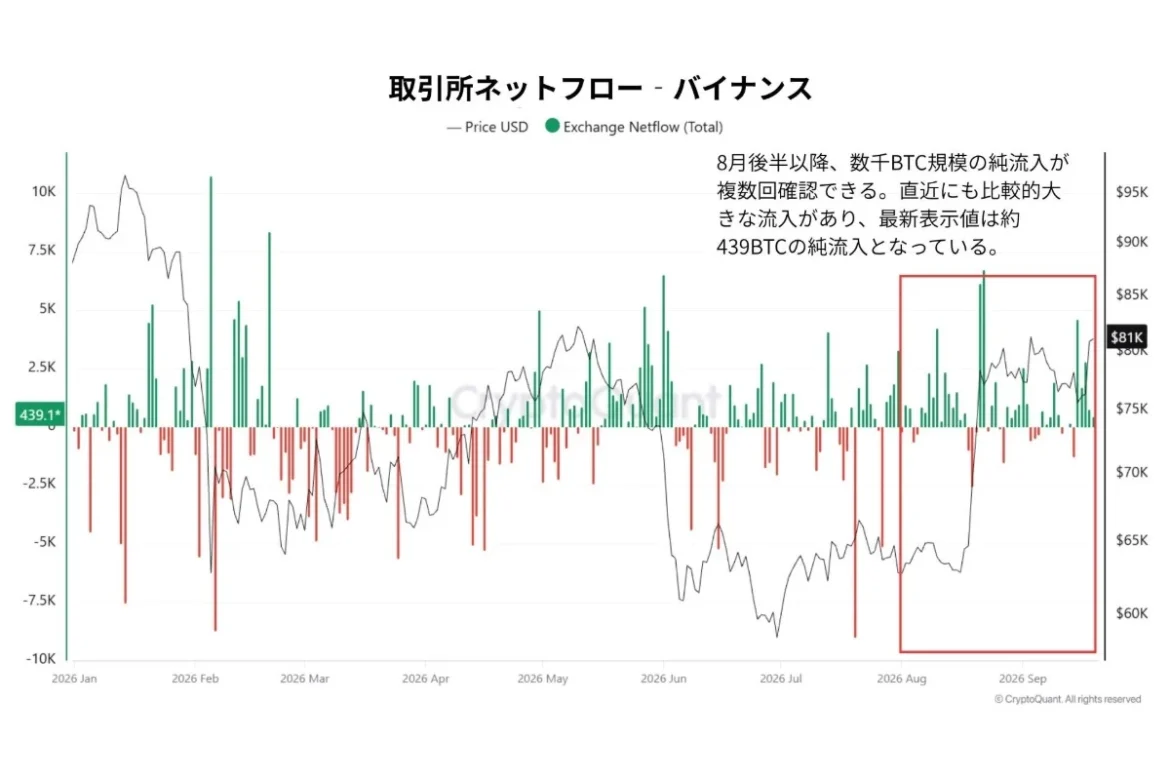
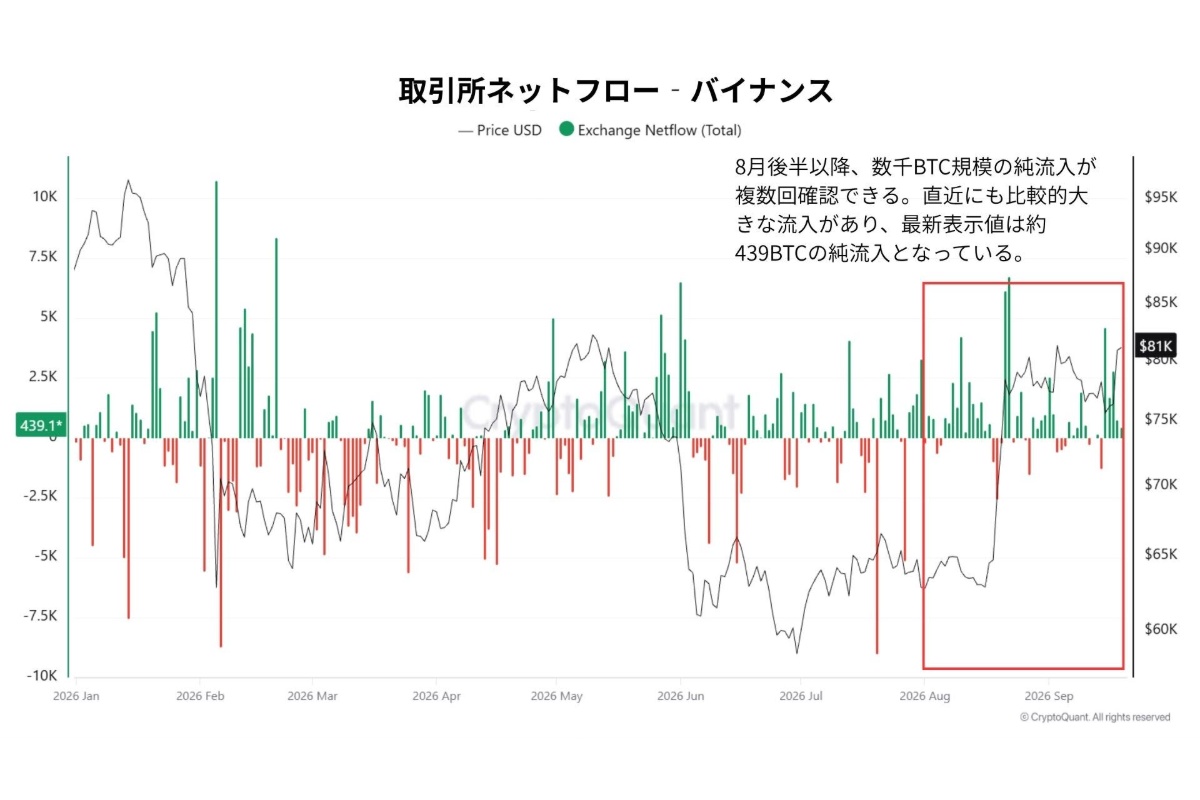
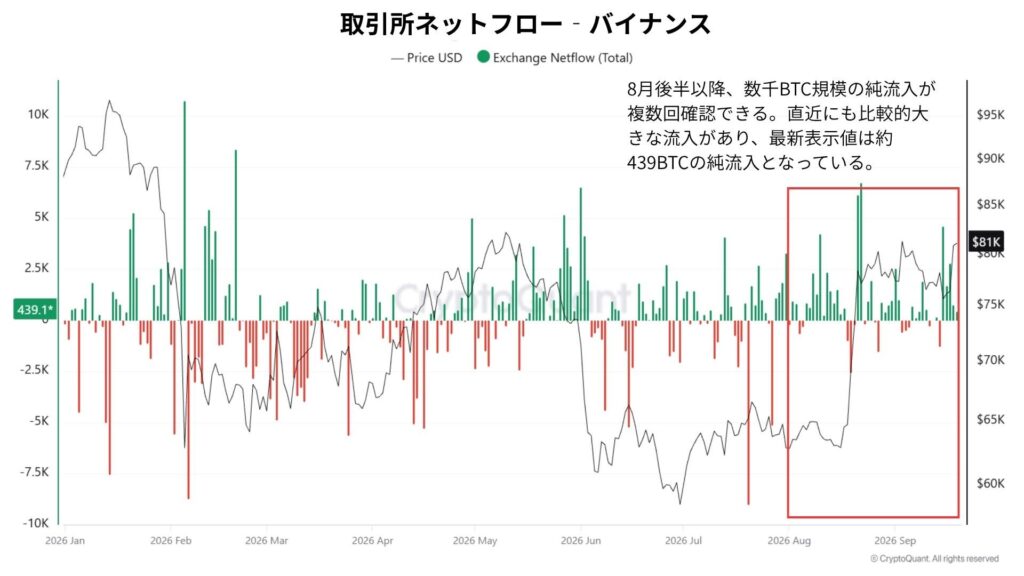
Trading activity on centralized exchanges (CEXs) provides further insight into the bearish sentiment prevailing in the market. Binance, the world’s largest cryptocurrency exchange by trading volume, has become a focal point for analysts monitoring retail and whale behavior. Recent data shows a steady stream of inflows to the exchange, which typically serves as a precursor to selling pressure. When investors move their assets from private wallets to exchanges, it often indicates an intent to liquidate positions or hedge against further downside.

84% of Binance Altcoins Remain Below Key Technical Level: CryptoQuant

The selling pressure appears to be coming from two distinct groups. On one hand, retail traders are reportedly dumping their holdings in a state of "panic," attempting to prevent mounting losses as prices continue to slide. On the other hand, a cross-section of "whales"—large-scale holders who accumulated assets during the market upswing in the first quarter of the year—are also gradually exiting their positions. This synchronized exit by both small-scale and large-scale investors has created a surplus of supply that the current market demand is unable to absorb.

Macroeconomic Pressures and the Global Financial Landscape

The struggles of the altcoin market cannot be viewed in isolation from the broader macroeconomic environment. Financial markets globally are currently facing significant pressures, including fluctuating interest rates, inflationary concerns, and shifting central bank policies. One of the most critical indicators currently flashing a "risk-off" signal is the United States Reserve Ratio. As the supply of available capital shrinks due to tightening monetary policies, crypto traders are finding it increasingly difficult to maintain leveraged positions or justify entries into high-risk altcoins.

Capital flows have notably shifted toward Bitcoin and other traditional "safe-haven" assets as investors seek to insulate themselves from macroeconomic volatility. This flight to quality has left altcoins starved of the liquidity needed to sustain a recovery. Analysts point out that this is not a short-term anomaly but rather part of a "prolonged period of stagnation" that is testing the limits of even the most seasoned investors. Historical data suggests that this is the second-longest underperformance streak for altcoins since 2020. The only comparable period occurred during the previous bear market, where a similar dynamic of underperformance lasted for approximately ten months before a meaningful trend reversal took place.

The Impact on Institutional Investment and Spot ETFs

The bearish sentiment has also permeated the institutional sector, which many had hoped would provide a floor for prices following the approval of spot exchange-traded funds (ETFs). Despite the initial excitement surrounding the launch of spot Ethereum ETFs, the reality has been underwhelming for many bulls. In the last 30 days, spot ETF volumes have seen a marked decline, and institutional funds have posted significant outflows.

Ethereum, the leading altcoin, has experienced a particularly difficult stretch. Over the past week, ETH has stretched its sideways trading into a downward slide of 5.2%, bringing its monthly slump to over 22%. At the time of reporting, Ethereum is trading at approximately $2,566, a figure that sits well below the optimistic projections issued by analysts at the start of the year. While some bulls are still pricing in a recovery after the market reaches what they hope is a "cycle bottom," the lack of institutional follow-through has made a quick rebound increasingly unlikely.

Performance Snapshot: SOL, XRP, and the Wider Market

Other major altcoins are also feeling the heat. Solana (SOL), which had shown relative strength earlier in the year, plummeted 1.5% in a single day, though it has managed to maintain a slightly positive weekly inflow with gains of roughly 4% over a seven-day window. This minor resilience in Solana is often attributed to its robust developer ecosystem and continued interest in its high-speed blockchain, but it remains susceptible to the broader market’s gravitational pull.

84% of Binance Altcoins Remain Below Key Technical Level: CryptoQuant

XRP has faced even steeper challenges, recording a 6% decline as it continues to navigate a complex regulatory and market landscape. The wider cryptocurrency market capitalization has dipped by 2.07%, falling to a total of $2.04 trillion. This contraction in market value is a clear signal of the low sentiment and high levels of uncertainty that currently define the digital asset space.

Analysis of Implications and the Path Forward

The current state of the altcoin market suggests a "purge" of speculative excess. The high percentage of tokens trading below their 200-day DMA indicates that the market is in a phase of consolidation and re-evaluation. For a sustainable recovery to occur, several factors must align. First, Bitcoin must establish a firm support level and begin a convincing trend upward to restore general market confidence. Second, the macroeconomic environment, particularly in the United States, must show signs of stabilization or a shift toward more accommodative monetary policies.

Until these conditions are met, altcoins are likely to remain in a period of stagnation. This "waiting game" is a characteristic feature of crypto market cycles, where periods of explosive growth are followed by long intervals of price discovery and capital rotation. For investors, the current environment serves as a reminder of the inherent risks of the altcoin market and the importance of monitoring technical indicators and macroeconomic trends.

The next few months will be critical in determining whether the current slump is a precursor to a deeper bear market or merely a mid-cycle correction before a year-end rally. With institutional interest cooling and retail traders remaining cautious, the burden of proof lies with the bulls to demonstrate that the value proposition of these altcoins remains intact despite the prevailing price action. For now, the "altcoin season" that many anticipated remains a distant prospect as the market navigates one of its most challenging phases in recent years.

July 19, 2026 0 comment
0 FacebookTwitterPinterestEmail
Altcoins & Token Projects

Robinhood Chain Memecoin Market Reels as Leading Launchpad Noxa Shuts Down After Twelve Million Dollar Fee Haul

by Dwi Wanna July 19, 2026
written by Dwi Wanna

The burgeoning decentralized finance ecosystem on the Robinhood Chain faced its most significant architectural crisis this week following the abrupt dissolution of Noxa, the dominant launchpad responsible for the vast majority of the network’s recent memecoin activity. On July 11, 2026, Noxa management announced a cessation of operations, a move that sent shockwaves through a market that had, until days prior, been hailed as the newest frontier for retail-driven crypto speculation. The shutdown occurred after Noxa successfully extracted an estimated $12 million to $14.5 million in protocol fees within a narrow two-week window, leaving investors and developers questioning the long-term viability of the nascent blockchain.

Noxa was far more than a mere peripheral service; it functioned as the primary liquidity engine for the Robinhood Chain. Since the chain’s official launch on July 1, 2026, Noxa had facilitated the deployment of over 60,000 unique tokens, accounting for approximately 75% of all smart contract deployments on the network. This unprecedented level of dominance allowed the platform to briefly eclipse industry giants like Solana’s Pump.fun in daily fee generation—a feat maintained for five consecutive days during the height of the "Robinhood Summer" frenzy. However, the sudden disappearance of this infrastructure has precipitated a liquidity vacuum, leading to a sharp correction in the valuation of top-tier ecosystem assets.

The Rise and Sudden Fall of Noxa: A Chronological Breakdown

To understand the magnitude of Noxa’s exit, one must examine the rapid timeline of the Robinhood Chain’s ascent. The network was positioned by Robinhood leadership, including CEO Vlad Tenev, as a high-performance environment designed to bridge traditional finance with decentralized applications. While the stated goal was the proliferation of tokenized real-world assets (RWAs), the reality of the first two weeks of July was a localized "memecoin season" that rivaled the early days of Base and Solana.

The chronology of the collapse began on July 8, 2026, when Tenev declared on social media that "Robinhood Summer is here," signaling institutional confidence in the network’s growth. By July 10, the Robinhood Chain had flipped Base to become the second-most active network for Uniswap deployments by volume, trailing only Ethereum Mainnet. At this peak, cumulative decentralized exchange (DEX) volume surpassed $4 billion.

The turning point arrived on July 11. Noxa leadership issued a statement citing an overwhelming influx of "bot spam" and "low-quality token floods" as the primary reasons for halting new token launches. While presented as a measure to protect the integrity of the ecosystem, the market reacted with immediate skepticism. Two days later, on July 13, the Noxa website went dark entirely. The team initially attributed the outage to technical difficulties with Cloudflare, but the platform did not return to full functionality.

In a final, highly scrutinized move, Noxa announced it would redirect 100% of its ongoing trading fees to token creators. While framed as a benevolent gesture toward the community, critics argued it was a calculated exit strategy, allowing the developers to step away from operational responsibilities while the infrastructure they built began to crumble.

Market Impact: The Devaluation of Flagship Assets

The immediate fallout of the Noxa shutdown was felt most acutely by CASHCAT, the flagship memecoin of the Robinhood Chain. At its zenith, CASHCAT boasted a market capitalization of $226 million and had attracted 267,642 unique wallet holders—a staggering level of adoption for a token less than ten days old. Following the news of Noxa’s departure, CASHCAT’s valuation plummeted by more than 33% in a 24-hour period.

Other ecosystem tokens that had previously posted triple-digit gains, including FOX and HOODIE, followed a similar downward trajectory. These assets were deeply integrated into Noxa’s bonding curve mechanics and liquidity pools. Without the launchpad’s continuous flow of new users and the "front-page" visibility it provided, these tokens lost the momentum required to sustain their speculative premiums.

The impact was not limited to individual tokens. The total DEX volume on the Robinhood Chain, which had peaked at $878 million on July 12, began a steady decline as traders migrated their capital back to more established networks like Solana or Base. Although the chain’s Total Value Locked (TVL) has remained relatively resilient near the $200 million mark, the velocity of capital has slowed significantly, suggesting a shift from active speculation to passive holding or staged exits.

The "Soft Rug" Controversy and Community Reaction

The crypto community remains deeply divided over the nature of Noxa’s exit. On social media platforms, the discourse has split into two distinct camps. One segment of the market views Noxa’s decision to halt operations as a principled stand against the "extractive" nature of bot-driven memecoin launches. Supporters of this view argue that the platform’s decision to return fees to creators is evidence of a "clean exit" rather than a malicious act.

Robinhood Chain’s Noxa Crashes After Receiving $12M In Fees, Top Memecoins Plunge By Over 30%

Conversely, a large contingent of investors and analysts have labeled the event a "soft rug." This term describes a scenario where a project team does not explicitly steal funds (a "hard rug") but instead abandons the project after extracting maximum value through fees or token sales, effectively leaving the community with a dying ecosystem. Prominent traders have pointed to the $12 million in fees as a motive for a "hit-and-run" operational model.

"Noxa the scam and other similar platforms slowly killed the momentum," noted a popular analyst under the pseudonym Shuarix. "The volume is already rotating to other chains. People got caught in the hype of a new chain without realizing the infrastructure was built on sand."

However, not all high-stakes players share this pessimism. The trader known as 0xAvast, who reportedly turned a modest investment into a multi-million dollar position during the CASHCAT rally, dismissed the current downturn as "irrelevant FUD" (Fear, Uncertainty, and Doubt). These conflicting perspectives highlight the high-risk, high-reward nature of early-stage blockchain ecosystems where sentiment can shift as rapidly as the underlying code.

Institutional Divergence: Memecoins vs. Real-World Assets

A critical aspect of the Noxa crisis is the stark disparity between the Robinhood Chain’s intended purpose and its actual usage. When Robinhood launched the chain, the primary marketing focus was on the tokenization of Real-World Assets (RWAs). However, as of mid-July 2026, the total market cap of RWA projects on the network stands at a mere $12.66 million.

To put this in perspective, at its peak, the CASHCAT memecoin alone was worth more than twelve times the entire RWA sector on the chain. This imbalance suggests that while Robinhood provided the "rails" for institutional-grade finance, the initial "passengers" were almost exclusively retail speculators. The collapse of Noxa exposes the fragility of a network whose growth is top-heavy with speculative assets. If the Robinhood Chain is to survive this volatility, it must find a way to pivot back to its original value proposition or foster a new generation of launchpads that prioritize long-term stability over short-term fee extraction.

The Search for a New Engine: Rival Platforms Step In

The void left by Noxa has created a competitive scramble among secondary launchpads. Platforms such as flap.sh, trensh.today, and bankr have all seen a marginal uptick in activity as they attempt to capture the displaced volume. A new entrant, Pons, has also positioned itself as a direct successor to Noxa, offering similar bonding curve mechanics but promising enhanced bot protection and more transparent governance.

Despite these efforts, none of the existing rivals have yet demonstrated the "brand pull" or the sheer scale that Noxa commanded. The technical barrier to entry for a launchpad is relatively low, but the social capital required to drive hundreds of millions of dollars in volume is difficult to replicate. Furthermore, the exit of Vlad.fun, another rival platform that went dark citing "internal integrity issues" just days after Noxa, has created a broader crisis of confidence in Robinhood Chain-native tooling.

Analytical Implications and Future Outlook

The Noxa episode serves as a cautionary tale for the broader cryptocurrency industry regarding "platform-dependent" ecosystems. In many modern Layer 2 and specialized Layer 1 networks, the health of the chain is inextricably linked to the health of its dominant dApps. When a single entity controls 75% of a chain’s deployments and then abruptly exits, the resulting damage to the network’s reputation can be permanent.

For Robinhood, the challenge now lies in damage control. The company’s foray into a proprietary blockchain was intended to showcase its technological prowess and its ability to capture the DeFi market. However, the association with "soft rugs" and volatile memecoin crashes may deter the very institutional partners needed for the RWA sector to flourish.

Investors moving forward must weigh the potential for "next-CASHCAT" style returns against the systemic risk of infrastructure failure. As the Robinhood Chain enters a period of consolidation, the focus will likely shift from how many tokens are being launched to how many of them possess actual utility beyond the bonding curve. The Noxa collapse has proven that in the world of decentralized finance, the platform is often more powerful than the asset—and when the platform disappears, it takes the market’s momentum with it.

July 19, 2026 0 comment
0 FacebookTwitterPinterestEmail
Crypto Regulations & Policy

Developer Lewellen lays out what’s at stake for open-source speech and user privacy.

by Raul Delapena Setiawan July 19, 2026
written by Raul Delapena Setiawan

On July 2, 2026, software developer Michael Lewellen filed an opening brief in the U.S. Court of Appeals for the Fifth Circuit, marking a pivotal moment in the ongoing legal battle over the boundaries of software development, financial regulation, and constitutional rights. Lewellen is seeking a pre-enforcement judgment to clarify whether the act of writing and publishing non-custodial software constitutes "unlicensed money transmission" under federal law. Supported by the cryptocurrency advocacy group Coin Center, the case challenges the Department of Justice’s (DOJ) recent aggressive stance toward developers of privacy-preserving and decentralized financial tools.

The core of the legal dispute rests on 18 U.S.C. § 1960, a federal statute that criminalizes the operation of an unlicensed money transmitting business. For decades, this law was applied primarily to entities that took physical or digital custody of third-party funds, such as banks or traditional money transmitters. However, recent prosecutions in the Southern District of New York (SDNY) have expanded this interpretation to include developers of decentralized protocols who never hold or control user assets. Lewellen’s brief argues that this expansion creates a "chilling effect" that forces law-abiding developers to abandon their work or face the threat of life-altering felony charges.

The Legal Context: 18 U.S.C. § 1960 and the Shift in Prosecution

To understand the gravity of Lewellen’s filing, one must examine the evolution of money transmission laws in the United States. 18 U.S.C. § 1960 was designed to prevent the rise of underground banking systems that could be used for money laundering or financing illicit activities. Traditionally, the Financial Crimes Enforcement Network (FinCEN) has defined a money transmitter as someone who accepts currency or funds from one person and transmits them to another location or person by any means.

The critical distinction in previous decades was "custody." If a service provider held a user’s funds, they were a transmitter. If they merely provided the tools—such as a wallet software or a communication protocol—they were considered "exempt" or outside the scope of the law. This distinction allowed the early internet and the first decade of the cryptocurrency industry to flourish.

However, starting in late 2023 and accelerating through 2024 and 2025, the DOJ began a series of high-profile prosecutions that signaled a departure from this standard. The cases against the founders of Tornado Cash and Samourai Wallet served as the catalyst for Lewellen’s preemptive legal action. In those instances, the government argued that even though the developers did not have control over user funds, the mere act of creating and maintaining the software that facilitated private transactions made them "money transmitters."

The Case of Michael Lewellen: Crowdfunding and the Fear of Publication

Michael Lewellen is an independent software developer who has designed a non-custodial crowdfunding platform. Unlike traditional platforms like Kickstarter or GoFundMe, Lewellen’s software uses smart contracts to allow users to raise funds directly from contributors without an intermediary ever touching the money.

In his brief, Lewellen explains that while his software is ready for deployment, he has refrained from publishing, maintaining, or marketing it due to a "well-founded fear" of prosecution. He argues that under the current interpretation favored by the SDNY, his role as the author of the code could be misconstrued as operating an unlicensed money transmitting business.

The brief emphasizes that Lewellen is not a criminal seeking to evade the law, but a citizen seeking to follow it. By asking for a pre-enforcement judgment, he is requesting the court to rule on the legality of his actions before the government can initiate a criminal case. The brief famously quotes: “A society founded on the rule of law does not want individuals to ‘bet the farm’ by breaking the law first and vindicating their rights second.”

A Chronology of the "Chilling Effect" in Crypto Development

The path to the Fifth Circuit has been paved by a series of regulatory and legal escalations:

  • August 2022: The U.S. Treasury Department’s Office of Foreign Assets Control (OFAC) sanctions the Tornado Cash smart contracts, marking the first time a piece of autonomous code was placed on a sanctions list.
  • August 2023: The DOJ indicts Tornado Cash founders Roman Storm and Roman Semenov, alleging conspiracy to commit money laundering and unlicensed money transmission.
  • April 2024: The founders of Samourai Wallet, Keonne Rodriguez and William Lonergan Hill, are arrested and charged with operating an unlicensed money transmitting business. The government’s theory again focuses on the provision of privacy software.
  • Late 2025: The "Blanche Memo" is circulated within the administration. While the memo suggested a more lenient approach toward developers, it lacked binding authority and failed to provide a concrete legal "safe harbor" for non-custodial software authors.
  • July 2, 2026: Michael Lewellen files his opening brief in the Fifth Circuit, seeking a definitive ruling to protect the act of publishing code.

Constitutional Arguments: Code as Speech and Due Process

At the heart of Lewellen’s argument are the First and Fifth Amendments of the U.S. Constitution. The First Amendment protects the right to free speech, and for nearly thirty years, U.S. courts have recognized that computer source code is a form of speech. In the landmark 1990s case Bernstein v. Department of Justice, the court ruled that software code is a medium of expression used by scientists and mathematicians, and thus deserves constitutional protection.

Lewellen’s brief argues that by criminalizing the publication of software, the government is engaging in a "prior restraint" on speech. SEC Commissioner Hester Peirce has echoed this sentiment in several public dissents, stating, "Publishing code is speech, which the First Amendment protects." The brief asserts that if the government wishes to regulate the use of technology, it must do so without infringing on the right to write and share the underlying logic of that technology.

Furthermore, the Fifth Amendment ensures "Due Process," which requires that laws be clear enough for an ordinary person to understand what is prohibited. Lewellen argues that the current application of 18 U.S.C. § 1960 is unconstitutionally vague. If a developer cannot determine whether their project will land them in federal prison until after they are indicted, the law fails to provide the requisite notice required by the Constitution.

Official Responses and the "Noblesse Oblige" Problem

The federal government’s response to these concerns has been characterized by many in the tech industry as "unreliable." While some administration officials have issued statements suggesting that "pure" software development is not a target, the DOJ has repeatedly refused to issue formal guidance or admit in court that non-custodial development is legal.

Lewellen’s brief addresses this directly, criticizing the government’s reliance on "prosecutorial discretion." The brief argues that law-abiding citizens should not have to rely on the "mercy of noblesse oblige"—the idea that they are safe only as long as the current administration chooses not to prosecute them. As political winds shift, so too can the priorities of the DOJ, leaving developers in a state of permanent legal peril.

Coin Center, the leading non-profit research and advocacy group focused on the public policy issues facing cryptocurrency, has been a vocal supporter of Lewellen. Peter Van Valkenburgh, Coin Center’s Director of Research, noted that the current environment is the "number one U.S. policy threat" to innovation. According to Van Valkenburgh, the weaponization of money transmission laws does more than just stop crypto projects; it undermines the fundamental privacy rights of every American who uses digital tools.

Broader Implications for Privacy and Innovation

The outcome of Lewellen v. Department of Justice (or the corresponding federal entity) will have far-reaching consequences beyond the world of Bitcoin and Ethereum. If the Fifth Circuit rules in favor of Lewellen, it would establish a critical precedent protecting open-source developers from being held liable for how third parties use their tools.

Conversely, if the government’s broad interpretation of money transmission is upheld, it could signal the end of American leadership in decentralized technology. Developers might flee to jurisdictions with clearer legal frameworks, such as Switzerland or Singapore, leading to a "brain drain" of technical talent.

Moreover, the case touches on the fundamental right to privacy. Privacy-preserving software, like the tools Lewellen seeks to build, is essential for protecting individuals from surveillance and data breaches. By categorizing the creation of these tools as a financial crime, the government effectively restricts the public’s access to privacy-enhancing technologies.

Analysis: A Nation of Laws, Not of Men

The brief concludes by invoking the words of John Adams: "We are a nation of laws, not of men." This principle suggests that the legality of an action should be determined by clear, written statutes and judicial interpretations, rather than the whims or "promises" of powerful officials.

For developers like Michael Lewellen, the quest is for certainty. In a digital age where code runs the global economy, the distinction between "writing a program" and "conducting a financial transaction" must be clearly defined. The Fifth Circuit now faces the task of determining whether the First Amendment remains a robust shield for the architects of the digital frontier, or whether the government’s power to regulate money will expand to encompass the very act of creative expression through code.

As the legal community and the technology sector watch closely, the Lewellen brief stands as a definitive statement on the rights of the individual against the expansive reach of the modern regulatory state. The decision rendered in this case will likely define the landscape of American innovation for the next generation.

July 19, 2026 0 comment
0 FacebookTwitterPinterestEmail
Crypto Regulations & Policy

FTX Initiates Fifth Distribution Round With $900 Million Payout to Creditors as Total Recoveries Approach $10 Billion

by Muslim July 19, 2026
written by Muslim

The FTX bankruptcy estate has announced it will commence its fifth major distribution of funds on July 31, 2026, marking a significant milestone in one of the most complex financial reorganizations in history. This latest tranche, valued at approximately $900 million, is part of the ongoing execution of the exchange’s court-approved Chapter 11 reorganization plan. With this disbursement, the estate, led by Chief Executive Officer and Chief Restructuring Officer John J. Ray III, has successfully returned nearly $10 billion to a diverse pool of creditors and claimants worldwide.

This distribution follows a substantial $2.2 billion payout completed in March 2025, signaling a steady pace in the estate’s efforts to liquidate assets and resolve claims. The July 31 payout is specifically directed toward holders of allowed claims within both the Convenience and Non-Convenience Classes who met the rigorous documentation and identity verification requirements by the June 16 record date. As the estate continues to unwind the tangled web of the collapsed crypto empire, the focus remains on maximizing recovery for those impacted by the exchange’s sudden implosion in November 2022.

Detailed Breakdown of Creditor Recoveries

The fifth distribution introduces a tiered recovery structure that aims to provide many creditors with more than the original dollar value of their claims at the time of the bankruptcy filing. This "over-par" recovery is a rarity in large-scale corporate bankruptcies and is the result of aggressive asset recovery, the liquidation of venture capital investments, and the appreciation of certain estate holdings.

Under the current distribution schedule, Allowed Class 5A Dotcom Customer Entitlement Claims will receive an additional 9% in this round. This brings the cumulative distribution for this class to 105% of their allowed claim value. Similarly, Allowed Class 5B US Customer Entitlement Claims are set to receive an additional 5%, also reaching a cumulative recovery of 105%.

General Unsecured Claims and Digital Asset Loan Claims are slated to receive an additional 3% in this round, raising their total cumulative distributions to 103%. The most significant percentage recovery, however, remains within the Convenience Class. This group, which primarily consists of retail customers with smaller, less complex claims, is projected to reach a cumulative recovery of 120%. By prioritizing the Convenience Class, the estate aims to resolve the highest volume of individual claims quickly, reducing administrative overhead and providing relief to the largest number of individual users.

Logistics and Distribution Partners

To facilitate the massive logistical undertaking of moving hundreds of millions of dollars to global users, FTX has partnered with established financial and cryptocurrency infrastructure providers. Eligible creditors who have completed the necessary onboarding steps can expect to receive their funds through BitGo, Kraken, or Payoneer.

The estate has confirmed that once the distribution process begins on July 31, funds should appear in the designated accounts within one to three business days, depending on the provider and the creditor’s geographic location. Creditors were required to select their preferred distribution provider and complete a series of compliance checks, including "Know Your Customer" (KYC) verification and the submission of relevant tax documentation.

For those who have not yet qualified for this or future distributions, the estate has emphasized that the claims portal remains the primary gateway for identity verification and tax form submission. Failure to complete these steps or to onboard with the authorized providers will result in delays or the withholding of funds in subsequent rounds.

The Context of the 2022 Collapse and Valuation Controversy

While the news of 105% to 120% recoveries appears positive on the surface, it remains a point of significant contention within the cryptocurrency community. The "valuation" of these claims is based on the dollar price of digital assets at the time of FTX’s bankruptcy filing in November 2022—a period often referred to as the "crypto winter."

In November 2022, Bitcoin was trading at approximately $16,000, and Ethereum was valued near $1,200. Since that time, the cryptocurrency market has experienced a massive resurgence, with Bitcoin and Ethereum reaching significantly higher valuations. Consequently, a creditor who held one Bitcoin on FTX in 2022 is being repaid based on a $16,000 valuation rather than receiving the actual Bitcoin back. While they may receive 105% of that $16,000 ($16,800), the "in-kind" value of that Bitcoin today would be substantially higher.

This "dollarization" of claims was a central legal battle during the bankruptcy proceedings. Many creditors argued for "in-kind" distributions, which would have required the estate to return the original digital assets. However, the court ruled in favor of the estate’s plan to value claims in U.S. dollars as of the petition date, citing the volatility of the assets and the legal necessity of establishing a fixed pool of liabilities to facilitate a fair distribution.

Timeline of the FTX Bankruptcy and Recovery Efforts

The journey from the collapse of FTX to the $10 billion recovery mark has been characterized by intense legal maneuvering and a massive global search for assets.

  • November 2022: FTX, FTX.US, and Alameda Research file for Chapter 11 bankruptcy protection following a liquidity crisis and allegations of massive fraud. Sam Bankman-Fried resigns, and John J. Ray III is appointed CEO.
  • Early 2023: The restructuring team begins the arduous process of locating assets, which were scattered across hundreds of bank accounts and various jurisdictions. They recover roughly $5 billion in liquid assets in the first few months.
  • 2023-2024: The estate aggressively pursues clawback lawsuits against former FTX executives, political organizations, and venture capital firms. Key assets, such as the exchange’s stake in the AI firm Anthropic, are sold for billions of dollars as AI valuations soar.
  • October 2024: The U.S. Bankruptcy Court for the District of Delaware officially approves the FTX reorganization plan, clearing the way for distributions to begin.
  • March 2025: The first major distribution of $2.2 billion is executed, providing the first wave of relief to creditors.
  • July 2026: The fifth distribution of $900 million is announced, pushing total recoveries toward the $10 billion threshold.

Asset Recovery and Legal Settlements

The ability of the FTX estate to offer over-par recoveries is largely due to the successful liquidation of a diverse portfolio of investments and the resolution of legal disputes. One of the most notable successes was the sale of FTX’s stake in Anthropic, an artificial intelligence startup. The estate’s initial investment of $500 million eventually yielded several billion dollars following the surge in interest in generative AI.

Additionally, the estate has been active in the courtroom. In May 2026, the law firm Fenwick & West, which had previously served as outside counsel for FTX, agreed to a $54 million settlement. The settlement resolved claims that the firm’s services helped enable the misconduct and lack of internal controls that led to the exchange’s downfall.

Furthermore, the estate has moved to distribute funds to preferred equity holders. On July 31, approximately $18 million will be distributed to eligible preferred shareholders, bringing the total payments from the Preferred Shareholder Remission Fund Trust to $95 million. While equity holders are typically the last to receive funds in a bankruptcy, the unique nature of the FTX recovery has allowed for a dedicated fund to address their losses.

Security Warnings and Fraud Prevention

Given the high profile of the FTX distribution and the large sums of money involved, the bankruptcy estate has issued a stern warning regarding security. Fraudsters have frequently targeted FTX creditors with sophisticated phishing campaigns, fraudulent websites, and social media scams.

The estate has reiterated that it will never ask customers to connect a cryptocurrency wallet to a website or provide private keys to receive their distribution. All official communications are conducted through the verified claims portal and authorized email channels. Creditors are urged to exercise extreme caution and verify the authenticity of any communication claiming to be from FTX or the bankruptcy estate.

Broader Implications for the Crypto Industry

The FTX bankruptcy and its subsequent recovery process have set a major precedent for the digital asset industry. The case has highlighted the critical importance of corporate governance, the separation of customer funds, and the role of regulatory oversight.

The "success" of the recovery—at least in terms of dollar-value percentages—contrasts sharply with other crypto bankruptcies, such as Celsius Network or Voyager Digital, where recoveries were often lower or more protracted. The FTX case demonstrated that even in the event of a catastrophic failure, a disciplined restructuring process can reclaim significant value if there are underlying assets of quality, such as the venture capital portfolio Sam Bankman-Fried built using misappropriated funds.

However, the lingering resentment over "petition date" valuations suggests that future crypto bankruptcies may face even more intense legal challenges regarding how digital assets are treated in court. Regulators around the world are using the lessons from the FTX collapse to draft more stringent requirements for exchanges, focusing on proof-of-reserves, mandatory audits, and clear legal frameworks for the custody of client assets.

As the July 31 distribution begins, the crypto community views the event with a mixture of relief and reflection. While the $900 million payout provides tangible financial return to thousands of people, it also serves as a final reminder of the volatility and risk that characterized the 2022 market cycle. The estate will continue to process remaining claims and pursue outstanding assets, with further distributions expected as the final chapters of the FTX saga are written.

July 19, 2026 0 comment
0 FacebookTwitterPinterestEmail
Japanese & Asian Crypto Markets

The Age of AI Agents and the Future of On-chain Finance: How DeFi Becomes the Essential Infrastructure for Autonomous Money at WebX 2026

by Siti Muinah July 19, 2026
written by Siti Muinah

The rapid convergence of artificial intelligence and decentralized finance (DeFi) has reached a critical inflection point, as industry leaders at the WebX 2026 conference in Tokyo articulated a future where these two technologies are not competitors, but symbiotic partners. During a high-profile panel titled "Will DeFi Die with AI? A Deep Dive by Japanese DeFi Founders," a group of prominent developers and financial experts gathered to dismantle the notion that AI would render blockchain-based finance obsolete. Instead, the consensus among the speakers—including Katsunori Kondo of DeltaForesight, Yuki Ozaki of Napier Labs, Taishi Kurahashi of SMBC Nikko Securities, and Masakazu Kikuchi of Secured Finance AG—was that AI agents will become the primary users of DeFi, transforming decentralized protocols into the foundational infrastructure for a global, autonomous economy.

The Paradigm Shift: AI as Decision-Maker, DeFi as Executor

The central thesis of the discussion, moderated by Daiki Endo (known in the industry as DeFi Chef), was the clear division of labor between AI and blockchain protocols. Yuki Ozaki, Founder and CEO of Napier Labs, proposed a framework that resonated throughout the session: AI serves as the cognitive interface that handles complex financial judgment, while DeFi and smart contracts serve as the "execution layer" that moves capital and settles transactions.

As AI agents become increasingly capable of managing wealth, they require a financial environment that is as programmatic and tireless as they are. Traditional banking systems, with their manual settlement processes, restricted operating hours, and human-in-the-loop requirements, are fundamentally incompatible with the millisecond-speed logic of an AI agent. DeFi, by contrast, provides a 24/7, permissionless, and immutable environment. In this vision of the future, an AI agent might analyze thousands of yield-farming opportunities across multiple chains in seconds, but it will rely on the underlying DeFi protocols to execute those trades securely and transparently.

Masakazu Kikuchi, Founder and CEO of Secured Finance AG, expanded on this by defining AI as an extension of human cognitive ability. He argued that while DeFi protocols function as the "rules of the road" on the blockchain, AI agents will be the "drivers" navigating those roads. This synergy allows for a level of automation in financial transactions that was previously unimaginable, moving toward a future where "autonomous money" manages itself according to pre-defined user goals and risk tolerances.

A Chronology of Convergence: From DeFi Summer to the AI Agent Era

To understand the significance of the WebX 2026 discussions, it is necessary to trace the timeline of how these technologies merged. The evolution of on-chain finance has moved through several distinct phases:

  1. The DeFi Summer (2020): The birth of decentralized lending and automated market makers (AMMs) like Uniswap and Aave, which proved that financial services could exist without intermediaries.
  2. The Institutional Awakening (2021-2022): Major banks and asset managers began exploring "Real World Assets" (RWA) and private blockchains, though these remained siloed from the public DeFi ecosystem.
  3. The Generative AI Explosion (2023-2024): The rise of Large Language Models (LLMs) sparked interest in "AI Agents"—software capable of performing tasks autonomously. Early experiments in AI-driven crypto trading bots began to emerge.
  4. The Infrastructure Integration (2025): Development focused on "intent-centric" design, where users specify a financial goal (e.g., "maximize yield with low risk") and AI-driven solvers find the best path through DeFi protocols.
  5. The Autonomous Economy (2026): As discussed at WebX, the focus shifted to the legal and technical "guardrails" necessary to allow AI agents to manage significant capital on-chain without human intervention.

This chronology highlights that DeFi is no longer just a playground for retail speculators but has matured into a robust backend for the next generation of digital intelligence.

Institutional Perspectives: TradFi Embracing On-chain Infrastructure

One of the most notable aspects of the WebX 2026 panel was the participation of Taishi Kurahashi, the head of the Nikko Open Innovation Lab and the DeFi Technology Department at SMBC Nikko Securities. His presence signaled a profound shift in how traditional financial (TradFi) institutions view decentralized protocols.

Kurahashi emphasized that the role of his department is not merely to extend existing business models but to re-imagine financial infrastructure from the ground up. He noted that while AI can improve market efficiency, the real breakthrough comes from making the market structure itself more efficient through blockchain. SMBC Nikko Securities is exploring how blockchain can serve as a global infrastructure to broadcast Japanese value and assets to the world.

Furthermore, Kurahashi addressed the necessity of regulation. From an institutional standpoint, "guardrails" are not a hindrance but a requirement for user safety and broad adoption. He argued that regulations should transition from being barriers to innovation to becoming rules that actively promote and facilitate the growth of on-chain finance.

AI時代、DeFiは金融インフラに──日本人創業者らが描くオンチェーン金融の未来【WebX 2026】 | NADA NEWS(ナダ・ニュース)

Navigating Risks: The Need for Legal and Technical Guardrails

Despite the optimistic outlook, the speakers were candid about the risks inherent in an AI-driven financial ecosystem. Katsunori Kondo of DeltaForesight raised critical questions regarding liability and responsibility. If an AI agent utilizes a DeFi protocol and a financial loss occurs due to a technical error or an unforeseen market event, where does the blame lie? Is it the developer of the AI, the creator of the DeFi protocol, the front-end provider, or the user?

The lack of a clear legal framework for autonomous agents remains a significant hurdle. Kondo stressed that for AI and DeFi to reach mass adoption, institutional design that clarifies the "location of responsibility" is indispensable.

Security also remains a double-edged sword. Yuki Ozaki pointed out that while AI can be used to launch more sophisticated attacks on smart contracts, it is also the most powerful tool for defense. In the 2026 landscape, security audits are increasingly being conducted by AI models capable of identifying vulnerabilities that human auditors might miss. The "arms race" between AI-led exploitation and AI-led protection will define the security standards of future DeFi protocols.

Supporting Data: The Growth of the AI-DeFi Ecosystem

The scale of this shift is reflected in the market data leading up to 2026. Industry reports indicate that the "AI-DeFi" sector has seen a 400% increase in total value locked (TVL) over the past 24 months. Furthermore, the volume of "agentic transactions"—those initiated by non-human actors—now accounts for an estimated 35% of all decentralized exchange (DEX) volume.

Key metrics supporting this trend include:

  • Transaction Latency: The shift to Layer 2 and Layer 3 scaling solutions has reduced transaction costs by 95%, making micro-transactions by AI agents economically viable.
  • Smart Contract Audits: Over 60% of new DeFi protocols launched in 2026 utilized AI-augmented formal verification during their development phase.
  • Institutional Participation: A survey of major Asia-Pacific financial institutions revealed that 45% are currently piloting or planning to pilot on-chain asset settlement systems.

The Global Competitive Landscape: Japan vs. The World

The discussion at WebX also touched upon Japan’s unique position in the global regulatory landscape. Katsunori Kondo noted that Japan has made significant strides, particularly with the inclusion of crypto assets under the Financial Instruments and Exchange Act and the ongoing movement toward separate taxation for crypto gains. These steps are viewed as progress toward recognizing DeFi as a legitimate tool for wealth formation.

However, Masakazu Kikuchi offered a more cautious comparison. He pointed out that while Japan is improving, it still lags behind jurisdictions like Switzerland in terms of legal clarity for token rights and the transfer of ownership. In Switzerland, the legal effect of a token transfer is clearly defined, providing a level of certainty that attracts international developers. Kikuchi argued that for Japan to become a global hub for the AI-DeFi era, it must go beyond tax reform and address the fundamental legal nature of digital assets and smart contract execution.

Conclusion: A Future Built on Transparency and Autonomy

The consensus from the WebX 2026 session is clear: DeFi is not dying; it is evolving into its final form as the "financial internet" for both humans and machines. By providing a transparent, programmable, and neutral execution layer, DeFi solves the "black box" problem of AI. When an AI makes a decision, the blockchain provides an immutable record of the execution, ensuring that even in an autonomous world, there is a trail of accountability.

As the industry moves forward, the focus will remain on refining the "guardrails" mentioned by the panelists—ensuring that as AI agents begin to move the world’s money, they do so within a framework that is secure, legally recognized, and beneficial to society. The "on-chain future" envisioned by these Japanese pioneers is one where the complexity of finance is handled by intelligence, but the integrity of finance is guaranteed by code. This synergy between AI’s judgment and DeFi’s execution is set to define the global financial landscape for the remainder of the decade.

July 19, 2026 0 comment
0 FacebookTwitterPinterestEmail
Newer Posts
Older Posts

Recent Posts

  • Market Analysts Reveal What Must Happen for Altcoin Season to Make a Comeback
  • Official Trump Memecoin Team Moves $17 Million in Tokens as CLARITY Act Deadlines Loom
  • The Taxation of Cryptocurrency Block Rewards and the Misconception of Immediate Income
  • Senate updates Clarity Act to bar presidents from issuing crypto assets.
  • Ethereum Holds Support at $1,860 as Prediction Markets Forecast Consolidation Ahead of FOMC Meeting and Robinhood Chain Ecosystem Expansion

Recent Comments

No comments to show.
  • Facebook
  • Twitter

@2021 - All Right Reserved. Designed and Developed by PenciDesign


Back To Top
Crypto Gohan
  • Home

We are using cookies to give you the best experience on our website.

You can find out more about which cookies we are using or switch them off in .

Crypto Gohan
Powered by  GDPR Cookie Compliance
Privacy Overview

This website uses cookies so that we can provide you with the best user experience possible. Cookie information is stored in your browser and performs functions such as recognising you when you return to our website and helping our team to understand which sections of the website you find most interesting and useful.

Strictly Necessary Cookies

Strictly Necessary Cookie should be enabled at all times so that we can save your preferences for cookie settings.