• Home
Crypto Gohan
keep your memories alive
Japanese & Asian Crypto Markets

21Shares Submits Second Amended Form S-1 for Spot Hyperliquid ETF as Institutional Competition for DEX-Linked Products Intensifies

by Siti Muinah April 26, 2025
written by Siti Muinah

21Shares, a prominent global issuer of cryptocurrency exchange-traded products (ETPs), officially filed its second amendment to the Form S-1 registration statement with the U.S. Securities and Exchange Commission (SEC) on April 14, 2025, for its proposed spot Hyperliquid (HYPE) exchange-traded fund (ETF). The proposed investment vehicle, which intends to trade under the ticker symbol THYP, represents a critical step in the firm’s efforts to provide traditional investors with regulated exposure to the native token of the Hyperliquid ecosystem. While the filing clarifies several technical aspects of the fund’s structure, specific details regarding management fees and other operational expenses have not yet been disclosed to the public.

This latest regulatory submission underscores the accelerating momentum behind decentralized finance (DeFi) infrastructure assets in the traditional financial sector. Hyperliquid, which operates as a high-performance decentralized exchange (DEX) built on its own dedicated Layer 1 blockchain, has seen its native token, HYPE, emerge as one of the most significant assets in the digital finance space over the past year. The move by 21Shares to refine its application follows a pattern of active engagement between crypto-asset managers and federal regulators, signaling that the path toward approval is entering a more mature phase of technical review.

Analysis of the Regulatory Progress and Expert Commentary

The submission of the second amendment is widely viewed by market observers as a positive indicator of the "back-and-forth" dialogue between the issuer and the SEC. James Seyffart, an ETF research analyst at Bloomberg Intelligence, noted that the revisions likely reflect specific feedback provided by SEC staff. In the context of the U.S. regulatory environment, the transition from an initial filing to subsequent amendments often indicates that the regulator is scrutinizing the finer details of custody, valuation, and liquidity—essential components for the approval of a spot commodity-based ETF.

According to Seyffart, the fact that 21Shares is moving forward with these amendments suggests that the listing process is progressing steadily. This iterative process was mirrored during the approval cycles for both Bitcoin and Ethereum spot ETFs, where multiple rounds of S-1 amendments were required to address the SEC’s concerns regarding market manipulation, custodial security, and the "cash-only" versus "in-kind" creation and redemption mechanisms.

The Competitive Landscape: 21Shares, Bitwise, and Grayscale

The race to launch the first spot HYPE ETF has become a three-way contest between major industry players. Each firm is attempting to differentiate its offering through fee structures, exchange partnerships, and unique fund features.

Bitwise Asset Management (BHYP)

Bitwise was among the first to move aggressively in the HYPE space, filing its second S-1 amendment on April 10, 2025, just days before 21Shares. Bitwise’s proposed fund will trade under the ticker BHYP on the NYSE Arca exchange. Notably, Bitwise has already disclosed a competitive annual management fee of 0.67%. Perhaps most significantly, the Bitwise application includes provisions for staking functionality. By incorporating staking, the fund aims to pass along the rewards generated by the underlying HYPE tokens to the shareholders, potentially offering a "yield-bearing" version of the ETF that could be more attractive to long-term institutional holders.

21Shares、HYPE現物ETFの第2次修正届出書をSECに提出 | NADA NEWS(ナダ・ニュース)

21Shares (THYP)

While 21Shares has yet to finalize its fee structure or confirm whether it will follow Bitwise’s lead in offering staking rewards, the firm brings extensive experience from the European market. 21Shares has historically been a pioneer in launching diverse crypto ETPs on Swiss and German exchanges, and its entry into the HYPE race is seen as a strategic expansion of its U.S. footprint. The choice of the ticker THYP positions the product as a direct competitor to Bitwise’s BHYP.

Grayscale Investments (GHYP)

Grayscale, the world’s largest crypto asset manager, also joined the fray with its own S-1 filing. Aiming for a listing on the Nasdaq under the ticker GHYP, Grayscale’s entry ensures that all three major U.S. listing venues—NYSE Arca, Cboe (often used by 21Shares), and Nasdaq—will have a horse in the race. Grayscale’s strategy often involves leveraging its existing trust structures, though for HYPE, it is pursuing a standard spot ETF registration from the outset.

Understanding the Hyperliquid (HYPE) Ecosystem

The institutional interest in a HYPE ETF is driven by the fundamental growth of the Hyperliquid platform. Unlike many other decentralized exchanges that operate as applications on general-purpose blockchains like Ethereum or Solana, Hyperliquid is a standalone Layer 1 blockchain optimized specifically for a high-performance order-book-based DEX.

Hyperliquid specializes in perpetual swaps (perps), which are the most traded instruments in the cryptocurrency market. By providing a user experience that rivals centralized exchanges (CEXs) like Binance or Coinbase, but with the transparency and self-custody of a decentralized protocol, Hyperliquid has captured a significant share of the DeFi trading volume.

The HYPE token serves multiple roles within this ecosystem:

  1. Governance: Token holders can vote on protocol upgrades and the allocation of the ecosystem’s resources.
  2. Staking and Security: As a Proof-of-Stake (PoS) network, the HYPE token is essential for securing the underlying blockchain.
  3. Utility: The token is integrated into the platform’s fee structures and liquidity incentives.

Market Data and Performance Metrics

The demand for an ETF is further bolstered by HYPE’s exceptional market performance. As of April 15, 2025, the token was trading at approximately $43, maintaining a strong upward trajectory. The asset has demonstrated significant resilience and growth:

  • Year-to-Date (YTD) Performance: An increase of approximately 65%.
  • 12-Month Performance: A staggering rise of approximately 182%.
  • Market Capitalization: Approximately $100 billion.

With a market capitalization of $100 billion, HYPE currently ranks as the 13th largest cryptocurrency by total valuation. This scale is a crucial threshold for ETF issuers; the SEC generally requires a high level of liquidity and market depth to ensure that an ETF can be traded efficiently without causing extreme price volatility in the underlying spot market. At its current valuation, HYPE has surpassed many "legacy" blockchain projects, cementing its status as a top-tier institutional-grade asset.

21Shares、HYPE現物ETFの第2次修正届出書をSECに提出 | NADA NEWS(ナダ・ニュース)

Chronology of Key Events in the HYPE ETF Race

The timeline of filings indicates a condensed and highly competitive environment:

  • Early 2025: Initial S-1 filings are submitted by Bitwise and 21Shares as Hyperliquid’s trading volume begins to dominate the DEX landscape.
  • March 2025: Grayscale officially enters the race with a Nasdaq-bound S-1 filing.
  • April 10, 2025: Bitwise submits its second amendment (S-1/A), revealing a 0.67% fee and staking plans.
  • April 14, 2025: 21Shares submits its second amendment, signaling continued engagement with the SEC.
  • April 15, 2025: HYPE reaches a market cap of $100 billion, providing a strong fundamental argument for the necessity of a regulated investment vehicle.

Broader Implications for the ETF Industry

The move toward a Hyperliquid ETF represents a shift in the "second wave" of crypto ETFs. While the "first wave" focused on digital gold (Bitcoin) and decentralized computing (Ethereum), the "second wave" is increasingly focused on specific financial infrastructure and utility protocols.

If approved, a spot HYPE ETF would provide a template for other DeFi-centric assets, such as Uniswap (UNI) or Jupiter (JUP), to seek similar regulated status. It also challenges the traditional definition of "commodities" in the eyes of the SEC. Because Hyperliquid is a functional trading platform, the SEC must evaluate whether the HYPE token represents a stake in a "common enterprise" (which would classify it as a security) or a decentralized utility/commodity.

The inclusion of staking in Bitwise’s filing is another pivotal point of contention. The SEC has previously expressed skepticism regarding staking within ETF structures, citing concerns over the liquidity of staked assets and the complexity of returning yields to shareholders. If the SEC allows Bitwise to include staking, it could set a massive precedent, potentially forcing 21Shares and Grayscale to amend their filings to remain competitive.

Conclusion and Outlook

The second amendment filed by 21Shares is more than just a procedural update; it is a testament to the staying power of decentralized exchange protocols in the global financial hierarchy. As the SEC continues to review these applications, the focus will likely shift to the robustness of the "Hyperliquid L1" consensus mechanism and the reliability of the price feeds used by the ETFs.

For investors, the arrival of a spot HYPE ETF would democratize access to one of the fastest-growing sectors of the digital economy. It would allow pension funds, 401(k) providers, and retail investors to participate in the growth of decentralized derivatives trading without the complexities of managing private keys or navigating DeFi interfaces. As the April 2025 filings show, the infrastructure for this transition is being built in real-time, with 21Shares positioned at the forefront of this institutional evolution.

April 26, 2025 0 comment
0 FacebookTwitterPinterestEmail
Japanese & Asian Crypto Markets

Fake Ledger Live App on Apple App Store Results in Over 9.5 Million Dollars Stolen as Regulatory Pressure Mounts on KuCoin and Platform Liability

by Reynand Wu April 25, 2025
written by Reynand Wu

The global cryptocurrency community is reeling from a sophisticated phishing campaign that utilized the Apple App Store to distribute a fraudulent version of the Ledger Live application, resulting in the theft of approximately $9.5 million in digital assets. According to comprehensive data released by renowned on-chain investigator ZachXBT on April 14, 2026, the malicious application successfully bypassed Apple’s rigorous App Store review process, leading to the compromise of over 50 individual accounts between April 7 and April 13. The stolen funds, which include a diverse portfolio of Bitcoin, Ethereum-based tokens, Solana, and Ripple, were subsequently funneled through a complex web of decentralized mixers and centralized exchanges, highlighting significant vulnerabilities in both mobile software ecosystems and international anti-money laundering (AML) frameworks.

The Mechanics of the Ledger Live Exploitation

The core of the security breach centered on a deceptive application masquerading as "Ledger Live," the official companion software for Ledger hardware wallets. Hardware wallets are widely considered the gold standard for cryptocurrency security because they keep private keys offline; however, they remain vulnerable to social engineering if a user is tricked into revealing their recovery phrase.

The fraudulent app followed a classic phishing protocol: upon installation, it prompted users to enter their 24-word recovery phrase—a "seed phrase" that serves as the master key to a user’s entire digital fortune. Ledger’s official documentation and security protocols explicitly state that a user should never enter these 24 words into any computer or smartphone app, as the phrase is only intended to be entered directly into the physical hardware device during recovery. Despite these long-standing warnings, the appearance of the app on the "trusted" Apple App Store provided a false sense of legitimacy that led dozens of high-net-worth investors to comply with the request.

Once the scammers obtained the recovery phrases, they gained full control over the victims’ wallets. On-chain data indicates that the perpetrators moved with extreme efficiency, draining accounts of various assets across multiple blockchain networks, including Bitcoin (BTC), Ethereum Virtual Machine (EVM) compatible tokens, TRON (TRX), Solana (SOL), and XRP.

Chronology of the Incident

The timeline of the theft suggests a highly coordinated and time-sensitive operation designed to maximize take-home value before detection by security researchers.

  • April 7, 2026: The fraudulent Ledger Live application appears to have gained traction on the App Store, with the first recorded unauthorized transfers appearing on-chain.
  • April 8, 2026: One of the largest single-day losses occurs, involving 20.64 BTC, 211 stETH, and 70 ETH, totaling roughly $1.95 million from a single victim.
  • April 9, 2026: Scammers successfully extract 3.23 million USDT (Tether) from another compromised account.
  • April 11, 2026: A third major victim loses 2.079 million USDC, marking the third instance of a seven-figure loss during this week-long window.
  • April 13, 2026: The number of confirmed victims surpasses 50, and the total estimated loss crosses the $9.5 million threshold.
  • April 14, 2026: ZachXBT publishes his findings on Telegram and X (formerly Twitter). Following the public outcry and the submission of forensic evidence, Apple removes the application from the App Store.

Money Laundering and the "AudiA6" Mixer

A critical component of ZachXBT’s investigation involved tracing the "exit" of the stolen funds. The investigation revealed that the perpetrators utilized a decentralized mixing service referred to as "AudiA6." This service functions by taking illicit deposits and cycling them through a vast array of intermediary addresses to break the "money trail" that investigators use to follow funds.

After the mixing process, the funds were dispersed across more than 150 unique deposit addresses associated with KuCoin, a major global cryptocurrency exchange. This technique, known as "layering" or "smurfing," is designed to bypass the automated monitoring systems used by exchanges. By splitting a multi-million dollar haul into hundreds of smaller transactions sent to different accounts, the attackers hope to avoid triggering the "Know Your Customer" (KYC) and AML red flags that would normally freeze a large, suspicious deposit.

KuCoin Under Regulatory Scrutiny

The involvement of KuCoin as a primary destination for the stolen assets has reignited concerns regarding the exchange’s compliance standards. KuCoin has a history of regulatory friction that serves as a backdrop to this latest incident.

In January 2025, KuCoin reached a landmark settlement with United States authorities, agreeing to pay over $2.97 billion in penalties for violations of the Bank Secrecy Act and for operating an unlicensed money-transmission business. Furthermore, in February 2026, the Austrian Financial Market Authority (FMA) issued a stern administrative order against KuCoin EU Exchange GmbH. The FMA prohibited the exchange from acquiring new customers within the European Union, citing the absence of a designated AML officer and a failure to comply with mandatory sanction-screening responsibilities.

These regulatory setbacks occurred despite KuCoin’s attempts to align with the Markets in Crypto-Assets (MiCA) regulation in November 2025. The fact that $9.5 million in stolen assets could be funneled into the exchange through 150 addresses just months after these sanctions suggests that while the exchange has sought legal licenses, its internal monitoring systems may still lag behind the sophisticated tactics used by modern cybercriminals.

The Question of Platform Liability: Apple’s Role

The incident has sparked a fierce debate over the legal and ethical responsibilities of Apple. The tech giant has long marketed its App Store as a "walled garden," a secure ecosystem where every application is manually reviewed to ensure it meets high standards of safety and integrity.

ZachXBT noted that the success of the fake Ledger app could serve as a foundational element for a class-action lawsuit against Apple. Legal experts suggest that victims may argue "gross negligence" on Apple’s part. The argument posits that because Apple takes a significant commission (often 15-30%) and claims to provide a secure environment, it has a "duty of care" to prevent highly recognizable brands—especially those in the financial sector like Ledger—from being impersonated by malicious actors.

This is not the first time a fake crypto app has infiltrated the App Store. Similar incidents involving Trezor and Rabby Wallet have occurred in the past, leading to calls for Apple to implement specialized verification for financial and cryptocurrency management tools, perhaps requiring developers to provide cryptographic proof of identity or official partnership with hardware manufacturers.

Broader Impact and Industry Implications

The $9.5 million theft is more than a localized loss for 50 individuals; it is a symptom of a broader crisis in the "user experience" of decentralized finance. As long as a single mistake—such as typing a recovery phrase into a mobile app—can result in the irreversible loss of millions of dollars, mainstream adoption of cryptocurrency will face significant hurdles.

For the hardware wallet industry, this event underscores the need for "Trust Zone" education. Ledger has intensified its "Academy" initiatives, emphasizing that the physical device is the only place a seed phrase should ever exist in digital form. However, the sophistication of the fake app’s UI/UX often overwhelms these warnings in the heat of the moment, especially when a user believes they are performing a necessary "update."

From a regulatory standpoint, the use of mixers like "AudiA6" and the subsequent deposit into KuCoin will likely be used as evidence by global bodies like the Financial Action Task Force (FATF) to push for even stricter "Travel Rule" enforcement. This would require exchanges to share more granular data about the origin of every transaction, potentially ending the era of privacy-focused "mixing" for any funds that eventually need to touch a centralized platform.

Conclusion and Future Outlook

As of late April 2026, the investigation into the $9.5 million Ledger Live phishing scam remains active. While the app has been removed, the funds remain largely in the control of the attackers or are currently frozen within the internal sub-wallets of KuCoin as the exchange works with law enforcement to identify the account holders.

This incident serves as a stark reminder of the "asymmetric warfare" inherent in digital asset security. While a company like Apple or Ledger can be right 99% of the time, a scammer only needs to be right once to cause catastrophic financial damage. Moving forward, the industry is looking toward more robust solutions, such as Multi-Party Computation (MPC) and account abstraction, which may eventually replace the "single point of failure" inherent in the 24-word recovery phrase system. Until then, the burden of security remains heavily on the end-user, who must navigate an increasingly treacherous digital landscape where even the most "trusted" platforms can be compromised by a clever facade.

April 25, 2025 0 comment
0 FacebookTwitterPinterestEmail
Japanese & Asian Crypto Markets

Bitget Wallet Expands Global Web3 Ecosystem with Enhanced Self-Custody Features and Strategic Multi-Chain Integration

by Pevita Pearce April 23, 2025
written by Pevita Pearce

The global transition toward decentralized finance (DeFi) has reached a critical juncture as Bitget Wallet, the non-custodial gateway within the Bitget ecosystem, announces a suite of expanded features aimed at bridging the gap between centralized convenience and decentralized security. As regulatory scrutiny intensifies on centralized exchanges worldwide, the demand for sophisticated, self-custody solutions has surged, positioning Bitget Wallet as a primary competitor in the Web3 infrastructure space. By integrating advanced trading tools, multi-chain interoperability, and user-centric incentive programs, the platform seeks to lower the barrier to entry for the next wave of retail and institutional crypto participants.

Bitget Walletとは?使い方や特徴などウォレットの基本情報を解説

The Strategic Evolution of Bitget Wallet

Originally known as BitKeep before its acquisition and subsequent rebranding by the Bitget exchange in early 2023, Bitget Wallet has evolved from a simple storage solution into a comprehensive "Web3 Trading Wallet." This evolution is characterized by a "platform-as-a-service" approach, where users can access almost every facet of the blockchain ecosystem—including swaps, NFT marketplaces, DApp browsers, and futures trading—without ever relinquishing control of their private keys.

The rebranding was supported by a $30 million investment from Bitget, which facilitated a total overhaul of the wallet’s security framework and user interface. Today, the wallet serves over 15 million users globally, supported by a $100 million Bitget Protection Fund designed to provide an extra layer of security against potential cyber threats. This hybrid model, leveraging the capital and reputation of a major exchange while maintaining the technical independence of a non-custodial wallet, represents a significant trend in the digital asset industry.

Bitget Walletとは?使い方や特徴などウォレットの基本情報を解説

Technical Specifications and Multi-Chain Interoperability

One of the most significant hurdles for Web3 adoption is the fragmentation of blockchain networks. Bitget Wallet addresses this by providing native support for over 130 distinct blockchains. This includes major Layer 1 networks such as Bitcoin, Ethereum, Solana, and Ripple (XRP), as well as prominent Layer 2 solutions and EVM-compatible chains like BNB Chain, Arbitrum, and Polygon.

The platform’s internal "Swap" function acts as a sophisticated liquidity aggregator, drawing from over 100 decentralized exchanges (DEXs) to ensure users receive the most competitive pricing with minimal slippage. Unlike traditional wallets that require users to manually switch networks and find external bridges, Bitget Wallet automates the cross-chain process, allowing for seamless asset transfers between disparate ecosystems.

Bitget Walletとは?使い方や特徴などウォレットの基本情報を解説

Supporting Data: Network Coverage and Trading Volume

Recent industry data suggests that multi-chain wallets see 40% higher retention rates than single-chain alternatives. Bitget Wallet’s support for 130+ chains places it in the top tier of non-custodial solutions. Furthermore, the wallet’s integrated futures trading platform offers over 100 trading pairs with leverage options up to 125x, a feature rarely seen in decentralized environments, which typically struggle with the high-speed requirements of derivative markets.

Solving the Gas Fee Dilemma: The GetGas Innovation

A recurring pain point for cryptocurrency users is the "gas fee" requirement—the necessity of holding a native token (such as ETH or SOL) to pay for transaction fees on a specific network. New users often find themselves in a "catch-22" where they have assets on a chain but cannot move them because they lack the native gas token.

Bitget Walletとは?使い方や特徴などウォレットの基本情報を解説

Bitget Wallet has introduced a proprietary feature known as "GetGas" to solve this logistical bottleneck. The GetGas function allows users to pay for transaction fees on more than 10 networks without needing the native token in advance. Instead, the fee can be deducted from other stablecoins or assets within the wallet. This innovation significantly streamlines the user experience, particularly for those exploring decentralized applications (DApps) or participating in airdrop campaigns across multiple chains.

Security Protocols in the Self-Custody Era

As a self-custody (non-custodial) wallet, Bitget Wallet adheres to the "not your keys, not your coins" philosophy. Upon creation, the wallet generates a 12-word mnemonic seed phrase that is stored exclusively on the user’s device. Bitget Wallet employees and servers never have access to this information, ensuring that even in the event of a corporate-level breach, user funds remain secure.

Bitget Walletとは?使い方や特徴などウォレットの基本情報を解説

The platform has also integrated advanced security features, including:

  • MPC (Multi-Party Computation) Technology: Distributing private key shares to eliminate a single point of failure.
  • Hardware Wallet Support: Compatibility with devices like Ledger for users requiring "cold storage" levels of security.
  • DApp Security Audits: An integrated scanning tool that warns users if they are interacting with a potentially malicious smart contract.

Strategic Incentives and the Refer2Earn Program

To accelerate growth and incentivize the migration from centralized platforms, Bitget Wallet has launched several promotional campaigns. Central to this strategy is the "Refer2Earn" initiative. New users who register using a referral code—such as the currently active "Yknq8K"—are eligible for specific benefits designed to reduce their initial operational costs.

Bitget Walletとは?使い方や特徴などウォレットの基本情報を解説

Specifically, the platform is offering a 5 USDT gas voucher for new users who enter the referral code within seven days of creating their wallet. This voucher can be used to offset transaction fees, effectively providing "free" initial trades or transfers. By subsidizing the cost of on-chain activity, Bitget Wallet aims to convert casual observers into active participants within the DeFi ecosystem.

Timeline of Key Developments

The trajectory of Bitget Wallet reflects the broader maturation of the Web3 sector:

Bitget Walletとは?使い方や特徴などウォレットの基本情報を解説
  • May 2018: Launch of BitKeep, focusing on the Asian market.
  • March 2023: Bitget acquires a controlling stake in BitKeep for $30 million.
  • August 2023: Official rebranding to Bitget Wallet and integration of the $100M User Protection Fund.
  • January 2024: Introduction of the "Smart Money" tracking feature, allowing users to follow high-performing on-chain wallets.
  • March 2025: Current expansion phase focusing on GetGas cross-chain efficiency and the Refer2Earn global rollout.

Broader Impact and Industry Implications

The rise of comprehensive tools like Bitget Wallet signals a shift in how retail investors interact with digital assets. Traditionally, users were forced to choose between the ease of use of a Centralized Exchange (CEX) and the security of a Decentralized Wallet. Bitget Wallet’s integration of futures, swaps, and staking (via protocols like Aave and Lido) directly within the wallet interface suggests that the distinction between CEX and DEX is blurring.

Market analysts suggest that this "super-app" approach to Web3 is necessary for mass adoption. By providing a single interface for 130 chains and a library of over 250,000 DApps, Bitget Wallet reduces the cognitive load on users who previously had to manage multiple extensions and accounts.

Bitget Walletとは?使い方や特徴などウォレットの基本情報を解説

Furthermore, the lack of mandatory Know Your Customer (KYC) requirements for the wallet’s core functions appeals to the privacy-conscious demographic that originally drove the creation of Bitcoin. While centralized exchanges face increasing pressure to implement strict identity verification, non-custodial wallets remain a sanctuary for permissionless innovation, provided they can maintain robust security standards.

Official Responses and Market Outlook

While Bitget Wallet operates as an independent technical entity, its synergy with the Bitget exchange provides a unique competitive advantage. In recent statements regarding the wallet’s direction, leadership emphasized that the goal is not merely to store assets but to provide a "comprehensive ecosystem where wealth can be managed, grown, and protected."

Bitget Walletとは?使い方や特徴などウォレットの基本情報を解説

Industry observers note that Bitget’s aggressive expansion into the wallet space is a defensive and offensive maneuver against competitors like MetaMask (ConsenSys) and the OKX Wallet. As the "gatekeeper" to Web3, the wallet that manages a user’s keys essentially manages their entire digital identity and financial activity.

Looking forward, Bitget Wallet is expected to continue its integration of Artificial Intelligence (AI) to assist users in identifying market trends and optimizing gas fees. With the ongoing bull cycle in the cryptocurrency market, the platform’s ability to handle high traffic while maintaining low-latency swaps will be the ultimate test of its infrastructure. For now, the combination of high-leverage trading, multi-chain support, and aggressive referral incentives has established Bitget Wallet as a formidable force in the decentralized landscape.

April 23, 2025 0 comment
0 FacebookTwitterPinterestEmail
Japanese & Asian Crypto Markets

Understanding the Evolution of Decentralized Finance: A Comprehensive Guide to the Future of Global Economic Infrastructure

by Lina Hope April 22, 2025
written by Lina Hope

Decentralized Finance, commonly referred to as DeFi, has emerged as a transformative force within the global financial landscape, fundamentally altering how capital is managed, exchanged, and deployed. Built primarily on blockchain technology, DeFi represents an ambitious effort to recreate traditional financial systems—such as banking, lending, and insurance—without the need for centralized intermediaries like commercial banks, brokerages, or clearinghouses. By leveraging smart contracts on programmable blockchains such as Ethereum, Solana, and Binance Smart Chain, DeFi protocols offer a "trustless" environment where transactions are governed by code rather than human oversight. This shift toward a Web3-based financial model promises greater transparency, reduced costs, and a level of accessibility previously unattainable for the world’s unbanked populations.

【3分でわかるWeb3.0講座】DeFiとは?特徴や注意点をわかりやすく解説

The Core Mechanisms of Decentralized Finance

At the heart of the DeFi movement is the concept of disintermediation. In the traditional financial model, known as Centralized Finance (CeFi), institutions act as gatekeepers. When a consumer sends a cross-border payment or applies for a loan, they rely on a chain of banks and credit agencies to verify their identity, validate the transaction, and secure the funds. This process is often slow, expensive, and prone to censorship or administrative error. DeFi replaces these human-led institutions with automated protocols known as smart contracts.

These smart contracts are self-executing agreements with the terms of the contract directly written into lines of code. When specific conditions are met, the contract executes the transaction automatically and records it on a public ledger. This ensures that the history of all transactions is immutable and transparent to any observer. The primary functions currently available in the DeFi ecosystem include decentralized exchanges (DEXs), lending and borrowing platforms, yield farming, and the issuance of stablecoins—digital assets pegged to the value of fiat currencies like the U.S. dollar to mitigate volatility.

【3分でわかるWeb3.0講座】DeFiとは?特徴や注意点をわかりやすく解説

A Chronological Evolution of the DeFi Ecosystem

The journey of DeFi began long before the term entered the mainstream lexicon. While Bitcoin introduced the world to decentralized peer-to-peer payments in 2009, it lacked the programmability required for complex financial services. The launch of Ethereum in 2015 was the true catalyst, providing a platform where developers could build decentralized applications (dApps).

In 2017, the launch of MakerDAO and its stablecoin, DAI, proved that complex financial instruments could exist without a central bank. However, it was the "DeFi Summer" of 2020 that saw the sector’s explosive growth. During this period, protocols like Compound began offering "liquidity mining" rewards, incentivizing users to provide capital to the ecosystem. This led to a surge in Total Value Locked (TVL)—a metric used to measure the total amount of assets held within DeFi protocols.

【3分でわかるWeb3.0講座】DeFiとは?特徴や注意点をわかりやすく解説

The years 2021 and 2022 marked a period of both extreme innovation and significant volatility. The rise of Automated Market Makers (AMMs) like Uniswap revolutionized trading by allowing users to swap assets without a traditional order book. Conversely, the collapse of certain algorithmic stablecoins and the bankruptcy of centralized entities like FTX in late 2022 underscored the importance of true decentralization. While centralized platforms failed due to human mismanagement, DeFi protocols continued to function exactly as their code intended, reinforcing the argument for transparent, on-chain finance.

Supporting Data: Market Growth and Global Adoption

The scale of the DeFi market has reached significant milestones over the past five years. According to industry data from platforms like DeFi Llama, the Total Value Locked in DeFi protocols peaked at over $175 billion in late 2021. Even during market contractions, the TVL has maintained a multi-billion dollar baseline, indicating a persistent demand for decentralized services.

【3分でわかるWeb3.0講座】DeFiとは?特徴や注意点をわかりやすく解説

Geographically, DeFi adoption is highest in regions where traditional banking infrastructure is either underdeveloped or unstable. Data from Chainalysis indicates that Central and Southern Asia, as well as parts of Africa, lead the world in P2P transaction volume. For the 1.4 billion unbanked adults worldwide, DeFi offers a pathway to financial services requiring nothing more than a smartphone and an internet connection. In countries experiencing hyperinflation, DeFi protocols provide access to dollar-pegged stablecoins, allowing citizens to preserve their purchasing power in a way that local banks cannot.

Key Features and Advantages Over Traditional Banking

The transition from CeFi to DeFi offers several distinct advantages that are driving institutional and retail interest:

【3分でわかるWeb3.0講座】DeFiとは?特徴や注意点をわかりやすく解説
  1. 24/7 Global Accessibility: Unlike traditional stock markets or banks that operate on business hours and observe holidays, DeFi protocols are operational 24 hours a day, 365 days a year. This allows for instantaneous settlement of transactions across time zones.
  2. Permissionless Participation: Traditional banking requires extensive documentation, credit checks, and physical presence. In contrast, DeFi is permissionless. Anyone with a digital wallet can interact with these protocols, regardless of their credit history or geographic location.
  3. Transparency and Auditability: Every transaction on a DeFi protocol is recorded on a public blockchain. This allows for real-time auditing of a protocol’s reserves and transaction history, providing a level of transparency that is impossible in the "black box" of traditional corporate accounting.
  4. Efficiency and Lower Costs: By removing the "middleman," DeFi reduces the fees associated with currency exchange, lending, and remittances. Overseas transfers that might take a week and cost 5-10% in fees via traditional banks can be completed in minutes for a fraction of the cost using DeFi.

Notable Projects and Market Leaders

Several projects have established themselves as the "blue chips" of the DeFi world, often categorized by their Total Value Locked and historical resilience.

  • Uniswap: As the leading decentralized exchange, Uniswap utilizes an AMM model to allow users to trade tokens directly from their wallets. It remains the standard for decentralized liquidity.
  • Curve Finance: Specializing in stablecoin swaps, Curve offers low-slippage trading for assets that are meant to have the same value. It is a critical piece of infrastructure for maintaining the stability of the broader ecosystem.
  • PancakeSwap: Operating primarily on the BNB Chain, PancakeSwap offers a high-speed, low-cost alternative to Ethereum-based DEXs, making it popular for retail users sensitive to transaction (gas) fees.
  • Aave: A leader in the lending and borrowing space, Aave allows users to earn interest on their deposits and borrow against their collateral in a completely automated fashion.

Navigating Risks: Security, Volatility, and Self-Responsibility

Despite its potential, the DeFi sector is not without significant risks. The most prominent challenge is security. Because the system relies on code, any vulnerability in a smart contract can be exploited by hackers. "Rug pulls," where developers abandon a project and flee with investor funds, and flash loan attacks remain persistent threats.

【3分でわかるWeb3.0講座】DeFiとは?特徴や注意点をわかりやすく解説

Furthermore, the "self-responsibility" model of DeFi means there is no "forgot password" button or customer support hotline. If a user loses their private keys or sends funds to the wrong wallet address, those assets are typically lost forever. Price volatility also remains a concern; while yield farming can offer high returns (sometimes exceeding 100% APR in early-stage projects), the underlying tokens can lose value just as quickly, leading to "impermanent loss" for liquidity providers.

Regulatory Responses and Future Implications

Governments and financial regulators are increasingly focusing on the DeFi space. The challenge for regulators lies in the fact that DeFi protocols often have no central headquarters or legal entity to subpoena. In the United States, the SEC has signaled a desire to bring DeFi platforms under existing securities laws, while the European Union’s Markets in Crypto-Assets (MiCA) regulation seeks to create a comprehensive framework for digital assets.

【3分でわかるWeb3.0講座】DeFiとは?特徴や注意点をわかりやすく解説

Industry analysts suggest that the future of finance will likely be a hybrid model. Traditional banks are already exploring "Institutional DeFi," where they use blockchain technology to settle internal transactions while maintaining regulatory compliance through Know Your Customer (KYC) protocols.

The Broader Impact on Global Economy

The long-term implications of DeFi extend beyond simple trading and lending. It represents a shift toward a "modular" financial system where different protocols can be stacked like "money legos" to create entirely new financial products. This innovation could democratize access to sophisticated investment strategies that were previously reserved for hedge funds and high-net-worth individuals.

【3分でわかるWeb3.0講座】DeFiとは?特徴や注意点をわかりやすく解説

As the technology matures and user interfaces become more intuitive, the barrier to entry for the average consumer will continue to fall. The integration of DeFi into GameFi (gaming finance) and SocialFi (social media finance) suggests that decentralized economic systems will eventually be embedded into almost every aspect of digital life. While the path forward will undoubtedly be marked by regulatory hurdles and technical challenges, the fundamental shift toward a more open, transparent, and efficient financial system appears irreversible. DeFi is no longer just an experiment for tech enthusiasts; it is the blueprint for the next generation of global economic infrastructure.

April 22, 2025 0 comment
0 FacebookTwitterPinterestEmail
Crypto Mining & Infrastructure

Bitcoin Mining Ecosystem Sees Moderate Hashprice Recovery as Network Hashrate Climbs Toward One Zettahash Threshold

by Basiran April 19, 2025
written by Basiran

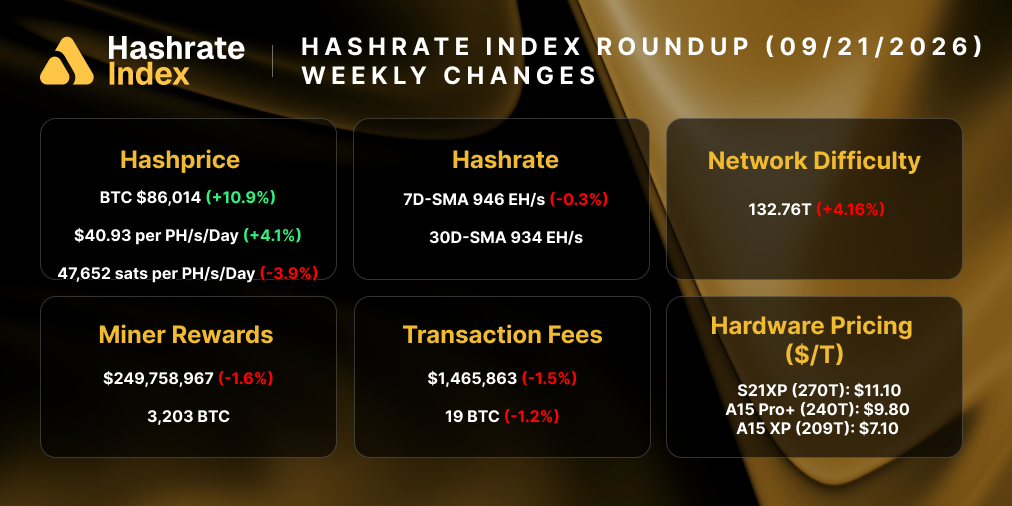
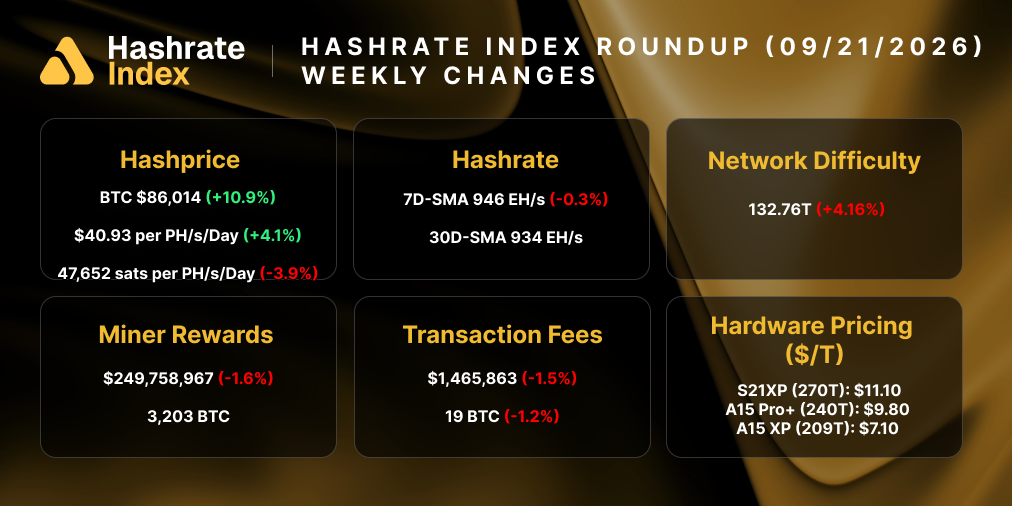
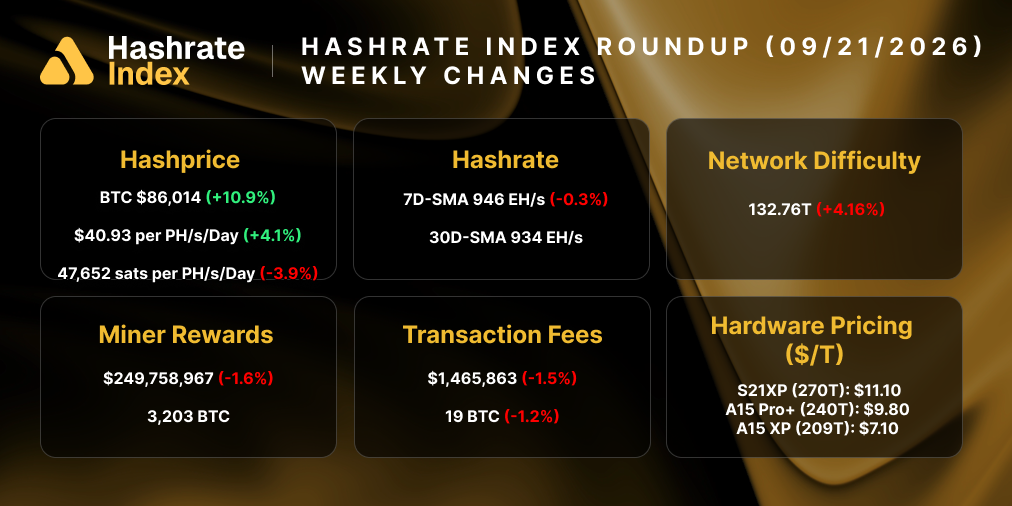
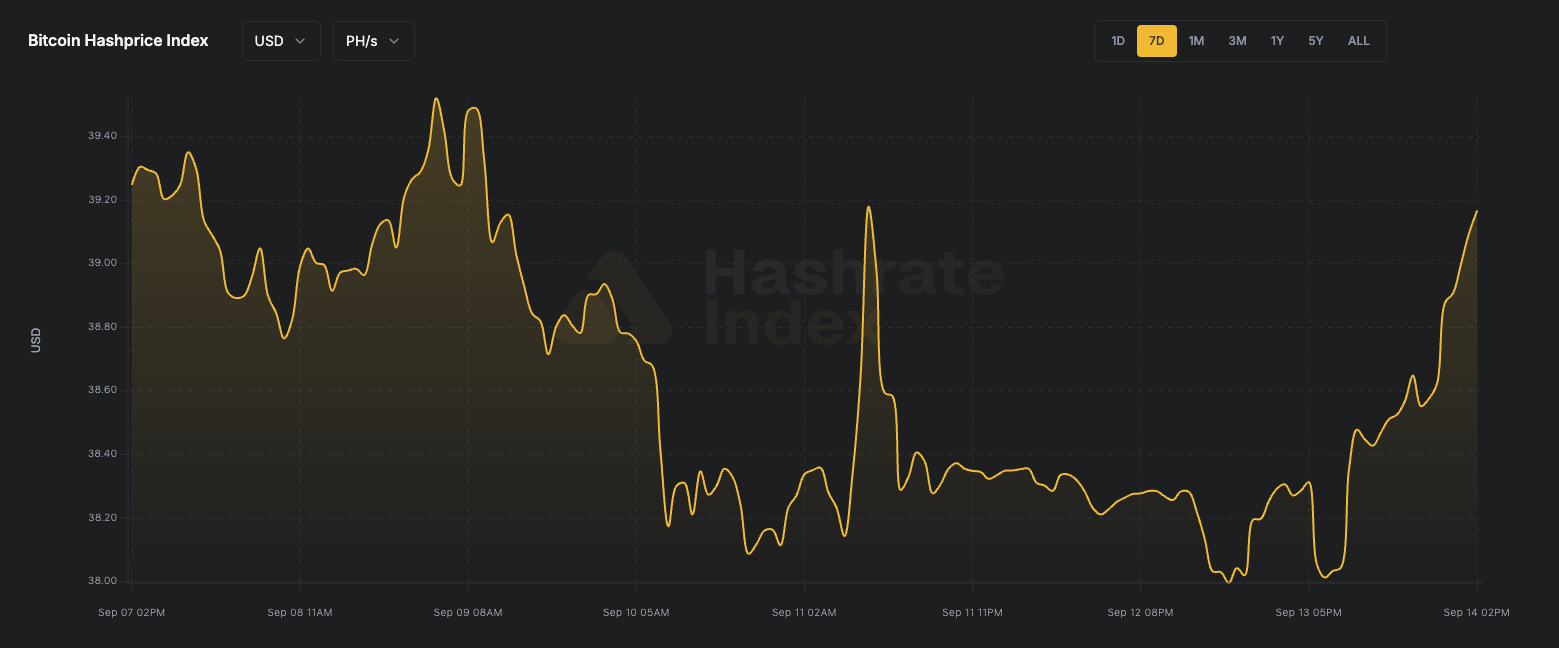
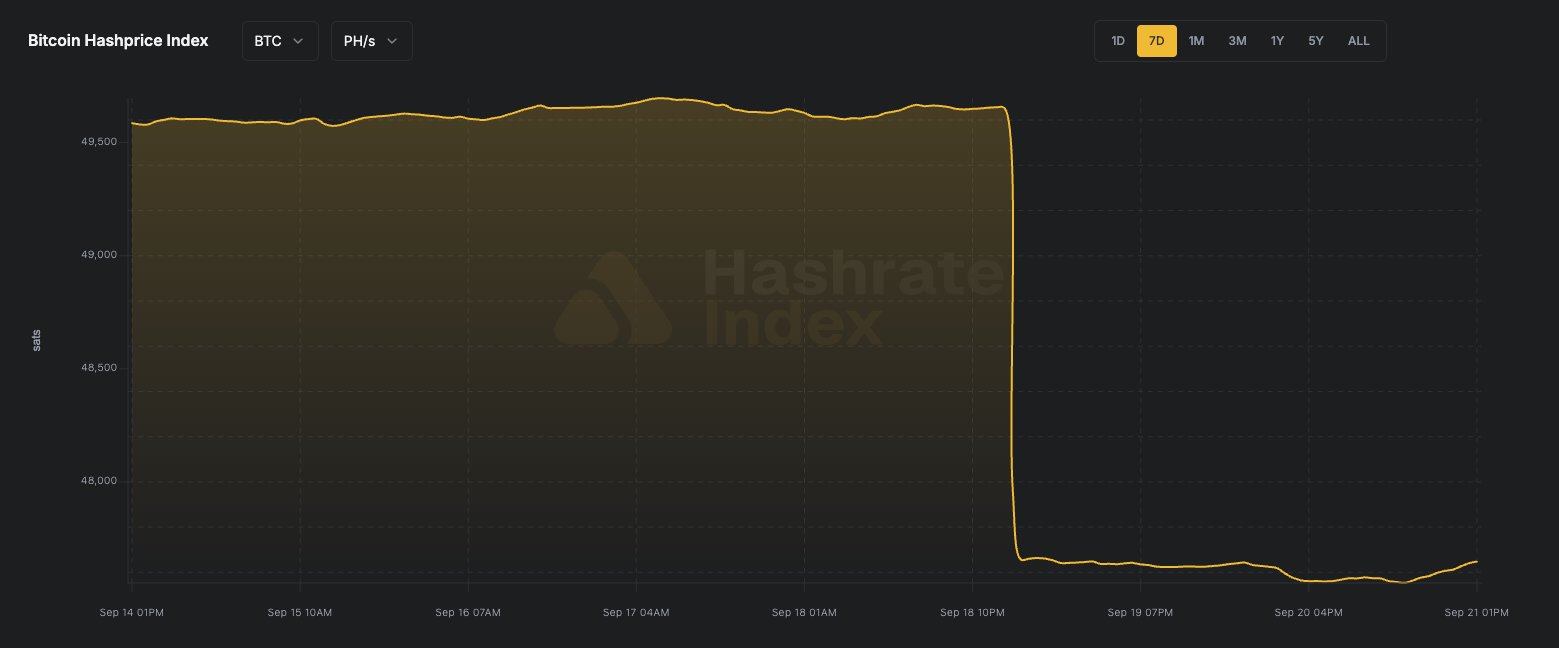
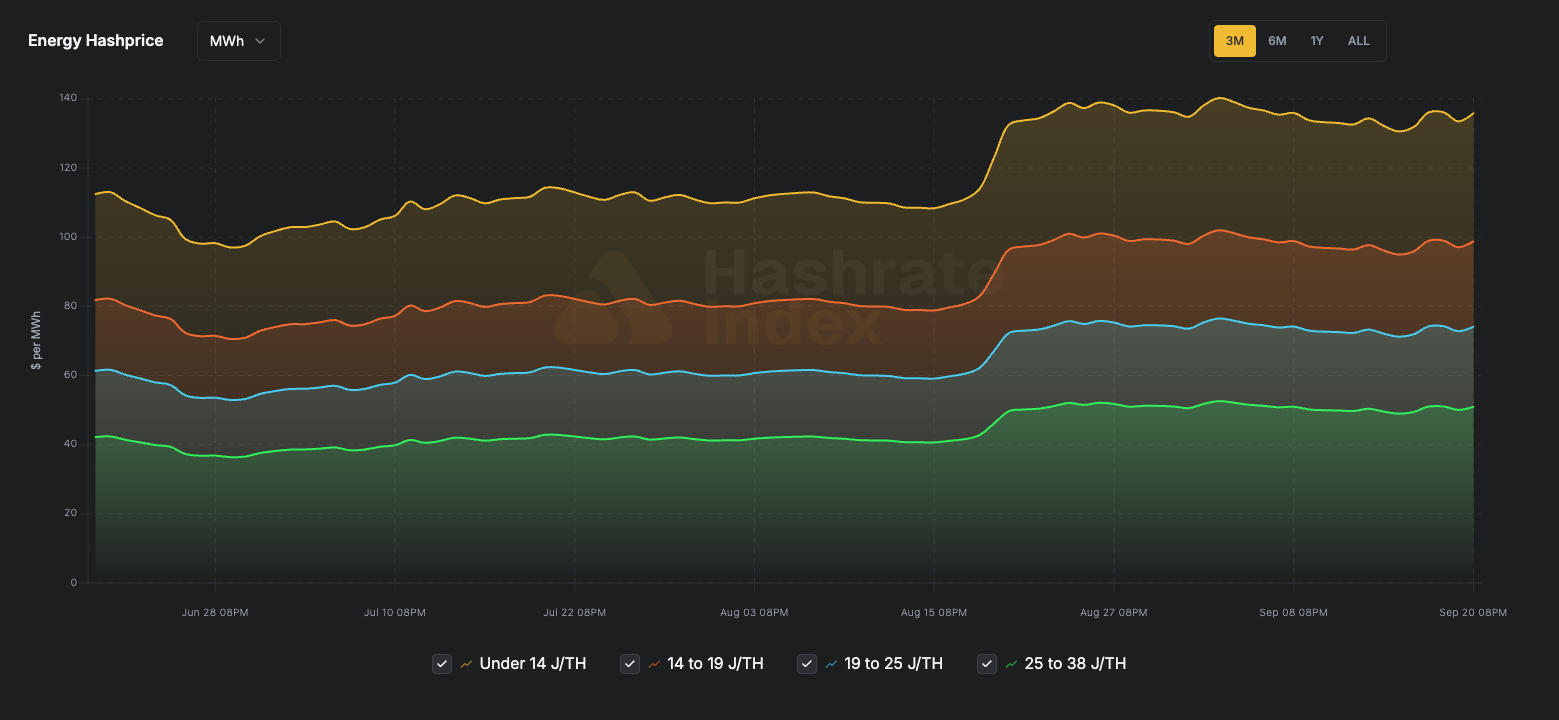
The Bitcoin mining sector demonstrated a complex interplay of rising network security and recovering revenue metrics during the week ending April 13, 2026. While the broader cryptocurrency market has faced a challenging start to the year, the past seven days provided a reprieve for industrial-scale miners as Bitcoin’s spot price surged by 8.0%, climbing from approximately $68,748 to $74,247. This price appreciation directly bolstered the USD hashprice—a critical measure of mining profitability—which rose 5.2% to finish the week at $33.25 per petahash per second per day (PH/s/Day). Despite this weekly recovery, the industry continues to navigate a high-difficulty environment, with the network hashrate maintaining its aggressive trajectory toward the psychological milestone of one zettahash per second (ZH/s).

Hashrate Index Roundup (April 13, 2026)

Market Volatility and Revenue Performance

The 8.0% increase in Bitcoin’s market value served as the primary catalyst for the improvement in mining economics this week. However, when viewed through a wider lens, the year-to-date (YTD) performance for Bitcoin remains down by 15.1%. This overarching downward trend since the beginning of 2026 has kept many high-cost operators under significant financial pressure.

During the observation period, miners collectively secured approximately 3,166 BTC in total block rewards, representing a gross revenue of roughly $226 million. A granular look at these earnings reveals a continued reliance on the block subsidy rather than transaction fees. Fees accounted for a mere 0.58% of total rewards, totaling 16 BTC (approximately $1.2 million). On a per-block basis, transaction fees averaged 0.0163 BTC, a slight 1% decline from the previous week’s average of 0.0165 BTC. This low-fee environment suggests a period of relatively low on-chain congestion, contrasting sharply with previous cycles where inscriptions or high-volume decentralized finance activity on the Bitcoin network spiked miner revenues.

Hashrate Index Roundup (April 13, 2026)

The Push Toward the Zettahash Era

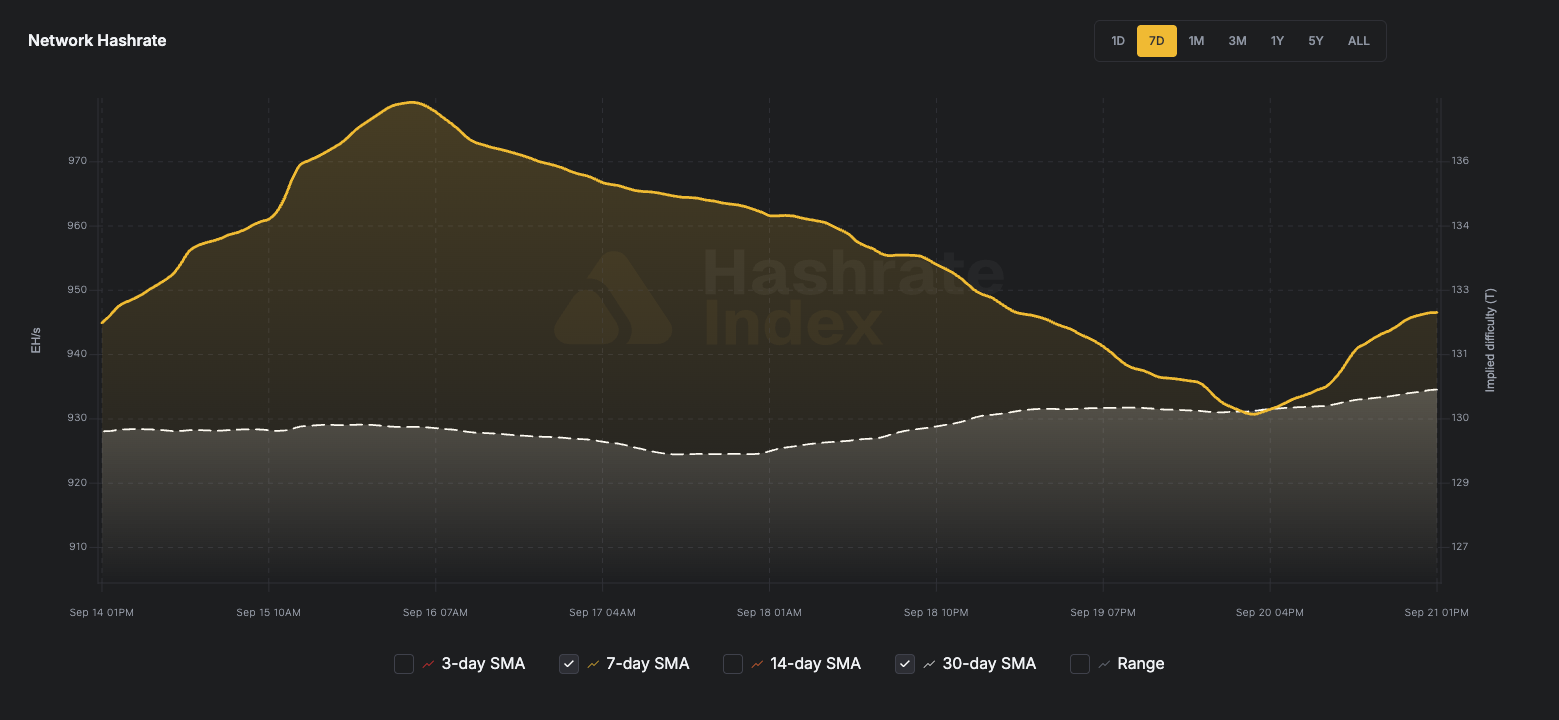
Network hashrate, the aggregate computing power dedicated to securing the Bitcoin blockchain, continued its upward climb. The 7-day simple moving average (SMA) rose by 1.3%, moving from 957 EH/s to 969 EH/s. The 30-day SMA currently sits slightly higher at 977 EH/s, indicating that while there was a minor weekly fluctuation, the long-term trend remains firmly bullish.

The industry is now less than 4% away from reaching 1,000 EH/s, or one zettahash. This growth is largely attributed to the ongoing deployment of next-generation hardware, such as the Bitmain Antminer S21 series, and the energization of massive data center projects in regions with stranded energy or subsidized industrial power. As hashrate increases, the competition for the fixed supply of newly minted Bitcoin intensifies, effectively diluting the "hash share" of older, less efficient machines.

Hashrate Index Roundup (April 13, 2026)

Difficulty Adjustments and Operational Margins

The Bitcoin network’s self-correcting mechanism, the difficulty adjustment, remains a pivotal factor in miner sustainability. The most recent adjustment occurred on April 3, resulting in a 3.87% increase to a record difficulty of 138.97T. This increase reflects the massive influx of hashrate over the preceding two weeks.

However, current data suggests a reprieve is on the horizon. With block times averaging 10 minutes and 22 seconds over the last 24 hours—slightly slower than the 10-minute target—the network is currently projected to decrease difficulty by approximately 3.66% during the next adjustment, expected on April 17.

Hashrate Index Roundup (April 13, 2026)

For many operators, this projected decrease is essential. At a hashprice of $33 per PH/s/Day, profit margins are razor-thin. Analysts note that for miners paying more than $0.06 to $0.07 per kilowatt-hour (kWh) for electricity, the current hashprice sits dangerously close to or even below the operational breakeven point, especially for those running older generation hardware like the Antminer S19 series.

Hardware Efficiency and the Role of Specialized Firmware

As margins compress, the market for mining hardware has reached a point of relative stabilization. The Bitmain S21XP, currently considered one of the most efficient machines on the market, is trading at approximately $25.70 per terahash (TH). The lack of significant price movement in hardware suggests that buyers are cautious, awaiting clearer signals of a sustained Bitcoin price rally before committing to large-scale capital expenditures.

Hashrate Index Roundup (April 13, 2026)

In response to these tight margins, there is a growing trend toward the use of custom firmware to optimize existing fleets. Products such as Luxor’s LuxOS have become integral for operators looking to "undervolt" their machines—reducing power consumption while maintaining stable hashrate—or "overclock" them during periods of low energy costs to maximize revenue. By improving the joules-per-terahash (J/TH) efficiency of the S19 and S21 series, firmware allows miners to lower their breakeven hashprice, effectively extending the lifespan of their hardware in a hyper-competitive environment.

The Transaction Fee Landscape

The stagnation of transaction fees remains a point of concern for the long-term security budget of the network. The 7-day average for fees stands at 0.0386 BTC, while the 30-day average is 0.0337 BTC. While the 14-day and 30-day averages show modest increases of 12.27% and 14.54% respectively, the absolute values remain low compared to the peaks seen in 2024 and 2025.

Hashrate Index Roundup (April 13, 2026)

Industry experts suggest that the current low-fee environment is a result of improved Layer 2 scaling adoption and a temporary lull in speculative on-chain activity. For miners, this means that nearly 99% of their revenue is currently derived from the block subsidy. As the network approaches future halving events, the necessity for a robust fee market becomes increasingly critical to compensate for the diminishing block reward.

Future Outlook: Forward Markets and Strategic Hedging

Looking ahead, the derivatives market provides insight into institutional expectations for the mining sector. The Luxor Hashrate Forward Market is currently pricing an average hashprice of $32.10 (or 0.00044 BTC) over the next six months. This "contango" or "backwardation" in the forward curve allows miners to hedge their production, locking in a guaranteed revenue stream to protect against potential drops in Bitcoin’s price or further surges in network difficulty.

Hashrate Index Roundup (April 13, 2026)

The forward curve for April 2026 through September 2026 indicates a gradual decline in USD-denominated hashprice expectations, falling from the high $30s toward the $32 range. This suggests that the market expects hashrate growth to continue outpacing Bitcoin price appreciation in the near term, further squeezing margins for inefficient operators.

Broader Impact and Industry Implications

The current state of the Bitcoin mining industry in April 2026 reflects a maturing sector defined by institutionalization and technological optimization. The resilience of the hashrate despite a 15% YTD decline in Bitcoin’s price demonstrates the long-term conviction of large-scale miners and their ability to access capital even in "risk-off" market conditions.

Hashrate Index Roundup (April 13, 2026)

Several key implications emerge from this week’s data:

  1. Consolidation Risk: Small-scale and retail miners are increasingly being priced out. The dominance of the S21XP and the necessity for custom firmware optimization favor large-scale operations with the technical expertise and economies of scale to survive $30-range hashprices.
  2. Energy Grid Integration: Miners are increasingly acting as "load balancers" for energy grids. The ability to curtail power during peak demand or utilize firmware to adjust consumption is becoming a secondary revenue stream through demand-response programs, particularly in regions like Texas and Northern Europe.
  3. The Zettahash Milestone: Crossing the 1,000 EH/s mark will be a historic moment for Bitcoin, signaling a level of computational security that was once considered theoretical. However, it also serves as a warning that the "arms race" for hardware efficiency shows no signs of slowing down.

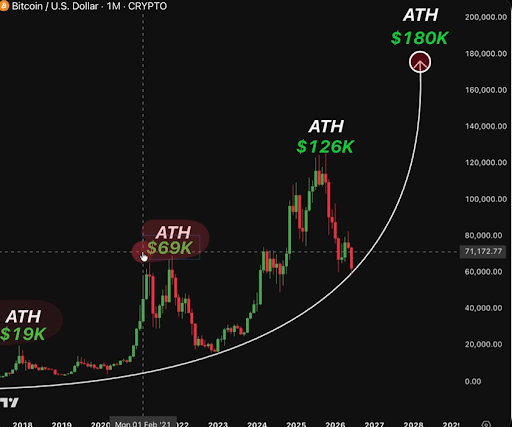
As the industry moves toward the next difficulty adjustment on April 17, all eyes will be on Bitcoin’s ability to maintain the $74,000 support level. A sustained move above $80,000 would provide the necessary "breathing room" for the mining fleet to expand further, while a retreat toward the $60,000 range could trigger a significant "miner capitulation" event, where older machines are forced offline, leading to a temporary drop in hashrate and a subsequent downward difficulty adjustment. For now, the mantra for the global mining community remains one of cautious optimization and operational discipline.

April 19, 2025 0 comment
0 FacebookTwitterPinterestEmail
Crypto Mining & Infrastructure

Massachusetts Authorities Issue Arrest Warrant for Former School Employee Accused of Operating Clandestine Cryptocurrency Mine

by Neng Nana April 18, 2025
written by Neng Nana

Law enforcement officials in Cohasset, Massachusetts, have secured a default warrant for the arrest of Nadeem Nahas, a former municipal employee accused of orchestrating an elaborate and illegal cryptocurrency mining operation within the crawl space of Cohasset High School. The case, which has drawn national attention to the intersection of public resource theft and digital asset production, centers on the alleged theft of nearly $18,000 in electricity used to power a hidden array of mining rigs. Nahas, who previously served as a facilities worker for the town, failed to appear for a scheduled arraignment at Quincy District Court, prompting a judge to issue the warrant that authorizes police to take him into custody.

The investigation into the unauthorized mining facility began in late 2021 and has since exposed the lengths to which individuals may go to offset the high overhead costs associated with proof-of-work (PoW) cryptocurrency mining. By utilizing public infrastructure, the accused allegedly sought to reap the rewards of Bitcoin production while externalizing the significant energy costs to the taxpayers of Cohasset.

The Discovery and Investigation Timeline

The genesis of the investigation dates back to December 14, 2021, when the facilities director for the town of Cohasset conducted a routine inspection of the high school’s infrastructure. During this inspection, the director noticed something highly irregular in a remote crawl space located near the building’s boiler room. Upon closer examination, the director discovered a sophisticated network of computers, temporary electrical wiring, and cooling fans that appeared entirely disconnected from the school’s authorized IT or HVAC systems.

Recognizing the potential for illegal activity or a significant safety hazard, the school administration immediately contacted the Cohasset Police Department. Detectives, alongside the town’s IT department, launched an exhaustive three-month forensic investigation. This probe eventually identified 11 individual "mining rigs"—specialized high-performance computers designed specifically for the intensive mathematical computations required to secure a blockchain and earn cryptocurrency rewards.

The investigation revealed that the rigs had been operating 24 hours a day, seven days a week, for several months. By tracing the hardware and interviewing staff members, investigators linked the operation to Nadeem Nahas, who was then an employee of the Cohasset facilities department. Nahas resigned from his position in March 2022, shortly after the investigation gained momentum and before formal charges were finalized.

Financial and Technical Scope of the Operation

The primary charge against Nahas involves the fraudulent use of electricity and vandalism of school property. According to court documents and municipal reports, the town of Cohasset calculated that the 11 mining rigs consumed approximately $17,492.57 worth of electricity between April 28, 2021, and the date of discovery in mid-December.

Cryptocurrency mining is a notoriously energy-intensive process. In a proof-of-work system, such as the one used by Bitcoin, miners compete to solve complex cryptographic puzzles. This requires specialized hardware known as Application-Specific Integrated Circuits (ASICs). These machines generate immense heat and require constant power to remain profitable. By hiding the hardware in a school crawl space, the operator avoided the two biggest obstacles to profitable mining: the high cost of residential or commercial electricity and the logistical challenge of cooling the equipment.

The timing of the operation coincided with the peak of the 2021 cryptocurrency bull market. During the period between April and December 2021, Bitcoin reached an all-time high of nearly $69,000. The potential for high returns during this period likely served as the catalyst for the clandestine setup, as the high value of the digital assets would have theoretically made the "free" electricity even more lucrative for the perpetrator.

Authorities Uncover Crypto Mine Hidden Under A School | Bitcoinist.com

Legal Proceedings and the Issuance of a Default Warrant

Following the conclusion of the initial investigation, the Cohasset Police Department filed a criminal complaint against Nahas, charging him with the fraudulent use of electricity and tagging (vandalism). A hearing was scheduled at Quincy District Court to formally arraign Nahas on these charges.

However, the legal process hit a significant hurdle when Nahas failed to appear for his scheduled court date in February 2023. Under Massachusetts law, when a defendant fails to appear for a required court proceeding without a valid excuse, the presiding judge may issue a default warrant. This warrant remains active until the individual is apprehended or voluntarily surrenders to the court.

A default warrant is a serious legal mechanism. Unlike a standard summons, it empowers any law enforcement officer in the state to arrest the individual upon contact. For the town of Cohasset, the warrant represents a necessary step in seeking restitution for the nearly $18,000 in stolen utility costs and ensuring accountability for the misuse of public property.

Broader Trends: The Rise of "Cryptojacking" and Energy Theft

The Cohasset incident is not an isolated case but rather part of a growing global trend where individuals attempt to bypass the high costs of crypto mining through theft. This phenomenon is often referred to in the cybersecurity world as "cryptojacking" when it involves malware on private computers, or "energy theft" when it involves physical tampering with electrical grids or unauthorized use of public facilities.

Similar incidents have occurred worldwide as authorities struggle to regulate the decentralized nature of digital assets. In July 2021, authorities in Malaysia made international headlines when they seized over 1,000 Bitcoin mining rigs that were being powered by stolen electricity. In a dramatic display of enforcement, the Malaysian police used a steamroller to crush $1.2 million worth of equipment to signal a zero-tolerance policy toward energy theft.

In August 2020, Bulgarian law enforcement agents arrested two individuals in Sofia who had allegedly funneled over $1.5 million in electricity to two illegal mining farms over a period of several months. These cases highlight a common theme: the high energy requirements of blockchain technology often drive bad actors toward high-stakes larceny, frequently targeting public utilities or industrial zones where massive power consumption might go unnoticed for longer periods.

Regulatory Scrutiny and Environmental Concerns in the U.S.

The Cohasset case arrives at a time of heightened scrutiny regarding the environmental and infrastructure impacts of cryptocurrency mining in the United States. Federal and state lawmakers have expressed increasing concern over the strain that large-scale mining operations place on the national power grid and the associated carbon emissions.

In early 2023, a coalition of eight U.S. lawmakers, including Senator Elizabeth Warren of Massachusetts and Representative Jared Huffman of California, sent a formal inquiry to the Environmental Protection Agency (EPA) and the Department of Energy (DOE). The lawmakers requested comprehensive data on the energy consumption and environmental footprint of the domestic crypto-mining industry.

"Energy use and pollution caused by cryptocurrency mining worries us," Representative Huffman stated in a public address. "We are urging officials to ensure that crypto miners transparently disclose their energy use and emissions."

Authorities Uncover Crypto Mine Hidden Under A School | Bitcoinist.com

The letter to the EPA emphasized that the rapid growth of the industry could undermine U.S. climate goals. Lawmakers are particularly concerned about "zombie" power plants—shuttered coal or gas facilities that have been reopened specifically to provide dedicated power to crypto-mining warehouses. The Cohasset incident, while smaller in scale than an industrial mining farm, underscores the difficulty of monitoring energy usage at the local level and the potential for public institutions to be exploited.

Implications for Public Infrastructure Safety

Beyond the financial theft, the Cohasset High School operation raised significant safety concerns. Unauthorized electrical work, especially the kind required to power 11 high-draw mining computers in a confined crawl space, poses a severe fire risk.

Mining rigs generate significant thermal output. In a professional data center, this heat is managed through industrial-grade cooling systems and fire suppression technology. In a school crawl space, however, the accumulation of heat near structural components and the use of "temporary" or "bootlegged" wiring can lead to electrical fires. The fact that the equipment was located near a boiler room—a central hub of the building’s heating system—only amplified the potential danger to students, faculty, and the facility itself.

Building experts suggest that school districts and municipal governments may need to implement more rigorous energy monitoring systems to detect anomalies in real-time. A sudden, sustained spike in electricity usage that does not align with seasonal changes or building schedules can be an early warning sign of unauthorized hardware installation.

Conclusion and Future Outlook

The case of Nadeem Nahas serves as a cautionary tale for municipal leaders and school administrators across the country. As the value of digital assets fluctuates and the difficulty of mining increases, the temptation to utilize "free" public resources remains a persistent threat.

The town of Cohasset is currently working to recover the lost funds and has tightened security protocols regarding access to mechanical rooms and crawl spaces. Meanwhile, the legal system awaits the apprehension of Nahas to proceed with the prosecution. The outcome of this case will likely be watched closely by other jurisdictions facing similar challenges, as it sets a precedent for how local governments handle the intersection of traditional larceny and modern technological exploitation.

As the United States continues to debate the federal regulation of the cryptocurrency industry, the Cohasset incident highlights the immediate, local impact of the "gold rush" for digital assets. Whether through legislative reform or increased physical security of public utilities, the message from Massachusetts authorities is clear: the use of taxpayer-funded resources for private gain in the crypto space will be met with criminal investigation and prosecution.

April 18, 2025 0 comment
0 FacebookTwitterPinterestEmail
Crypto Mining & Infrastructure

Google Secures Largest Stake in TeraWulf Following 1.8 Billion Dollar AI Infrastructure Agreement with Fluidstack

by Nana April 16, 2025
written by Nana

The landscape of high-performance computing and cryptocurrency mining has undergone a seismic shift following the announcement that Google has entered into a massive financial arrangement involving TeraWulf Inc. (NASDAQ: WULF), a leading developer and operator of digital asset infrastructure. In a move that signals a profound convergence between Big Tech and the energy-intensive world of blockchain, Google has effectively become the largest shareholder in TeraWulf as part of a complex $1.8 billion deal aimed at accelerating the deployment of artificial intelligence (AI) infrastructure.

The transaction centers on a 10-year AI-hosting agreement between TeraWulf and Fluidstack, a cloud platform that specializes in the orchestration of high-performance GPU clusters. To facilitate this decade-long partnership, Google has agreed to provide a $1.8 billion backstop for Fluidstack’s lease obligations. In exchange for this financial guarantee and its role in the ecosystem, Google has received approximately 41 million shares of TeraWulf’s common stock. This equity position establishes Google as the primary institutional holder of WULF, marking one of the most significant direct involvements by a major technology firm in a company primarily known for Bitcoin mining.

Strategic Realignment: From Bitcoin to Artificial Intelligence

TeraWulf, currently ranked as the fifth-largest Bitcoin mining firm globally by market capitalization, has been aggressively pivoting toward high-performance computing (HPC) and AI hosting. This strategic shift is driven by the increasing demand for data center space capable of handling the immense power and cooling requirements of modern AI workloads. While Bitcoin mining utilizes Application-Specific Integrated Circuits (ASICs), the burgeoning AI sector requires massive clusters of Graphics Processing Units (GPUs), such as those produced by Nvidia.

The agreement with Fluidstack and the subsequent backing by Google focuses on TeraWulf’s flagship Lake Mariner facility in Western New York. The site is uniquely positioned for such an expansion due to its access to low-cost, zero-carbon energy sources, primarily hydroelectric and nuclear power. Under the terms of the deal, TeraWulf will provide the physical infrastructure, power, and cooling necessary to host Fluidstack’s GPU clusters, while Google’s multi-billion dollar backstop provides the long-term financial security required to scale these operations.

Market Reaction and Financial Performance

The announcement, which was officially disclosed on August 14th, triggered an immediate and volatile reaction in the equity markets. TeraWulf’s stock price (WULF) experienced a dramatic surge, doubling in value within a short window as investors processed the implications of Google’s involvement. The stock climbed from a baseline of $5.24 to a peak of $10.54. Following this rapid ascent, the price underwent a natural market correction, eventually stabilizing around the $8.90 level.

With a market capitalization now hovering around $3.49 billion, TeraWulf has moved into a new tier of valuation among its peers in the crypto-mining sector. The market’s enthusiasm reflects a broader trend: investors are increasingly valuing crypto miners not just for their ability to produce digital assets, but for their underlying "power-at-the-plug" assets. In an era where power grid capacity and electrical permits are becoming the primary bottlenecks for AI development, TeraWulf’s existing infrastructure is viewed as a "hyperscale-ready" asset.

For comparison, Google’s parent company, Alphabet Inc., currently maintains a market valuation of approximately $2.43 trillion. Its shares (GOOG) have been trading near all-time highs of $201.44, buoyed by the company’s aggressive integration of generative AI across its product suite. By securing a stake in TeraWulf, Google is effectively verticalizing its supply chain, ensuring that the physical data centers required for its AI future are backed by sustainable energy and robust operational expertise.

The Lake Mariner Expansion and Zero-Carbon Commitment

A central pillar of the deal is the expansion of the Lake Mariner campus. TeraWulf’s CEO, Paul Prager, described the partnership as a "defining moment" for the company. The facility is currently being upgraded to support an initial 200 megawatts (MW) of AI and HPC capacity. Unlike traditional data centers that may rely on fossil fuels, TeraWulf’s operations are designed to be "predominantly zero-carbon," a factor that is increasingly critical for tech giants like Google that have committed to ambitious net-zero sustainability goals.

The technical requirements for hosting AI clusters are significantly more stringent than those for Bitcoin mining. AI GPUs generate intense heat and require sophisticated liquid cooling systems and redundant power supplies. TeraWulf has indicated that the capital provided and the stability of the 10-year contract will allow it to build out this specialized "next generation" infrastructure. The Lake Mariner site’s ability to scale rapidly is a key reason Fluidstack and Google selected TeraWulf as a primary partner.

Chronology of the Deal and Industrial Context

The path to this landmark agreement has been paved by a series of strategic maneuvers by TeraWulf over the past 18 months.

  1. Early 2023: TeraWulf begins diversifying its energy portfolio and optimizing its Bitcoin mining fleet to maximize cash flow.
  2. Late 2023: The company identifies the "HPC opportunity," noting that its power permits and physical land are undervalued by the market.
  3. April 2024: The Bitcoin "halving" event occurs, reducing the rewards for mining Bitcoin and prompting miners industry-wide to seek alternative revenue streams.
  4. June 2024: Reports emerge of major AI firms seeking partnerships with Bitcoin miners (most notably the Core Scientific and CoreWeave deal).
  5. August 14, 2024: TeraWulf officially announces the 10-year agreement with Fluidstack and the $1.8 billion backstop and equity stake from Google.

This timeline highlights a broader industry trend. As the profitability of Bitcoin mining becomes more dependent on extreme efficiency and low energy costs, the "dual-purpose" data center model has emerged as the most viable path forward for large-scale operators. TeraWulf’s move follows in the footsteps of other miners like Core Scientific, which recently signed a multi-billion dollar deal with CoreWeave, but the direct involvement of a company of Google’s stature represents a new level of institutional validation for the sector.

Executive Perspectives and Industry Implications

The leadership at TeraWulf has expressed immense confidence in the company’s new trajectory. CEO Paul Prager emphasized that the transaction underscores the status of their facilities as premier destinations for the world’s most demanding compute tasks. "We are proud to unite world-class capital and compute partners to deliver the next generation of AI infrastructure," Prager stated. He noted that the transition into high-performance computing is an acceleration of a long-standing strategic plan, rather than a reactionary shift.

Industry analysts suggest that this deal may trigger a "land grab" for power-rich assets. As Google, Microsoft, and Amazon scramble to secure the electricity needed to run their Large Language Models (LLMs), the existing power footprints of Bitcoin miners have become the most valuable real estate in the tech world. TeraWulf’s 41 million shares now held by Google create a unique alignment of interests, where one of the world’s most powerful software companies is now a part-owner of the physical infrastructure that powers it.

Broader Economic Impact and Future Outlook

The implications of the Google-TeraWulf deal extend beyond the balance sheets of the two companies. It signals a maturation of the digital asset industry, where the "mining" of data and the "mining" of currency are merging into a singular category of industrial-scale computation.

For the Western New York region, the expansion of the Lake Mariner facility is expected to bring increased technical investment and job opportunities in the high-tech sector. Economically, the deal provides TeraWulf with a diversified revenue stream that is not tied to the volatile price of Bitcoin. This stability is likely to make WULF a more attractive option for ESG-focused (Environmental, Social, and Governance) investment funds that previously avoided the crypto sector due to its perceived lack of utility and high carbon footprint.

As the 10-year agreement begins, the focus will shift to TeraWulf’s ability to meet the rigorous uptime and performance standards required by Fluidstack and Google. If successful, this model could become the blueprint for the survival and growth of the crypto-mining industry in a post-halving world. By leveraging zero-carbon energy and existing grid connections, TeraWulf has successfully positioned itself at the center of the AI revolution, backed by the financial might of the world’s most dominant search and cloud provider.

April 16, 2025 0 comment
0 FacebookTwitterPinterestEmail
Newer Posts
Older Posts

Recent Posts

  • Ripple Treasury Network Expansion Triggers Speculative 625 Dollar XRP Valuation Analysis Amidst 13000 Bank Integration
  • Analyst Says Bitcoin Is Set To Close This Month In The Red, Here’s Why
  • XRP, Solana, Cardano, BNB, DOGE Primed For Huge Expansion If Ethereum Attains This Milestone
  • Justin Sun Files Federal Lawsuit Against World Liberty Financial Over Token Freeze and Governance Disputes
  • Ripple Collaborates with Crypto ISAC to Combat North Korean Cyber Threats Using AI-Powered Intelligence Sharing

Recent Comments

No comments to show.
  • Facebook
  • Twitter

@2021 - All Right Reserved. Designed and Developed by PenciDesign


Back To Top
Crypto Gohan
  • Home

We are using cookies to give you the best experience on our website.

You can find out more about which cookies we are using or switch them off in .

Crypto Gohan
Powered by  GDPR Cookie Compliance
Privacy Overview

This website uses cookies so that we can provide you with the best user experience possible. Cookie information is stored in your browser and performs functions such as recognising you when you return to our website and helping our team to understand which sections of the website you find most interesting and useful.

Strictly Necessary Cookies

Strictly Necessary Cookie should be enabled at all times so that we can save your preferences for cookie settings.