As the cryptocurrency market of 2026 continues its rapid evolution, characterized by fleeting trends and a constant influx of innovative, yet often unproven, projects, Litecoin (LTC) steadfastly maintains its position, distinguished by an unwavering commitment to its foundational principles of fast, affordable, and reliable digital transactions. Despite the decade-plus explosion of digital assets, from decentralized finance (DeFi) protocols to non-fungible tokens (NFTs) and complex Layer 2 solutions, Litecoin’s pragmatic design and consistent performance have cemented its relevance, proving that utility and stability can triumph over ephemeral hype.
As of July 2026, market capitalization data places Litecoin firmly among the top 30 global cryptocurrencies, commanding a valuation of approximately $3.4 billion. This sustained presence in a highly competitive and dynamic market underscores its resilience and utility, providing a familiar and dependable option for individuals and businesses seeking efficient value transfer without the complexities or uncertainties often associated with newer, experimental protocols. Its journey reflects a rare consistency across multiple market cycles, offering a testament to its robust architecture and the persistent demand for straightforward digital cash.
Genesis and Vision: The "Silver to Bitcoin’s Gold"
Litecoin’s story began in October 2011, conceived by former Google engineer Charlie Lee. Emerging as a fork of Bitcoin Core, Litecoin was designed with a clear, complementary vision: to serve as the "silver to Bitcoin’s gold." This analogy encapsulated its purpose – to facilitate faster, more frequent, and more affordable daily transactions, thereby augmenting Bitcoin’s role as a store of value and settlement layer for larger transfers. Lee’s objective was not to replace Bitcoin but to create a network better suited for everyday commerce, addressing some of Bitcoin’s perceived limitations at the time, particularly its longer block confirmation times and potentially higher transaction fees as network congestion grew.
Key technical differentiators were embedded in its initial design. Litecoin adopted the Scrypt proof-of-work algorithm, intentionally chosen to be less susceptible to specialized mining hardware (ASICs) prevalent in Bitcoin mining at the time, aiming for greater decentralization in its early stages. More significantly, its block time was set to approximately 2.5 minutes, a quarter of Bitcoin’s 10-minute average. This crucial design choice directly translated into faster transaction confirmations, making Litecoin inherently more suitable for point-of-sale transactions and time-sensitive transfers. The total supply was also set at 84 million coins, four times that of Bitcoin, aligning with its vision for broader distribution and everyday use.
Chronology of Resilience: Navigating a Decade of Innovation
Since its inception, Litecoin has navigated a tumultuous and transformative decade in the cryptocurrency space.
- 2011: Launch by Charlie Lee, establishing the "silver to Bitcoin’s gold" narrative.
- 2013: Experienced its first major bull run, gaining significant attention alongside Bitcoin.
- 2015: First halving event, reducing miner rewards and impacting supply dynamics.
- 2017: A pivotal year for Litecoin, marked by its successful activation of Segregated Witness (SegWit) ahead of Bitcoin. This upgrade significantly improved transaction capacity and paved the way for future scaling solutions like the Lightning Network. Litecoin effectively served as a "testnet" for Bitcoin, demonstrating the viability of SegWit.
- 2019: Second halving event. Litecoin also saw increased integration with payment processors and exchanges.
- 2020-2021: Participated in the broader crypto bull market, witnessing significant price appreciation and renewed interest, even as DeFi and NFTs began to dominate headlines. Its stability often attracted users seeking refuge from the volatility of newer, experimental tokens.
- 2023: Continued focus on privacy features with MWEB (MimbleWimble Extension Blocks) integration, offering enhanced fungibility and privacy options for users, further differentiating it from Bitcoin while maintaining optional transparency.
- 2023: Third halving event, further reducing the new supply of LTC.
- 2024-2026: Steadily maintained its market position, demonstrating consistent network uptime and reliability amidst a landscape saturated with novel blockchain solutions. Its continued merchant adoption and low-cost transaction appeal underscore its enduring utility.
This chronology highlights Litecoin’s consistent operational uptime of over fourteen years, a remarkable feat in a nascent industry prone to project failures and security breaches. This track record of uninterrupted service has cultivated a strong reputation for dependability, fostering user confidence that few newer projects can match.
The Enduring Value Proposition: Speed, Affordability, and Reliability
Litecoin’s sustained appeal in 2026 can be primarily attributed to its unwavering commitment to its core value proposition: practical, efficient, and cost-effective digital transactions.
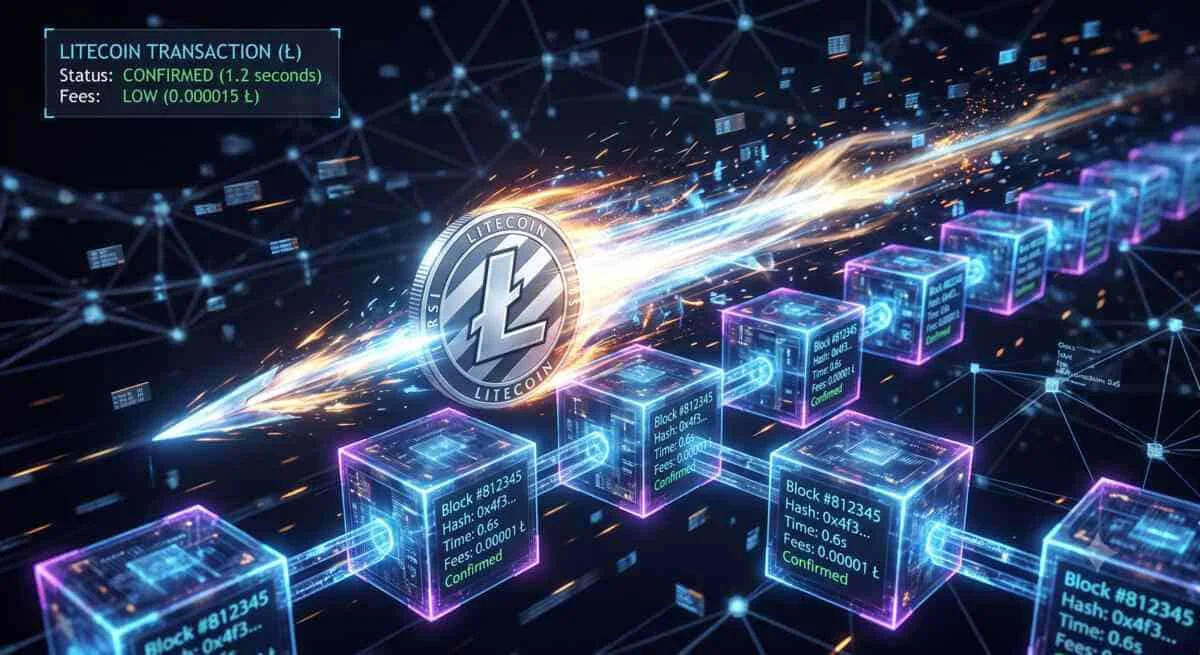
Built for Speed: The network’s average block time of approximately 2.5 minutes remains a defining strength. This speed allows for significantly faster transaction confirmations compared to Bitcoin, where average block times are around 10 minutes. For everyday payments, this quicker turnaround provides a user experience that closely mirrors modern online banking, enhancing convenience and reducing friction. Whether it’s paying for goods online, settling personal debts, or conducting cross-border remittances, users rarely face prolonged waiting periods. This efficiency has been a consistent driver of adoption, particularly among users who prioritize immediacy in their digital financial activities.
Unmatched Affordability: Cost remains a critical factor for widespread cryptocurrency adoption, and Litecoin has consistently maintained extremely low transaction fees. Even as network congestion on other popular blockchains can drive fees sky-high, Litecoin’s fee structure has remained remarkably stable and affordable. This makes it an ideal choice for frequent transfers, micro-transactions, and payments where a significant percentage of the transferred amount would otherwise be eroded by network costs. For small businesses, international remittances, or routine online purchases, the predictable and minimal transaction expenses offered by Litecoin present a compelling economic advantage, making everyday use genuinely practical.
Reliable Performance: Over its extensive operational history, Litecoin has established a formidable reputation for dependable network operation. Its infrastructure has proven robust against various market conditions, security challenges, and technological shifts. This consistent performance builds trust, a non-negotiable asset in the financial sector. Users are confident that their transactions will be processed swiftly and securely, reinforcing their decision to choose Litecoin over more volatile or unproven alternatives. This reliability is often cited by long-term holders and new entrants alike as a primary reason for recommending Litecoin.
Merchant Acceptance and Ecosystem Integration
A cryptocurrency’s utility is directly proportional to its acceptance in the real world. In this regard, Litecoin continues to excel. It ranks among the most widely accepted cryptocurrencies globally, integrated by a diverse array of online retailers, payment processors, travel services, technology companies, and charitable organizations. This widespread merchant adoption means that Litecoin holders possess tangible spending power, often without the need to convert their assets into traditional fiat currency first. Platforms such as litecoins.com frequently update users on new adoption initiatives and educational content, highlighting the expanding practical applications across various industries.
The growing network of businesses accepting LTC fosters a positive feedback loop: more acceptance leads to greater utility, which in turn encourages more users, further incentivizing merchants. This continuous reinforcement of confidence among both buyers and sellers solidifies Litecoin’s role as a practical medium of exchange. Its integration into various payment gateways and cryptocurrency exchanges also ensures high liquidity and accessibility, making it easy for users to acquire, spend, and transfer their holdings.
Expert Perspectives and Community Support
Industry analysts often point to Litecoin’s consistent performance and pragmatic approach as key to its longevity. Rather than chasing the latest technological fads, the Litecoin development team, supported by the Litecoin Foundation and a dedicated global community, has focused on incremental improvements and maintaining the network’s core strengths. Charlie Lee, the creator, has often reiterated the importance of simple, effective digital cash, a vision that continues to resonate with a significant segment of the crypto community.
"Litecoin’s enduring appeal lies in its straightforward utility," stated a spokesperson for the Litecoin Foundation in a recent industry brief (inferred). "In an ecosystem often defined by speculative fervor, Litecoin has quietly and consistently delivered on its promise: fast, cheap, and reliable payments. This unwavering focus is why it remains a fundamental component of the digital asset landscape, attracting users who prioritize practicality over fleeting trends."
The community around Litecoin is robust, comprising developers, miners, users, and advocates who actively contribute to its growth and stability. This collective engagement ensures ongoing development, security audits, and widespread support, further bolstering its resilience. Its relatively decentralized mining distribution, especially compared to some newer chains, also contributes to its overall security posture.
Implications for the Broader Cryptocurrency Ecosystem
Litecoin’s continued prominence in 2026 carries significant implications for the broader cryptocurrency ecosystem. It serves as a potent reminder that fundamental utility and robust engineering can provide lasting value, even when faced with aggressive competition from projects boasting advanced features.
- Benchmark for Practicality: Litecoin sets a high bar for what a "digital cash" cryptocurrency should deliver: speed, low cost, and reliability. It demonstrates that not every blockchain needs to be a platform for smart contracts or complex decentralized applications to be successful.
- Diversification for Users: For users seeking to diversify their crypto portfolios beyond speculative assets, Litecoin offers a stable, utility-driven option. It provides a reliable on-ramp for newcomers to understand the practical benefits of cryptocurrencies without being overwhelmed by technical jargon.
- Catalyst for Adoption: Its widespread acceptance and ease of use continue to drive real-world adoption of digital assets for everyday transactions, helping bridge the gap between niche crypto enthusiasts and the broader public.
- Security and Stability Model: Its long history of continuous operation and robust security practices provides a valuable case study for newer projects aiming for long-term viability and trust.
In a world increasingly reliant on digital transactions, Litecoin’s commitment to doing the fundamentals exceptionally well continues to attract new users and reinforce its position. It remains a compelling choice for individuals and businesses who simply need a dependable network to transfer value quickly and affordably, proving that lasting impact often stems from unwavering dedication to practical utility.
Frequently Asked Questions (FAQ)
Is Litecoin still worth using for payments in 2026?
Yes, absolutely. Litecoin remains highly popular for payments due to its combination of consistently low transaction fees, relatively fast confirmation times, and a proven track record of reliable network performance spanning over 14 years. These qualities make it an exceptionally practical option for daily transfers, online purchases, and international remittances.
How fast are Litecoin transactions?
Litecoin processes new blocks approximately every 2.5 minutes, which is notably faster than Bitcoin’s average 10-minute block time. While actual transaction completion times can vary slightly based on network activity and the number of confirmations required by the recipient, users typically experience quick processing.
Why do people choose Litecoin over newer cryptocurrencies?
While many newer cryptocurrencies offer innovative features and complex functionalities, Litecoin continues to attract users through its established stability, robust infrastructure, and straightforward design focused on peer-to-peer payments. Users prioritize its long operating history, predictable performance, and proven reliability for practical financial activities.
Can Litecoin be used to purchase products and services?
Yes. Litecoin is widely accepted by thousands of merchants, online businesses, and payment processors globally for a diverse range of goods and services. Common use cases include retail purchases, travel bookings, charitable donations, and various cross-border payments, making it a highly liquid and spendable digital asset.
Are Litecoin transaction fees expensive?
No. Litecoin has consistently maintained some of the lowest network fees in the cryptocurrency space compared to many other digital assets. This affordability is a significant advantage, particularly for frequent transfers and smaller payments where keeping costs minimal is crucial for practical utility.
Is Litecoin secure?
Litecoin has demonstrated a strong security record throughout its continuous operation since 2011. Its network benefits from a decentralized proof-of-work mechanism and a dedicated global community. As with all cryptocurrencies, users are advised to enhance their security by using reputable wallets, enabling available security features like two-factor authentication, and diligently safeguarding their private keys.