The global cryptocurrency market experienced a transformative week characterized by a significant shift in investor sentiment, moving from the extreme pessimism of June toward a phase of cautious optimism driven by institutional spot buying and a favorable macroeconomic backdrop. Bitcoin, the market’s primary benchmark, demonstrated resilience as it navigated a price range between $63,000 and $66,000, supported by a combination of institutional accumulation and expectations for systemic regulatory reforms in both the United States and Japan. While short-term profit-taking remains a factor, the underlying market structure appears to be transitioning from a speculative, leverage-driven environment to one anchored by physical spot demand and long-term holding strategies.
Weekly Market Performance and Price Action
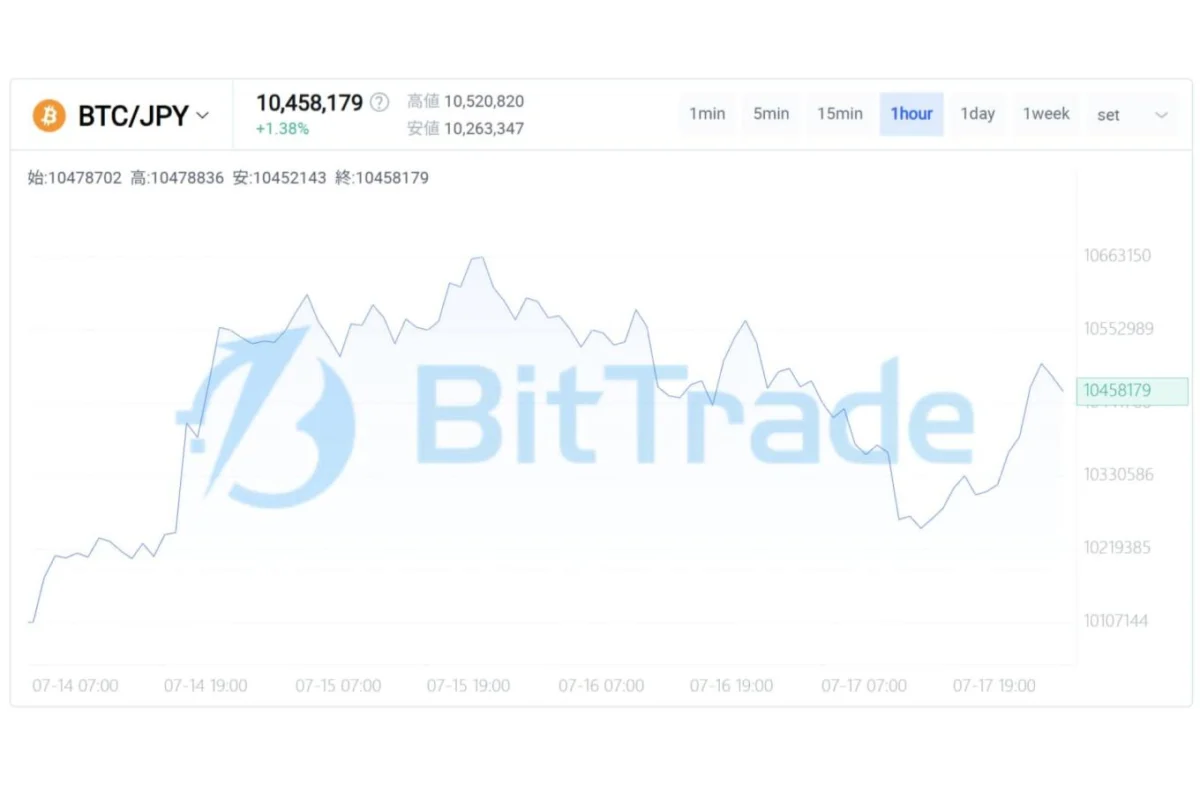
The trading week commenced with Bitcoin positioned in the $63,000 to $64,000 range, equivalent to approximately 10.2 million to 10.4 million yen. Following a period of consolidation, the asset saw a localized rally that pushed valuations toward the $65,000 to $66,000 corridor (10.5 million to 10.6 million yen). This upward movement was not merely a technical bounce but was underpinned by improving sentiment regarding the United States’ inflation trajectory and the potential for a more accommodative monetary policy.
As the week progressed, Bitcoin faced natural resistance at the $66,000 mark, leading to a period of healthy adjustment. By the close of the weekly session, the price settled back toward the $64,000 level, or roughly 10.35 million yen. Despite this minor retracement, the market’s ability to maintain these levels suggests a robust support zone. Analysts note that the current price action is a departure from the "panic selling" observed in June, indicating that the market has absorbed much of the immediate negative pressure from government sell-offs and creditor repayments.
The Transition from Speculative Rebounds to Spot Accumulation
One of the most critical developments of the past week was the qualitative change in buying pressure. Earlier in the month, market recoveries were largely attributed to short-term "short-covering" or speculative rebuying. However, current data indicates a shift toward spot-driven demand. In major global exchanges, the pressure from spot buying has increased, signaling that investors are looking to hold the underlying asset rather than simply trade price fluctuations.
This trend is further validated by the resurgence of capital inflows into U.S.-based spot Bitcoin Exchange Traded Funds (ETFs). After a period of stagnation and outflows in late June, institutional products managed by firms like BlackRock and Fidelity have once again begun to see net positive entries. This institutional appetite is complemented by the behavior of "whales"—large-scale individual and entity holders—and long-term holders who have continued to accumulate Bitcoin throughout the recent volatility. The current market dynamic shows long-term participants effectively absorbing the Bitcoin sold by short-term investors who are exiting the market for quick profits or to mitigate perceived risks.
Behavioral Finance: Overcoming Loss Aversion
From the perspective of behavioral finance, the market is currently navigating the psychological aftermath of the June price drop. Many retail investors who experienced the sharp decline are currently driven by "loss aversion," a psychological phenomenon where the pain of losing is felt more intensely than the joy of gaining. Consequently, as prices recover, there is a tendency for these investors to sell their holdings as soon as they reach a "break-even" point, fearing another potential downturn.
This "selling on the rise" behavior creates a ceiling for price movements in the short term. However, the fact that the market has remained stable despite this persistent selling pressure is viewed as a bullish signal. It indicates that the demand side of the equation—specifically from institutional and long-term buyers—is strong enough to neutralize the exit of retail participants. The market is currently in a "relief phase," moving away from extreme fear but not yet entering a state of unbridled euphoria.
Macroeconomic Catalysts and the Global Equity Correlation
The broader financial environment has played a pivotal role in supporting the cryptocurrency recovery. In the United States, recent inflation data has shown signs of cooling, which has moderated fears of further interest rate hikes. The Consumer Price Index (CPI) and other inflationary indicators have led to a decrease in U.S. Treasury yields, making risk assets more attractive to global investors.
This macroeconomic easing has propelled major stock indices, such as the S&P 500 and the NASDAQ, to record or near-record highs. Bitcoin’s historical correlation with high-growth technology stocks remains a factor, and the strength of the U.S. equity markets has provided a "wealth effect" that trickles down into the digital asset space. As long as the narrative of a "soft landing" for the U.S. economy persists, the capital allocation toward risk-on assets like Bitcoin is expected to remain steady.
Regulatory Reform and the Maturation of the Digital Asset Ecosystem
Beyond price and macroeconomics, the market is increasingly focused on the institutionalization of the industry through regulatory reform. In the United States, significant attention is being paid to the Financial Innovation and Technology for the 21st Century Act (FIT21) and various stablecoin regulations. These legislative efforts aim to provide a clear framework for how digital assets are classified and traded, reducing the "regulatory "uncertainty" that has historically deterred large-scale institutional entry.
In Japan, similar progress is being made through updates to the Financial Instruments and Exchange Act. There is a growing expectation for reforms that would allow for a wider range of financial products, including crypto-backed investment vehicles. Furthermore, the concept of Real World Assets (RWA) and the tokenization of traditional securities are becoming central themes. The movement to integrate digital assets into existing financial systems—such as Bitcoin-collateralized lending and tokenized bonds—is no longer a theoretical exercise but is becoming a concrete reality. These developments provide a fundamental "floor" for investor sentiment, as they suggest that the long-term utility and legality of the asset class are being cemented.
A Chronology of the Week’s Key Events
- Monday – Tuesday: Bitcoin opens steady in the $63,000 range. Initial caution prevails as traders wait for U.S. economic data. Spot ETF flows show minor but consistent positive momentum.
- Wednesday: U.S. inflation figures are released, coming in slightly lower than expected. This triggers a rally across both equities and cryptocurrencies. Bitcoin breaks the $65,000 barrier.
- Thursday: The rally continues as Bitcoin touches the $66,000 mark. However, "break-even" selling from retail investors begins to flood the market, leading to a localized peak.
- Friday: A period of price adjustment occurs. Bitcoin retraces to $64,000. Market observers note that despite the drop, the volume of spot buying remains higher than in previous weeks, preventing a deeper slide.
- Weekend: The market enters a consolidation phase. Discussions shift toward the upcoming week’s potential for institutional inflows and the sustainability of the current support levels.
Analysis of Broader Implications and Risks
While the current outlook is predominantly positive, the market is not without its risks. Bitcoin is not yet a "safe-haven" asset in the traditional sense; it remains highly sensitive to liquidity conditions. Should the global equity markets experience a significant correction, or if the U.S. dollar regains extreme strength due to unforeseen geopolitical tensions, the digital asset market would likely see a synchronized sell-off.
Furthermore, investors must distinguish between price increases driven by actual demand and those driven by leverage. An increase in "open interest" (the total number of outstanding derivative contracts) without a corresponding increase in spot demand can lead to market instability. If the market becomes over-leveraged on the long side, even a small price dip could trigger a "long squeeze," where forced liquidations lead to a rapid and dramatic price collapse. Currently, the market is in a "de-risked" state compared to the heights of the previous bull cycle, but vigilance regarding leverage ratios remains essential.
Future Outlook: Key Factors for the Coming Week
As the market looks toward the next trading session, three primary factors will determine the sustainability of the current recovery:
- Continuity of ETF Inflows: It is vital to observe whether the recent return to positive net inflows in U.S. spot ETFs is a temporary reaction to macro data or the start of a sustained institutional trend. Consistent daily inflows would provide the necessary capital to push Bitcoin past the $66,000 resistance level.
- Spot vs. Derivatives Volume: A healthy market requires the leadership of the spot market. If trading volume is dominated by futures and options, the risk of volatility increases. Continued evidence of spot accumulation by whales and institutions will be a key indicator of market health.
- Stability of the Support Zone: The $64,000 to $66,000 range has emerged as a critical battleground. If Bitcoin can successfully absorb profit-taking and maintain its position above $64,000, it will likely build the base needed for a move toward $70,000.
In conclusion, the market is currently in a phase where "expectations for recovery" are leading the way, while "actual demand" is working to catch up. The structural improvements in the market—ranging from regulatory progress to the shift toward spot buying—suggest that the foundations are being laid for a more stable and mature asset class. However, the path forward will likely involve continued testing of investor resolve as the market works through the psychological and technical residues of previous volatility. For the coming week, the market’s strength will be judged not by how high it can rally, but by how well it can hold its ground against the inevitable waves of profit-taking.