
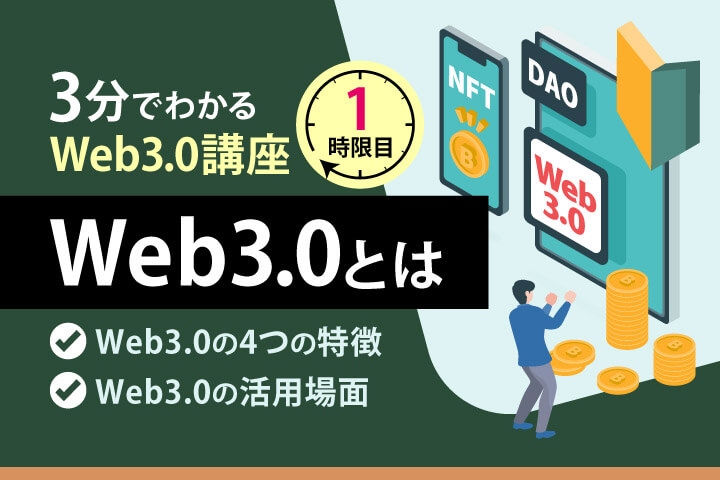
The global digital landscape is currently undergoing a fundamental transformation, transitioning from a model dominated by centralized technology giants to a decentralized ecosystem known as Web3.0. While the term has become a staple of technological discourse and investment strategies, its technical underpinnings and societal implications remain complex for the general public to navigate. At its core, Web3.0 represents a paradigm shift in how data is stored, shared, and owned, moving away from the "walled gardens" of the current internet era toward a transparent, user-centric framework powered by blockchain technology.
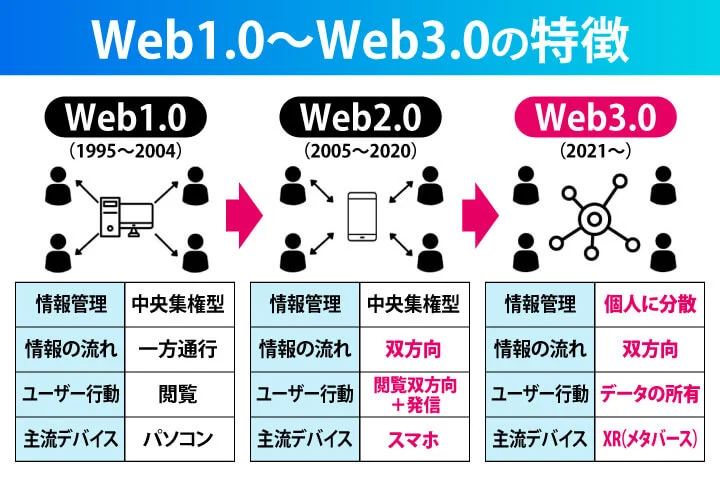
To understand the significance of Web3.0, it is essential to analyze the chronological progression of the internet, which experts typically categorize into three distinct stages. This evolution reflects not only advancements in hardware and software but also a changing philosophy regarding individual agency and data sovereignty.
The Historical Context: From Web1.0 to Web2.0
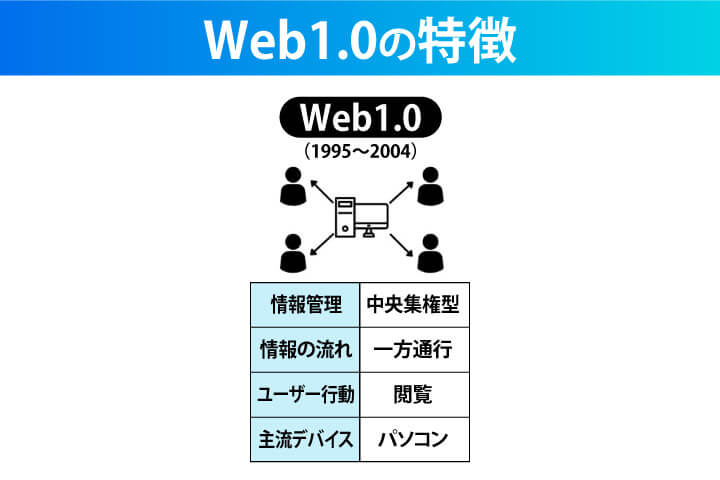
The first iteration of the internet, Web1.0, spanned roughly from 1995 to 2004. This era is often characterized as the "Read-Only" web. During this period, the internet functioned primarily as a digital library. Organizations and businesses created static websites, and users consumed information passively. There was little to no interaction; the flow of data was strictly one-way. For the average user, the experience was limited to browsing news portals, searching early directories like Yahoo!, and utilizing basic email services. The technical barriers to publishing content were high, meaning only those with specialized knowledge or significant resources could contribute to the digital landscape.

The transition to Web2.0, beginning around 2005 and continuing to the present day, introduced the "Read-Write" web. This era was defined by the rise of social media platforms, the proliferation of smartphones, and the democratization of content creation. Platforms such as Google, Facebook (now Meta), Twitter (now X), and YouTube empowered billions of people to become creators. Interaction became the hallmark of the digital experience, as users could comment, share, and collaborate in real-time.
However, the convenience of Web2.0 came at a significant cost: the centralization of power. In the Web2.0 model, a handful of multi-billion-dollar corporations act as intermediaries for almost all digital interactions. While these services are often "free" to use, they are funded by the collection and monetization of user data. This has led to the emergence of "surveillance capitalism," where personal information, browsing habits, and even private communications are treated as commodities. Furthermore, because these platforms are centralized, they possess the unilateral power to censor content, de-platform individuals, and change algorithms without user consent.
Defining Web3.0: The Era of Ownership and Decentralization
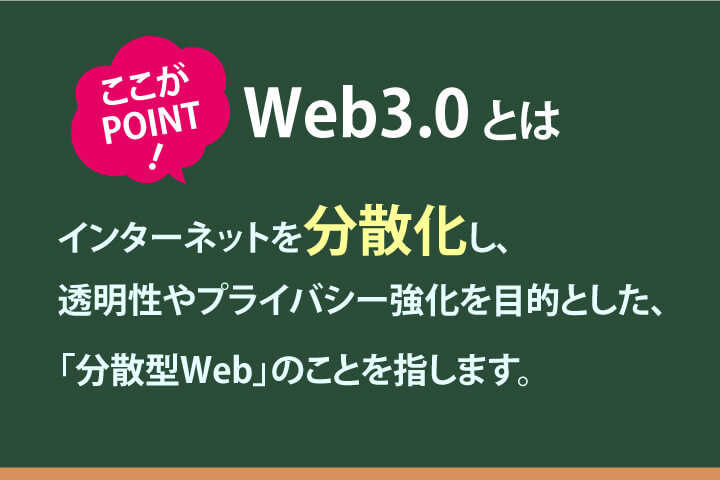
Web3.0, often called the "Read-Write-Own" web, seeks to address the structural imbalances of the previous era. By utilizing decentralized ledgers—most notably blockchain—Web3.0 aims to remove the need for central intermediaries. In this new ecosystem, data is not stored on the private servers of a single company but is distributed across a global network of computers.
The implications of this shift are profound. In a Web3.0 environment, users maintain control over their digital identities and assets. Instead of granting a platform permission to manage their data, users hold their own "keys," allowing them to interact with services directly. This removes the "single point of failure" inherent in centralized systems and introduces a level of transparency and security previously unattainable.

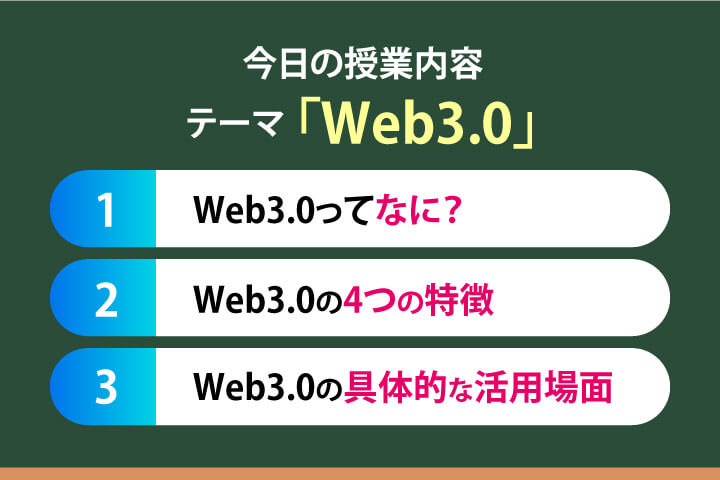
The Four Pillars of Web3.0
To grasp why Web3.0 is attracting billions of dollars in venture capital and the attention of national governments, one must examine its four defining characteristics:
1. Reduced Dependency on Centralized Platforms
In the current Web2.0 model, platforms hold absolute authority over their ecosystems. A notable example frequently cited by analysts is the permanent suspension of high-profile accounts by major social media firms. Regardless of the political or social context, these events highlighted a stark reality: private corporations have the power to silence voices and erase digital histories at their discretion. Web3.0 operates on decentralized protocols that are resistant to such top-down censorship. Because no single entity owns the network, no single entity can unilaterally decide who is allowed to participate.
2. Individual Data Sovereignty
Data privacy has become one of the most pressing issues of the 21st century. Under Web2.0, data breaches and the unauthorized sale of personal information have become commonplace. Web3.0 shifts the burden of data management back to the individual. Through the use of decentralized identifiers (DIDs) and private keys, users can choose exactly what information they share with a service and for how long. This effectively turns the "user" into an "owner."
3. Enhanced Security and Resistance to Tampering
The technical backbone of Web3.0 is blockchain technology—a distributed ledger that records transactions in a chronological and immutable way. Once data is written to a blockchain, it is nearly impossible to alter without the consensus of the entire network. This makes Web3.0 ecosystems highly resistant to fraud, hacking, and unauthorized data manipulation. In an age of "deepfakes" and misinformation, the ability to verify the provenance of digital content is a critical advantage.

4. Network Resilience and 100% Uptime
Centralized servers are vulnerable to outages, whether caused by technical failure, cyberattacks, or maintenance. When a major cloud service provider goes down, a significant portion of the internet can become inaccessible. Because Web3.0 is decentralized, the network does not rely on a single server. As long as some nodes in the network are active, the system remains functional. This ensures a level of reliability and "uptime" that centralized infrastructures cannot guarantee.
Real-World Applications: Finance and Beyond
Web3.0 is not a theoretical concept; it is already being applied across various industries to solve long-standing inefficiencies.

Decentralized Finance (DeFi):
One of the most mature applications of Web3.0 is in the financial sector. Traditional banking systems are often slow, expensive, and exclusive. Decentralized Finance, or DeFi, allows individuals to lend, borrow, and trade assets directly with one another using "smart contracts"—self-executing code on a blockchain. This removes the need for a bank or broker, significantly reducing fees and allowing for 24/7 global transactions. For the estimated 1.4 billion "unbanked" people worldwide, DeFi provides a pathway to financial services that were previously out of reach.
Healthcare and Personal Data Management:
In the medical field, Web3.0 offers a solution to the fragmented and insecure nature of patient records. Currently, a patient’s medical history is often scattered across various hospitals and clinics, stored in incompatible databases. By using Web3.0 protocols, patients can hold their own medical data in a secure digital vault. They can grant temporary access to a specific doctor or specialist as needed, ensuring that their records are both portable and private. This prevents sensitive health information from being stored on vulnerable hospital servers where it could be targeted by ransomware.

Broader Impact and Global Implications
The transition to Web3.0 has prompted significant reactions from global regulatory bodies and the corporate world. In Japan, the government has officially integrated Web3.0 into its national strategy, recognizing its potential to drive economic growth and digital transformation. Similarly, the European Union has moved forward with the Markets in Crypto-Assets (MiCA) regulation to provide a clear legal framework for decentralized technologies.
However, the shift is not without challenges. Critics point to the high energy consumption of certain blockchain networks, the complexity of user interfaces, and the potential for decentralized platforms to be used for illicit activities. Furthermore, the "unregulated" nature of Web3.0 creates a "buyer beware" environment where users are solely responsible for their own security.
Despite these hurdles, the momentum behind Web3.0 appears irreversible. Major technology firms that defined the Web2.0 era, such as Google and Meta, are already investing heavily in blockchain infrastructure to avoid being left behind. The evolution represents a move toward a more equitable digital world where the value generated by a network is shared by its participants rather than extracted by a central authority.
As we move deeper into this new era, the focus will likely shift from the underlying technology to the user experience. The ultimate success of Web3.0 will depend on its ability to provide the same level of convenience as Web2.0 while delivering the superior security and autonomy that the decentralized model promises. For businesses and individuals alike, understanding these fundamental changes is no longer optional; it is a prerequisite for navigating the future of the digital economy.
