
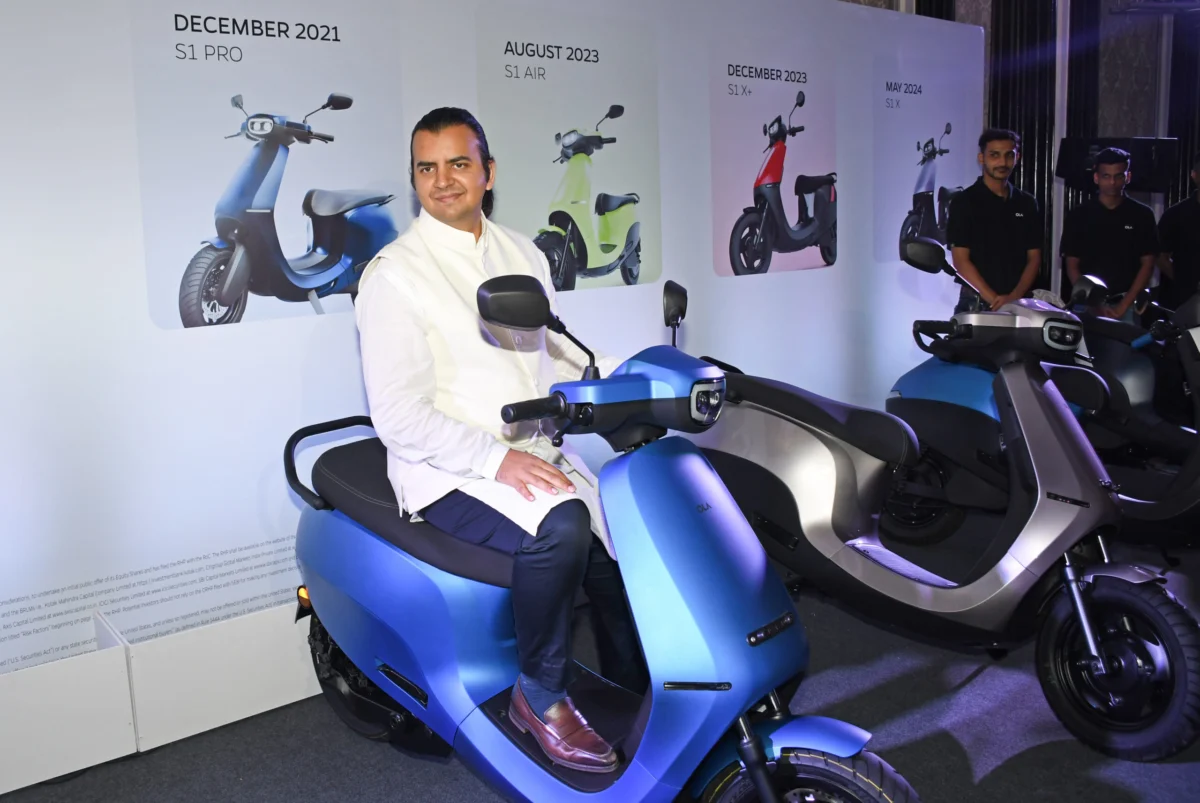
The Indian electric vehicle (EV) sector, once hailed as the vanguard of the nation’s green energy transition, is currently witnessing a significant recalibration as its market leader, Ola Electric, grapples with a perfect storm of operational hurdles. On Monday, shares of the Bengaluru-based manufacturer plummeted by as much as 9.1%, reaching a low of ₹89.14 on the National Stock Exchange. This sharp decline has effectively wiped out a substantial portion of the gains made since the company’s high-profile Initial Public Offering (IPO) in August, sending its market capitalization below the $4.75 billion mark for the first time since it went public.
While the stock remains above its initial offering price of ₹76, the trajectory has been decidedly bearish over the last several weeks. From a record peak of ₹157, the valuation has retracted by more than 40%. Financial analysts suggest that this sell-off is not merely a technical correction but a reaction to deep-seated systemic issues involving product reliability, inadequate service infrastructure, and a rapidly eroding market share that is being aggressively captured by traditional automotive giants.
A Mounting Crisis of Customer Confidence
At the heart of Ola Electric’s current woes is a staggering volume of customer dissatisfaction. According to reports from the Indian daily newspaper Mint, the company is now receiving upwards of 80,000 customer complaints per month. This volume of grievances has placed an unprecedented strain on the company’s service ecosystem, leading to long wait times and a decline in the quality of repairs.
The nature of these complaints is multifaceted, ranging from minor software glitches to critical hardware failures. Customers have reported issues with the scooters’ digital consoles, sensor malfunctions in the hub motors, and "phantom" battery drainage where the vehicle loses significant charge while parked. In more extreme cases, hardware failures related to the suspension and braking systems have raised safety concerns among the user base.
A research note from HSBC analysts, issued after a series of visits to Ola Electric service centers across India, painted a grim picture of the company’s after-sales operations. The analysts observed that most service hubs appeared "overwhelmed" and were struggling to maintain the service quality standards typically expected from an established Automotive Original Equipment Manufacturer (OEM) in the Indian market. The report highlighted a "clear lack of experience" in the management of these facilities and noted that the company appeared to have prioritized sales volume over the development of a robust maintenance network.
The Infrastructure Gap and Technical Failures
The HSBC report further detailed that Ola Electric did not invest sufficiently in servicing capacity to match the exponential growth in sales volumes seen over the past 24 months. As the company scaled its "Futurefactory" and pushed thousands of units of the S1 scooter series into the market, the physical infrastructure required to support those vehicles lagged behind.
Key findings from the analyst visits include:
- Shortage of Skilled Labor: There is an acute lack of technicians trained specifically in EV powertrains and software-integrated systems.
- Equipment Deficits: Many service centers were found to be lacking necessary diagnostic tools and testing equipment, leading to prolonged "trial and error" repair cycles.
- Spare Parts Bottlenecks: Delays in the supply chain for specific components have left many scooters stranded in service lots for weeks or even months.
The technical issues identified go beyond routine maintenance. The integration of complex software into the vehicle’s operating system—marketed as a premium feature—has become a double-edged sword. While it allows for over-the-air (OTA) updates, it has also introduced bugs that can immobilize the vehicle, a frustration compounded by the lack of immediate physical support.
Erosion of Market Dominance
The impact of these service failures is now visible in the company’s market performance data. For much of 2023 and early 2024, Ola Electric enjoyed a near-monopoly in the premium electric two-wheeler segment, at one point commanding nearly half of the entire Indian EV market. In the quarter ending June 2024, the company held a dominant 49% market share.
However, government registration data reveals a sharp decline in the following months. By the end of September 2024, Ola’s market share had plummeted to approximately 27%. This contraction represents one of the fastest declines in dominance seen in the nascent EV industry.
As Ola falters, legacy automotive manufacturers are capitalizing on the opening. Companies like Bajaj Auto and TVS Motor Company, which have spent decades building nationwide dealership and service networks, have aggressively ramped up their EV portfolios. The Bajaj Chetak and TVS iQube models have seen a surge in registrations, with both companies now controlling more than 20% of the market each. For many Indian consumers, the reliability of a traditional brand and the proximity of an established service center are proving to be more persuasive than the high-tech marketing and performance specs offered by newer startups.

Public Relations Challenges and Leadership Friction
The operational crisis has been exacerbated by a public relations firestorm involving the company’s founder and CEO, Bhavish Aggarwal. Over the past weekend, Aggarwal engaged in a highly publicized and contentious exchange on the social media platform X (formerly Twitter) with popular Indian comedian Kunal Kamra.
The dispute began when Kamra posted a photograph of a crowded Ola service center, questioning the company’s ability to support its customers and raising concerns about the plight of everyday users whose livelihoods depend on their scooters. Rather than addressing the concerns with a corporate assurance of improvement, Aggarwal responded with a series of combative posts. He accused the comedian of having a "failed career" and alleged that he had been paid to criticize the company. Aggarwal further challenged Kamra to spend a day at a service center to "help" if he was truly concerned.
The exchange was widely criticized by brand experts and investors alike. In the context of a falling stock price and genuine customer distress, the CEO’s defensive and dismissive tone was viewed by many as a sign of poor corporate governance. Analysts suggest that such public outbursts can spook institutional investors who look for steady, professional leadership during periods of corporate volatility.
Chronology of Ola Electric’s Market Journey
To understand the current situation, it is necessary to look at the timeline of Ola Electric’s rapid rise and subsequent challenges:
- August 2021: Ola Electric launches the S1 and S1 Pro scooters amidst massive hype, receiving over 100,000 bookings in 24 hours.
- Late 2021 – 2022: Initial delivery delays and reports of software bugs begin to surface. The company adopts a Direct-to-Consumer (D2C) model, bypassing traditional dealerships.
- 2023: Ola scales production significantly, becoming the first Indian EV startup to reach a monthly sales milestone of 30,000 units. It secures a dominant 40%+ market share.
- August 2024: Ola Electric goes public with an IPO priced at ₹76. The stock sees a massive post-listing rally, nearly doubling in value within weeks as investors bet on the company’s "Gigafactory" plans and future EV car projects.
- September 2024: Market share begins to drop as competitors Bajaj and TVS increase production and expand their EV lineups. Reports of 80,000 monthly complaints become public.
- October 2024: Shares fall to ₹89, a 40% drop from their peak. The CEO’s social media spat further dampens investor sentiment.
Broader Implications for the Indian EV Ecosystem
The struggles of Ola Electric carry significant implications for the broader Indian electric vehicle landscape. As the "poster child" for Indian EV manufacturing, Ola’s performance is often seen as a barometer for the industry’s health.
First, the situation highlights the limitations of the D2C service model for high-utilization products like scooters. While the model allows for higher margins by cutting out middleman dealers, it places the entire burden of infrastructure on the manufacturer. For a country as geographically vast and logistically complex as India, building a proprietary service network that can keep pace with hyper-growth sales is a monumental task.
Second, the crisis may lead to a shift in consumer behavior. The "tech-first" approach that favored startups is being replaced by a "reliability-first" mindset. This shift favors legacy players who can offer a "peace of mind" guarantee through their existing infrastructure.
Finally, the regulatory environment may tighten. With thousands of complaints reaching consumer courts and social media platforms, there is increasing pressure on the Indian government to implement stricter quality control and after-sales service mandates for EV manufacturers. This could include requirements for spare part availability and maximum turnaround times for repairs.
Looking Ahead
Ola Electric now finds itself at a critical juncture. The company’s ability to stabilize its stock price and regain market share will depend less on its marketing prowess and more on its ability to execute a "service-first" turnaround.
Management has recently announced plans to double its service network to 1,000 centers by the end of the year and hire thousands of additional technicians. However, as the HSBC note suggests, the challenge is not just about quantity but the quality of the technical expertise. For a company that has built its identity on moving fast and breaking things, the current crisis serves as a reminder that in the automotive world, the relationship with the customer only truly begins after the sale is made.
Investors will be closely watching the next quarterly earnings report for signs of margin compression, as the cost of fixing the service network and the potential need for aggressive discounting to stave off competitors could weigh heavily on the company’s path to profitability. For now, the road ahead for Ola Electric remains as bumpy as the terrain its scooters are designed to navigate.
