
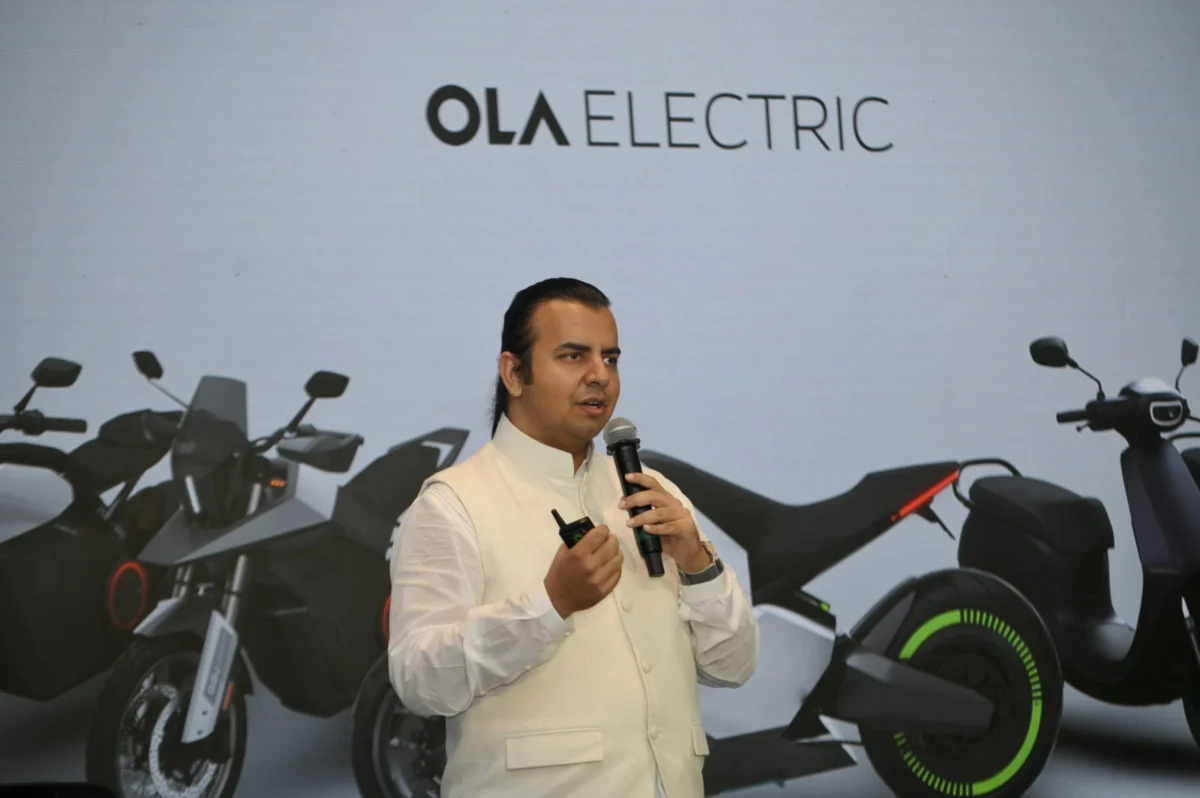
The Central Consumer Protection Authority (CCPA), India’s primary regulator for safeguarding consumer interests, has officially issued a show-cause notice to Ola Electric, the nation’s leading electric two-wheeler manufacturer. The regulatory intervention follows a sustained surge in consumer grievances regarding the company’s product reliability and after-sales service standards. The notice, served on October 7, 2024, marks a significant escalation in the challenges facing the Bengaluru-based company, which has seen its market dominance tested by both operational hurdles and a sharp decline in investor confidence.
The CCPA’s notice specifically alleges violations of consumer rights, misleading advertisements, and the adoption of unfair trade practices. Under the terms of the notice, Ola Electric has been granted 15 days to provide a comprehensive response to the allegations. In a regulatory filing submitted to the Bombay Stock Exchange (BSE), the company confirmed receipt of the notice. Ola Electric’s Chief Financial Officer, Harish Abichandani, stated that the company would respond to the authority within the stipulated timeframe, providing all necessary supporting documentation to address the concerns raised by the regulator.
The news of the regulatory crackdown had an immediate and severe impact on the company’s valuation. On Monday, Ola Electric’s shares plummeted by 9.1%, closing at 89.14 rupees (approximately $1.06). This decline pushed the company’s market capitalization below the $4.75 billion mark for the first time since its high-profile Initial Public Offering (IPO) in August 2024. At its peak, the stock traded at 157 rupees (about $1.87), meaning the company has now lost more than 40% of its value from its post-listing high.
A Growing Crisis of Consumer Confidence
The regulatory scrutiny by the CCPA is the culmination of months of mounting public dissatisfaction. Reports have indicated that Ola Electric has been struggling to manage a staggering volume of customer complaints. According to data recently highlighted by Indian financial daily Mint, the company has been receiving upwards of 80,000 customer complaints every month. These grievances range from minor software glitches to catastrophic hardware failures, including issues with the "hub motor," battery discharge problems during periods of non-usage, and malfunctioning sensors.
The sheer volume of these complaints has reportedly overwhelmed Ola’s service infrastructure. In September, analysts from global financial services firm HSBC conducted field visits to several Ola Electric service centers across India. Their findings painted a dire picture of the company’s after-sales ecosystem. The analysts noted that most service centers appeared "overwhelmed" by the backlog of requests, with many locations struggling to provide even basic service quality expected of an established Automotive Original Equipment Manufacturer (OEM).
The HSBC report further suggested that Ola Electric had failed to invest sufficiently in its servicing capacity to keep pace with its aggressive sales volumes over the past two years. The note highlighted a "clear lack of experience" in the development and maintenance of service infrastructure, leading to staff shortages and long wait times for customers. In some instances, service centers were described as resembling "scrapping yards," where hundreds of scooters sat idle waiting for spare parts or technician attention.
The Social Media Catalyst and Public Perception
While the technical and operational issues have been simmering for months, the crisis reached a fever pitch over the weekend preceding the CCPA notice. A public and highly publicized social media exchange between Ola Electric’s founder and CEO, Bhavish Aggarwal, and popular Indian comedian Kunal Kamra served as a catalyst for renewed scrutiny.
Kamra had posted a photograph of dozens of dusty Ola scooters parked outside a service center, questioning the company’s ability to support its customers. Aggarwal’s combative response, in which he challenged Kamra’s motives and dismissed the criticism, backfired significantly. The exchange prompted thousands of disgruntled customers to share their own "horror stories" regarding Ola’s service, ranging from scooters being stuck in workshops for months to poor communication from the company’s support teams.
This public relations debacle highlighted a growing disconnect between the company’s aggressive marketing—which positions Ola as the vanguard of India’s EV revolution—and the lived reality of its user base. Industry observers suggest that this loss of narrative control likely accelerated the CCPA’s decision to step in and demand accountability.
Timeline of Ola Electric’s Market Trajectory
To understand the gravity of the current situation, it is necessary to look at the timeline of Ola Electric’s rapid rise and recent volatility:
- August 2021: Ola Electric launches the S1 and S1 Pro electric scooters with massive fanfare, promising to disrupt the internal combustion engine (ICE) market.
- 2022-2023: The company achieves rapid scale, becoming the market leader in the Indian electric two-wheeler segment. However, reports of software bugs and occasional thermal incidents (fires) begin to surface.
- August 2024: Ola Electric goes public with an IPO priced at 76 rupees per share. The stock sees a significant post-listing rally, nearly doubling in price within weeks.
- September 2024: Market share begins to show signs of erosion as traditional players like TVS Motor and Bajaj Auto ramp up their EV offerings. HSBC issues its critical report on service center backlogs.
- October 6, 2024: A social media spat between the CEO and a prominent critic goes viral, amplifying consumer grievances.
- October 7, 2024: The CCPA issues a show-cause notice for consumer rights violations; stock prices tumble by over 9%.
Analysis of Implications for the Indian EV Sector
The troubles facing Ola Electric have broader implications for the electric vehicle ecosystem in India. As the market leader, Ola’s performance is often seen as a bellwether for the industry. If the company fails to resolve its service crisis, it could lead to a "trust deficit" among first-time EV buyers, potentially slowing the national transition toward sustainable mobility.
Furthermore, the CCPA’s intervention signals a new era of regulatory vigilance in India’s emerging tech and EV sectors. The Consumer Protection Act of 2019 grants the CCPA broad powers to recall goods, order the reimbursement of prices paid, and impose heavy penalties for misleading advertisements. If Ola Electric’s response is deemed unsatisfactory, the regulator could theoretically take more drastic measures, including imposing fines of up to 1 million rupees (and up to 5 million rupees for subsequent violations) or even banning certain promotional activities.
Competitively, the situation provides an opening for legacy manufacturers. Companies like Bajaj Auto and TVS Motor, which have spent decades building robust, nationwide service networks, are increasingly seen as "safer" bets by consumers who prioritize long-term reliability over high-tech features. Recent data suggests that while Ola still holds a significant lead, its market share has dipped from over 40% earlier this year to approximately 27-30% as competitors gain ground.
Official Responses and Next Steps
In the wake of the notice, Ola Electric has maintained a formal stance. The company’s regulatory filing emphasized its commitment to the Indian market and its intention to cooperate with the authorities. "The Company will respond to the Central Consumer Protection Authority within the given timeframe with the supporting documents," wrote Harish Abichandani.
Internally, Ola has recently announced "Service 2.0," an initiative aimed at doubling its service network to 1,000 centers by the end of the year and improving technician training. However, analysts remain skeptical about how quickly these physical expansions can translate into improved customer satisfaction, given the existing backlog of 80,000 monthly complaints.
As the 15-day deadline approaches, the automotive industry and the investing public will be watching closely. The outcome of this regulatory inquiry will likely determine whether Ola Electric can stabilize its operations and regain its footing, or if it will face prolonged legal and financial consequences that could reshape the hierarchy of the Indian electric vehicle market. For now, the company remains at a crossroads, forced to balance its ambitious growth targets with the fundamental necessity of keeping its existing customers on the road.
