
The landscape of digital asset investment products has reached a defining juncture as spot exchange-traded funds (ETFs) tracking Bitcoin and Ethereum post record-breaking inflows and navigate shifting market dynamics. Over the past year, these financial instruments have transformed from speculative novelties into core components of institutional portfolios, bridging traditional finance and the decentralized economy. Recent market data highlights a surge in daily capital accumulation, robust institutional retention, and evolving regulatory scrutiny, signaling a mature phase in cryptocurrency adoption.
Daily Capital Inflows and Record-Breaking Accumulation
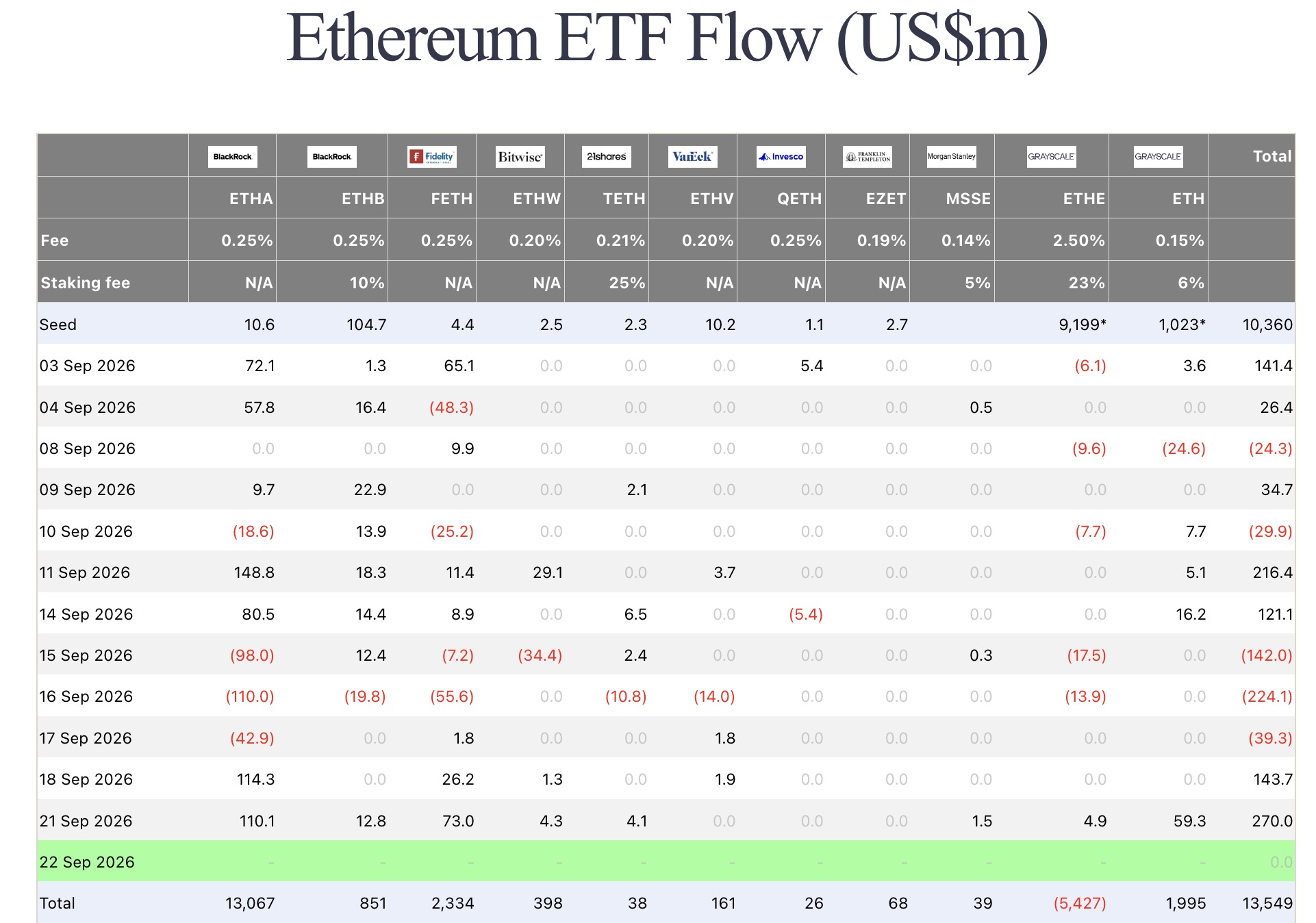
Spot cryptocurrency exchange-traded funds have demonstrated extraordinary resilience, capturing billions of dollars in net inflows across major global markets. According to data compiled by industry analysts, Ethereum (ETH) spot ETFs recently recorded single-day net inflows surging past $270 million, while Bitcoin (BTC) spot ETFs attracted a staggering $999 million within the same reporting period. This massive influx of capital reflects sustained institutional demand, particularly from asset managers, hedge funds, and corporate treasuries seeking regulated exposure to digital assets without the complexities of direct custody.

Eric Balchunas, Senior ETF Analyst at Bloomberg, noted that the overall trajectory of crypto-linked ETFs has continued to defy skeptical projections since their initial approvals through late 2025 and into 2026. The ability of these products to absorb macroeconomic headwinds, regulatory uncertainties, and periodic market corrections has surprised many financial traditionalists. Analysts point out that the sustained interest from institutional investors has effectively established a permanent floor for digital asset liquidity, reducing the severity of historical market downturns.
Chronology of ETF Growth and Market Milestones
The journey of spot cryptocurrency ETFs has been marked by rapid expansion punctuated by regulatory milestones. Following the landmark approvals of spot Bitcoin ETFs and subsequent approvals for Ethereum products, the market experienced waves of explosive growth followed by periods of consolidation.
During the early phases of trading, daily inflows fluctuated wildly in response to broader macroeconomic indicators, including inflation reports and Federal Reserve interest rate decisions. However, by mid-2025, institutional sentiment stabilized. Providers such as Farside UK and various US-based asset managers began reporting consistent net-positive weeks. By October 2025, cumulative inflows for Bitcoin ETFs breached historic thresholds, with individual days regularly logging hundreds of millions in net additions.

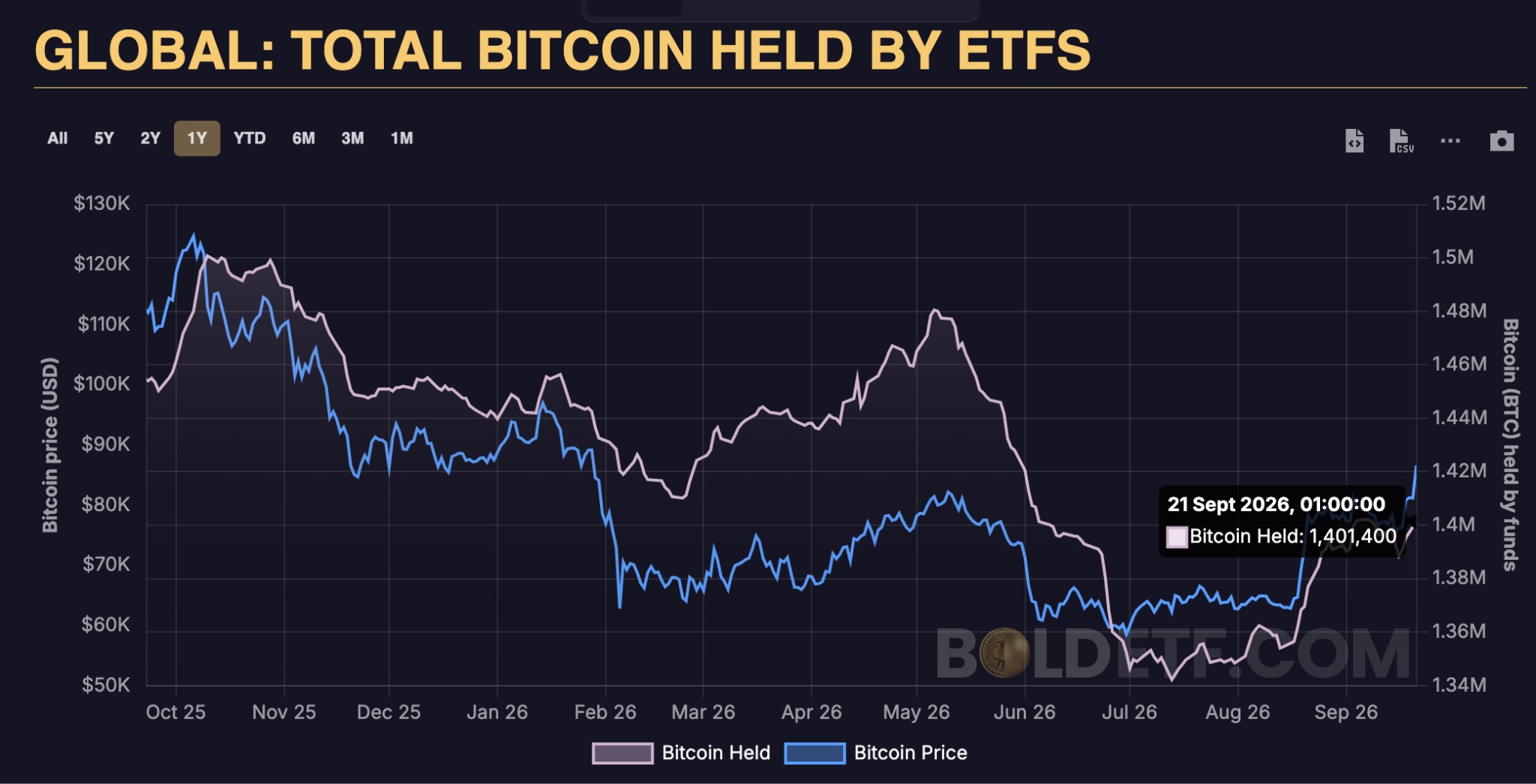
Entering 2026, the momentum accelerated further. Data from leading market intelligence platforms indicated that aggregate holdings across all spot Bitcoin ETFs surpassed 1.4 million BTC by late September 2026, representing nearly 7% of the total circulating supply. Meanwhile, Ethereum ETFs steadily expanded their footprint, capturing substantial market share despite facing higher initial volatility compared to their Bitcoin counterparts.
Comprehensive Data Analysis: Holdings and Market Share
A granular examination of on-chain data and provider reports underscores the profound dominance of spot ETFs in the modern financial ecosystem. According to BitcoinTreasuries and auxiliary reporting metrics, institutional products now anchor a significant portion of total circulating supply.
- Bitcoin ETF Holdings: Major issuers collectively hold approximately 1.4 million BTC. Leading institutional custodians maintain the lion’s share of these assets, effectively removing substantial selling pressure from open exchanges.
- Ethereum ETF Growth: Ethereum investment vehicles have experienced a steady climb, with cumulative net inflows reaching multi-billion-dollar milestones. Staking-enabled ETF variants, in particular, have attracted long-term capital by offering yield-generating mechanisms integrated directly into regulated wrappers.
- Discount and Premium Dynamics: Throughout various trading cycles, market prices for spot ETFs have traded at tight discounts or premiums relative to net asset value (NAV). Advanced algorithmic models, such as those provided by AlgoAlpha, have tracked these discrepancies closely, noting that price adjustments consistently reflect healthy arbitrage mechanisms rather than structural market failures.
Market analysts emphasize that the concentration of assets within these funds provides both stability and systemic risk. While institutional backing cushions against sharp retail sell-offs, it also centralizes a vast amount of digital asset supply under the management of a handful of traditional financial institutions.
Institutional Responses and Expert Commentary
The unprecedented growth of crypto ETFs has prompted widespread commentary from prominent figures in both traditional finance and the blockchain sector. Ki Young Ju, CEO of CryptoQuant, highlighted that the continuous, year-long accumulation trend observed in Bitcoin ETFs suggests a fundamental shift in how large-scale capital views cryptocurrency as an asset class. According to Ju, the institutionalization of Bitcoin has fundamentally altered market microstructure, making traditional cycle-based analyses less predictable than in previous years.
Regulatory bodies have also adapted their oversight frameworks. While early discussions focused heavily on custody security, market manipulation risks, and anti-money laundering (AML) compliance, recent regulatory dialogue has shifted toward accommodating yield-bearing products and expanding options trading on ETF shares. This regulatory maturation has encouraged more conservative institutional allocators—such as pension funds and municipal endowments—to revisit their investment mandates and allocate fractional percentages of their portfolios to digital assets.
Broader Economic Implications and Future Outlook
The integration of spot ETFs into mainstream financial portfolios carries profound implications for the global economy. By streamlining access to digital assets, these financial instruments have democratized institutional-grade investing while simultaneously binding cryptocurrency valuations more tightly to traditional macroeconomic cycles.
As liquidity deepens, market participants are monitoring potential risks, including regulatory shifts, tax policy changes, and potential liquidity crunches if macroeconomic conditions force sudden risk-off behavior among institutional allocators. Nevertheless, the prevailing consensus among market strategists is that spot ETFs have permanently altered the financial landscape. The ability of these products to weather market volatility, maintain consistent inflows, and attract blue-chip capital ensures that cryptocurrency will remain a permanent fixture of modern portfolio management for the foreseeable future.