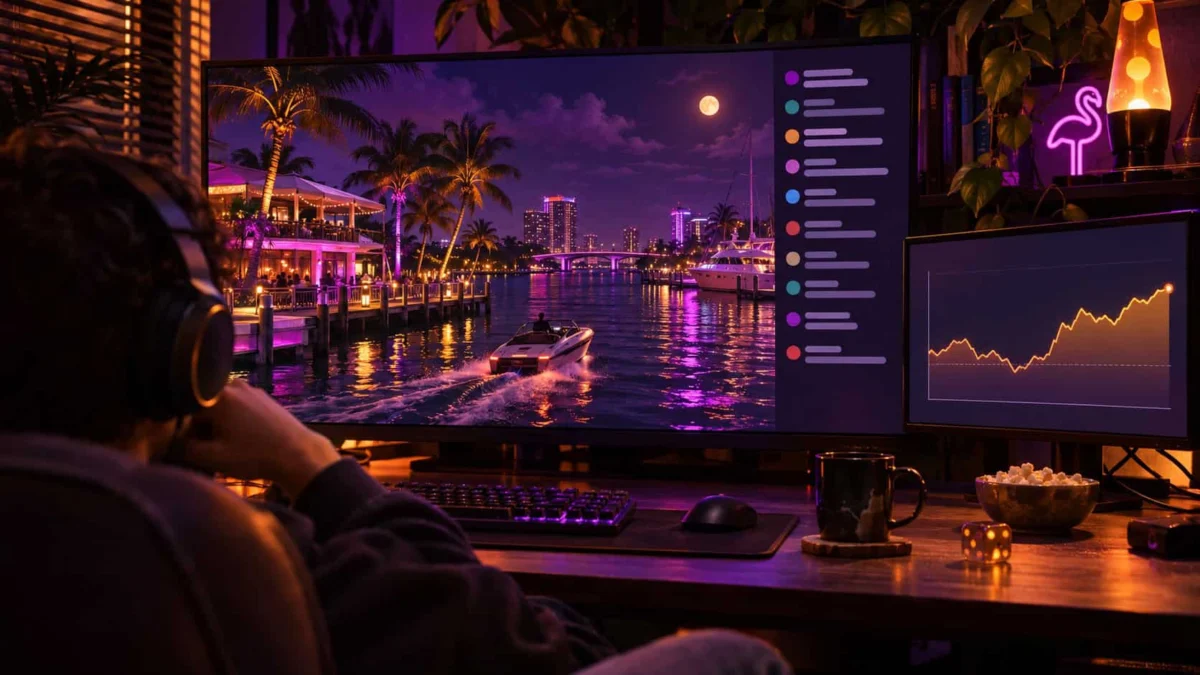
The intersection of interactive entertainment, livestreaming culture, and decentralized prediction markets has reached a new milestone as financial speculation bleeds into the gaming world. Grand Theft Auto VI, arguably the most anticipated entertainment release in history, has evolved beyond a traditional video game into a live-spectator commodity. On prediction platforms such as Polymarket, financial contracts tied to the in-game behavior of prominent content creators have generated significant trading volumes, transforming casual gameplay into high-stakes financial tracking.
Data from Polymarket indicates that trading volume surrounding the completion timeline of popular Twitch streamer TheBurntPeanut has reached approximately $131,000. This figure represents the aggregate value of trades within a specialized market speculating on the exact date the streamer will finish the narrative campaign of Grand Theft Auto VI. Similar contracts have emerged for other internet personalities, including streamer ohnePixel, alongside broader macroeconomic-style bets on when developer Rockstar Games might release a PC port of the title. While speculation regarding a PC release follows traditional anticipation for ports of major console blockbusters, the micro-level betting on individual playthrough speeds introduces a novel paradigm to modern media consumption.
The Mechanics of Open-World Distraction and Financial Stakes
Rockstar Games has built its reputation on engineering vast, highly detailed open-world environments designed to encourage player deviation from primary objectives. The core design philosophy of the Grand Theft Auto series relies heavily on emergent gameplay—moments where players abandon structured missions in favor of spontaneous exploration, environmental experimentation, or chaotic sandbox interactions.
However, the introduction of prediction market contracts fundamentally alters the psychological relationship between the audience and the content creator. Traditionally, a streamer stopping to steal a random vehicle, investigate a hidden map location, or engage in physics-based mischief serves as purely entertaining diversion. When financial capital is staked on specific completion deadlines, however, the viewer’s incentive shifts.
Investors holding "Yes" shares on an impending deadline face a direct financial conflict of interest with the organic entertainment value of the stream. Every minute spent testing game mechanics, admiring digital scenery, or interacting with chat tangents introduces delay risks to the portfolio of the bettor. This dynamic transforms passive spectators into virtual project managers, creating a strange dichotomy where fans simultaneously demand chaotic content while financially rooting for absolute efficiency.
The Chronology of Anticipation and Speculation
The financialization of Grand Theft Auto VI did not occur overnight; it is the culmination of a decade-long development cycle characterized by unprecedented secrecy, leaks, and delays.
In February 2022, Rockstar Games officially confirmed that active development for the next entry in the series was well underway. This announcement followed years of speculation, serving as the starting gun for global market anticipation.
By September 2022, the gaming industry experienced one of its most significant security breaches when massive amounts of early development footage were illegally leaked online. Despite the setback, public interest intensified rather than waned.
In December 2023, Rockstar released the official launch trailer for Grand Theft Auto VI, confirming a targeted release window and immediately setting off speculative ripples across financial, media, and tech sectors. The trailer shattered YouTube engagement records within 24 hours, cementing the title’s status as a cultural monolith.
As the eventual release approached and early access copies or rollout phases reached select influencers and content creators, prediction markets seized the opportunity. Platforms like Polymarket utilized active Twitch broadcast channels as official resolution sources, establishing binary or multi-date contracts structured around specific calendar milestones.
Broader Implications for Streaming and Prediction Markets
The emergence of streamer-centric prediction markets highlights the ongoing convergence of digital entertainment, participatory culture, and decentralized finance (DeFi). For years, sports betting has conditioned audiences to remain engaged long after the outcome of a match has been decided, driven entirely by point spreads and micro-wagers. The application of this model to livestreaming extends the concept from physical athletics to digital performance art.
Industry analysts note that while traditional media consumption is bounded by passive viewing or subscription models, prediction markets introduce an active financial layer that monetizes audience attention in entirely new ways. For the content creator, playing a game under the watchful eye of an audience with vested financial interests introduces unpredictable social dynamics. Chat rooms may become battlegrounds between those who view the playthrough as pure entertainment and those attempting to protect open market positions.
Furthermore, the trend raises regulatory and operational questions regarding the boundaries of prediction markets. While traditional financial instruments focus on macroeconomic indicators, corporate earnings, or geopolitical events, the expansion into niche digital culture—such as a specific individual’s gaming pace—demonstrates the appetite for decentralized liquidity to find purchase in virtually any measurable human activity.
As Grand Theft Auto VI continues to dominate digital mindshare, the presence of betting desks tracking gameplay pacing underscores a broader shift in modern media. Content is no longer merely consumed; it is traded, analyzed, and leveraged, proving that in the modern digital economy, any quantifiable event can—and will—be turned into a market.