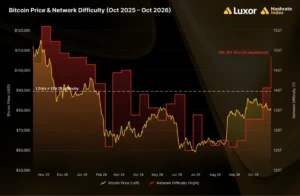
The Evolution of Bitcoin Mining Data Analytics
The history of Bitcoin mining has transitioned from a hobbyist endeavor conducted on consumer-grade hardware to a multi-billion dollar industrial sector governed by publicly traded corporations and state-level energy initiatives. In the early years of the network, the "hashrate"—the total computational power used to mine and process transactions—was a metric known only to a niche group of enthusiasts. Today, it is a macroeconomic indicator that reflects the security of the world’s largest decentralized financial network.
As mining operations migrated from residential basements to data centers in regions with low-cost electricity, such as the United States, Kazakhstan, and Paraguay, the need for standardized reporting became evident. The Hashrate Index emerged as an essential tool to document this transition. The newsletter acts as a comprehensive repository for data that informs decision-making, such as the "hashprice," a metric that quantifies the expected revenue per unit of hashrate. By providing this information, the newsletter enables miners to optimize their hardware cycles, manage operational expenditures, and hedge against the cyclical nature of Bitcoin market volatility.
Chronology of Market Fluctuations and Mining Trends
To understand the current state of the mining industry, one must analyze the timeline of recent market developments. Following the 2021 regulatory shift in China, which led to a massive exodus of mining hardware, the global distribution of hashrate underwent a structural transformation. This event underscored the importance of geographical diversification and energy security.
In the subsequent years, the industry saw the integration of institutional capital, with mining companies listing on major stock exchanges. This shift brought with it a heightened requirement for transparency. Throughout 2022 and 2023, the industry faced the dual pressures of a "crypto winter" and rising electricity costs, forcing many firms to liquidate assets and improve operational efficiency. The Hashrate Index has tracked these developments closely, noting how mining operations have pivoted toward "behind-the-meter" energy solutions and advanced cooling technologies to maintain profitability.
Recent milestones, such as the 2024 Bitcoin halving, have further accelerated the need for high-fidelity data. As the block reward for miners was reduced by 50%, the threshold for efficient operation shifted upward, rendering older-generation hardware obsolete. The newsletter has documented this transition, providing data on how mining firms are upgrading to more efficient application-specific integrated circuits (ASICs) to survive the post-halving economic landscape.
Supporting Data: The Metrics of Network Security
The security of the Bitcoin network is directly proportional to its hashrate. As more computational power is deployed, the network becomes more resistant to potential attacks. Data provided through the Hashrate Index tracks the total network hashrate in exahashes per second (EH/s), providing a clear picture of the network’s defensive posture.
According to industry data, the aggregate hashrate has reached unprecedented levels, reflecting a global competitive landscape where firms are constantly iterating on hardware performance. The newsletter regularly updates readers on the following key performance indicators (KPIs):
- Difficulty Adjustment: The algorithmic process that ensures block production remains consistent regardless of total network power.
- Transaction Fees vs. Block Rewards: A critical analysis of mining revenue composition, especially as block rewards continue to diminish over time.
- Energy Consumption Metrics: Data on the shift toward renewable energy sources and grid-balancing initiatives, which are increasingly relevant to environmental, social, and governance (ESG) compliance.
- Hardware Efficiency Trends: Benchmarking performance of the latest mining rigs (measured in joules per terahash) to assist operators in fleet management.
Industry Perspectives and Institutional Impact
The professionalization of the Bitcoin mining industry has elicited responses from various stakeholders, including energy grid operators, financial regulators, and environmental advocates. Industry leaders often cite the role of Bitcoin mining as a "grid stabilizer," capable of absorbing excess energy production during periods of low demand and curtailing operations during peak load periods to prevent grid strain.
Official statements from mining consortiums and publicly traded mining companies consistently highlight the importance of data transparency. "The ability to analyze real-time market data is the difference between operational sustainability and insolvency," noted one industry analyst. "The Hashrate Index provides the granularity required for CFOs and operations managers to make informed decisions in a market that never sleeps."
Regulatory bodies have also begun to monitor these metrics more closely. The focus has shifted from the environmental impact of mining to the broader economic implications of digital asset infrastructure. Consequently, the information disseminated through the newsletter serves not only the mining community but also researchers and policymakers who require accurate, unbiased data to craft informed regulatory frameworks.
Broader Implications for the Global Digital Economy
The implications of robust data collection in the Bitcoin mining sector extend far beyond the immediate profitability of individual firms. As digital assets continue to integrate with traditional financial systems, the stability of the underlying infrastructure becomes a matter of systemic importance. The Hashrate Index contributes to this stability by fostering a well-informed market.
By providing a clear view of how electricity is consumed and how computational power is distributed, the newsletter helps dispel myths regarding the network’s energy usage and encourages a shift toward more sustainable practices. For instance, the growing trend of mining operations co-locating with stranded natural gas or wind energy projects is a development that has been tracked and analyzed with precision by industry observers. This data-backed narrative is essential for shifting the public discourse from speculative criticism to objective analysis of energy infrastructure evolution.
Furthermore, as the industry matures, the focus will likely shift toward the secondary market for mining hardware and the development of sophisticated financial derivatives tailored to mining revenue. The newsletter positions itself as a central hub for this evolving discourse, offering a platform where technical data meets high-level strategic analysis.
The Necessity of Informed Participation
In the contemporary digital landscape, the volume of noise often exceeds the volume of signal. For those engaged in the mining industry—whether as service providers, investors, or energy partners—accessing a refined, data-rich source of information is vital. The Hashrate Index acts as a filter, distilling complex network data into actionable intelligence.
The newsletter’s structure, which emphasizes empirical evidence over opinion, ensures that its readership remains grounded in the realities of the market. Whether it is an unexpected adjustment in mining difficulty or a significant shift in global ASIC manufacturing capacity, the publication ensures that its subscribers are equipped to anticipate trends rather than react to them.
As the industry continues to scale, the role of independent reporting will become even more pronounced. The transition from a decentralized experiment to a cornerstone of modern financial infrastructure requires a sophisticated information ecosystem. By continuing to provide rigorous, timely, and objective analysis, the Hashrate Index supports the healthy development of the Bitcoin mining ecosystem, ensuring that participants can navigate the complexities of the digital age with confidence and precision.
The ongoing commitment to transparency and data accuracy remains the primary objective. As the network approaches new milestones in hash rate, adoption, and integration, the newsletter will continue to serve as the industry standard for reporting, maintaining a focus on the facts that drive the global Bitcoin economy forward. Through the combination of longitudinal studies, real-time metrics, and expert analysis, the publication provides a comprehensive map for stakeholders navigating the most critical developments in the digital asset sector.