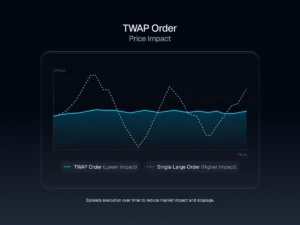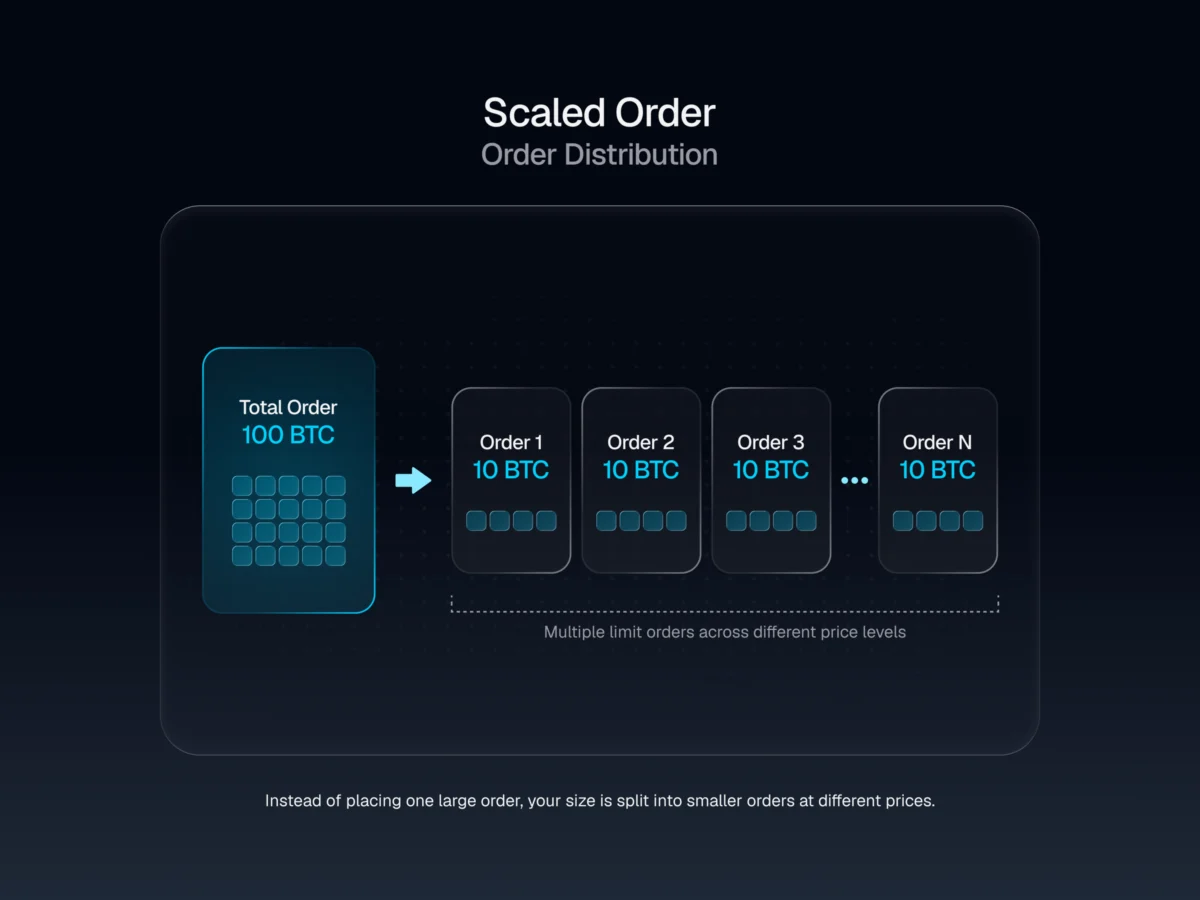
The decentralized finance landscape continues to mature rapidly, driven by the demand for sophisticated trading tools that were once exclusively the domain of institutional Wall Street desks. In a major development for the decentralized derivatives sector, liquidity protocol Synthetix has officially rolled out its advanced "Scaled Orders" feature on Synthetix Perps. This newly integrated functionality allows traders to automatically generate a complex series of limit orders distributed across a customized price range, effectively bridging the gap between automated execution algorithms and decentralized exchange infrastructure. By dividing a single, large position into multiple granular suborders, the feature aims to mitigate slippage, improve average entry and exit prices, and significantly reduce the market impact of large-volume trades executed on-chain.
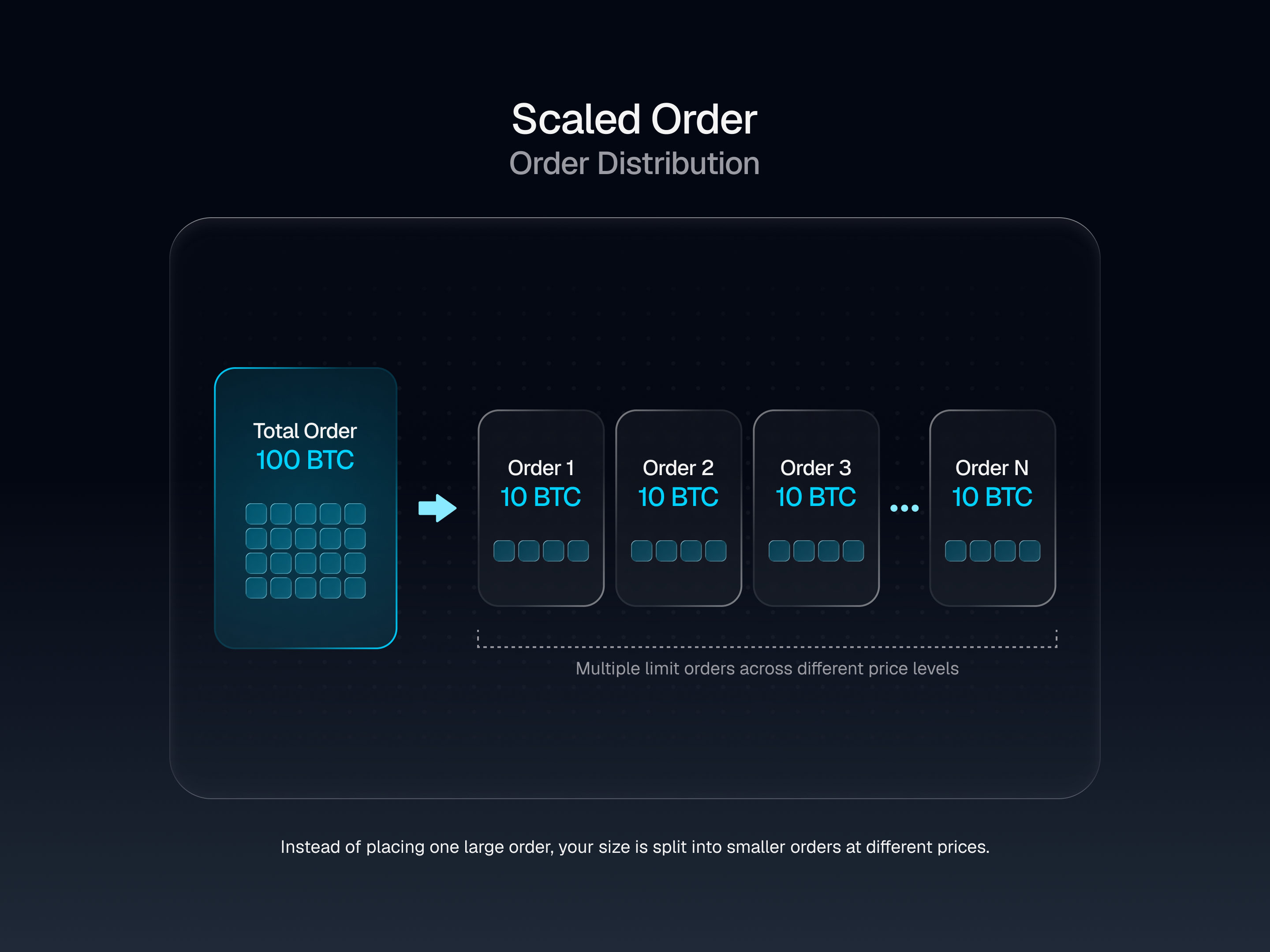
The introduction of scaled orders addresses a fundamental friction point in decentralized perpetual exchanges: the market impact of large single-point executions. Traditionally, traders executing sizable positions on-chain faced considerable slippage if the order book lacked sufficient depth at a specific price level. To counter this, advanced market participants have historically relied on manual "laddering"—the practice of placing multiple incremental limit orders across a descending or ascending price spectrum. While effective, manual laddering is time-consuming, prone to human error, and inefficient in fast-moving, volatile markets. Synthetix’s new native tool automates this entire process. Instead of committing capital to a single price point, a scaled order splits total capital into several smaller suborders distributed systematically across a defined price band. Consequently, traders can "ladder in" to long positions during market pullbacks and "ladder out" to secure profits during upward trends without constant manual intervention.
To accommodate diverse trading strategies, market conditions, and asset volatilities, the Synthetix implementation incorporates three distinct quantity distribution types. These algorithms dictate how the total order volume is allocated across the specified price range. The first option, the Equal (Flat) distribution, allocates an identical size to every suborder uniformly across all price points. This straightforward approach is favored by traders who anticipate range-bound price action without a definitive directional bias. The second option, the Increasing distribution, causes suborder sizes to grow as the price moves in a specified direction, meaning the largest portion of the trade is executed at higher prices. This is frequently utilized by sophisticated participants for distributing sell orders to maximize the average execution price. Conversely, the Decreasing distribution reduces suborder sizes as the price rises, concentrating the largest volume at lower price levels. This method is predominantly deployed when building accumulation positions, ensuring that the bulk of the asset is acquired at discounted prices to lower the overall average entry cost.
Beyond automated quantity allocation, the protocol provides granular control over price distribution intervals. Through the platform’s order panel, users can customize the spacing between individual limit orders, placing them at wider or narrower intervals depending on market liquidity and volatility profiles. This dual-layer customization—combining quantity weighting with precise price interval spacing—enables both short-term speculative traders and long-term accumulators to execute highly tailored strategies. The rollout is particularly timely given the broader macroeconomic and crypto-market context of 2026, where heightened volatility across digital asset derivatives demands greater execution precision. By bringing institutional-grade execution algorithms directly to the Ethereum mainnet and its associated layer networks, Synthetix is positioning its perps ecosystem as a primary venue for sophisticated decentralized finance (DeFi) participants.
Industry analysts and core contributors have highlighted the broader implications of deploying automated execution tooling within decentralized architectures. As decentralized exchanges increasingly rival centralized counterparts in volume and liquidity, the availability of advanced order types is viewed as a critical evolutionary step. Institutional liquidity providers and professional trading syndicates often cite the absence of native algorithmic execution as a primary barrier to migrating significant capital on-chain. By automating complex execution strategies at the smart contract level, protocols like Synthetix reduce execution risk and enhance capital efficiency. Furthermore, the ability to distribute order impact across time and price reduces the vulnerability of traders to predatory MEV (Maximal Extractable Value) strategies and front-running bots that frequently prey on large single-block transactions.
The deployment of scaled orders follows months of protocol development and community governance discussions aimed at enhancing the user experience on Synthetix Perps. Core contributors emphasize that the feature is fully live and accessible to all platform users via the official exchange interface. Comprehensive documentation and interactive support channels have been established to assist traders in configuring and testing the new order types safely. As the decentralized derivatives market continues to capture greater market share from traditional financial counterparts, the integration of professional-grade tools such as scaled orders signals a permanent shift in how liquidity is accessed, managed, and executed on the blockchain. Traders seeking to utilize the new functionality can access the Synthetix exchange portal directly, with ongoing community support and technical resources actively maintained across the protocol’s official Discord, Telegram, and developer channels.