The decentralized finance landscape on Ethereum Mainnet has achieved a significant milestone with the official launch of multicollateral margin on Synthetix, marking the first time users can post Ether (ETH) directly as native collateral for perpetual futures trading. This structural upgrade allows traders to utilize their primary asset holdings without liquidating their long-term positions, bridging a long-standing capital efficiency gap in Layer 1 derivative markets. Historically, traders operating on Ethereum Mainnet perpetual decentralized exchanges (perp DEXes) have been restricted to stablecoin margins, predominantly USDT or USDC, necessitating the sale of bullish assets to fund trading margins. By integrating native ETH collateral, Synthetix has unlocked a mechanism for market participants to maintain direct exposure to the underlying asset while simultaneously opening leveraged perpetual positions.
The deployment of this feature alters how liquidity and collateral interact within the protocol’s unified account structure. Operating exclusively on Ethereum Mainnet, where every trade settles natively on the Layer 1 network, Synthetix has aligned its margin architecture with the native asset of the ecosystem. Market analysts note that this capability taps into a massive pool of idle capital residing on the Ethereum blockchain, presenting a new paradigm for decentralized derivatives.
Background Context and Evolution of Margin Systems
To understand the weight of this development, one must examine the evolution of margin systems within decentralized derivatives exchanges. In the early stages of DeFi, margin accounts were strictly single-asset, requiring traders to deposit the exact stablecoin designated for position settlement. While effective at mitigating immediate solvency risks, this design forced users to incur opportunity costs, tax events, or unwanted asset sales simply to access leverage.
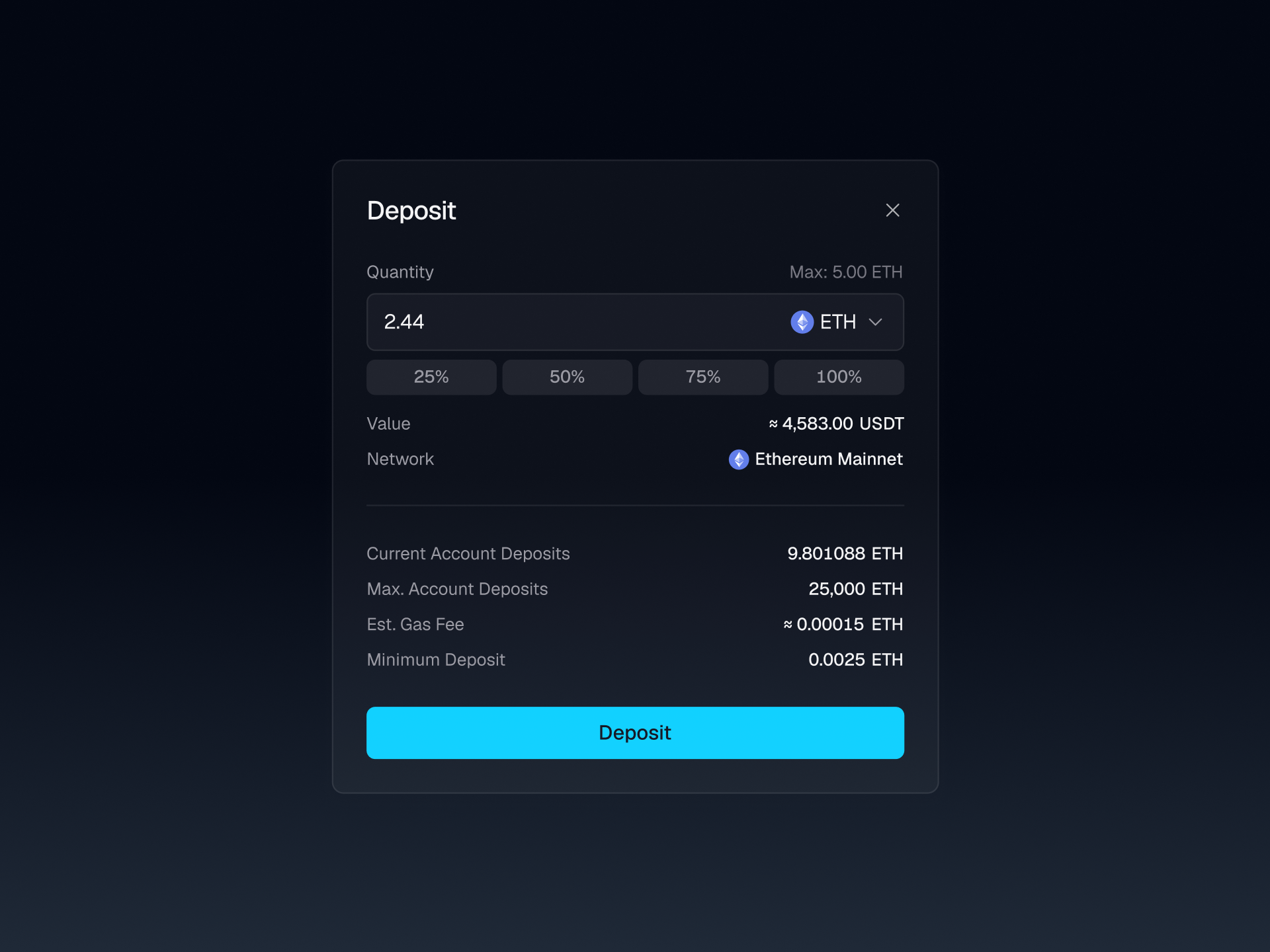
As the market matured, the industry gravitated toward cross-margin and multi-collateral models, though these were predominantly pioneered on alternative Layer 1 networks or high-throughput Layer 2 scaling rollups due to gas optimization and execution speed considerations on Ethereum Mainnet. Synthetix’s decision to build and launch its multicollateral framework directly on Ethereum Mainnet signifies a concerted effort to fortify Layer 1 utility. By allowing users to deposit ETH into a unified margin account alongside USDT, the protocol establishes a hybrid solvency framework where non-stablecoin assets back stablecoin-denominated positions.
Mechanics of Native ETH Margin and Unified Accounts
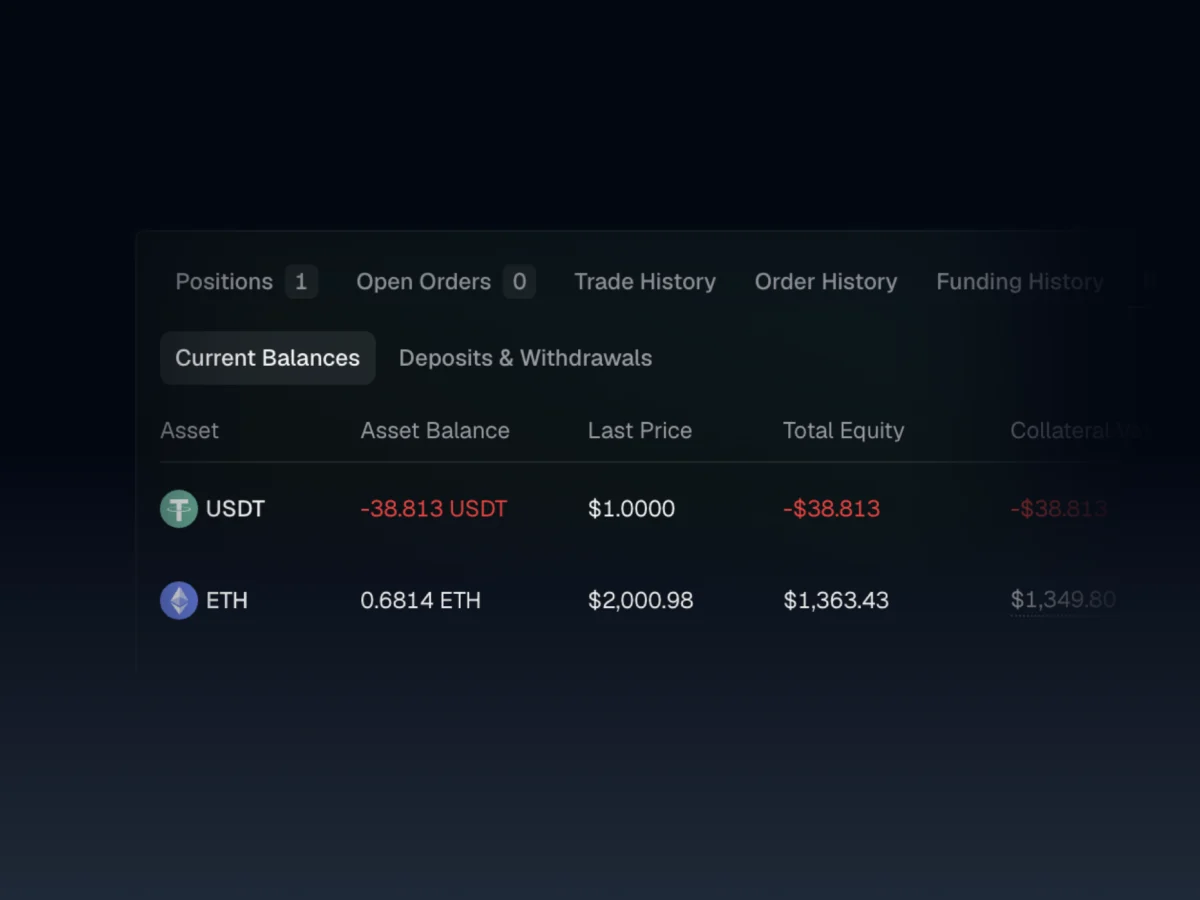
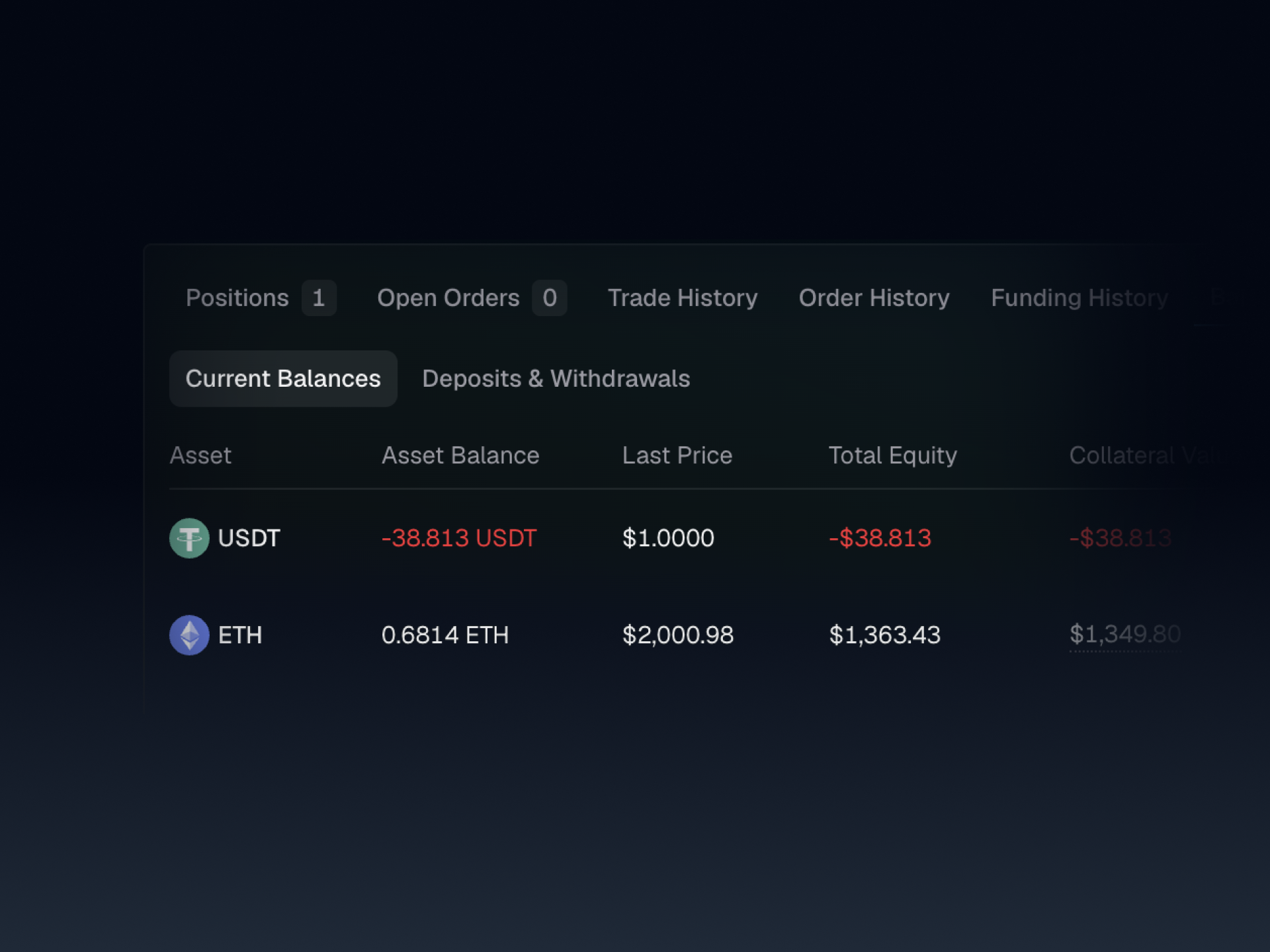
The mechanics governing native ETH margin on Synthetix involve specific risk-management parameters designed to protect the protocol while maximizing user utility. When a trader deposits ETH into the unified margin system, the asset is appraised using its live index price. To account for market volatility, the protocol applies a standard risk discount, commonly referred to as a haircut, resulting in the user’s effective Collateral Value. This discounted value is what actively counts toward the account’s total margin requirement.
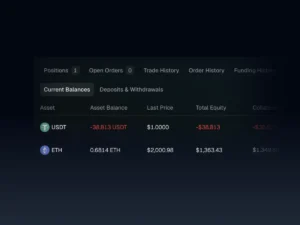
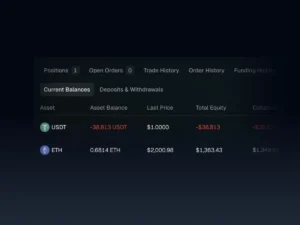
Because all Synthetix perpetual positions settle in USDT, trading fees, funding rates, and realized profit and loss (PnL) continue to be denominated in USDT. Consequently, if a user opens positions backed entirely by ETH collateral without maintaining a positive USDT balance, their account’s USDT balance can legally and intentionally enter a negative state. This deficit is entirely collateralized by the underlying ETH stack. Users maintain the flexibility to clear this negative USDT balance at any time by utilizing the protocol’s integrated swap feature, which converts a portion of their deposited ETH directly into USDT within the account interface.
Risk parameters are strictly enforced. Because ETH collateral is continuously marked to its live index price, adverse price movements in the underlying asset diminish the account’s total collateral value, independent of open position PnL. If accumulated USDT debt or unfavorable market fluctuations cause an account’s margin to breach safety thresholds, the protocol features automated safeguards. These measures can autonomously convert a portion of the user’s ETH into USDT to maintain solvency, though traders are strongly encouraged to manage their buffers and execute voluntary repayments ahead of automated liquidation triggers.
Enhancing DeFi Strategies: The Efficiency of Basis Trades
The introduction of ETH as multicollateral margin provides immediate utility for fundamental decentralized finance strategies, most notably the execution of basis trades. Historically, running a delta-neutral basis trade—simultaneously holding a spot asset and shorting a corresponding perpetual contract to capture funding rates—required complex asset management, wrapping, or multi-step bridging across protocols.
With Synthetix’s multicollateral architecture, traders can deposit ETH as collateral and short ETH perpetual contracts in equivalent sizing within the same unified account. The collateral value and the position’s PnL move inversely, largely neutralizing directional price risk while the trader continuously collects funding payments from the short position. Market infrastructure specialists observe that by streamlining these arbitrage pathways, institutional and retail basis traders help keep funding rates closely aligned with spot market conditions, thereby fostering tighter, more competitive pricing across all markets hosted on the exchange.
Broader Economic Implications for the Ethereum Ecosystem
The integration of ETH as collateral opens access to a vast pool of capital. With well over $100 billion in idle ETH circulating within the broader crypto economy, providing native utility for this capital on Layer 1 transforms the token from a passive store of value into an active, composable margin instrument. Protocol developers and ecosystem participants have long argued that expanding the utility surface of ETH strengthens the economic security of the entire Ethereum stack.
Market analysts evaluating the launch suggest that capturing even a fractional share of average monthly derivatives volume could initiate a powerful liquidity flywheel. Increased trading activity on Ethereum Mainnet naturally drives higher transaction throughput, generates sustainable fee revenue for underlying validators, and enhances the composability of derivative instruments with other native decentralized finance primitives, such as lending markets and yield aggregators.
Future Roadmap and Collateral Expansion
Synthetix has confirmed that Ether is merely the initial non-USDT asset to be integrated into its multicollateral framework. The underlying smart contract infrastructure has been engineered to scale horizontally, paving the way for additional collateral types to be incorporated over time. Future updates are expected to introduce support for diverse asset classes, including yield-bearing tokens and liquid staking derivatives, further maximizing capital efficiency for traders.
As the rollout progresses, the protocol continues to publish comprehensive documentation detailing specific asset limits, minimum deposit thresholds, maximum account caps, and variable haircut percentages. With the infrastructure fully operational on Ethereum Mainnet, Synthetix has established a new technical benchmark for Layer 1 derivatives trading, shifting the paradigm of how capital is utilized, managed, and deployed in decentralized finance.