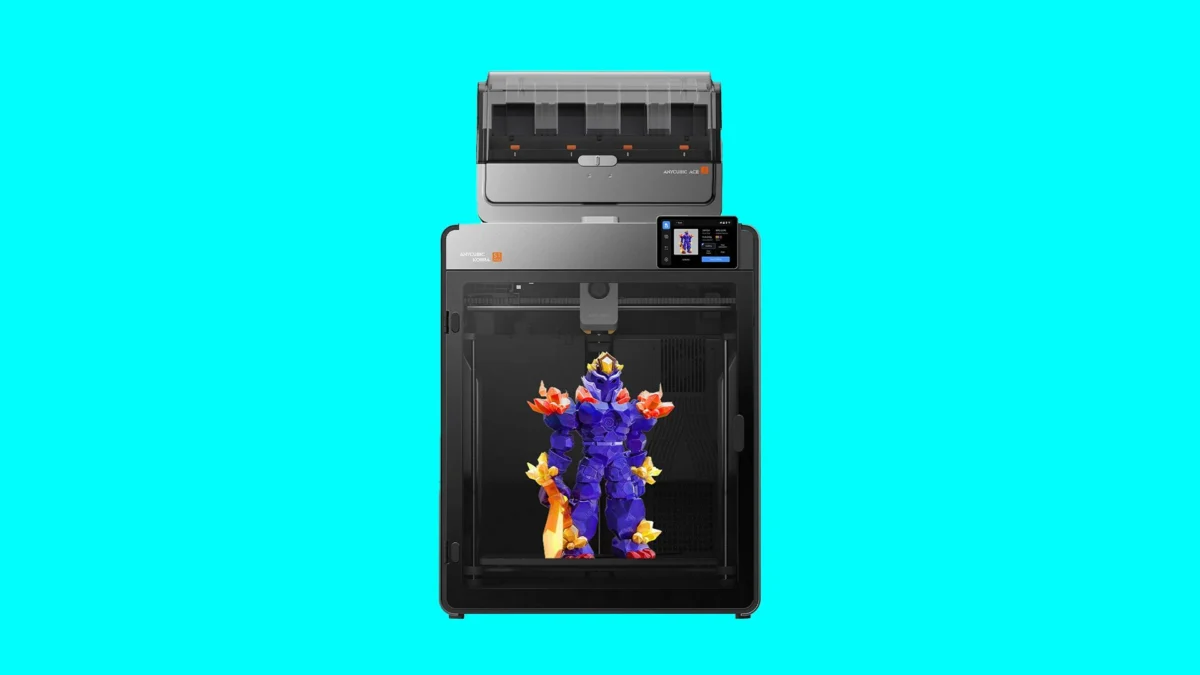
The 3D printing industry has experienced a significant wave of consumer interest and commercial adoption over the past decade, driven largely by rapid advancements in multi-color capabilities, faster print speeds, and increasingly user-friendly interfaces. Capitalizing on this growth trajectory, manufacturer Anycubic has officially launched its 11th-anniversary promotional event, offering substantial price cuts across its ecosystem of hardware, bundle packages, and printing materials. Running through the current promotional cycle, the anniversary sale features discounts of up to $500 on select bundles, targeting everyone from absolute beginners entering the hobby to professional creators and industrial prototypers seeking to expand their production capabilities.
At the center of the promotional lineup is a notable $170 price reduction on the Kobra S1 ACE 2 Pro Combo, a machine engineered specifically to handle sophisticated 16-color FDM (Fused Deposition Modeling) printing. Industry analysts and equipment reviewers have frequently highlighted multi-material integration as one of the most transformative developments in desktop fabrication, allowing users to produce complex, multi-colored models without the tedious manual filament swaps that characterized earlier generations of consumer-grade 3D printers. By bringing down the cost barrier for advanced multi-color setups, Anycubic aims to capture market share among hobbyists looking to elevate the visual fidelity of their printed miniatures, prototypes, and functional household objects.
Background Context of the Event and Market Evolution
To understand the significance of Anycubic’s promotional pricing, one must examine the broader evolution of the desktop 3D printing market over the past eleven years. Founded in 2015 during the early commercialization boom of consumer additive manufacturing, Anycubic emerged alongside a handful of pioneering brands that sought to democratize a technology previously locked behind expensive industrial paywalls. In its early years, the company focused on reliable, open-source-friendly LCD resin and entry-level Cartesian FDM printers, which required significant technical troubleshooting, manual calibration, and mechanical tinkering from the end user.
Over the subsequent decade, the competitive landscape transformed radically. Consumer expectations shifted away from experimental hobbyist kits toward appliance-like reliability, automated bed leveling, high-speed acceleration firmware such as Klipper, and enclosed printing chambers capable of handling engineering-grade filaments like ABS, ASA, and nylon. The 11th-anniversary milestone reflects not only Anycubic’s longevity in a notoriously fast-moving hardware sector but also its strategic pivot toward sophisticated, feature-rich ecosystems. Today, the company competes fiercely against global rivals like Bambu Lab, Creality, and Prusa Research, all of which are locked in a continuous race to offer faster print speeds, intelligent AI monitoring, and seamless multi-material capabilities out of the box.
Comprehensive Breakdown of the Anniversary Promotions
Beyond the headline-grabbing discount on the Kobra S1 ACE 2 Pro Combo, the anniversary event encompasses a wide-ranging inventory of hardware and consumables. The promotional structure is divided into several distinct tiers designed to capture different segments of the consumer base:
- FDM Multi-Color and High-Speed Combos: Aimed at users who require complex material transitions and high volumetric flow rates. These packages bundle high-speed printers with automatic material management systems (ACE), allowing for automated spool feeding, moisture management, and multi-color swapping.
- Large-Format FDM Printers: Tailored for cosplayers, prop makers, and industrial designers who need a substantial build volume to print large, single-piece objects without partitioning models into smaller segments.
- Resin (SLA/MSLA) Printers: High-resolution resin systems utilizing advanced masking LCD panels. These units are heavily favored by tabletop gaming enthusiasts, jewelry designers, and dental technicians who demand micron-level surface accuracy and smooth finishes.
- Consumables and Accessories: Discounts covering standard PLA, PETG, and specialized engineering filaments, alongside replacement resin vats, UV curing stations, wash-and-cure machines, and replacement build plates.
Furthermore, Anycubic has introduced an incentivized discount model via its digital marketing channels. Customers who subscribe to the official Anycubic newsletter are granted access to an exclusive pack of digital vouchers, unlocking additional marginal savings that can be stacked on top of existing markdown prices during the checkout process. Company representatives note that prices listed during the promotional period exclude regional taxes, which fluctuate depending on the buyer’s geographical jurisdiction and local value-added tax (VAT) regulations.
Chronology of Anycubic’s Growth and Product Milestones
The trajectory leading up to this 11th-anniversary sale is marked by several pivotal technological and corporate milestones that trace the maturation of consumer-grade 3D printing:
- 2015: Anycubic is established in Shenzhen, China, quickly gaining traction with its early-generation desktop 3D printers designed for makers and educational institutions.
- 2017–2019: The company pivots heavily into UV resin printing, launching the Photon series, which democratizes stereolithography (SLA) by making high-resolution resin printing affordable for everyday consumers and tabletop gaming hobbyists.
- 2020–2021: Amid the global pandemic, demand for home-based hobbies surges. Anycubic scales up its manufacturing output and introduces the Kobra series, establishing a stronger foothold in the FDM (filament) market with automated leveling features.
- 2022–2023: The industry experiences a paradigm shift toward high-speed printing and closed-loop motion control. Anycubic responds with core-XY and high-acceleration firmware architectures, significantly reducing print times for complex geometries.
- 2024–2025: The integration of multi-material systems becomes standard for high-end consumer machines. The introduction of advanced multi-color combos, culminating in hardware like the Kobra S1 ACE 2 Pro, positions the company to compete directly in the premium multi-color printing segment.
- Current: Celebrating its 11th anniversary, the company deploys aggressive pricing strategies, offering up to $500 off comprehensive bundles to capture market share ahead of the mid-year retail cycle.
Industry Analysis and Market Implications
The timing of Anycubic’s anniversary sale is strategically significant within the broader consumer electronics and hardware market. As global supply chains stabilize and inflationary pressures force consumers to be more deliberate with discretionary spending, hardware manufacturers are increasingly relying on timed promotional events to stimulate demand, clear inventory, and introduce new software or hardware ecosystems to a broader audience.
From an economic perspective, discounting complex hardware bundles such as the Kobra S1 ACE 2 Pro Combo serves a dual purpose. First, it lowers the psychological barrier to entry for prospective buyers who might otherwise hesitate to invest in a multi-thousand-dollar or high-tier ecosystem. Second, it secures long-term customer loyalty and recurring revenue streams through the ongoing purchase of proprietary consumables, including specialized filament spools, replacement print heads, build plates, and photopolymer resins.
Industry experts observe that the modern 3D printing market operates on a razor-and-blades business model, where the initial hardware sale is merely the entry point. By offering significant upfront hardware savings during milestone events like an 11th-anniversary sale, manufacturers successfully expand their active user base, which in turn drives higher consumption of proprietary materials and accessories over the lifecycle of the machine.
Accessibility and User Experience in Modern Additive Manufacturing
A recurring critique of the 3D printing sector historically has been its steep learning curve. Early machines demanded considerable mechanical aptitude, manual calibration of print beds, slicing software optimization, and troubleshooting of failed prints caused by nozzle clogs or bed adhesion failures. However, the hardware highlighted in Anycubic’s current promotional lineup illustrates how far the industry has progressed toward plug-and-play accessibility.
Modern systems feature automated multi-point bed leveling, filament runout sensors, power-loss recovery, integrated web-cam monitoring, and AI-assisted spaghetti detection that halts failed print jobs before valuable material is wasted. Consequently, market research indicates that the demographic profile of 3D printer buyers has expanded dramatically. While the core base of engineering hobbyists and tech enthusiasts remains robust, the market now attracts educators, artists, costume designers, and small business owners who utilize the technology for rapid prototyping and localized manufacturing without needing an engineering degree.
Broader Impact on Small Business and Localized Production
The increased affordability and sophistication of desktop 3D printing equipment—accelerated by promotional pricing events—have tangible downstream effects on small businesses and independent creators. Micro-entrepreneurs utilizing platforms like Etsy, Kickstarter, and local craft markets increasingly rely on desktop farms consisting of multiple FDM and resin printers to produce custom goods, architectural models, bespoke mechanical components, and specialized artistic merchandise.
By reducing capital expenditure requirements through sales offering up to $500 in combined discounts, manufacturers enable small-scale creators to scale their production capacity more efficiently. This lower barrier to entry fosters grassroots innovation, allowing independent designers to prototype and manufacture physical products locally rather than relying on overseas mass-production tooling, which traditionally required high minimum order quantities (MOQs).
Conclusion and Outlook for Consumers
As Anycubic’s 11th-anniversary sale progresses, prospective buyers and seasoned creators have a distinct window of opportunity to acquire advanced hardware, including multi-color FDM systems and high-precision resin printers, at significantly reduced price points. While consumers must account for regional tax variations and ensure they select the appropriate hardware configuration for their specific production needs, the breadth of the current discounts underscores the intensely competitive nature of the modern desktop fabrication market. As manufacturers continue to push the boundaries of speed, multi-material integration, and automation, events of this scale serve as vital milestones in the ongoing democratization of additive manufacturing technology.