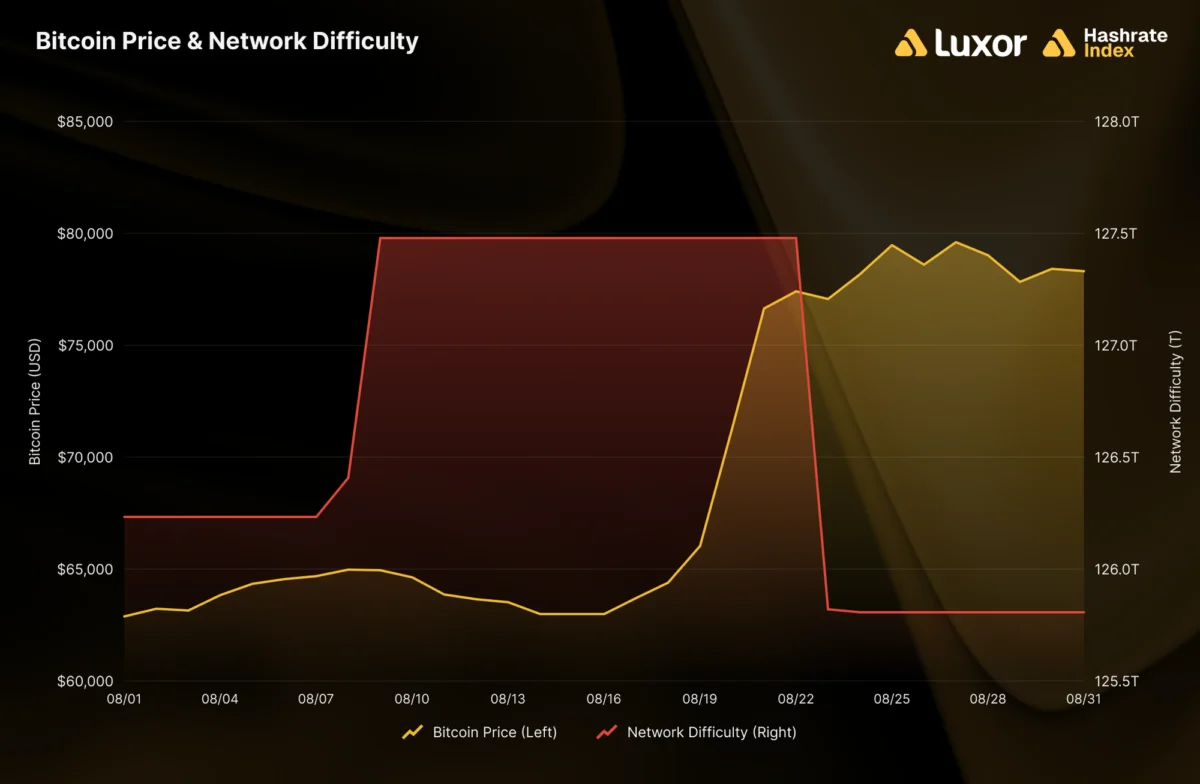
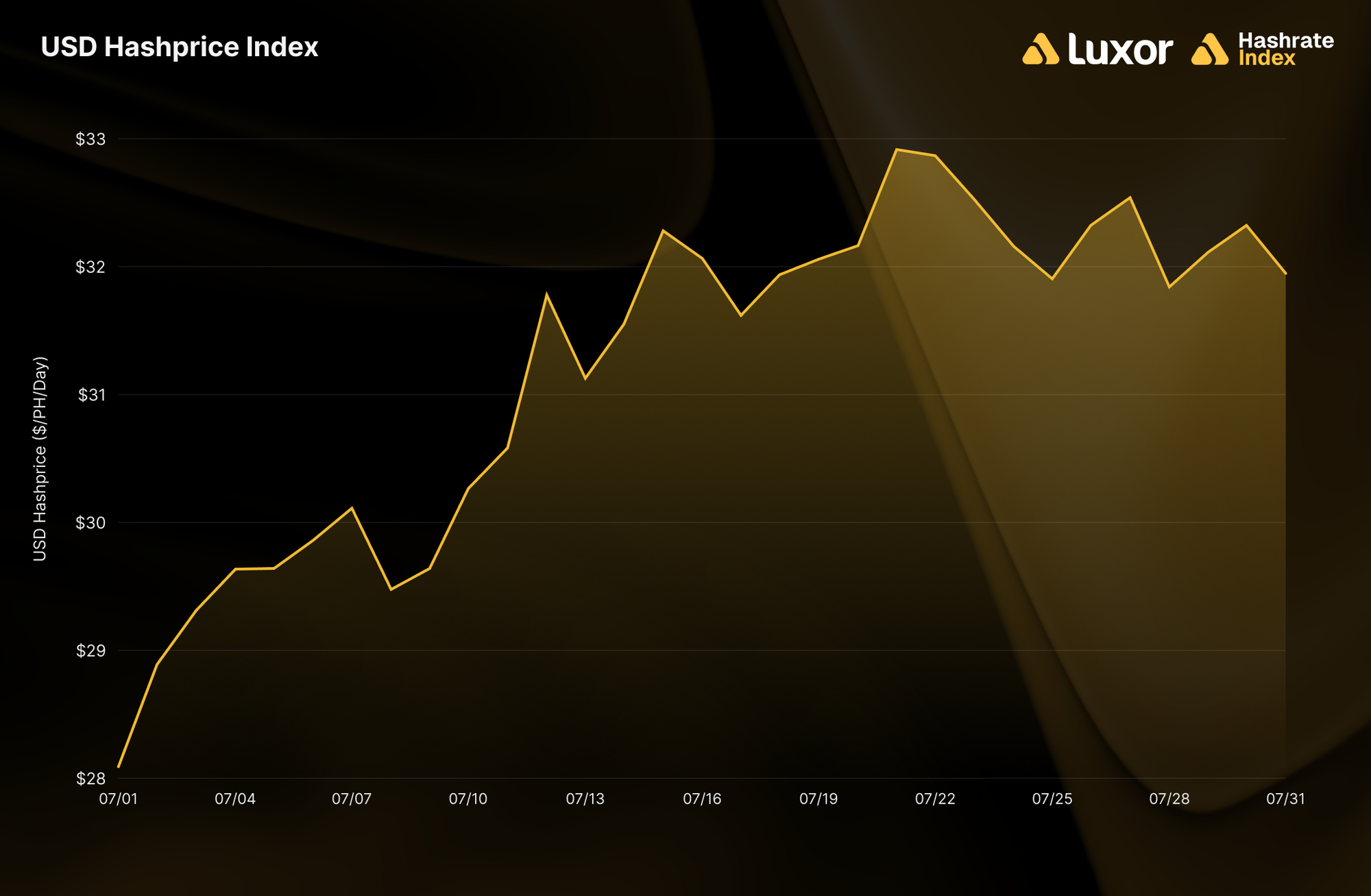
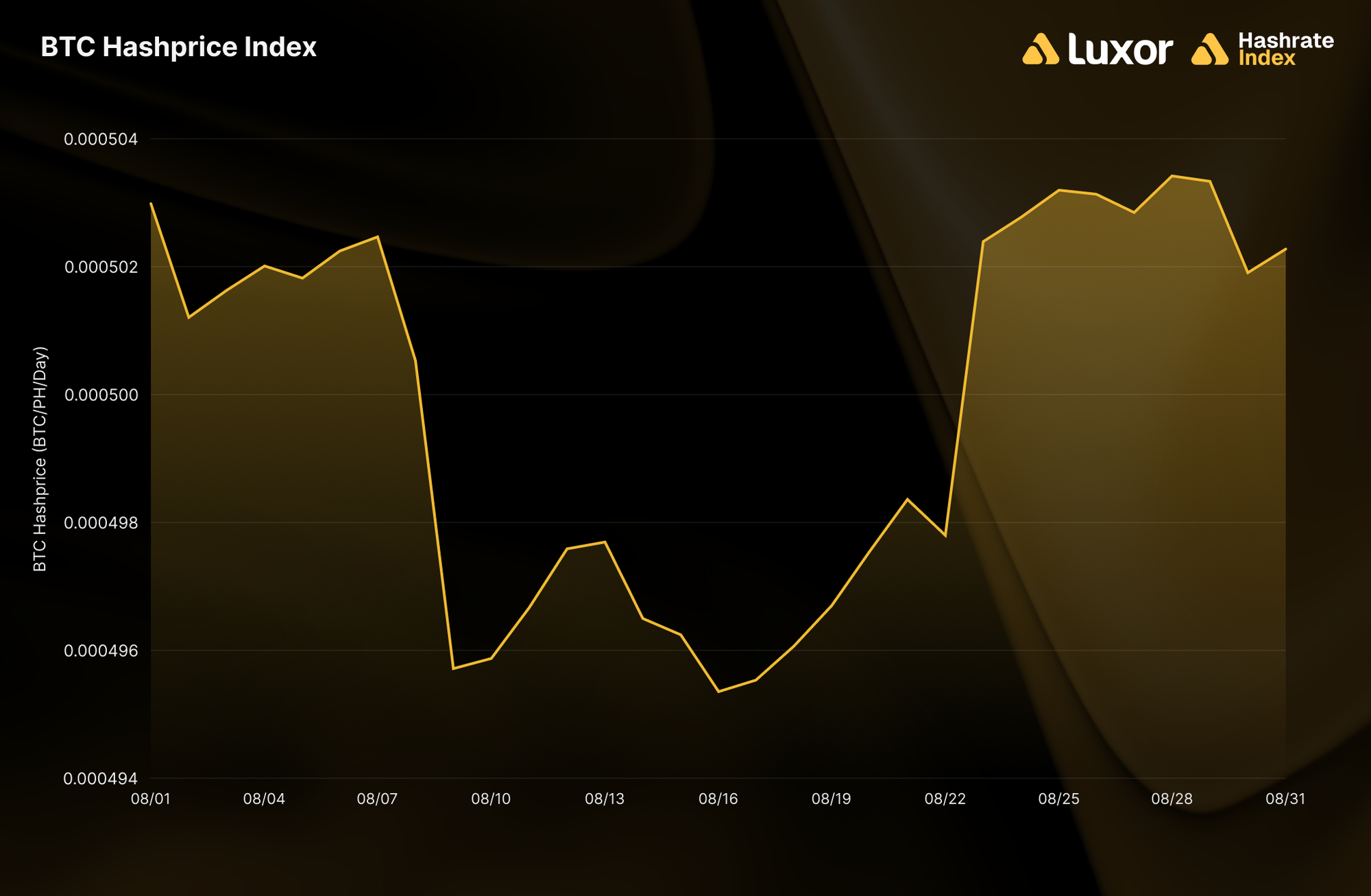
August 2026 proved to be a transformative period for the Bitcoin mining industry, characterized by a sharp bifurcation in market performance. For the first nineteen days of the month, the sector remained trapped in the stagnant conditions that defined July, with hashprice oscillating within a narrow $31 to $33 per PH/s/day band and Bitcoin prices lingering in the low $60,000 range. However, the final third of the month catalyzed a dramatic reversal, as a confluence of regulatory announcements, macroeconomic shifts, and record-breaking liquidation events propelled Bitcoin’s price upward by 19% in just three days.
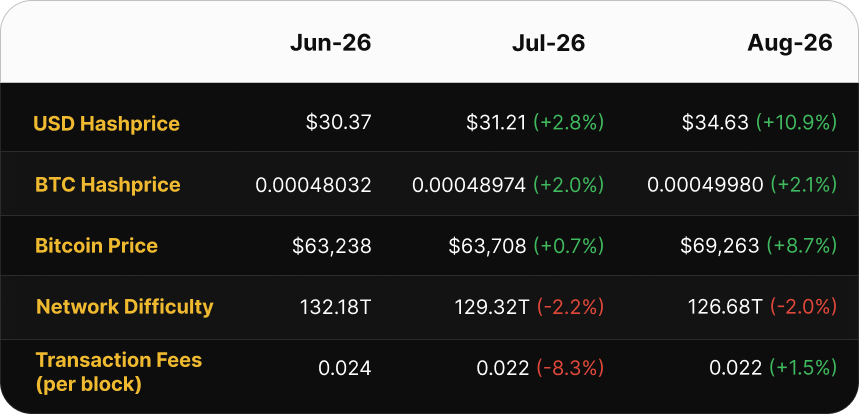
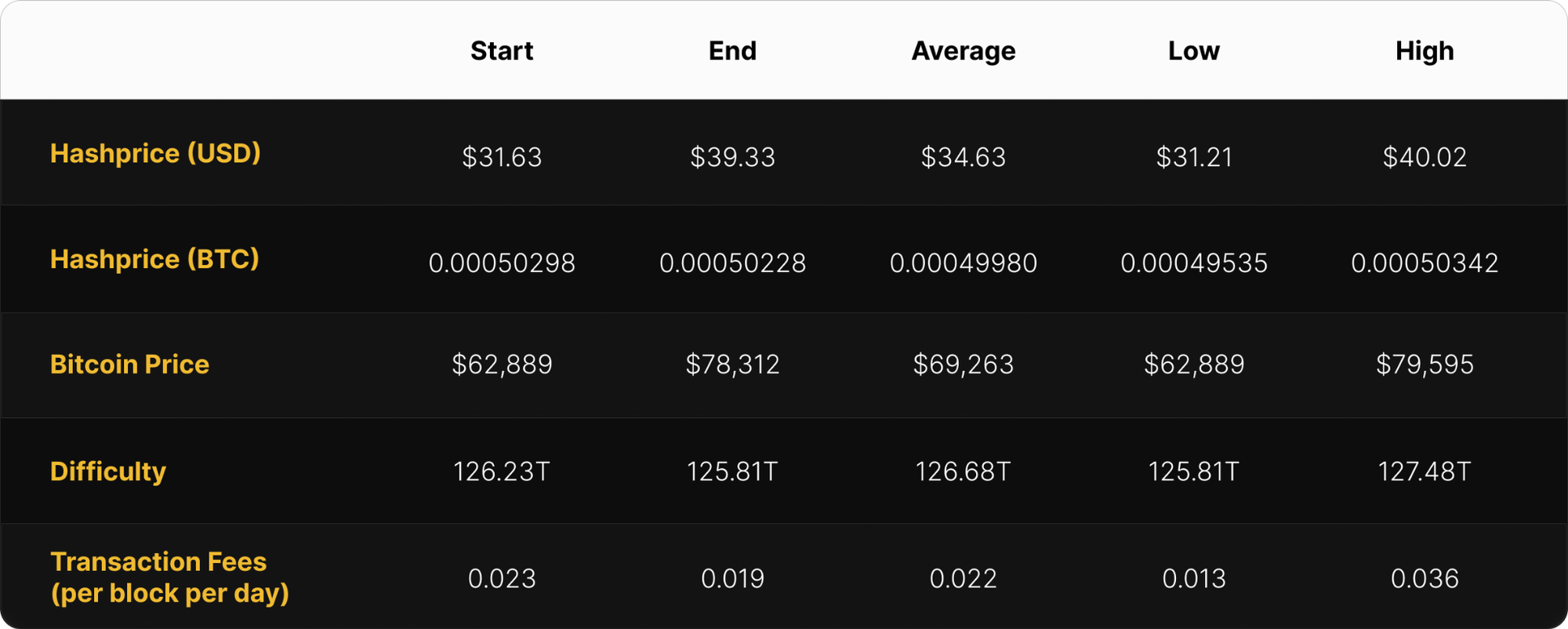
This volatility shift not only provided a reprieve for marginal miners but also reshaped the forward-looking expectations of institutional market participants. By the close of August, the monthly average USD hashprice had climbed to $34.63 per PH/s/day, a 10.9% increase from July and the highest monthly average since May 2026. This recovery was underscored by a significant open-to-close surge of 24.4%, the 18th largest monthly percentage gain for hashprice since 2017.
The Market Turning Point: Catalysts and Market Dynamics
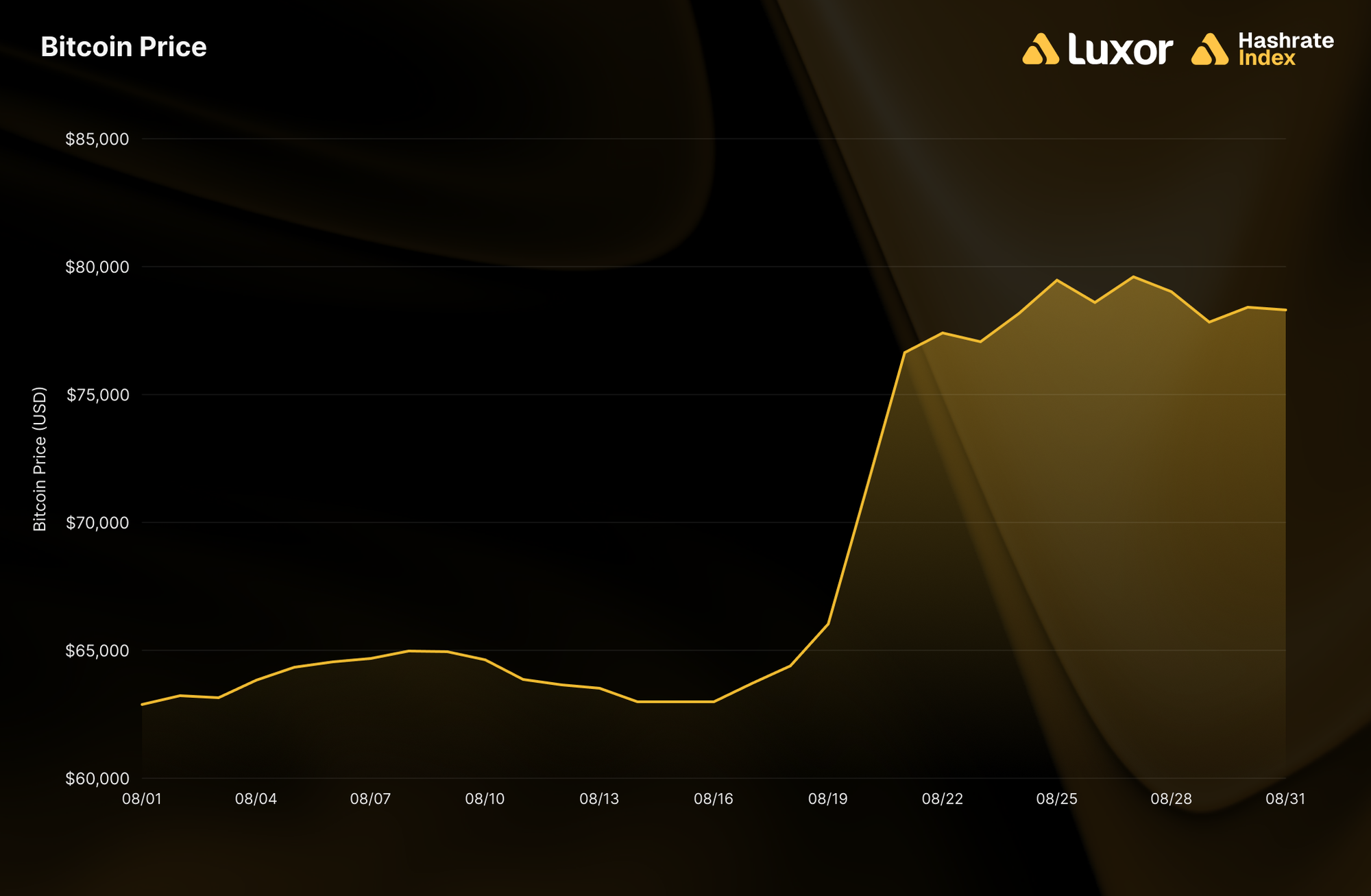
The sudden appreciation in Bitcoin’s value—rising from an opening of $62,889 to a closing of $78,312—was not the result of a single isolated event, but rather a structural shift in investor sentiment triggered by three primary pillars of influence.
On August 18, the Securities and Exchange Commission (SEC) unveiled its proposed Regulation Crypto Assets. This rulemaking, the first of its kind explicitly dedicated to digital asset offerings, provided much-needed clarity for the industry by exempting token raises of up to $5 million and $75 million from traditional Securities Act registration requirements. This move served to lower the regulatory risk premium that had weighed on the broader crypto market for months.
Simultaneously, the macroeconomic landscape shifted on August 19 when the U.S. Treasury announced a strategic pivot, doubling its long-end buyback operations from $2 billion to $4 billion. This intervention, effective September 9, prompted a nearly 10-basis-point drop in 30-year yields, which had been hovering at 19-year highs. The reduction in long-term borrowing costs acted as a tailwind for risk-on assets, including Bitcoin.
Finally, on August 20, President Donald Trump publicly pressured the Senate to expedite the passage of the Clarity Act. The combination of these political and fiscal signals triggered a massive short squeeze, resulting in the liquidation of approximately $2.7 billion in crypto derivatives. Spot Bitcoin ETFs, which had seen relatively muted activity in July, confirmed this trend, recording $3.52 billion in inflows throughout August and expanding their total assets under management from $76.3 billion to $99.6 billion.
Network Difficulty and Operational Realities
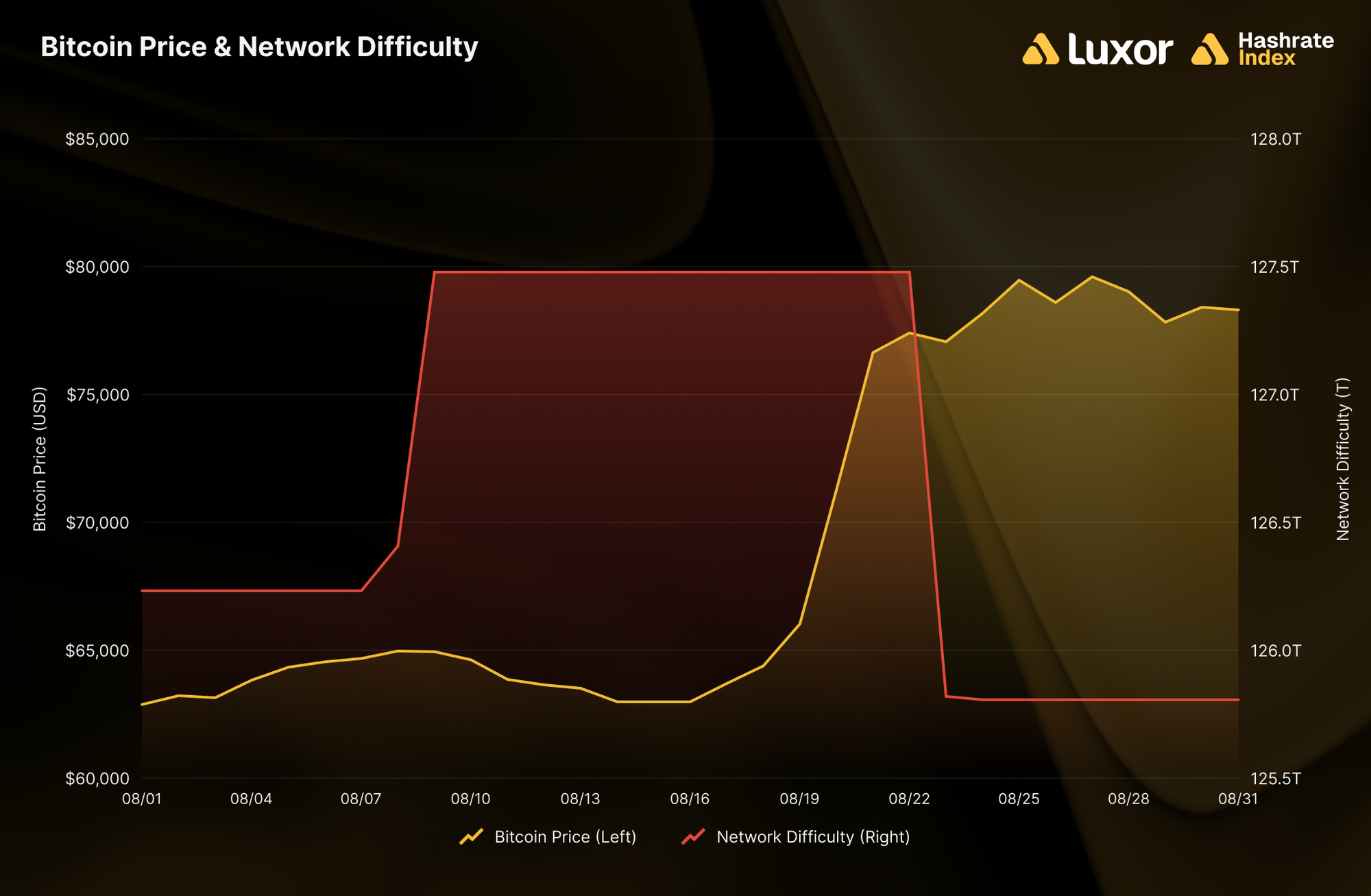
While the price of Bitcoin rallied, the network’s difficulty adjustments provided a stabilizing counter-effect. The network experienced two primary adjustments: a 0.99% increase on August 8, followed by a 1.31% decrease on August 23. The net result was a marginal decline of 0.34%, keeping the difficulty average at 126.68T.
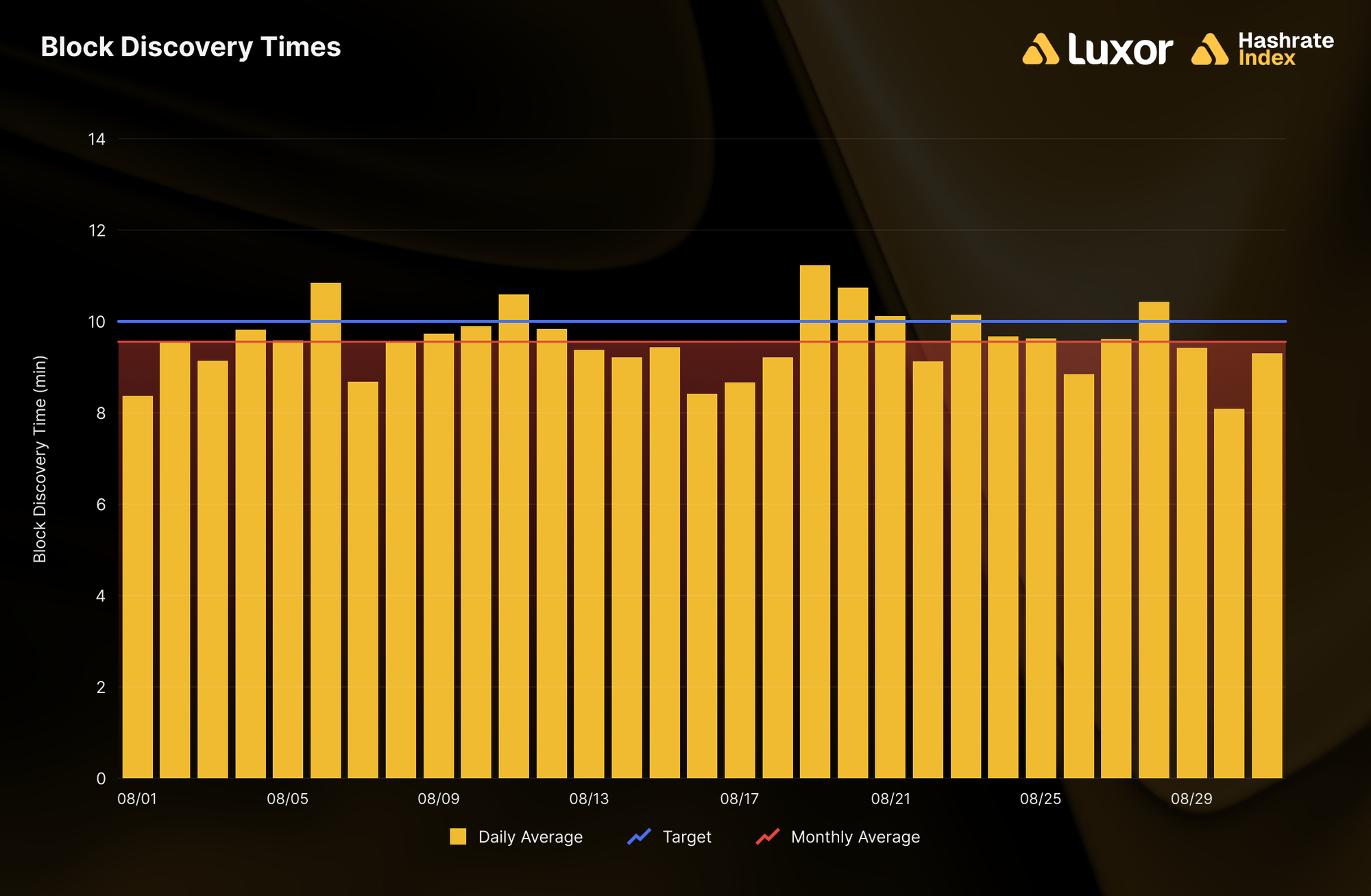
This relative stagnation in difficulty is significant, as it indicates that the massive influx of hashrate that usually follows a price spike has yet to fully manifest. Block times averaged 9 minutes and 34 seconds, suggesting that the network is currently running approximately 4.6% faster than the prevailing difficulty would imply. This reflects the reality that miners who curtailed operations in June and July are gradually re-engaging their fleets as the profitability threshold shifts.
Notably, the 4CP (Four Coincident Peaks) transmission cost avoidance strategy, common among large-scale miners in the Texas ERCOT market, continued to influence the network. August’s adjustments averaged a slight decline, deviating from the historical August average increase of 2.04% observed between 2022 and 2025. As miners exit the peak summer heat, this seasonal pressure is expected to wane, likely leading to a resumption of more aggressive hashrate growth in the coming months.
Transaction Fees and the Cost of Error
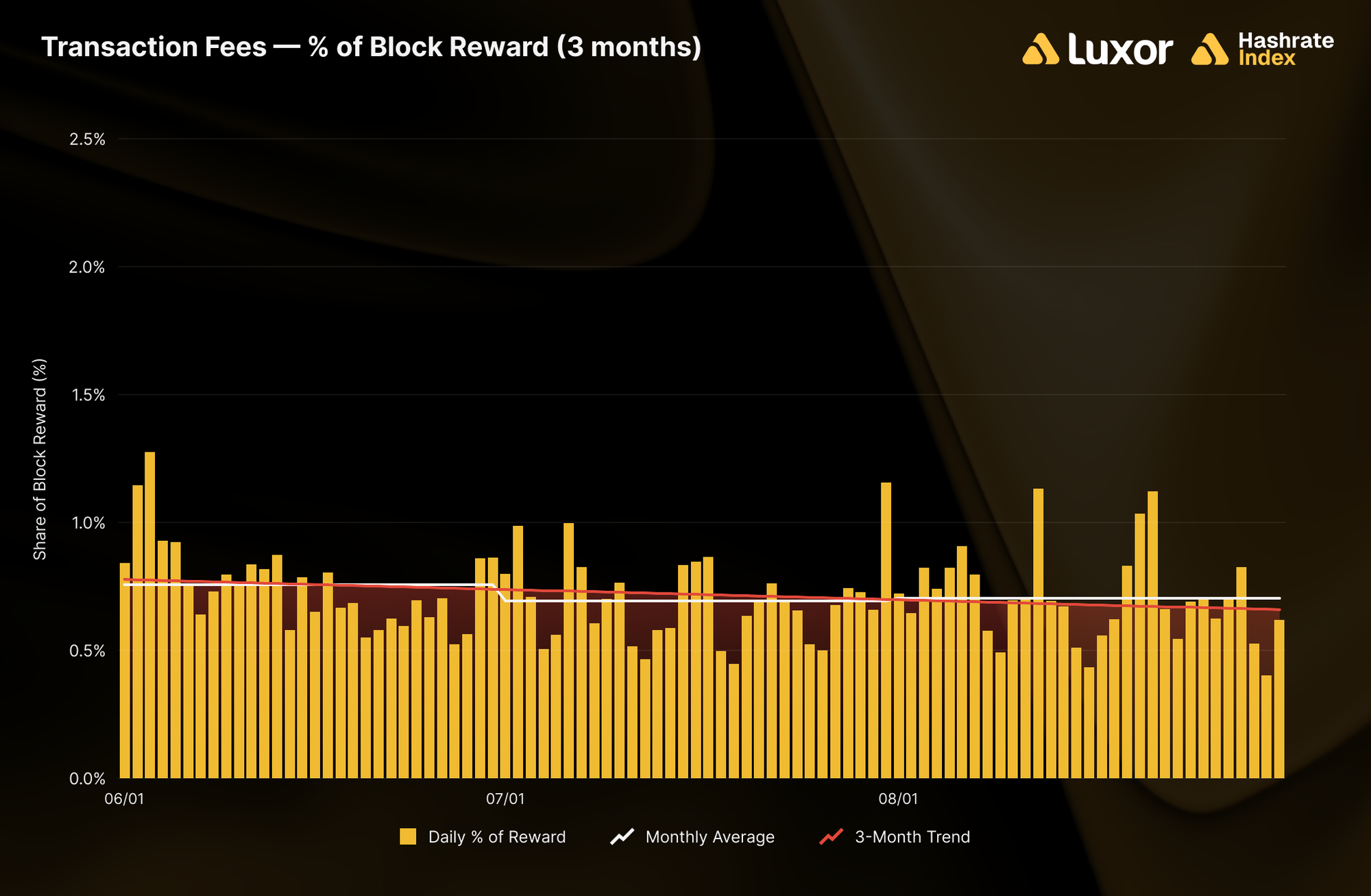
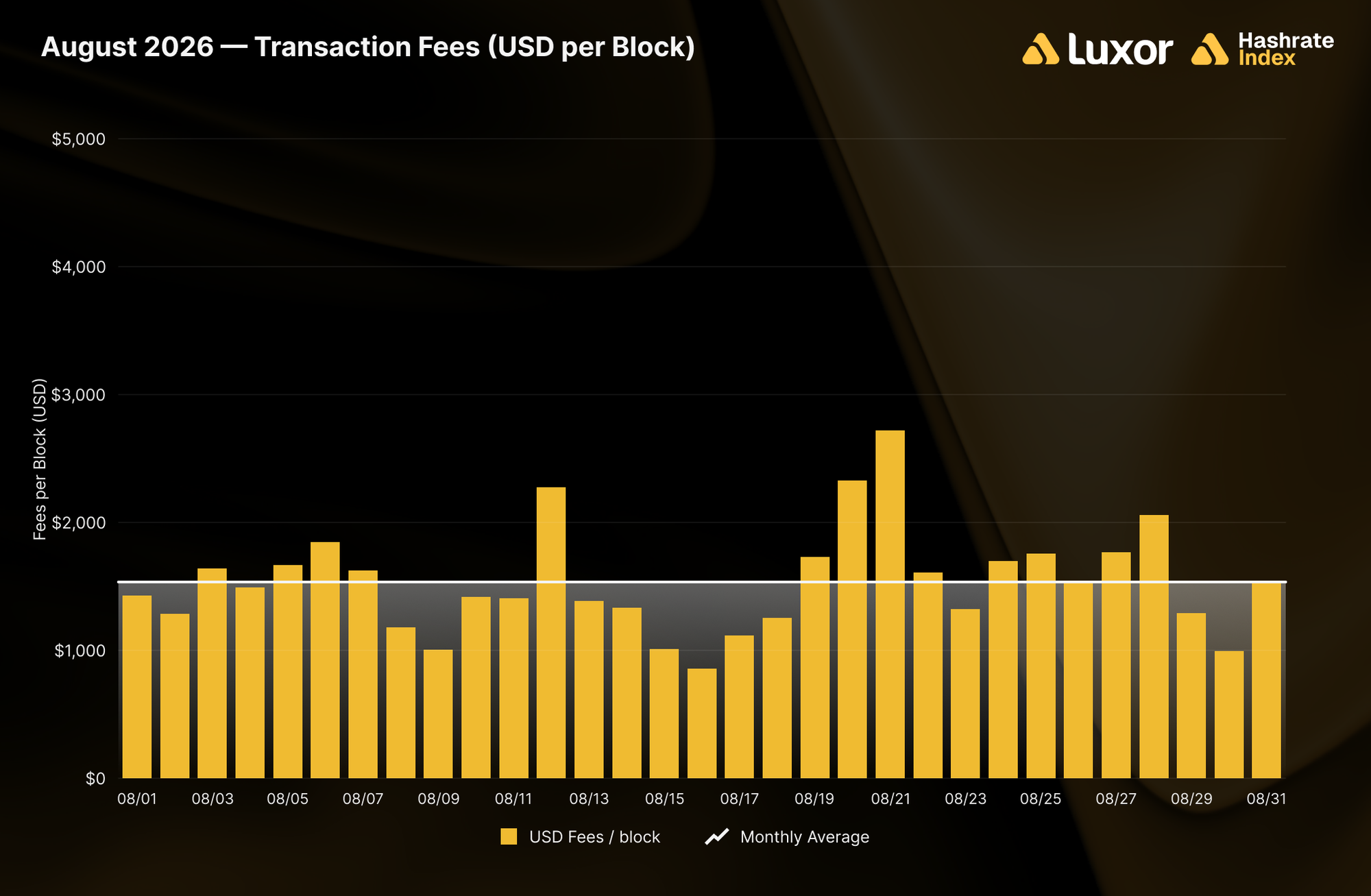
Transaction fees remained largely flat in BTC terms, averaging 0.02218 BTC per block, and representing less than 1% of total block rewards for the fourteenth consecutive month. However, a notable outlier occurred on August 12, when block 962,142 was mined with 1.82 BTC in fees—the highest daily average of the month.
The anomaly was traced to an automated Replace-by-Fee (RBF) script that malfunctioned, causing a user to pay approximately $103,000 in fees to send a zero-value transaction. Excluding this anomalous block, fee collection remained consistent with the monthly trend. This incident serves as a stark reminder of the risks inherent in automated on-chain transaction management and the impact of individual user behavior on overall network revenue.
Forward Market Performance and Hedging Implications
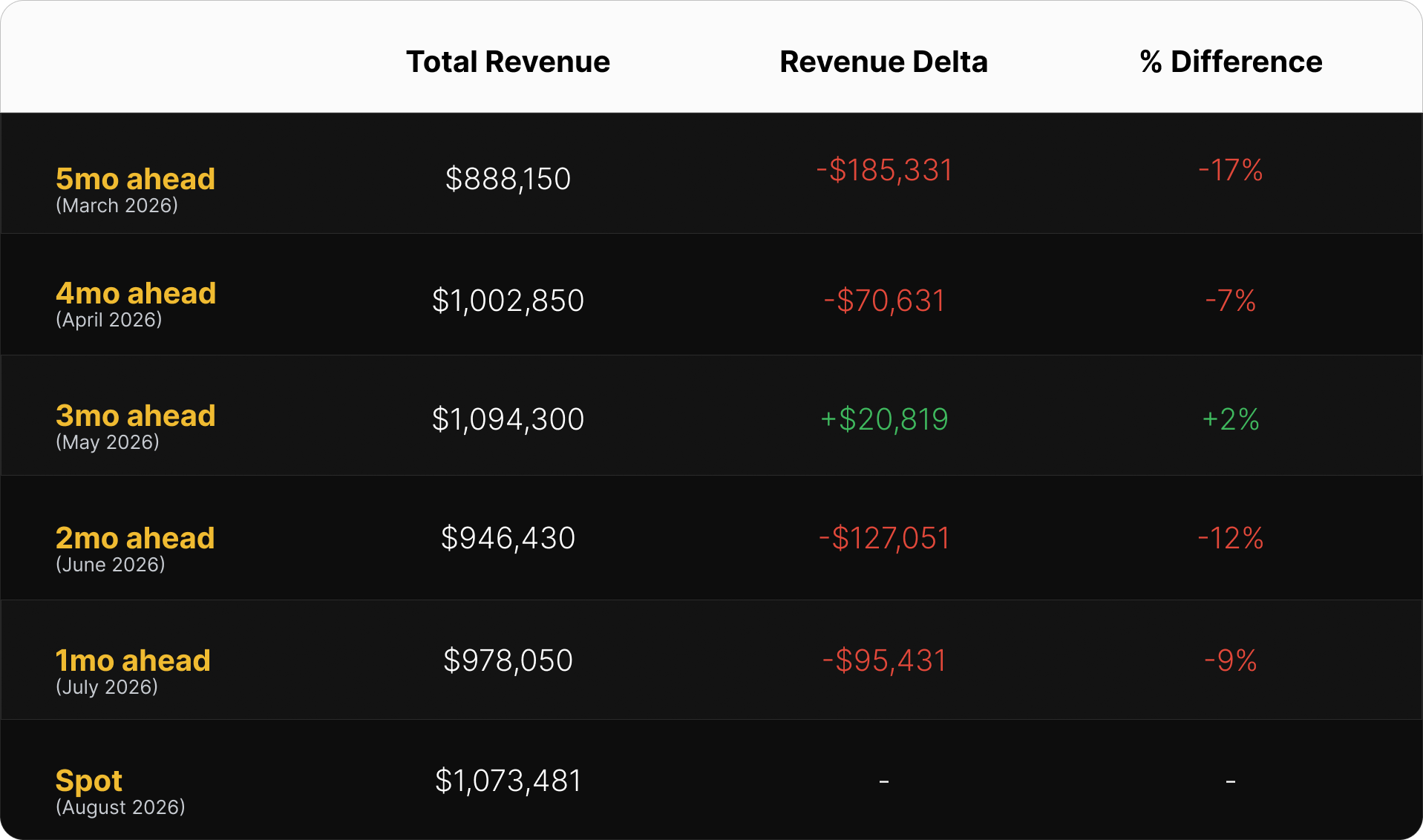
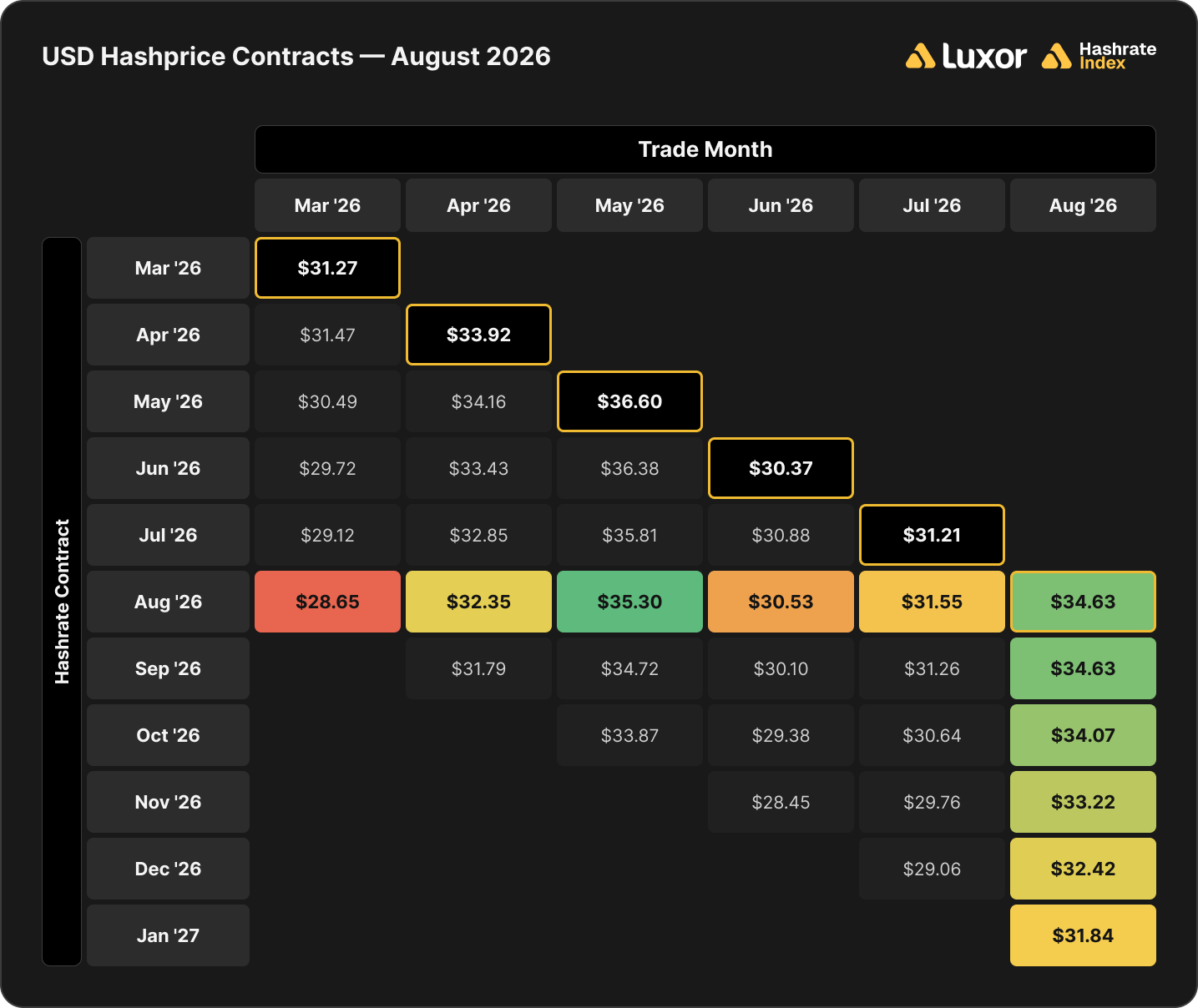
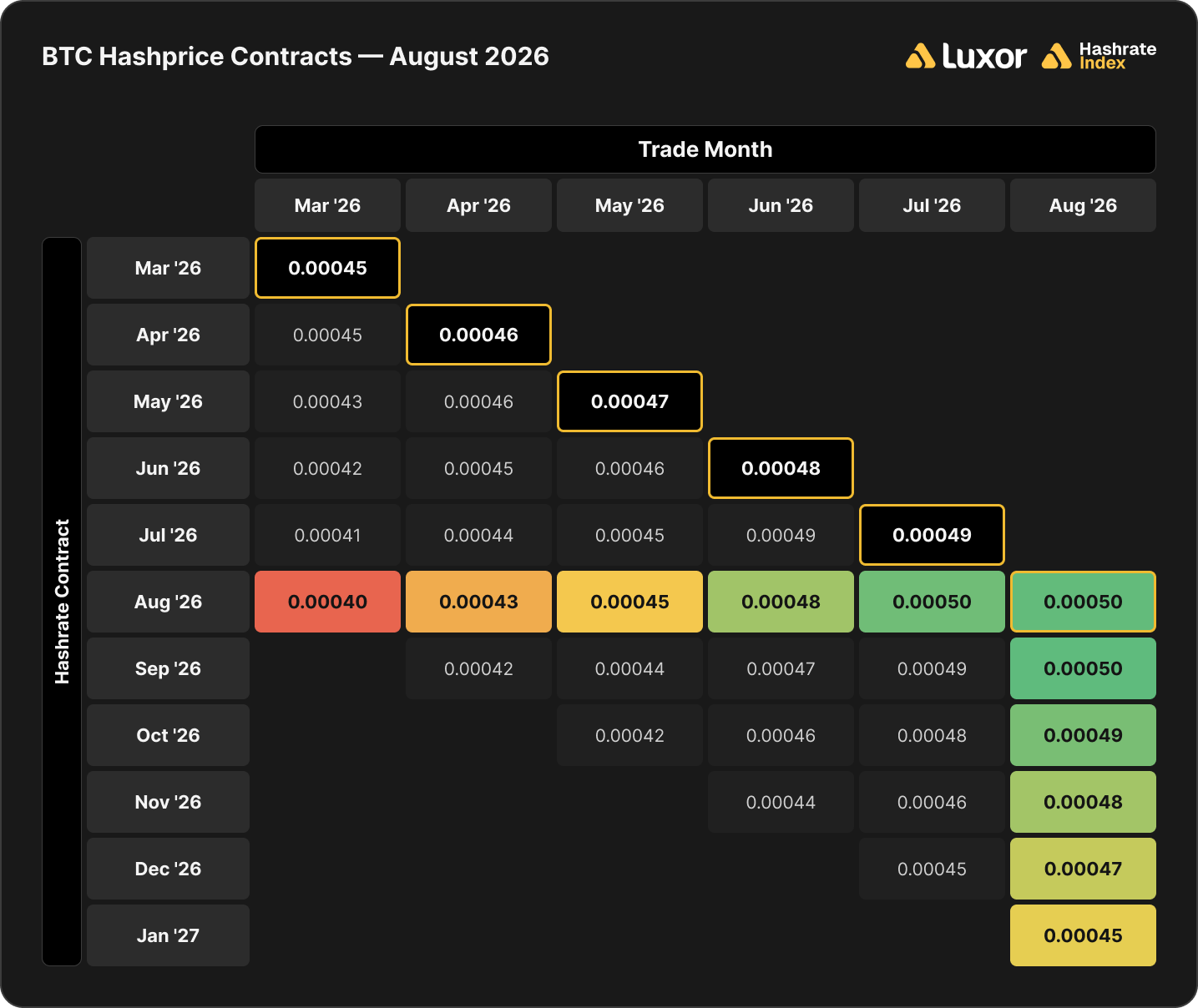
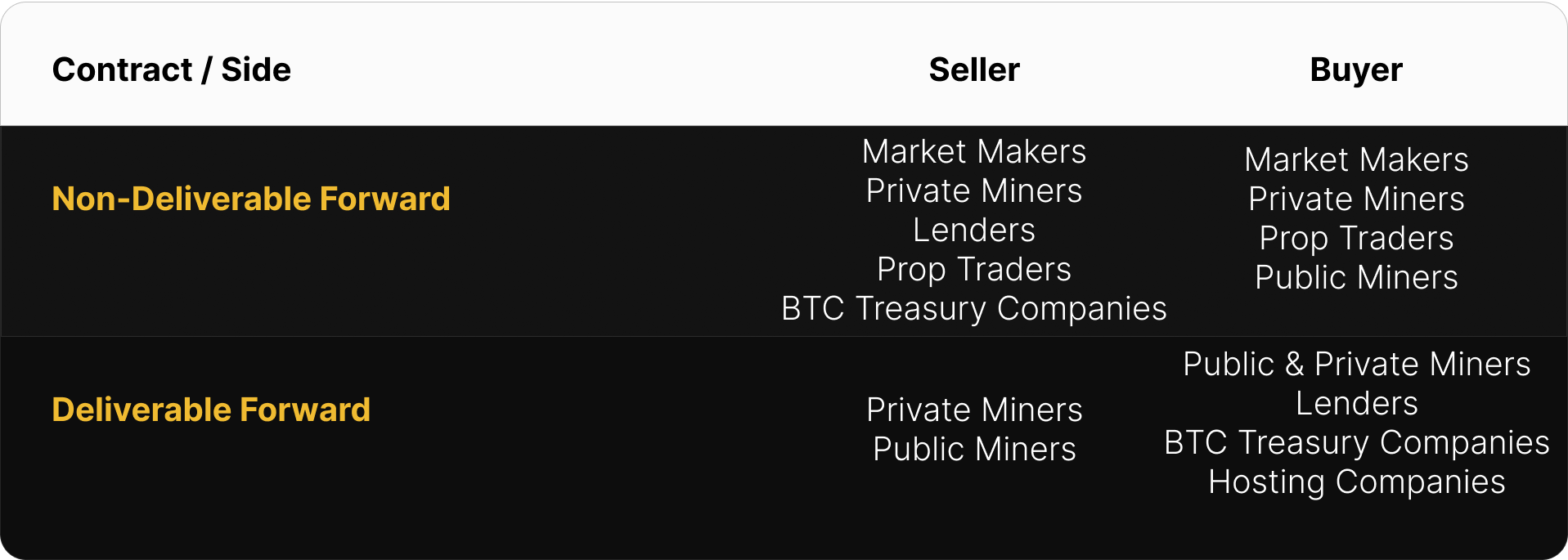
Luxor’s data on hashrate forward contracts reveals a distinct shift in how miners and lenders approached risk management in August. The forward market for hashrate is a critical barometer for industry health, allowing miners to secure non-dilutive financing by selling future production at fixed rates.
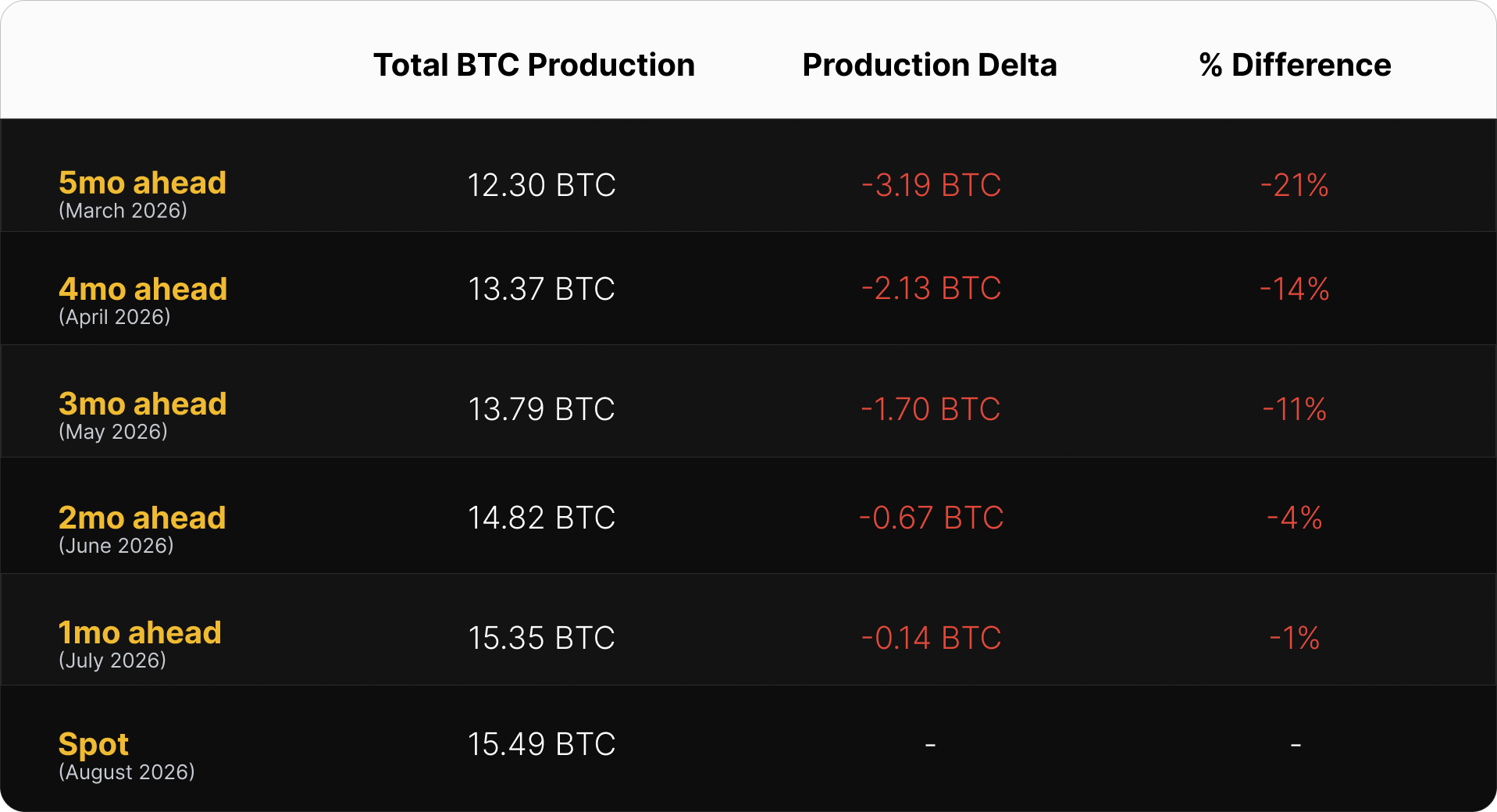
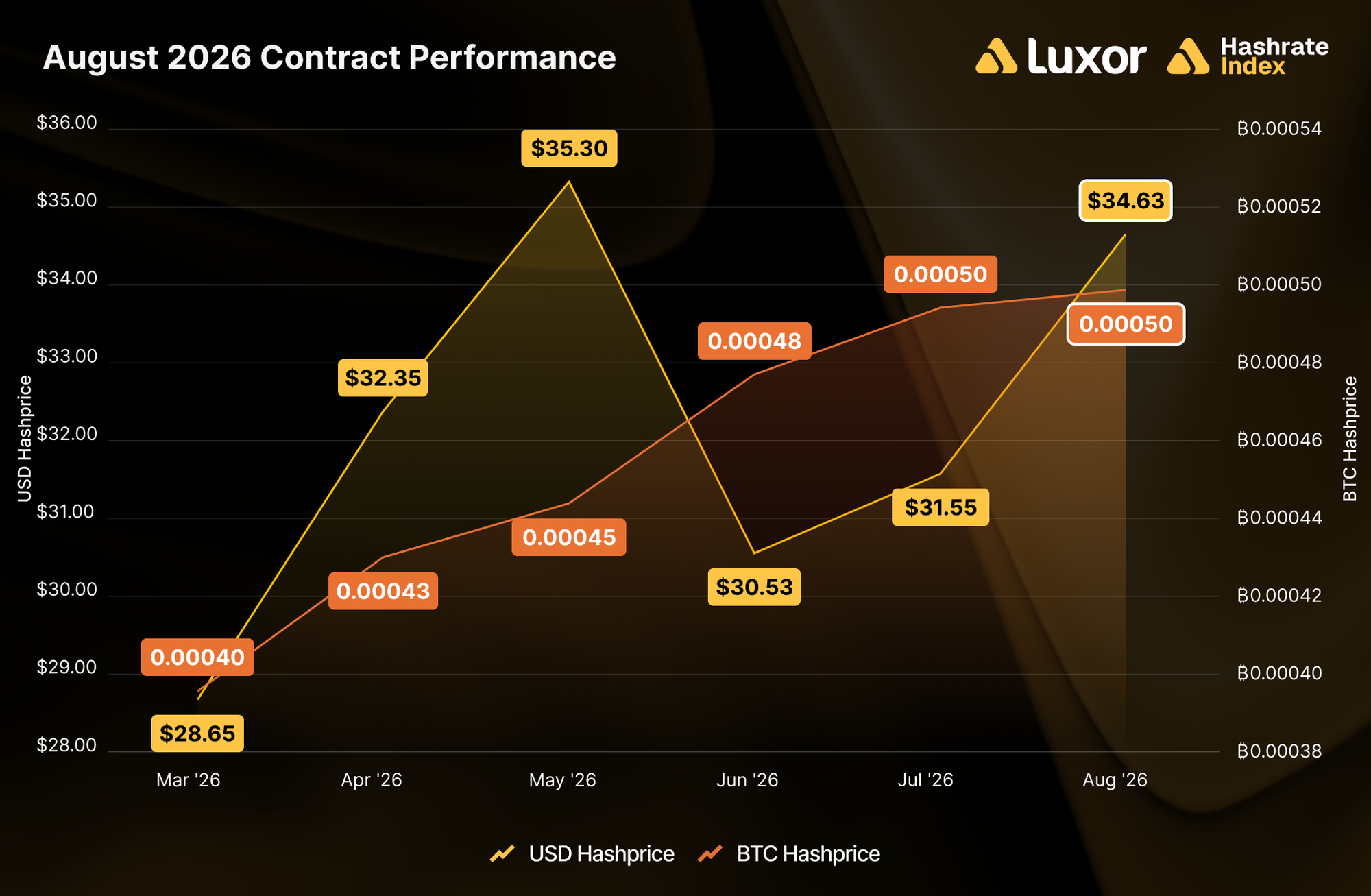
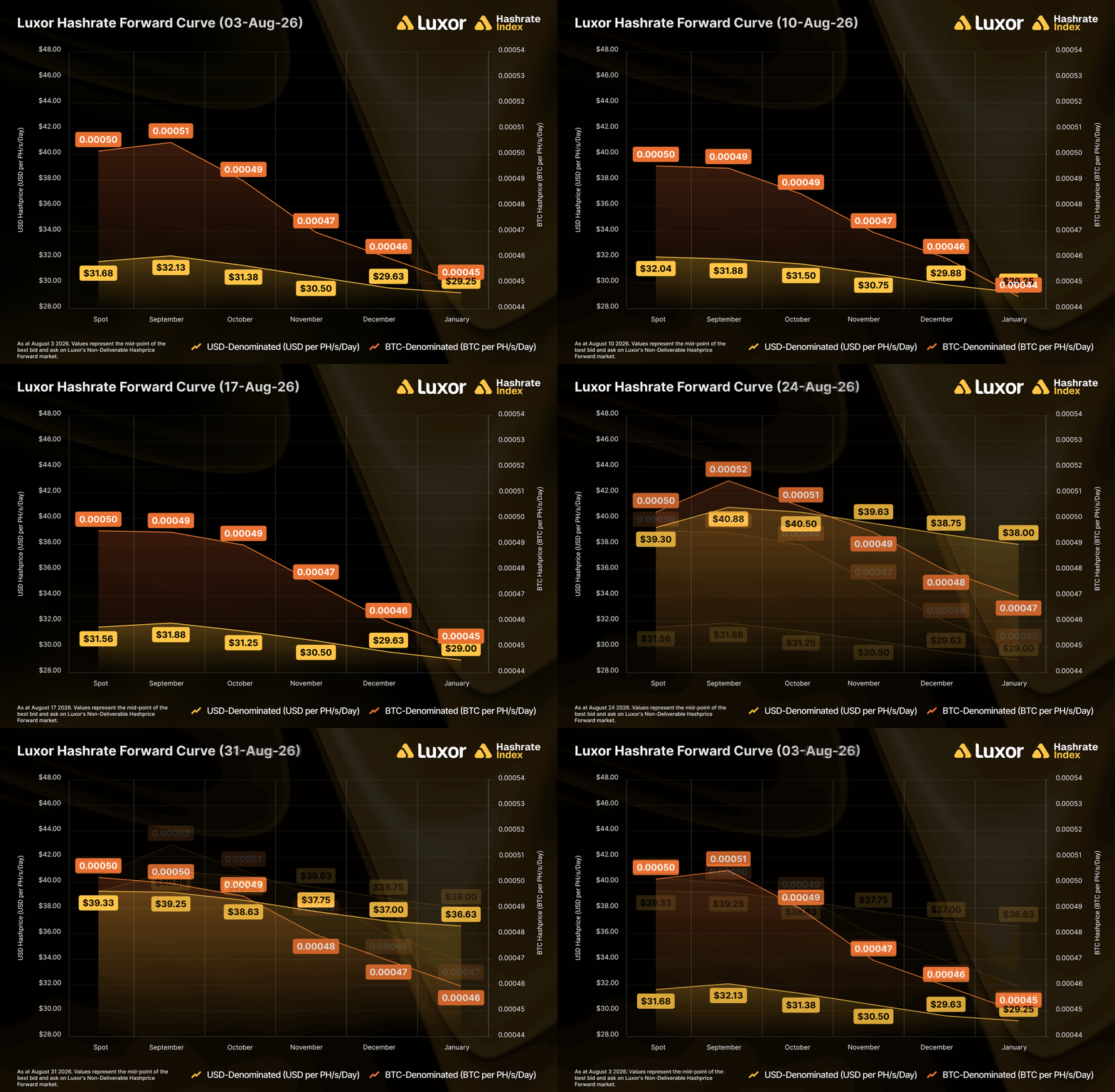
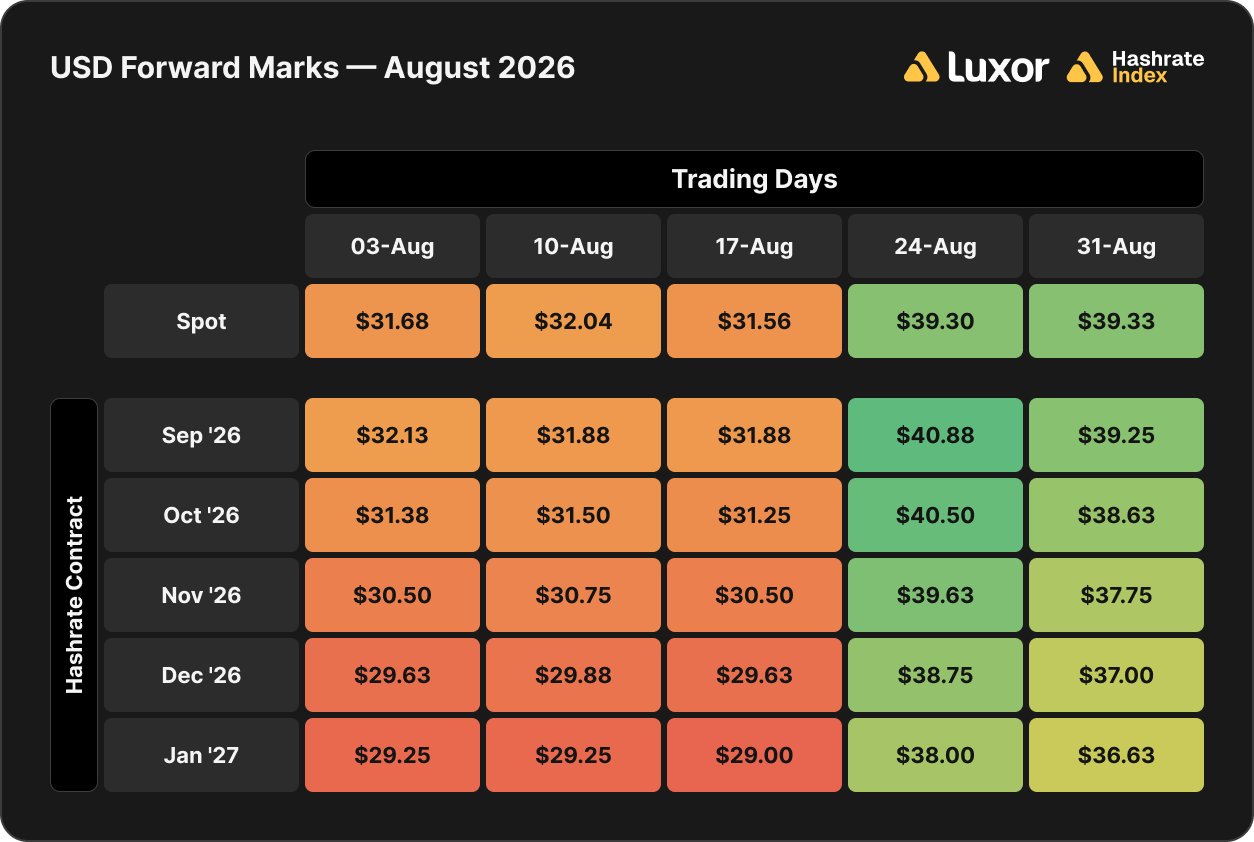
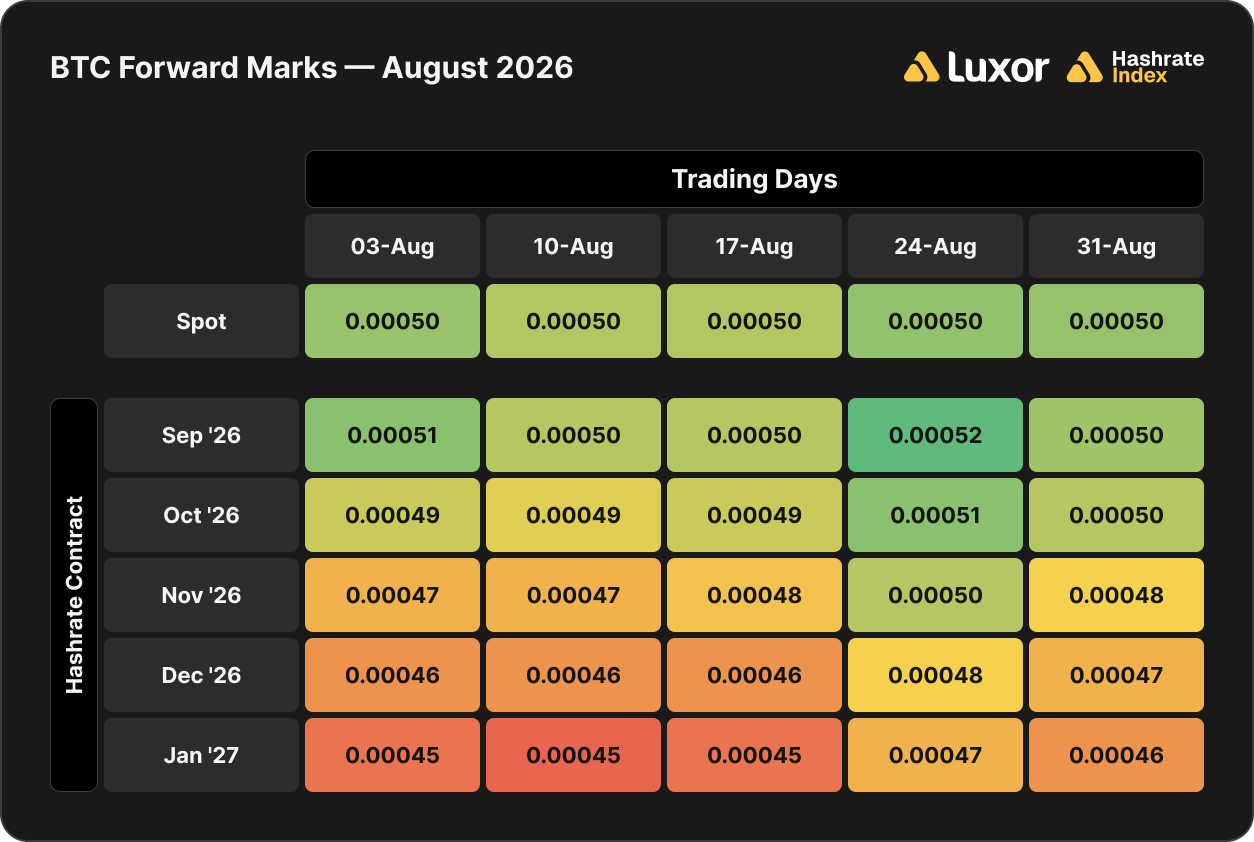
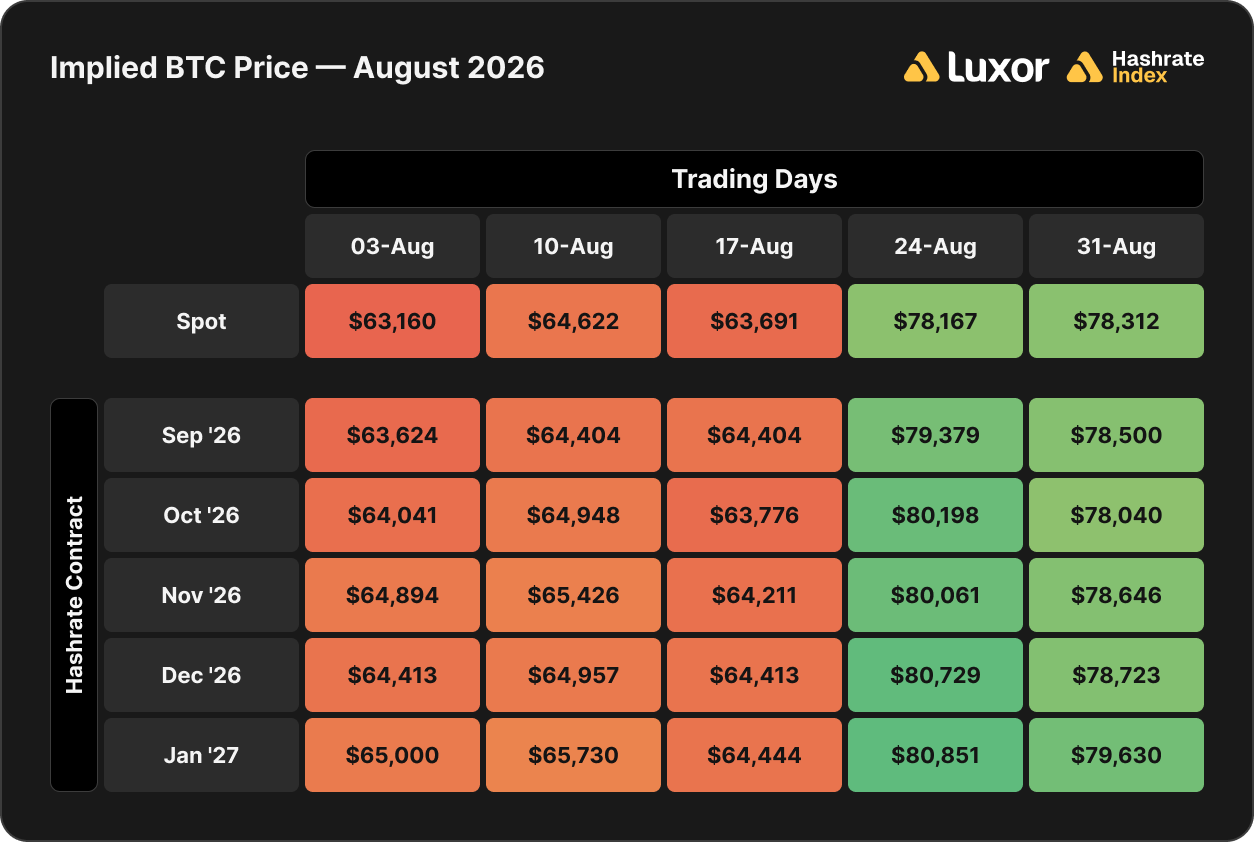
Throughout the month, the USD-denominated forward curve closely tracked the spot hashprice, with lock-in rates for the September 2026 to January 2027 period rising by 23.8%. Conversely, the BTC-denominated forward curve saw minimal movement, increasing by only 1.3%. This discrepancy suggests that while the market aggressively repriced its view on Bitcoin’s dollar value, its expectations for future difficulty and network competition remained largely unchanged.
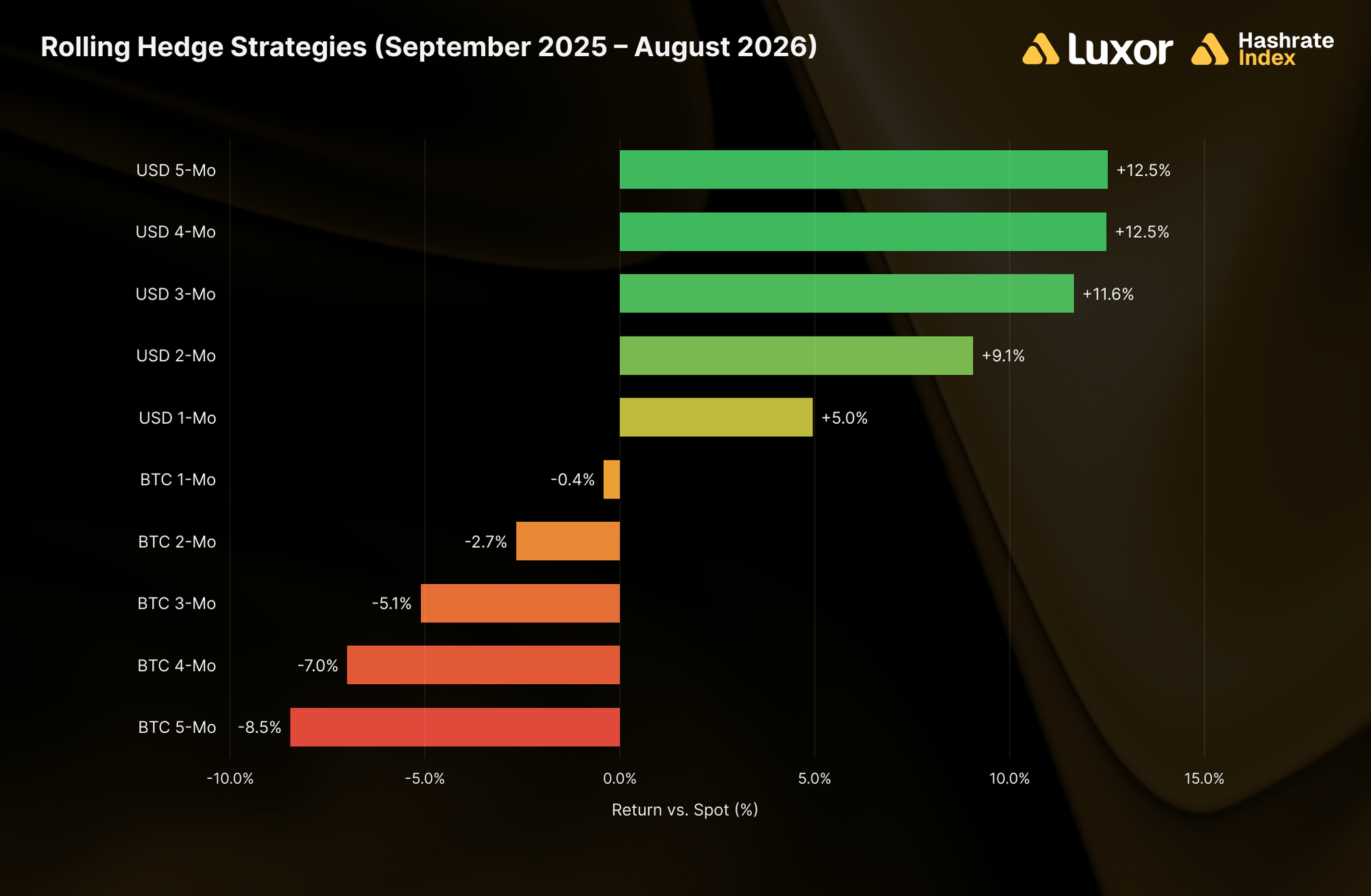
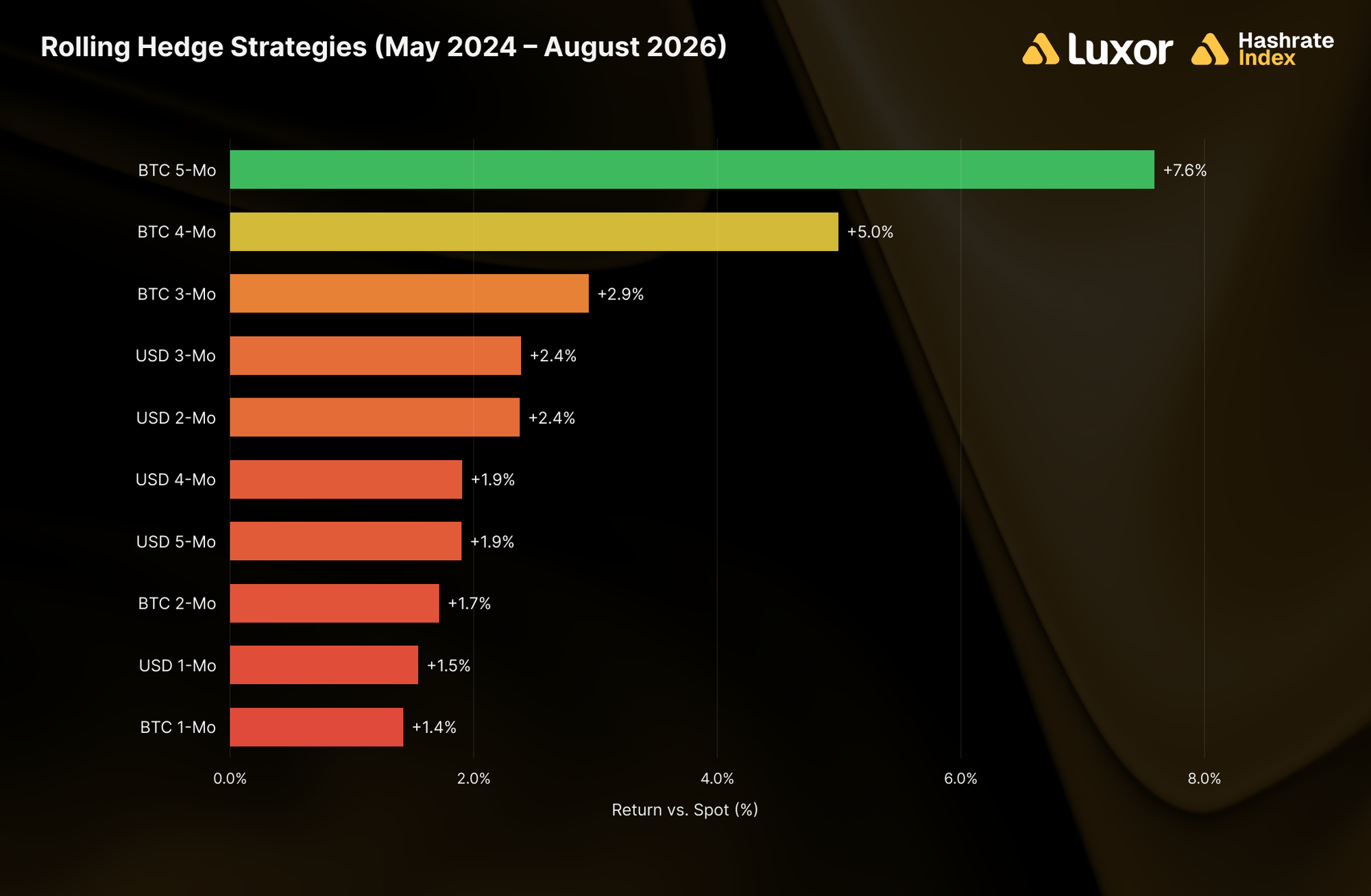
For miners, the hedging landscape has been complex. Over the past twelve months, those who utilized rolling USD hashprice hedges outperformed spot rates by 5% to 12.5%. However, long-duration BTC-denominated hedges have lost ground since March. This inversion illustrates the transition of the market from a difficulty-led environment to a price-led environment. As the market enters the final quarter of 2026, the data suggests that sellers of hashrate in dollars captured the majority of the upside, while those betting on BTC-denominated hashprice have found the current environment increasingly difficult to navigate.
Looking Ahead: September and Beyond
As the industry moves into September, attention has turned to the Federal Open Market Committee (FOMC) and the legislative future of the Clarity Act. With the probability of a September rate hike now standing at 58.5%, according to CME FedWatch data, miners are bracing for potential liquidity tightening. Furthermore, the Senate’s upcoming vote on the Clarity Act is viewed as a binary event for the industry; analysts have noted that the bill’s chances of becoming law have dropped significantly, and a failure to secure a cloture vote on September 15 could signal the end of the legislative push for the year.
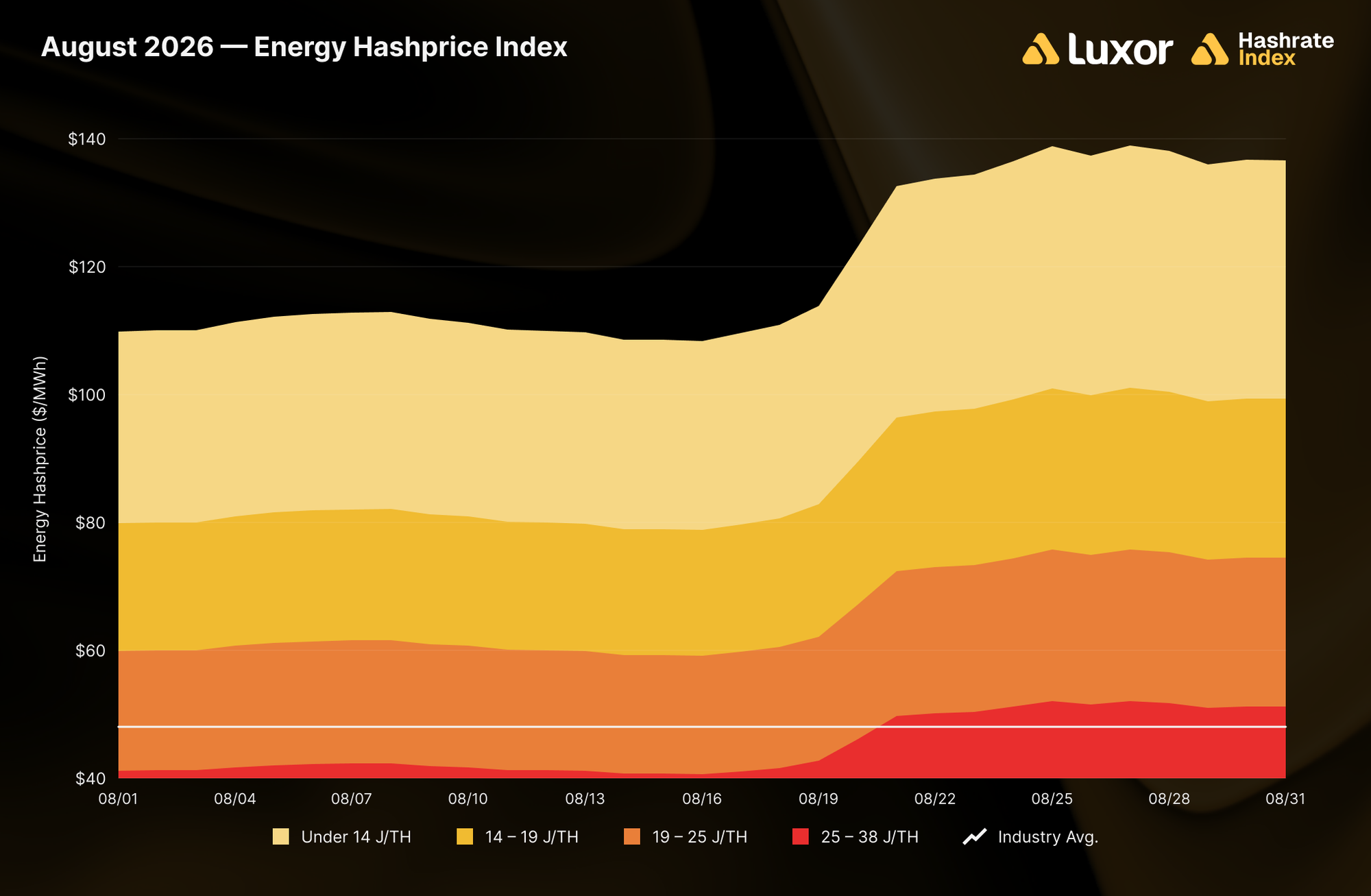
From an operational standpoint, the industry remains in a delicate state of equilibrium. With Bitcoin currently hovering near $79,000 and current network difficulty, the hashprice sits at approximately $39, with an equipment breakeven efficiency of roughly 34 J/TH. The 25–38 J/TH cohort of miners, which faced significant existential pressure earlier this summer, has been provided with a crucial window of profitability.
However, this profitability is contingent upon maintaining current price levels. Should Bitcoin retreat to its August 1–19 average of $64,000, that same 25–38 J/TH tier would once again fall below breakeven. With roughly 235 EH of capacity currently idle or curtailed, any sustained rally in hashprice will likely trigger a rapid return of this capacity, which in turn will raise network difficulty and compress margins.
In conclusion, August 2026 served as a reminder of the inherent volatility in the Bitcoin mining ecosystem. The sector has successfully navigated a period of intense pressure, but the path forward remains dependent on a delicate interplay between macroeconomic policy, regulatory developments in Washington, and the cyclical return of dormant mining capacity. Miners and investors alike should view the current stability as a reprieve rather than a long-term guarantee, focusing on capital efficiency and robust risk management strategies as they navigate the remainder of the year.