Decentralized Autonomous Organizations, commonly referred to by the acronym DAO, represent a fundamental shift in how humans coordinate resources, make decisions, and execute collective goals in the digital age. As the foundational architecture of the Web3.0 movement, DAOs seek to replace traditional, top-down hierarchical management structures with flat, transparent, and code-based governance systems. While the term has become a buzzword within the cryptocurrency and blockchain sectors, its implications reach far beyond speculative finance, touching upon corporate law, labor relations, and the very philosophy of institutional trust. To understand the DAO is to understand the transition from "Don’t be evil"—the famous former motto of centralized tech giants—to "Can’t be evil," a paradigm where the rules are hardcoded into the blockchain and cannot be arbitrarily changed by a single leader or board of directors.
The Core Concept: Breaking Down the DAO Framework
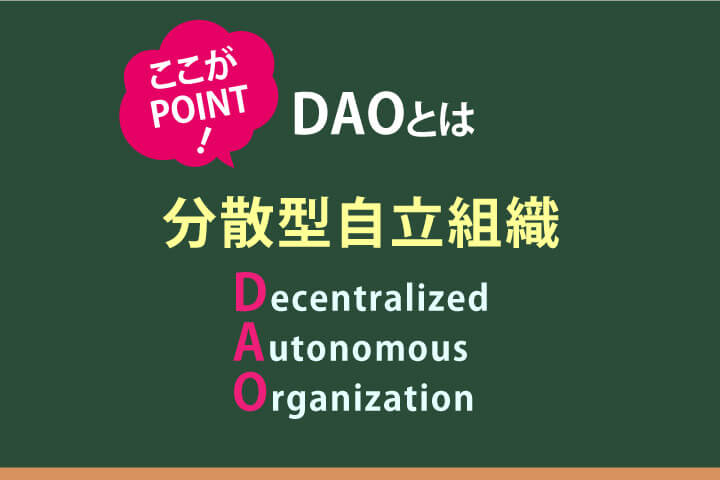
To grasp the complexity of a DAO, one must dissect the three components that form its name. The first pillar is "Decentralized," which signifies that the organization is not controlled by a single central entity, such as a CEO or a government body. Instead, authority is distributed across a network of participants who often hold governance tokens. The second pillar, "Autonomous," refers to the use of smart contracts—self-executing code stored on a blockchain. These contracts automatically perform actions (such as distributing funds or recording a vote) once specific conditions are met, reducing the need for human intermediaries. Finally, "Organization" denotes that the entity is a collective of individuals or bots working toward a shared mission, whether that be managing a decentralized finance (DeFi) protocol, collecting digital art, or funding charitable causes.
In a traditional corporation, decision-making power is concentrated at the top. Information flows upward, and orders flow downward. In contrast, a DAO operates on a horizontal plane. Decisions are made through proposals and community voting. This structure ensures that every stakeholder has a voice proportional to their contribution or token holdings, creating a more democratic, albeit complex, operational environment.

A Chronological History of the DAO Movement
The history of DAOs is inextricably linked to the history of blockchain technology itself. While the concept of decentralized governance has theoretical roots in cypherpunk literature from the 1990s, its practical application began in 2009.
2009: The Bitcoin Genesis
Although rarely described as such in its early days, Bitcoin is technically the world’s first DAO. It operates on a set of pre-defined rules (the Bitcoin protocol), has no central leader, and relies on a decentralized network of miners to secure the system in exchange for economic incentives. It is a "pure" DAO in the sense that it performs a single, autonomous function: the maintenance of a global, censorship-resistant ledger.

2014: Vitalik Buterin and the Ethereum Whitepaper
The concept was formalized when Vitalik Buterin, the co-founder of Ethereum, described "Decentralized Autonomous Organizations" in the Ethereum Whitepaper. He envisioned entities that could go beyond simple currency transfers and manage complex business logic using smart contracts.
2016: The "The DAO" Incident
The most famous—and infamous—milestone was the launch of an entity simply called "The DAO" on the Ethereum blockchain. It raised over $150 million in ETH, making it the largest crowdfunding project at the time. However, a vulnerability in its code allowed an attacker to drain a third of its funds. This led to a controversial "hard fork" of the Ethereum blockchain to recover the funds, creating a schism between Ethereum and Ethereum Classic. This event taught the industry a vital lesson: in a DAO, the "code is law," but if the code is flawed, the organization is at risk.
2020–Present: The DeFi Summer and Legal Recognition
The "DeFi Summer" of 2020 saw the explosion of protocols like Uniswap, MakerDAO, and Aave, all of which utilize DAO structures for governance. In 2021, the U.S. state of Wyoming became the first jurisdiction to pass a law recognizing DAOs as legal entities, granting them similar protections to Limited Liability Companies (LLCs).
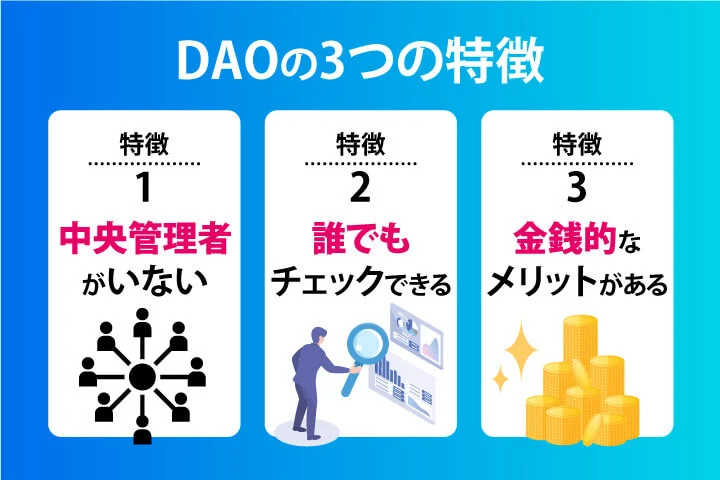
The Three Pillar Features of DAOs
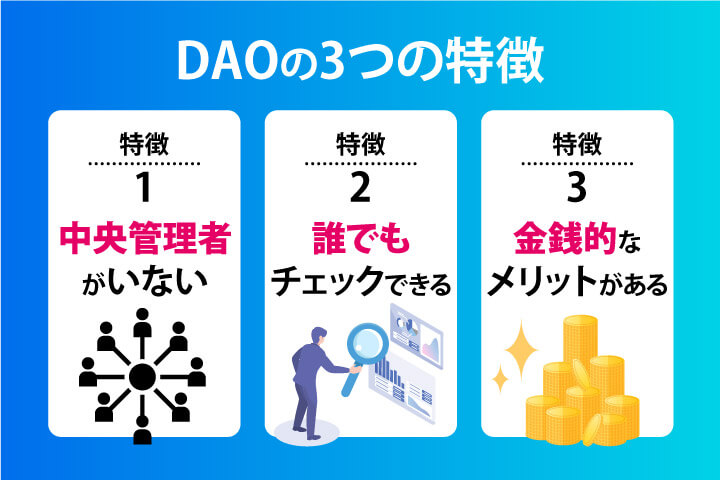
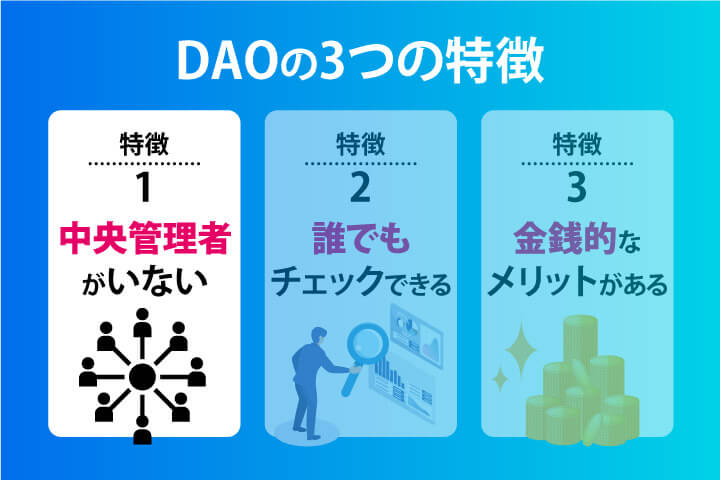
The current appeal of DAOs rests on three defining characteristics that distinguish them from Web2.0 organizations: decentralization, transparency, and economic incentives.
1. Decentralization and the Redistribution of Power
In a standard company, a small group of executives or a board of directors holds the ultimate authority to pivot the business, hire or fire employees, and manage the treasury. In a DAO, these powers are distributed. Participants use governance tokens to vote on "proposals." For example, if a DAO wants to change its fee structure, a member must submit a proposal to the blockchain. The community then votes, and if the majority agrees, the smart contract automatically updates the protocol. This removes the "single point of failure" risk where a corrupt or incompetent leader can ruin an entire organization.
2. Transparency and Verifiable Trust
Trust in traditional institutions is often blind; stakeholders must trust that the accountants are honest and that the bank’s vaults are full. DAOs operate on "verifiable" trust. Because they are built on public blockchains like Ethereum or Solana, every transaction, every vote, and every movement of funds is visible to anyone with an internet connection. Most DAOs also conduct their internal deliberations in public forums or Discord channels. This level of transparency makes it nearly impossible for individuals to embezzle funds or make "backroom deals" without the community noticing.

3. Economic Incentives: The Alignment of Interests
One of the most revolutionary aspects of the DAO model is the "economic incentive" or "incentive alignment." In a typical corporation, the founders and early investors reap the vast majority of the rewards if the company succeeds. Employees receive a salary, but their upside is often limited. In a DAO, anyone who contributes to the ecosystem—whether by writing code, providing liquidity, or creating marketing content—can be rewarded with governance tokens. As the DAO grows and becomes more valuable, the tokens held by all participants increase in value. This creates a "skin in the game" environment where everyone is motivated to work for the collective success of the organization.
Supporting Data: The Growth of the DAO Ecosystem
The scale of the DAO movement is no longer negligible. According to data from DeepDAO, a leading analytics platform for the sector, the total Assets Under Management (AUM) in DAO treasuries has fluctuated between $10 billion and $25 billion over the last two years, depending on market conditions.

As of late 2023, there are over 12,000 DAOs in existence, ranging from massive protocols with billions in assets to small "social DAOs" with a few dozen members. The participation rate is also significant; millions of unique wallet addresses have participated in at least one governance vote. This data suggests that DAOs are becoming a preferred vehicle for collective investment and protocol management, particularly among the younger, digitally native demographic.
Critical Challenges and Demerits
Despite their potential, DAOs are currently in an experimental phase and face significant hurdles that prevent them from replacing traditional companies entirely.

Legal and Regulatory Ambiguity
The foremost challenge is the lack of a global legal framework. Because DAOs are decentralized and often have members in dozens of different countries, it is unclear which laws apply to them. In many jurisdictions, if a DAO is not registered as a legal entity, its members could be held "jointly and severally liable" for the organization’s debts or legal infractions. This means a single token holder could theoretically be sued for the actions of the entire DAO. Furthermore, tax compliance for a decentralized entity that pays contributors in volatile cryptocurrencies remains a logistical nightmare.
Decision-Making Latency and Complexity
While decentralization is a strength, it is also a weakness in terms of efficiency. In a fast-moving market, a CEO can make a decision in seconds. In a DAO, a proposal must be drafted, discussed, and voted on over several days or weeks. This "governance lag" can be catastrophic during a crisis or a security breach. Additionally, "voter apathy" is a major issue; many token holders do not participate in votes, leading to situations where a small minority of "whales" (large token holders) can effectively control the outcome, undermining the democratic ideal.

Official Responses and Industry Perspectives
The reaction from global authorities has been a mix of caution and curiosity. The U.S. Securities and Exchange Commission (SEC) has frequently signaled that many DAO tokens may be considered unregistered securities, especially if they promise profits based on the efforts of others. SEC Chair Gary Gensler has often stated that "the label doesn’t matter; the underlying economic reality does," suggesting that calling a group a "DAO" does not exempt it from existing financial laws.
On the other hand, tech forward-thinkers see DAOs as the only way to govern the "Global Commons" of the internet. Andreessen Horowitz (a16z), one of the world’s largest venture capital firms, has invested billions into the DAO ecosystem, arguing that DAOs are the organizational equivalent of the internet protocol—a way to build "community-owned" services that cannot be shut down or censored by a single government or corporation.
Broader Impact and Future Implications
The long-term impact of DAOs could be transformative for the global workforce. We are moving toward a future where a person might not work for a single company, but instead contribute to five different DAOs simultaneously, earning a "portfolio of tokens" rather than a single salary. This "gig economy 2.0" would offer unprecedented freedom but would also require individuals to manage their own healthcare, taxes, and retirement without corporate support.
Furthermore, the integration of Artificial Intelligence (AI) with DAOs is an emerging frontier. We may soon see "AI-DAOs" where the smart contract is managed by an AI agent that optimizes the treasury or executes trades faster than any human committee could.
In conclusion, while DAOs face daunting legal and operational hurdles, they represent the most significant innovation in organizational theory since the invention of the joint-stock company in the 17th century. By leveraging the transparency and security of the blockchain, DAOs offer a vision of a world where cooperation is fueled by code rather than coercion, and where the value created by a community is shared by the community. As the technology matures and legal frameworks catch up, the DAO may well become the standard operating system for the digital economy.