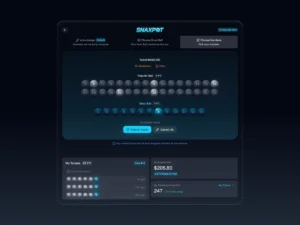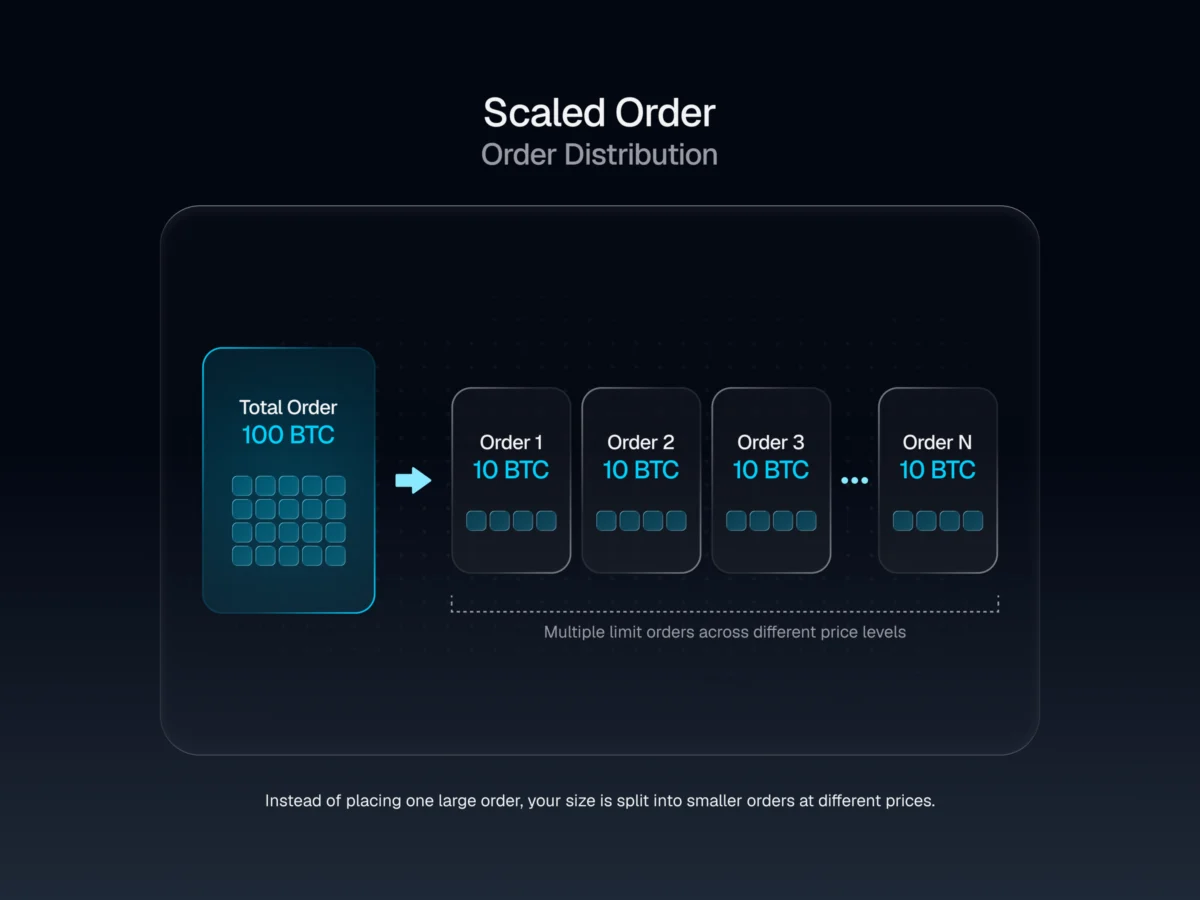
Synthetix Perps has officially launched its highly anticipated Scaled Orders feature, fundamentally transforming how traders can execute large positions on its decentralized perpetual futures exchange. This innovative tool automates the generation of a series of limit orders, distributing them across a user-defined price range. This strategic implementation moves beyond the traditional method of placing a single, large limit order at one price level, offering traders enhanced control, efficiency, and reduced market impact. The introduction of Scaled Orders represents a significant advancement in the capabilities available to decentralized finance (DeFi) traders, aligning Synthetix with the sophisticated order types typically found in centralized financial markets.
Understanding Scaled Orders: A Paradigm Shift in Execution
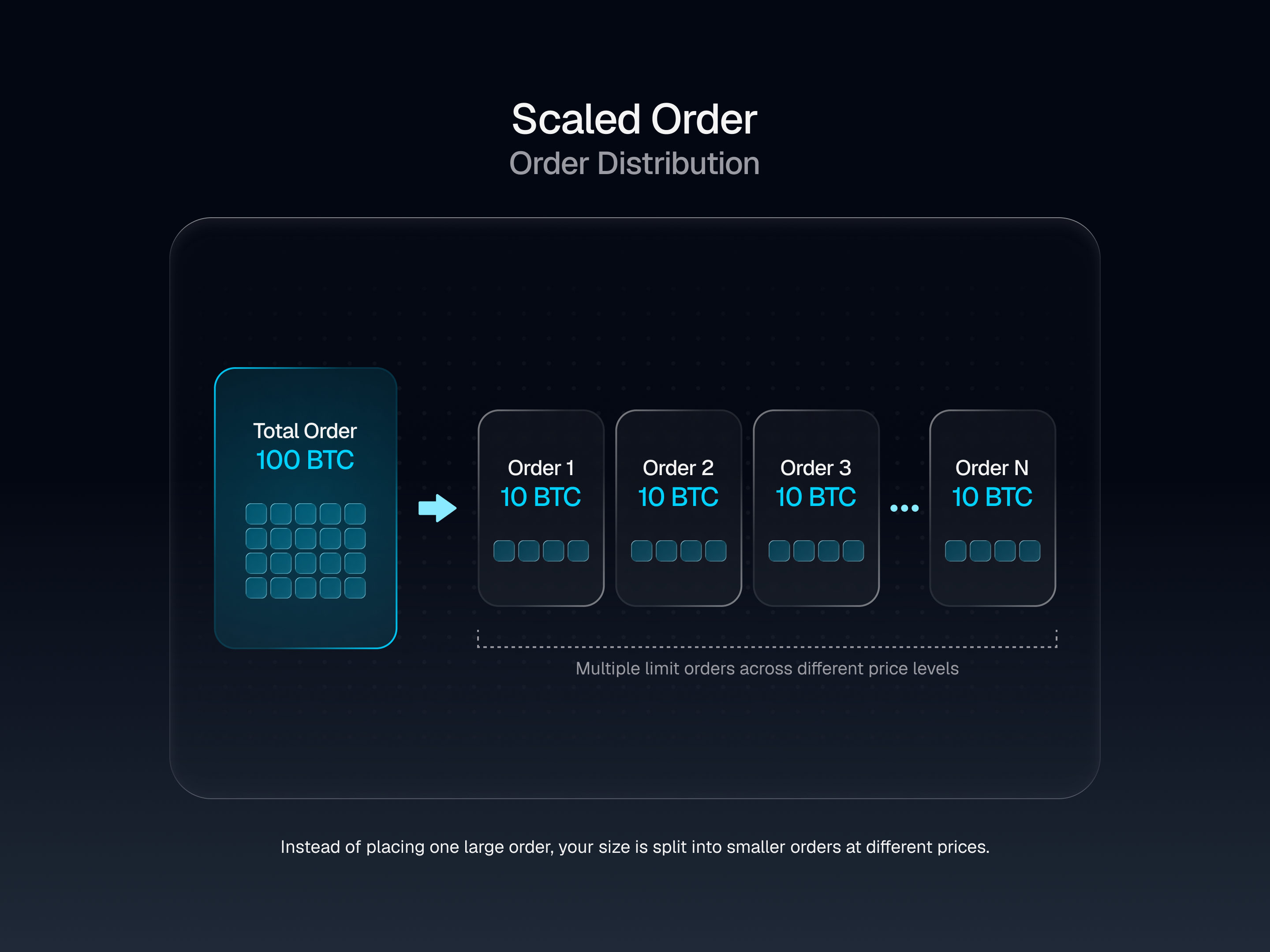
At its core, a scaled order is an intelligent execution strategy designed to optimize entry into or exit from a trading position. Instead of committing an entire order size to a singular price point, which can be susceptible to market volatility and slippage, a scaled order intelligently fragments this large sum into multiple smaller suborders. These suborders are then systematically distributed across a pre-defined price spectrum, allowing for a more nuanced and adaptive approach to market participation. This method is particularly valuable for traders looking to "ladder in" to long positions during price declines, gradually accumulating an asset at potentially more favorable average prices, or to "ladder out" of positions during price increases, methodically taking profits as the market moves upwards.
The practical application of scaled orders yields a series of executions that progressively build or unwind a position. This gradual approach is instrumental in several key areas:
- Capturing a Better Average Price: By spreading executions across a range, traders can mitigate the risk of adverse price movements impacting their entire order, thereby improving their overall average entry or exit price.
- Reducing Market Impact: Large single orders, especially in markets with varying liquidity, can significantly influence the order book, leading to self-inflicted slippage. Scaled orders alleviate this by breaking down the volume, making each suborder less likely to move the market against the trader.
- Automation and Strategy: The automatic generation and distribution of orders remove the need for constant manual intervention, allowing traders to implement complex strategies with greater precision and less emotional decision-making.
The official launch on Synthetix Perps positions the platform at the forefront of offering institutional-grade tools within the decentralized ecosystem. This development caters to both longer-term accumulation strategies, where patient entry and exit are paramount, and shorter-term trading in highly volatile market conditions, where adaptability is key.
The Strategic Context: Synthetix and the Evolution of DeFi Trading
Synthetix, a prominent decentralized liquidity protocol, has consistently aimed to bring sophisticated financial instruments to the blockchain. Its perpetual futures (Perps) platform allows traders to speculate on the future price of various assets without an expiration date, using synthetic assets. This environment, while offering immense opportunities, also presents unique challenges, primarily due to the inherent volatility and sometimes thinner liquidity profiles compared to traditional exchanges.
The introduction of Scaled Orders is a direct response to these challenges and a strategic move to enhance the trading experience on Synthetix Perps. For years, advanced order types like Iceberg orders, VWAP (Volume Weighted Average Price) algorithms, and various forms of scaled entries/exits have been staples in traditional finance (TradFi), enabling professional traders and institutions to manage large positions discreetly and efficiently. As DeFi matures, the demand for similar, robust tools has grown exponentially. Traders operating with significant capital, or those seeking to optimize their execution against fluctuating market conditions, have expressed a clear need for mechanisms that go beyond basic market and limit orders.
This release can be seen as part of a broader trend within DeFi to bridge the gap with TradFi in terms of functionality and user experience. By offering Scaled Orders, Synthetix not only empowers its existing user base but also aims to attract a new cohort of more sophisticated traders who require such advanced tools for their strategies. The feature underscores Synthetix’s commitment to continuous innovation, solidifying its position as a leading venue for decentralized derivatives trading on Ethereum Mainnet.
Distribution Types: Customizing Your Execution Strategy
Synthetix’s Scaled Orders provide traders with three distinct quantity distribution types, allowing for fine-tuned control over how the total order size is allocated across the specified price range. These options empower traders to tailor their strategy based on their market outlook and desired average price.
-
Equal (Flat) Distribution:
- Mechanism: In this mode, each suborder receives an identical size. The total amount is uniformly distributed across every price point within the defined range.
- Application: This is the most straightforward option, ideal for scenarios where a trader anticipates price movement within a range but holds no specific directional bias. For instance, if a trader believes an asset will oscillate between $100 and $110, an Equal distribution scaled order could be set to buy at various points within this range, ensuring an average entry price without predicting exact lows or highs. It’s effective for dollar-cost averaging in sideways markets or for simply spreading risk evenly.
-
Increasing Distribution:
- Mechanism: Suborder size progressively grows as the price moves in a specific direction. For a sell order, the suborder at the highest price within the range will carry the largest quantity, meaning more of the asset is traded at higher prices.
- Application: This type is predominantly used for distributing sell orders to optimize the average selling price. If a trader holds a long position and expects the price to continue rising but wants to start taking profits, an Increasing distribution scaled order would sell smaller amounts at lower prices in the profit range and larger amounts as the price ascends further. This strategy helps "lift" the overall average selling price, maximizing profit realization. Conversely, for a buy order, it would mean buying larger quantities as the price increases, which is less common but could be used in breakout scenarios.
-
Decreasing Distribution:
- Mechanism: Suborder size diminishes as the price rises. For a buy order, the suborder at the highest price within the range will carry the smallest quantity, meaning more of the asset is traded at lower prices.
- Application: This distribution type is commonly employed for buy orders, aiming to lower the average acquisition price. When a trader anticipates a price decline but wishes to accumulate an asset, a Decreasing distribution scaled order would buy larger amounts at lower prices and smaller amounts as the price recovers or stabilizes. This allows for more significant accumulation closer to perceived bottoms, effectively "scaling in" during a dip. Conversely, for a sell order, it would mean selling larger quantities at lower prices, which might be used in a capitulation scenario where a quick exit is prioritized.
Beyond quantity distribution, traders on Synthetix also have the flexibility to edit the intervals of price distribution within the ‘Price Distribution’ subsection of the scaled orders panel. This allows for placing suborders at larger or smaller price intervals, further customizing the granularity of the order ladder. This advanced customization can be used synchronously with the order quantity distribution types, offering an unparalleled level of control over execution strategy. For example, a trader might choose a Decreasing quantity distribution with tighter price intervals at the lower end of a buying range and wider intervals higher up, precisely reflecting their conviction about price levels.
Implementing Scaled Orders on Synthetix Perps: A Step-by-Step Guide (General Process)
While the original article provides a concise "How to Place a Scaled Order" section, a more detailed explanation highlights the user journey and decision points. The general process involves:
- Accessing the Trading Interface: Navigating to the Synthetix Perps exchange interface.
- Selecting the Asset and Position: Choosing the specific perpetual futures contract (e.g., sETH, sBTC) and determining whether to open a long or short position.
- Initiating a Scaled Order: Locating and selecting the "Scaled Order" option within the order placement panel, distinguishing it from standard limit or market orders.
- Defining the Price Range: Specifying the lower and upper price bounds for the order execution. This critical step requires careful market analysis to identify potential support/resistance levels or anticipated price fluctuations.
- Setting Total Order Size: Inputting the total quantity of the asset to be bought or sold across the entire price range.
- Choosing Distribution Type: Selecting one of the three quantity distribution types (Equal, Increasing, Decreasing) based on the desired execution strategy.
- Customizing Price Intervals (Optional): Adjusting the spacing between individual limit orders within the defined price range, allowing for a denser or sparser distribution of suborders.
- Review and Confirm: Carefully reviewing all parameters of the scaled order, including range, total size, distribution type, and estimated average price, before final confirmation.
Key Considerations for Traders
While Scaled Orders offer significant advantages, traders should remain cognizant of several crucial aspects:
- Market Volatility: Scaled orders perform optimally in volatile markets, but extreme, rapid price movements can still impact execution. It’s essential to set realistic price ranges.
- Liquidity: Although scaled orders reduce individual market impact, overall market liquidity can still affect the speed and completeness of execution, especially for very large orders.
- Fees: Each suborder executed will incur transaction fees. While individual fees are small, the cumulative effect of many suborders should be factored into the overall cost analysis.
- Strategy Alignment: The effectiveness of a scaled order heavily relies on aligning the chosen distribution type and price range with a sound market analysis and trading strategy.
- Monitoring: While automated, it is still prudent to monitor scaled orders, especially in rapidly changing market conditions, to adjust or cancel if the market outlook shifts dramatically.
Broader Impact and Implications for DeFi
The launch of Scaled Orders on Synthetix Perps is more than just a new feature; it signifies a maturing DeFi landscape.
- Enhanced Trader Sophistication: It empowers individual and institutional traders with tools previously confined to traditional finance, fostering more sophisticated trading strategies in decentralized markets. This could attract more professional participants to DeFi.
- Improved Market Efficiency: By reducing large single-order market impact and facilitating more precise entries/exits, scaled orders can contribute to healthier order books and overall market efficiency on decentralized exchanges.
- Competitive Advantage: For Synthetix, this feature strengthens its competitive edge against other decentralized and even centralized derivatives platforms. Offering advanced order types becomes a differentiator in attracting and retaining liquidity and trading volume.
- Innovation Benchmark: This development sets a new benchmark for what users can expect from DeFi protocols. It pushes other decentralized exchanges to innovate further, ultimately benefiting the entire ecosystem with more robust and user-friendly trading tools.
- Risk Management: By enabling traders to average into or out of positions, scaled orders inherently offer a layer of risk management, mitigating the impact of mistimed single-point entries. This could lead to more sustainable trading practices and potentially reduce the incidence of large, sudden liquidations due to aggressive single-point entries.
Availability and Support
Scaled Orders are now live and fully operational on Synthetix Perps. This rollout follows a period of rigorous development and testing, ensuring a robust and reliable user experience. Traders interested in leveraging this new capability can access the platform directly via the Synthetix exchange interface. For comprehensive guidance and technical documentation, the Synthetix docs site provides detailed information. Furthermore, dedicated support channels, including a chat icon on the docs site, offer direct access to the Synthetix team for immediate assistance. The Synthetix community also thrives on platforms like Discord, Telegram, and X (formerly Twitter), where traders can engage in discussions, share strategies, and receive updates on the protocol’s continuous evolution. This multi-channel support infrastructure underscores Synthetix’s commitment to fostering an informed and empowered trading community as it continues its mission to make Ethereum Mainnet the premier destination for decentralized perpetual futures.