In a landmark development for decentralized finance (DeFi), Synthetix, a prominent derivatives liquidity protocol, has officially launched multicollateral margin capabilities, integrating Ethereum’s native asset, ETH, as the inaugural non-USDT collateral option. This innovation marks a significant first in the history of the Ethereum network, empowering traders to leverage their ETH directly as collateral for perpetual futures (perps) trading on the Ethereum Mainnet. The new system allows users to deposit ETH, engage in various market trades, and manage their positions from a single, unified multicollateral margin account, all without liquidating their ETH holdings. This move is poised to redefine capital efficiency and trading strategies within the DeFi ecosystem, aligning Synthetix’s on-chain settlement with the network’s foundational asset.
A Milestone for Decentralized Finance: Trading Without Selling Your ETH
The introduction of native ETH margin on Synthetix represents a substantial leap forward for traders and the broader DeFi landscape. Traditionally, engaging in derivatives trading on decentralized exchanges often necessitated converting primary assets like ETH into stablecoins such as USDT or USDC to be used as collateral. This process introduced friction, potential slippage, and forced traders to relinquish direct exposure to their most bullish assets. Synthetix’s new feature directly addresses this challenge, enabling users to maintain their ETH exposure while simultaneously utilizing it to back their trading activities.
For the first time on Ethereum Mainnet, users can now post ETH directly as collateral, merging their conviction in the asset’s long-term value with their immediate trading strategies. This means that an investor who is fundamentally bullish on ETH no longer needs to sell a portion of their holdings to fund a perp trade. Instead, their ETH stack acts as the foundational capital, with USDT-settled positions running on top of it. This integration is particularly powerful for those who "think in ETH," providing a seamless experience that eliminates the need to leave the Layer 1 environment for collateral management. The protocol’s architecture ensures that every trade lives and settles natively on Ethereum Mainnet, making the utilization of its native asset as collateral a logical and long-awaited evolution.
Synthetix’s Evolution: A Commitment to On-Chain Innovation
Synthetix has been a foundational pillar of the DeFi ecosystem since its inception, pioneering synthetic assets and decentralized derivatives. Launched in 2017 as Havven, it evolved into Synthetix, focusing on providing deep liquidity for a wide array of synthetic assets, including cryptocurrencies, commodities, and fiat currencies. Its core strength lies in its decentralized architecture, which allows for robust on-chain settlement, eliminating counterparty risk associated with centralized exchanges. The protocol’s commitment to building directly on Ethereum Mainnet, despite the scalability challenges sometimes associated with it, underscores its dedication to decentralization and composability.
The journey to multicollateral margin has been a deliberate one, reflecting Synthetix’s continuous efforts to enhance its trading infrastructure. Previous iterations of the Synthetix protocol relied heavily on its native token, SNX, and later stablecoins, as collateral. The expansion to include ETH as a direct collateral asset is a natural progression, leveraging the deepest liquidity pool within the Ethereum ecosystem. This strategic move not only enhances the user experience but also reinforces Synthetix’s position as a leading innovator in the decentralized derivatives space, capable of adapting and evolving its offerings to meet the sophisticated demands of DeFi traders. The development team has been working on this feature for several months, meticulously designing the smart contracts and risk parameters to ensure a secure and efficient trading environment.
The Mechanics of Native ETH Collateral: Understanding the System
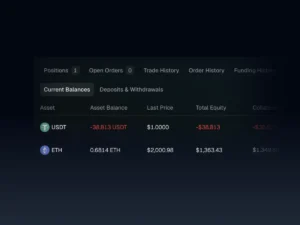
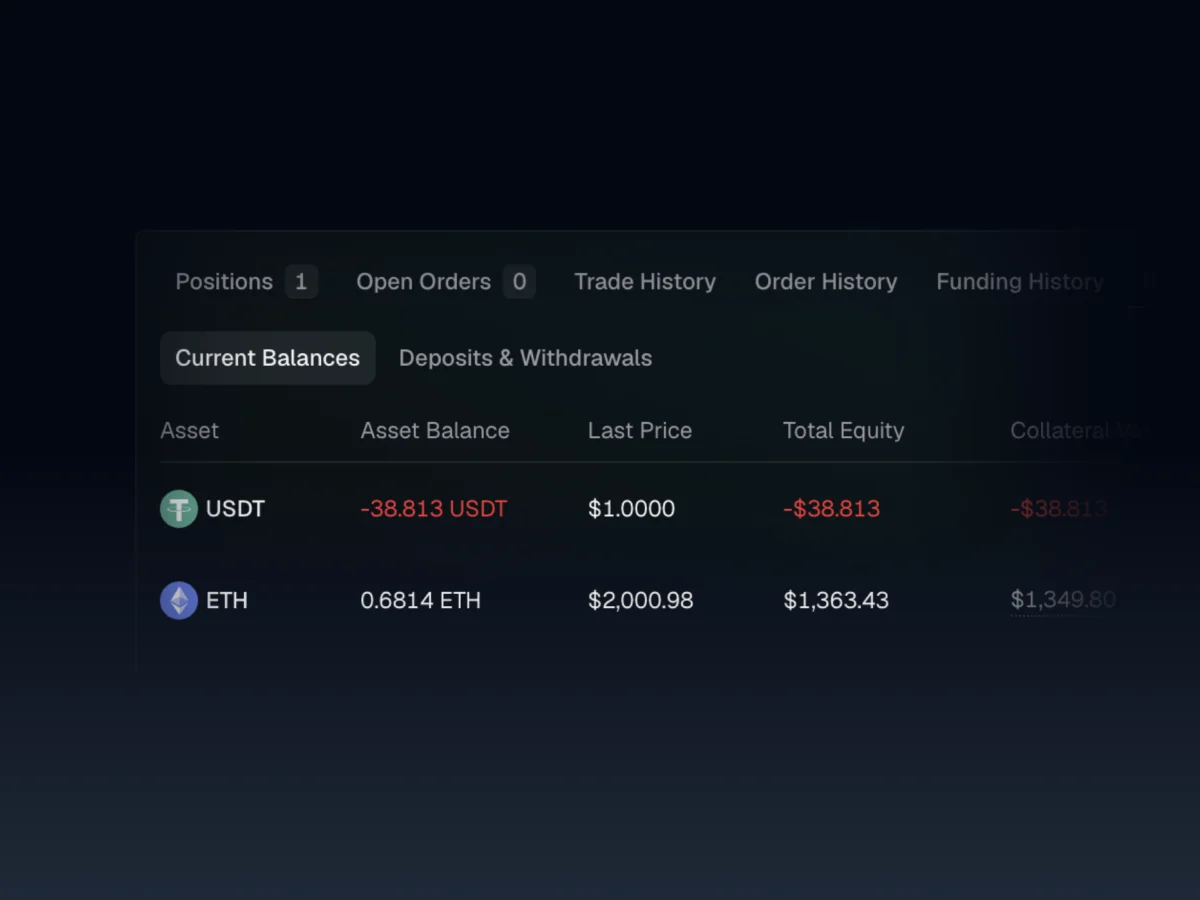
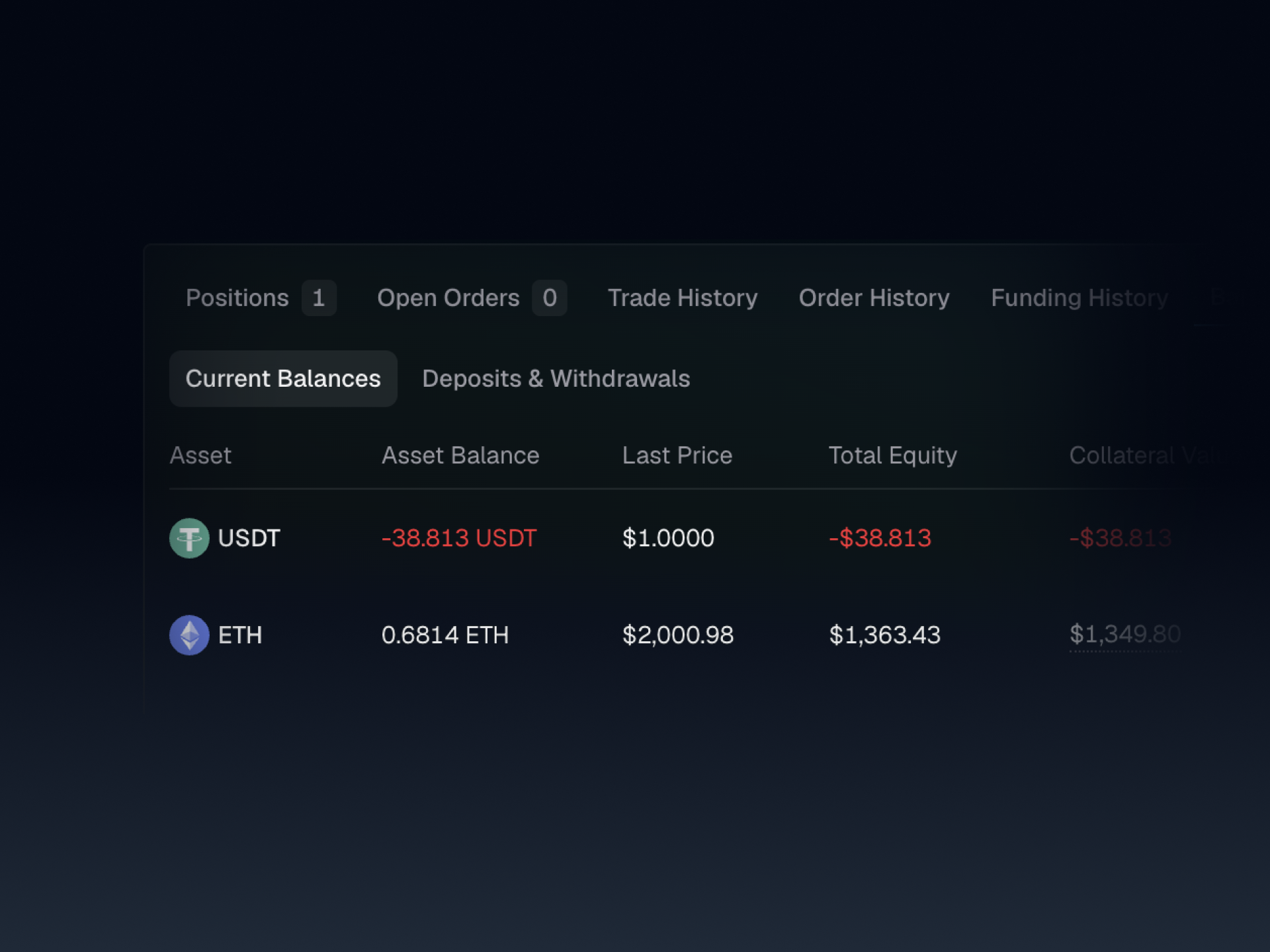
When users deposit ETH as collateral on Synthetix, the system values it using its live index price. To mitigate market volatility and associated risks, a standard risk discount, known as a "haircut," is applied to non-USDT collateral. This haircut effectively reduces the perceived value of the ETH for collateral purposes, providing a buffer against sudden price drops. For instance, if ETH is trading at $3,000 and a 10% haircut is applied, each ETH deposited would contribute $2,700 to the user’s collateral value. This calculated figure, the "Collateral Value," represents the actual amount of ETH that counts towards the user’s margin, and it is transparently displayed in the user’s balance table.
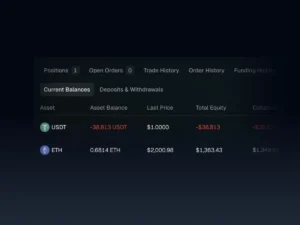
A crucial aspect of this system is that while ETH acts as collateral, positions, fees, funding, and profit and loss (PnL) continue to be settled in USDT. This design choice ensures stability in accounting and settlement, as USDT provides a relatively stable peg. Consequently, if a trader operates solely on ETH collateral without a separate USDT balance, their USDT balance can temporarily go negative while positions are open. This is an intentional feature, as the negative USDT balance is implicitly backed by the deposited ETH collateral.
Users have the flexibility to manage their USDT debt. They can repay it at any time by utilizing Synthetix’s built-in swap functionality to convert a portion of their ETH into USDT directly within their account. However, active monitoring of the collateral price is essential. A significant drop in the price of ETH will directly reduce the collateral value, potentially impacting the account’s margin health even if open positions remain unchanged. To prevent forced liquidation, traders are advised to maintain a sufficient buffer. Should USDT debt exceed the account’s predefined limits, the protocol is engineered to automatically convert a necessary amount of ETH to USDT to restore solvency. Full details regarding haircuts, swap mechanisms, withdrawal procedures, and account health parameters are comprehensively outlined in the Synthetix documentation, encouraging users to familiarize themselves with the system’s intricacies.
Enhanced Capital Efficiency and Strategic Trading Advantages
The unified multicollateral margin account is a cornerstone of this new offering, enabling ETH and USDT to work synergistically. This combined collateral pool backs every open position, optimizing capital utilization for traders. This integrated approach unlocks several strategic advantages:
- Optimized Risk Management: By pooling different collateral types, traders can diversify their collateral base, potentially reducing exposure to single-asset price fluctuations. The system intelligently assesses the combined value, offering a more robust margin foundation.
- Reduced Liquidation Risk: With a unified account, a decline in the value of one collateral asset can be offset by the stable value of another (e.g., USDT), providing greater resilience against market downturns and reducing the likelihood of premature liquidations.
- Simplified Portfolio Management: Traders no longer need to manage separate collateral pools for different positions or assets. Everything is consolidated, streamlining the trading experience and reducing operational overhead.
One of the most compelling applications of ETH as multicollateral margin is the facilitation of "Basis Trades." Basis trading, a staple strategy in traditional finance and increasingly in DeFi, involves simultaneously taking a long position in a spot asset and a short position in its corresponding perpetual future. The goal is to profit from the "funding rate" – the periodic payments exchanged between long and short positions to keep the perpetual contract price anchored to the spot price.
With native ETH collateral, basis trades become remarkably efficient. A trader can deposit ETH as collateral and then open an equally sized short ETH perpetual future position. This creates a delta-neutral setup: the value of the collateral and the profit/loss (PnL) of the position move in opposite directions, largely offsetting each other. This significantly reduces directional price risk, allowing the trader to primarily capture the funding rate on the short position. By making basis trades more seamless and capital-efficient, Synthetix not only empowers sophisticated traders but also contributes to healthier markets. Basis traders play a crucial role in arbitrage, helping to keep funding rates in line with market dynamics. Their increased efficiency directly translates to tighter spreads and more competitive markets for all participants on the exchange.
Broader Implications for the Ethereum Ecosystem: Tapping into Billions
The strategic decision to integrate native ETH as collateral on Synthetix Perps carries profound implications for the entire Ethereum ecosystem. The opportunity presented by leveraging ETH, the network’s foundational asset, as collateral on the only perp DEX built directly on Ethereum Mainnet cannot be overstated. Ethereum boasts a market capitalization exceeding $350 billion (as of early 2024, fluctuating), with a substantial portion of this ETH held by users who are long-term holders or simply not actively trading it. Synthetix can now seamlessly tap into a significant fraction of this vast pool of "idle" ETH capital, which collectively represents hundreds of billions of dollars.
This move is not merely about attracting more liquidity to Synthetix; it’s about expanding the utility of ETH itself, natively on the Ethereum Layer 1. The upside of delivering a broad surface area of utility for ETH as an asset, particularly when considering Synthetix’s deep composability with native DeFi protocols on Ethereum, is nearly limitless. As a permissionless, composable primitive, Synthetix’s integration of native ETH collateral can cascade benefits across other DeFi applications that interact with it.
The vision articulated by Synthetix is audacious yet transformative: if the protocol can capture even 10% of today’s average monthly derivatives volume across the broader crypto market, it would ignite a "virtuous flywheel" for the entire Ethereum ecosystem. Such a level of volume and trading activity would not only generate substantial fees for the Synthetix protocol and its stakers but would also drive increased demand for block space on Ethereum, benefiting validators and increasing network security. Furthermore, it would enhance the overall liquidity and vibrancy of the L1 DeFi landscape. Every protocol within the ecosystem benefits when the core infrastructure is strengthened and its utility expanded. The entire Ethereum DeFi stack, from lending protocols to aggregators, stands to become exponentially more valuable through this enhanced capital efficiency and expanded utility for its native asset.
A Competitive Edge in the Derivatives Landscape and Roadmap Ahead
The decentralized derivatives market is fiercely competitive, with numerous protocols vying for liquidity and users. By offering native ETH collateral, Synthetix carves out a distinct competitive advantage. Many existing platforms, while offering perpetual futures, often rely on Wrapped ETH (wETH) or require users to bridge their assets to Layer 2 solutions or sidechains, adding layers of complexity and potential security concerns. Synthetix’s direct L1 integration simplifies the user journey and appeals to those who prioritize the security and decentralization guarantees of the Ethereum Mainnet.
This launch is positioned not as an endpoint but as the beginning of a truly multicollateral trading experience. ETH is the first non-USDT collateral asset, but Synthetix’s underlying infrastructure is explicitly designed to support a wider array of assets in the future. The development roadmap includes plans for additional collateral types, with a particular emphasis on "yield-bearing assets." This implies that users may soon be able to use assets that are simultaneously generating yield (e.g., staked ETH derivatives, interest-bearing stablecoins) as collateral, further enhancing capital efficiency and unlocking new strategies. This forward-looking approach underscores Synthetix’s ambition to remain at the forefront of DeFi innovation, continuously expanding the utility and flexibility offered to its traders.
Getting Started: Accessing ETH Margin on Synthetix
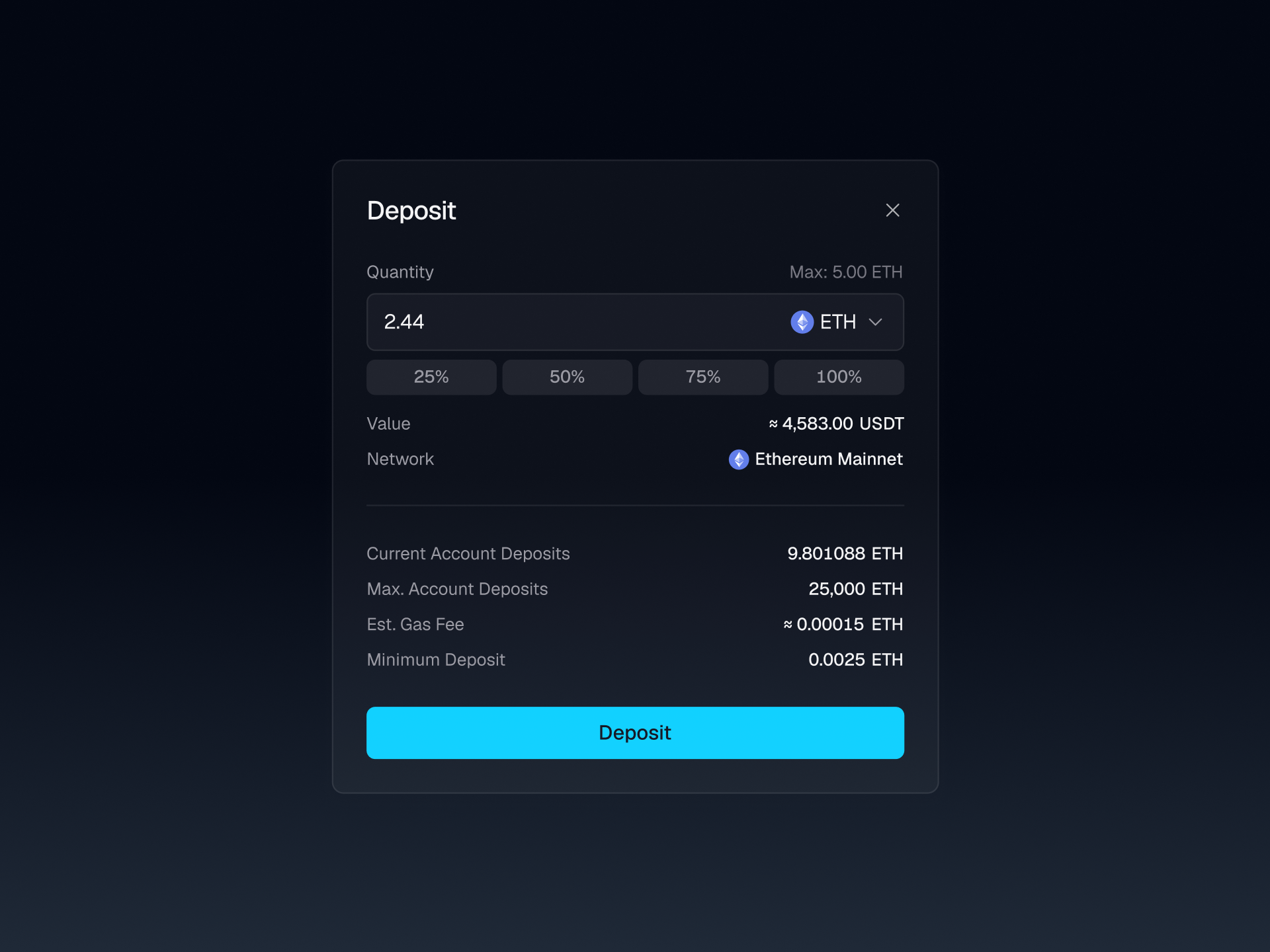
For traders eager to leverage this new capability, accessing ETH margin on Synthetix Perps is designed to be straightforward. Users can navigate to the Synthetix interface, connect their Ethereum-compatible wallet, and select ETH as their preferred collateral type. The platform’s deposit flow provides clear information on minimum deposit requirements, maximum account caps, and per-asset limits, which are subject to adjustment as the system scales and additional collateral types are introduced. Comprehensive guidance and detailed instructions are available in the official Synthetix documentation. For real-time assistance, users can also utilize the chat support feature integrated into the documentation site to connect directly with the Synthetix team.
As Synthetix continues to push the boundaries of decentralized derivatives, the integration of native ETH collateral marks a pivotal moment. It not only empowers individual traders with unprecedented capital efficiency and strategic flexibility but also strengthens the fundamental utility of Ethereum’s native asset, fostering a more robust and interconnected DeFi ecosystem on the Mainnet. This development sets a new standard for decentralized exchanges and reinforces Ethereum’s position as the premier venue for sophisticated on-chain financial instruments. The community is encouraged to follow Synthetix’s ongoing developments as it continues to shape the future of decentralized finance.