The U.S. Department of the Treasury’s Office of Foreign Assets Control (OFAC) has intensified its financial pressure on Iran by updating its designation of the Central Bank of Iran to include four additional cryptocurrency wallet addresses. This move, announced on Tuesday, is a significant escalation in the ongoing effort to curb the Islamic Republic’s ability to circumvent international sanctions through digital assets. On-chain data reveals that these newly identified wallets collectively received approximately $165 million in stablecoins, with Tether, a prominent stablecoin issuer, promptly freezing balances totaling $131 million.
This designation update represents an expansion of OFAC’s financial blockade against the Central Bank of Iran, an entity accused of leveraging cryptocurrency to evade sanctions, fund its regime’s operations, and channel assets to regional proxies, including the U.S.-designated terror group Hezbollah, based in Lebanon. The inclusion of these specific cryptocurrency addresses signifies a targeted effort to disrupt Iran’s illicit financial networks.
Escalating Scrutiny of Iran’s Crypto Operations
The Central Bank of Iran’s engagement with cryptocurrency has been under heightened scrutiny, particularly since the onset of escalating geopolitical tensions and regional conflicts. This latest action by OFAC follows a pattern of increased enforcement. Just last month, OFAC sanctioned several major Iranian cryptocurrency exchanges that the Central Bank had reportedly utilized for moving funds in and out of stablecoin holdings. These exchanges are believed to have acted as crucial intermediaries in facilitating these transactions.
The context for these intensified sanctions is deeply rooted in Iran’s broader regional policies and its alleged support for non-state actors. In recent times, there have been reports of Iranian actors proposing the implementation of a cryptocurrency-based toll for all vessels seeking passage through the strategically vital Strait of Hormuz. Chainalysis, a blockchain analysis firm, has assessed that shipping companies complying with such a toll would face significant sanctions exposure from international authorities. This proposed measure, if implemented, would have further amplified the complexity of maritime trade in the region and presented a direct challenge to global shipping regulations.
Iran’s Strategic Reliance on Stablecoins
Chainalysis’s extensive research into the Iranian regime’s cryptocurrency habits has consistently highlighted a strong preference for stablecoins. This strategic choice is logical from the perspective of actors seeking to move value efficiently and with a degree of anonymity. Stablecoins are designed to maintain a stable value, typically pegged to a fiat currency like the U.S. dollar, making them highly liquid and globally accepted assets. These attributes are essential for any user, whether operating within legitimate financial channels or engaging in illicit activities.
However, this very characteristic of stablecoins also presents a significant vulnerability for illicit actors. Unlike more volatile cryptocurrencies, stablecoins are often issued by centralized entities that have the technical capability and, in many cases, the legal obligation to freeze illicit funds at the direction of law enforcement and regulatory agencies. This ability to "unwind" transactions by freezing assets on specific wallet addresses makes stablecoins a double-edged sword for those attempting to evade sanctions.
Tether’s swift action in freezing $131 million of the newly designated funds underscores this dynamic. Cumulatively, Tether has now frozen nearly $475 million from wallet addresses identified by OFAC as being linked to the Central Bank of Iran. This substantial sum, rendered inaccessible to the Iranian regime, represents a significant blow to its financial maneuverability and its capacity to fund its activities through these digital channels. Freezing a stablecoin balance on a particular address effectively prevents the holder from spending or transferring those funds, effectively immobilizing them.
Tracing the Flow of Funds
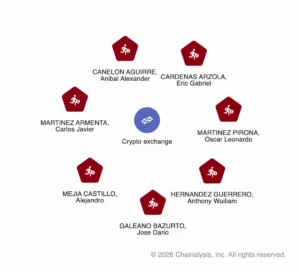
On-chain analysis, utilizing tools like Chainalysis Reactor, has provided crucial insights into the origins of these funds. The Central Bank of Iran addresses that were added to the OFAC designation received funds upstream from an institutional liquidity provider and an Asia-based payment processor. This suggests a sophisticated network through which these illicit funds are being routed, involving multiple entities and jurisdictions. The identification of these upstream sources is vital for OFAC and other law enforcement agencies to build a comprehensive understanding of the illicit financial ecosystem Iran is attempting to utilize.
The flow of funds, as depicted in Chainalysis’s accompanying visual data, illustrates a complex pathway. Funds originating from an institutional liquidity provider and an Asia-based payment processor were directed into the newly sanctioned wallets. This indicates that the Central Bank of Iran is not operating in isolation but is part of a broader network that facilitates these transactions. Understanding these linkages is critical for effective sanction enforcement, as it allows authorities to target not only the end recipients but also the facilitators of illicit financial flows.

Broader Implications and Future Outlook
The U.S. Treasury’s consistent efforts to track and sanction cryptocurrency assets used by sanctioned entities highlight a growing recognition of the digital asset landscape as a critical frontier in financial warfare and sanctions enforcement. The success of these measures, particularly the freezing of stablecoin assets, demonstrates the effectiveness of regulatory oversight and inter-agency cooperation with stablecoin issuers.
The ongoing conflict and geopolitical tensions in the Middle East further underscore the importance of these actions. Iran’s alleged use of cryptocurrency to fund proxy groups like Hezbollah poses a direct threat to regional stability and international security. By disrupting these financial flows, the U.S. aims to diminish Iran’s capacity to engage in such activities.
For the broader cryptocurrency industry, these actions serve as a stark reminder of the regulatory scrutiny that digital assets are facing. While cryptocurrencies offer innovation and financial inclusion, their potential for misuse necessitates robust compliance frameworks and cooperation with law enforcement. Stablecoin issuers, in particular, are finding themselves on the front lines of this battle, balancing their business operations with the imperative to prevent illicit use of their products.
The trend of increased sanctions against entities utilizing digital assets is likely to continue. As illicit actors adapt their methods, regulatory bodies and blockchain analytics firms will need to remain vigilant and innovative in their approaches to tracking and disrupting these financial networks. The ability to trace funds on-chain, coupled with strong enforcement actions, is proving to be a powerful deterrent.
Timeline of Key Developments:
- Recent Months (Pre-July 2026): OFAC intensifies scrutiny of Iran’s cryptocurrency activities, particularly in light of ongoing geopolitical conflicts.
- June 2026: OFAC sanctions major Iranian cryptocurrency exchanges reportedly used by the Central Bank of Iran for stablecoin transactions.
- Leading up to Tuesday (July 2026): Chainalysis identifies four additional cryptocurrency wallet addresses linked to the Central Bank of Iran.
- Tuesday, July 15, 2026: OFAC updates its designation of the Central Bank of Iran to include these four cryptocurrency addresses.
- Immediately following designation: Tether, the issuer of the stablecoins held in these wallets, freezes balances totaling $131 million.
- Ongoing: Chainalysis and other analytical firms continue to monitor and trace the flow of funds related to Iranian entities, providing data to support enforcement actions.
Frequently Asked Questions:
Who did OFAC sanction?
The U.S. Treasury Department’s Office of Foreign Assets Control (OFAC) updated its designation of the Central Bank of Iran to include four additional cryptocurrency wallet addresses that are believed to be controlled by the Central Bank of Iran.
How much money did the wallets hold?
These newly designated wallets received over $165 million in stablecoins. Of this amount, $131 million has been frozen by their issuer, Tether, rendering it inaccessible to the Central Bank of Iran.
Why is OFAC sanctioning the Central Bank’s crypto?
OFAC is sanctioning the Central Bank of Iran’s cryptocurrency wallets because intelligence and on-chain analysis indicate that the regime is using these digital assets to fund its illicit operations, evade international sanctions, and funnel assets to regional terror partners.
What are the implications of these sanctions?
These sanctions aim to disrupt Iran’s ability to access and utilize global financial systems, thereby limiting its capacity to fund its military activities, support proxy groups, and undermine regional stability. For the cryptocurrency industry, it underscores the increasing regulatory oversight and the importance of compliance measures to prevent illicit use.
Disclaimer: This article is for informational purposes only and does not constitute financial, legal, or investment advice. Chainalysis, Inc. and its affiliates (collectively, "Chainalysis") are not responsible for any decisions made or actions taken by recipients in reliance on this material. Chainalysis does not guarantee the accuracy, completeness, timeliness, suitability, or validity of the information presented and will not be liable for any claims attributable to errors, omissions, or other inaccuracies.