
Blockchain analytics platform Chainalysis Reactor has secured a major legal victory as a U.S. appellate court officially upheld its admissibility as expert evidence in federal criminal trials. The decision by the U.S. Court of Appeals for the D.C. Circuit marks the first time a blockchain intelligence tool has successfully navigated both trial-level and appellate judicial scrutiny under the stringent Daubert standard. The ruling stems from the high-profile prosecution of Roman Sterlingov, the operator of the notorious darknet cryptocurrency mixing service Bitcoin Fog, who was convicted and sentenced to over 12 years in prison.
The affirmation by the appellate court validates the scientific and technical reliability of blockchain attribution methodologies used by law enforcement agencies worldwide. As digital asset investigations increasingly rely on sophisticated software to trace illicit funds, the court’s decision provides a robust legal foundation for the use of advanced cryptographic forensics in judicial proceedings.
The Prosecution of Bitcoin Fog and the Genesis of the Legal Challenge
The legal battle over Chainalysis Reactor’s admissibility originated in United States v. Sterlingov, a landmark federal case targeting illicit financial infrastructure on the dark web. Roman Sterlingov, a dual Swedish-Russian national, was accused of operating Bitcoin Fog, a crypto mixing service that processed more than $335 million worth of transactions—much of it tied to darknet drug markets and illicit enterprises—between 2011 and 2021.
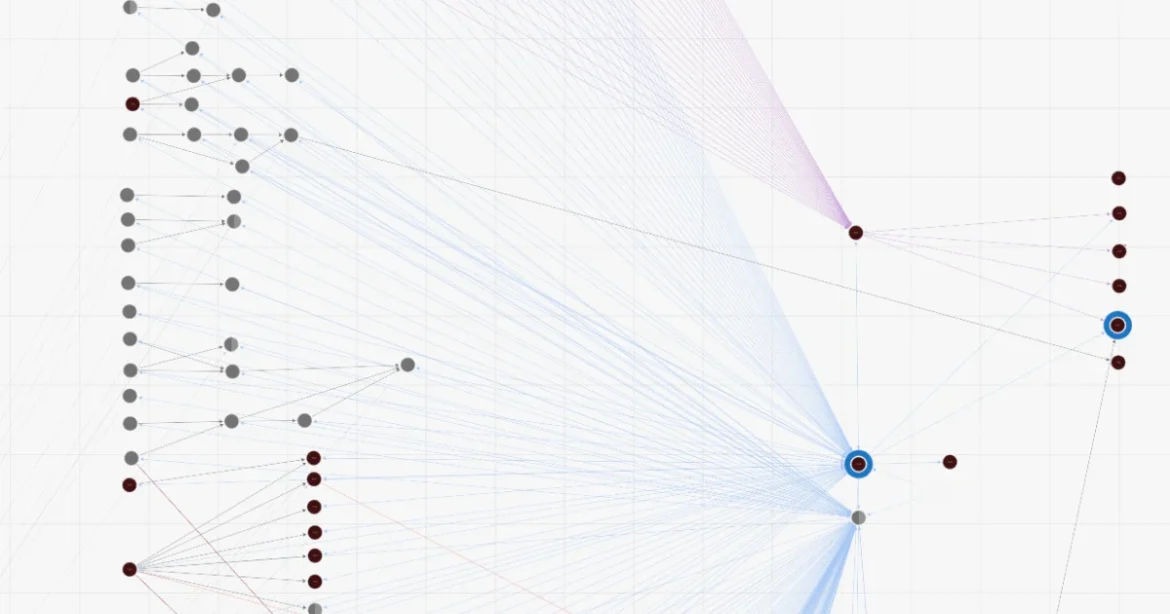
To link Sterlingov directly to the illicit operation, federal investigators utilized Chainalysis Reactor. The software enabled the Federal Bureau of Investigation (FBI) to analyze complex transaction webs connecting Bitcoin Fog to various darknet marketplaces. Ultimately, the tool was instrumental in attributing more than 900,000 Bitcoin addresses to the mixing service.
During the 2024 trial, the prosecution presented expert testimony from FBI Special Agent Luke Scholl and Chainalysis Director of Investigations Elizabeth Bisbee. The witnesses detailed Reactor’s underlying methodologies, data validation processes, and practical application in tracing illicit cryptocurrency flows.
Recognizing the pivotal role of the software in the government’s case, Sterlingov’s defense team launched a vigorous challenge to block the evidence. The defense argued that Reactor’s clustering and attribution techniques were unreliable, speculative, and fundamentally unsuited for courtroom presentation. This defense strategy triggered a Daubert hearing, wherein the trial judge evaluated whether the software’s underlying scientific principles met federal criteria for reliability and relevance.
The Daubert Standard and Trial Court Evaluation
Under the Daubert standard, established by the U.S. Supreme Court in the 1993 ruling Daubert v. Merrell Dow Pharmaceuticals, Inc., federal judges act as gatekeepers to ensure that expert testimony rests on a reliable foundation and is relevant to the task at hand. When assessing technical and scientific evidence, courts typically consider several core factors: whether a theory or technique can be and has been tested; whether it has been subjected to peer review and publication; its known or potential error rate; the existence of standards controlling its operation; and its general acceptance within the relevant scientific community.
In the initial Sterlingov trial, the District Court rejected the defense’s attempts to suppress the evidence, ruling that Chainalysis Reactor satisfied the Daubert requirements. The court found that the software’s clustering attribution methodology—which merges change address analysis with digital fingerprinting to identify addresses exhibiting synchronized behavioral patterns—was built on sound, verifiable principles. Furthermore, the court noted the widespread, routine adoption of the platform across federal, state, and international law enforcement agencies, as well as the private compliance sector, establishing a strong baseline of general acceptance.
Following his subsequent conviction and sentencing to more than a decade behind bars, Sterlingov appealed his verdict to the U.S. Court of Appeals for the D.C. Circuit. He renewed his challenge against the admissibility of the Reactor-derived evidence, arguing that the trial court abused its discretion by allowing the software’s outputs and associated expert testimony into the record.
The Appellate Decision and Rejection of Defense Arguments
In its September ruling, the D.C. Circuit Court of Appeals firmly rejected Sterlingov’s appeal, affirming the District Court’s decision to admit the evidence. The three-judge panel found no legal error in the lower court’s evaluation of the Daubert factors.
The appellate decision addressed several specific challenges raised by the defense, most notably the argument that Reactor was unreliable because it lacked formal peer-reviewed academic literature and an established error rate. The appellate court was unpersuaded by this line of reasoning. It observed that formal peer review is not a rigid prerequisite for technologies operating within rapidly evolving, highly specialized technological fields such as blockchain forensics.
To reinforce this point, the court considered broader empirical evidence regarding the platform’s reliability, including testimony from FBI and industry experts who stated they could not recall a single instance where a verified Chainalysis attribution had subsequently been proven false. Additionally, the court took note of independent academic evaluations published in recent years. A comprehensive 2025 granular evaluation of blockchain analysis tools confirmed that Chainalysis data maintains the highest accuracy and coverage rates in the industry, paired with the lowest incidence of false positives.
Crucially, the appellate court praised Reactor’s inherently conservative approach to attribution. Rather than penalizing the software for underinclusive data mapping, the court recognized that prioritizing defensible, high-confidence connections over speculative or exhaustive links actually enhances its reliability as a forensic instrument. By erring on the side of caution, the platform minimizes the risk of false positives, thereby protecting investigations from corrupted foundational data.
Chronology of Key Legal and Investigative Milestones
- 2011–2021: Bitcoin Fog operates as a prominent darknet cryptocurrency mixing service, processing hundreds of millions of dollars in illicit transactions.
- April 2021: Roman Sterlingov is arrested in Los Angeles and subsequently charged with money laundering, operating an unlicensed money transmitting business, and money transmission conspiracy.
- 2024: During the trial phase of United States v. Sterlingov, the federal district court holds a Daubert hearing and rules that Chainalysis Reactor meets federal standards for expert testimony admissibility.
- March 2024: A federal jury convicts Sterlingov on all counts after prosecutors utilize Reactor evidence to tie him to over 900,000 Bitcoin addresses.
- July 2024: Sterlingov is sentenced to 12 years and six months in federal prison.
- September 2025: Independent academic researchers publish exhaustive evaluations confirming the high data accuracy and low false-positive rate of leading blockchain analysis frameworks.
- September 2026: The U.S. Court of Appeals for the D.C. Circuit upholds the District Court’s evidentiary rulings, cementing Chainalysis as the only blockchain analytics provider to successfully pass the Daubert standard at both trial and appellate levels.
Implications for Blockchain Forensics, Law Enforcement, and AI Integration
The appellate court’s confirmation of Chainalysis Reactor’s admissibility carries profound implications for the future of financial crime investigations, regulatory compliance, and courtroom litigation. As decentralized finance (DeFi) ecosystems expand and illicit actors employ increasingly sophisticated obfuscation techniques, the reliance on blockchain analytics platforms by prosecutors and regulators continues to grow exponentially.
Legal experts note that establishing a clear judicial precedent under the Daubert standard lowers the procedural hurdles for admitting digital asset forensics into evidence. Historically, defense attorneys could easily challenge emerging digital forensic tools by questioning their novelty. With the D.C. Circuit Court validating Reactor’s methodology, prosecutors possess a powerful legal precedent to defend the integrity of blockchain analytics in future criminal and civil proceedings.
Furthermore, the ruling arrives at a critical juncture in the technological evolution of investigative tools, particularly concerning artificial intelligence. As compliance firms and investigative agencies increasingly integrate machine learning models to accelerate forensic workflows, the foundational integrity of the underlying data becomes paramount. Industry analysts emphasize that while artificial intelligence can vastly accelerate data processing and pattern recognition, it cannot correct fundamentally flawed datasets or weak methodologies.
The validation of Chainalysis Reactor at two tiers of federal courts provides independent verification that its underlying data architecture is sufficiently rigorous to support high-stakes automated analysis. This distinction is especially vital as organizations deploy AI-driven analytics to manage systemic financial risks, conduct sanctions screening, and trace complex cyberheists—such as recent multi-million-dollar cryptocurrency thefts investigated using advanced forensic mapping.
By surviving rigorous judicial scrutiny, Chainalysis Reactor has transitioned from a proprietary commercial software into a judicially recognized standard for blockchain intelligence. As digital assets face heightened regulatory scrutiny worldwide, the intersection of cryptography, software engineering, and federal jurisprudence will continue to shape the boundaries of financial accountability in the digital age.
