
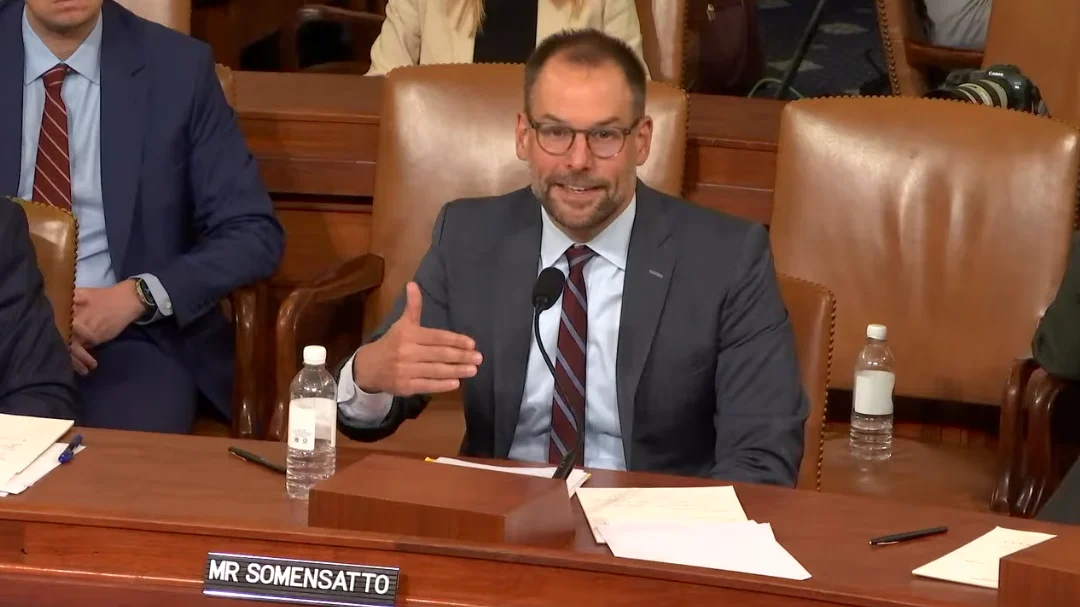
The House Ways and Means Committee convened a full committee legislative hearing this week to address the evolving landscape of digital asset taxation, featuring testimony from Jason Somensatto, the Director of Policy at Coin Center. The hearing, titled "Digital Asset Taxation: Evaluating the Path Forward for Innovation and Compliance," sought to address the persistent ambiguities in the United States tax code that stakeholders argue have stifled the growth of the domestic blockchain industry and created undue burdens for individual taxpayers. Somensatto’s testimony focused on the critical need for a de minimis tax exemption for small personal transactions, the clarification of reporting requirements for non-custodial actors, and the equitable treatment of block rewards, such as those earned through mining and staking. As the primary tax-writing committee in the House of Representatives, the Ways and Means Committee’s deliberations represent a significant step toward a potential comprehensive legislative overhaul of how cryptocurrencies and other digital tokens are treated by the Internal Revenue Service (IRS).
The Core Testimony: Modernizing the Internal Revenue Code
Jason Somensatto’s appearance before the committee highlighted several friction points between the current Internal Revenue Code and the functional reality of decentralized technologies. Central to his testimony was the argument that the current "property" designation for digital assets—established by IRS Notice 2014-21—is increasingly impractical for use cases involving medium-of-exchange functions. Under current law, every time a consumer uses a digital asset to purchase a good or service, or even exchanges one token for another, they trigger a realization event for capital gains purposes. This requires the taxpayer to calculate the cost basis of the asset at the time of acquisition and the fair market value at the time of the transaction, a process that Somensatto argued is prohibitively complex for everyday use.
To mitigate this, Somensatto advocated for a "de minimis" exemption, which would allow taxpayers to exclude small personal transactions—typically those under $200 or $600—from capital gains reporting. Proponents of this measure argue that it would bring digital assets in line with the treatment of foreign currency used for personal travel, thereby encouraging the use of blockchain technology for micro-payments and retail commerce. Without such an exemption, the administrative burden on both the taxpayer and the IRS is viewed as disproportionate to the actual tax revenue generated by these small-scale transactions.
Furthermore, the testimony addressed the controversial "broker" definition introduced in the Infrastructure Investment and Jobs Act of 2021. Somensatto reiterated the industry’s concern that the definition remains overly broad, potentially capturing software developers, hardware manufacturers, and decentralized protocol validators who do not have access to the personal information of users. He urged the committee to refine these definitions to ensure that information reporting requirements are only applied to intermediaries who actually facilitate transactions and possess the requisite data to comply with "Know Your Customer" (KYC) and 1099 reporting standards.
Historical Context and the Evolution of IRS Oversight
The hearing comes after a decade of incremental and often reactive guidance from the IRS and the Department of the Treasury. The history of digital asset taxation in the U.S. began in earnest in 2014 when the IRS issued its first formal guidance, declaring that virtual currency would be treated as property rather than currency. While this provided some initial clarity, it set the stage for the complex capital gains reporting requirements that exist today.
In 2019, the IRS signaled a heightened focus on enforcement by adding a specific question regarding "virtual currency" to the top of Form 1040, the individual income tax return. This move was followed by a series of "John Doe" summonses issued to major exchanges like Coinbase and Kraken, as the agency sought to identify taxpayers who had failed to report significant gains. By 2021, the legislative focus shifted toward closing the "tax gap"—the difference between taxes owed and taxes paid. The Treasury Department estimated at the time that the lack of comprehensive reporting in the digital asset space contributed billions of dollars to this gap annually.
The 2021 Infrastructure Investment and Jobs Act represented the first major legislative attempt to codify reporting requirements, but it was met with intense backlash from the technology sector. Critics argued that the bill’s language was technically infeasible for decentralized finance (DeFi) and proof-of-stake networks. The current hearing in June 2026 serves as a progress report on these issues, evaluating whether the regulatory framework has kept pace with technological shifts toward Layer 2 scaling solutions and liquid staking derivatives.
Supporting Data and the Economic "Tax Gap"
The push for legislative reform is driven by staggering figures regarding the scale of the digital asset market. According to recent market data, the total capitalization of the digital asset market has fluctuated between $1.5 trillion and $3 trillion over the past several years. Internal Revenue Service data suggests that while millions of Americans now hold digital assets, the compliance rate remains lower than that of traditional brokerage accounts.
In 2021, the Joint Committee on Taxation (JCT) estimated that the enhanced broker reporting requirements would generate approximately $28 billion in tax revenue over a ten-year period. However, industry analysts have countered that overly aggressive tax reporting requirements could drive innovation offshore, resulting in a net loss of economic activity and long-term tax revenue for the U.S. Treasury. A study cited during the hearing indicated that the U.S. share of global blockchain developer talent has declined by nearly 10% since 2018, a trend some attribute to regulatory and tax uncertainty.
The committee also examined the "wash sale" rule, which currently does not apply to digital assets as it does to stocks and securities. Under current law, investors can sell a digital asset at a loss and immediately repurchase it to claim a tax deduction. Closing this "loophole" is estimated by some budget hawks to potentially raise several billion dollars, though Somensatto and other experts cautioned that such changes must be balanced with broader reforms to ensure the tax code remains neutral and fair.
Stakeholder Reactions and Bipartisan Perspectives
The hearing revealed a nuanced divide within the committee. Republican members generally emphasized the need for "regulatory sandboxes" and tax incentives to ensure the United States remains the global leader in financial technology. They expressed concern that the IRS’s current approach is "enforcement-heavy" and lacks the clarity necessary for businesses to operate with confidence.
Conversely, many Democratic members focused on the necessity of robust information reporting to prevent tax evasion and money laundering. There was significant discussion regarding Section 6050I of the tax code, which requires businesses to report transactions of more than $10,000, including the Social Security numbers of the parties involved. Coin Center has been a vocal critic of this requirement as applied to digital assets, arguing it constitutes an unconstitutional intrusion into the privacy of law-abiding citizens and is technically impossible to fulfill in peer-to-peer transactions.
The reaction from the broader crypto industry has been one of cautious optimism. Major industry groups, including the Blockchain Association and the Crypto Council for Innovation, issued statements supporting Somensatto’s testimony. They argued that the "complexity tax"—the cost of hiring specialized accountants and software to track thousands of micro-transactions—is a major barrier to entry for the average American.
Analysis of Implications for Staking and Mining
One of the most technical aspects of the hearing involved the taxation of "newly created property." Somensatto argued that rewards earned through mining or staking should not be taxed at the moment they are received. Instead, they should be taxed only when they are sold or exchanged for other property.
Under current IRS interpretations, these rewards are often treated as immediate income, similar to interest from a bank account. However, Somensatto argued that a more accurate analogy is that of a farmer growing crops or an author writing a book. A farmer is not taxed when the corn grows; they are taxed when the corn is sold at market. By taxing staking rewards at the moment of creation, the IRS forces participants to sell a portion of their rewards just to cover the tax liability, which can create downward pressure on the asset’s price and discourage participation in network security.
If the committee adopts this "sale-only" approach, it would represent a landmark victory for the proof-of-stake ecosystem. It would provide a clear, predictable path for validators and delegators, potentially leading to increased domestic investment in blockchain infrastructure.
Future Outlook and Legislative Path
The testimony provided by Jason Somensatto and the subsequent committee discussion are expected to inform the drafting of the "Digital Asset Tax Reform Act," a bipartisan effort aimed at consolidating various proposals into a single, cohesive framework. Key provisions likely to be included are the de minimis exemption, a narrowed definition of "broker," and updated guidelines for the treatment of hard forks and airdrops.
As the 2026 legislative session continues, the House Ways and Means Committee will likely hold further markups to refine these proposals. The ultimate goal is to create a tax environment that fulfills the government’s need for revenue and oversight while respecting the unique architectural differences of decentralized networks.
In the interim, the IRS is expected to release final regulations regarding broker reporting, which have been under review for several years. The tension between these administrative rules and the legislative efforts of the Ways and Means Committee will be a focal point for tax professionals and digital asset holders alike. For now, the testimony of experts like Somensatto remains a vital bridge between the "code" of the blockchain and the "code" of the federal tax system, ensuring that as technology advances, the law does not leave innovation behind.
