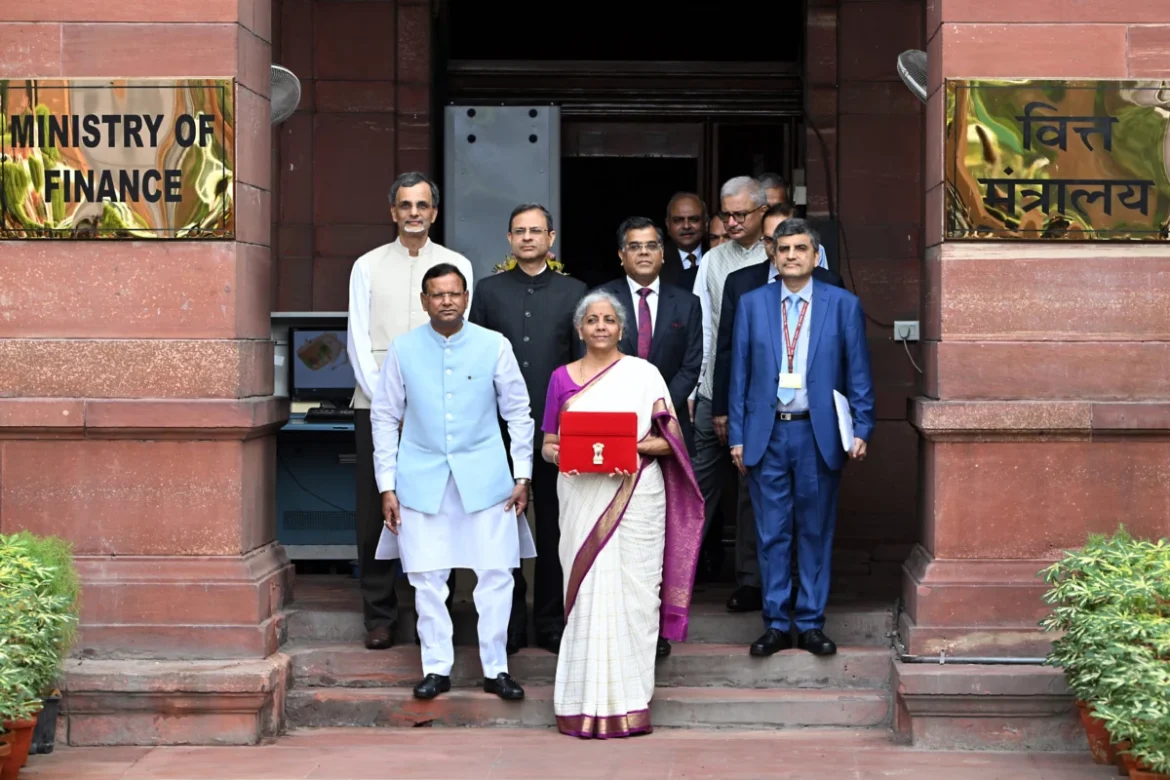
In a move that marks a definitive shift in the regulatory landscape for Indian entrepreneurship, the federal government has announced the complete abolition of the so-called angel tax for all classes of investors. Finance Minister Nirmala Sitharaman delivered this landmark decision during her presentation of the Union Budget, addressing a decade-long grievance held by founders, venture capitalists, and angel investors. The decision is seen as a strategic pivot to eliminate friction in capital formation and to solidify India’s position as the world’s third-largest startup ecosystem.
"To bolster the Indian startup ecosystem, to boost entrepreneurial spirit and support innovation, I propose abolishing angel tax for all classes of investors," the Finance Minister stated during her address to Parliament. This policy change is expected to take effect immediately, providing a much-needed reprieve to early-stage companies that have historically struggled with the tax implications of their valuation premiums.
The Genesis and Mechanics of the Angel Tax
The angel tax, formally categorized under Section 56(2)(viib) of the Income Tax Act, was first introduced in 2012 by the then-Finance Minister Pranab Mukherjee. Its primary intent was to curb money laundering through the subscription of shares in unlisted companies at prices significantly higher than their fair market value. The government feared that shell companies were being used to park unaccounted wealth by issuing shares at inflated premiums.
However, the practical application of the law quickly became a significant hurdle for legitimate startups. Under the provision, if a closely held company issued shares at a price exceeding its Fair Market Value (FMV), the excess amount was treated as "income from other sources" and taxed at a rate of approximately 30%.
The fundamental problem resided in the methodology used to determine FMV. Tax authorities typically relied on the Net Asset Value (NAV) method, which looks at the current book value of a company’s assets. In contrast, startups are valued by investors based on future growth potential, intellectual property, and market scalability—often using the Discounted Cash Flow (DCF) method. This discrepancy meant that almost every successful seed or Series A funding round could potentially trigger a massive tax liability, effectively siphoning off a third of the capital intended for growth and innovation.
A Decade of Friction: The Chronological Path to Abolition
The journey toward the abolition of the angel tax has been marked by incremental reforms and periods of heightened tension between the tech community and the tax department.
- 2012: The Introduction: The tax was introduced as an anti-abuse measure, targeting the premium on shares of unlisted companies.
- 2016: The Startup India Launch: Despite the government’s push to promote entrepreneurship through the "Startup India" initiative, the angel tax remained a contradictory force, leading to many startups receiving tax notices for capital raised years prior.
- 2018-2019: Public Outcry and Partial Relief: Following a surge in "tax terrorism" complaints where startups reported their bank accounts being frozen to recover dues, the government introduced exemptions. Startups registered with the Department for Promotion of Industry and Internal Trade (DPIIT) could claim exemption, provided they met certain criteria regarding their share capital and investment limits.
- 2023: Extension to Foreign Investors: In a surprising move in the 2023 Budget, the government extended the angel tax to include investments from non-resident investors. Previously, it only applied to domestic investors. This move sparked fears of a significant drop in Foreign Direct Investment (FDI) at a time when the global "funding winter" was already biting.
- 2024: Full Abolition: Recognizing that the tax had become more of a hindrance to legitimate capital formation than a tool for catching money launderers, the government opted for a clean break by removing the tax for all investor classes, including residents and non-residents.
Supporting Data and Economic Context
The timing of this abolition is critical. According to industry data, Indian startup funding saw a significant decline in 2023, dropping to roughly $7 billion to $10 billion from a peak of $42 billion in 2021. The "funding winter," characterized by high interest rates globally and a cautious approach by venture capitalists, made the additional burden of the angel tax even more unpalatable.
By removing this tax, the government aims to stimulate the flow of domestic and international capital. India currently boasts over 117,000 startups recognized by the DPIIT, contributing significantly to job creation and technological advancement. Analysts suggest that the removal of Section 56(2)(viib) could lead to a 15-20% increase in early-stage investment activity over the next 18 months, as the "valuation risk" from a tax perspective is eliminated.
Industry Reactions and Official Responses
The announcement has been met with near-unanimous praise from the venture capital and startup community. Siddarth Pai, co-founder and partner at 3one4 Capital, described the move as a "watershed moment." He noted that a tax on capital is fundamentally antithetical to the goal of capital formation, adding that the provision had long been used as a tool to harass legitimate businesses.
Amit Mehra, CFO of Lightspeed, highlighted the reduction in uncertainty. "The removal of the tax will foster a more supportive environment for investments in the startups and will certainly fuel innovation and growth," Mehra said. He emphasized that this move is essential for ensuring that Indian founders choose to remain in India rather than "flipping" their headquarters to tax-friendly jurisdictions like Singapore or the United States.
Market observers also noted that the abolition removes a significant administrative burden. Previously, startups had to spend considerable resources on valuations, legal filings, and defending themselves against tax assessments. This "compliance tax" often outweighed the actual tax collected by the government from these provisions.
Broader Impact and Policy Implications
The abolition of the angel tax is not an isolated move but part of a broader strategy to position India as a global hub for technology and space exploration. In tandem with the tax relief, the Finance Minister announced the establishment of a $120 million (approximately ₹1,000 crore) venture capital fund specifically for the space economy.
This space-focused fund is designed to capitalize on the momentum generated by the successful Chandrayaan-3 mission and the recent liberalization of the space sector. By providing state-backed capital, the government hopes to encourage private players to develop satellite technologies, launch vehicles, and downstream applications.
Furthermore, the removal of the angel tax is expected to encourage "reverse flipping." Over the last decade, many Indian startups moved their parent entities abroad to avoid the complexities of Indian tax laws and to access global capital more easily. With the removal of one of the most significant regulatory hurdles, the incentive to maintain an offshore structure diminishes. This could lead to more startups listing on Indian stock exchanges (NSE and BSE) in the future, deepening the domestic capital market.
Analysis: A Shift Toward Trust-Based Governance
From a policy perspective, the decision reflects a shift toward "trust-based governance." By removing a law intended to catch a few bad actors but which ended up penalizing thousands of legitimate entrepreneurs, the government is signaling a more sophisticated approach to tax enforcement. Modern anti-money laundering (AML) and "Know Your Customer" (KYC) frameworks are now considered sufficient to track the source of funds, making the blunt instrument of the angel tax redundant.
However, some tax experts caution that while the angel tax is gone, the scrutiny on valuations might not entirely disappear. The tax department still maintains the authority to investigate the source of funds under other sections of the Income Tax Act and the Prevention of Money Laundering Act (PMLA). Nevertheless, the specific threat of taxing share premiums as income has been neutralized.
Conclusion
The abolition of the angel tax marks the end of a contentious chapter in India’s economic history. It represents a victory for the startup ecosystem’s persistent lobbying and a recognition by the federal government that innovation requires a tax environment that rewards risk rather than penalizing it.
As India seeks to reach its goal of becoming a $5 trillion economy, the role of high-growth startups is paramount. By removing the "valuation friction" caused by Section 56(2)(viib), the government has cleared the path for more robust domestic investment and attracted the attention of global investors who were previously wary of India’s complex tax treatment of equity. Combined with targeted funds for sectors like space-tech, this policy shift sets the stage for a new era of entrepreneurial expansion in the Indian subcontinent.