The landscape of financial crime underwent a profound structural shift the moment threat actors began weaponizing high-speed automation to launder billions of dollars in stolen cryptocurrency. Considered by cybersecurity experts and blockchain analysts to be the most complex and largest digital asset breach in history, the unauthorized drainage of funds from the world’s largest cryptocurrency exchange, Binance, set off an unprecedented crisis response. In the face of algorithms designed to fragment and obscure stolen capital across tens of thousands of decentralized destinations, traditional manual tracing methods proved inadequate. To counter this threat, blockchain intelligence firm Chainalysis deployed its newest AI-native investigative workspace, known as Chain, fundamentally changing how investigators track, analyze, and neutralize cyber threats in real time.
The Magnitude of the Binance Breach and the Evolution of Crypto Laundering
The incident began at approximately 4:00 PM on a Thursday, when unauthorized actors executed a meticulously planned exploit that siphoned billions of dollars from Binance. The attackers immediately demonstrated an advanced understanding of cross-chain architecture. Rather than relying on simple wallet-to-wallet transfers, the perpetrators scattered the stolen digital assets across nearly a dozen distinct blockchains. To further compound the complexity, they leveraged decentralized cross-chain bridges—protocols designed to allow the transfer of tokens between completely separate blockchain networks—to rapidly shift capital and obfuscate the digital trail.
Historically, tracing funds across multiple blockchains required investigators to manually query individual blockchain explorers, deploy custom application programming interfaces (APIs), and write specialized scripts to map out transactional dependencies. This manual bottleneck often allowed sophisticated threat actors to outpace investigators, successfully routing stolen funds through privacy mixers, decentralized finance (DeFi) liquidity pools, and multi-signature wallets before law enforcement could flag or freeze the assets.
In the wake of the Binance incident, the race against time became a battle of processing speeds. The attackers utilized automated scripts to break massive sums of capital into smaller, manageable increments, routing these fractions through complex webs of stablecoin swaps and lending protocols. Recognizing that human speed alone could not match automated money laundering, Chainalysis relied on Chain—a platform built on twelve years of accumulated attribution data and investigative methodologies—to intercept the funds before they could be permanently laundered into fiat currency or untraceable privacy coins.
Core Capabilities of Chain: Converse, Create, and Codify

Designed specifically to address the velocity and scale of modern cryptocurrency exploits, Chain integrates machine intelligence directly into the investigative workflow. During the Binance crisis, the platform’s core functional pillars—conversation, creation, and codification—proved critical in helping analysts untangle the complex web of transactions.
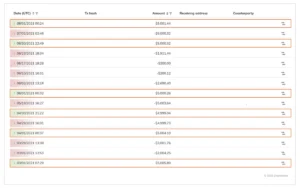
The conversational interface allows investigators to query the platform using natural language, instantly accessing Chainalysis’s expansive database of on-chain intelligence. During the early hours of the Binance response, investigators faced the daunting task of mapping bridge transactions across multiple fragmented networks. Instead of navigating dozens of external block explorers manually, analysts simply instructed the system to locate the corresponding bridge transactions. According to internal reports from the investigative team, the integrated data layer eliminated the need for external tooling, allowing analysts to extract reliable transactional pathways instantaneously.
Beyond conversational queries, Chain features a creative output engine that enables research teams to synthesize raw data into structured visual reports, network graphs, and analytical briefs. During the response, the Chainalysis research team utilized this capability to contextualize the Binance exploit against historical trends, specifically comparing the scale of the attack to long-standing patterns of state-sponsored cyber theft, such as operations historically attributed to North Korean threat actors like the Lazarus Group.
Eric Jardine, Head of Research at Chainalysis, emphasized the importance of rapid data collation during high-pressure events. Jardine noted that the platform allowed the research team to cross-reference existing datasets of state-sponsored crypto thefts with publicly available intelligence sources in real time. This iterative process yielded a definitive dataset illustrating the sheer enormity of state-backed hacking operations within the broader digital asset ecosystem, providing vital context to regulators and law enforcement agencies.
Perhaps the most crucial innovation deployed during the crisis was the platform’s ability to codify investigative labor into repeatable automations. Recognizing that the hackers were employing repetitive laundering patterns—such as swapping stablecoins back and forth through decentralized lending protocols—investigators translated these behavioral signatures into automated workflows. Once an analyst identified a complex multi-step swap sequence, they built an automation rule within Chain that instructed the system to autonomously flag the source address, track the stablecoin exchange, identify the recipient, and trace the subsequent movement of capital across the network. This automated "recipe book" approach enabled investigators to scale their operations horizontally, matching the computational speed of the hackers.
Broader Industry Implications and Collaborative Enforcement
The successful deployment of AI-native workspaces during a major systemic crisis highlights a broader transformation in the cryptocurrency compliance and regulatory sectors. As cybercriminals adopt sophisticated artificial intelligence and automation tools to execute and conceal financial crimes, defensive stakeholders—including centralized exchanges, decentralized protocols, and law enforcement agencies—must modernize their analytical infrastructure.

The implications of automated blockchain forensics extend far beyond immediate incident response. By codifying successful investigative workflows into reusable recipes, private sector platforms can proactively manage risk exposure, identifying suspicious transactional patterns before funds are fully laundered. Simultaneously, law enforcement agencies equipped with advanced analytical tools can secure actionable intelligence more rapidly, reducing the time required to obtain seizure warrants and coordinate international asset freezes.
This incident also underscores the growing necessity of cross-sector collaboration in combating digital financial crime. Initiatives such as the Digital Crime Task Force—formed through strategic partnerships between blockchain analytics firms, major token issuers like Tether, and blockchain networks like TRON—demonstrate a unified approach to proactively identifying and disrupting illicit financial flows. These alliances rely heavily on real-time data sharing and advanced tracing capabilities to dismantle the infrastructure used by sophisticated threat syndicates.
Future Outlook for Crypto Forensics and Accessibility
As the digital asset economy continues to mature and integrate deeper into the global financial architecture, the sophistication of illicit actors will inevitably evolve. The transition from manual ledger analysis to AI-driven, automated forensic workspaces marks a turning point in the ongoing effort to secure the blockchain ecosystem.
Following its successful stress test during the historic Binance breach, Chain has transitioned into active deployment for internal investigations and is gradually being introduced to external enterprise and public-sector clients. Compliance officers, risk management professionals, and investigative teams across the financial sector are increasingly seeking solutions that combine conversational intelligence with customizable automation, enabling organizations to scale their investigative capacity without linearly increasing operational headcount.
The race between cybercriminals weaponizing automation and forensic analysts deploying advanced artificial intelligence will define the next era of financial security. By bridging the gap between historical attribution data and real-time computational speed, tools like Chain provide the digital asset ecosystem with a critical defense mechanism, ensuring that transparency and accountability remain foundational pillars of the blockchain economy.