Decentralized liquidity protocol Synthetix has officially launched Time-Weighted Average Price (TWAP) orders on its mainnet, introducing sophisticated execution architecture designed to assist traders in scaling large positions. This new feature aims to address critical execution challenges such as price slippage, temporary market volatility, and liquidity fragmentation, particularly within long-tail asset markets. As decentralized finance (DeFi) platforms mature, the rollout of institutional-grade trading tools represents a significant step toward narrowing the functional gap between centralized and decentralized derivatives exchanges.
The implementation of TWAP functionality arrives amid an evolving landscape for on-chain derivatives trading. Historically, decentralized exchanges (DEXs) have grappled with the limitations of Automated Market Maker (AMM) models and thin order books, where large single-block transactions can heavily penalize traders through severe price impact. By integrating time-weighted execution strategies, Synthetix provides market participants with a systematic mechanism to partition large orders into smaller, discrete increments distributed across a specified duration. This approach is intended to protect capital efficiency and preserve expected fill prices, offering a strategic advantage for high-volume traders, institutional participants, and algorithmic strategies operating in volatile digital asset sectors.
Understanding TWAP Mechanics in Decentralized Derivatives
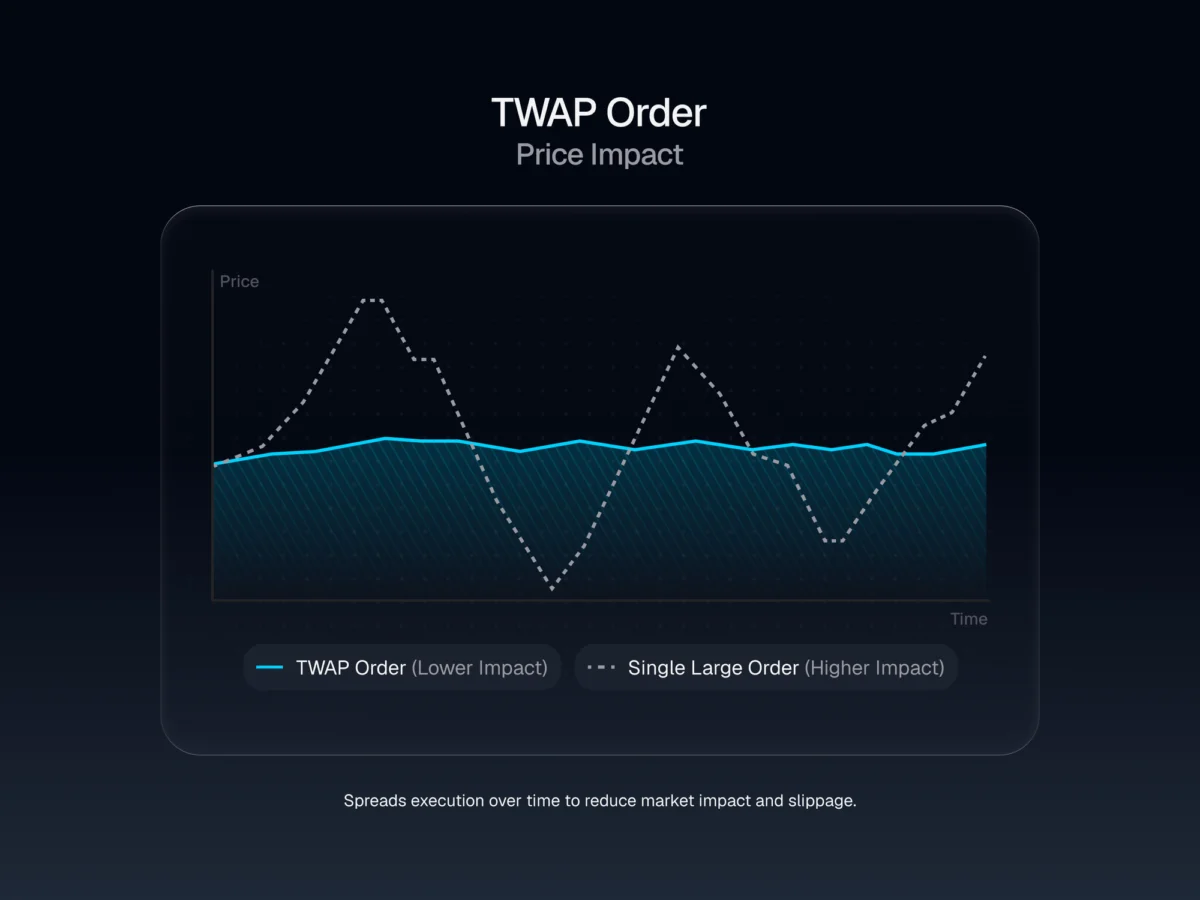
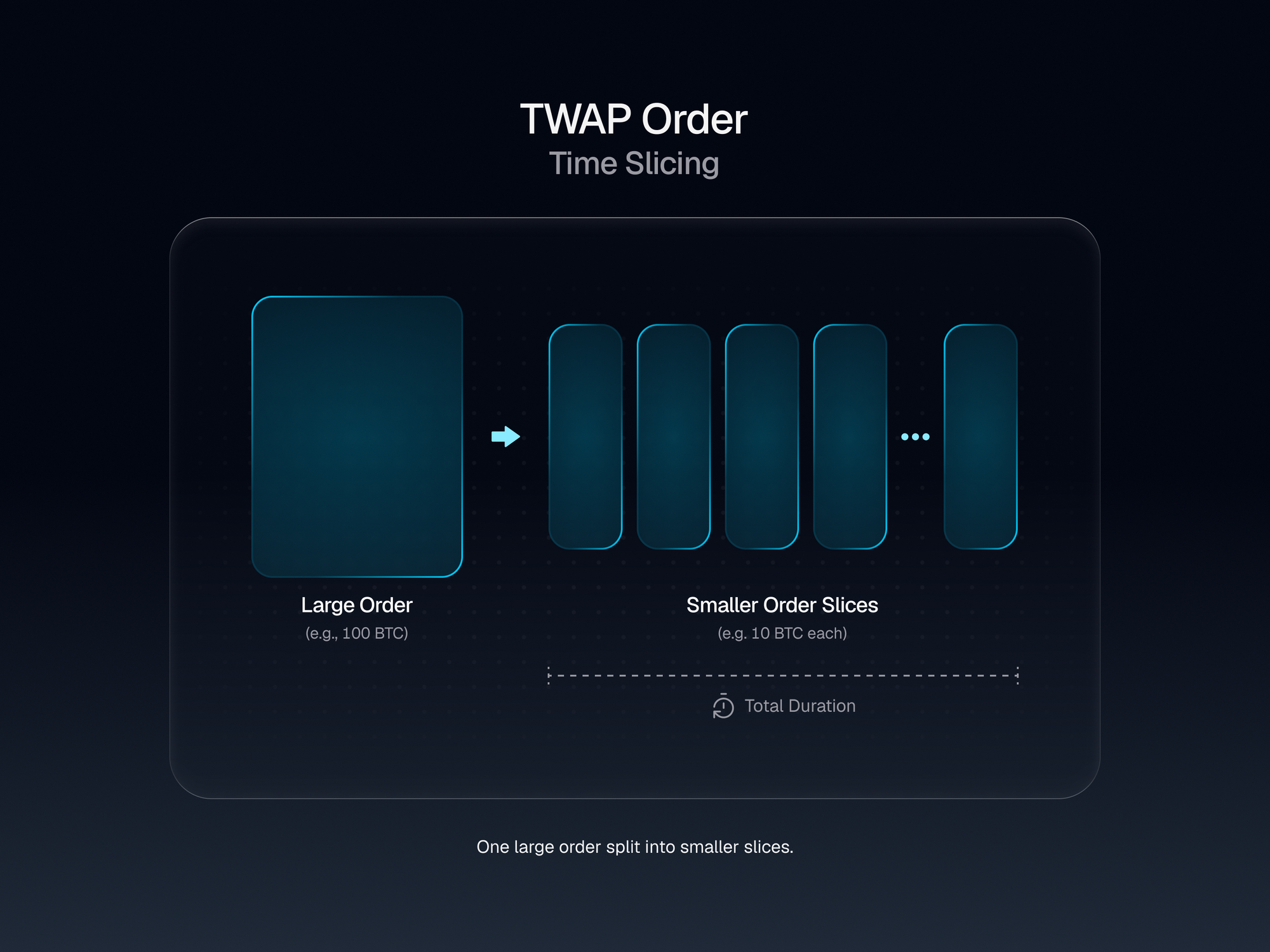
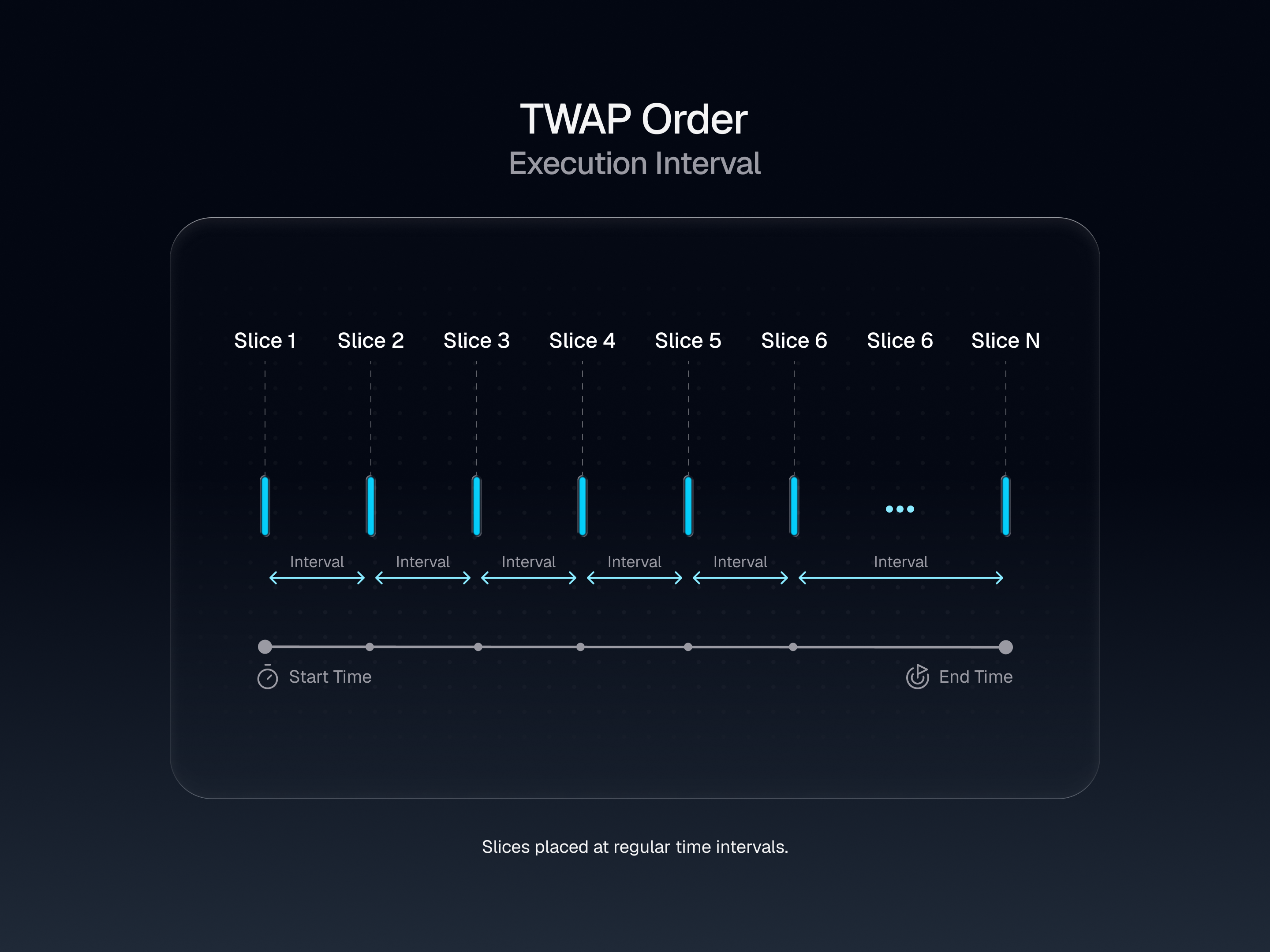
At its core, a Time-Weighted Average Price order functions by dividing a single, comprehensive trade instruction into a series of smaller slices executed at regular intervals over a predefined timeframe. Rather than demanding immediate liquidity for a massive position—which can trigger cascading liquidations or unfavorable price spikes—a TWAP order smooths the execution curve.
For instance, a trader seeking to establish a substantial 100 Bitcoin (BTC) perpetual futures position can configure a TWAP order to distribute purchases evenly across a multi-hour window. This programmatic dispersion prevents the market from absorbing an instantaneous shock. In low-liquidity or long-tail asset markets—where order book depth is frequently shallow and subject to rapid fluctuations—such safeguards are paramount.
Synthetix’s new deployment allows users to configure order durations ranging from a concise five-minute window up to a full 24-hour cycle. Shorter durations are tailored for traders aiming to stay tightly correlated with immediate market pricing while mitigating single-block slippage. Conversely, extended durations allow for ultra-granular order slicing, effectively shielding portfolios from sudden wicks, flash crashes, and short-term volatility spikes.
Mitigating Market Impact and Navigating Long-Tail Liquidity
One of the primary engineering challenges in decentralized derivatives trading is the management of market impact. When a trader attempts to execute an oversized order in a thin market, the execution price deteriorates rapidly as it consumes available liquidity levels. In technical terms, this creates an adverse selection problem where the trader essentially moves the market against their own position before the fill is fully realized.
The introduction of TWAP orders directly counters this friction by treating time as a variable in liquidity consumption. By breaking down order sizes, Synthetix enables market participants to stealthily accumulate or divest positions without signaling their intentions to predatory bots or high-frequency arbitrageurs. This capability is exceptionally vital for long-tail markets—alternative or emerging tokens hosted on the protocol that traditionally exhibit higher volatility and narrower liquidity pools.
Industry analysts have frequently noted that the growth of decentralized perpetual exchanges depends heavily on their capacity to handle substantial notional volume without sacrificing execution quality. By offering native TWAP capabilities, Synthetix aligns its infrastructure with traditional financial (TradFi) execution algorithms, such as TWAP and VWAP (Volume-Weighted Average Price), which have been standard practice in institutional equity and foreign exchange markets for decades.
Operational Parameters and Implementation Guidelines
To utilize the newly deployed TWAP architecture on the Synthetix mainnet, traders must navigate specific protocol parameters designed to maintain network integrity and manage systemic risk. Most notably, the protocol has established a minimum order size threshold of $10,000 USD in notional value for TWAP configurations. In this context, notional value denotes the total aggregate exposure of the position after accounting for any applied leverage.
The execution workflow is integrated directly into the existing user interface of the Synthetix exchange. Traders can specify their desired asset, total position size, leverage parameters, and the preferred execution duration. Once initiated, the smart contract infrastructure automates the slicing and timing of the individual fills, offering real-time tracking through the platform’s dashboard. For technical support, documentation, and direct communication channels with the development team, users can access the protocol’s official knowledge base and community support portals via Discord, Telegram, and X (formerly Twitter).
Broader Implications for the DeFi Derivatives Ecosystem
The deployment of institutional execution tools on Synthetix carries profound implications for the broader decentralized finance ecosystem. As regulatory scrutiny increases and institutional capital seeks robust avenues for on-chain yield and hedging, the infrastructure supporting these activities must scale accordingly. Advanced order types are no longer viewed as optional auxiliary features; they are foundational requirements for professional trading desks migrating strategies from centralized venues to self-custodial protocols.
By reducing the friction associated with large-scale order execution, Synthetix is positioning Ethereum mainnet as a competitive hub for perpetual swaps. Enhanced execution quality attracts higher trading volumes, which in turn deepens overall protocol liquidity in a compounding positive feedback loop. Furthermore, empowering retail and professional traders alike with institutional-grade risk management tools democratizes access to sophisticated trading strategies that were previously restricted to proprietary trading firms equipped with custom-built execution algorithms.
As the crypto market matures through successive cycles, the success of decentralized derivatives protocols will increasingly be measured by their execution resilience during periods of extreme macroeconomic stress and high market volatility. Synthetix’s rollout of TWAP orders signals a proactive approach to these structural challenges, setting a technical benchmark for how decentralized liquidity layers can absorb large-scale capital flows while protecting the end user from market inefficiencies.