The decentralized finance (DeFi) sector achieved a significant milestone today with the official rollout of multicollateral margin on Synthetix. For the first time in the history of the Ethereum network, traders can utilize Ether (ETH) as native collateral to execute and manage perpetual swap positions directly on Ethereum Mainnet. Previously limited to stablecoins like USDT for margin requirements, the platform’s infrastructure now bridges the gap between idle Layer 1 assets and high-performance derivatives trading.
This development marks a departure from traditional decentralized exchange (DEX) models that rely heavily on Layer 2 rollups or sidechains for high-throughput perpetual trading. By keeping settlement and execution strictly on Ethereum Mainnet, Synthetix aims to offer a unified, highly composable trading environment. Industry observers note that the integration of native ETH margin taps into an asset class representing over $100 billion in potential capital, providing a new avenue for asset efficiency without forcing long-term holders to liquidate their core holdings.
Background Context and Evolution of Synthetix Perps
To understand the weight of this release, it is necessary to examine the architectural evolution of Synthetix. Founded as a synthetic asset issuance protocol, Synthetix has progressively pivoted toward becoming a core liquidity layer for decentralized derivatives, most notably through its perpetual futures (perps) markets.
Historically, decentralized perpetual exchanges faced a trilemma: balancing execution speed, deep liquidity, and strict adherence to decentralization and self-custody. While many derivatives protocols migrated to Layer 2 networks or app-chains to circumvent Ethereum’s historical gas constraints and block times, Synthetix maintained a strategic commitment to Ethereum Mainnet settlement. However, this commitment previously imposed limitations on capital efficiency, requiring traders to bridge or convert their native assets into stablecoins to fund margin accounts.
The introduction of multicollateral margin addresses this bottleneck. Over the past year, core contributors and governance participants laid the technical groundwork for multi-asset risk management frameworks. By implementing dynamic risk parameters—such as asset-specific haircuts and automated solvency checks—the protocol has engineered a system capable of handling volatile Layer 1 collateral safely within a unified account structure.
Mechanics of Native ETH Margin and Unified Accounts
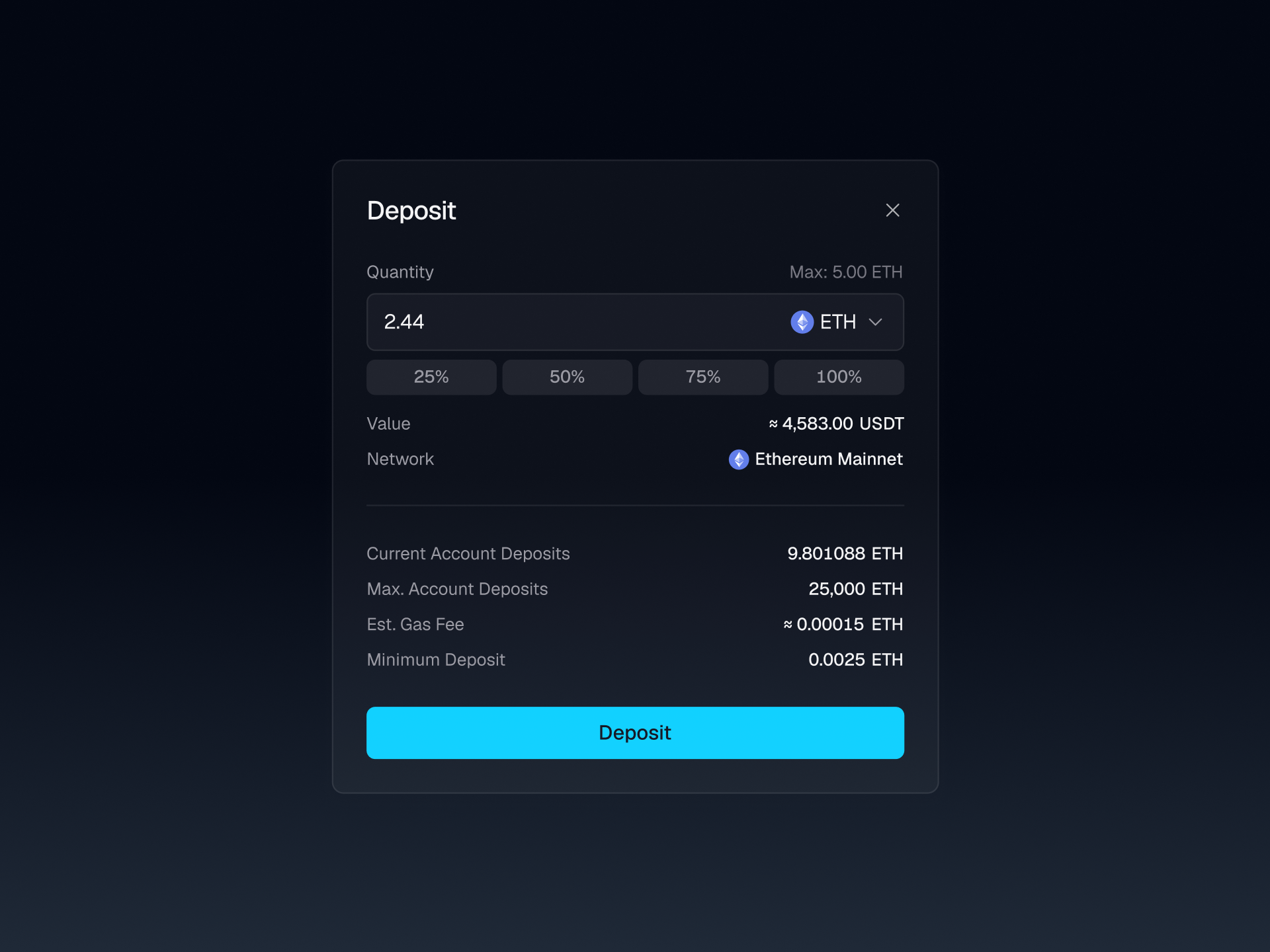
The mechanics behind the new feature are designed to maximize capital efficiency while minimizing friction for the end user. When a trader deposits ETH into Synthetix, the protocol values the asset using its live index price, adjusted by a predefined risk discount, commonly known as a haircut. This calculation yields the official collateral value, which counts toward the user’s overall margin requirement alongside any existing stablecoin balances.
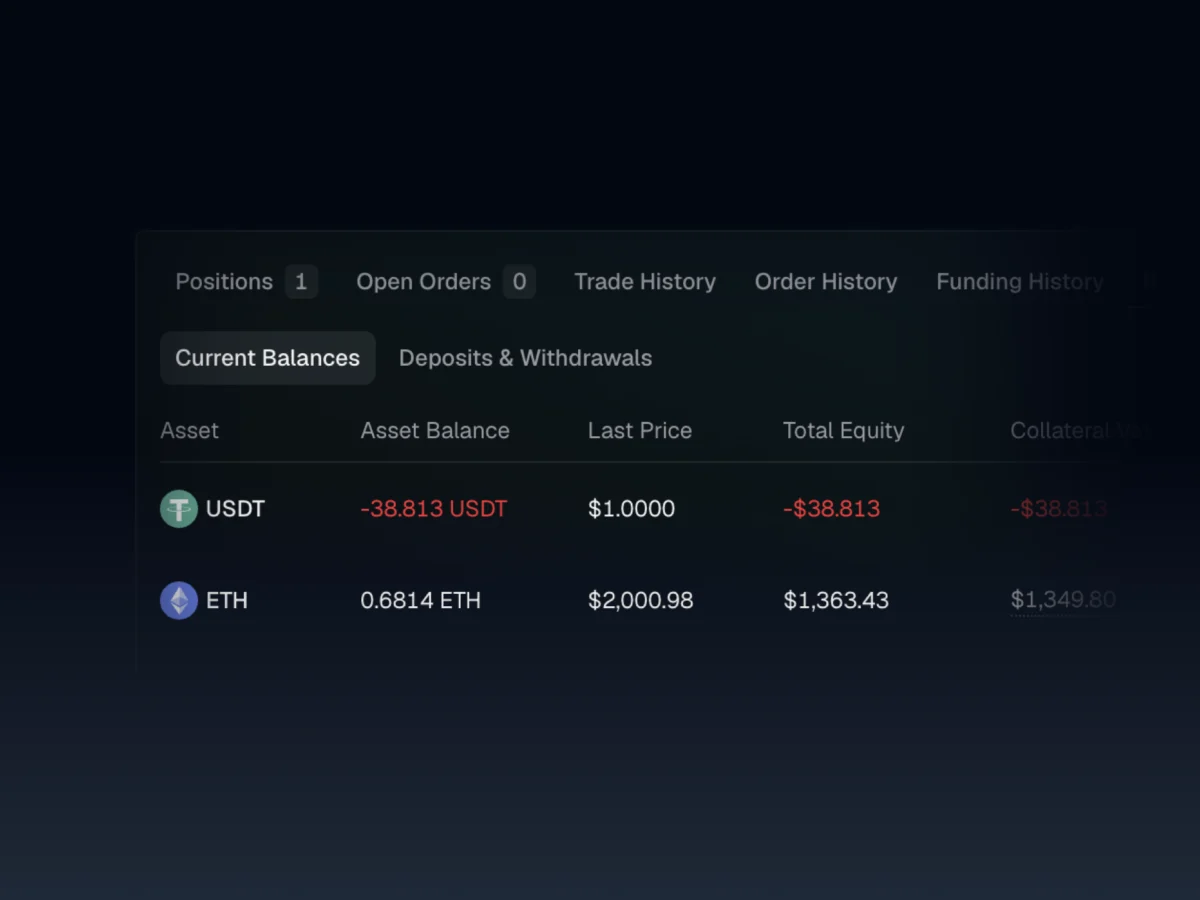
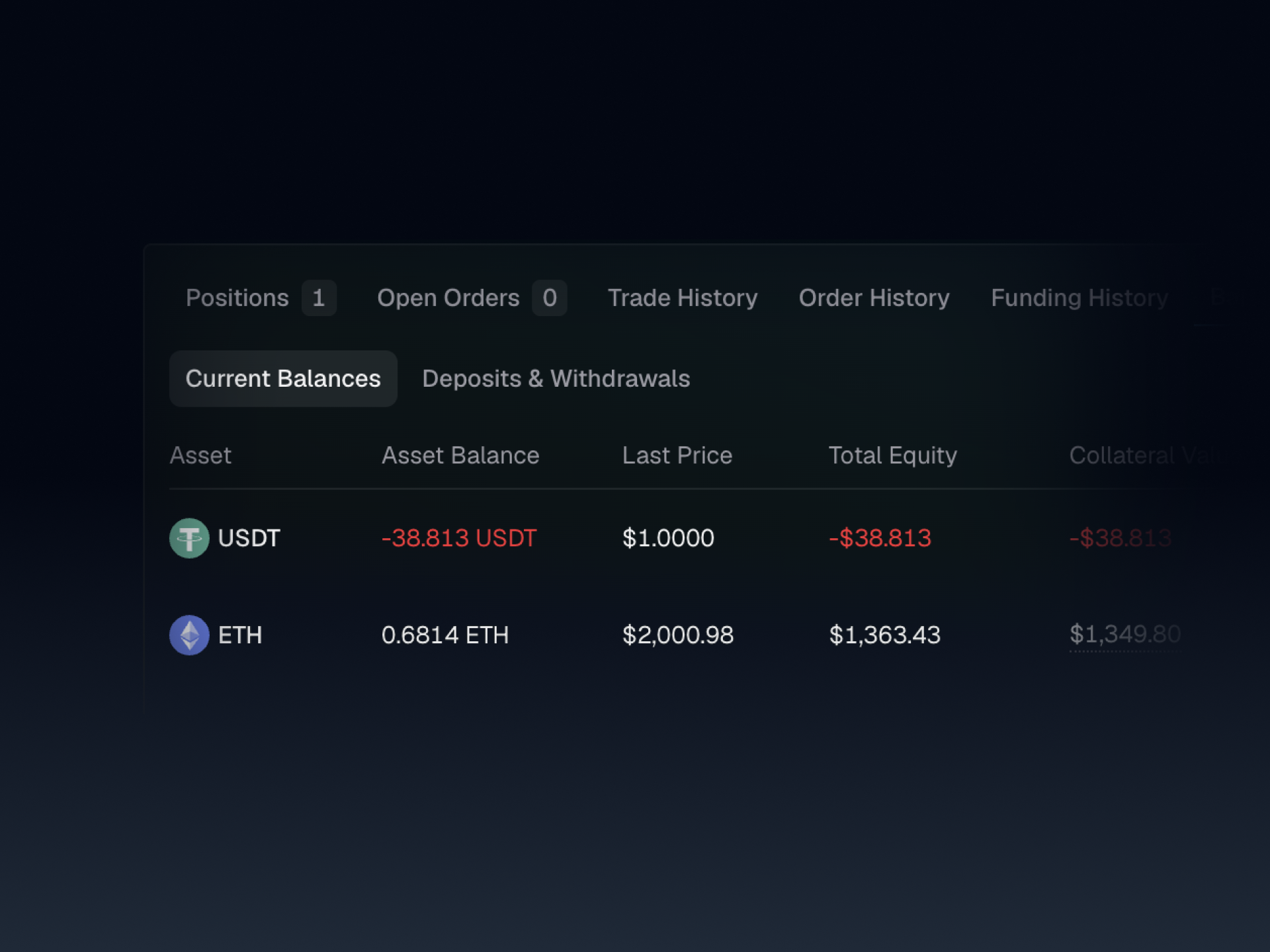
Because Synthetix perpetual markets are settled in USDT, operational variables such as trading fees, funding rates, and realized profit and loss (PnL) continue to be denominated in USDT. Consequently, a user trading exclusively with ETH collateral may temporarily carry a negative USDT balance while open positions remain active. This structural design is intentional; the negative stablecoin balance is secured entirely by the underlying ETH collateral.
Traders retain the flexibility to clear negative USDT balances at any time by utilizing the protocol’s internal swap function to convert a portion of their deposited ETH into USDT. Conversely, the system incorporates automated risk-mitigation safeguards. If market volatility causes the price of ETH to drop significantly—thereby reducing the total collateral value—and a user’s USDT debt exceeds permitted thresholds, the protocol is authorized to automatically liquidate a portion of the collateralized ETH to restore account solvency. This automated mechanism protects both the individual trader from catastrophic liquidation and the broader protocol from bad debt accumulation.
Unlocking Advanced DeFi Strategies: The Efficiency of Basis Trades
Beyond basic long and short directional trading, the integration of ETH as multicollateral margin streamlines complex derivatives strategies that form the bedrock of institutional-grade DeFi trading. Most notably, the update removes friction for executing delta-neutral basis trades.
A standard basis trade involves holding a spot asset while simultaneously opening an equivalent short position in the perpetual futures market to capture funding rates. Previously, executing this strategy on-chain required maintaining separate pools of capital or navigating multiple liquidity venues, exposing traders to execution lag and bridging risks. With native ETH margin, a trader can deposit ETH as collateral and open a short ETH perpetual position of equal size within the same unified account.
Under this setup, the collateral value and the position PnL move inversely, largely neutralizing directional price risk. The trader can collect recurring funding payments while retaining their underlying ETH exposure. Financial analysts suggest that lowering the barrier to entry for basis traders will improve market depth, resulting in tighter bid-ask spreads and more competitive pricing for all participants on the exchange.
Broader Implications for the Ethereum Ecosystem
The launch of multicollateral margin carries substantial implications for the broader Ethereum ecosystem. By unlocking access to billions of dollars in idle ETH, Synthetix positions itself as a major liquidity sink for the network’s native asset.
Market analysts point out that if decentralized perpetual protocols can capture even a fraction of the daily derivatives volume currently dominated by centralized exchanges, the resulting transactional activity creates a positive feedback loop. Increased trading volume generates higher fee revenues, deepens liquidity pools, and enhances the composability of the Ethereum DeFi stack as a whole.
Furthermore, the successful deployment of ETH as a non-stablecoin collateral type serves as a technological proof-of-concept for the protocol. According to development roadmaps released by core contributors, ETH is merely the first step. The underlying risk infrastructure has been architected to scale horizontally, paving the way for additional collateral types—including yield-bearing tokens and liquid staking derivatives (LSDs)—to be integrated into the margin system in subsequent updates.
Protocol Guidelines and Risk Management for Traders
As the feature goes live, protocol developers and risk committees have emphasized the importance of prudent risk management. Because ETH is subject to market fluctuations, a decline in the spot price of Ether directly impacts an account’s margin health, independent of the performance of any open derivative positions.
Traders utilizing ETH as collateral are advised to maintain a healthy margin buffer well above the minimum liquidation thresholds. Comprehensive documentation detailing specific asset caps, minimum deposit requirements, variable haircut percentages, and automated account liquidation parameters is publicly available through the official Synthetix documentation portal.
With multicollateral margin now operational, Synthetix continues its push to establish Ethereum Mainnet as a viable, high-performance venue for decentralized derivatives trading, signaling a new chapter in capital efficiency and asset utility within the decentralized economy.