The decentralized finance (DeFi) ecosystem has reached another milestone in trading infrastructure maturity as liquidity protocol Synthetix officially rolls out Time-Weighted Average Price (TWAP) execution capabilities on its mainnet. Designed specifically to address the complexities of managing large positions in fluctuating liquidity environments, the newly integrated tool aims to bridge the gap between institutional-grade execution strategies and decentralized derivatives trading. By allowing traders to automate the division of massive orders into smaller, temporally distributed slices, Synthetix is positioning its platform to better accommodate high-net-worth participants, market makers, and professional funds operating within the Ethereum and layer-2 landscape.
The deployment of TWAP orders arrives at a critical juncture for decentralized exchanges (DEXs), which continuously strive to match the sophisticated tooling available on centralized counterparts (CEXs). Historically, executing substantial trades on-chain—particularly in long-tail or niche asset markets—presented significant structural hurdles. Large single-block transactions often cause severe price slippage, adversarial front-running by Maximal Extractable Value (MEV) bots, and unfavorable fill prices due to thin order books. Synthetix’s latest product release directly targets these friction points, providing a systematic mechanism for market participants to scale into and out of multi-million-dollar positions without leaving an aggressive footprint on the underlying order book.
Understanding the Mechanics of TWAP Execution in Decentralized Markets
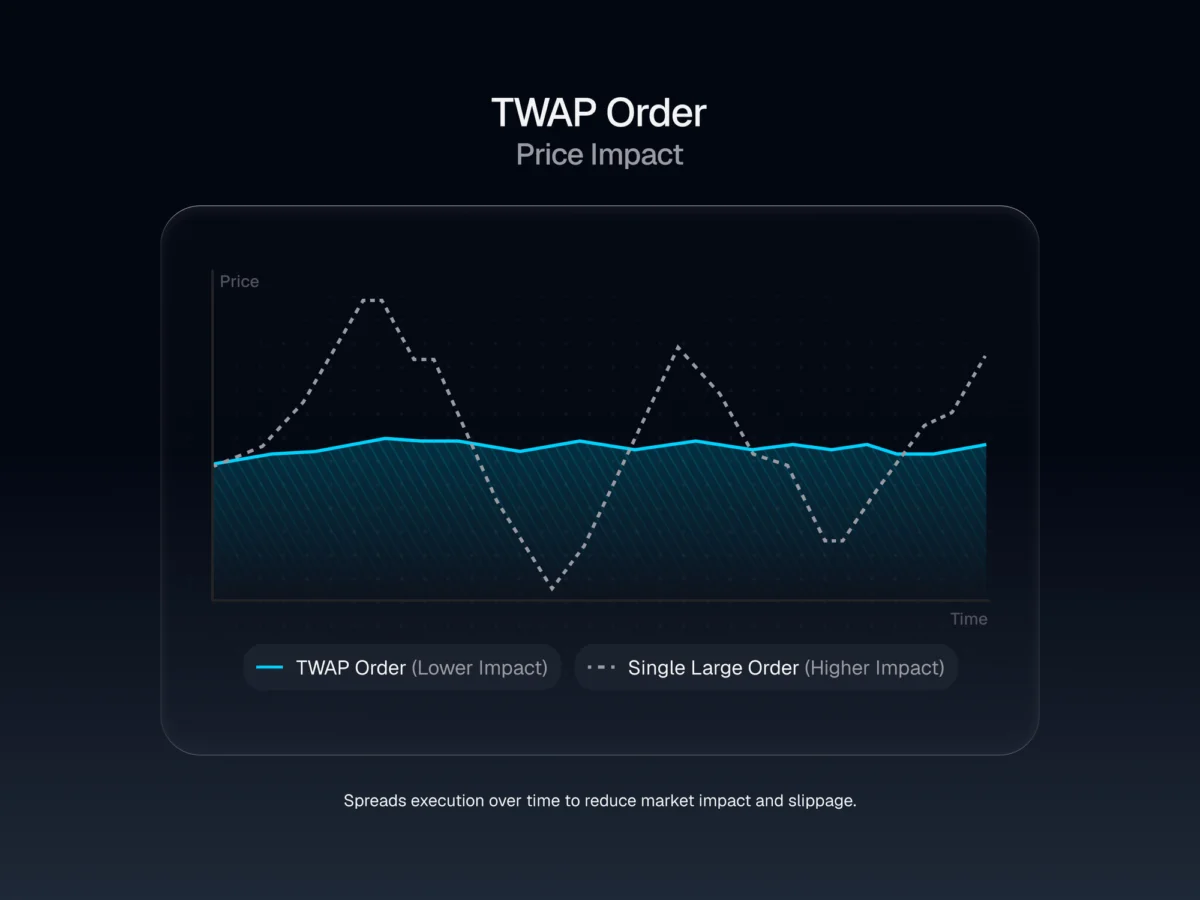
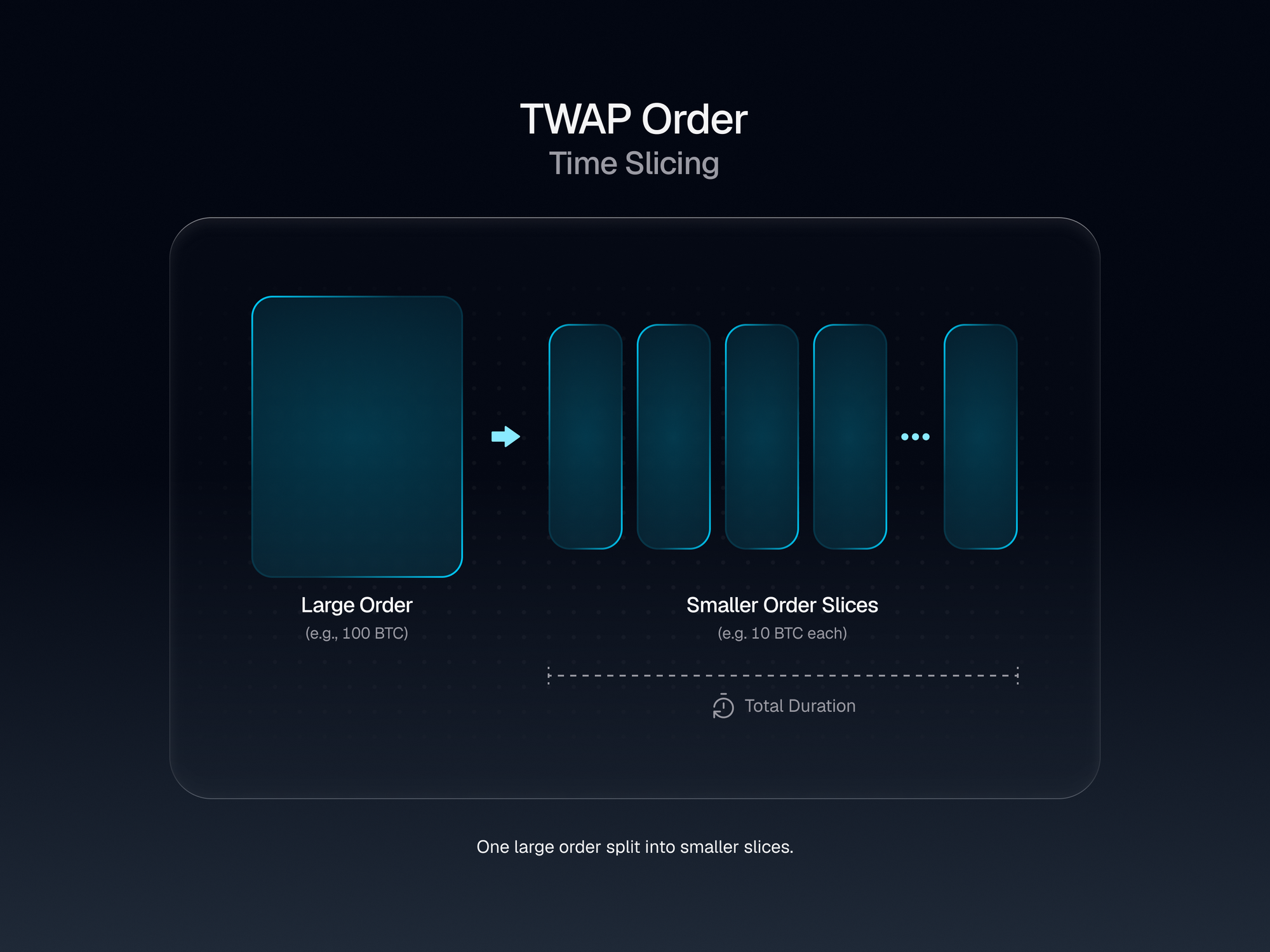
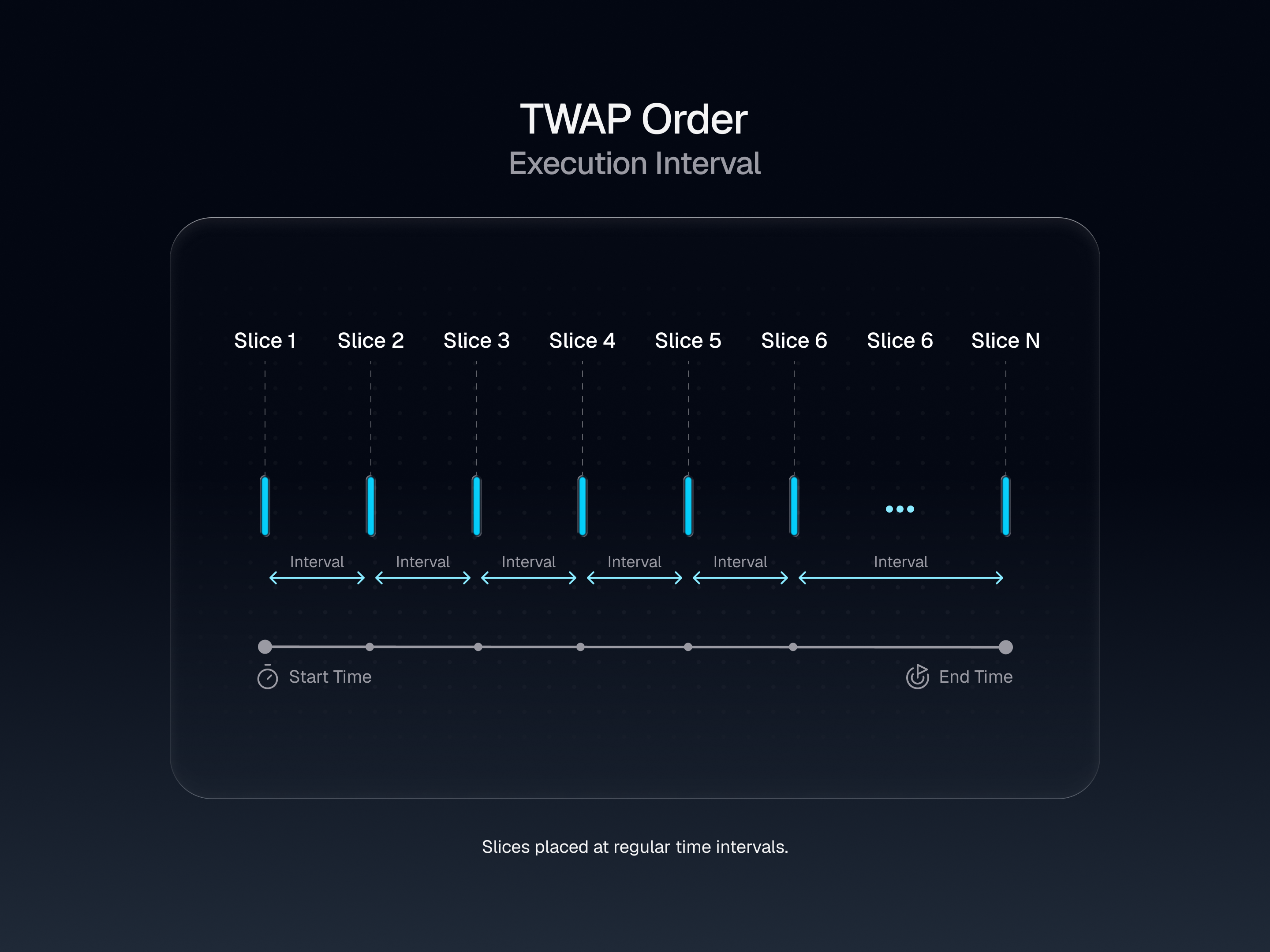
At its core, a Time-Weighted Average Price order is an algorithmic execution strategy that breaks a singular, large trade quantity into a series of smaller incremental orders distributed uniformly across a predefined window of time. Rather than exposing a trading strategy all at once—which can trigger panic or predatory liquidity reactions—a TWAP implementation slowly builds or unwinds a position, ensuring that the final execution price closely mirrors the average market price over the designated period.
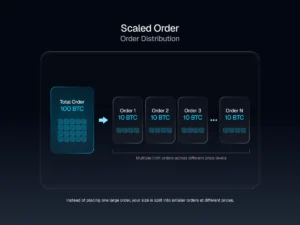
For example, a trader wishing to establish a 100-Bitcoin derivatives position would traditionally face the dilemma of either executing all at once, thereby driving up the immediate purchase price, or manually executing dozens of smaller trades over hours, introducing operational risk and constant monitoring requirements. With the integration of automated TWAP parameters on Synthetix, the protocol’s smart contracts handle the scheduling and execution of these fractional tranches automatically. This capability proves exceptionally vital in long-tail digital asset markets, where liquidity pools are inherently shallower and more susceptible to sudden, dramatic price shifts driven by individual whale transactions.
Furthermore, Synthetix has built flexibility into the configuration of these orders. Traders can select durations ranging from a rapid 5-minute execution window up to a full 24-hour cycle. Shorter durations are engineered for traders who require swift position establishment while still mitigating the immediate market impact of a single block fill. Conversely, extended durations spanning several hours or a full day allow market participants to absorb short-term market volatility, smooth out erratic price wicks, and achieve a stable daily average fill price.
Mitigating Volatility and Minimizing Market Impact
Market volatility remains one of the most persistent challenges for active derivatives traders. Sudden price spikes or cascading liquidations can result in unfavorable entry or exit points, severely degrading profitability. By averaging out execution prices across multiple intervals, TWAP orders insulate traders from the localized noise of temporary price dislocations.
In low-liquidity environments, the consequences of a large market order are amplified. When an order outstrips the immediate depth of the order book, the execution engine sweeps through progressively worse price tiers—a phenomenon known as price impact or slippage. By parsing a large order into micro-executions, the TWAP mechanism allows liquidity providers and secondary market arbitrageurs sufficient time to replenish order book depth between slices. Consequently, the aggregate market impact is drastically reduced, leading to cleaner charts, lower trading costs, and enhanced capital preservation for large-scale operators.
Industry analysts have noted that the introduction of advanced execution algorithms like TWAP is a necessary evolution for decentralized derivatives venues seeking to capture institutional volume. As decentralized finance increasingly attracts sophisticated capital allocators who manage risk through algorithmic execution, platforms that fail to offer granular order types risk losing market share to venues with more robust trading suites.
Parameters, Implementation, and Accessibility
To maintain platform stability and protect network integrity, Synthetix has established specific operational parameters for the new feature. Most notably, TWAP orders on the Synthetix Mainnet require a minimum order size of $10,000 USD in notional value. In the context of derivatives trading, notional value refers to the total exposure of the position after leverage is applied, ensuring that the tool is utilized primarily for substantial trades where market impact is a genuine concern.
To execute a TWAP order, traders navigate to the Synthetix interface, select their desired asset pair, input the total target position size, and configure the time horizon according to their strategic requirements. The system then automatically calculates the optimal slicing frequency and executes the strategy transparently on-chain. Comprehensive documentation and direct technical support channels have been established via the official Synthetix documentation portal and community Discord server to assist users in onboarding and optimizing the new feature.
Broader Industry Implications and the Path Forward
The launch of TWAP capabilities underscores Synthetix’s broader strategic objective: cementing Ethereum Mainnet and its associated ecosystem as the premier destination for high-performance perpetual swaps (perps) and decentralized derivatives. Over the past several years, Synthetix has continually evolved its liquidity architecture, transitioning through various governance iterations and architectural upgrades to optimize capital efficiency and fee distribution.
The inclusion of institutional-grade execution tools reflects a mature understanding of trader psychology and market microstructure. As decentralized exchanges continue to narrow the feature gap with traditional financial institutions and centralized crypto exchanges, the adoption of algorithmic order types is expected to become an industry standard rather than a luxury.
Market observers will be closely monitoring trading volumes and liquidity depth on Synthetix following the rollout to gauge the extent to which institutional and high-frequency traders leverage the new functionality. If successful, the deployment could serve as a blueprint for other decentralized liquidity protocols looking to attract professional trading desks and mitigate the systemic risks associated with on-chain whale activity. For now, the feature is fully live and accessible to all eligible traders on the Synthetix Mainnet, marking another significant step forward in the maturation of decentralized financial markets.