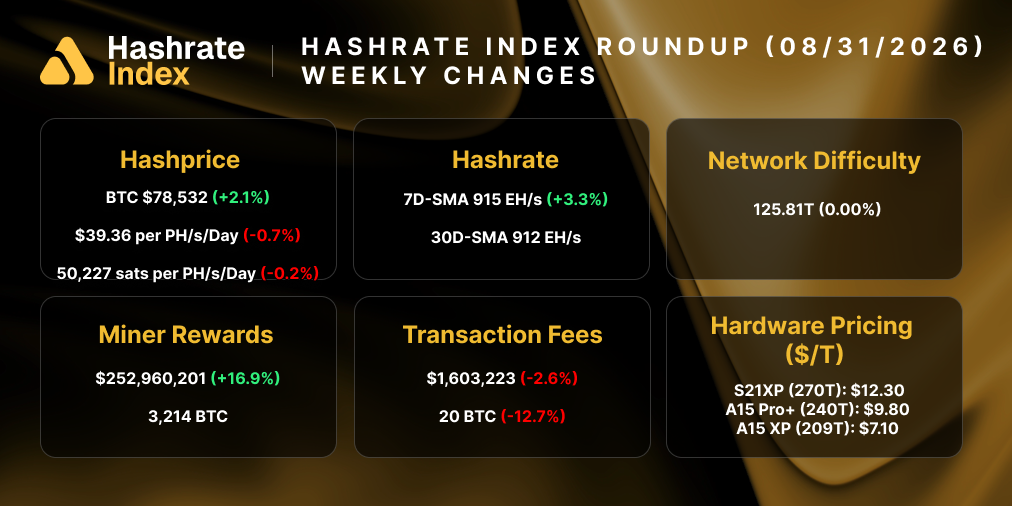
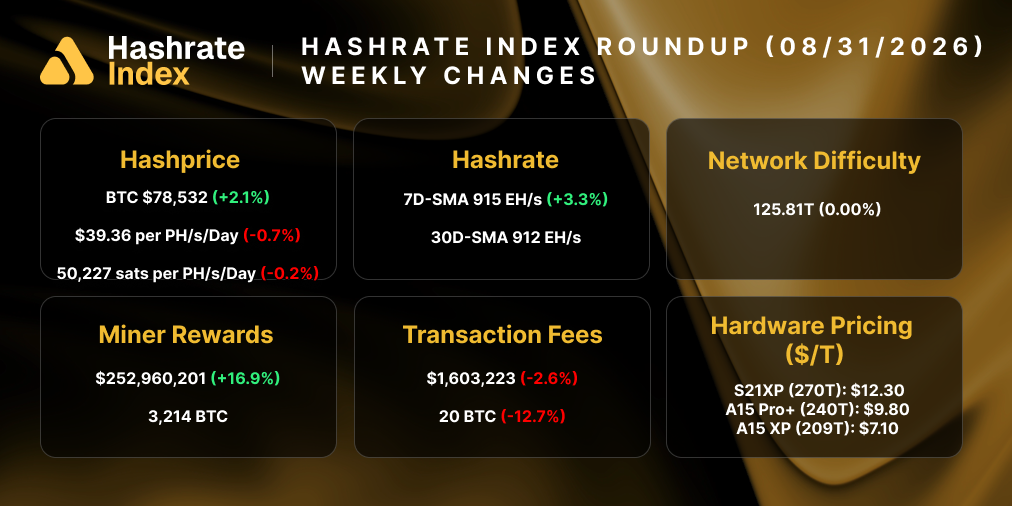
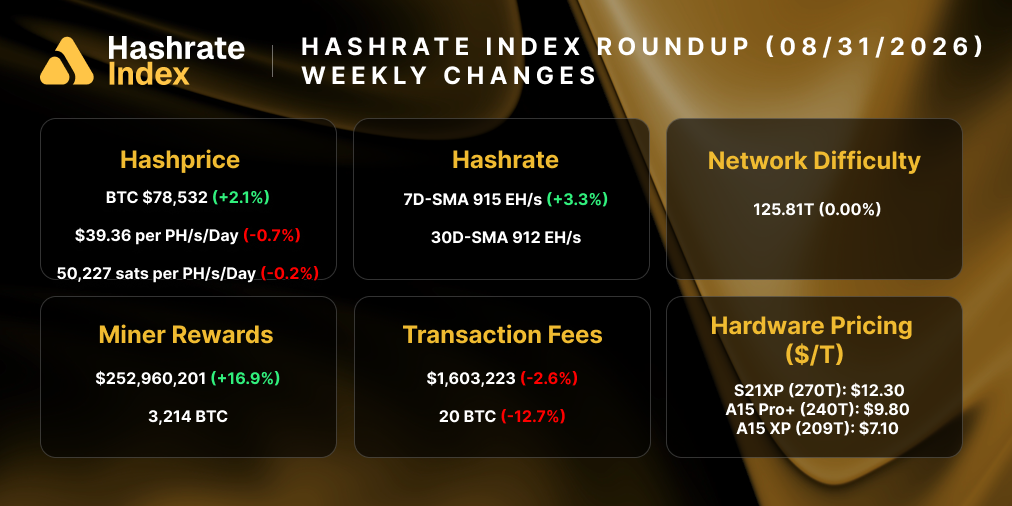
The primary driver for the industry remains the underlying volatility of the Bitcoin price, which saw a 2.1% appreciation over the seven-day period, climbing from approximately $76,933 to $78,563. Despite this recent upward momentum, the year-to-date performance remains negative at -10.1%, reflecting the broader macroeconomic challenges that have characterized the fiscal year for digital asset miners.
Hashrate Expansion and Network Dynamics
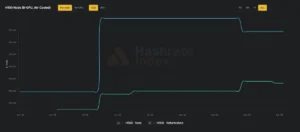
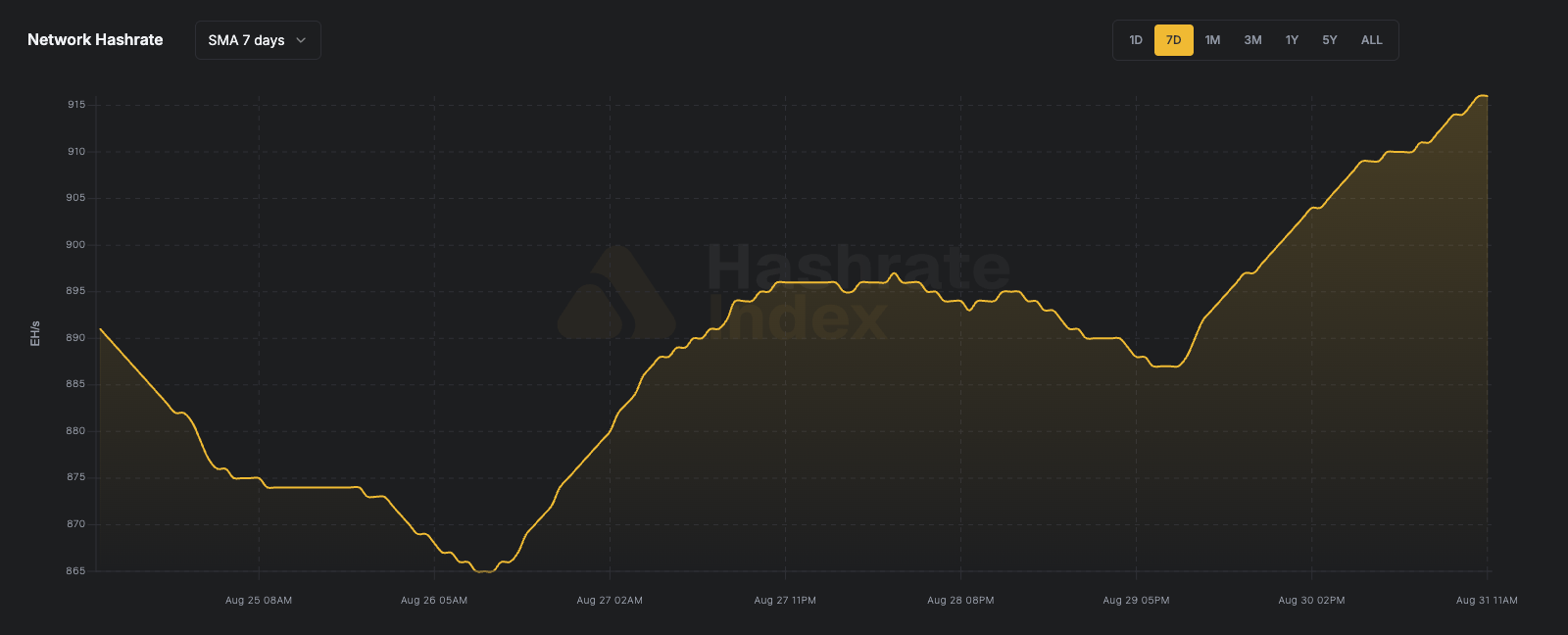
The Bitcoin network demonstrated continued robustness in its security infrastructure. The network hashrate, which serves as a proxy for the total computing power dedicated to verifying transactions and minting new blocks, expanded by 3.3%. The 7-day simple moving average (SMA) for network hashrate reached 915 EH/s, up from 886 EH/s the previous week. This sustained growth in hashrate underscores the ongoing deployment of high-efficiency hardware by major mining operations, which continue to seek dominance in the competitive landscape despite compressed margins.
This computational surge contrasts with the stability of the network difficulty. The most recent difficulty adjustment, which occurred on August 23, 2026, resulted in a marginal decline of 1.31%, setting the difficulty at 125.81T. This adjustment serves as a self-correcting mechanism designed to keep block production times consistent, and current metrics indicate that the network is successfully maintaining an average block time of 9 minutes and 56 seconds. Analysts are currently projecting a minor upward adjustment of approximately 0.67% around September 5, 2026, which would suggest that the influx of new hardware is slightly outpacing the natural churn of older, less efficient equipment.
The Profitability Squeeze: Hashprice Trends
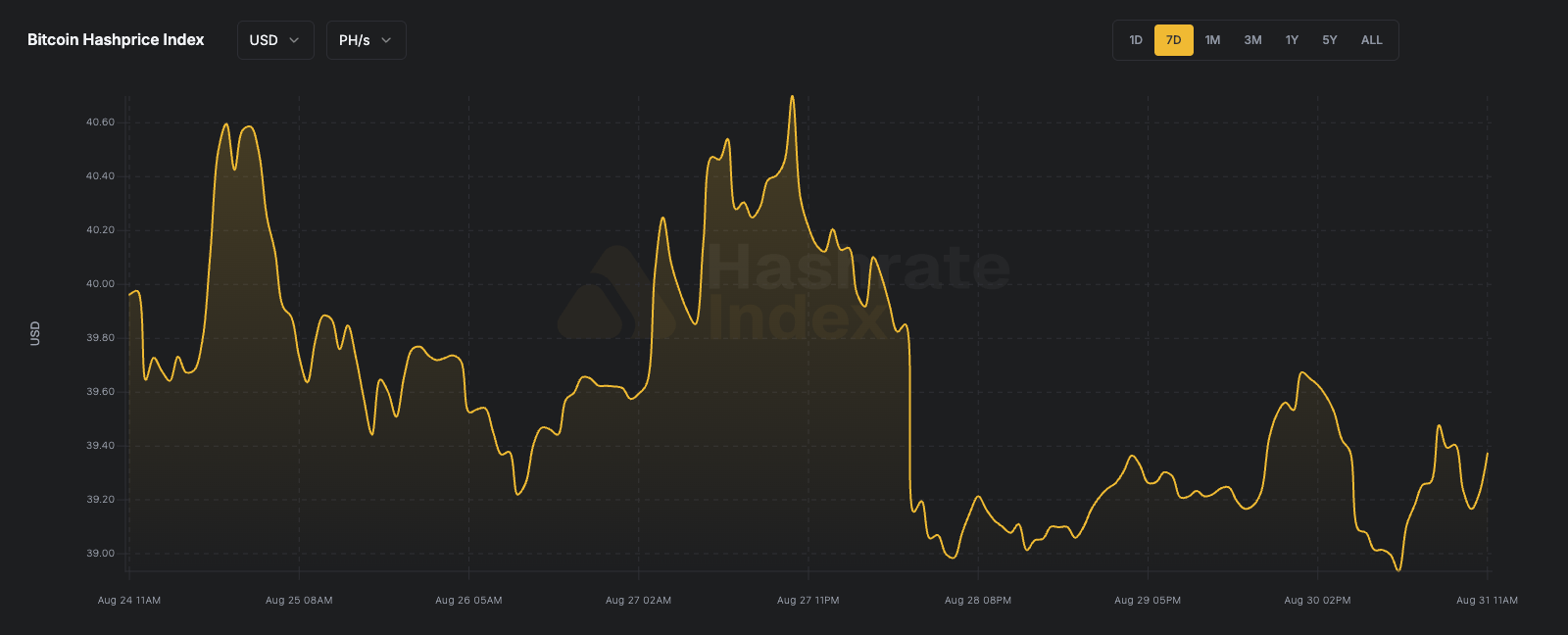
The economic health of mining operations is best captured by "hashprice," a metric representing the expected daily revenue per unit of hashrate (PH/s). For the week ending August 31, the USD-denominated hashprice declined by 0.7%, landing at $39.36 per PH/s/Day. This contraction in profitability, despite a rising Bitcoin price, indicates that the competitive intensity of the network is rising faster than the value of the rewards miners are receiving.
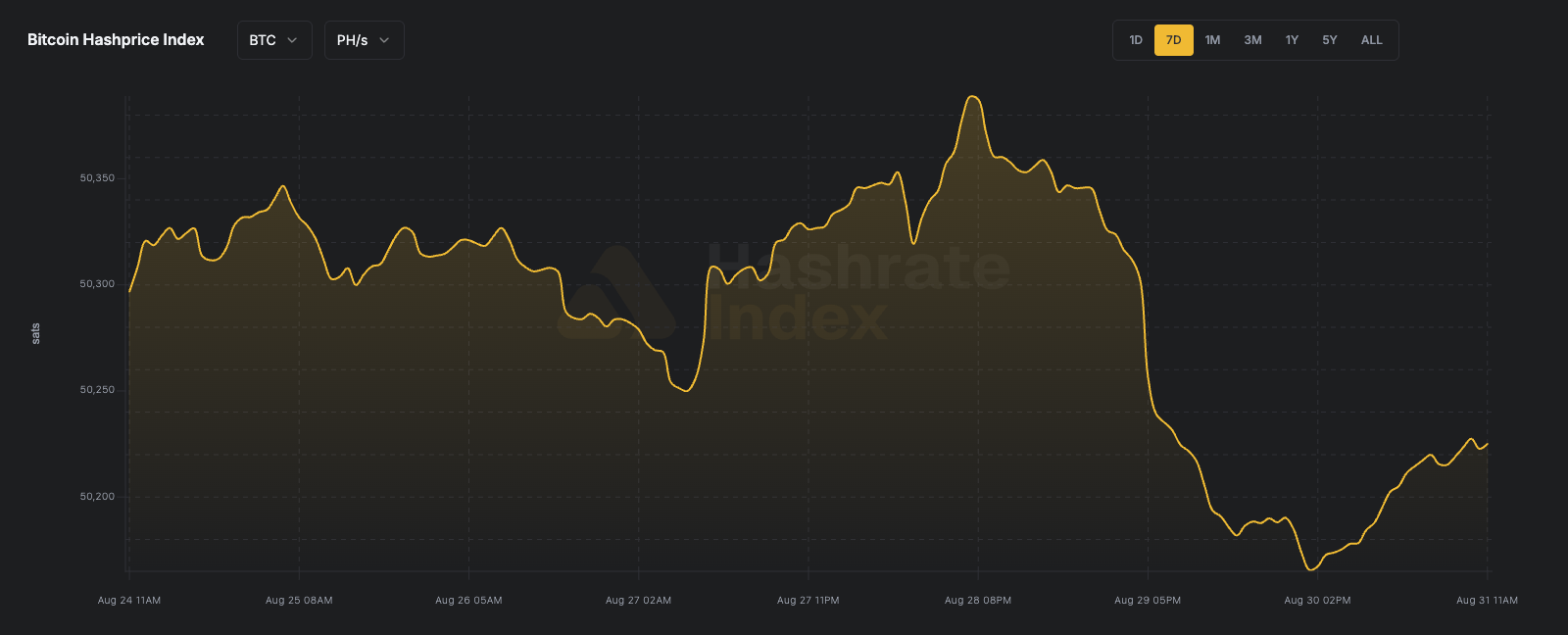
When measured in BTC terms, the picture remains similarly constrained. The BTC hashprice moved to 0.00050227 BTC per PH/s/Day, a 0.2% decrease from the previous week. For institutional miners, these figures represent the thin margins upon which their business models are currently predicated. The 30-day average hashprice of $34.63 reveals that while the current spot price is slightly elevated, the monthly trend highlights a challenging environment for operators who lack access to low-cost energy or the most advanced ASIC hardware.
Transaction Fee Contributions and Revenue Streams
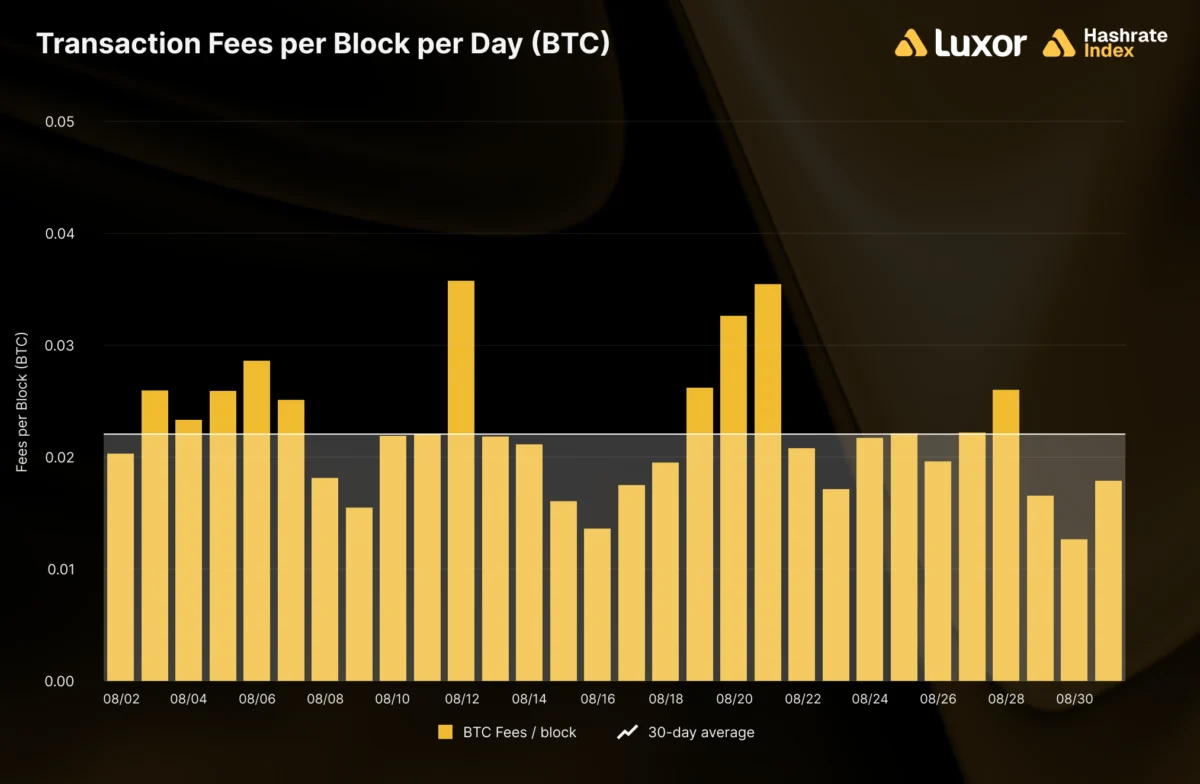
A critical component of mining revenue, transaction fees, saw a significant downturn this week. Miners collected a total of approximately 3,214 BTC in block rewards, with transaction fees accounting for a modest 20 BTC—roughly 0.64% of total earnings. This represents a 21% decline in average transaction fees per block compared to the previous week, dropping from 0.0248 BTC to 0.0196 BTC.
This decrease in fee revenue suggests a period of lower on-chain congestion. While lower fees are beneficial for network users, they create a revenue vacuum for miners who have become increasingly reliant on transaction volume to subsidize the halving-reduced block rewards. The broader implication is that, in the absence of high-value block space demand, miners are almost entirely dependent on the spot price of Bitcoin to maintain profitability.
Market Sentiment and Mining Equity Performance
The public equity market for Bitcoin miners faced a difficult week, with most major tickers recording losses as of the August 31 market close. The decline in mining stocks mirrored the broader cautious sentiment in the digital asset sector. Companies such as IREN, Riot Platforms, and Marathon Digital saw share price contractions of 9.2%, 8.6%, and 6.4% respectively.
These stock movements suggest that investors are closely monitoring the operational efficiency of these firms. As hashprice remains stagnant, companies with high debt-to-equity ratios or those lagging in fleet efficiency are facing increased scrutiny. The market capitalization of these firms remains significant, but the week-over-week performance shows that investors are increasingly sensitive to the marginal cost of production—the cost to mine a single Bitcoin—which remains high as network difficulty persists at record levels.
Looking Ahead: Forward Market Projections
The Luxor Hashrate Forward Market provides a window into the industry’s outlook for the coming months. Currently, the market is pricing in an average hashprice of approximately $37.59 per PH/s/Day over the next six months. This forward-looking data implies that market participants expect profitability to remain within the current range, with no immediate expectation of a dramatic "bull run" in hashprice.
For mining firms, this forward curve is an essential tool for hedging. By locking in future revenue through derivatives, miners can mitigate the risk of further declines in hashprice or unexpected spikes in energy costs. The consensus in the market appears to be one of cautious stability, where efficiency—rather than speculative growth—remains the primary determinant of long-term survival.
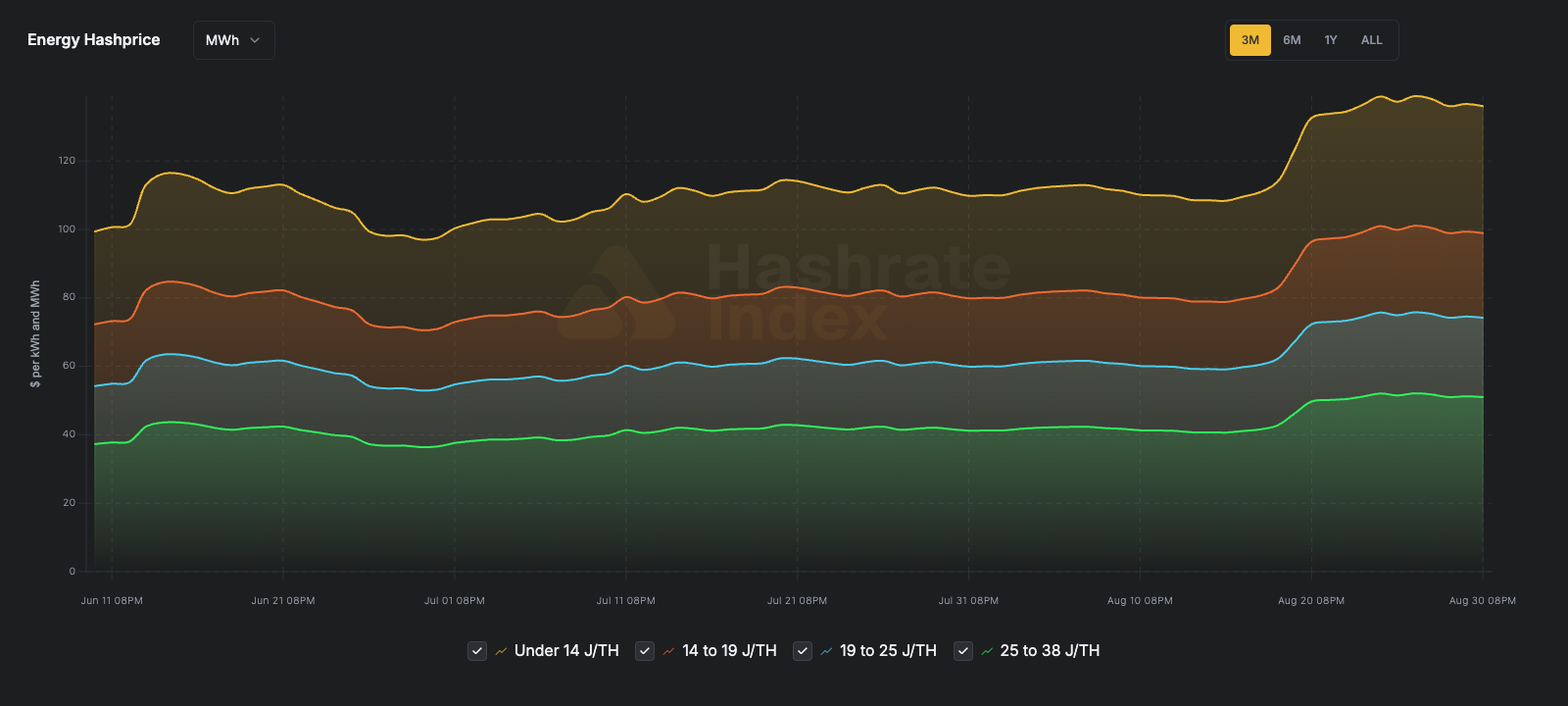
Broader Implications and Strategic Outlook
The events of the final week of August 2026 highlight a mature, if challenging, stage of the Bitcoin mining lifecycle. The shift toward higher hashrate capacity is no longer just an arms race of power consumption; it is an exercise in resource optimization. With the network difficulty maintaining its trajectory and transaction fees providing minimal support, the industry is entering a phase where the "cost-per-hash" is the most vital metric in the boardroom.
As the industry moves into September, the focus will likely remain on the impact of upcoming energy pricing models and the potential for a recovery in on-chain activity to boost fee revenue. For now, the narrative is one of resilience: miners continue to secure the network at unprecedented levels, proving that even in a low-margin environment, the commitment to the Proof-of-Work consensus mechanism remains the foundational pillar of the Bitcoin ecosystem.
The industry’s ability to navigate these thin margins will define the landscape for the remainder of the year. As larger, more capitalized players continue to dominate the hashrate, the barrier to entry for smaller, inefficient operators grows increasingly formidable. The data from this week confirms that while the network is stronger than ever, the business of mining has transitioned into a highly competitive, utility-like sector where operational excellence is the only path to sustainable profitability.