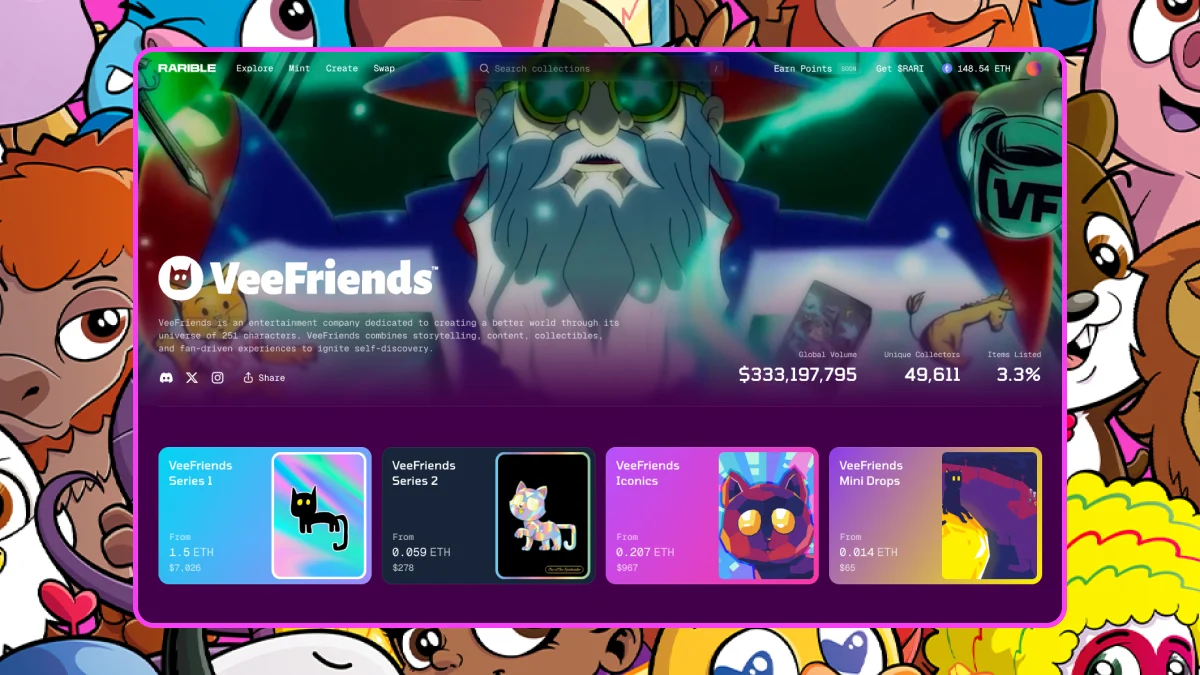
As commerce moves onchain, storefronts are rapidly evolving into the new front page for every major brand. This shift marks a departure from traditional e-commerce paradigms, signaling a future where digital ownership, decentralized infrastructure, and direct-to-consumer engagement converge. Rarible, a prominent player in the non-fungible token (NFT) and digital asset space, has officially entered this new era by unveiling its branded onchain storefront initiative, with the inaugural partnership featuring the popular media and entertainment brand VeeFriends.
The Strategic Evolution of Digital Marketplaces
The concept of the onchain storefront represents a significant architectural shift from the aggregated marketplace model that dominated the early Web3 era. Historically, users navigated to centralized hubs where assets from thousands of creators were listed in a uniform, utilitarian interface. Rarible’s new infrastructure seeks to replace this anonymity with brand-centric hubs, allowing entities to curate their own digital environments.
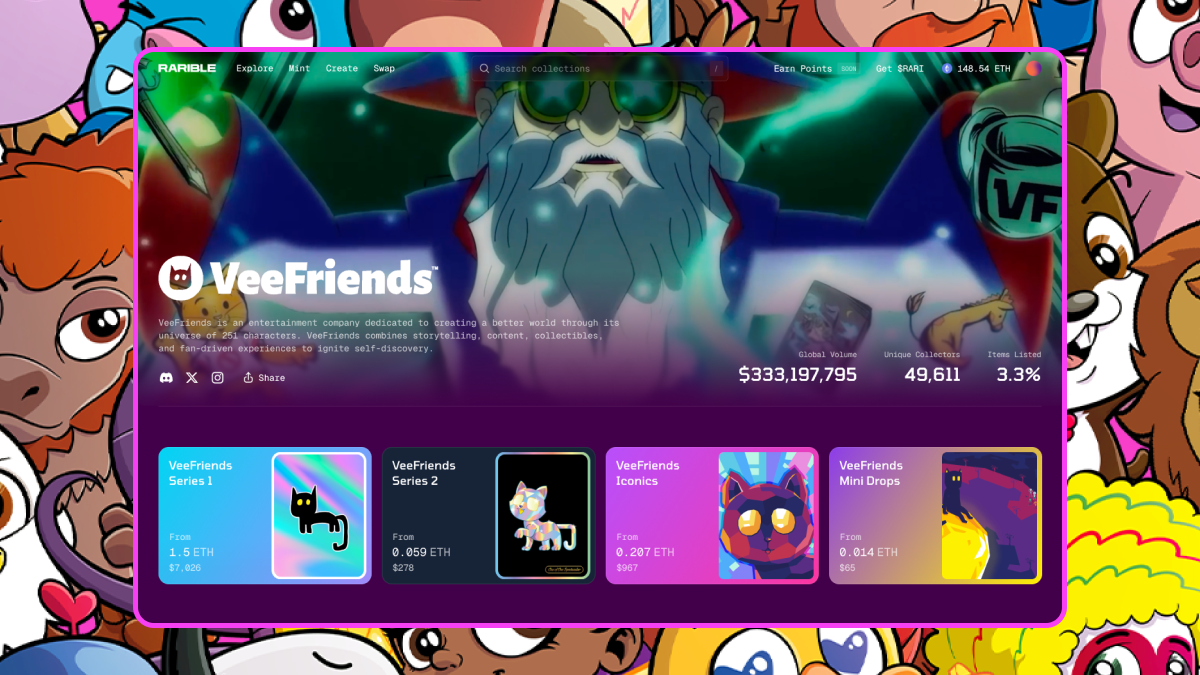
VeeFriends, founded in 2021 by entrepreneur Gary Vaynerchuk, serves as the pilot for this initiative. Spanning a vast ecosystem of over 250 characters—each represented through collectibles, intellectual property, comics, and exclusive real-world experiences—VeeFriends has built a community centered on storytelling. By transitioning these assets into a dedicated, branded storefront on Rarible, the company is effectively decentralizing its point-of-sale while maintaining the aesthetic and narrative integrity of its universe.
Chronology of the Integration
The launch of the VeeFriends storefront follows a period of rapid prototyping within the Rarible engineering team. The development timeline began with an assessment of the friction points that prevent mainstream consumers from participating in onchain commerce.
In early 2025, the team finalized the integration of the VeeFriends Wallet, powered by the Privy infrastructure. This integration was critical to the project’s success, as it allows users to authenticate via email—a necessary step for bridging the gap between legacy web users and blockchain-native participants. Following this, the integration of Crossmint provided the payment processing layer, enabling credit card, Apple Pay, and Google Pay functionality. This multi-layered approach ensures that the user journey is indistinguishable from standard e-commerce platforms like Shopify, despite the backend transactions occurring entirely on the blockchain.

Supporting Data and Technical Infrastructure
The shift toward branded storefronts is supported by an increasing demand for specialized digital environments. According to market data from the last fiscal year, brands that cultivate dedicated community hubs experience a 30% higher retention rate in digital engagement compared to those relying solely on third-party aggregate platforms.
Rarible’s storefront architecture utilizes a modular design that allows for the following:
- Customization: Brands can implement bespoke UI/UX designs that align with their visual identity.
- Decentralized Settlement: Transactions occur directly on-chain, eliminating the reliance on centralized intermediary escrow services.
- Incentive Alignment: Through the $RARI rewards program, facilitated by the RARI Foundation, active participants on these storefronts are eligible for ecosystem-wide rewards, effectively gamifying the shopping experience.
This infrastructure is not merely a display case; it acts as a data-rich environment where brands can track ownership history, secondary market royalties, and community sentiment through transparent, immutable ledgers.
Industry Implications and Market Analysis
The move to onchain commerce has profound implications for how brands protect and leverage their intellectual property. By moving away from centralized databases, brands are insulating themselves against the platform risk associated with legacy tech giants. If a company owns its storefront onchain, it effectively controls its customer database and sales records in a way that is portable and resilient to shifts in platform policy.
Market analysts suggest that this trend reflects a broader "de-platforming" movement in the retail sector. As consumers grow more accustomed to digital ownership—whether through gaming items, loyalty tokens, or digital collectibles—the demand for a professionalized, branded storefront interface has surged. Companies that adopt these tools early position themselves as leaders in the digital economy, capturing the "first-mover advantage" in a landscape that is quickly moving toward tokenized assets as a standard component of brand loyalty programs.
Official Stance and Future Outlook
While representatives from Rarible have maintained a focus on the immediate functionality of the VeeFriends launch, the broader roadmap is clear. The company has announced the impending release of "Rarible Studio," a dashboard designed to democratize the creation of these storefronts. Rarible Studio aims to provide a "no-code" solution for businesses, allowing them to manage their digital inventories, set royalty structures, and update their storefronts without needing deep technical expertise in smart contract deployment.
Industry observers note that the success of this model will depend on the scalability of the underlying blockchain networks. As Rarible expands its offerings to include more iconic brands in the coming months, the reliance on efficient, low-gas networks will become paramount to maintaining the seamless, frictionless experience promised to the end-user.
The Future of Brand Commerce
The transition of the internet into an "onchain" state is no longer a theoretical exercise. It is a practical migration of commerce, community, and culture into a format that is natively interoperable. By treating the storefront as the front page of a brand, Rarible is effectively arguing that the website of the future is not just a brochure, but a functional economic engine.
As more brands migrate to this model, the role of the traditional e-commerce intermediary may diminish. In its place, specialized, brand-owned infrastructure—like the one debuted by VeeFriends—will likely become the standard for any entity looking to maintain direct, authentic, and transparent relationships with its digital audience.

For the average consumer, the distinction between a traditional online store and a blockchain-powered one will continue to blur, until eventually, the technology behind the transaction becomes invisible. The launch of the VeeFriends storefront serves as a milestone in this transition, proving that the tools for a decentralized, brand-centric digital economy are not only ready for deployment but are already being integrated into the cultural fabric of the internet.
Conclusion
The collaborative effort between Rarible and VeeFriends underscores a pivotal moment for digital commerce. By prioritizing user experience through seamless onboarding, payment flexibility, and brand-aligned design, the initiative provides a blueprint for future brand-led onchain projects. As the ecosystem matures and tools like Rarible Studio become more accessible, the barriers to entry for brands looking to claim their space on the blockchain will continue to fall. The digital storefront is no longer a future concept; it is the current frontier of brand engagement.