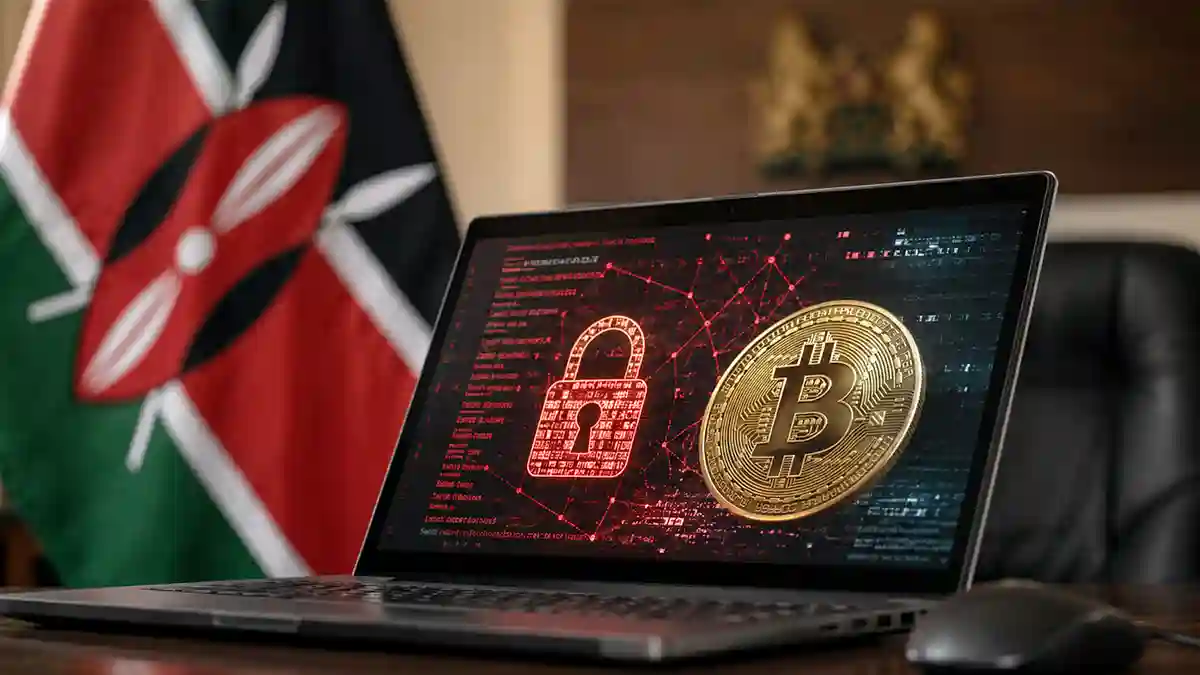
The official website of Kenyan President William Ruto, president.go.ke, was successfully targeted by cybercriminals on July 18, 2026, resulting in a high-profile defacement and a subsequent demand for a ransom to be paid in Bitcoin. The breach, which was first brought to public attention by local media outlets including NTV Kenya, sent shockwaves through the nation’s administrative capital, Nairobi, prompting an immediate and high-level investigation by the country’s top cybersecurity authorities. According to reports and digital screenshots captured during the incident, the attackers gained unauthorized access to the web server, replaced the homepage with a ransom note, and demanded a payment of 5 BTC—valued at approximately $324,000 USD or 52 million JPY at the time of the incident—in exchange for restoring access and returning control of the domain to the government.
The Ministry of Information, Communications, and the Digital Economy was forced into an emergency response posture as the site remained inaccessible to the public for several hours. Cabinet Secretary William Kabogo confirmed the security breach through a formal statement issued on the social media platform X, formerly Twitter. In his address to the nation, Kabogo emphasized that while the website had been compromised, the government’s primary digital infrastructure remained intact. He further stated that the ICT Authority and the National Computer and Cybercrimes Coordination Committee (NC4) had been deployed to conduct a comprehensive forensic analysis of the breach, identify the point of entry, and mitigate any further risks to the state’s digital assets.
Chronology of the Cyberattack and Government Response
The timeline of the attack suggests a well-coordinated effort to maximize visibility and pressure on the administration. Initial reports of technical glitches on the presidential portal began circulating early on the morning of July 18. By mid-morning, the standard interface of president.go.ke had been replaced by a black screen featuring a message from the hackers. The note explicitly stated that the site’s databases and administrative controls had been "seized" and would only be released upon the confirmation of a 5 BTC transfer to a specific cryptocurrency wallet address.
By 1:00 PM local time, the ICT Ministry had successfully initiated its emergency protocols. The ministry’s technical team took the decision to take the website completely offline to prevent the attackers from using the portal as a springboard for further lateral movement within the government’s internal network. During this period, Cabinet Secretary Kabogo’s office maintained communication with the public, asserting that the "incident was being handled with the highest level of urgency." By the evening of July 18, the government reported that restoration efforts were in their final stages, although access to the site remained restricted to internal testing to ensure that no backdoors or malicious scripts remained within the system’s code.
Technical Analysis and Forensic Investigation
The nature of the attack appears to be a combination of a web defacement and a high-stakes extortion attempt. Cybersecurity experts in Nairobi suggest that the attackers likely exploited a vulnerability in the Content Management System (CMS) or a compromised administrative credential to gain entry. While the hackers claimed to have control over sensitive data, the government has been quick to downplay the severity of the data exposure. In his official statement, CS Kabogo noted that "there is currently no evidence to suggest that sensitive or confidential state data has been exfiltrated or compromised."
The ICT Authority has launched a "comprehensive forensic audit" to determine the exact methodology used by the perpetrators. This investigation is expected to examine server logs, traffic patterns leading up to the breach, and the origin of the IP addresses used during the unauthorized login. Forensic investigators are also working in tandem with international cyber-intelligence agencies to track the Bitcoin wallet address provided by the hackers. Although the pseudo-anonymous nature of Bitcoin makes tracking difficult, modern blockchain analytics tools allow authorities to monitor any movement of the funds to centralized exchanges where "Know Your Customer" (KYC) protocols might reveal the identity of the account holders.
The Role of Cryptocurrency in Modern Extortion
The demand for 5 BTC highlights a growing trend of cybercriminals targeting sovereign entities with cryptocurrency-based ransom demands. Bitcoin remains the preferred medium for such activities due to its borderless nature and the speed with which assets can be moved across jurisdictions. For the Kenyan government, this incident is particularly poignant as the country has been actively moving toward the formalization and regulation of the digital asset sector.
Recent reports indicate that the Kenyan government has been preparing a legislative framework to legalize and regulate virtual assets, with a target implementation date of January 2025. The National Treasury, led by Cabinet Secretary John Mbadi, has previously expressed that while the risks of money laundering and fraud are significant, the economic potential of blockchain technology cannot be ignored. This cyberattack, however, may provide ammunition for skeptics who argue that the nation’s digital infrastructure is not yet robust enough to handle the complexities and security risks associated with widespread cryptocurrency adoption.
Historical Context and Previous Vulnerabilities
This is not the first time Kenya’s digital infrastructure has faced significant challenges. In July 2023, the "eCitizen" portal—a centralized platform for over 5,000 government services—was hit by a massive Distributed Denial of Service (DDoS) attack claimed by a group calling itself "Anonymous Sudan." That attack caused widespread disruption to government operations, affecting everything from passport applications to business registrations.
The breach of the presidential website in 2026 suggests that despite increased investment in cybersecurity, the "Silicon Savannah"—a nickname for Kenya’s burgeoning tech ecosystem—remains a prime target for both domestic and international threat actors. The presidential portal is a symbol of national sovereignty and administrative transparency; a successful attack on such a high-profile site is often intended more for psychological impact and reputational damage than for actual data theft.
Broader Implications for National Security and Public Trust
The implications of this breach extend far beyond the temporary unavailability of a website. For the Ruto administration, the attack is a significant embarrassment that raises questions about the security of other critical infrastructure, such as the national power grid, the banking sector, and the integrated population registration system. If a presidential portal can be defaced so easily, the public may begin to doubt the safety of their personal data stored in other government databases.
Furthermore, the incident may impact Kenya’s standing as a regional leader in technology. As the country seeks to attract foreign direct investment (FDI) in its ICT sector, maintaining a reputation for robust cybersecurity is essential. International tech giants and financial institutions require a stable and secure digital environment to operate. A successful ransom attempt on the head of state’s website could signal to investors that the country’s cyber-defenses are lagging behind its digital ambitions.
Future Outlook and Mitigation Strategies
In the wake of the attack, the Kenyan government is expected to accelerate the implementation of the National Cybersecurity Strategy. This may include mandatory security audits for all government websites, the adoption of zero-trust architecture, and enhanced training for IT personnel across all ministries. There is also a strong likelihood that the government will seek to strengthen its cooperation with the FBI’s Cyber Division and Interpol to create a more formidable deterrent against international cyber-syndicates.
As the forensic investigation continues, the focus will remain on identifying the perpetrators and ensuring that such a breach does not occur again. The administration has reiterated its stance that it will not negotiate with cyber-terrorists or pay any form of ransom, as doing so would only embolden future attackers. For now, the Kenyan digital landscape remains on high alert, serving as a stark reminder that in the age of the digital economy, the most prestigious offices in the land are only as secure as their weakest line of code.
The incident serves as a global case study on the vulnerabilities of government digital portals and the evolving tactics of cyber-extortionists. As nations continue to digitize their administrative functions, the balance between accessibility and security becomes increasingly difficult to maintain. For Kenya, the path forward involves not just restoring a website, but rebuilding the digital trust that was compromised in the early hours of July 18.