
The landscape of professional 3D design and digital sculpting is undergoing a significant paradigm shift following Maxon’s announcement that its flagship software suites, Cinema 4D and ZBrush, will feature native touch support for Apple’s newly unveiled MacBook Pro equipped with the PROLED XDR display. This major software update, slated for release in late November, marks a pivotal moment in hardware-software integration for creative professionals. For years, Apple has maintained a strict division between its touch-enabled iOS and iPadOS ecosystems and its non-touch macOS lineup, resisting industry trends seen across Windows laptops. The introduction of touch input on a high-performance Apple laptop—powered by the new M5 Pro and M5 Max chips—signals a strategic pivot that bridges the tactile responsiveness of tablet workflows with the immense computational power of desktop-class systems.
A New Era of Hardware and Software Convergence
The announcement coincides with the launch of the MacBook Pro PROLED XDR, a machine boasting what industry experts are calling the most advanced laptop display ever manufactured. Featuring groundbreaking tandem OLED technology, the screen delivers industry-leading brightness, exceptional contrast ratios, and color accuracy calibrated for professional color grading and high-end visual effects pipelines.
Maxon’s upcoming software updates are designed to fully leverage this hardware leap. By introducing touch support to Cinema 4D and ZBrush, the company aims to eliminate the friction between conceptualizing a digital asset and manipulating it. While traditional input methods—the mouse, keyboard, and graphics tablet—will remain essential for precision work, direct touch input introduces a kinetic, intuitive layer to tasks such as camera navigation, viewport manipulation, and organic digital sculpting.
This development builds upon the success of ZBrush for iPad, which proved that tactile, finger-and-stylus-based sculpting workflows could be successfully translated to mobile hardware. By bringing similar capabilities to the MacBook Pro, Maxon is offering digital artists a unified ecosystem where they can transition seamlessly from mobile drafting to heavy-duty desktop production without losing the physical intimacy of touch-based creation.
Expanding into Spatial Computing: Apple Vision Pro Integration
In addition to touchscreen optimizations, Maxon is expanding its ecosystem into spatial computing through a deep integration with the Apple Vision Pro. Utilizing a new Spatial Preview API, Cinema 4D will soon allow artists to preview and interact with complex 3D models in immersive, life-size detail using the headset alongside a Mac running macOS and Mac Virtual Display.
This capability addresses a long-standing challenge in 3D design and architectural visualization: evaluating spatial scale, proportions, and lighting on a flat, two-dimensional monitor. Historically, designers had to rely on renders or specialized game engines to simulate how an object or interior would look in real life. The new Vision Pro integration bypasses these intermediate steps, allowing creators to step directly inside their virtual scenes in real time.
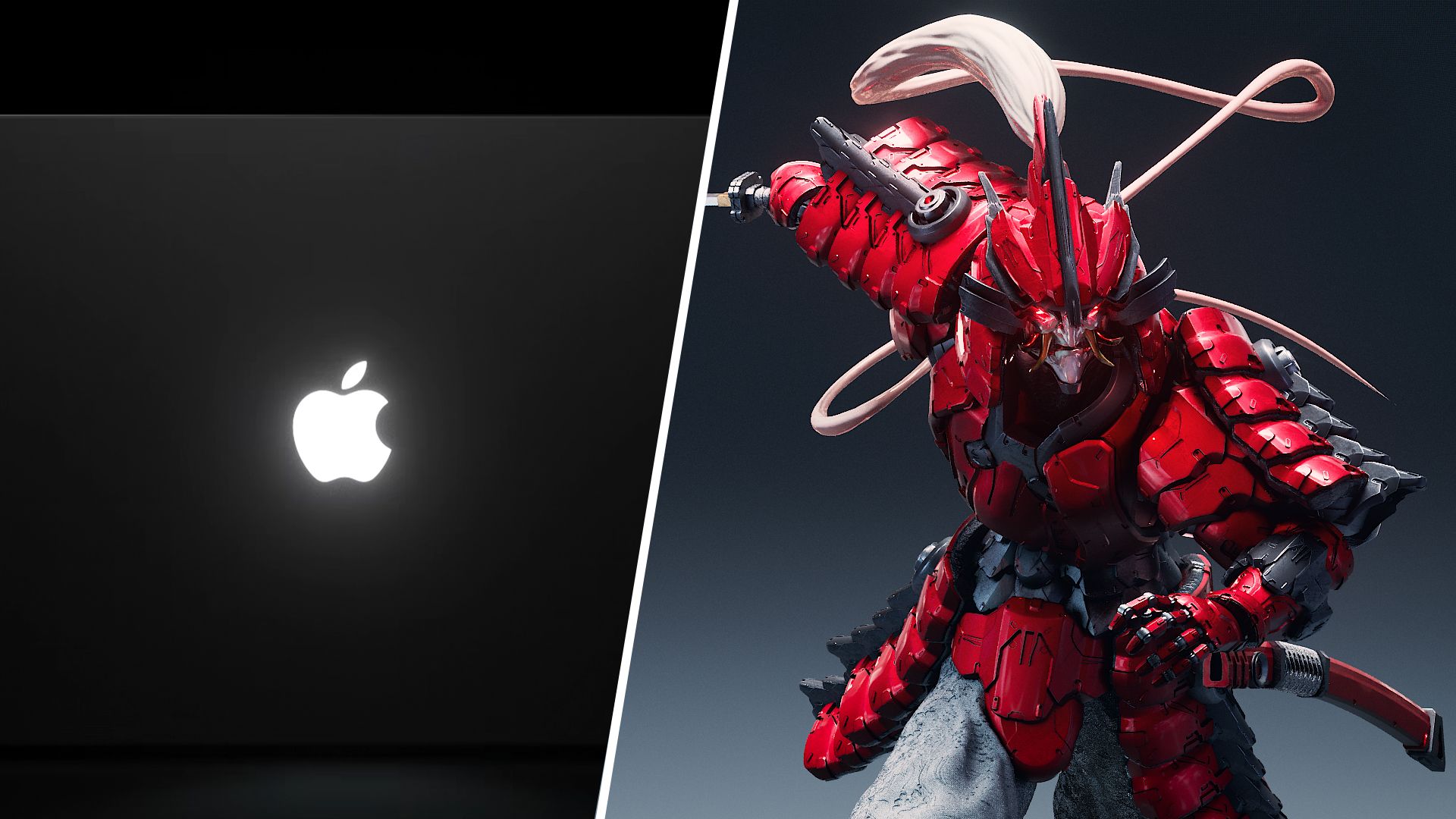
For industries such as architectural visualization, retail environment design, exhibition planning, and experiential marketing, this workflow offers unprecedented efficiency. Designers can virtually walk through a proposed building interior, evaluate the layout of a retail space, or examine industrial prototypes at a 1:1 scale before physical manufacturing or construction begins. Furthermore, this tool facilitates streamlined client collaboration. Stakeholders who lack technical familiarity with complex 3D navigation can don an Apple Vision Pro and inhabit the virtual space alongside the designer, offering more intuitive feedback and accelerating the approval process.
Chronology and Release Timeline
The rollout of these transformative features follows a carefully structured release schedule designed to align with Apple’s hardware deployment:
- November 6, 2026: Apple officially begins shipping the new MacBook Pro with the PROLED XDR Display. Cinema 4D and ZBrush will be immediately available to run on the new hardware using traditional input methods.
- Late November 2026: Maxon will officially release updates for Cinema 4D and ZBrush introducing native touch support for the MacBook Pro. Simultaneously, the Spatial Preview API for Apple Vision Pro (running visionOS 27) and Mac (running macOS 27) will roll out to users.
- Late 2026: Maxon is scheduled to launch a dedicated Cinema 4D iPad application, further cementing the cross-platform continuity of its professional software suite.
Industry Implications and Broader Market Impact
The convergence of touchscreen laptop hardware and spatial computing tools is expected to resonate far beyond traditional animation studios and visual effects houses. For over a decade, creative software developers have grappled with how to make complex 3D applications more accessible and efficient. While Windows manufacturers experimented with touchscreen laptops early on, the lack of standardized software support and inconsistent panel color accuracy limited their adoption among elite creative professionals.
Apple’s entry into touch-enabled pro laptops, backed by heavyweights like Maxon, changes the calculus. By ensuring that applications like Cinema 4D and ZBrush are optimized from the ground up for tactile interaction, Apple and Maxon are setting a new benchmark for professional hardware ergonomics.
Industry analysts suggest that this move could accelerate the adoption of hybrid workflows across multiple creative sectors. Freelance artists, who often rely on a single mobile workstation for both on-set supervision and heavy studio rendering, stand to benefit significantly from a device that functions as a traditional power workstation, a sketch tablet, and a spatial preview terminal all at once.
As the official release dates approach, the creative technology sector will be closely monitoring how these tools perform in real-world production environments. If successful, the integration of touch input and spatial computing could redefine the standard toolset for digital artists, bridging the gap between imagination and digital execution more fluidly than ever before.
