
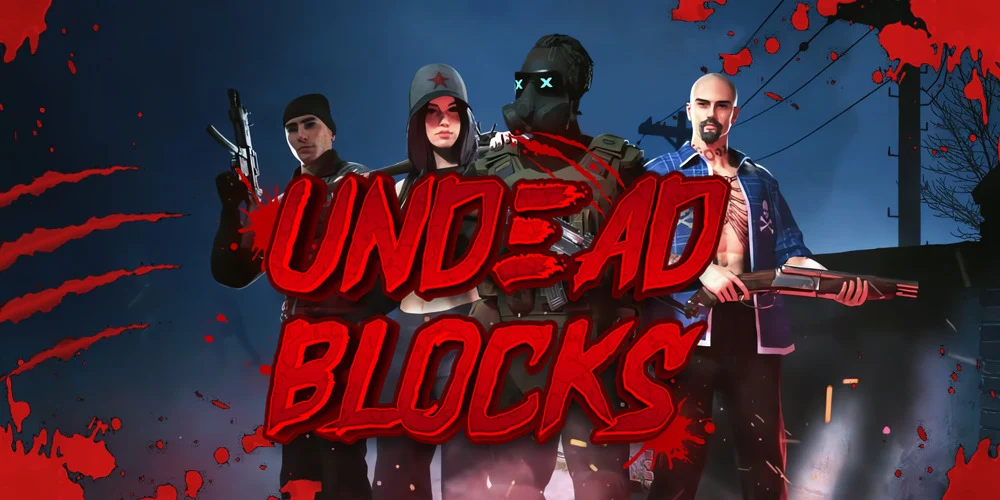
The landscape of blockchain-based gaming has experienced a significant maturation phase over the past several years, shifting away from speculative models toward sustainable, skill-driven economies. At the forefront of this evolution is Undead Blocks, a premier first-person shooter (FPS) survival game developed by Wagyu Games. Designed as a pioneering kill-to-earn ecosystem, the platform allows players to utilize high-end controller support, engage in intense multiplayer configurations, and earn digital assets through zombie combat. Backed by prominent industry venture capitalists and strategic partnerships—including a high-profile collaboration with GameStop NFT—Undead Blocks is rapidly scaling its infrastructure to accommodate thousands of new players across multiple platforms.

The journey of Undead Blocks began with a vision to bridge the gap between AAA gaming quality and Web3 utility. As traditional gamers historically resisted blockchain integrations due to complex onboarding processes and sub-par gameplay mechanics, Wagyu Games adopted a platform-agnostic, skill-agnostic, and crypto-agnostic approach. This philosophy ensures that players can enjoy a fluid, immersive experience regardless of their familiarity with cryptocurrencies or decentralized finance (DeFi). Over recent months, the development team has achieved major milestones, culminating in the announcement of Undead Mobile, which brings the frantic zombie-slaying action directly to mobile browsers, Apple iOS, and Google Play stores.
To understand the trajectory of Undead Blocks, one must examine its structured rollout and diverse game modes. The ecosystem is engineered to cater to various playstyles, ranging from casual solo players to competitive esports athletes. The primary gameplay modes—Solo, Squads, SpeedRun, and Massacre—each offer unique mechanics designed to test player reflexes, tactical coordination, and survival instincts.

The Solo mode provides a traditional PvE (Player versus Environment) survival experience. Players drop into Round 1 with basic weaponry, fighting off increasingly difficult waves of the undead. As the rounds progress, players must manage ammunition, unlock new areas of the map, upgrade their gear, and optimize their loadouts to survive the relentless hordes. This mode serves as the foundational testing ground for new players to hone their skills without the pressures of team coordination.
For players seeking collaborative gameplay, the Squads mode accommodates groups of two to four players. Teamwork is essential in Squads, as players must revive fallen comrades, share ammunition, and coordinate defensive positions against overwhelming zombie attacks. This mode leverages multiplayer matchmaking to foster a strong community spirit, encouraging players to strategize and climb the global leaderboards together.

SpeedRun mode introduces a competitive element to the survival genre, challenging players to clear specific objectives or survive waves as quickly as possible. Designed with esports integration in mind, SpeedRun appeals to high-skill players who thrive under time constraints. By recording and verifying speedrun times on-chain, the ecosystem establishes a transparent and tamper-proof competitive ranking system, opening doors for future tournaments and prize pools.
Massacre mode takes the intensity of SpeedRun and combines it with the cooperative mechanics of Squads, delivering a high-stakes, fast-paced environment where elite players can showcase their mastery. These diverse game modes are deeply integrated with the platform’s NFT utility, allowing weapon skins and digital collectibles to provide tangible in-game advantages and aesthetic customization.

A cornerstone of the Undead Blocks economy is its dual-token model, featuring $ZBUX and $UNDEAD. The $ZBUX token serves as the primary utility and reward currency within the game. Players earn $ZBUX by slaying zombies, participating in daily challenges, and successfully extracting from various game modes. These tokens can be utilized to purchase ZBOXes—digital mystery boxes containing rare weapon NFTs—or swapped for other digital assets via decentralized exchanges (DEXs) such as Uniswap.
Complementing $ZBUX is the $UNDEAD governance token. $UNDEAD holders play a crucial role in decentralizing the ecosystem, participating in DAO (Decentralized Autonomous Organization) governance, voting on future game updates, and directing treasury allocations. Furthermore, the integration of Hedera ($HBAR) as a supported network expands the project’s multi-chain capabilities, offering users faster transaction speeds and lower gas fees compared to traditional layer-one networks.

The integration of Non-Fungible Tokens (NFTs) within Undead Blocks is structured to provide genuine utility rather than superficial speculation. Players can acquire weapon NFTs ranging from standard pistols to high-powered assault rifles. These weapon NFTs are not merely cosmetic; they directly influence a player’s earning potential and combat effectiveness in the kill-to-earn modes.
Acquiring these digital assets is streamlined through standard cryptocurrency onboarding procedures. Players typically purchase Ethereum (ETH) via centralized or decentralized exchanges, transfer the funds to a Web3 wallet such as MetaMask, and utilize marketplaces like OpenSea or the official Undead Blocks marketplace to acquire weapon NFTs. The platform’s commitment to interoperability ensures that players can seamlessly connect their wallets, equip their purchased weapons, and track their earnings through an intuitive user dashboard.

The rapid development and expansion of Undead Blocks are largely attributed to the strategic guidance of Wagyu Games and its leadership team, including Grant Haseley. The project has successfully secured funding from prominent venture capital firms, signaling strong institutional confidence in the sustainability of skill-based Web3 gaming models. By aligning the interests of traditional gamers, crypto enthusiasts, and institutional investors, Undead Blocks has positioned itself as a resilient player in the blockchain gaming sector.
Looking toward the future, the roadmap for Undead Blocks outlines ambitious milestones for 2025 and 2026. The primary focus centers on the full commercial release of Undead Mobile, expanding the player base to millions of smartphone users worldwide. Additionally, the development team plans to introduce advanced multiplayer features, cross-platform tournaments, and deeper integrations with the Hedera network to enhance overall network performance.

In summary, Undead Blocks represents a paradigm shift in how blockchain gaming can be successfully executed. By prioritizing engaging gameplay, robust multi-chain tokenomics, and accessible mobile integration, the platform addresses the historical criticisms of Play-to-Earn models. As the ecosystem continues to scale through strategic partnerships, technological upgrades, and community-driven governance, Undead Blocks sets a new benchmark for the future of interactive entertainment in the Web3 era.
