
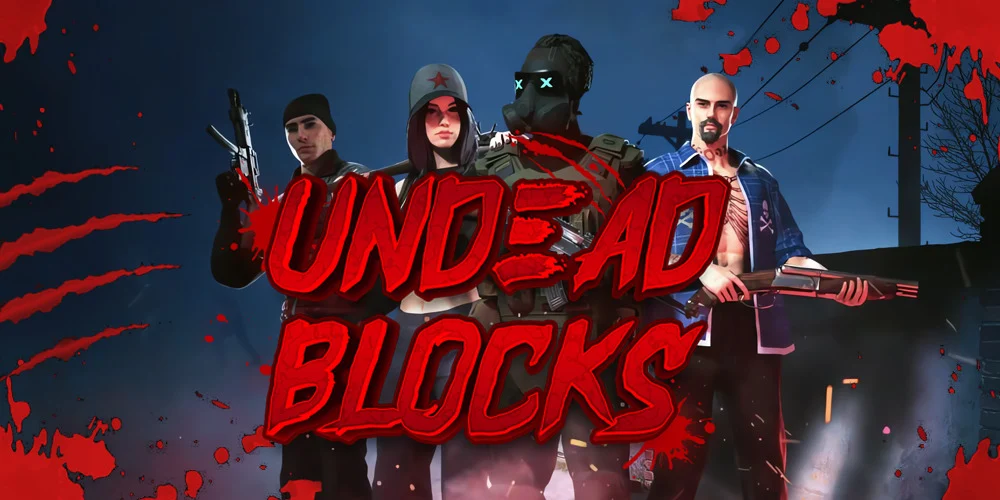
The landscape of Web3 gaming is undergoing a significant transformation, driven by the convergence of high-fidelity graphics, accessible multiplayer frameworks, and cross-platform compatibility. At the forefront of this evolution is Undead Blocks, a premier first-person shooter (FPS) survival game developed by Wagyu Games. Originally launched as a browser-based and PC title, the project has steadily expanded its footprint across multiple blockchains, gaming consoles, and mobile ecosystems. Backed by industry giants such as Animoca Brands and bolstered by strategic partnerships with major retail and gaming entities like GameStop NFT, Undead Blocks has positioned itself as a benchmark for sustainable play-to-earn (P2E) economies in the blockchain gaming sector.

The development of Undead Blocks represents a paradigm shift away from traditional, isolated cryptocurrency games toward a more inclusive, platform-agnostic model. By breaking down barriers to entry—such as requiring expensive hardware or exclusive console ownership—the development team has prioritized user acquisition, retention, and long-term economic stability. As the gaming industry increasingly adopts decentralized assets, projects that successfully bridge the gap between traditional Web2 gamers and Web3 enthusiasts will likely dictate the future of interactive entertainment.
The Evolution of Undead Blocks: From PC to Cross-Platform Dominance
Undead Blocks was conceived with a clear objective: to deliver a AAA-quality, zombie-survival FPS experience where players could genuinely monetize their in-game skill. Historically, blockchain gaming faced severe criticism for prioritizing tokenomics over core gameplay mechanics, resulting in high churn rates and unsustainable economic models. Wagyu Games sought to reverse this trend by designing a game that is fun, challenging, and engaging regardless of whether a player chooses to interact with the underlying cryptocurrency.

The game’s architectural philosophy is built on three core pillars: skill agnosticism, platform agnosticism, and crypto agnosticism. This means that players of varying skill levels can find competitive enjoyment, the game can be accessed across a multitude of devices, and users are not forced to navigate complex blockchain protocols just to enjoy a round of zombie slaying. The integration of controller support for PlayStation 5 and Xbox One controllers via Bluetooth further bridges the gap between console gaming and browser- or mobile-based Web3 titles.
Comprehensive Game Modes and Competitive Structures
Undead Blocks offers a diverse array of game modes designed to cater to different player preferences, ranging from casual solo survival to highly competitive esports tournaments. Each mode utilizes unique mechanics, reward systems, and NFT integrations to keep the player base engaged.

Solo Mode
In Solo Mode, players face endless waves of the undead in a traditional PvE (Player versus Environment) setting. Designed as a training ground and a test of endurance, Solo Mode allows players to hone their shooting skills, test different weapon loadouts, and strategize weapon upgrades. While the stakes are personal, the mode tracks performance metrics that translate into progression milestones within the broader ecosystem.
Squads Mode
Squads Mode expands the gameplay loop by allowing teams of two to four players to band together in multiplayer sessions. This cooperative format introduces tactical depth, as players must coordinate weapon drops, cover fire, and defensive strategies to survive higher-tier waves. Squads Mode has proven to be a primary driver for community building, encouraging social play and collaborative ecosystem participation.

SpeedRun Mode
For competitive players and aspiring esports athletes, SpeedRun Mode introduces a time-trial element to the zombie-survival genre. Players race against the clock to clear specific objectives or survive designated waves as quickly as possible. SpeedRun tournaments offer substantial prize pools, drawing top-tier talent from the global gaming community and establishing Undead Blocks as a viable contender in the emerging Web3 eSports arena.
Massacre Mode
Massacre Mode is designed for high-intensity, high-reward gameplay. It combines elements of SpeedRun and Squads modes into a single, high-stakes environment where players can maximize their earnings through exceptional performance and efficient zombie elimination. This mode is particularly favored by elite players looking to optimize their daily token yields.

NFT Game Modes
Integrating digital assets directly into the gameplay loop, NFT Game Modes provide weapon-tier multipliers and exclusive cosmetic rewards for NFT holders. These modes ensure that players who invest in the ecosystem’s digital collectibles receive tangible in-game advantages and enhanced earning potential, while maintaining balanced matchmaking for free-to-play participants.
The Dual-Token Economy: $UNDEAD and $ZBUX
At the heart of the Undead Blocks ecosystem is a sophisticated dual-token economic model designed to ensure long-term stability and liquidity. Unlike single-token economies that are frequently vulnerable to hyper-inflation and sudden market crashes, Undead Blocks separates utility from governance.

$UNDEAD Token
$UNDEAD serves as the governance token of the ecosystem. Holders of $UNDEAD can participate in key decision-making processes regarding game updates, tournament structures, and future roadmap milestones. The token is traded on decentralized exchanges (DEXs) such as Uniswap, allowing for transparent price discovery and deep liquidity. Furthermore, the integration of $UNDEAD with Hedera Hashgraph highlights the project’s multi-chain ambitions, offering lightning-fast transactions and minimal fees for enterprise-grade gaming operations.
$ZBUX Token
$ZBUX acts as the primary in-game currency, used by players to purchase consumables, upgrade weapons, and claim rewards earned during gameplay. Players can convert their earned $ZBUX into $UNDEAD or other supported cryptocurrencies, creating a seamless financial loop that rewards skill and time investment. The stability of $ZBUX is maintained through carefully calibrated sinks and sources within the game economy, preventing excessive token dumping and preserving the purchasing power of active participants.

NFT Integration and the Loot Coffin System
Digital ownership is a foundational element of Undead Blocks, allowing players to truly own their in-game assets. Weapons, character skins, and cosmetic items are minted as NFTs on the Ethereum blockchain, ensuring verifiable scarcity and interoperability.
The primary mechanism for acquiring weapon NFTs is through the "Loot Coffin" (ZBOX) system. Players can purchase or earn ZBOXes through gameplay, opening them to reveal random weapon NFTs of varying rarities—ranging from common pistols to legendary assault rifles. These weapon NFTs can be used in-game, traded on secondary marketplaces like OpenSea, or rented out to other players through upcoming scholarship programs.

Weapon rentals represent a major innovation for the project, enabling scholarship managers and NFT owners to lease their digital arsenals to skilled players who may not have the capital to purchase high-tier weapons upfront. This creates a symbiotic micro-economy where asset owners earn passive income, and players gain access to competitive gear without heavy upfront investments.
Strategic Partnerships, Funding, and Market Expansion
The rapid development and scaling of Undead Blocks would not have been possible without substantial backing from prominent venture capital firms and strategic industry partners. Animoca Brands, a global leader in gamification and blockchain ecosystems, leads a roster of investors that instills strong confidence in the project’s long-term viability.

A pivotal milestone in the game’s commercial expansion was its collaboration with GameStop NFT. This partnership introduced thousands of traditional and Web2 gamers to the Undead Blocks ecosystem, significantly expanding the user base and validating the project’s cross-platform accessibility strategy. By embracing a "crypto-agnostic" approach—allowing players to engage with the game without needing to understand complex wallet mechanics immediately—Undead Blocks successfully lowered the barrier to entry for mainstream audiences.
Roadmap and Future Outlook
Looking toward the future, Wagyu Games has outlined an ambitious roadmap that extends well into 2026. Following the successful rollout of browser-based gameplay and early mobile optimizations, the development team is actively preparing for the official launch of the Undead Mobile application across the Apple App Store and Google Play Store in the second quarter.

The mobile expansion is expected to act as a massive catalyst for user acquisition, bringing multiplayer zombie survival to millions of smartphone users worldwide. Concurrently, the integration of Hedera Hashgraph and cross-chain compatibility initiatives will ensure that the game remains scalable, secure, and cost-effective for players regardless of their preferred blockchain network.
Conclusion
Undead Blocks has successfully redefined what a play-to-earn shooter can achieve by refusing to compromise on gameplay quality. By combining AAA-tier FPS mechanics, a robust dual-token economy, sustainable NFT utility, and aggressive multi-platform expansion, Wagyu Games has crafted a resilient ecosystem. As the broader blockchain gaming industry matures, Undead Blocks stands out as a prime example of how digital ownership, competitive integrity, and engaging design can successfully coalesce into a sustainable entertainment product for the future.
