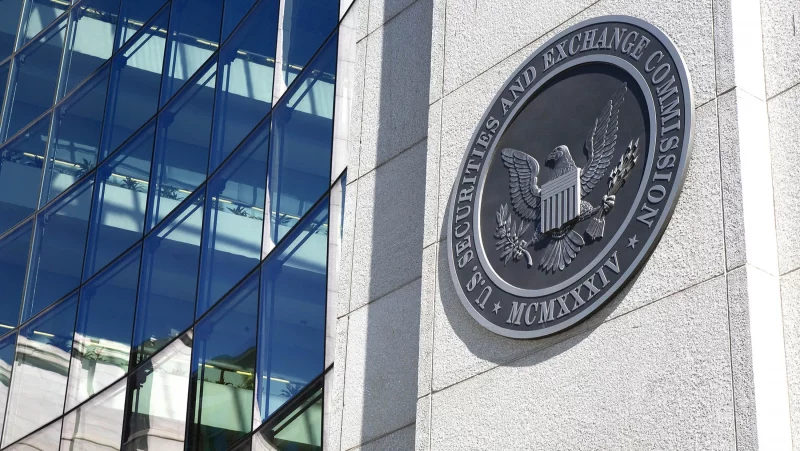
The Division of Corporation Finance at the U.S. Securities and Exchange Commission (SEC) released a comprehensive set of Frequently Asked Questions (FAQs) this past Friday, providing long-awaited clarity on the intersection of federal securities laws and evolving digital asset practices. The document serves to refine the SEC’s stance on token buybacks, liquid staking receipt tokens, and the ongoing maintenance of decentralized blockchain networks. While this guidance does not constitute binding law and has not undergone formal Commission approval, it offers the most granular insight to date into how agency staff interpret the application of the landmark Howey Test to modern decentralized finance (DeFi) mechanisms.
Contextualizing the Regulatory Landscape
For years, the crypto industry has operated in a state of regulatory ambiguity, often citing the lack of specific guidelines as a barrier to institutional adoption and product development. The SEC’s primary framework for determining whether a digital asset qualifies as an "investment contract"—and thus a security—remains the Supreme Court’s 1946 ruling in SEC v. W.J. Howey Co. Under the Howey Test, an asset is classified as a security if it involves an investment of money in a common enterprise with a reasonable expectation of profits to be derived from the efforts of others.
The new FAQs build upon a March interpretive release that sought to delineate the boundaries between digital commodities and securities. By addressing specific operational behaviors such as buybacks and protocol upgrades, the SEC staff is attempting to bridge the gap between legacy financial concepts and the realities of blockchain-based governance. Industry participants have frequently raised concerns that standard business practices—such as buying back tokens to reduce supply or updating network software—could inadvertently trigger "essential managerial effort" labels, subjecting these protocols to stringent registration requirements under the Securities Act of 1933.
Clarifications on Token Buybacks
One of the most significant aspects of the new guidance concerns the mechanism of token buybacks. In traditional corporate finance, share buybacks are a standard tool for returning value to shareholders and signaling confidence in the firm’s future. In the crypto sector, buybacks have often been viewed with suspicion by regulators who worry they are designed to manipulate prices or imply a promise of future profit.
The SEC staff clarified that for a functional, decentralized network, the mere announcement of a token buyback involving a non-security asset does not, by itself, satisfy the "efforts of others" prong of the Howey Test. This is a vital distinction. If the network has reached a state of sufficient decentralization or operational maturity, the buyback is viewed as a feature of the protocol rather than a managerial strategy intended to enrich holders through the oversight of a central authority.
However, the guidance introduces a crucial caveat regarding non-functional networks. If a project is in its developmental or "pre-functional" phase, the staff suggests that a buyback could be interpreted as part of an investment contract if it is presented as a method of generating yield or artificial returns. This reinforces the SEC’s long-standing view that the early stages of a project’s lifecycle carry a higher regulatory burden because investors are inherently reliant on the developers to deliver a functional product.
Liquid Staking and Digital Tools
The proliferation of liquid staking protocols—where users deposit tokens to earn yield and receive a "receipt" token in return—has created significant complexity for regulators. The SEC’s new FAQs attempt to categorize these receipt tokens as either "digital tools" or "digital commodities" depending on their underlying utility.
The staff indicated that a staking receipt token representing a digital commodity can be classified as a digital tool, provided the underlying asset itself is not subject to an investment contract. In this view, the receipt token serves merely as a record of ownership or a claim on the underlying staked asset. Furthermore, when the value of a staking receipt token is driven primarily by market supply and demand within a functional crypto ecosystem, it may be classified as a digital commodity rather than a security. This provides a potential pathway for liquid staking providers to operate without being classified as brokers or dealers of unregistered securities, provided they maintain operational neutrality.
Essential Managerial Efforts and Network Maintenance
A recurring point of contention has been the extent to which developers can continue to "improve" a network without turning it into a security. Many developers feared that any contribution to the codebase after a token launch could be construed as the "essential managerial effort" required by Howey.
The new guidance offers a measure of relief, stating that the act of maintaining, securing, or improving a functional network does not automatically constitute managerial effort. This acknowledges the reality of open-source software, where continuous updates are necessary for security and functionality. The staff further clarified that promoting a network’s current utility or capabilities does not, in isolation, constitute a promise of future profits. Even aspirational statements regarding future features are considered outside the scope of the Howey Test, provided those statements do not explicitly tie the success of those features to the potential for investor profit.
Secondary Market Operators and Promoter Status
The SEC also addressed the status of secondary trading platforms. There has been ongoing debate regarding whether operators of decentralized exchanges (DEXs) or secondary market aggregators could be considered "promoters" of the assets listed on their platforms. The staff clarified that the operation of a secondary market does not automatically confer promoter status upon a trading platform. Instead, the platform must meet the specific legal definition of a "promoter" under Securities Act Rule 405. This requirement necessitates a deeper involvement in the creation, organization, or financing of the issuer, rather than simply providing a venue for trade.
Chronology of Recent SEC Actions
The path to this guidance has been marked by several high-profile legal battles and policy shifts:
- 2017: The SEC issues the DAO Report, marking the first time the agency formally applied the Howey Test to a token offering.
- 2020-2022: A series of enforcement actions against major issuers, including Ripple (XRP) and various Initial Coin Offering (ICO) projects, solidifies the SEC’s stance on the securities classification of tokens sold during fundraising rounds.
- March 2023: The Division of Corporation Finance issues initial interpretations regarding the transition of tokens from securities to non-securities as networks become decentralized.
- May 2024: Following a period of industry lobbying and judicial pressure, the SEC staff releases the current FAQs, providing the most detailed technical guidance since the DAO Report.
Industry Implications and Future Outlook
Legal experts and market participants have largely reacted with cautious optimism. By defining clear "safe harbors" for operational behaviors, the SEC is providing a blueprint for compliant development. However, the reliance on the term "functional" suggests that the burden of proof remains on the project teams to demonstrate that their networks are sufficiently decentralized and operational to fall outside the scope of securities laws.
For institutional investors, this guidance represents a reduction in the "legal overhang" that has hindered investment in certain DeFi protocols. By clarifying that routine maintenance and standard token buybacks are not inherently problematic, the SEC has effectively narrowed the scope of what constitutes an investment contract in the secondary market.
Nevertheless, the fact that these FAQs do not carry the force of law means that the SEC could still initiate enforcement actions if they believe a project is using these features as a pretext to circumvent security regulations. The guidance is an interpretive tool for staff and should not be viewed as a permanent immunity from oversight.
As the industry moves forward, the focus will likely shift to the "functional" criteria. Projects will need to document their development processes and decentralization milestones with greater rigor to align with these new expectations. While this guidance does not resolve the broader debate over whether Congress should create a new asset class for digital tokens, it provides a functional framework for the current environment, allowing for continued innovation within the constraints of existing statutes. The crypto industry now has a clearer, if still complex, set of rules for navigating the SEC’s regulatory expectations.