
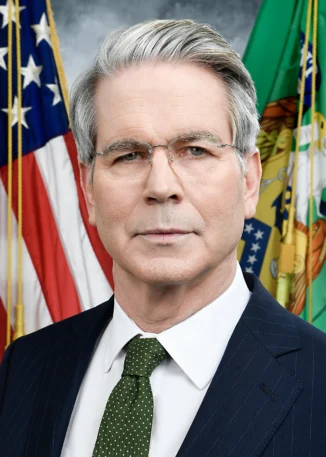
US Treasury Secretary Scott Bessent has officially placed the board of directors at Nvidia Corporation on a strict ten-day deadline to provide comprehensive answers regarding alleged failures in export-control compliance. The inquiry, formally issued on November 15, 2026, concerns reports that high-end artificial intelligence (AI) semiconductors—specifically those subject to rigorous federal restrictions—were illicitly routed to Chinese entities via Megaspeed, a Singapore-based intermediary. This development marks a significant escalation in the ongoing geopolitical struggle to restrict the flow of advanced computing power to foreign adversaries, shifting the focus from broad policy declarations to specific, actionable oversight of corporate supply chains.
The core of the Treasury’s concern lies in the potential for unauthorized access to technology deemed vital for national security. Current US export control regulations, implemented under the authority of the Commerce Department, explicitly prohibit the sale or transfer of advanced AI chips, such as the H100 and H200 tiers, to China. These semiconductors are considered "dual-use" technologies, meaning they possess the processing power necessary to train sophisticated large language models and perform complex cryptographic operations that could be repurposed for military advancement or state-led surveillance initiatives.
Chronology of the Regulatory Stand-Off
The controversy surrounding Megaspeed did not emerge in a vacuum. For months, intelligence reports and independent trade investigations have pointed toward a sophisticated network of resellers operating in Southeast Asia, leveraging free-trade zones to obscure the final destination of sensitive hardware.
According to sources familiar with the interagency discussions, the timeline of this escalation is as follows:
- Q1 2026: Initial intelligence reports suggest that Megaspeed, a Singaporean entity, began procuring Nvidia hardware in volumes disproportionate to the local market demand in Singapore.
- May 2026: Multiple federal agencies, including the Treasury and certain intelligence bureaus, reportedly recommended to the Department of Commerce that Megaspeed be added to the Entity List—a designation that effectively bars a company from receiving US-origin technology.
- August 2026: Despite these recommendations, no action was taken by the Commerce Department, leading to growing friction within the executive branch regarding the efficacy of current enforcement mechanisms.
- November 15, 2026: Treasury Secretary Scott Bessent issues a formal demand to Nvidia’s board, citing the failure to detect or prevent the diversion of chips as a breach of national security protocols.
- November 2026 (Upcoming): The ten-day window expires, with significant pressure on Nvidia to provide a transparent audit of its distribution channels.
The Friction Between Treasury and Commerce
Secretary Bessent’s demand for accountability is notably accompanied by a pointed critique of the Department of Commerce, currently led by Secretary Howard Lutnick. The Treasury’s frustration stems from a perceived administrative inertia within the Commerce Department, which holds primary jurisdiction over export licensing and the enforcement of the Entity List.
Bessent’s rhetoric suggests that the current oversight regime has allowed for regulatory "blind spots" that sophisticated actors are increasingly exploiting. By failing to designate Megaspeed as a restricted entity despite interagency intelligence, the Commerce Department is being painted as a bottleneck in the government’s broader strategy to contain technological leakage. This internal friction has not gone unnoticed by the Legislative Branch.
Congressional Scrutiny and Legislative Oversight
The Senate Banking Committee, under the leadership of Chair Tim Scott, has moved swiftly to intervene. In response to the revelations regarding Megaspeed, Senator Scott has issued formal summons to both Commerce Secretary Howard Lutnick and Nvidia CEO Jensen Huang. The committee aims to determine why the warning signs surrounding the Singaporean intermediary were ignored and whether Nvidia’s internal compliance protocols are merely superficial.
For Nvidia, this represents a significant shift in the company’s relationship with Washington. While the tech giant has historically maintained that it operates in strict accordance with the law, the "Megaspeed incident" suggests that the government is no longer satisfied with general assertions of compliance. Lawmakers are now demanding granular data on how Nvidia tracks its hardware after the point of sale, particularly in jurisdictions where transshipment risks are statistically high.
Data and Technical Context: Why the H200 Matters
The strategic value of the hardware in question cannot be overstated. The H200 and H100 series chips are the industry standard for high-performance computing (HPC) and generative AI model training. Their architecture features high-bandwidth memory (HBM) and specialized tensor cores that enable the processing of massive datasets at speeds unreachable by older or consumer-grade hardware.
US export policy is specifically designed to degrade the ability of Chinese firms to develop "frontier" AI models. Because the training of these models requires thousands of these chips networked together, the illicit diversion of even a few hundred units through a company like Megaspeed can significantly bolster the compute capacity of a prohibited entity. If reports are accurate, the diversion of these units would represent a failure of "Know Your Customer" (KYC) protocols that Nvidia and its distribution partners are expected to uphold globally.
Implications for Shareholders and the Tech Market
The timing of this investigation is particularly detrimental to Nvidia, occurring just as the company prepares to disclose its fiscal third-quarter earnings. Shareholders are bracing for a period of heightened volatility. Historically, Nvidia’s growth has been underpinned by its dominance in the AI hardware space; however, this dominance is now being weighed against the increasing cost of geopolitical compliance.
If the Treasury Department finds that Nvidia’s compliance culture is fundamentally flawed, the potential consequences are severe. These could include:
- Stricter Licensing Requirements: Requiring individualized government approval for every high-end shipment to Asia, which would cripple supply chain efficiency.
- Fines and Sanctions: Substantial financial penalties for failing to adhere to federal export standards.
- Expanded Entity Lists: A broader crackdown on third-party distributors, which could force Nvidia to sever ties with legitimate partners across the globe to avoid further scrutiny.
Beyond the immediate market impact, this situation serves as a test case for the current administration’s enforcement philosophy. By placing the Commerce Department on notice alongside Nvidia, the Treasury is signaling a shift toward a more aggressive, multi-agency approach to export controls.
The Path Forward: Compliance vs. Contention
The next ten days will be critical in defining the future of semiconductor exports in a fractured global economy. For Nvidia, a detailed and credible response to the Treasury’s inquiry is essential to preventing a deeper legislative investigation. A vague or dismissive response, however, would likely trigger a bipartisan push in Congress to legislate more invasive, real-time tracking requirements for all US-manufactured semiconductors exported abroad.
As the industry waits for the board’s response, the focus remains on the broader question: can a private corporation truly guarantee the end-use of its products in a complex, globalized market? Or is the current system of export controls inherently reliant on a level of cooperation from intermediaries like Megaspeed that no longer exists?
The standoff between the Treasury and the Commerce Department, playing out in the public eye, suggests that the US government is moving toward a model where technology companies are treated as extensions of national security policy, rather than mere commercial entities. Whether Nvidia can navigate this transition without sacrificing its international revenue streams will be the defining challenge for its leadership in the coming fiscal year. The market’s reaction will ultimately hinge on whether investors believe Nvidia is an active participant in the security apparatus, or an inadvertent casualty of a rapidly shifting geopolitical landscape.
