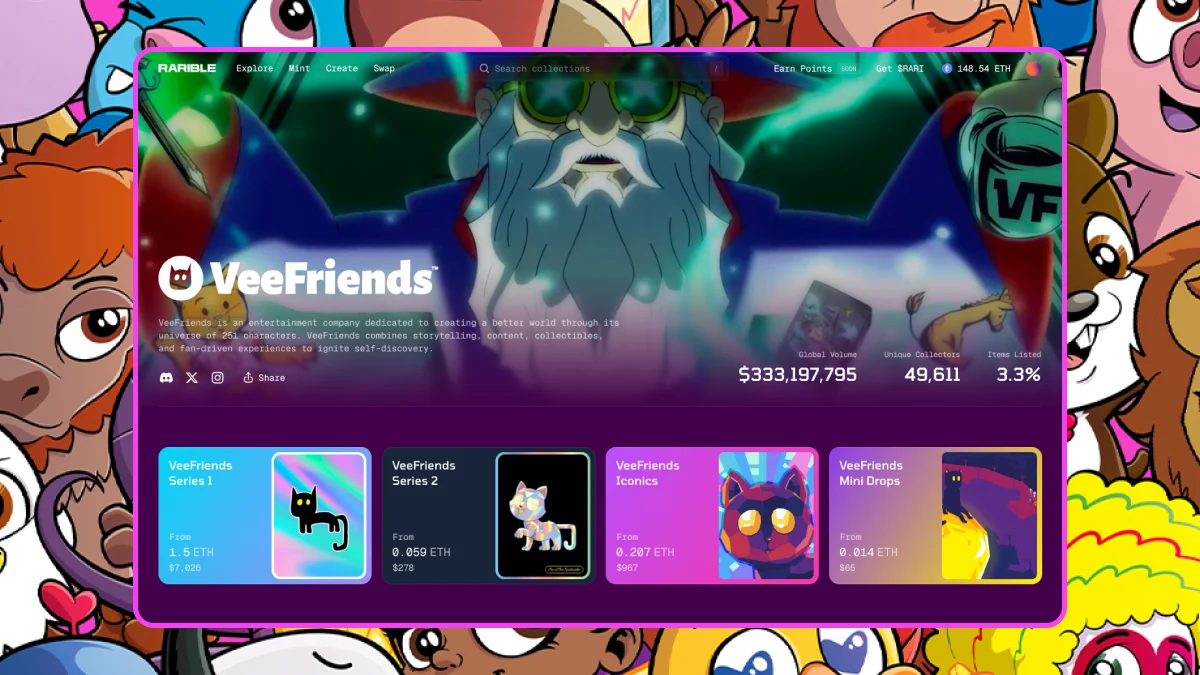
As global commerce increasingly migrates to decentralized ledger technology, the digital storefront has evolved from a simple transactional interface into a critical brand-building asset. Rarible, a prominent player in the non-fungible token (NFT) and digital asset marketplace space, has officially unveiled its new "Branded Onchain Storefronts" initiative, marking a significant shift in how brands engage with their audiences on the blockchain. The inaugural deployment of this infrastructure features a collaboration with VeeFriends, the intellectual property universe founded by entrepreneur Gary Vaynerchuk. This launch signifies a broader strategic pivot within the digital asset ecosystem, moving away from aggregated, platform-centric marketplaces toward curated, brand-owned digital destinations.
The VeeFriends collaboration serves as the pilot program for this architecture. Established in 2021, VeeFriends has grown from a nascent NFT collection into a multifaceted media and entertainment entity encompassing animation, physical collectibles, and real-world event activations. By providing VeeFriends with a dedicated, modular onchain space, Rarible is testing a model that prioritizes storytelling and community engagement over the generic, high-volume listing format that has historically defined NFT marketplaces.
A New Paradigm for Brand-Consumer Interaction
The transition to onchain commerce is largely driven by the need for brands to exert greater control over their customer experience. Historically, creators and brands were limited by the rigid constraints of third-party marketplaces, which often prioritized platform identity over brand uniqueness. Rarible’s new storefront model aims to dismantle this limitation by offering a white-labeled, customizable interface that lives natively on the blockchain.
According to industry analysts, the integration of brand-specific hubs is a natural progression of the "Direct-to-Avatar" (D2A) economy. As digital identity becomes more intertwined with ownership of verifiable digital assets, the demand for dedicated, immersive brand environments—where users can view collections, track scarcity, and engage with lore—has reached a critical juncture. The VeeFriends storefront acts as a centralized dashboard, aggregating digital collectibles with metadata and historical context, effectively transforming a standard marketplace listing into a curated, interactive brand experience.
Frictionless Onboarding and Technical Infrastructure
One of the most significant barriers to the mass adoption of onchain commerce has been the complexity of user onboarding. The technical hurdles associated with wallet management, gas fees, and cryptographic keys have traditionally deterred mainstream consumers. To address this, the Rarible storefront implementation utilizes the VeeFriends Wallet powered by Privy. This integration allows users to authenticate their identity using standard email-based login flows, effectively abstracting the complexities of private key management while retaining the benefits of self-custody.

Furthermore, the integration of Crossmint facilitates payment flexibility, enabling users to finalize transactions using conventional payment methods, including credit cards, Apple Pay, and Google Pay. By bridging the gap between fiat-based consumer habits and blockchain-based asset settlement, Rarible is positioning these storefronts as a viable alternative to legacy e-commerce platforms. Additionally, the integration with the $RARI rewards program, supported by the RARI Foundation, creates a secondary incentive structure that encourages active participation within the ecosystem, rewarding users for their engagement with these branded hubs.
Chronology and Strategic Development
The launch of these storefronts follows a period of rapid iteration within the Web3 infrastructure sector. Throughout 2023 and 2024, the focus for many marketplaces shifted from pure speculation to utility-driven commerce.
- 2021: VeeFriends debuts, establishing a strong community foundation through character-based NFT storytelling.
- 2022: Rarible shifts focus toward supporting independent creator tools and decentralized governance through the RARI token.
- 2023: Market trends indicate a decline in generalist NFT trading volume, prompting a pivot toward niche, high-fidelity brand experiences.
- 2025 (Q4): Rarible launches its first Branded Onchain Storefront for VeeFriends, signaling a departure from the traditional marketplace model.
This timeline illustrates a deliberate move toward vertical integration. By providing the tools for brands to manage their own storefronts, Rarible is effectively pivoting from being a mere intermediary to becoming a provider of "Storefront-as-a-Service" (SaaS) architecture for the decentralized web.
The Role of Rarible Studio
While the VeeFriends storefront is the first iteration of this technology, the broader roadmap involves the rollout of "Rarible Studio." This upcoming dashboard is designed to provide brands with a suite of administrative tools, allowing for the direct management of digital catalogs, customer engagement, and storefront aesthetics.
Industry observers note that this move toward self-management is a direct response to the "platform risk" inherent in the current Web3 landscape. By enabling brands to own the front-end interface through which their assets are displayed and traded, Rarible is mitigating the risks associated with platform de-platforming or arbitrary changes to marketplace policies. This shift is expected to attract legacy brands currently exploring entry into the digital asset space, as it offers a familiar level of brand autonomy combined with the benefits of blockchain-based provenance and royalty enforcement.
Economic Implications and Market Analysis
The implications for the broader digital economy are significant. Onchain storefronts allow for "no-intermediary" commerce, which can theoretically reduce transaction costs while ensuring that royalty payments—a critical component of the creator economy—are baked into the smart contracts governing the storefront.
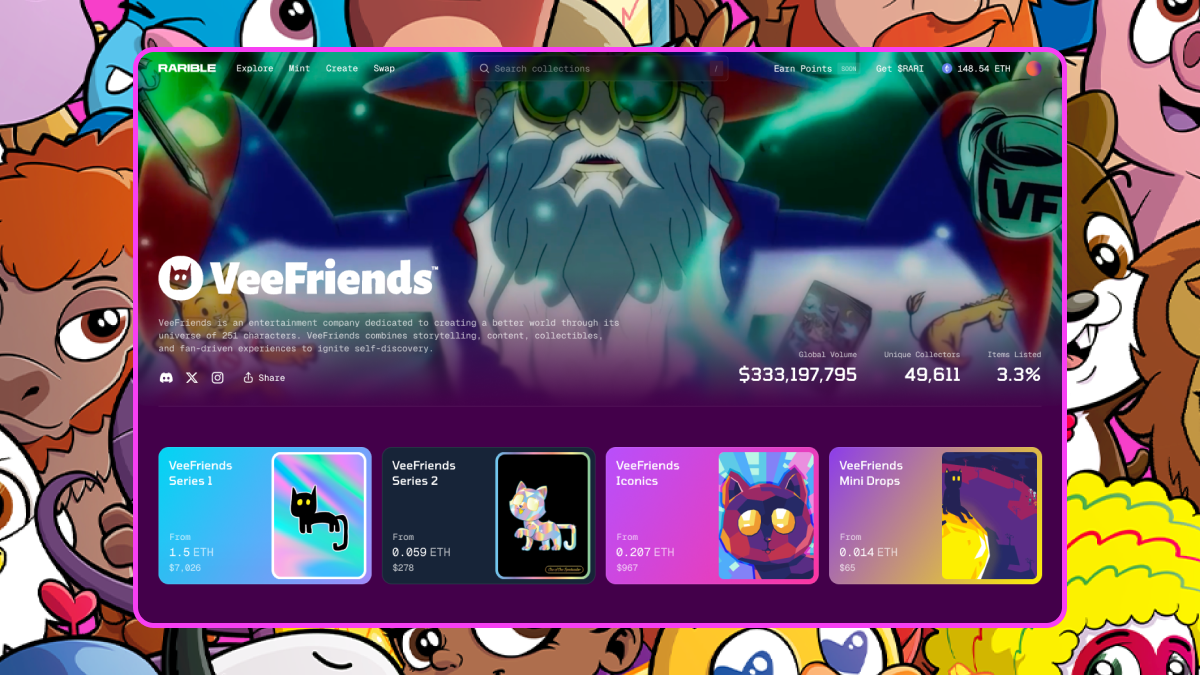
Market data suggests that consumer trust is higher when transactions occur within a brand-authorized environment. By creating a distinct, verifiable space for VeeFriends, the platform establishes a "source of truth" that protects users against the proliferation of counterfeit assets that often plague decentralized markets.
Furthermore, the modular nature of these storefronts allows for rapid scaling. As brands grow their digital product lines—whether through physical-digital "phygital" goods, membership passes, or digital media—they can update their storefronts without needing to rebuild their technical infrastructure. This modularity is a critical feature for enterprises that require high levels of brand consistency and operational agility.
Looking Ahead: The Future of Brand Commerce
The collaboration with VeeFriends serves as a proof-of-concept for a much larger ambition. In the coming months, Rarible is expected to onboard additional partners, each of whom will be granted the flexibility to tailor their storefronts to meet specific community needs.

The successful implementation of this model could force a recalibration of how NFTs are marketed and sold. If the "storefront" becomes the standard, the marketplace itself will function more as a discovery engine, while the actual conversion and community interaction will increasingly occur in these proprietary, brand-led environments.
Ultimately, the initiative represents a convergence of traditional e-commerce principles and blockchain innovation. By prioritizing user experience, ease of entry, and brand-owned infrastructure, Rarible is betting that the next wave of Web3 adoption will not be driven by speculative trading, but by brands creating meaningful, persistent digital homes for their communities. As the digital and physical worlds continue to blur, the storefront will remain the primary bridge, connecting consumers to the assets that define their digital identity.
The VeeFriends storefront is now live, providing a template for what the future of onchain retail might look like: a space where the creator is in control, the user experience is seamless, and the community is at the center of the exchange. For developers, brands, and investors alike, this marks the beginning of a chapter where onchain commerce moves from the periphery into the core of digital strategy.