• Home
Crypto Gohan
keep your memories alive
Crypto Regulations & Policy

Pakistan Central Bank Lifts 2018 Crypto Ban as New Regulatory Framework for Virtual Assets Takes Effect

by Nana June 7, 2025
written by Nana

The State Bank of Pakistan (SBP), the nation’s central monetary authority, has officially authorized commercial banks and regulated financial institutions to provide banking services to licensed Virtual Asset Service Providers (VASPs). This landmark decision effectively repeals a restrictive policy maintained since 2018, which had prohibited the country’s financial sector from engaging in any transactions involving virtual currencies or tokens. The shift marks a fundamental pivot in Pakistan’s approach to digital finance, transitioning from a regime of prohibition to one of regulated integration.

According to a formal notice issued by the SBP’s Banking Policy & Regulations Department, the updated framework permits banks to onboard VASPs that have secured a valid license from the newly established Pakistan Virtual Asset Regulatory Authority (PVARA). This policy reversal is not an unconditional opening of the floodgates but rather a highly controlled environment characterized by rigorous compliance mandates, enhanced due diligence (EDD), and continuous monitoring protocols designed to mitigate the inherent risks of the digital asset sector.

The End of the Prohibitive Era: From 2018 to 2026

The roots of the previous restrictive environment trace back to April 2018, when the SBP issued a circular (BPRD Circular No. 03 of 2018) warning the public against the risks of virtual currencies. At that time, the central bank explicitly prohibited banks, microfinance banks, and payment system operators from processing, using, trading, or investing in virtual assets. The primary concerns cited were the potential for money laundering, terror financing, and the lack of consumer protection.

However, the 2018 ban did not achieve its intended goal of stifling the growth of digital assets. Instead, the market moved underground. According to reports from the Federation of Pakistan Chambers of Commerce and Industry (FPCCI), peer-to-peer (P2P) crypto activity in Pakistan surged by more than 700% in the years following the ban. By early 2024, it was estimated that Pakistanis held billions of dollars in virtual assets, largely facilitated through informal "Digital Hundi" networks and global exchanges like Binance, which operates as the dominant platform in the region with an estimated user base exceeding 20 million.

The realization that prohibition was fueling an unregulated shadow economy led to a multi-year legislative effort, culminating in the enactment of the Virtual Assets Act of 2026. This legislation provided the legal basis for the creation of PVARA and the subsequent re-entry of the banking sector into the virtual asset ecosystem.
The Role of the Pakistan Virtual Asset Regulatory Authority (PVARA)

The centerpiece of the new regulatory regime is the Pakistan Virtual Asset Regulatory Authority (PVARA). Established under the 2026 Act, PVARA serves as the primary supervisor for the virtual asset industry, tasked with licensing VASPs, ensuring market integrity, and protecting retail investors.

The SBP’s new guidelines are inextricably linked to PVARA’s licensing status. Banks are only permitted to offer full-scale banking services to entities that hold a formal license from the authority. For entities still in the nascent stages of the licensing process, the framework allows for the issuance of a No Objection Certificate (NOC) from PVARA. This NOC permits a VASP to open a "limited-purpose" account, which is restricted to facilitating the administrative and financial requirements necessary to complete the licensing procedure. Full operational banking services, however, remain contingent upon the final grant of a VASP license.

Strict Safeguards: The Client Money Account (CMA) Framework

To ensure financial stability and protect consumer funds, the SBP has introduced a stringent structural requirement for VASP banking: the Client Money Account (CMA). Banks are mandated to maintain a clear and absolute segregation between a VASP’s operational funds and the funds belonging to its customers.

These CMAs are subject to several restrictive conditions:

  1. Currency Denomination: All accounts must be denominated in Pakistani Rupees (PKR), preventing the direct use of foreign currency for domestic virtual asset trading and mitigating risks related to capital flight.
  2. Non-Interest Bearing: To maintain the transactional nature of these accounts and align with specific domestic financial standards, CMAs must be non-interest-bearing.
  3. Prohibition of Cash Transactions: The framework strictly prohibits cash deposits and withdrawals from VASP accounts. All movements of funds must occur through traceable digital banking channels, such as inter-bank fund transfers (IBFT) or wire transfers.
  4. No Collateralization: VASP accounts and the funds held within them cannot be used as collateral for any form of financing, credit, or margin lending by the bank.

Furthermore, the SBP has reiterated a "Chinese Wall" policy regarding bank participation. While banks can facilitate the transactions of VASPs, they are explicitly forbidden from investing in, trading, or holding virtual assets using their own proprietary funds or customer deposits.

Enhanced Due Diligence and AML/CFT Compliance

In alignment with international standards set by the Financial Action Task Force (FATF), the SBP has placed a heavy burden of responsibility on the banking sector regarding Anti-Money Laundering (AML) and Countering the Financing of Terrorism (CFT).

Pakistan’s central bank overrides ban on accounts for crypto service providers

Banks are required to perform "Enhanced Due Diligence" before onboarding any VASP. This process involves a deep dive into the provider’s business model, its target customer base, the geographic scope of its operations, and its internal compliance controls. Banks must also assess the VASP’s own KYC (Know Your Customer) procedures to ensure that the "on-ramps" and "off-ramps" for digital assets are not being exploited by illicit actors.

Ongoing monitoring is another critical pillar of the new framework. Banks are expected to utilize sophisticated transaction monitoring tools to detect patterns indicative of money laundering or unusual financial behavior. Any suspicious activity must be reported immediately to the Financial Monitoring Unit (FMU) of Pakistan, in accordance with the AML Act.

Economic Implications and Market Reaction

The decision to integrate virtual assets into the formal banking system is expected to have far-reaching economic consequences. By bringing crypto activity out of the shadows, the Pakistani government aims to increase its tax base. Previously, the billions of dollars flowing through P2P and Hundi networks were largely untaxed. With transactions now flowing through PKR-denominated bank accounts, the Federal Board of Revenue (FBR) will have a clearer window into the wealth generated within the sector.

Market analysts also suggest that the move will bolster financial inclusion. With over 20 million users already active in the space, providing a legal and secure way to convert digital assets to fiat currency encourages the use of formal banking channels by a demographic that may have previously been skeptical of traditional finance.

Furthermore, the Virtual Assets Act of 2026 includes provisions for "innovation sandboxes" and "virtual asset zones." These initiatives are designed to attract foreign investment from global blockchain firms, positioning Pakistan as a potential hub for Web3 development in South Asia. The support for tokenized financial systems could also modernize the country’s capital markets, potentially allowing for the fractional ownership of real estate or other traditional assets via blockchain technology.

Reaction from the Industry and Financial Experts

The response from the domestic fintech community has been overwhelmingly positive. Spokespersons for several emerging Pakistani VASPs have noted that the lack of banking access was the single greatest hurdle to legitimate growth. "For years, we were treated as pariahs despite our efforts to comply with international best practices," stated a CEO of a Karachi-based digital asset exchange. "The SBP’s new notice provides the legal certainty required to attract institutional partners and scale our operations safely."

However, some financial experts urge caution. Economists have pointed out that while the framework is robust, the implementation phase will be challenging. Banks will need to invest heavily in specialized training for compliance officers and acquire new technological tools to understand the complexities of blockchain forensics. There are also concerns regarding the volatility of virtual assets and whether the SBP can effectively prevent these fluctuations from spilling over into the broader financial system.

A Strategic Alignment with Global Standards

Pakistan’s shift is also seen as a strategic move to remain in the good graces of international regulatory bodies. The FATF has increasingly focused on "Recommendation 15," which requires countries to regulate VASPs for AML/CFT purposes. By establishing PVARA and a formal banking framework, Pakistan is demonstrating its commitment to international financial transparency standards, which is crucial for its long-term economic stability and relationship with global lenders.

The move puts Pakistan in a similar trajectory to other regional players. While India has maintained a high tax regime on crypto without a formal licensing framework, and the UAE has established itself as a global leader with its VARA regulations in Dubai, Pakistan’s approach appears to be a middle ground—focused on strict central bank oversight combined with a dedicated sectoral regulator.

Conclusion and Future Outlook

The State Bank of Pakistan’s decision to authorize banking for licensed VASPs represents a sophisticated evolution of the country’s financial policy. By replacing a blanket ban with a nuanced, risk-based regulatory framework, the government is attempting to harness the potential of blockchain technology while maintaining a firm grip on financial integrity.

As the Virtual Assets Act of 2026 begins to take full effect, the focus will shift to how effectively PVARA can license providers and how strictly the SBP will enforce its CMA and EDD requirements. For a nation with one of the world’s fastest-growing populations of digital asset users, the transition from "Digital Hundi" to a regulated, bank-integrated ecosystem marks the beginning of a new chapter in Pakistan’s digital economy. The success of this initiative will ultimately depend on the synergy between the central bank, the new regulatory authority, and a banking sector that must now navigate the complexities of the frontier of finance.

June 7, 2025 0 comment
0 FacebookTwitterPinterestEmail
Japanese & Asian Crypto Markets

SBI Chilizと東京ヴェルディ、ファントークン導入で提携──Jリーグクラブ初 | NADA NEWS(ナダ・ニュース)

by Suro Senen June 5, 2025
written by Suro Senen

SBI Chiliz, a joint venture between the Japanese financial giant SBI Digital Asset Holdings and the global sports Web3 leader Chiliz Group, officially announced on April 15 the signing of a Memorandum of Understanding (MOU) with the J-League football club Tokyo Verdy. This agreement initiates a joint research project aimed at introducing fan tokens within the Japanese domestic market, marking a historic milestone as the first time SBI Chiliz has entered into such a formal partnership with a club from the Japan Professional Football League (J-League). According to statements released by both organizations, the collaboration is designed to explore the integration of blockchain technology into the fan experience, providing a roadmap for how digital assets can enhance engagement, loyalty, and commercial opportunities for professional sports teams in Japan.

Under the terms of the MOU, SBI Chiliz and Tokyo Verdy will collaborate on several key initiatives designed to redefine the relationship between a sports club and its supporters. The joint research will focus on the development of "fan voting" mechanisms, where token holders can participate in certain club decisions, as well as the distribution of digital gifts and rewards. Furthermore, the partnership intends to examine ways to link digital tokens with live match events, allowing for real-time engagement and the exchange of digital assets for physical, real-world items or exclusive experiences. This move represents a significant shift toward "Digital Transformation" (DX) within the J-League, as clubs seek to diversify their revenue streams and deepen their connections with a tech-savvy, global audience.

The Strategic Alliance Between SBI and Chiliz

The foundation of this partnership lies in the formation of SBI Chiliz, a company established through the combined efforts of SBI Digital Asset Holdings and the Chiliz Group. The Chiliz Group is widely recognized as the pioneer of the fan token industry, operating the popular fan engagement platform Socios.com. Globally, Chiliz has partnered with more than 70 major sports organizations, including world-renowned football giants such as FC Barcelona, Manchester City, Paris Saint-Germain, and Juventus. By leveraging the Chiliz Chain—a specialized blockchain for the sports and entertainment industry—these clubs have successfully launched fan tokens that allow supporters to vote on kit designs, stadium names, and other club-related matters while earning exclusive rewards.

For the SBI Group, this venture is a core component of its broader strategy to lead the digital asset revolution in Japan. SBI has been aggressive in its pursuit of Web3 and blockchain opportunities, and by partnering with Chiliz, it aims to localize the global success of fan tokens for the Japanese market. The expertise of SBI in the domestic financial sector, combined with Chiliz’s technological infrastructure and international sports network, creates a powerful synergy intended to overcome the regulatory and cultural hurdles associated with digital assets in Japan.

Tokyo Verdy: A Historic Club in a Digital Age

Tokyo Verdy, the partner in this landmark agreement, is one of the most storied clubs in Japanese football history. Founded in 1969 as Yomiuri FC, the club was a founding member of the J-League when it launched in 1993. Throughout the early years of professional football in Japan, Verdy was the dominant force, producing legendary players who became household names, such as Kazuyoshi "King Kazu" Miura and Ruy Ramos. The club’s rich history and deep-rooted tradition make it an ideal candidate for this pilot program, as it seeks to bridge the gap between its long-standing legacy and the modern digital era.

In recent years, Tokyo Verdy has focused on revitalizing its brand and expanding its fan base both domestically and internationally. The introduction of fan tokens is seen as a way to engage younger generations who are increasingly comfortable with digital currencies and decentralized platforms. By participating in this joint research, Tokyo Verdy is positioning itself at the forefront of the J-League’s technological evolution, signaling to the rest of the league that Web3 adoption is no longer a niche experiment but a strategic necessity.

SBI Chilizと東京ヴェルディ、ファントークン導入で提携──Jリーグクラブ初 | NADA NEWS(ナダ・ニュース)

The Evolution of Web3 in the J-League

The partnership between SBI Chiliz and Tokyo Verdy does not exist in a vacuum; it is part of a growing trend of blockchain adoption within Japanese professional sports. In recent years, several J-League clubs have begun exploring the potential of Web3 technologies to enhance fan engagement and secure new funding.

One of the most notable examples is Avispa Fukuoka, which in 2023 established Japan’s first sports DAO (Decentralized Autonomous Organization). Following this, in 2025, the club entered into a "Web3 Partnership Agreement" with Mitsui Sumitomo Banking Corporation to further integrate blockchain solutions into its operations. Similarly, Vissel Kobe has experimented with the issuance of NFT (Non-Fungible Token) tickets for its opening matches, providing fans with a verifiable and collectible digital record of their attendance.

More recently, in March of the current year, Gamba Osaka conducted a demonstration experiment in collaboration with DeCurret DCP. This project focused on visualizing "fan contributions"—such as cheering and information sharing—on the blockchain, allowing the club to record and reward supporter loyalty in a transparent and immutable way. These precedents set the stage for Tokyo Verdy and SBI Chiliz to move beyond experimental trials and toward a comprehensive fan token ecosystem that could eventually become standard practice across the entire league.

Technical Scope and Proposed Fan Features

The joint research initiated by the MOU will delve into the technical and practical aspects of launching a fan token on the Chiliz Chain. Unlike traditional loyalty points, fan tokens are fungible digital assets that provide holders with a range of utility features. The research will specifically look into the following areas:

  1. Governance and Voting Rights: Researching how fans can use tokens to vote on non-sporting decisions, such as the design of club merchandise, the music played at the stadium, or the selection of "Man of the Match."
  2. Digital-to-Physical Incentives: Investigating the logistics of allowing fans to trade digital tokens for limited-edition physical goods, such as signed jerseys or match-worn equipment.
  3. Gamification and Matchday Integration: Developing mobile-based interactions that allow fans at the stadium to "check-in" via blockchain and receive exclusive digital collectibles or "power-ups" for use in integrated games.
  4. Global Accessibility: Exploring how international fans of Tokyo Verdy can purchase tokens to feel more connected to the club, thereby expanding the team’s commercial reach beyond the borders of Japan.

Market Context and Economic Implications

The sports fan token market has seen significant growth globally, with hundreds of millions of dollars in revenue generated for clubs worldwide. In Japan, the market is particularly ripe for expansion due to the country’s high rate of smartphone penetration and a cultural affinity for collectibles and "otaku" (enthusiast) culture. However, the Japanese market also faces strict financial regulations regarding the sale and trading of crypto-assets.

The involvement of SBI Digital Asset Holdings is crucial in this regard. As a regulated financial entity, SBI brings a level of trust and compliance that is essential for mass-market adoption. The joint research will likely address how to navigate the Payment Services Act and other Japanese financial regulations to ensure that the fan tokens are accessible to the general public while remaining compliant with domestic law.

From an economic perspective, fan tokens provide clubs with a "re-monetizable" asset. Traditional sponsorship and ticket sales are often limited by physical space or time. In contrast, digital tokens can be traded on secondary markets, providing clubs with ongoing royalty fees and creating a liquid ecosystem where the value of the token can reflect the club’s popularity and engagement levels.

SBI Chilizと東京ヴェルディ、ファントークン導入で提携──Jリーグクラブ初 | NADA NEWS(ナダ・ニュース)

Reactions from Industry Stakeholders

While official quotes from the signing ceremony focused on the spirit of innovation, industry analysts suggest that this MOU is a defensive as well as an offensive move. For Tokyo Verdy, it is an offensive strategy to reclaim its status as a premier innovator in the league. For SBI, it is a move to secure a first-mover advantage in a sports market that has been slow to move away from traditional corporate sponsorship models.

Supporter groups have expressed a mix of curiosity and cautious optimism. Many younger fans welcome the prospect of having a more direct say in club affairs, while older, more traditional supporters are waiting to see how these digital tools will affect the "soul" of the game. The joint research project is expected to include surveys and focus groups with Tokyo Verdy’s core fan base to ensure that the eventual token launch aligns with the supporters’ values.

Broader Impact on the Japanese Sports Landscape

The success of the SBI Chiliz and Tokyo Verdy partnership could serve as a catalyst for a "domino effect" across the J-League and other professional sports in Japan, such as the B.League (basketball) and NPB (baseball). If Tokyo Verdy can demonstrate a tangible increase in fan engagement and a new, stable revenue stream, it is highly probable that other clubs will follow suit.

Furthermore, this partnership highlights the shifting role of financial institutions in sports. No longer just stadium sponsors or lenders, companies like SBI are becoming integral technology partners, providing the infrastructure for a new digital economy within the stadium walls. The move toward Web3 in sports also aligns with the Japanese government’s "Society 5.0" initiative, which promotes the integration of advanced technologies into all aspects of social and economic life.

Timeline and Next Steps

Following the signing of the MOU, the joint research phase is expected to last several months. During this period, SBI Chiliz and Tokyo Verdy will conduct technical stress tests, legal reviews, and market demand assessments. A pilot launch of the fan tokens is rumored to be scheduled for the following season, depending on the findings of the research.

As the J-League continues to celebrate its history while looking toward the future, the partnership between Tokyo Verdy and SBI Chiliz stands as a testament to the power of collaboration between traditional sports and cutting-edge technology. Whether this will lead to a permanent shift in how Japanese fans support their teams remains to be seen, but for now, the eyes of the sporting and financial worlds are firmly fixed on Tokyo Verdy and the digital path they are forging.

June 5, 2025 0 comment
0 FacebookTwitterPinterestEmail
Japanese & Asian Crypto Markets

Ripple and Kyobo Life Insurance Partner to Pioneer South Koreas First Tokenized Government Bond Settlement on Blockchain

by Sagoh June 4, 2025
written by Sagoh

In a landmark development for the South Korean financial sector, San Francisco-based enterprise blockchain provider Ripple has announced a strategic partnership with Kyobo Life Insurance, one of the nations largest and most prominent life insurance companies. This collaboration, officially unveiled on April 15, 2026, aims to facilitate South Koreas first-ever blockchain-based settlement of tokenized government bonds. By leveraging Ripple Custody, the firms institutional-grade digital asset infrastructure, the partnership seeks to modernize the traditional bond market, transitioning from legacy settlement cycles toward a more efficient, transparent, and real-time on-chain environment.

The joint venture represents a significant milestone in the institutional adoption of Real World Asset (RWA) tokenization within the Asia-Pacific region. As global financial markets increasingly explore the benefits of distributed ledger technology (DLT), South Korea is positioning itself as a leader in regulatory-compliant digital finance. The pilot program will focus on the end-to-end lifecycle of government bonds—from custody to transfer and final settlement—demonstrating how traditional securities can coexist with blockchain protocols to reduce systemic risk and operational overhead.

The Structural Shift in South Korean Bond Settlements

Historically, the settlement of government bonds in South Korea has relied on a T+2 cycle, meaning that a transaction takes two full business days to finalize after the trade is executed. While this system has served the market for decades, it is inherently fraught with inefficiencies. During the two-day lag, capital is effectively "locked," preventing institutional investors from reinvesting those funds immediately. Furthermore, the delay introduces counterparty risk, where one party may fail to fulfill their obligation before the settlement is completed.

The integration of Ripple Custody allows Kyobo Life Insurance to bypass these traditional bottlenecks. By tokenizing government bonds, the ownership of the asset is represented as a digital token on a secure blockchain. This enables "atomic settlement," a process where the transfer of the asset and the payment occur simultaneously. If the pilot proves successful, it could virtually eliminate the T+2 delay, allowing for near-instantaneous settlement. For a massive institutional player like Kyobo Life, which manages trillions of won in long-term assets, the ability to optimize liquidity and reduce capital constraints is a powerful incentive for digital transformation.

A Chronology of Digital Asset Evolution in South Korea

The partnership between Ripple and Kyobo Life does not exist in a vacuum; it is the culmination of nearly a decade of regulatory evolution and technological progress in South Korea.

In 2017, the South Korean government began laying the groundwork for a regulated digital economy by introducing licensing requirements for money transfer operators and virtual asset service providers (VASPs). Initially, the regulatory environment was characterized by strict oversight aimed at curbing speculative retail trading. However, as the global narrative shifted toward institutional blockchain utility, South Korean authorities began to foster an environment conducive to corporate innovation.

Between 2021 and 2024, the Financial Services Commission (FSC) and the Bank of Korea (BOK) accelerated their exploration of Central Bank Digital Currencies (CBDCs) and regulated stablecoins. During this period, South Korea’s major financial institutions, including Tier-1 banks and insurance giants, began establishing internal blockchain divisions. Kyobo Life’s decision to partner with Ripple reflects this long-term strategy to integrate Next-Generation Finance (NGF) into its core business model. By 2025, the focus had shifted definitively toward the tokenization of RWAs, with government bonds being identified as the most stable and high-volume asset class for initial testing.

Technical Foundations: The Role of Ripple Custody

At the heart of this initiative is Ripple Custody, a platform designed to provide financial institutions with the security and compliance tools necessary to manage digital assets. Unlike retail-grade wallets, Ripple Custody is built to meet the rigorous standards of global financial regulators. It offers multi-party computation (MPC) technology, advanced governance frameworks, and seamless integration with existing banking infrastructure.

For Kyobo Life, the custody solution serves as more than just a digital vault. It acts as the gateway for the entire tokenization lifecycle. Through this platform, the insurance provider can issue, store, and transfer tokenized bonds while maintaining a transparent audit trail that is accessible to regulators in real-time. This level of transparency is expected to significantly reduce the cost of compliance and reporting, which currently consumes a substantial portion of institutional operating budgets.

Furthermore, the partnership explores the use of stablecoins to facilitate the "cash leg" of the bond transactions. By using a stablecoin pegged to the South Korean Won (KRW) or another major currency, the parties can achieve 24/7/365 transaction processing. This moves the market away from the limitations of traditional banking hours, allowing for global settlement even during weekends and holidays.

Official Responses and Strategic Vision

Executive leadership from both organizations emphasized the transformative nature of the agreement. Park Jin-ho, Vice President of Kyobo Life Insurance, stated that the firm’s primary objective is to prove that traditional financial products can operate safely and efficiently within a blockchain ecosystem. He noted that as an insurance and pension fund manager, Kyobo Life is responsible for managing long-term capital, and the efficiency gains from blockchain technology will directly benefit their policyholders and stakeholders through improved asset performance and reduced risk.
Ripple’s leadership highlighted the strategic importance of South Korea in their global roadmap. A spokesperson for Ripple noted that the Asia-Pacific region is currently the most proactive in adopting institutional blockchain solutions. By partnering with a heavyweight like Kyobo Life, Ripple aims to create a "blueprint" for other insurance companies and pension funds worldwide. The company indicated that this project is the first step in a broader strategy to integrate custody, liquidity, and settlement into a single, unified institutional platform.

Broader Impact and Market Implications

The successful implementation of tokenized government bond settlements could have far-reaching implications for the South Korean economy. Often referred to as the "Korea Discount," the country’s financial markets have sometimes been undervalued due to perceived transparency issues and outdated administrative processes. The widespread adoption of blockchain for sovereign debt could help eliminate this discount by providing global investors with a more modern, transparent, and accessible entry point into South Korean assets.

Beyond bonds, the infrastructure being built by Ripple and Kyobo Life sets the stage for the tokenization of other real-world assets, such as real estate, private equity, and carbon credits. As institutional investors become more comfortable with the security and regulatory compliance of Ripple’s platform, the volume of on-chain assets is expected to grow exponentially.

The move also places pressure on other regional financial hubs, such as Singapore and Hong Kong, to accelerate their own RWA initiatives. While Singapore has been active with "Project Guardian," South Korea’s focus on the massive insurance and pension sector provides a unique use case that demonstrates the utility of blockchain for large-scale, long-term capital management.

Future Outlook: Toward a Global On-Chain Economy

As the pilot moves toward its full deployment phase, the focus will likely shift toward interoperability. For tokenized government bonds to reach their full potential, they must be able to move seamlessly across different blockchain networks and traditional financial systems. Ripple has long been a proponent of interoperability, and its work with the XRP Ledger (XRPL) and various sidechains suggests that the South Korean project will eventually be part of a broader, global network of value.

The partnership also hints at a future where the distinction between "crypto" and "traditional finance" disappears entirely. When a major insurer like Kyobo Life utilizes blockchain to settle government-backed debt, the technology is no longer an alternative—it becomes the standard. The next twelve to twenty-four months will be critical as regulatory bodies monitor the results of this pilot. If the data confirms that blockchain settlement reduces risk and increases capital efficiency without compromising security, it is highly probable that the South Korean government will move to institutionalize these practices across the entire financial sector.

In conclusion, the collaboration between Ripple and Kyobo Life Insurance is a definitive signal that the era of institutional RWA tokenization has arrived in South Korea. By addressing the long-standing challenges of the T+2 settlement cycle and providing a secure, compliant framework for digital asset custody, the two companies are not just modernizing a single market—they are laying the foundation for a more efficient and resilient global financial system. The world’s financial capitals will undoubtedly be watching closely as South Korea takes this bold step into the future of decentralized finance.

June 4, 2025 0 comment
0 FacebookTwitterPinterestEmail
Japanese & Asian Crypto Markets

約400ETH復旧の裏側「ビットコイン・セイヴァー」に独占取材

by Ali Ikhwan June 3, 2025
written by Ali Ikhwan

The Context of the 2014 Ethereum Crowdsale and the Problem of Lost Access

To understand the magnitude of this recovery, one must look back to the summer of 2014, when the Ethereum Foundation launched its initial crowdsale. At the time, Ethereum was an ambitious project seeking to expand the utility of blockchain technology beyond simple peer-to-peer payments into the realm of smart contracts. During the sale, participants exchanged Bitcoin (BTC) for ETH at a rate of approximately 2,000 ETH per 1 BTC. Upon purchase, users were provided with a "wallet file"—a JSON-formatted text file—that contained the encrypted private keys to their new ETH holdings.

約400ETH復旧の裏側「ビットコイン・セイヴァー」に独占取材

The security of these files relied entirely on a user-generated password. Unlike modern centralized financial institutions, the decentralized nature of the Ethereum Genesis block meant there was no "forgot password" button and no customer support desk to reset credentials. If an investor lost their password or the specific software environment required to decrypt the file, the assets became functionally non-existent, trapped in a digital vault with no key. As the value of ETH climbed from pennies in 2014 to thousands of dollars in the following decade, the psychological and financial toll on those with "lost" Genesis wallets became a recurring theme in the cryptocurrency industry.

Chronology of the 400 ETH Recovery Operation

The case handled by Bitcoin Savior and Cryptic Brain involved a client who had participated in the 2014 sale but found themselves unable to access their 400 ETH. Before approaching Mr. Iwata’s team, the client had reportedly consulted several other technical experts and recovery services, all of whom concluded that the password was unrecoverable through standard brute-force methods.

約400ETH復旧の裏側「ビットコイン・セイヴァー」に独占取材

The timeline of the successful recovery began with a comprehensive "hearing" or interview process. Mr. Iwata and Bhashana emphasize that recovery is not merely a technical challenge but a psychological one. The team collected fragments of information from the client: potential password components, character preferences, and the specific software environment used during the 2014 purchase.

The breakthrough did not occur through a traditional computational "brute force" attack, which would have taken centuries given the entropy of the encryption. Instead, the turning point came during a casual technical discussion between Bhashana and a colleague regarding new programming methodologies. This conversation sparked a "eureka moment" for Bhashana, who realized that a specific algorithmic approach—leveraging a suspected bug or pattern in the original 2014 password generation tools—could narrow the search space significantly. By applying this refined logic, the team was able to bypass the "bottleneck" that had stymied previous experts, successfully identifying the correct credential and moving the 400 ETH for the first time in over twelve years.

約400ETH復旧の裏側「ビットコイン・セイヴァー」に独占取材

Technical Analysis: Password Cracking vs. Protocol Security

A critical aspect of this news is the clarification of what this recovery does and does not imply for blockchain security. Bhashana, a security veteran with over 20 years of experience in the field, was quick to dispel rumors that the Ethereum blockchain itself had been compromised.

"It is important to distinguish between cracking a user’s password and breaking the blockchain protocol," Bhashana stated during an interview. He confirmed that it remains mathematically impossible to recover a wallet using only a public address or a public key. The security of the Elliptic Curve Digital Signature Algorithm (ECDSA) used by Ethereum remains intact. The recovery was possible only because the team possessed the encrypted wallet file (the JSON file) and was able to exploit weaknesses in the user’s password choice and the legacy encryption implementation, rather than any flaw in the Ethereum network.

約400ETH復旧の裏側「ビットコイン・セイヴァー」に独占取材

Furthermore, the team addressed the rising discourse regarding quantum computing. While future quantum computers might theoretically be able to derive private keys from public keys, Bhashana noted that such technology is not yet viable for practical attacks on the current network. The success of this 400 ETH recovery serves as a reminder that the "human element"—passwords, seed phrase management, and legacy software—remains the primary point of failure in digital asset custody.

Supporting Data and Evidence of Success

To maintain transparency and professional integrity, Bitcoin Savior provided on-chain evidence of the recovery. Transaction logs show the movement of 400 ETH from a long-dormant Genesis-era address to a new, secure wallet. Additionally, Bhashana provided a cryptographically signed message from the recovered address, a standard "Proof of Control" in the crypto industry, confirming that the team had indeed gained full access to the private keys.

約400ETH復旧の裏側「ビットコイン・セイヴァー」に独占取材

According to data from Chainalysis and other blockchain analytics firms, approximately 3.7 million to 4 million BTC (and a proportional amount of ETH) are estimated to be "lost" or stuck in dormant addresses. Cases like this 400 ETH recovery are statistically rare, as they require the original owner to still possess the encrypted data files. However, the success of Bitcoin Savior suggests that a non-trivial portion of these "lost" billions may be recoverable through advanced forensic linguistics and algorithmic analysis.

Official Responses and Implications for the Industry

Mr. Iwata, CEO of Bitcoin Savior, framed the recovery as a mission of "rescue" rather than mere profit. "When the news of this 400 ETH case was first publicized, there was a lot of misinformation. We wanted to provide the correct facts to help others who might be in a similar position," Iwata explained. He noted that the primary goal of his organization is to assist individuals who have been locked out of their life savings, noting that for many early adopters, these recovered funds represent a life-altering amount of capital.

約400ETH復旧の裏側「ビットコイン・セイヴァー」に独占取材

The industry reaction has been one of cautious optimism. Security experts suggest that the success of this operation may lead to a surge in inquiries for legacy wallet recoveries. However, it also serves as a warning. The team at Bitcoin Savior highlighted the risks of "malicious recovery services" or "scam hackers" who promise to recover funds but instead steal the user’s data or charge exorbitant upfront fees without results.

Broader Impact: The Future of Digital Asset Custody

The recovery of the 400 ETH highlights a growing sub-sector of the crypto economy: blockchain forensics and recovery services. As the "OG" generation of crypto investors ages, the issues of inheritance, lost keys, and legacy wallet compatibility are becoming increasingly prevalent.

約400ETH復旧の裏側「ビットコイン・セイヴァー」に独占取材

For the broader market, these recoveries introduce a small amount of "new" supply into the circulating pool, but more importantly, they provide a blueprint for how technical expertise can be applied to solve the industry’s most persistent problem—the permanence of loss.

The advice from Bitcoin Savior for current investors is clear:

約400ETH復旧の裏側「ビットコイン・セイヴァー」に独占取材
  1. Redundancy: Ensure that seed phrases and passwords are stored in multiple secure, physical locations.
  2. Hardware Wallets: Use modern hardware wallets (like Ledger or Trezor) which have standardized recovery protocols.
  3. Legacy Documentation: For those holding 2014-era files, keep detailed records of the software versions and devices used at the time of purchase, as these "metadata" points are often the key to successful recovery.

In conclusion, the successful recovery of 400 ETH by Bitcoin Savior and Cryptic Brain is a testament to the fact that while the blockchain is immutable, the barriers to human access are sometimes permeable through a combination of psychological profiling, historical technical knowledge, and algorithmic innovation. As we move further into the 2020s, the intersection of cybersecurity and human behavior will continue to define the safety and accessibility of the world’s digital wealth.

June 3, 2025 0 comment
0 FacebookTwitterPinterestEmail
Japanese & Asian Crypto Markets

Essential Guide to Web3 Security and Digital Asset Protection in a Decentralized Economy

by Lina Hope June 1, 2025
written by Lina Hope

The rapid evolution of the Web3 ecosystem has introduced a paradigm shift in how individuals interact with digital value, moving away from centralized financial institutions toward a model of absolute self-sovereignty. However, this transition to a decentralized landscape brings with it a critical caveat: the burden of security rests entirely on the end user. In the world of blockchain, there are no "undo" buttons, no customer service hotlines to reverse a fraudulent transaction, and no centralized authorities to recover lost private keys. As the adoption of non-fungible tokens (NFTs), decentralized finance (DeFi), and blockchain-based gaming continues to accelerate, understanding the nuances of digital asset protection has become a fundamental requirement for any participant in the digital economy.

【3分でわかるWeb3.0基礎講座】セキュリティ

The Foundation of Web3: The Reality of Self-Responsibility

At its core, Web3 is built on the principle of decentralization, which removes intermediaries like banks or tech conglomerates. In traditional Web2 environments, a forgotten password can be reset via email, and a fraudulent credit card charge can be disputed through a bank. In Web3, users employ non-custodial wallets, such as MetaMask or Trust Wallet, where they alone hold the private keys or "seed phrases" that grant access to their assets.

The transparency of the blockchain, while a cornerstone of its integrity, also presents unique risks. Every transaction, balance, and asset movement is recorded on a public ledger. Platforms such as Etherscan (for the Ethereum network) or BSCScan (for the BNB Smart Chain) allow anyone to input a wallet address and view its entire history. For malicious actors, this transparency serves as a roadmap. Scammers can monitor high-value wallets—often referred to as "whales"—or track users participating in specific "trending" projects to tailor their social engineering attacks. When a user interacts with a decentralized application (dApp), they are essentially interacting with smart contracts, and any lapse in judgment can lead to the immediate and irreversible draining of their digital holdings.

【3分でわかるWeb3.0基礎講座】セキュリティ

Chronology of the Scam Evolution: From Simple Phishing to Sophisticated Drainers

The methods used by cybercriminals in the Web3 space have evolved significantly since the early days of Bitcoin. Initially, scams were limited to simple "giveaway" frauds where users were asked to send crypto to an address with the promise of receiving double in return. Today, the tactics are far more insidious and technically complex.

  1. Social Engineering and Community Compromise (2021–Present): As Discord and X (formerly Twitter) became the primary hubs for Web3 communities, scammers began targeting these platforms. By compromising the accounts of project founders or Discord moderators, attackers post "emergency" or "stealth mint" links. Users, driven by the "Fear Of Missing Out" (FOMO), often click these links and connect their wallets without performing due diligence.
  2. The Rise of Phishing Clones (2022–Present): Attackers create pixel-perfect replicas of popular marketplaces like OpenSea or Uniswap. These sites are often promoted through paid Google search ads, appearing at the top of search results. When a user attempts to "login" or "connect," they are prompted to sign a transaction that grants the attacker full permission to transfer their assets.
  3. Wallet Drainers and Malicious Signatures: The most recent evolution involves "drainer" scripts. These are sophisticated pieces of code that, once a wallet is connected to a site, scan the wallet for its most valuable assets (ETH, Bored Ape NFTs, stablecoins) and present a series of signature requests. To the untrained eye, these look like standard login prompts, but they are actually "SetApprovalForAll" or "Permit" functions that authorize the attacker to withdraw everything.

Supporting Data: The Economic Impact of Web3 Vulnerabilities

The scale of the threat is underscored by recent industry data. According to reports from blockchain security firms such as Immunefi and Chainalysis, the total value lost to hacks and scams in the crypto space has consistently reached billions of dollars annually. In 2023 alone, it was estimated that over $1.8 billion was lost across the ecosystem. Phishing attacks, specifically those targeting individual wallets through social media, accounted for a significant portion of these losses, particularly in the NFT sector where individual assets can be worth tens of thousands of dollars.
【3分でわかるWeb3.0基礎講座】セキュリティ

Furthermore, a study of "Rug Pulls"—where developers abandon a project and run away with investors’ funds—reveals that approximately 25% of all new tokens launched in certain periods exhibited characteristics of fraudulent intent. This data highlights the necessity of not only technical security but also rigorous project vetting.

Critical Security Protocols for Digital Asset Protection

To navigate this environment safely, users must adopt a multi-layered security strategy that addresses both technical vulnerabilities and psychological manipulation.

【3分でわかるWeb3.0基礎講座】セキュリティ

The Danger of Direct Messages (DMs)

On platforms like Discord and X, the default setting for any Web3 participant should be to disable Direct Messages from strangers. Scammers frequently use DMs to send "congratulatory" messages regarding fake airdrops or whitelist spots. Legitimate Web3 projects almost never reach out to individual users via DM to offer prizes. If a message claims you have "won" a contest you did not enter, or requires you to "act now" to claim a reward, it is invariably a phishing attempt.

Verifying Official Links

Users should never rely on search engines or social media posts for access to dApps. Instead, they should use "Linktree" profiles found in the official bios of verified project accounts or bookmark the official URLs once they have been confirmed. Comparing the URL character by character is essential, as "typosquatting" (e.g., using 0pensea.io instead of opensea.io) is a common tactic.

【3分でわかるWeb3.0基礎講座】セキュリティ

Implementing Security Extensions

A new generation of Web3 security tools has emerged to provide a safety net. Browser extensions like "Kekkai" or "Pocket Universe" act as a firewall for your wallet. When a user is asked to sign a transaction, these tools simulate the transaction in a sandboxed environment and show the user exactly what will leave their wallet before they sign. If a site is attempting to drain an NFT, the extension will display a prominent warning, potentially saving the user from a catastrophic loss.

The "Revoke" Mechanism: Managing Smart Contract Permissions

One of the most misunderstood aspects of Web3 security is the concept of "Token Approvals." When you trade on a platform like Uniswap or list an NFT on OpenSea, you must grant that platform’s smart contract permission to move your tokens. However, if a user accidentally grants this permission to a malicious site, the attacker can drain the wallet even days or weeks later.

【3分でわかるWeb3.0基礎講座】セキュリティ

How to Revoke Permissions

To mitigate this risk, users must regularly audit and "revoke" their approvals. This process essentially tells the blockchain to cancel the permission previously granted to a specific contract.

  1. Access a Scan Tool: Navigate to the "Token Approval" section of a block explorer. For Ethereum, this is found at etherscan.io/tokenapprovalchecker. For BNB Chain, it is bscscan.com/tokenapprovalchecker.
  2. Connect Web3 Wallet: Click the "Connect to Web3" button to link your wallet to the explorer. This allows the tool to read your current active approvals.
  3. Audit the List: The tool will display a list of all contracts that have permission to spend your tokens or move your NFTs.
  4. Execute the Revoke: For any unfamiliar or suspicious contracts, click the "Revoke" button. This requires a small "gas fee" (transaction fee) because it involves writing a new instruction to the blockchain.
  5. Confirmation: Once the transaction is confirmed, the contract no longer has access to your assets.

Official Responses and the Move Toward Better UX

The prevalence of these attacks has prompted responses from both wallet providers and regulatory bodies. The developers of MetaMask, for instance, have introduced improved warning labels for "SetApprovalForAll" requests, making it clearer when a user is granting broad permissions. Similarly, the "Seaport" protocol used by OpenSea was designed to make signatures more readable and harder to spoof.

【3分でわかるWeb3.0基礎講座】セキュリティ

From a regulatory perspective, governments in jurisdictions like the EU (via the MiCA regulation) and the United States are increasingly looking at how to protect consumers without stifling innovation. However, most experts agree that because of the decentralized nature of the technology, regulation can only do so much; the primary defense will always be user education.

Broader Impact and Future Implications

The current state of Web3 security is often cited as the single greatest barrier to mass adoption. For the average person, the fear of losing their life savings due to a single misclick is a significant deterrent. As the industry moves forward, we are likely to see a rise in "Account Abstraction" (ERC-4337). This technology allows for "smart contract wallets" that can have social recovery features, daily spending limits, and two-factor authentication (2FA) directly on the blockchain.

【3分でわかるWeb3.0基礎講座】セキュリティ

Until these advanced features become the standard, the "self-responsibility" model remains the status quo. The difference between a successful Web3 experience and a devastating loss often comes down to five seconds of hesitation—time used to verify a URL, check a transaction simulation, or double-check a Discord announcement. In the digital frontier, vigilance is the only true insurance.

June 1, 2025 0 comment
0 FacebookTwitterPinterestEmail
Japanese & Asian Crypto Markets

South Korea Grapples with Fragmented Cyber Defenses Amid Surge in High-Profile Security Breaches

by Suro Senen May 31, 2025
written by Suro Senen

South Korea has long been celebrated as a global paragon of digital integration, boasting some of the fastest internet speeds on the planet and near-universal broadband penetration. As the home to industrial titans such as Samsung, Hyundai, and LG, the nation has positioned itself at the vanguard of the Fourth Industrial Revolution. However, this aggressive pursuit of digital dominance has inadvertently created a vast and lucrative attack surface for malicious actors. Today, the very infrastructure that powered South Korea’s economic miracle is being tested by a series of sophisticated cyberattacks that have exposed significant cracks in the nation’s defensive posture.

The country is currently navigating a period of unprecedented digital instability. Throughout 2025, a relentless wave of hacking incidents has targeted a broad spectrum of the economy, ranging from established telecommunications giants and credit card providers to burgeoning tech startups and critical government departments. These breaches have not only compromised the personal data of millions of citizens but have also raised fundamental questions about the government’s ability to coordinate a cohesive response to modern digital warfare.

The Paradox of Digital Leadership

South Korea’s vulnerability stems from what experts call the "Cybersecurity Paradox." While the private sector has excelled at developing consumer-facing technologies and hardware, the underlying security frameworks have often been treated as secondary considerations. The speed of innovation has consistently outpaced the evolution of protective measures.

Critics and industry analysts point to a fragmented regulatory landscape as a primary culprit. In the event of a major breach, responsibility is often split between the Ministry of Science and ICT, the Korea Internet & Security Agency (KISA), the Financial Services Commission, and the National Intelligence Service. This division of labor, intended to ensure specialized oversight, has instead resulted in a "silo effect" where agencies often work in parallel rather than in unison, leading to delays in threat detection and remediation.

A Year of Escalating Threats: The 2025 Chronology

The year 2025 has been marked by a staggering frequency of cyber incidents, with major breaches occurring almost every month. This timeline illustrates the breadth of the challenge facing South Korean authorities.

January 2025: The Fintech Breach
The year began with a massive data exfiltration event targeting several prominent fintech startups. Hackers exploited vulnerabilities in third-party API integrations, gaining access to the transaction histories and personal identification numbers of hundreds of thousands of users. This incident highlighted the risks inherent in the country’s rapidly expanding decentralized finance ecosystem.

February 2025: Telecommunications Disruption
A major telecommunications provider suffered a coordinated Distributed Denial of Service (DDoS) attack that paralyzed mobile and home internet services for several hours in the Seoul metropolitan area. While no data was stolen, the economic impact of the downtime was estimated in the millions of dollars, underscoring the fragility of the nation’s connectivity.

April and May 2025: Public Sector Vulnerabilities
During the spring, attention shifted to government infrastructure. Multiple municipal databases were breached, resulting in the leak of sensitive administrative records. Investigators found that the attackers used sophisticated spear-phishing campaigns to target low-level government employees, bypassing traditional firewall protections.

June 2025: The Manufacturing Intellectual Property Theft
In a blow to the nation’s industrial pride, a major subsidiary of a leading conglomerate reported the theft of proprietary blueprints related to next-generation semiconductor manufacturing. This incident raised the specter of corporate espionage and highlighted the strategic nature of cyber threats against South Korea’s export-driven economy.

July 2025: Credit Card and Financial Chaos
Mid-summer saw a resurgence of financial sector attacks. A breach at a leading credit card issuer exposed the financial details of millions of customers, leading to a surge in fraudulent transactions and a collapse in consumer confidence. The government’s response was criticized for being reactive, as regulators only intervened after the data had already appeared on dark web forums.

August 2025: Critical Infrastructure Probing
Hackers targeted the control systems of regional power grids and water treatment facilities. While no actual service disruption occurred, the "probing" nature of the attacks suggested that malicious actors were mapping the vulnerabilities of the nation’s most vital physical assets.

September 2025: The KT Security Incident
The crisis reached a fever pitch in September when KT, one of the nation’s largest telecommunications companies, reported new hacking incidents. This prompted an immediate and unprecedented intervention from the highest levels of government.

Structural Obstacles and the Talent Gap

The recurring nature of these attacks has illuminated deep-seated structural issues within the South Korean cybersecurity framework. Brian Pak, the chief executive of Seoul-based cybersecurity firm Theori and an advisor to SK Telecom’s special committee on cybersecurity innovations, argues that the current approach is fundamentally flawed.

"The government’s approach to cybersecurity remains largely reactive, treating it as a crisis management issue rather than as critical national infrastructure," Pak told TechCrunch. He noted that because agencies operate in silos, there is a lack of long-term strategic planning. This fragmentation prevents the development of a unified "threat intelligence" network that could preempt attacks before they manifest.

Furthermore, South Korea is facing a critical shortage of skilled cybersecurity professionals. This talent gap is exacerbated by an educational and corporate culture that has historically prioritized hardware engineering and software development over security architecture. "This lack of talent creates a vicious cycle," Pak explained. "Without enough expertise, it’s impossible to build and maintain the proactive defenses needed to stay ahead of threats."

Political deadlock has also played a role. Legislative efforts to modernize cyber laws often get bogged down in partisan bickering, leading to a reliance on "quick fixes" following high-profile crises. These temporary measures often address the symptoms of a breach without tackling the underlying systemic weaknesses.

The Move Toward a "Control Tower"

In response to the escalating crisis, the South Korean Presidential Office’s National Security Office (NSO) announced a significant shift in policy in September 2025. The government is now pushing for a "whole-of-government" response, effectively creating a centralized "control tower" to oversee national cybersecurity.

Under this new plan, the President’s office will lead an interagency body designed to break down the silos between different ministries. Perhaps most significantly, regulators have signaled a legal change that would grant the government the authority to launch investigations at the first sign of a potential hack—even if the affected company has not yet filed an official report. This "proactive probe" power is intended to eliminate the delays caused by corporate hesitation or the fear of reputational damage.

A spokesperson for the Ministry of Science and ICT emphasized the government’s resolve: "We are committed to addressing increasingly sophisticated and advanced cyber threats. We continue to work diligently to minimize potential harm to Korean businesses and the general public."

Analysis: Balancing Power and Protection

While the "control tower" approach aims to solve the problem of uncoordinated responses, it has also sparked concerns regarding potential overreach. Brian Pak cautioned that placing all authority within a presidential body could lead to the "politicization" of cybersecurity. There are fears that such a centralized system could be used for domestic surveillance or to exert undue pressure on private enterprises.

Analysts suggest that a hybrid model might be the most effective path forward. This would involve a central body responsible for setting high-level strategy and coordinating during national emergencies, paired with independent, technical agencies like KISA that handle the day-to-day work of threat mitigation. Such a system would require clear rules of accountability and independent oversight to ensure that the "control tower" does not exceed its mandate.

The implications of South Korea’s struggle reach far beyond its borders. As a linchpin in the global technology supply chain, any sustained disruption to South Korea’s digital integrity could have ripple effects across the global economy. The world is watching to see if one of the most connected nations on earth can successfully fortify its "fragile shield" or if it will remain a cautionary tale of the risks inherent in the digital age.

As the government begins implementing its comprehensive cyber measures in the final quarter of 2025, the focus will be on whether these policy shifts can translate into tangible security. For South Korea, the goal is no longer just to have the fastest internet, but to ensure that its digital foundations are strong enough to withstand the storms of an increasingly hostile cyber landscape.

May 31, 2025 0 comment
0 FacebookTwitterPinterestEmail
Crypto Mining & Infrastructure

The Latent Power of Latin America: Bridging the Gap Between Energy Abundance and Bitcoin Mining Reality

by Ammar Sabilarrohman May 30, 2025
written by Ammar Sabilarrohman

Latin America possesses the natural resources and the geographical advantages necessary to become a global epicenter for Bitcoin mining, yet the region remains a developing frontier rather than an established leader in the digital asset infrastructure space. While the continent sits atop some of the most prolific renewable energy reservoirs on the planet—including the Paraná River hydroelectric cascade in Brazil, the Vaca Muerta shale gas belt in Argentina, the Caroní basin in Venezuela, and the volcanic geothermal fields of Central America—the collective output of the region represents only a fraction of the global hashrate. As of the second quarter of 2026, Latin America accounts for approximately 5% to 6% of the world’s total Bitcoin mining capacity, a stark contrast to the United States, which commands a 37.4% share of the market. This disparity between latent energy potential and industrial reality defines the current state of the industry across the region.

The Global Mining Landscape in 2026: A Period of Consolidation

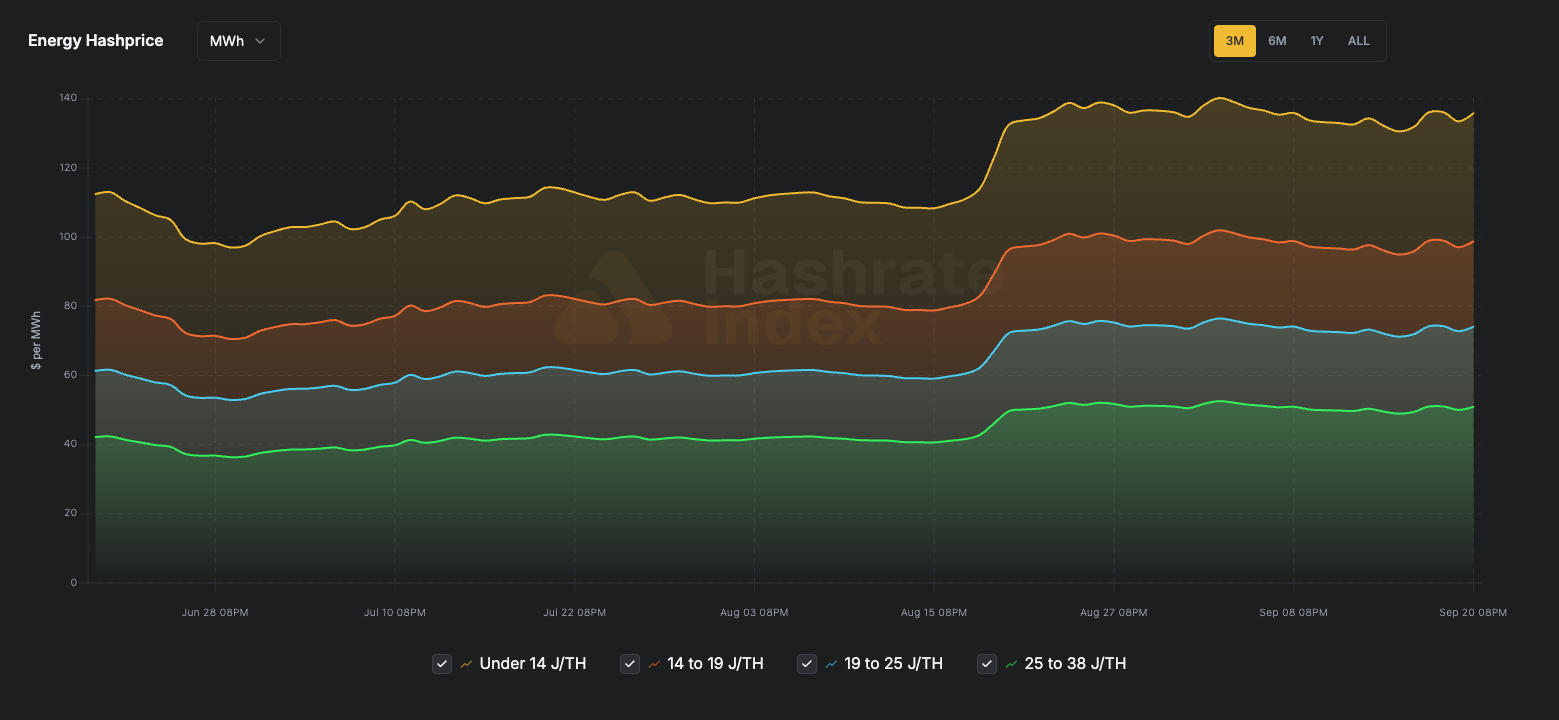
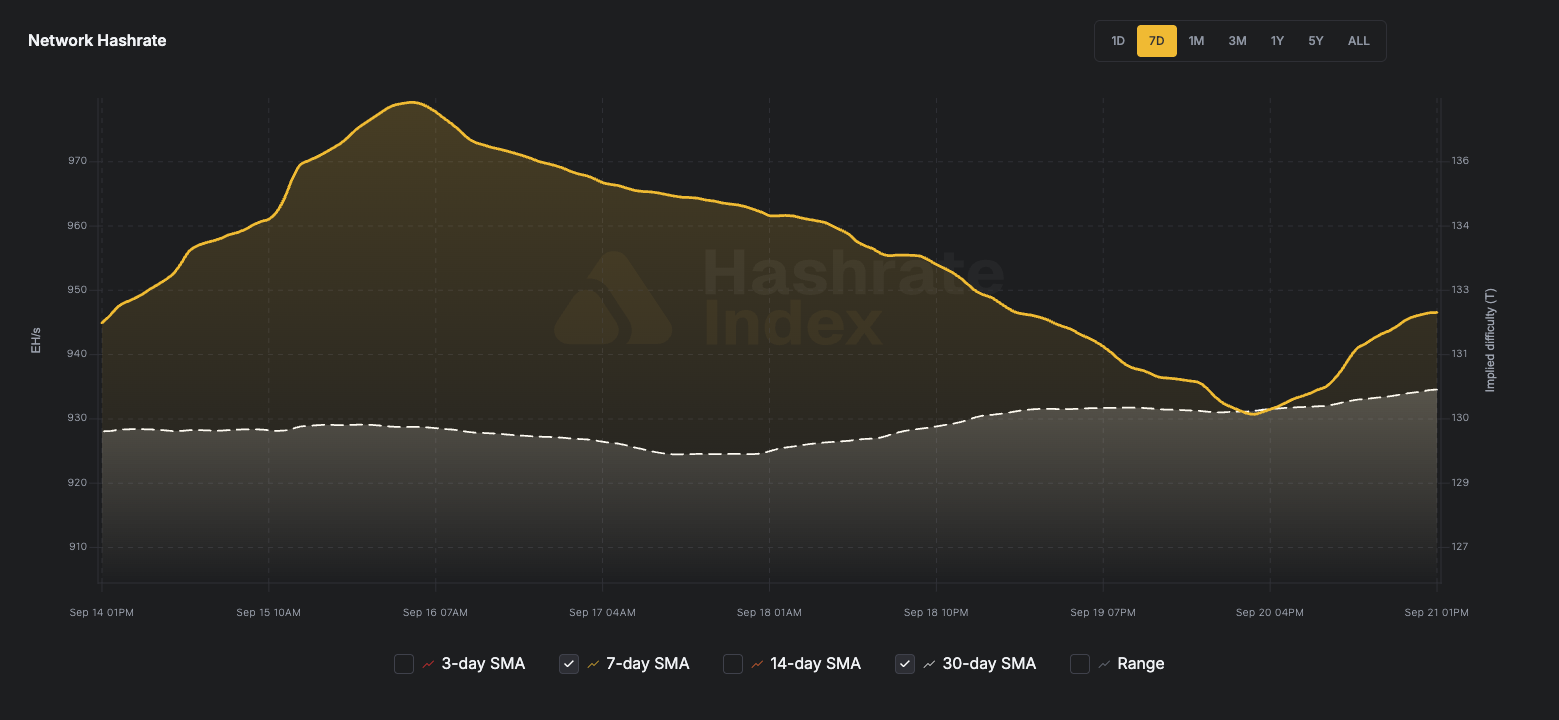
The global Bitcoin mining industry underwent a significant recalibration during the first half of 2026. Following a peak in early 2025, global hashrate retracted to 1,004 EH/s in the second quarter, representing a 5.8% decline from the 1,066 EH/s recorded in the previous quarter. This contraction was largely driven by a sharp correction in Bitcoin’s market price, which fell from a high of approximately $124,000 in October 2025 to lows near $65,000 in early 2026.

The State of Bitcoin Mining in Latin America (2026)

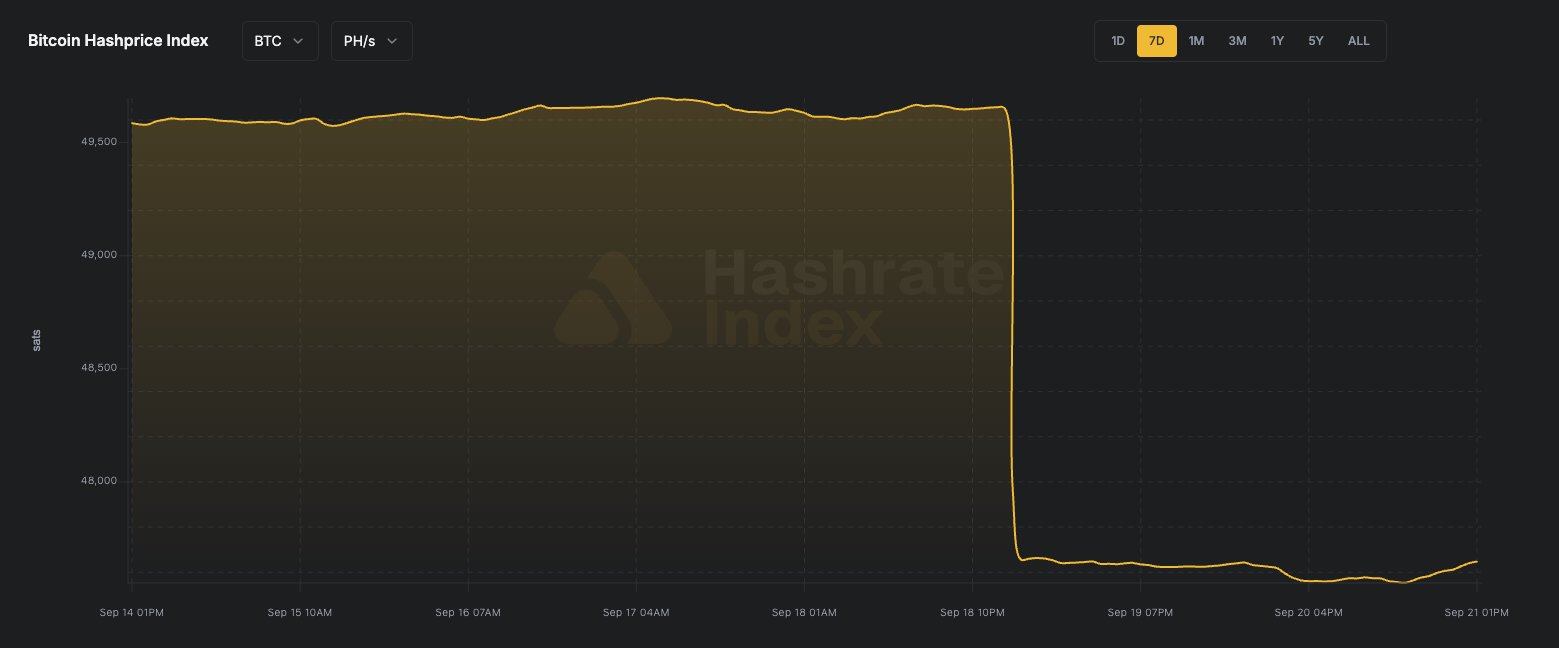
This price volatility pushed hashprice—the expected value of 1 PH/s of hashing power per day—to all-time lows of roughly $27.89. The resulting margin squeeze forced approximately 252 EH/s of older-generation hardware (machines with an efficiency rating of 25 J/TH or higher) to go offline as they became unable to cover their basic operating expenses. Amidst this "Great Shakeout," the global distribution of hashrate remained concentrated among three dominant players: the United States (37.4%), Russia (16.9%), and China (12.0%). Together, these nations control 65% of the network. However, the emergence of Paraguay as the world’s fourth-largest mining jurisdiction, holding a 4.3% global share, signals a potential shift toward the Southern Hemisphere.

Paraguay: The Engine of Latin American Mining

Paraguay’s ascent to the number four spot globally is not a matter of chance but a result of a massive, structural energy surplus. The nation’s electricity generation is dominated by the Itaipu Dam, one of the world’s largest hydroelectric facilities with an installed capacity of 14,000 MW. Under the terms of the 1973 Itaipu Treaty, Paraguay is entitled to 50% of this output. With a peak domestic demand of only 5,280 MW against an available capacity of roughly 8,760 MW, the country maintains a consistent surplus of approximately 3,480 MW.

This surplus energy, which must be either consumed or sold back to Brazil at below-market rates, has allowed the state utility, ANDE, to offer industrial tariffs that are among the most competitive in the world. For intensive industrial consumers (GCIE category), the effective cost ranges between $0.040 and $0.050 per kWh. Unlike other jurisdictions where low costs are the result of temporary government subsidies, Paraguay’s pricing is based on the production economics of fully depreciated assets with near-zero marginal costs.

The State of Bitcoin Mining in Latin America (2026)

Institutional growth in Paraguay has remained resilient despite the global market downturn. In Q2 2026, while other regions saw a decline in activity, Paraguay maintained a 54% year-over-year growth rate. Major players like the Penguin Group and Alps Blockchain have established long-term infrastructure in the country, treating Bitcoin mining as a strategic national industry. Furthermore, the government is leveraging this energy abundance to attract AI data center investments, exemplified by a 500 MW Memorandum of Understanding signed with X8 Cloud USA. The primary risk factor for this market remains the ongoing renegotiation of the Itaipu Treaty’s Annex C, which could alter the pricing formula for Paraguay’s surplus energy over the next decade.

Brazil: Infrastructure Expansion and Market Liberalization

Brazil is currently the most dynamic market to watch in the region, exhibiting a 133% year-over-year increase in hashrate, growing from 1.5 EH/s to 3.5 EH/s. This growth occurred during a global down-cycle, suggesting that operators in Brazil are making long-term infrastructure commitments rather than seeking short-term arbitrage.

The backbone of Brazil’s appeal is the SIN (Sistema Interligado Nacional), a grid with 232 GW of installed capacity that is consistently 90% renewable. However, Brazil faces a unique geographic challenge: its renewable generation is often located far from demand centers, leading to significant curtailment. In 2024 alone, over 9.5 million MWh of wind energy in the Northeast was curtailed because the transmission infrastructure could not accommodate the load.

The State of Bitcoin Mining in Latin America (2026)

A pivotal regulatory shift occurred in 2024 with the full opening of the ACL (Ambiente de Contratação Livre), allowing high-tension consumers to negotiate bilateral contracts directly with power generators. This has enabled Bitcoin miners to bypass standard distributor tariffs and secure fixed-price renewable energy. Companies like Minter Digital are specifically targeting remote regions to monetize stranded renewable assets, particularly in the Sul (South) region, where industrial tariffs average approximately $0.046/kWh.

Argentina: Navigating Macroeconomic Volatility

Argentina presents a paradox of world-class energy assets and a challenging macroeconomic environment. The country’s hashrate declined by 42% year-over-year in Q2 2026, a trend driven not by energy scarcity but by capital controls, currency instability, and political risk.

Despite these hurdles, the technical potential remains immense. Argentina’s Vaca Muerta formation is one of the largest shale gas deposits in the world. Companies like Unblock Global, in partnership with Crusoe Energy and Pampa Energia, have successfully deployed operations that utilize flared gas to power mining rigs—a model that reduces methane emissions while generating hard currency.

The State of Bitcoin Mining in Latin America (2026)

The outlook for Argentina is beginning to shift under the Milei administration. Decrees 450, 451, and 452 of 2025 have initiated a comprehensive restructuring of the energy sector, moving toward marginal-cost pricing and facilitating USD-denominated bilateral power purchase agreements (PPAs). If these reforms provide the necessary macro-stability, Argentina’s combination of Patagonian wind and Vaca Muerta gas could quickly reverse the current hashrate decline.

Bolivia: The Risks of Artificial Subsidies

Bolivia’s recent experience serves as a cautionary tale for the mining industry. The country saw a 2,400% year-over-year growth in hashrate through early 2026, driven almost entirely by subsidized natural gas. The government-owned utility, YPFB, provides gas to power plants at approximately $1.30/MMBTU, while the international market price fluctuates between $8 and $12.

This artificial spread created a boom in mining activity, but the foundation is precarious. Bolivia’s gas reserves are depleting rapidly, and the country is projected to become a net gas importer within the next two to five years. As the cost of maintaining these subsidies becomes unsustainable, operators are already beginning to exit the market. Q2 2026 data showed a notable pullback in hashrate, as rational actors price in the end of the subsidy era. Durable opportunities in Bolivia will likely shift toward renewable assets, such as the Zongo hydroelectric cascade or the Uyuni solar fields, which do not carry the same fuel-price exposure.

The State of Bitcoin Mining in Latin America (2026)

Venezuela: The Untapped Frontier

Venezuela remains the most significant "black box" in the global mining landscape. While it does not appear on formal hashrate heatmaps due to regulatory complexities and OFAC sanctions, its energy potential is unrivaled. The country’s grid suffers from massive transmission and distribution losses, leaving an estimated 7,500 MW of hydroelectric potential in the Caroní basin "stranded"—generated at the source but unable to reach load centers.

Additionally, Venezuela flares roughly 300,000 barrels of oil equivalent per day in associated gas. Domestic operators like DoctorMiner, which has been active since 2016, have demonstrated that mining can provide a vital economic lifeline in a collapsing currency environment. Recent shifts in US policy, including OFAC General Licenses 48A and 49A, have created a legal pathway for American investment in Venezuela’s energy infrastructure. If political and regulatory hurdles continue to clear, Venezuela could theoretically deploy several gigawatts of mining capacity using energy that is currently being wasted.

El Salvador: From Narrative to Economic Reality

El Salvador has gained global recognition as a "pioneer" for its adoption of Bitcoin as legal tender and its state-sponsored geothermal mining initiatives. However, the country has struggled to become a competitive market for private-sector mining due to high electricity costs, which average $0.20/kWh—nearly four times the rate in Paraguay.

The State of Bitcoin Mining in Latin America (2026)

The long-term viability of El Salvador as a mining hub depends on the expansion of its geothermal capacity. The government’s "Volcano Energy" project and exploration in the Chinameca field aim to increase total geothermal output to over 400 MW. If these projects reach scale and lower the levelized cost of energy to the projected $0.03–$0.06/kWh range, El Salvador may finally match its pro-Bitcoin narrative with the economic fundamentals required for industrial-scale mining.

Conclusion: The Road Ahead for Latin American Mining

The data from Q2 2026 highlights a clear trend: energy abundance is a necessary but insufficient condition for a thriving Bitcoin mining industry. The difference between the United States’ 37.4% share and Latin America’s 5-6% share is not a lack of megawatts, but a lack of stable policy and mature capital markets.

Paraguay has set the template for the region by offering a stable, low-cost environment based on structural surpluses. Brazil is following suit through market liberalization and grid integration. Meanwhile, Argentina and Venezuela represent the "high-beta" opportunities where significant regulatory or macroeconomic shifts could unlock gigawatts of capacity.

The State of Bitcoin Mining in Latin America (2026)

As the industry moves into the latter half of 2026, the focus will remain on how these nations bridge the gap between their natural resources and their regulatory frameworks. For Latin America to truly become a global mining powerhouse, it must transform its stranded energy into a reliable, legally protected asset for international investors. The energy is there; the work of building the infrastructure and policy to support it is only just beginning.

May 30, 2025 0 comment
0 FacebookTwitterPinterestEmail
Crypto Mining & Infrastructure

Foundry to Launch Institutional Grade Zcash Mining Pool in April 2026 to Bridge Infrastructure Gaps for Privacy Focused Digital Assets

by Muslim May 28, 2025
written by Muslim

Foundry, the digital asset infrastructure provider that operates the world’s largest Bitcoin mining pool, has officially announced its intention to expand its ecosystem by launching a dedicated Zcash (ZEC) mining pool. Scheduled for a commercial debut in April 2026, the new pool is specifically engineered to meet the stringent requirements of institutional investors, public corporations, and large-scale enterprise miners. This move represents a significant pivot for the Rochester, New York-based firm, as it seeks to apply its dominant North American mining model to the privacy-preserving sector of the cryptocurrency market. By providing a regulated, transparent, and enterprise-grade gateway for Zcash mining, Foundry aims to resolve a long-standing disparity between the asset’s market maturity and the sophisticated infrastructure required to support it at scale.

The announcement comes at a pivotal moment for Zcash, a decentralized cryptocurrency that leverages advanced cryptography to offer enhanced financial privacy. While Foundry USA—the company’s flagship Bitcoin pool—currently commands a plurality of the global Bitcoin hashrate, the expansion into Zcash signals a growing institutional appetite for diversified proof-of-work (PoW) assets. According to Foundry CEO Mike Colyer, while Zcash has evolved into a sophisticated asset class capable of attracting institutional interest, the underlying mining infrastructure has historically lagged behind the standards expected by corporate entities. The forthcoming pool is designed to bridge this gap, offering the same level of reliability, reporting, and compliance that has made Foundry a leader in the Bitcoin mining space.

The Strategic Evolution of Zcash Mining Infrastructure

Zcash was launched in 2016 as a fork of the original Bitcoin codebase, but it introduced a revolutionary cryptographic tool known as zk-SNARKs (Zero-Knowledge Succinct Non-Interactive Arguments of Knowledge). This technology allows parties to verify transactions without revealing sensitive metadata, such as the sender, receiver, or transaction amount. Despite its technical prowess, Zcash mining has remained a relatively niche sector compared to Bitcoin, often dominated by individual hobbyists or smaller-scale operations.

Foundry’s entry into the space is expected to professionalize the Zcash mining landscape. Mining pools function as decentralized cooperatives where individual participants combine their computational power, or hashrate, to increase the statistical probability of solving a block and earning rewards. In the institutional context, the stability of these rewards and the transparency of the pool operator are paramount. By launching a pool based in the United States, Foundry provides a level of jurisdictional certainty that is often lacking in the global mining industry. This is particularly relevant for public companies that must adhere to strict auditing and "Know Your Customer" (KYC) requirements.

Bitcoin Mining Giant Enters Zcash With Institutional Service

The choice of April 2026 for the launch date suggests a long-term commitment to the Zcash roadmap. It allows for a rigorous development and testing phase to ensure that the pool can handle the unique technical requirements of the Equihash algorithm, which Zcash utilizes for its proof-of-work consensus. Unlike Bitcoin’s SHA-256 algorithm, Equihash is memory-oriented, requiring specific hardware configurations that Foundry is well-positioned to optimize for its institutional clients.

Analyzing the Recent Surge in Zcash Network Hashrate

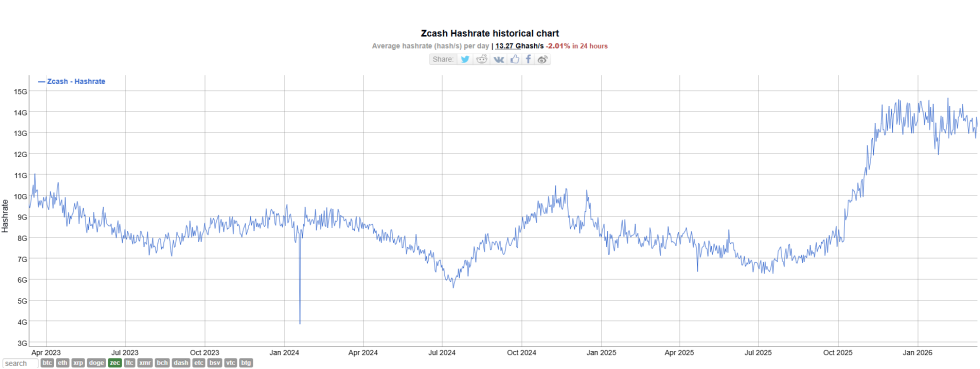
The decision to launch this new venture is backed by compelling on-chain data. Over the past several months, the Zcash network has experienced a significant surge in total computing power. Data from BitInfoCharts indicates that the ZEC hashrate, which hovered below 8 Ghash/s as recently as October, has climbed to over 13 Ghash/s. This represents a growth of more than 60% in a relatively short timeframe, suggesting that miners are increasingly allocating resources to the network in anticipation of future price appreciation or protocol upgrades.

This hashrate boom is often a leading indicator of network health and security. As more computational power is dedicated to the chain, it becomes exponentially more expensive and difficult for malicious actors to execute a 51% attack. For institutional players, a high and stable hashrate is a prerequisite for investment, as it guarantees the integrity of the ledger. Foundry’s involvement is likely to accelerate this trend, as the firm’s ability to aggregate hashrate from large-scale North American facilities could push the Zcash network to new record highs in terms of security and decentralization.

Bridging the Gap Between Privacy and Compliance

One of the most complex challenges facing privacy coins like Zcash is the perceived tension between anonymity and regulatory compliance. Foundry’s press release addressed this head-on, noting that Zcash demonstrates how financial privacy and compliant digital infrastructure can coexist. The protocol offers "shielded" addresses for private transactions, but it also supports "transparent" addresses that function similarly to Bitcoin. This duality allows users and institutions to choose the level of privacy they require while maintaining the ability to provide transaction data to regulators or auditors when necessary.

Zooko Wilcox, the founder of Zcash and current Chief Product Officer at Shielded Labs, expressed strong support for Foundry’s initiative. Shielded Labs, a Switzerland-based independent organization dedicated to supporting the Zcash ecosystem, views the entry of a North American powerhouse like Foundry as a validation of Zcash’s long-term viability. Wilcox noted that having an enterprise-grade pool operated by a reputable firm provides the necessary "shielding" for institutions that want to participate in the network without navigating the risks associated with less transparent, offshore mining pools.

Bitcoin Mining Giant Enters Zcash With Institutional Service

The involvement of Shielded Labs also highlights the global nature of the project. While Foundry provides the operational muscle in North America, the intellectual and developmental support for Zcash remains a global effort. This synergy between US-based infrastructure and international protocol development is a hallmark of the maturing digital asset industry.

Economic Implications and the Halving Cycle

The economic model of Zcash closely mirrors that of Bitcoin, which is a significant draw for institutional miners familiar with the "digital gold" narrative. Zcash has a hard supply cap of 21 million tokens, and it undergoes "halving" events approximately every four years. During these events, the block reward issued to miners is cut in half, effectively reducing the inflation rate of the currency.

For miners, these cycles require careful planning and high-efficiency hardware. Foundry’s expertise in managing Bitcoin’s halving cycles provides them with a distinct advantage in the Zcash market. By offering an institutional-grade pool, Foundry can provide participants with sophisticated tools for managing their rewards, hedging against volatility, and optimizing their hardware lifecycles. This level of financial sophistication is essential for the survival of mining operations in a post-halving environment where margins are typically compressed.

Market Context and Current Price Performance

At the time of the announcement, the price of Zcash (ZEC) was trading at approximately $209. While the asset has seen a retracement of about 11% over the past week, its long-term trajectory remains a subject of intense interest among analysts. The current price action reflects broader market volatility, but the underlying fundamentals—evidenced by the rising hashrate and the entry of major infrastructure players—suggest a strengthening foundation.

The correlation between hashrate and price is a frequent topic of debate in the crypto-economics community. While hashrate typically follows price, the entry of an institutional operator like Foundry can create a "flywheel effect." Improved infrastructure attracts more institutional capital, which can lead to increased liquidity and price stability, which in turn attracts more miners to the network. By committing to a 2026 launch, Foundry is signaling its belief that Zcash will remain a relevant and valuable component of the digital asset landscape for years to come.

Bitcoin Mining Giant Enters Zcash With Institutional Service

Broader Impact on the Privacy Coin Sector

The launch of an institutional Zcash pool by the world’s largest Bitcoin pool operator carries implications that extend beyond a single token. It serves as a broader endorsement of the privacy coin sector at a time when privacy is becoming an increasingly contentious issue in global finance. As central bank digital currencies (CBDCs) and more rigorous surveillance tools are developed, the demand for decentralized, privacy-preserving financial alternatives is expected to grow.

Foundry’s move could encourage other major infrastructure providers to reconsider their stance on privacy-focused assets. If Foundry can successfully navigate the regulatory requirements of operating a Zcash pool in the United States, it provides a blueprint for other firms to follow. This could lead to a more robust and diverse mining ecosystem, reducing the reliance on a single asset like Bitcoin and fostering innovation across the entire proof-of-work landscape.

Conclusion and Future Outlook

The announcement that Foundry will launch an institutional-grade Zcash mining pool in April 2026 marks a significant milestone in the evolution of privacy-preserving digital assets. By leveraging its success in the Bitcoin sector, Foundry is poised to bring unprecedented levels of professionalization and security to the Zcash network. This initiative addresses the critical need for US-based, compliant mining infrastructure, providing a clear pathway for public companies and institutional investors to engage with Zcash.

As the network hashrate continues to climb and the industry prepares for future halving events, the presence of a dominant, transparent pool operator like Foundry will likely be a stabilizing force. While the launch is still over a year away, the strategic groundwork being laid today suggests that the future of Zcash will be defined by a marriage of cutting-edge privacy technology and institutional-grade reliability. For the broader cryptocurrency market, this represents another step toward the integration of decentralized technologies into the traditional financial fold, proving that privacy and compliance are not mutually exclusive, but are instead the twin pillars of a mature digital economy.

May 28, 2025 0 comment
0 FacebookTwitterPinterestEmail
Crypto Mining & Infrastructure

American Bitcoin Backed by Trump Family to List on Nasdaq Following Merger with Gryphon Digital Mining

by Lina Hope May 27, 2025
written by Lina Hope

American Bitcoin, a specialized cryptocurrency mining enterprise with high-profile backing from Eric Trump and Donald Trump Jr., is finalized for a public debut on the Nasdaq stock exchange following a definitive all-stock merger agreement with Gryphon Digital Mining. This strategic consolidation marks a significant milestone in the intersection of digital asset infrastructure and political-industrial influence, positioning the newly formed entity as a major contender in the global Bitcoin mining sector. According to reports confirmed by Reuters and statements from Hut 8 CEO Asher Genoot, the transaction is expected to conclude imminently, with the company slated to begin trading under the ticker symbol "ABTC" in early September 2025.

The merger represents a sophisticated pivot for the firm, which was established in March 2025 with the ambitious goal of becoming the world’s most efficient "pure-play" Bitcoin miner. By merging with Gryphon Digital Mining, an existing player in the space known for its focus on carbon-neutral mining operations, American Bitcoin bypasses the traditional and often more arduous initial public offering (IPO) process. This maneuver allows the company to gain immediate access to public capital markets, providing a streamlined path for institutional investment and broader financing options that are essential for scaling large-scale data center operations.

The Strategic Alliance and Ownership Structure

The financial architecture of the deal reveals a concentrated ownership structure dominated by industry veterans and the Trump family. Hut 8, one of the largest and longest-standing North American digital asset miners, currently holds an 80% stake in American Bitcoin. Following the completion of the merger with Gryphon, Hut 8 will retain a majority interest, ensuring that the operational expertise of the veteran mining firm remains at the core of the new entity’s strategy.

Collectively, Hut 8 and the Trump brothers—Eric and Donald Jr.—will control approximately 98% of the company’s equity. This level of insider ownership suggests a long-term commitment to the firm’s growth trajectory and a high degree of confidence in the underlying value of the Bitcoin mining business model. The involvement of the Trump family has already acted as a catalyst for securing high-profile anchor investors. Among the most notable participants are Tyler and Cameron Winklevoss, the founders of the Gemini cryptocurrency exchange and early pioneers in the Bitcoin space. While Gemini representatives have declined to provide formal comments on the specifics of their investment, their participation underscores the institutional appetite for Bitcoin-linked equities.

Asher Genoot, the CEO of Hut 8, emphasized that the decision to pursue a merger over a traditional IPO was driven by the need for agility in a rapidly evolving market. Speaking at the Bitcoin Asia conference in Hong Kong, Genoot noted that the public listing via Gryphon provides a "ready-made" platform to tap into global liquidity. The move is seen as a tactical play to leverage the current regulatory and market climate, which has become increasingly receptive to digital asset infrastructure companies.

Expansion into Asian Markets: Hong Kong and Japan

While the company bears the name "American Bitcoin," its strategic vision is decidedly global. A central component of the firm’s post-merger growth strategy involves aggressive expansion into the Asia-Pacific region. During his appearance in Hong Kong, Asher Genoot revealed that the company is actively exploring acquisition opportunities in both Hong Kong and Japan. These markets are viewed as critical hubs for the next phase of cryptocurrency adoption and institutional integration.

The timing of these expansion plans coincides with high-level diplomatic and business engagements. Eric Trump, a key figure in the company’s leadership, is scheduled to travel to Tokyo to participate in an event hosted by Metaplanet. Metaplanet, a Japanese firm listed on the Tokyo Stock Exchange, has gained international attention for adopting a "Bitcoin treasury" model similar to that of the U.S.-based MicroStrategy, aggressively accumulating BTC as a reserve asset.

The rationale for establishing a footprint in Asia is twofold. First, it allows American Bitcoin to diversify its operational risk by spreading its hashrate across different jurisdictions. Second, it provides a gateway for investors in markets where direct access to Nasdaq-listed stocks might be restricted or administratively complex. By investing in or acquiring local firms, American Bitcoin can offer regional investors exposure to a publicly listed Bitcoin mining powerhouse, effectively bridging the gap between Western capital markets and Eastern digital asset demand.

Operational Philosophy: Pure-Play Mining and Treasury Accumulation

At its core, American Bitcoin aims to differentiate itself through operational efficiency and a dual-pronged approach to asset accumulation. The company defines itself as a "pure-play" miner, meaning its primary revenue stream and corporate focus are dedicated exclusively to the extraction of Bitcoin, rather than diversifying into ancillary blockchain services or unrelated technology sectors.

The company’s roadmap includes:

  1. Mining Efficiency: Utilizing state-of-the-art ASIC (Application-Specific Integrated Circuit) hardware to maximize hashrate while minimizing energy consumption. By partnering with Hut 8, American Bitcoin gains access to proprietary energy management software and optimized data center designs.
  2. Direct Purchases: In addition to the Bitcoin earned through mining blocks, the company plans to utilize its capital reserves to purchase Bitcoin directly from the market. This strategy is designed to accelerate the growth of its balance sheet, aligning the company’s valuation closely with the spot price of the cryptocurrency.
  3. Infrastructure Scaling: Rapidly increasing its megawatt capacity through the acquisition of existing data centers and the development of new "greenfield" projects, particularly in regions with surplus renewable energy.

This "HODL" strategy—holding onto mined Bitcoin rather than selling it immediately to cover operational costs—is a hallmark of the most successful firms in the industry. It transforms the company into a de facto Bitcoin ETF (Exchange-Traded Fund) with an industrial component, providing shareholders with leveraged exposure to the price of the digital asset.

Chronology of the Path to Public Markets

The journey of American Bitcoin from its inception to its impending Nasdaq listing has been remarkably swift, reflecting the fast-paced nature of the crypto-industrial complex.

  • March 2025: American Bitcoin is founded, with Hut 8 taking a dominant 80% stake. The Trump brothers are announced as key backers, signaling a fusion of political branding and crypto-infrastructure.
  • April – June 2025: The company secures initial rounds of funding and begins the search for a public vehicle for listing. Negotiations with Gryphon Digital Mining commence.
  • July 2025: Finalization of the all-stock merger agreement. The "ABTC" ticker symbol is reserved with the Nasdaq.
  • August 2025: Reuters reports the details of the merger and the involvement of the Winklevoss twins as anchor investors. Asher Genoot and Eric Trump promote the venture at Bitcoin Asia in Hong Kong.
  • September 2025 (Projected): The merger closes, and ABTC officially begins trading on the Nasdaq.

Political Implications and Industry Scrutiny

The involvement of the Trump family in a major Bitcoin mining operation has not been without controversy. Critics and regulatory watchdogs have raised concerns regarding potential conflicts of interest, particularly given Donald Trump’s evolving and increasingly supportive stance on the cryptocurrency industry during his political campaigns.

The "Trump Effect" on the crypto market has been a subject of intense debate among analysts. On one hand, the family’s involvement brings unprecedented mainstream visibility and political capital to the mining sector, potentially paving the way for more favorable regulatory frameworks. On the other hand, it subjects the company to heightened scrutiny from the Securities and Exchange Commission (SEC) and other federal agencies, who may be wary of the intersection between political influence and financial market activities.

Despite these concerns, the company has maintained that its operations are strictly commercial and aimed at bolstering American leadership in the global digital asset race. The mission to create a "most efficient" miner is framed by the company as a matter of national economic competitiveness, particularly as other nations seek to dominate the hashrate market.

Analysis of the Broader Impact on the Mining Sector

The emergence of ABTC on the Nasdaq is likely to trigger a ripple effect across the Bitcoin mining industry. As one of the few firms with such a high concentration of insider ownership and political backing, American Bitcoin enters the market with a unique value proposition.

For the broader market, the successful listing of a Trump-backed crypto firm signifies a maturation of the industry. It suggests that digital asset mining is no longer a fringe activity but a legitimate component of the American industrial and financial landscape. Furthermore, the focus on Asian expansion highlights a shift in the industry’s center of gravity. As North American firms look toward Hong Kong and Tokyo, we are likely to see an increase in cross-border partnerships and a more integrated global market for hashrate.

Investors will be closely watching the performance of ABTC relative to established peers such as Marathon Digital Holdings, Riot Platforms, and Core Scientific. The "pure-play" designation will be a key metric for comparison, as analysts evaluate whether a focused mining and treasury strategy can outperform more diversified blockchain technology conglomerates.

In conclusion, the merger of American Bitcoin and Gryphon Digital Mining represents more than just a corporate transaction; it is a high-stakes bet on the future of Bitcoin as a cornerstone of the global financial system. With the backing of the Trump family, the operational prowess of Hut 8, and the capital of the Winklevoss twins, ABTC is poised to become a formidable force on the Nasdaq and beyond. As the September trading date approaches, the eyes of both the political and financial worlds will be on the "ABTC" ticker, waiting to see if this ambitious venture can fulfill its promise of becoming the world’s leading Bitcoin mining powerhouse.

May 27, 2025 0 comment
0 FacebookTwitterPinterestEmail
Global Cryptocurrency News

Bitcoin Poised for Significant Upside as Macro, Technical, and On-Chain Signals Align, Says Capriole Founder

by Asep Darmawan May 25, 2025
written by Asep Darmawan

Bitcoin may be approaching a more consequential upside move if current technical and on-chain trends hold, according to Charles Edwards, founder of Capriole, who argues in a new market note that a cluster of macro, sentiment, and blockchain indicators has shifted in a more constructive direction, despite a persistently volatile geopolitical backdrop. This comprehensive analysis suggests that the world’s leading cryptocurrency is on the cusp of a significant rally, driven by fundamental strengths and a changing global economic narrative.

Edwards framed the current environment as unusually difficult to navigate, with global financial markets swinging erratically between heightened war fears, dramatic oil price spikes, and the rapidly evolving threat landscape presented by artificial intelligence. Despite these numerous headwinds, he asserts that the underlying signals from Bitcoin’s network and broader macroeconomic data are becoming increasingly hard to ignore. A critical threshold for validating this optimistic outlook, Edwards emphasized, is Bitcoin’s ability to sustain a monthly and weekly close above $71,500. This price point, he explained, is a pivotal level that, if maintained, would signify a definitive shift in market momentum.

Technical Analysis Signals Robust Bullish Momentum

From a purely technical perspective, the significance of the $71,500 level is profound. Edwards highlighted that a close above this price point would mark Bitcoin’s strongest technical monthly finish in a year. Such a development would not only break through previous resistance levels but also establish a solid foundation for further price appreciation. In technical analysis, a strong monthly close above a significant psychological and structural level often indicates that buying pressure has decisively overcome selling pressure, signaling a clear shift in market control to the bulls. This type of breakout typically attracts further institutional and retail interest, creating a self-reinforcing upward trend.

Examining the daily chart, Edwards described the recent price action as even more encouraging. He specifically cited an "engulfing advance," a powerful bullish candlestick pattern where a current green candle fully encompasses the body of the previous red candle. This pattern is widely interpreted by traders as a strong reversal signal, indicating that buyers have stepped in aggressively to overwhelm sellers, often leading to continued upward movement. The relative strength Bitcoin has demonstrated against other traditional markets since the onset of the Iran conflict further strengthens this technical narrative. For months, Bitcoin had largely traded like a risk asset, showing correlation with equities and other speculative investments. However, its recent outperformance, even amidst geopolitical uncertainty, suggests a decoupling. This divergence implies that investors might be increasingly viewing Bitcoin as a unique asset, potentially a hedge against broader market instability or a distinct growth opportunity, rather than merely another component of the "risk-on" portfolio. This shift in character, moving away from its previous nine-month correlation with risk assets, is a key component of Edwards’ bullish thesis, indicating a maturing asset class.

On-Chain Metrics Uncover Deep Accumulation and Network Strength

Bitcoin Could Be Near A Bigger Breakout As Key Metrics Turn, Capriole Founder Says

Beyond conventional price charts, Edwards’ analysis leverages a suite of on-chain metrics, which provide an unparalleled, transparent view into the fundamental health and investor behavior within the Bitcoin network. These indicators, he argues, are collectively painting a picture consistent with historical accumulation zones—periods that have consistently preceded significant price rallies in past cycles.

One crucial metric supporting this view is Normalized Dormancy, which currently registers at low levels. Dormancy measures the average age of spent transaction outputs, indicating how long coins have remained unspent before being moved. A low normalized dormancy suggests that long-term holders, often referred to as "HODLers," are not actively distributing their Bitcoin holdings, even in periods of price volatility or weakness. This behavior signals strong conviction among experienced investors who believe in Bitcoin’s long-term value proposition, thereby reducing the available supply on exchanges and making any fresh demand more impactful on price.

Edwards also pointed to a renewed phenomenon he termed "restacking" by longer-dated holders, specifically noting a significant turn in the 2-year-plus cohort. "Restacking" refers to the accumulation of Bitcoin by these highly experienced market participants who have held their assets for extended periods, enduring multiple market cycles. When this cohort begins to increase its holdings, it typically indicates a collective belief that the current price levels offer attractive entry points for long-term growth. The actions of the 2-year-plus cohort are particularly insightful, as these investors have demonstrated resilience and a deep understanding of Bitcoin’s market dynamics, making their accumulation a potent bullish signal.

Another compelling on-chain signal comes from SOPR (Spent Output Profit Ratio) readings, which are described as "deeply depressed." SOPR is an indicator that assesses whether spent bitcoins are, on average, being moved in profit or loss. A SOPR value below 1 suggests that market participants are, on average, selling their Bitcoin at a loss. Deeply depressed SOPR readings are historically associated with periods of market capitulation, where weaker hands are flushed out of the market due to despair or necessity. These phases have often marked significant market bottoms and have consistently been followed by stronger forward Bitcoin opportunities, as the supply held by high-conviction investors increases. It indicates that much of the selling pressure driven by fear or necessity has been absorbed, setting the stage for recovery.

The behavior of Bitcoin miners, who are critical to the network’s security and supply, also provides bullish cues. Edwards noted that the market remains in a "deep miner capitulation phase," referencing Hash Ribbons. Hash Ribbons are an on-chain indicator that uses moving averages of the Bitcoin hash rate to identify periods where miners are under severe stress, often forced to sell their mined Bitcoin to cover operational costs (capitulation). While "capitulation" sounds negative, it is often considered a contrarian bullish signal for price, as it signifies that less efficient miners have exited the market, leaving a more robust and profitable mining ecosystem. Concurrently, miner sell pressure is unusually subdued. Miners represent a consistent source of new Bitcoin supply, and reduced selling from this cohort further tightens the market’s available supply, contributing to potential price appreciation.

Finally, one of the most significant insights from Edwards’ analysis is the observation that institutions are once again net buyers of Bitcoin. This trend, he argued, has been a hallmark of every major Bitcoin appreciation phase over the last five years, especially when institutional demand outstrips the newly mined supply. The increasing participation of institutional investors, facilitated by products like spot Bitcoin ETFs, represents a substantial influx of capital and a strong validation of Bitcoin as a legitimate, investable asset class. Their sustained accumulation provides a powerful demand floor, absorbing supply and acting as a significant catalyst for price growth.

Collectively, these robust on-chain indicators offer a compelling, data-driven foundation for Edwards’ bullish conviction. He concludes, "Amongst this swathe of data (and more) it’s hard not to be bullish on Bitcoin above $71.5K."

Bitcoin Could Be Near A Bigger Breakout As Key Metrics Turn, Capriole Founder Says

Macroeconomic Landscape: Fading Fear and Emerging Optimism

The favorable technical and on-chain dynamics for Bitcoin are intrinsically linked to a discernible shift in broader traditional market sentiment and macroeconomic indicators. Edwards highlighted a significant dissipation of macro fear, even as geopolitical tensions simmer.

A key traditional market signal identified by Edwards is a recent VIX macro buy signal. The VIX, or CBOE Volatility Index, often dubbed the "fear gauge," measures the market’s expectation of future volatility in the S&P 500. Edwards observed a notable drop in volatility, with the VIX falling from above 30—a level indicative of extreme market fear and uncertainty—back towards the 20 area. A decline in the VIX typically signals a reduction in market apprehension and an increase in investor confidence, often preceding periods of market stability or upward movement. This shift suggests that the most acute phase of geopolitical panic, which had previously unsettled global markets, may be receding.

Further bolstering this sentiment turnaround, the CNN Fear & Greed Index has re-entered "buy territory." This index compiles various market indicators to gauge whether investors are primarily driven by fear or greed. Its return to a "buy" signal implies a resurgence of optimism and a greater willingness among investors to embrace risk, marking a stark contrast to the heightened caution prevalent during periods of market distress.

Crucially, Edwards also pointed to what he termed the "biggest weekly jump in US liquidity since May 2025." Liquidity in financial markets refers to the ease with which assets can be bought or sold without significantly impacting their price. A substantial increase in US liquidity implies that more capital is available within the financial system, which often translates into increased investment in risk assets like cryptocurrencies. When central banks or governments inject liquidity, it generally creates a more favorable environment for asset price appreciation, as investors seek returns in a capital-rich landscape.

Edwards interprets these macroeconomic shifts as evidence that markets are moving beyond the sharpest phase of geopolitical panic. This is particularly evident in the market’s evolving perception of the Iran conflict. Initially, the conflict triggered widespread concerns about regional instability and disruptions to global energy supplies. However, Edwards noted that markets are increasingly treating the conflict as a "contained risk" rather than a prolonged, systemic macro shock. This reassessment is supported by several factors: global oil prices have retreated below $100 per barrel after initial spikes, indicating easing supply concerns; reports of a US-Iran ceasefire have helped de-escalate immediate tensions; and, significantly for the crypto market, Bitcoin has remarkably outperformed equities by 11% since the war began. For an asset that had spent months tracking broader market downtrends and behaving largely as a risk-on indicator, this substantial change in character is a powerful testament to its newfound resilience and perceived value.

Edwards extended his analysis by suggesting that markets might now be entering a phase of "volatility fatigue." This psychological phenomenon describes a state where investors become desensitized to the daily torrent of dramatic headlines and short-term market reversals. Instead of reacting impulsively to every news event, they begin to discount transient noise and return to pricing assets based on more fundamental drivers: underlying liquidity, economic growth prospects, and intrinsic value. This shift from reactive panic to a more deliberate, analytical approach could foster a more stable and predictable environment for Bitcoin’s continued growth.

Bitcoin Could Be Near A Bigger Breakout As Key Metrics Turn, Capriole Founder Says

The Growing AI-Driven Security Threat to Crypto Infrastructure

Despite the overwhelmingly bullish signals for Bitcoin itself, Edwards’ market note included a significant cautionary section, addressing what he perceives as a rapidly escalating, AI-driven security threat to the broader crypto infrastructure, particularly impacting Decentralized Finance (DeFi) protocols and complex smart contract systems.

Edwards posited that increasingly capable artificial intelligence models are poised to dramatically compress the time required to discover and exploit vulnerabilities in code, shrinking what traditionally took months of human auditing and analysis down to mere minutes. This acceleration in exploit potential poses an existential risk to many current DeFi applications. AI’s ability to rapidly analyze vast amounts of code, identify subtle logical flaws, predict attack vectors, and even autonomously craft exploit payloads represents a paradigm shift in cybersecurity. While AI can also be leveraged for defensive measures, the offensive capabilities are evolving at an alarming rate.

The vulnerabilities are particularly acute in DeFi because these protocols often involve intricate interdependencies between various smart contracts, large sums of locked capital, and immutable code. A single, undiscovered flaw can lead to catastrophic losses, as evidenced by numerous high-profile hacks over the years. With AI, the speed and scale of potential attacks could make these systems far more precarious. For instance, AI could analyze a smart contract’s bytecode, simulate millions of possible interactions, identify obscure edge cases where funds could be siphoned, and then execute the attack automatically, all before human auditors could even begin to understand the vulnerability.

Edwards’ advice on this front was stark and unambiguous: "If you don’t have a really good reason to use complex DeFi protocols and smart contracts, you probably shouldn’t be as we enter this new AI realm. Think about it. Is it really worth the complexity of juicing out that extra few basis points to lend/borrow/bridge/stake/restake?" This serves as a potent warning to investors to carefully weigh the risk-reward calculus of engaging with highly complex, interconnected DeFi applications. While the allure of high yields and novel financial instruments within DeFi is strong, the rapidly diminishing window for identifying and patching vulnerabilities, coupled with the irreversible nature of blockchain transactions, presents an elevated and

May 25, 2025 0 comment
0 FacebookTwitterPinterestEmail
Newer Posts
Older Posts

Recent Posts

  • Ripple Treasury Network Expansion Triggers Speculative 625 Dollar XRP Valuation Analysis Amidst 13000 Bank Integration
  • Analyst Says Bitcoin Is Set To Close This Month In The Red, Here’s Why
  • XRP, Solana, Cardano, BNB, DOGE Primed For Huge Expansion If Ethereum Attains This Milestone
  • Justin Sun Files Federal Lawsuit Against World Liberty Financial Over Token Freeze and Governance Disputes
  • Ripple Collaborates with Crypto ISAC to Combat North Korean Cyber Threats Using AI-Powered Intelligence Sharing

Recent Comments

No comments to show.
  • Facebook
  • Twitter

@2021 - All Right Reserved. Designed and Developed by PenciDesign


Back To Top
Crypto Gohan
  • Home

We are using cookies to give you the best experience on our website.

You can find out more about which cookies we are using or switch them off in .

Crypto Gohan
Powered by  GDPR Cookie Compliance
Privacy Overview

This website uses cookies so that we can provide you with the best user experience possible. Cookie information is stored in your browser and performs functions such as recognising you when you return to our website and helping our team to understand which sections of the website you find most interesting and useful.

Strictly Necessary Cookies

Strictly Necessary Cookie should be enabled at all times so that we can save your preferences for cookie settings.