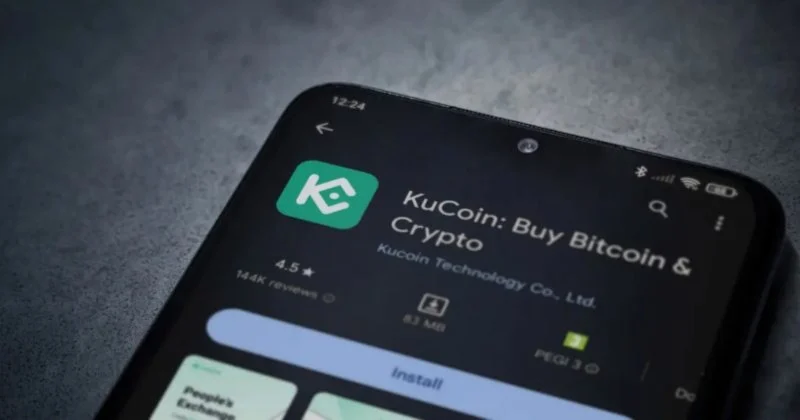
In a move that underscores the tightening nexus between global geopolitics and the digital asset sector, major cryptocurrency exchange KuCoin announced on Thursday the immediate cessation of its operations for users residing in Russia and Belarus. The exchange cited the necessity of adhering to evolving legal and regulatory frameworks as the primary driver behind this strategic withdrawal. This decision marks a significant shift in the exchange’s operational footprint, as it joins a growing list of global platforms opting to restrict access to markets characterized by heightened sanctions risks.
The termination of services is comprehensive, encompassing the entirety of the KuCoin ecosystem. Users within the affected jurisdictions will no longer have access to the platform’s suite of products, which includes spot trading, futures, staking services, and other financial resources. KuCoin has initiated a communication protocol to inform affected customers, promising individual notifications that will outline specific timelines and necessary procedures for liquidating open positions and withdrawing digital assets to external wallets. For those who do not receive direct correspondence, the exchange maintains that no immediate action is required, though the underlying regulatory climate suggests that the door for these users is unlikely to reopen in the near term.
The Chronology of Industry Retreats
The decision by KuCoin does not occur in a vacuum; rather, it reflects a deepening trend of risk mitigation among centralized cryptocurrency exchanges (CEXs). Following the escalation of the Russia-Ukraine conflict in February 2022, the global financial landscape underwent a seismic shift. Initially, many crypto exchanges adopted a "wait and see" approach, balancing their commitment to decentralization against the mounting pressure from Western regulators.
However, the regulatory environment has hardened considerably over the last 18 months. The following timeline illustrates the accelerating departure of major platforms from the Russian and Belarusian markets:
- February 2022: Immediate international sanctions are imposed on Russian financial infrastructure following the invasion of Ukraine. Exchanges begin to face scrutiny regarding the potential use of crypto assets to evade these measures.
- October 16, 2023: Bitget updates its terms of service, introducing stringent restrictions for users in Russia, Belarus, and Kazakhstan. This move signaled a proactive effort to insulate the platform from regional regulatory liabilities.
- October 20, 2023: MEXC Global announces a complete discontinuation of services for Russian and Belarusian users, explicitly citing global compliance considerations and the need to align with international regulatory expectations.
- Mid-2023 to Late 2023: HTX (formerly Huobi) implements a series of restrictions that effectively limit the utility of its platform for users in sanctioned regions, representing a gradual "de-risking" strategy rather than a total cessation.
- November 2023: KuCoin formally confirms the termination of services, solidifying the trend among Tier-1 exchanges to prioritize Western regulatory compliance over access to the Russian and Belarusian markets.
The Regulatory Pressure Cooker
The rationale behind these withdrawals is rooted in the "compliance-first" mandate currently sweeping the cryptocurrency industry. As Western governments—led by the United States, the European Union, and the United Kingdom—have expanded the scope of sanctions to include complex financial entities and individual oligarchs, the spotlight has turned toward digital asset intermediaries.
Regulatory bodies such as the U.S. Treasury’s Office of Foreign Assets Control (OFAC) have repeatedly signaled that cryptocurrency exchanges are expected to implement the same rigor in their Know-Your-Customer (KYC) and Anti-Money Laundering (AML) protocols as traditional banking institutions. For platforms like KuCoin, which operate globally, maintaining access to Western banking partners and securing operational licenses in jurisdictions like Hong Kong, Dubai, or the United States is contingent upon proving an unwavering commitment to sanctions enforcement.
Leaving high-risk markets is essentially a strategic maneuver to reduce enforcement exposure. If an exchange is found to be facilitating transactions for sanctioned entities, it risks not only significant monetary fines but also the potential loss of access to the global financial system. Given that the liquidity and operational stability of these exchanges rely on their integration with fiat banking rails, the cost of maintaining service in Russia and Belarus has officially outweighed the potential revenue generated from those user bases.
Supporting Data and Market Dynamics
Data from blockchain analytics firms suggests that while total volume from these regions represents a shrinking percentage of global crypto activity, it remains a focal point for regulators concerned about illicit finance. According to recent reports from firms like Chainalysis, while the use of crypto for sanctions evasion has not reached the levels predicted by some policy analysts, the mere presence of loopholes remains unacceptable to international watchdogs.
The economic reality for exchanges is also clear: the administrative burden of verifying user identities and monitoring transactions in regions where information sharing with local authorities is virtually non-existent has become prohibitively expensive. By exiting these markets, platforms can streamline their compliance overhead and provide clearer narratives to auditors and regulators regarding their risk management posture.
The Future of Decentralized Alternatives
As centralized exchanges exit these jurisdictions, a void is created, but it is unlikely to remain empty for long. Industry analysts observe that Russian and Belarusian users are increasingly pivoting toward decentralized finance (DeFi) protocols, peer-to-peer (P2P) trading platforms, and self-custody solutions.
While these alternatives provide a path to bypass the restrictions imposed by centralized entities, they introduce a new layer of risk for the average user. Unlike centralized platforms, which offer customer support, account recovery, and some degree of user protection, DeFi protocols are often "code-as-law" environments. The migration to these platforms exposes users to:
- Liquidity Fragmentation: Users may struggle to find favorable exchange rates for larger trades, leading to increased slippage and higher transaction costs.
- Fraud and Phishing: Without the gatekeeping of centralized exchanges, users are more susceptible to scams and fraudulent projects that thrive in unregulated environments.
- Irreversibility: The lack of a centralized intermediary means that if a transaction is sent to the wrong address or compromised by a hack, there is no mechanism for recovery.
Implications for the Broader Industry
The departure of major players like KuCoin signals that the era of "crypto-as-a-sanctuary" is rapidly closing. The industry is moving toward a bifurcated model: one side consisting of heavily regulated, institutional-grade exchanges that adhere strictly to global sanctions, and another side consisting of decentralized, permissionless networks that operate outside the traditional legal framework.
For the mainstream crypto market, this transition is generally viewed as a positive development for long-term legitimacy. By shedding high-risk jurisdictions, these exchanges can better position themselves to attract institutional capital, which is historically hesitant to invest in assets or platforms that have exposure to sanctioned regions.
Practical Guidance for Affected Users
For those currently holding assets on the KuCoin platform within the affected regions, the window for action is finite. Financial security experts recommend the following steps:
- Verify Official Channels: Users must exercise extreme caution regarding phishing attempts. Only follow instructions provided directly through the official KuCoin website or authenticated in-app notifications. Avoid clicking links in emails that mimic the exchange’s branding.
- Prioritize Asset Withdrawal: The primary goal should be the migration of funds to a non-custodial wallet (such as a hardware wallet or a reputable software wallet) that the user controls exclusively.
- Close Open Positions: Margin positions, futures, and other leveraged instruments should be closed systematically to avoid forced liquidations that may occur as the platform begins its shutdown process.
- Documentation: Maintain records of all transaction hashes and account closure confirmations. In the event of a dispute, having a clear audit trail of the withdrawal process is essential.
As the geopolitical climate remains volatile, the actions taken by KuCoin and its peers serve as a clear indicator of the new reality for the crypto sector. The mandate is no longer just about providing financial access; it is about navigation—successfully steering through the complex currents of international law to ensure the survival and growth of the digital asset ecosystem in a world of increasing regulatory scrutiny.