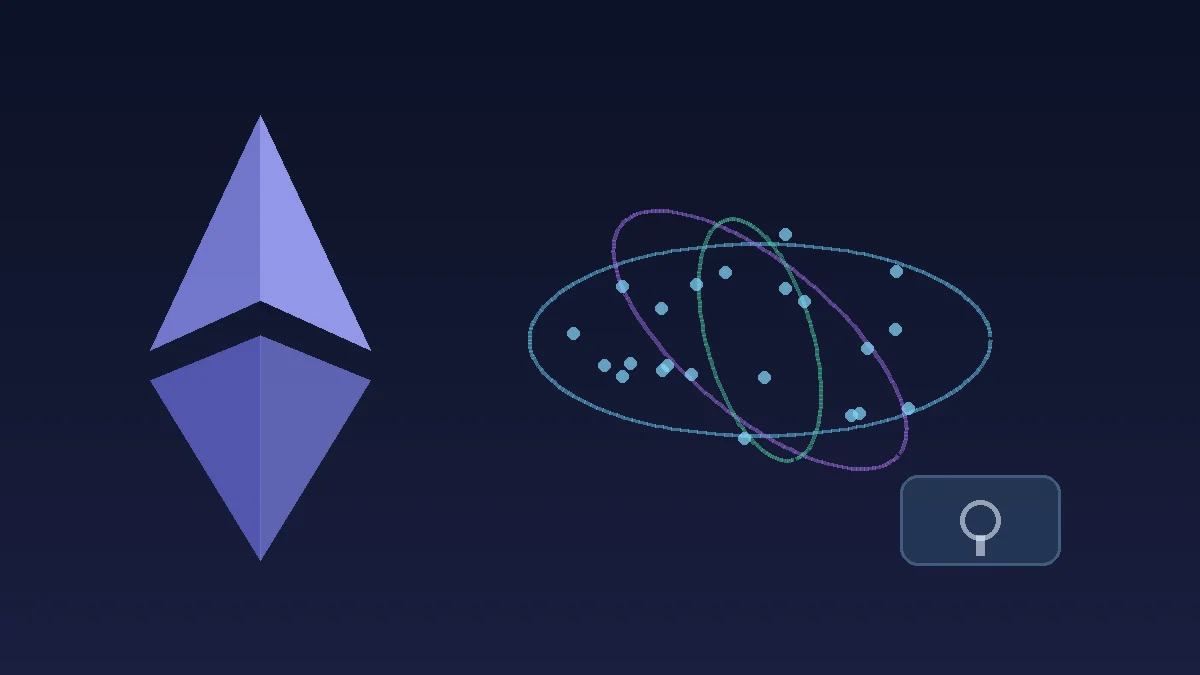
The ongoing discourse surrounding Ethereum’s long-term cryptographic security has transitioned from theoretical speculation into practical engineering. A researcher affiliated with the Kohaku privacy and wallet infrastructure project has recently introduced a novel framework that could allow Ethereum users to voluntarily upgrade to quantum-resistant smart accounts. This development addresses one of the most formidable, albeit distant, existential threats facing modern distributed ledgers: the advent of cryptanalytically relevant quantum computers (CRQCs) capable of breaking standard public-key cryptography.
While the proposal does not represent an immediate network-wide upgrade—nor does it signal that quantum attacks are imminent—it establishes a vital blueprint for how decentralized systems can proactively future-proof themselves. By leveraging account abstraction, the new proposal outlines a pathway for high-value accounts, decentralized autonomous organizations (DAOs), and institutional treasuries to shield their assets long before quantum computing reaches a level of maturity that threatens current encryption standards.
The Looming Quantum Horizon: Understanding the Cryptographic Threat
To appreciate the significance of the Kohaku-linked proposal, one must first examine the foundational mechanics of blockchain security. Currently, the vast majority of blockchain networks—including Bitcoin and Ethereum—rely heavily on asymmetric cryptography, predominantly Elliptic Curve Cryptography (ECC), specifically the secp256k1 curve. These cryptographic algorithms secure user funds by ensuring that a private key can easily generate a corresponding public key, while making the reverse computation computationally infeasible for classical computers.
However, the theoretical rise of quantum computing introduces an entirely different paradigm. Quantum computers utilize qubits and exploit the principles of quantum mechanics—namely superposition and entanglement—to process complex mathematical calculations exponentially faster than classical binary computers. In 1994, mathematician Peter Shor formulated "Shor’s Algorithm," a quantum algorithm capable of efficiently solving prime factorization and discrete logarithms. When executed on a sufficiently powerful quantum computer, Shor’s algorithm can theoretically derive a private key from a known public key.
In the context of Ethereum, this vulnerability primarily targets Externally Owned Accounts (EOAs). If an adversary captures a user’s public key—which is often exposed on-chain when a transaction is broadcast—a sufficiently advanced quantum computer could theoretically compute the private key and drain the account.
Despite the severity of this threat, mainstream cryptographers and quantum physicists largely agree that a cryptanalytically relevant quantum computer capable of cracking secp256k1 at scale does not yet exist. Current quantum systems are plagued by high error rates, environmental decoherence, and a lack of sufficient physical qubits to maintain stable, error-corrected logical qubits of the scale required for Shor’s algorithm. Estimates regarding when a functional quantum computer could threaten blockchain encryption vary wildly, with conservative projections placing the timeline a decade or more into the future. Nevertheless, complex cryptographic migrations across global, decentralized networks require years of rigorous testing, auditing, and gradual deployment, making proactive research both timely and necessary.
Leveraging Account Abstraction for Opt-In Security
One of the primary challenges in mitigating quantum risk on Ethereum is the sheer inertia of the network’s architecture. For years, forcing a hard fork to transition all legacy EOAs to post-quantum signature schemes has been viewed as a logistical nightmare. Ethereum currently hosts millions of active accounts, dormant wallets, intricate smart contracts, decentralized finance (DeFi) protocols, and centralized custody integrations. A mandatory, network-wide cryptographic overhaul would risk breaking backwards compatibility, stranding dormant funds, and introducing catastrophic operational risks if executed improperly.
The recent proposal sidesteps this systemic hurdle by focusing on account abstraction (ERC-4337) and programmable smart accounts. Account abstraction decouples wallet logic from the consensus layer, transforming user accounts from rigid EOAs into flexible, programmable smart contracts. This architectural shift enables wallets to incorporate custom validation logic, multi-factor authentication, social recovery mechanisms, spending limits, and—crucially—alternative signature verification schemes.
Instead of demanding a disruptive ecosystem-wide migration, the new framework proposes a modular, opt-in model. Under this design, users who perceive themselves to be at higher risk—such as institutional funds, multi-signature treasuries, and whale accounts—can voluntarily deploy or migrate to post-quantum smart accounts. Meanwhile, everyday retail users with lower-value balances can continue interacting with standard account structures until network-level upgrades become mandatory or more streamlined.
This opt-in strategy introduces a tiered security model that mirrors how traditional financial and cybersecurity sectors handle emerging threats. High-value assets require immediate, robust fortifications, whereas lower-risk profiles can absorb new technologies at a more gradual pace as user interfaces mature and gas overhead decreases.
Balancing Security With Gas Efficiency and Usability
Historically, one of the most persistent bottlenecks associated with post-quantum cryptography (PQC) has been its massive performance footprint. Post-quantum signature schemes—such as stateful hash-based signatures (e.g., XMSS, LMS) or lattice-based cryptography (e.g., CRYSTALS-Dilithium)—often require significantly larger public keys and complex mathematical verifications compared to traditional elliptic curve signatures.
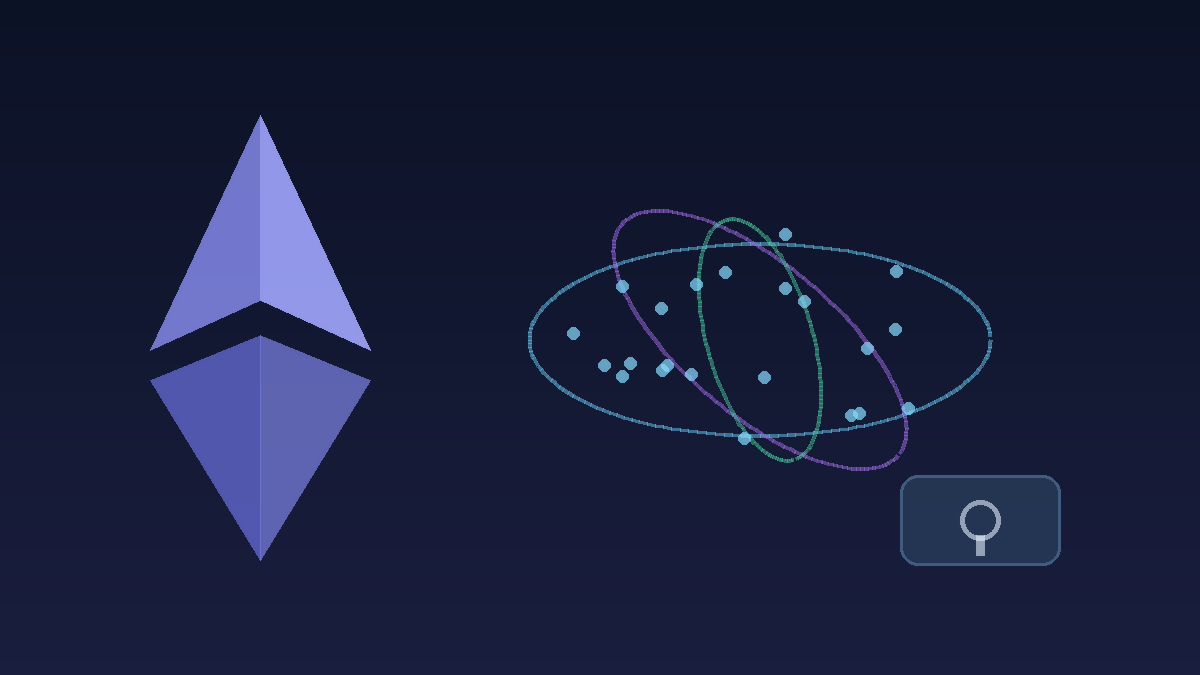
On a blockchain like Ethereum, where computational resources and data storage are priced via gas, cryptographic bloat translates directly into exorbitant transaction fees. If verifying a quantum-resistant signature requires an impractical amount of gas, the resulting smart account becomes economically unviable for routine use.
The breakthrough highlighted in the recent proposal lies in its focus on reducing verification costs to a relatively manageable threshold. By optimizing post-quantum signature verification pathways specifically for smart account architecture, the researcher aims to minimize the computational burden placed on the Ethereum Virtual Machine (EVM). While the system still incurs higher overhead than standard secp256k1 verification, optimization brings it within a practical range for periodic use by institutional actors and high-net-worth entities.
Furthermore, this modular approach allows wallet developers to experiment with user experience (UX) paradigms. Transitioning to advanced cryptography often complicates key management, backup procedures, and signing workflows. By testing these systems within specialized smart accounts, developers can refine the software interface, iron out compatibility issues with existing decentralized applications (dApps), and ensure that security upgrades do not inadvertently degrade user safety through human error or complex operational friction.
Industry Context and the Broader Roadmap for Ethereum
Ethereum’s core developers and researchers have long recognized the quantum threat, integrating long-term cryptographic resilience into the network’s theoretical roadmap. Ethereum co-founder Vitalik Buterin has frequently emphasized that while quantum computing remains a medium-to-long-term concern, the ecosystem must eventually transition to quantum-resistant primitives, such as hash-based signatures and STARK-based proofs, to safeguard the ledger’s century-scale viability.
The introduction of the Kohaku-linked smart account proposal aligns with Ethereum’s broader philosophy of modular scaling and incremental upgrades. Rather than waiting for a monolithic, top-down cryptographic mandate, the Ethereum ecosystem traditionally relies on bottom-up innovation, where independent researchers, layer-2 teams, and wallet developers propose, test, and refine interoperable components.
In parallel with account-level quantum resistance, researchers are also exploring adjustments to Ethereum’s core consensus and cryptographic primitives. These include researching STARK-friendly hash functions and preparing for future protocol-level hard forks that could eventually deprecate vulnerable signature schemes entirely. However, consensus-layer changes take years to coordinate, test, and implement safely across distributed validator sets. Wallet-level account abstraction provides a vital intermediary sandbox, allowing the community to deploy post-quantum defenses years ahead of any mandatory base-layer protocol shift.
Expert Analysis and Ecosystem Implications
Financial and cryptographic analysts have responded to the proposal with cautious optimism, noting that while the framework represents a constructive step forward, significant hurdles remain before real-world adoption can begin.
Foremost among these challenges is the necessity for exhaustive cryptographic peer review. Cryptographic primitives—especially newly adapted post-quantum schemes—are notoriously difficult to design correctly. History has shown that early implementations of cryptographic algorithms frequently harbor subtle side-channel vulnerabilities, implementation bugs, or mathematical flaws that can be exploited by sophisticated attackers. Before any quantum-resistant smart account standard is codified into wallet templates, it must undergo rigorous formal verification and extensive auditing by top-tier security firms.
Additionally, industry observers have highlighted potential messaging and educational risks. In the fast-paced cryptocurrency markets, simplified headlines regarding "quantum-proof wallets" can easily generate unwarranted panic or breed a false sense of security. Retail investors might mistakenly believe that deploying a quantum-resistant smart account completely immunizes their funds against all vectors of attack, potentially ignoring more immediate threats like phishing, private key mismanagement, or smart contract exploits. Clear, transparent communication from developers and media outlets will be essential to ensure the market accurately understands the scope and current status of these proposals.
The Path Ahead
The dialogue surrounding Ethereum’s quantum security has evolved from abstract academic anxiety into pragmatic engineering. By demonstrating that post-quantum signatures can be integrated into smart accounts at a viable gas cost, researchers have provided the ecosystem with a tangible tool for long-term risk management.
As the blockchain industry matures, its survival depends on anticipating structural vulnerabilities decades before they materialize. While an immediate quantum catastrophe remains unlikely, proactive initiatives like the Kohaku-linked smart account proposal ensure that Ethereum is building its defenses methodically, transparently, and well before the market is forced to panic. The road from theoretical cryptography to universal standard is long, but the journey has officially begun.