The decentralized finance landscape on Ethereum Mainnet experienced a significant structural evolution today with the official rollout of multicollateral margin on Synthetix, introducing Ether (ETH) as the protocol’s first non-stablecoin collateral asset. For the first time in the history of the Ethereum network, traders can deposit native ETH to serve as direct collateral for perpetual swaps (perps) without ever needing to liquidate their core asset holdings. Operating entirely on Ethereum Layer 1, the new system aims to bridge the gap between long-term holding strategies and active derivatives trading, unlocking billions of dollars in idle capital across the ecosystem.
Background Context and Evolution of Synthetix Margining
To understand the weight of this development, it is necessary to examine the historical constraints of decentralized perpetual exchanges. Historically, the vast majority of decentralized derivatives platforms—particularly those handling high-frequency trading or complex order books—relied strictly on stablecoins such as USDT or USDC for margin and settlement. While stablecoins mitigate volatility risks during margin calculations, they force traders who are fundamentally bullish on volatile assets like ETH to either sell their holdings or utilize wrapped, third-party lending protocols to borrow liquidity, introducing smart contract fragmentation, bridge risks, and liquidation friction.
Synthetix has long positioned itself as a foundational liquidity layer native to Ethereum Mainnet. By anchoring its trades, settlements, and liquidity pools directly to the Layer 1 network, the protocol sought to build a more secure, trust-minimized trading environment. However, the limitation of accepting only USDT for margin constrained capital efficiency. Traders who held significant ETH stacks had to execute taxable events or incur opportunity costs by parting with their primary digital assets to participate in derivatives markets.
The introduction of multicollateral margin marks the culmination of months of protocol engineering and smart contract auditing. By bridging the gap between an investor’s long-term conviction in ETH and their short-term trading strategies, Synthetix has systematically removed one of the most prominent friction points in decentralized derivatives trading.
Mechanics of Native ETH Margin: How the System Operates
Under the newly deployed architecture, users can deposit ETH directly into a unified multicollateral margin account on Ethereum Mainnet. Rather than forcing separate accounts for different asset types, the system aggregates a trader’s collateral pool, allowing ETH and USDT to function cooperatively behind the scenes.
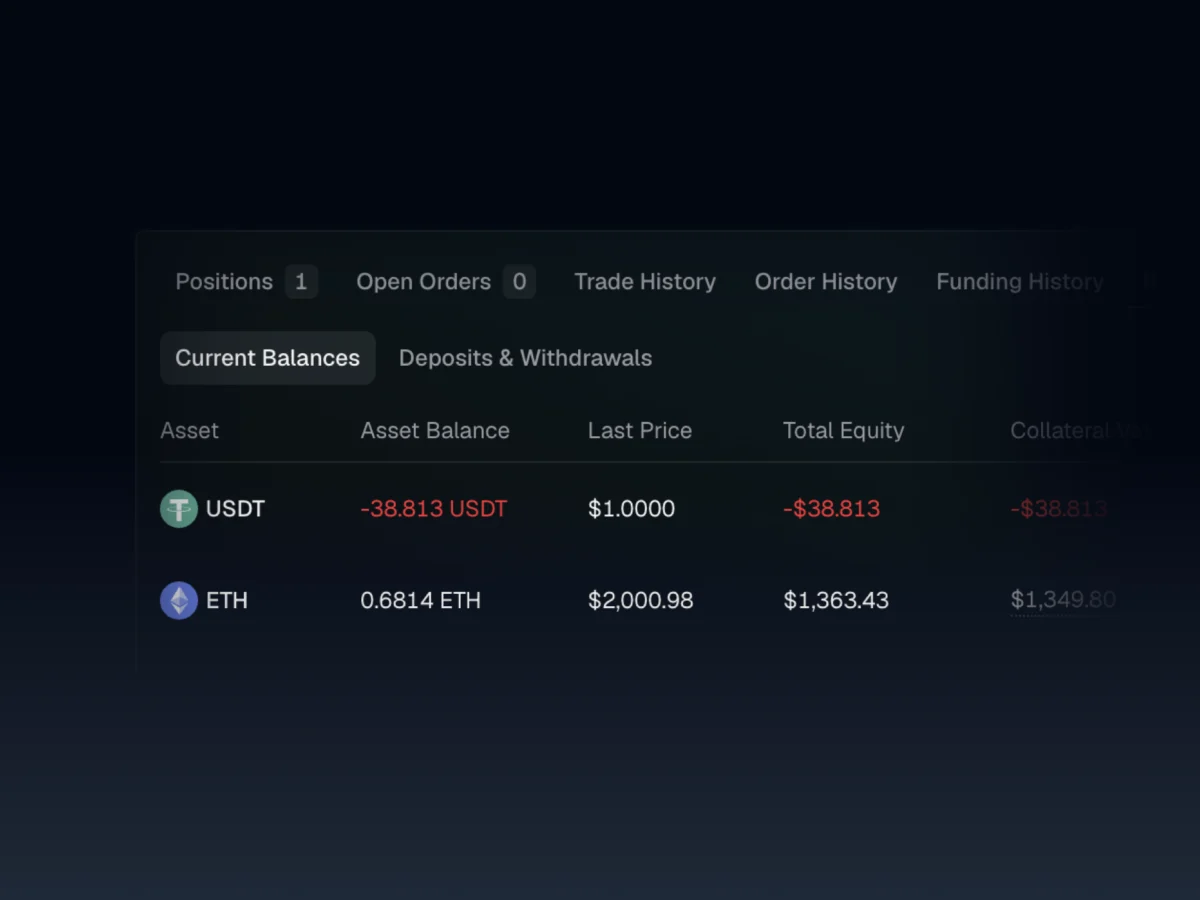
When a user deposits ETH, the protocol calculates its real-time value using live oracle index prices. To account for potential market volatility, the system applies a risk discount—commonly referred to as a "haircut"—to the asset. The resulting figure is designated as the user’s Collateral Value, which dictates the precise borrowing and margin capacity of the account.
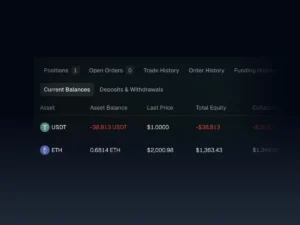
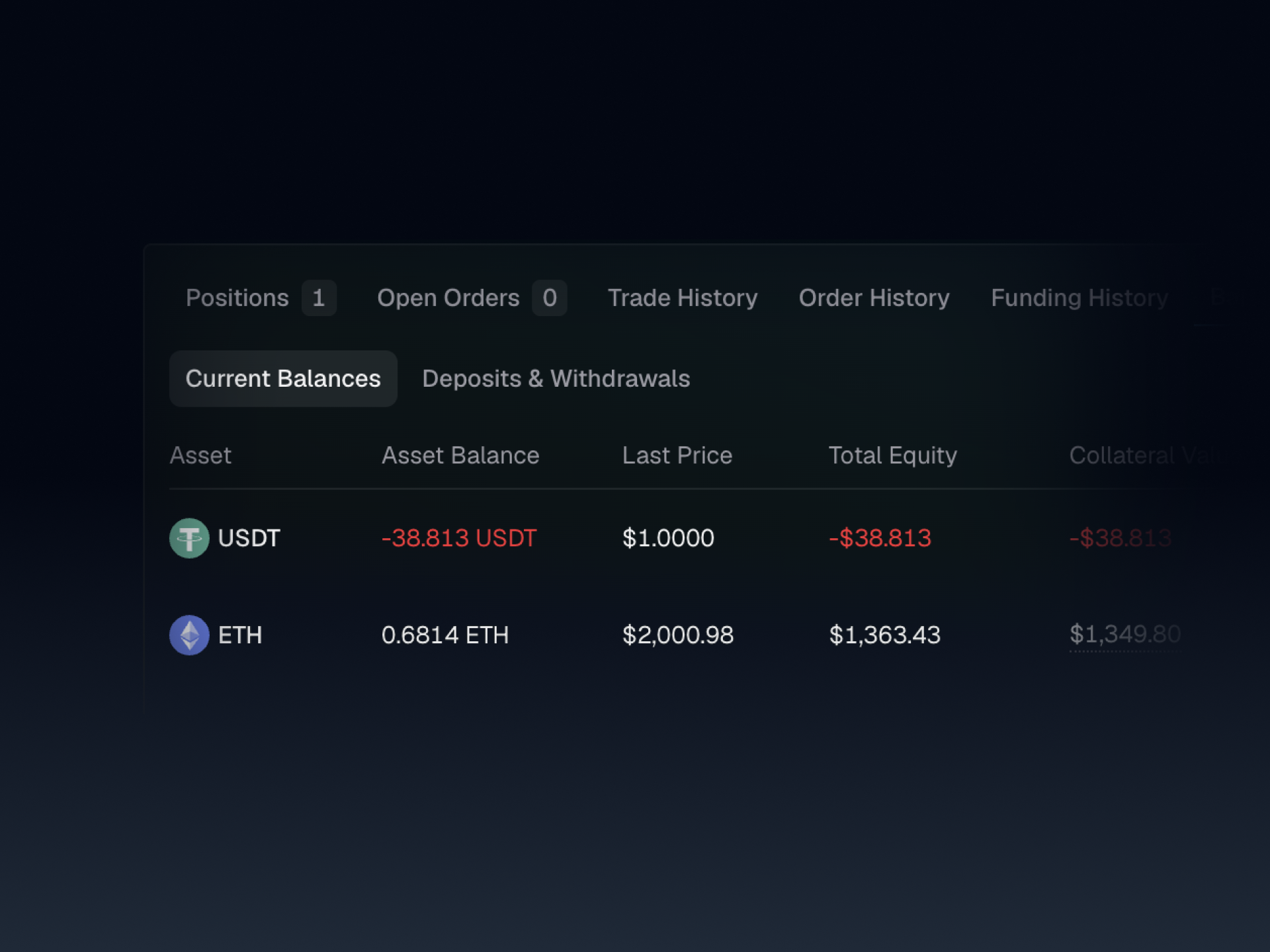
Because Synthetix perpetual markets are denominated and settled in USDT, trading fees, funding payments, and realized profit and loss (PnL) continue to be settled in the stablecoin. Consequently, if a trader opens positions utilizing ETH collateral without maintaining an active USDT balance, their account’s USDT balance can temporarily dip into a negative figure. This negative balance is intentionally engineered to be fully backed by the underlying ETH collateral. Users retain the flexibility to clear this deficit at any time by utilizing the protocol’s integrated swap feature to convert a portion of their deposited ETH directly into USDT within their unified account dashboard.
To safeguard protocol solvency, the system continuously monitors account health. Because ETH is subject to price fluctuations, a sudden downward market movement in Ether’s spot price will compress the account’s margin buffer, even if the trader’s open perpetual positions remain flat. If a user’s USDT debt exceeds the platform’s established risk limits, automated protocol mechanisms are designed to liquidate a fraction of the deposited ETH to cover the deficit. Protocol developers strongly encourage active traders to monitor their collateral ratios closely and manage their buffers proactively to avoid automated intervention.
Unlocking DeFi Efficiency: The Rise of Optimized Basis Trades
The deployment of ETH as multicollateral margin is expected to profoundly impact institutional and advanced retail trading strategies within decentralized finance, most notably the execution of basis trades. The basis trade—a cornerstone strategy in traditional finance and mature crypto markets—involves going long on a spot asset while simultaneously opening an equivalent short position in the perpetual futures market to capture yield from positive funding rates.
Previously, executing a delta-neutral basis trade on-chain required navigating complex multi-step processes across distinct lending markets and derivatives venues, exposing traders to fragmentation and operational overhead. With Synthetix’s unified account structure, a trader can deposit ETH as collateral and open a matching short ETH perpetual position within the exact same interface.
The collateral value of the ETH and the PnL of the short perpetual position move in inverse directions, effectively neutralizing directional price exposure while allowing the trader to continuously collect funding rate payments. Financial analysts note that as basis trading becomes frictionless on Layer 1, market participants will be able to supply deeper liquidity more efficiently, leading to tighter bid-ask spreads and more competitive pricing for all users on the exchange.
Tapping into Billions in Idle Capital
Industry observers have highlighted the vast macroeconomic implications of opening Layer 1 derivatives liquidity to native assets. With well over $100 billion in circulating ETH residing across wallets, staking contracts, and decentralized applications, the potential addressable market for Synthetix is immense. By providing utility for ETH directly on the Ethereum layer where network security is highest, the protocol has established a foundation for unprecedented capital composability.
Core developers and ecosystem stakeholders have set ambitious milestones for the platform. Market analysts suggest that capturing even a modest single-digit percentage of the broader crypto derivatives market volume could trigger a powerful economic flywheel for the Ethereum ecosystem. Increased trading volume inherently drives higher fee generation, deeper liquidity, and stronger protocol revenues, reinforcing the value proposition of the entire decentralized finance stack.
Future Roadmap: Beyond ETH and Toward Yield-Bearing Assets
While ETH represents the inaugural non-USDT collateral asset accepted by Synthetix Perps, protocol architects have confirmed that the underlying infrastructure was deliberately designed for expansion. The newly implemented multicollateral framework is modular, laying the technical groundwork to onboard a wide array of additional assets in subsequent updates.
Upcoming iterations of the collateral framework are anticipated to include various tokens, with a particular focus on integrating yield-bearing assets. By allowing users to post interest-generating or staking derivative tokens as margin—thereby earning native yield on their collateral while simultaneously utilizing it to back active derivative positions—Synthetix aims to redefine capital efficiency standards in the decentralized derivatives sector.
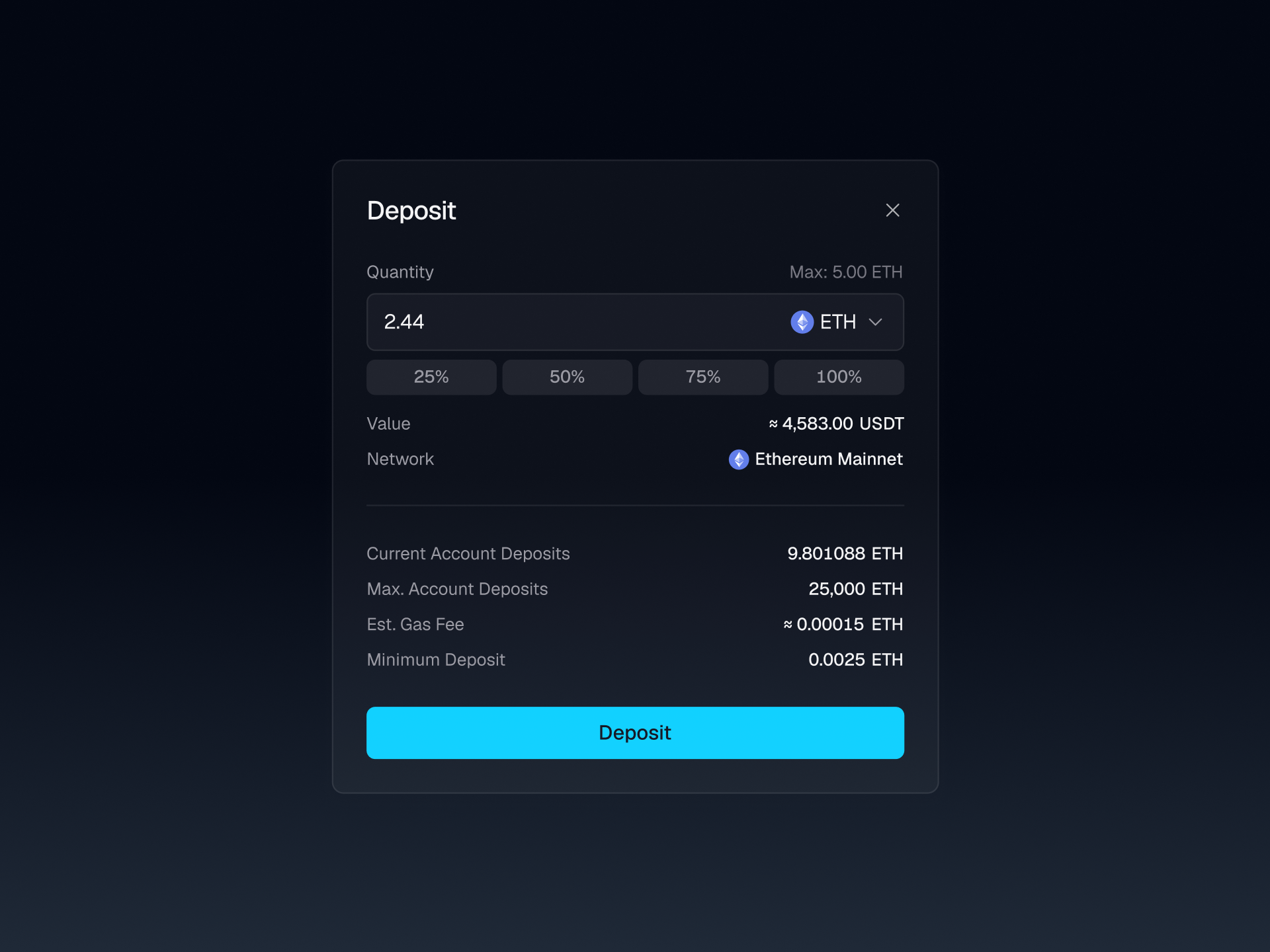
Current limitations, including minimum deposit thresholds, maximum account caps, and per-asset risk parameters, are dynamically displayed within the platform’s deposit interface. Protocol governance and engineering teams plan to incrementally scale these caps and introduce new collateral types as the system proves its stability under live market conditions.
Market Implications and Industry Outlook
The launch arrives at a pivotal moment for decentralized exchanges (DEXs), which have continuously vied with centralized counterparties (CEXs) for market share in the derivatives sector. While centralized platforms have historically dominated due to deep liquidity and multi-asset collateral support, decentralized protocols like Synthetix are steadily closing the capability gap through advanced Layer 1 and Layer 2 infrastructure.
By anchoring its operations securely on Ethereum Mainnet and eliminating the requirement to liquidate core holdings, Synthetix is positioning itself as an attractive venue for sophisticated traders seeking self-custody alongside institutional-grade capital efficiency. As the protocol rolls out higher deposit caps and incorporates additional collateral classes in the coming months, the broader crypto community will be watching closely to evaluate how native asset margining influences derivatives volume and market depth across the Ethereum ecosystem.