The cryptocurrency market continues to navigate a complex matrix of macroeconomic signals, shifting regulatory landscapes, and evolving institutional participation. Recent data from prominent analytics platforms highlights a fascinating divergence in Bitcoin (BTC) price action, characterized by multi-year lows in realized volatility contrasted against persistent structural supply pressures. As financial markets absorb incoming Consumer Price Index (CPI) data and adjust to the shifting monetary policies of central banks worldwide, stakeholders are closely monitoring how spot exchange-traded funds (ETFs) and derivatives markets influence price stability. This comprehensive report examines the underlying mechanics of Bitcoin’s recent market behavior, drawing on historical trading ranges, academic research published in the Journal of Financial Management, and expert insights from on-chain analytics providers.
Historical Realized Volatility and Multi-Year Lows
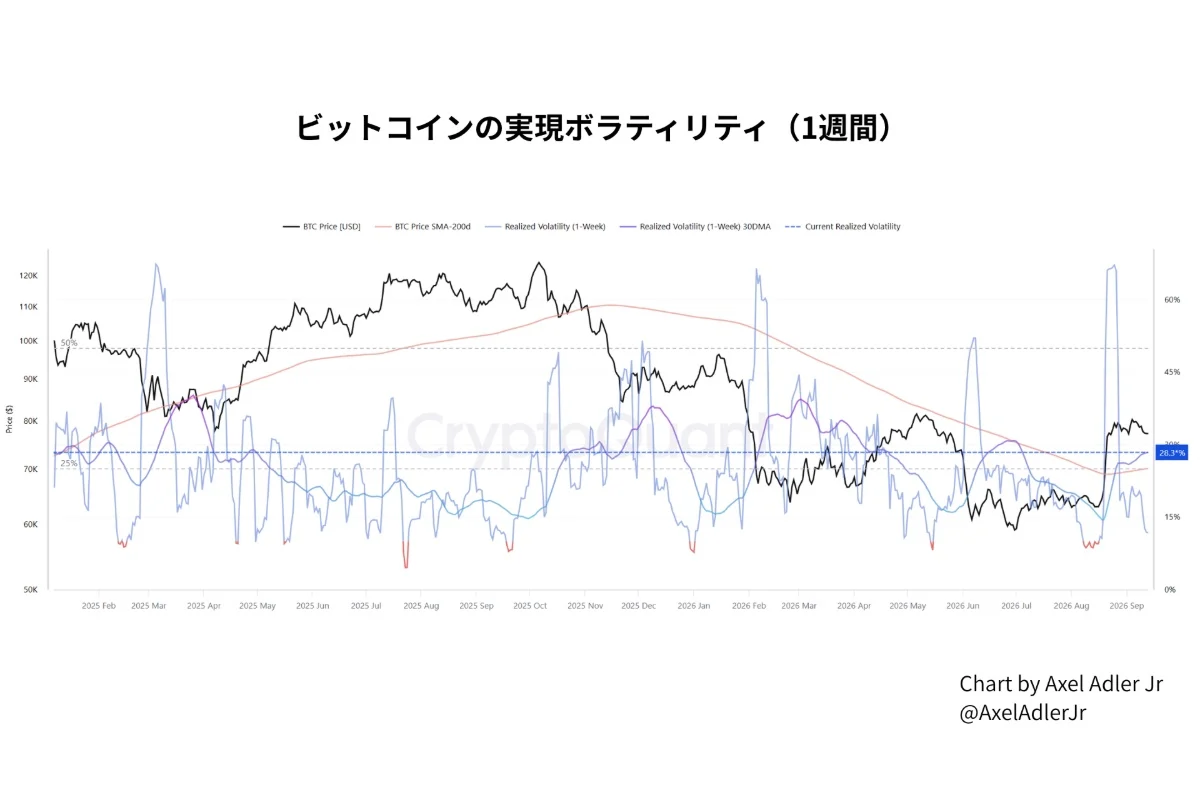
A central narrative dominating cryptocurrency analytics circles is the dramatic compression of Bitcoin’s realized volatility over recent months. According to recent observations shared by CryptoQuant analyst Axel Adler Jr., Bitcoin’s realized volatility metrics have touched levels not seen since late 2023 and early 2024. Specifically, short-term volatility indicators, such as the 1-week and 30-day realized volatility metrics, have experienced prolonged downward pressure, hovering near historical floors.
When examining the broader historical context, current market conditions reflect a significant departure from the turbulent price swings that defined earlier market cycles. For instance, comparing the current environment to the turbulent market phases of 2017–2018 and 2021–2022 reveals a stark contrast. During those previous eras, annualized volatility frequently spiked above 80% to 100%, driven by retail-heavy participation, less mature derivatives infrastructure, and a lack of institutional hedging vehicles. In contrast, the current market structure benefits from a broader base of long-term holders, sophisticated risk management frameworks, and the stabilizing influence of regulated financial products like spot ETFs.
This compression in volatility has sparked debate among traders and analysts regarding whether it represents a period of prolonged accumulation before a significant breakout or a sign of market fatigue. While lower volatility reduces the immediate risk of sudden, catastrophic liquidations for leveraged traders, it also dampens the speculative enthusiasm that historically drove aggressive retail rallies. Market participants are thus forced to rely more heavily on fundamental macroeconomic indicators and institutional capital flows to gauge the direction of the next major market move.
Academic Perspectives and Intraday Volatility Patterns
Academic research provides further depth to the understanding of Bitcoin’s price behavior. A study published in the Journal of Risk and Financial Management by researcher Huda Aldhahi analyzed thousands of BTC/USD tick data points from major exchanges like Kraken spanning from 2016 through 2025. The study’s findings shed light on how intraday volatility is distributed across different trading sessions, particularly concerning the overlap between traditional financial market hours and digital asset trading.
The research highlights that Bitcoin volatility is not uniformly distributed throughout the day. Instead, it frequently peaks during specific institutional opening hours, particularly coinciding with the opening of traditional equities markets in the United States, such as the New York Stock Exchange (NYSE). During these windows, institutional trading desks execute large-scale rebalancing, hedging, and arbitrage strategies, which in turn inject temporary liquidity and volatility into the cryptocurrency ecosystem.
Furthermore, the study notes that weekend trading sessions often exhibit markedly lower volatility compared to weekdays, primarily due to reduced institutional participation and the closure of traditional banking rails. However, this weekend calm can occasionally lead to exaggerated price gaps when major news breaks outside of traditional business hours, catching leveraged market participants off guard. Understanding these intraday and weekly cyclical patterns is crucial for institutional investors seeking to minimize execution slippage and optimize their entry and exit strategies in the digital asset market.
Macroeconomic Pressures and Central Bank Policy Impacts
Beyond the internal mechanics of the cryptocurrency market, external macroeconomic factors continue to exert a profound influence on Bitcoin’s price trajectory. Recent weeks have seen heightened sensitivity to inflation reports, employment data, and the monetary policy decisions of the United States Federal Reserve.
The release of the Consumer Price Index (CPI) report remains a pivotal moment for digital asset markets. As inflation figures dictate the trajectory of interest rate expectations, risk-on assets—including equities and cryptocurrencies—frequently react with heightened sensitivity. When inflation prints higher than anticipated, raising concerns that central banks will maintain higher interest rates for longer, Bitcoin and other risk assets often face immediate downward pressure. Conversely, signs of cooling inflation can stimulate renewed capital inflows into spot ETFs and derivatives markets.
The introduction of spot Bitcoin ETFs in early 2024 fundamentally altered this macroeconomic transmission mechanism. By bridging the gap between traditional finance (TradFi) and digital assets, spot ETFs have allowed institutional capital to flow more seamlessly into Bitcoin. However, this integration also means that Bitcoin is increasingly correlated with broader macroeconomic shocks that impact traditional equity markets, such as shifting bond yields and geopolitical tensions.
Data from analytics firms such as Kaiko indicates that ETF trading volumes have matured significantly since their initial launch. While early trading days were characterized by massive speculative inflows and outflows, recent months have shown a more stable pattern of net institutional accumulation. This institutional maturation helps cushion the market against panic selling, though it also ties Bitcoin’s medium-term outlook more closely to the health of the global financial system.
The Evolving Role of Derivatives and Institutional Hedging
The maturation of the cryptocurrency derivatives market has played a dual role in shaping recent price dynamics. On one hand, the expansion of regulated futures and options markets on platforms like the Chicago Mercantile Exchange (CME) provides institutional investors with robust tools for risk management. These instruments allow funds to hedge their spot holdings, thereby reducing systemic risk and attracting capital from conservative investors who previously viewed cryptocurrencies as too speculative.
On the other hand, heavy reliance on derivatives can occasionally exacerbate price swings during periods of high market stress. Liquidations of leveraged long and short positions frequently trigger cascading price movements, leading to sharp, temporary deviations from spot market prices. Market analysts closely monitor metrics such as open interest, funding rates, and options skew to gauge market sentiment and identify potential inflection points where a squeeze might occur.
Recent data indicates that open interest across major derivatives exchanges has remained relatively stable, suggesting that traders are exercising caution rather than building excessive speculative leverage. This measured approach contrasts sharply with previous bull markets, where unchecked leverage routinely fueled unsustainable price bubbles followed by severe market corrections. The current environment suggests a more disciplined marketplace, albeit one where participants remain highly sensitive to regulatory developments and macroeconomic surprises.
Future Outlook and Market Implications
As the cryptocurrency market looks toward the remainder of 2026, the interplay between realized volatility, macroeconomic data, and institutional adoption will remain the primary driver of price action. While the current low-volatility environment may frustrate short-term day traders seeking rapid gains, it signals a deeper institutionalization of the asset class.
Long-term holders and institutional allocators are increasingly viewing Bitcoin through the lens of portfolio diversification and digital gold, treating short-term price fluctuations as noise against a backdrop of long-term adoption. Nevertheless, market participants must remain vigilant. The persistence of macroeconomic headwinds, potential regulatory shifts, and unexpected liquidity events mean that volatility can return rapidly to the market.
Ultimately, the ability of Bitcoin and the broader digital asset ecosystem to maintain stability amid tightening macroeconomic conditions will test the resilience of this emerging asset class. As traditional financial institutions deepen their involvement and regulatory frameworks mature, the boundary between traditional finance and decentralized assets will continue to blur, setting the stage for the next evolutionary phase of global finance.