The Bitcoin mining landscape faced a period of stabilization during the week ending September 14, 2026, as network metrics remained largely range-bound while market participants braced for an impending upward adjustment in mining difficulty. Miners collectively earned approximately 3,253 BTC in total block rewards, a figure valued at roughly $253 million based on prevailing market prices. Of this total, transaction fees contributed a relatively modest portion, amounting to 19 BTC or approximately $1.49 million, reflecting a continued trend of lower on-chain activity relative to the block subsidy.
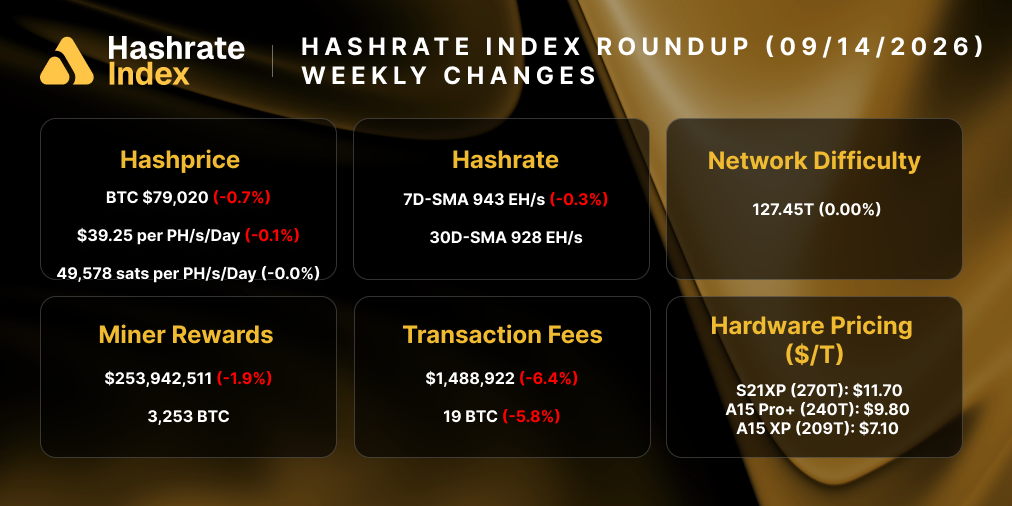
Market conditions for Bitcoin remained relatively stagnant throughout the seven-day period. The asset price moved by -0.7%, sliding from $79,581 at the start of the week to a close of $79,020. This decline contributes to a year-to-date performance of -9.6%, highlighting the ongoing challenges faced by miners operating in a volatile price environment where operational costs must be carefully balanced against revenue generation.
Hashprice Stability and Revenue Dynamics
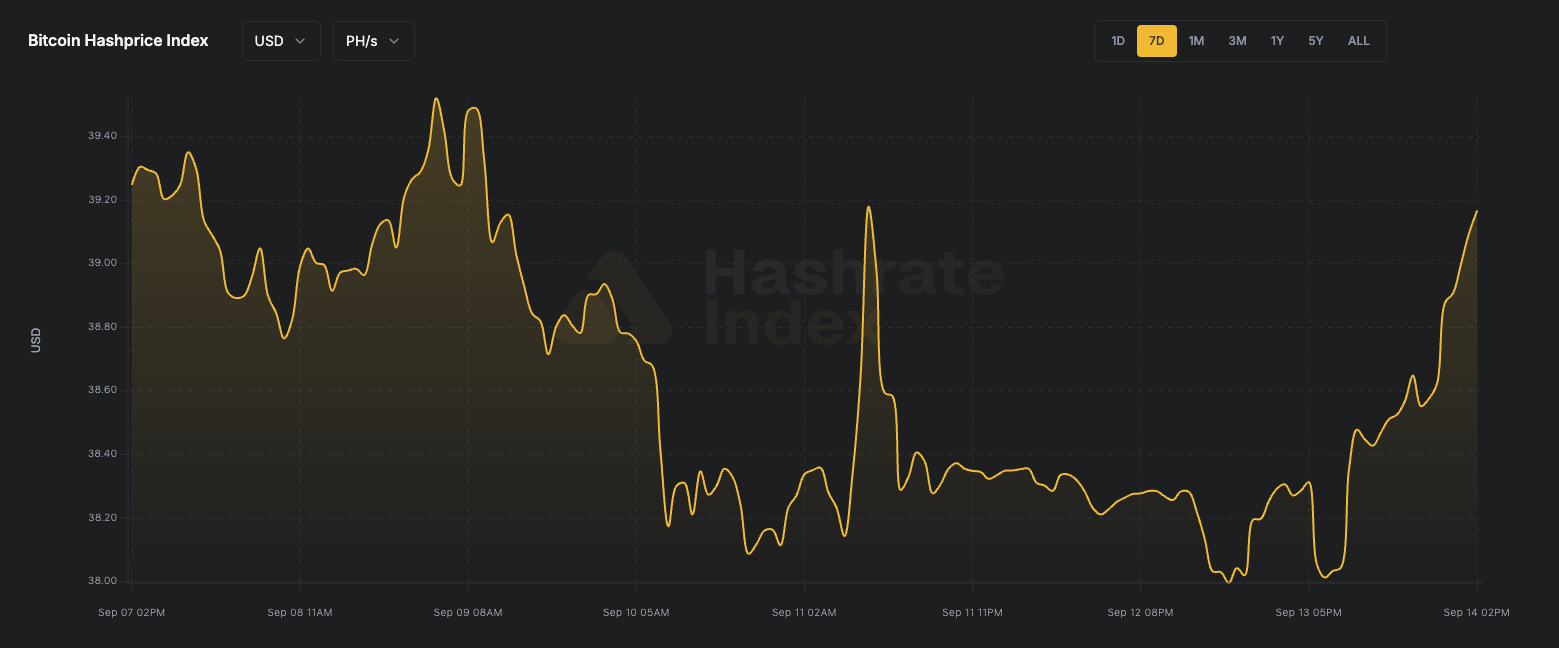
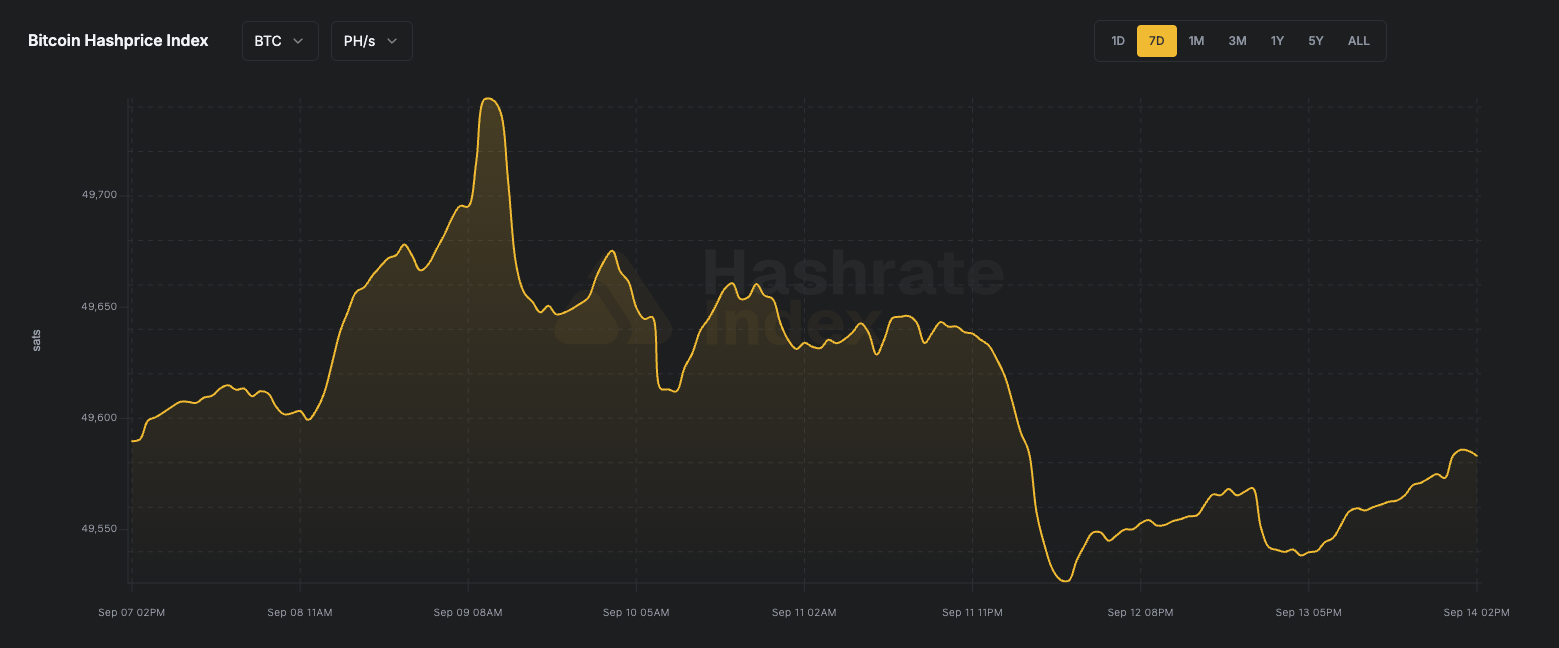
The financial health of mining operations, measured primarily through "hashprice"—the expected revenue generated by one petahash per second (PH/s) of computing power per day—saw minimal movement. USD-denominated hashprice dipped by 0.1%, moving from $39.29 to $39.25. Similarly, BTC-denominated hashprice remained largely unchanged, shifting from 0.00049599 BTC to 0.00049578 BTC per PH/s per day.
These figures underscore the equilibrium currently present in the mining sector. While hashprice has experienced slight fluctuations on a 30-day average basis—trending upward by 3.2%—the immediate spot price suggests a market that is waiting for catalysts to push hashprice out of its current band. The consistency in hashprice is largely a function of the stable network hashrate, which has prevented the wild volatility in profitability that characterized previous market cycles.
Network Hashrate and Impending Difficulty Adjustment
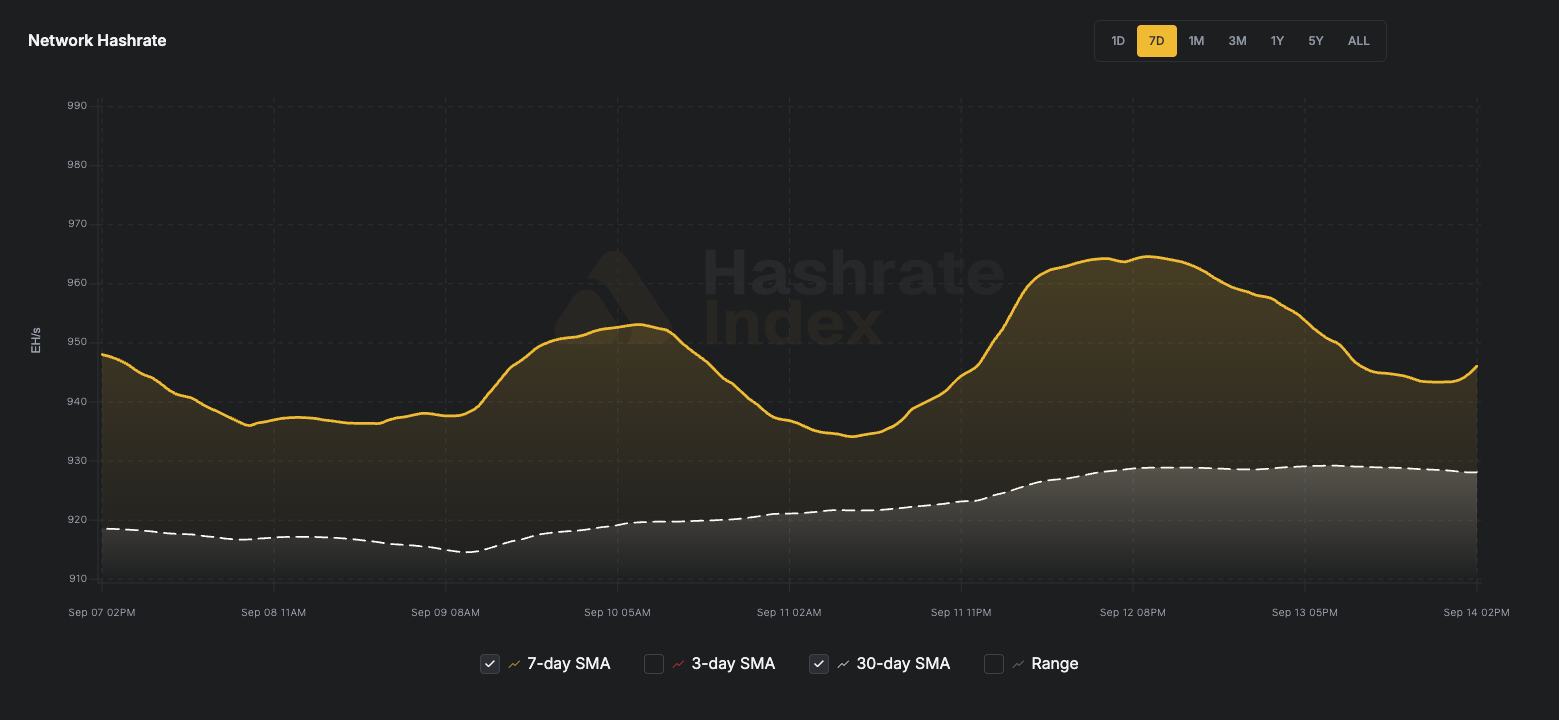
The Bitcoin network hashrate, the aggregate computational power dedicated to securing the blockchain, saw a minor contraction of -0.3% over the week. The seven-day simple moving average (SMA) decreased from 946 EH/s to 943 EH/s, while the 30-day SMA held steady at 928 EH/s. This marginal decline indicates that, despite the sustained interest in hardware deployment, the industry is seeing a temporary cooling in the rapid expansion of total network power.
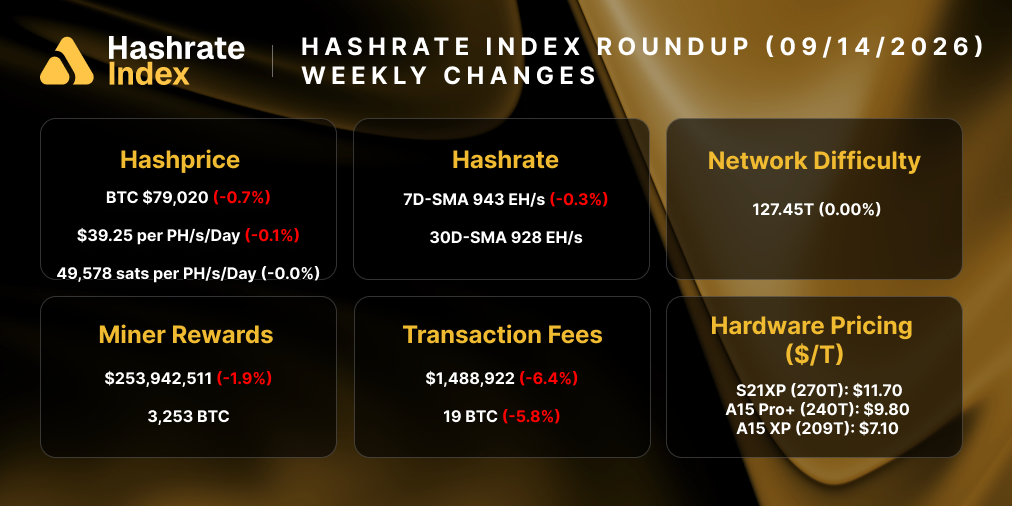
However, the network is preparing for a significant adjustment in difficulty. The most recent adjustment occurred on September 5, 2026, which saw a 1.31% increase, pushing network difficulty to 127.45T. With block times currently averaging 9 minutes and 30 seconds—slightly faster than the target of 10 minutes—the network is on track for a further increase in difficulty. Projections indicate a 5.26% upward adjustment expected on September 19, 2026. This anticipated rise will necessitate increased efficiency from mining fleets, as a higher difficulty level makes it harder for existing hardware to secure the same number of blocks, thereby exerting downward pressure on the profit margins of older, less efficient machines.
Transaction Fee Trends
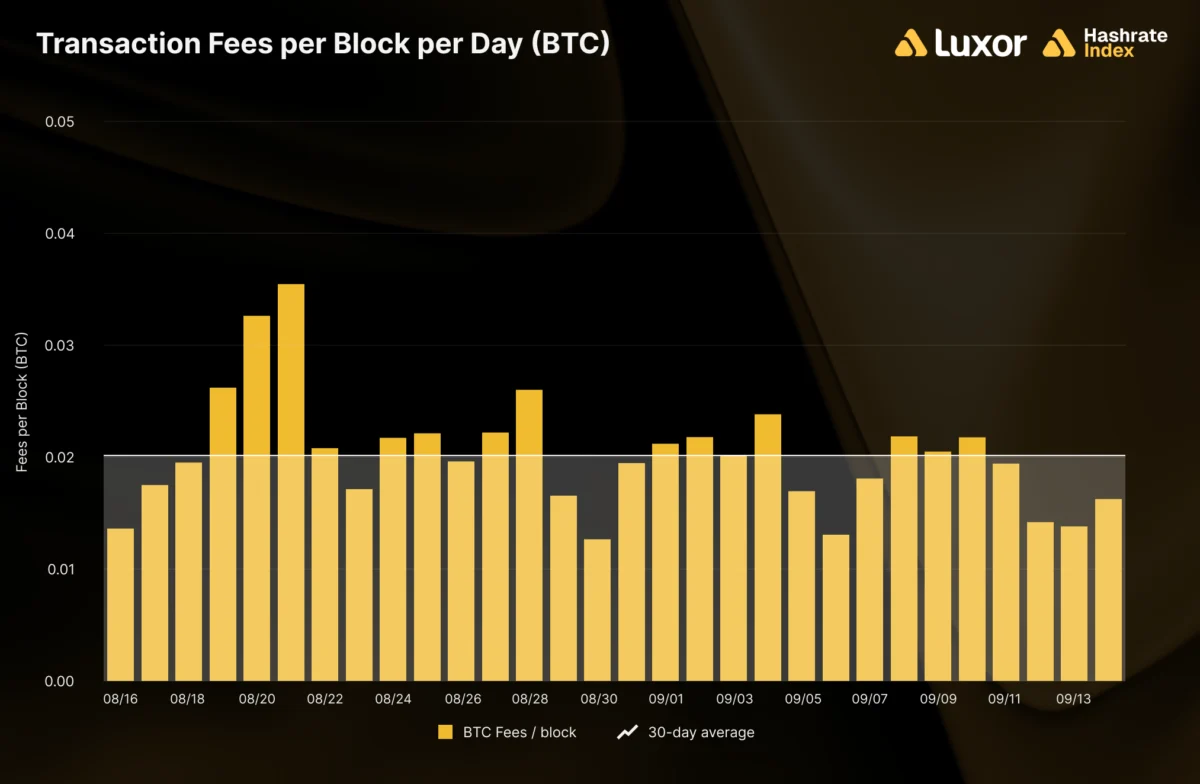
Transaction fees continue to represent a small, though vital, component of the overall miner revenue stack. Over the past week, miners collected an average of 0.0183 BTC per block in fees, representing a 5% decline compared to the previous week’s average of 0.0193 BTC. The 30-day average for transaction fees stands at 0.0202 BTC per block, suggesting that while there is consistent demand for block space, there has been a lack of significant, fee-driving spikes in on-chain activity.
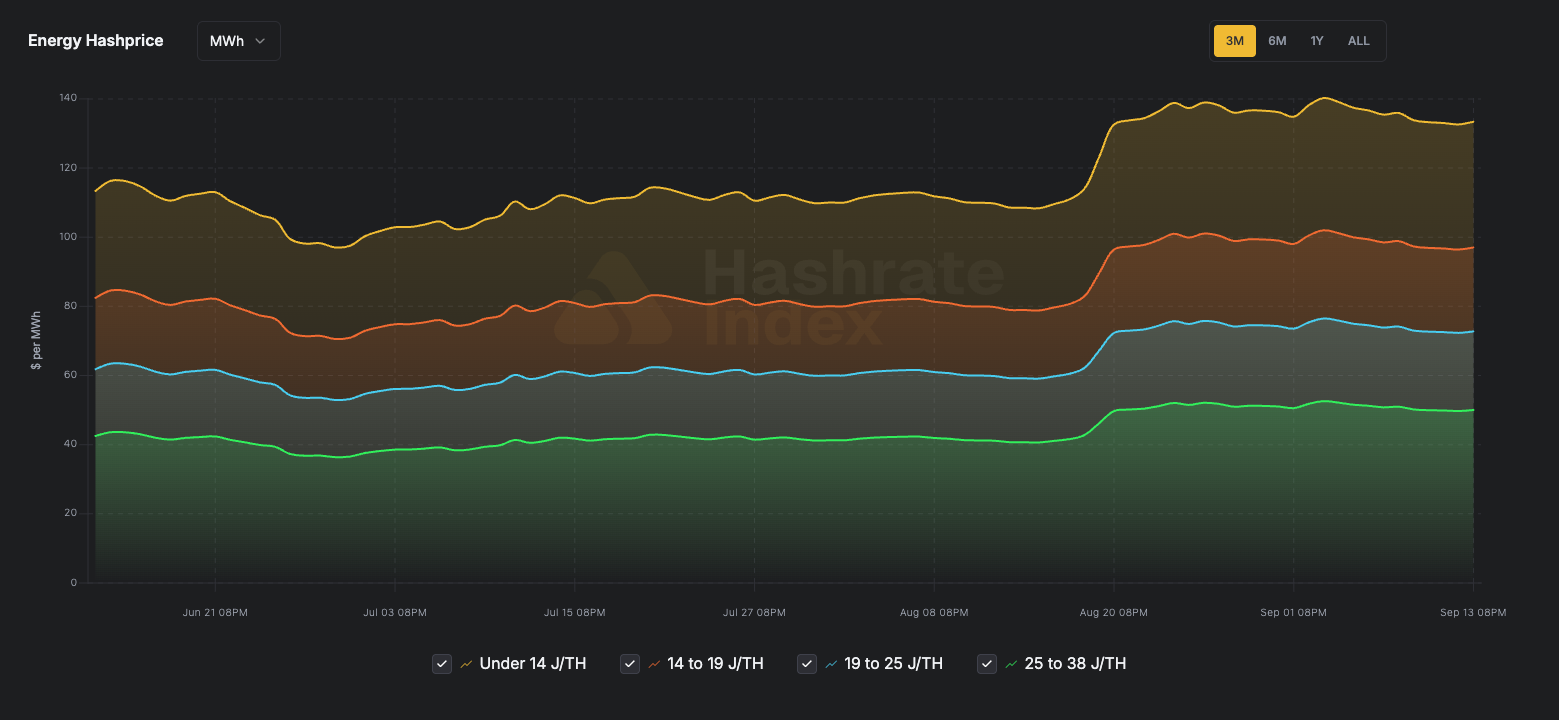
For mining firms, this environment highlights the necessity of maintaining low electricity costs and high-efficiency hardware. When transaction fees are low and the block subsidy remains fixed, the margin for error in operational expenditures becomes thinner. Analysts suggest that until there is a sustained increase in transaction volume—driven perhaps by layer-2 adoption or increased demand for digital asset settlement—miners must rely on the stability of the USD-denominated price of Bitcoin to remain cash-flow positive.
Forward Market Outlook
Looking toward the near future, the Luxor Hashrate Forward Market provides a glimpse into industry sentiment. The forward curve, which allows miners to hedge their production, is pricing in an average hashprice of $36.92 or 0.00047 BTC over the next six months. This suggests that market participants are not pricing in significant volatility in the near term but are remaining cautious, likely hedging against the possibility of continued downward pressure on profitability as the network difficulty continues its climb.
Performance of Publicly Traded Mining Equities
The equity markets for Bitcoin miners experienced a challenging week, with a majority of major tickers closing in the red. The sector saw broad-based selling pressure, with several notable companies recording double-digit declines. For instance, Cipher Mining (CIFR) saw a 14.0% decrease, while Terawulf (WULF) fell by 12.4%. Other major players, such as Riot Platforms (RIOT) and CleanSpark (CLSK), saw declines of 5.6% and 0.7%, respectively.
These stock price movements are often highly correlated with the price of Bitcoin, but they are also influenced by investor sentiment regarding the dilution of equity, the cost of capital, and the operational efficiency of individual fleets. The divergence in performance—where companies like ANY saw a 18.0% gain while others suffered double-digit losses—suggests that investors are increasingly distinguishing between miners based on their individual balance sheets, energy procurement strategies, and expansion plans.
Strategic Implications for the Mining Industry
The current state of the Bitcoin mining industry, as of mid-September 2026, is one of transition. The network has grown significantly in terms of raw compute power, yet it remains tethered to a price environment that has seen a 9.6% decline since the start of the year. The upcoming difficulty adjustment will serve as a stress test for the industry. Miners who have invested in next-generation hardware will be better positioned to absorb the 5.26% increase in difficulty, while those relying on older, less efficient fleets may find themselves operating at the edge of profitability.
As the industry matures, the focus has shifted from simple, rapid expansion to rigorous optimization. The ability to manage energy costs, leverage efficient mining firmware, and engage in sophisticated financial hedging—such as using the hashrate forward market—has become the hallmark of a successful mining operation. The next few months will likely see further consolidation within the sector as capital-efficient players continue to scale, while less prepared entities potentially exit the space or seek acquisition.
In summary, the week ending September 14, 2026, was defined by relative calm in metrics but underlying tension in the competitive landscape. With a rising difficulty level on the horizon and a cautious forward-pricing environment, the industry remains in a period of disciplined consolidation. Miners, manufacturers, and investors alike are keeping a close watch on both the hashprice and the broader macroeconomic factors that influence the price of Bitcoin, as these remain the primary drivers of success in the mining ecosystem. The industry moves forward with a clear mandate: increase efficiency or risk obsolescence in an increasingly competitive, high-difficulty environment.