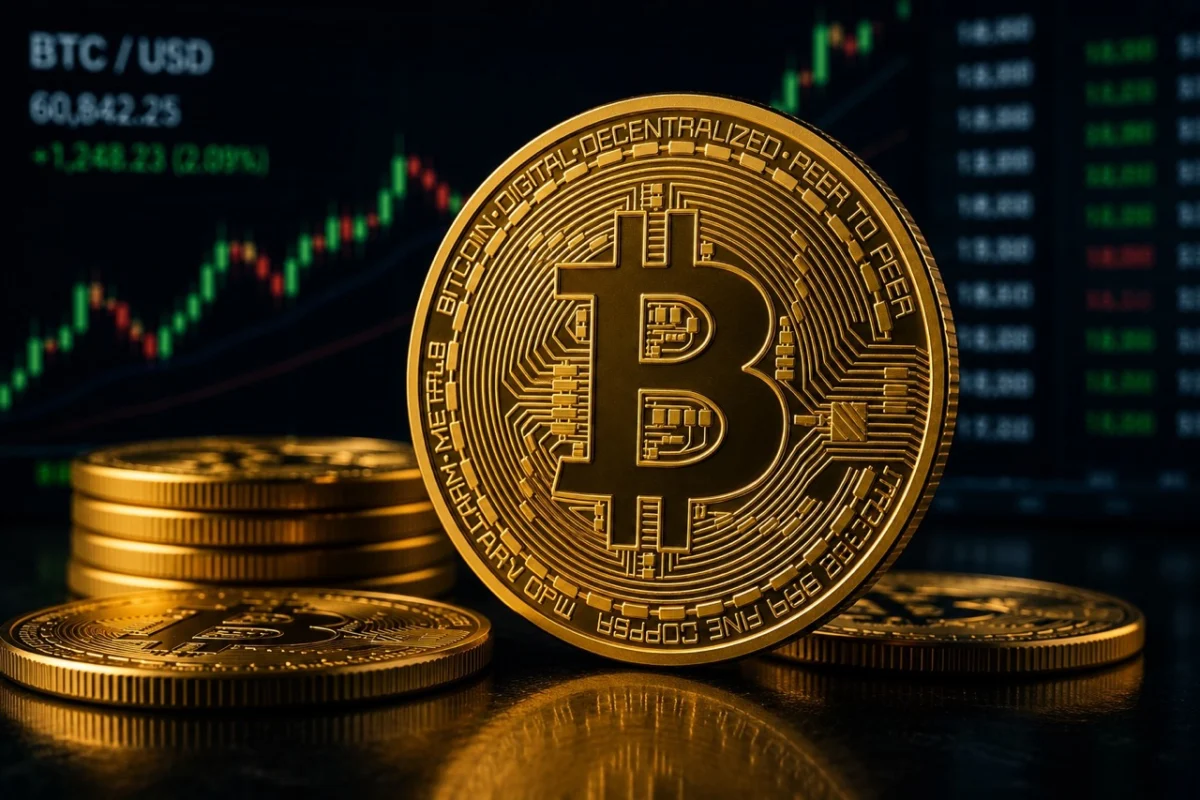
The highly anticipated second-quarter 2026 earnings report from Tesla, scheduled for release on July 22, is poised to once again bring the electric vehicle giant’s substantial Bitcoin holdings into sharp relief. Investors, analysts, and the broader cryptocurrency community are keenly observing whether the pioneering automotive and energy company has maintained its 11,509 BTC corporate treasury position throughout the quarter. This figure, which has remained consistent in recent official disclosures, serves as a critical checkpoint for one of the most prominent mainstream corporations with significant exposure to the digital asset market. The upcoming report is not merely a routine financial update; it represents a barometer for Tesla’s continued stance on Bitcoin as a reserve asset, offering insights into broader corporate adoption trends.
A Chronology of Tesla’s Bitcoin Journey
Tesla’s foray into Bitcoin began with a seismic announcement in February 2021, when the company revealed a $1.5 billion investment in the cryptocurrency. This move, disclosed in a U.S. Securities and Exchange Commission (SEC) filing, sent shockwaves through both traditional financial markets and the crypto world. At the time, Bitcoin’s price was hovering around the $30,000 to $40,000 range, and Tesla’s investment immediately legitimized the digital asset in the eyes of many institutional investors. The company stated its intention to begin accepting Bitcoin as a payment method for its vehicles, further integrating the cryptocurrency into its operational framework.
By March 2021, Tesla indeed began accepting Bitcoin payments, a move spearheaded by CEO Elon Musk, who had become an increasingly vocal proponent of digital assets on social media. This period marked a peak in enthusiasm, with Bitcoin’s price soaring to new all-time highs, partly fueled by institutional interest and Tesla’s high-profile endorsement. However, this honeymoon phase was short-lived. In May 2021, just two months after initiating Bitcoin payments, Tesla suspended the option, citing environmental concerns over the energy consumption associated with Bitcoin mining. This reversal triggered a significant market downturn for Bitcoin and drew considerable scrutiny to the sustainability aspects of proof-of-work cryptocurrencies.
The next major development in Tesla’s Bitcoin saga occurred in the second quarter of 2022. Amid a broader cryptocurrency market downturn, Tesla disclosed that it had sold approximately 75% of its Bitcoin holdings. This strategic sale, which added $936 million in cash to its balance sheet, was justified by the company as a measure to maximize cash liquidity during a period of uncertainty. While the sale was framed as a financial maneuver rather than a definitive rejection of Bitcoin, it led to speculation about Tesla’s long-term commitment to digital assets. Since that substantial reduction, Tesla’s remaining 11,509 BTC balance has been consistently reported in subsequent quarterly filings, signaling a period of stability in its digital asset treasury strategy. The Q2 2026 report will thus confirm whether this steady-state approach has continued for another quarter.
Why Tesla’s Bitcoin Holding Commands Attention
Tesla’s Bitcoin position garners disproportionate attention precisely because the company is not a crypto-native entity. When a cryptocurrency miner, exchange, or dedicated Bitcoin treasury company holds BTC, it aligns with market expectations and their core business model. However, when a global technology and manufacturing powerhouse like Tesla, primarily known for electric vehicles, artificial intelligence, and energy solutions, maintains a significant digital asset on its corporate balance sheet, the signal is far broader and more profound. It demonstrates that a major, diversified corporation is willing to incorporate a volatile, non-traditional asset into its treasury strategy alongside more conventional holdings like cash, securities, and other financial instruments.
This distinction is crucial for the psychological narrative surrounding Bitcoin’s mainstream adoption. For Bitcoin supporters, Tesla’s continued holding validates the asset’s potential as a legitimate store of value and a reserve asset, even if it’s not the company’s primary focus. It underscores the belief that Bitcoin can coexist within traditional corporate finance frameworks. The fact that Tesla has reduced its position in the past, yet retained a material balance, suggests a measured and strategic approach rather than a fleeting experiment. A confirmed unchanged position in the upcoming report would reinforce the idea that Tesla views Bitcoin as a persistent component of its treasury, contributing to a more mature and diversified balance sheet strategy.
The Broader Corporate Treasury Adoption Narrative
The concept of corporate treasury adoption is one of Bitcoin’s most compelling long-term narratives, extending beyond the influence of exchange-traded funds (ETFs) or specialized crypto funds. It directly addresses whether operating companies are prepared to hold Bitcoin alongside their fiat currency reserves, short-term investments, and other balance sheet assets. Tesla serves as a high-profile test case in this evolving landscape. Its actions, whether holding, buying, or selling, are scrutinized for their implications on the broader corporate appetite for digital assets.
In the past few years, a growing number of companies, albeit still a minority, have explored or adopted Bitcoin for their treasuries. These range from publicly traded companies to smaller private firms. Their motivations often include hedging against inflation, seeking diversification, or capitalizing on potential long-term appreciation. Tesla’s continued presence in this cohort, despite its prior partial sale and the inherent volatility of the crypto market, provides significant symbolic weight. It suggests that even companies not solely dedicated to the crypto space see value in maintaining some exposure, which can inspire confidence among other enterprises contemplating similar moves.
Earnings Reports as Critical Disclosure Points
Unlike real-time market data for publicly traded cryptocurrencies, corporate Bitcoin holdings are not always updated continuously. Investors and market participants often rely on quarterly financial filings, earnings materials, and investor updates to confirm any changes in a company’s digital asset positions. This makes earnings season a particularly vital period for companies with known crypto exposure, transforming financial reports into critical checkpoints for transparency and strategic updates.
Tesla’s Q2 2026 report on July 22 is one such pivotal disclosure window. If the company confirms an unchanged balance of 11,509 BTC, the market will likely interpret it as a signal of continuity and stability rather than a new catalyst. This steady approach might reassure investors that Tesla has a defined, long-term strategy for its digital assets. Conversely, if the balance were to change—either through a purchase or a sale—the reaction could be significantly stronger. A sale might raise questions about the company’s confidence in Bitcoin as a reserve asset, potential liquidity needs, or a shift in treasury strategy. A new purchase, on the other hand, would undoubtedly reignite discussions around corporate Bitcoin adoption, potentially fueling bullish sentiment in the crypto market. For now, the most responsible approach remains to await the official filing and accompanying commentary.
Distinguishing Tesla’s Strategy from MicroStrategy’s
It is imperative to differentiate Tesla’s Bitcoin strategy from that of MicroStrategy, a business intelligence firm that has fundamentally restructured its corporate identity around Bitcoin accumulation. MicroStrategy, under the leadership of Michael Saylor, has made Bitcoin its primary treasury reserve asset and a central pillar of its long-term corporate strategy, consistently acquiring more BTC through various financing mechanisms. Its entire market narrative and valuation are deeply intertwined with its Bitcoin holdings.
Tesla, by contrast, maintains its core business focus on electric vehicles, battery energy storage, artificial intelligence, and related technology. Bitcoin, for Tesla, represents a treasury position—a component of its balance sheet—rather than the central tenet of its capital strategy or operational model. This difference is profound. Tesla can hold Bitcoin without transforming into a "Bitcoin treasury company." It can also maintain a stable position without making a major strategic statement with every quarterly report. For Tesla investors, the Bitcoin balance is just one piece of a much larger financial puzzle. Metrics such as vehicle deliveries, profit margins, AI infrastructure spending, energy generation and storage revenue, operating costs, and future guidance are typically far more influential in driving the company’s stock performance.
However, for Bitcoin markets and the broader digital asset ecosystem, Tesla’s treasury line still carries immense symbolic weight. A continued hold supports the crucial narrative that major, diversified corporations can responsibly maintain Bitcoin exposure, even when it is not their primary business. This contributes significantly to the mainstream acceptance and maturation of Bitcoin as a legitimate asset class.
Anticipating Market Scrutiny: What Analysts Will Watch
Beyond the confirmation of the 11,509 BTC figure, financial analysts and investors will be looking for several key elements within Tesla’s Q2 2026 earnings report and accompanying investor call. Firstly, any explicit language or commentary from Tesla regarding its digital asset strategy, impairment charges related to Bitcoin (if applicable under current accounting standards), fair-value accounting practices for digital assets, or broader treasury management philosophy will be meticulously scrutinized. Even subtle changes in wording or emphasis can attract significant attention, given the extensive discussions surrounding Tesla’s past Bitcoin decisions.
Secondly, the prevailing market conditions for Bitcoin leading up to and immediately following the report’s release will heavily influence its interpretation. If Bitcoin has experienced a period of strong performance and price appreciation, an unchanged Tesla balance might reinforce bullish sentiment, suggesting confidence in the asset’s trajectory. Conversely, if Bitcoin has been weak or volatile, the same unchanged balance might be perceived as less impactful or even a missed opportunity, depending on the analyst’s perspective. Context, therefore, plays a crucial role in how Tesla’s Bitcoin position is ultimately received.
Furthermore, traditional financial metrics will dominate the overall assessment of Tesla’s Q2 performance. Analysts will closely examine vehicle production and delivery numbers, especially for newer models and international markets. Gross margins and operating margins will be critical indicators of profitability and cost efficiency. Updates on AI development, particularly related to autonomous driving capabilities and supercomputing infrastructure (like Dojo), will be pivotal. Progress in the energy generation and storage division, including Megapack deployments and Powerwall installations, will also be key. Finally, the company’s guidance for the third quarter and the remainder of 2026 will provide crucial insights into its future outlook and strategic priorities. The Bitcoin balance, while symbolically important, will be weighed against these core business performance indicators.
Implications for Tesla and the Digital Asset Landscape
The Q2 2026 earnings report will offer multifaceted implications. For Tesla, confirming an unchanged Bitcoin holding suggests a stable and consistent approach to its treasury management, potentially reducing speculative noise around its digital asset strategy and allowing investors to focus on its core business performance. A sale, however, could lead to questions about its financial stability or a renewed skepticism towards Bitcoin, while a purchase would signal a more aggressive stance on digital assets. Each scenario carries different potential impacts on Tesla’s stock price and its public image.
For the broader digital asset landscape, Tesla’s continued holding of Bitcoin, even if passive, reinforces the narrative of institutional and corporate adoption. It maintains Bitcoin’s visibility within mainstream finance and serves as a benchmark for other corporations considering similar treasury diversification. In an environment where regulatory clarity for cryptocurrencies is still evolving globally, the actions of a major public company like Tesla provide a significant data point for market participants and policymakers alike.
Ultimately, the July 22 earnings report will provide investors with an official and definitive update. The key takeaway, however, is to avoid overstating the implications before the official documents are released. Tesla has not provided any preliminary indications of a Q2 Bitcoin buy or sale in its current investor relations materials. The core story remains that one of the world’s most visible and influential public companies is approaching another critical disclosure window, with a significant Bitcoin treasury position continuing to capture widespread attention. This ongoing focus, in itself, is a testament to Bitcoin’s enduring presence in the evolving world of corporate finance.
This article is based on Tesla investor relations materials and general market analysis.