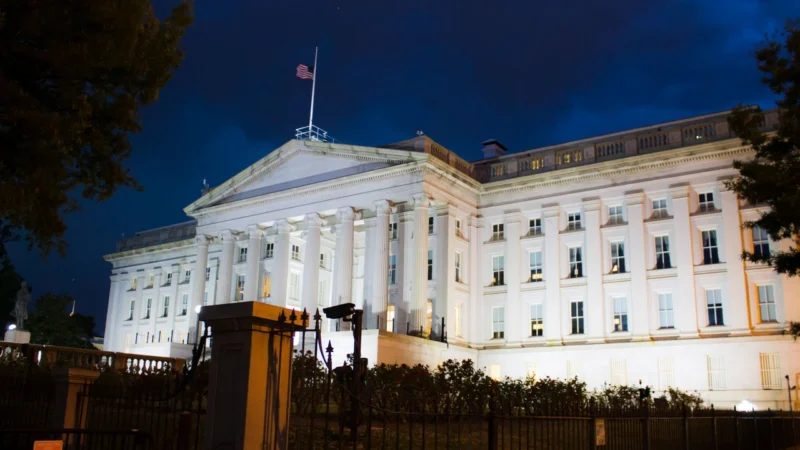
The United States Department of the Treasury’s Office of Foreign Assets Control (OFAC) has executed a significant escalation in its ongoing campaign against transnational criminal organizations, issuing a third round of sanctions targeting the Cambodia-based Prince Group. On November 5, 2026, authorities designated 45 new targets—comprising four individuals and 41 corporate entities—allegedly central to a sprawling digital asset investment fraud and money laundering apparatus. This latest enforcement action represents a concerted effort by Washington to dismantle the financial infrastructure that allows the Prince Group to facilitate cyber-enabled fraud, including elaborate romance scams and high-yield digital asset traps.
The inclusion of a Malaysian national, Chui Kok Wa, in this designation highlights a secondary, parallel effort by the U.S. government to address the rise of localized, high-impact NFT-based scams originating from Madagascar. By systematically targeting the shell companies and financial facilitators that provide the Prince Group with its global reach, the Treasury is attempting to force compliance among international financial institutions that may be unwittingly processing illicit proceeds.
Chronology of Enforcement: A Persistent Threat
The November 2026 sanctions are not an isolated event but rather the latest chapter in a protracted multi-year effort to neutralize the Prince Group’s operations. The initial phase of this crackdown began in October 2025, when OFAC first identified the organization as a primary node for cyber-enabled criminal activity. At that time, the focus was on the foundational entities and key personnel responsible for the development of fraudulent investment platforms.
By June 2026, it became clear that the Prince Group had responded to the initial sanctions by proliferating its corporate structure. The second round of designations targeted the obfuscation techniques employed by the group, specifically its use of complex corporate layering across jurisdictions with varying degrees of regulatory oversight. The November 5 action represents the third, and perhaps most granular, attempt to dismantle these networks. The fact that the Treasury has returned to the "Prince Group well" three times in thirteen months underscores both the resilience of the organization and the determination of U.S. intelligence and law enforcement agencies to track the group’s evolution.
Anatomy of the Corporate Network
The 41 entities sanctioned in this latest round are strategically distributed across global financial hubs, reflecting a sophisticated understanding of international regulatory arbitrage. By incorporating shell companies in the British Virgin Islands, Hong Kong, Cambodia, Singapore, Mauritius, and Malaysia, the Prince Group has created a multi-jurisdictional labyrinth designed to impede the work of investigators.
These entities serve as the plumbing for the group’s illicit wealth. Treasury documents suggest that these corporate vehicles facilitate the movement of stolen digital assets from victim wallets into legitimate financial systems, where they are converted into fiat currency or laundered through high-volume crypto exchanges. By blacklisting these 41 entities, the U.S. has effectively severed their access to the U.S. financial system, placing them on the Specially Designated Nationals and Blocked Persons (SDN) List. This creates a ripple effect: any foreign financial institution that maintains relationships with these entities risks secondary sanctions, effectively compelling global banks and exchanges to offboard them immediately.
Human Rights and the Scam Compounds
A critical, often overlooked dimension of the Treasury’s narrative regarding the Prince Group is the nexus between cybercrime and human trafficking. According to U.S. officials, many of the investment scams are orchestrated from heavily fortified compounds in Southeast Asia. These facilities are not merely offices; they are sites where individuals—often lured by the promise of legitimate employment—are coerced into performing digital labor.
This "dual-harm" model is a priority for the U.S. government. Victims of the financial scams lose their life savings to fake romance and investment platforms, while the "employees" inside the compounds are victims of human trafficking, forced to work under duress to meet daily quotas for successful fraud. By highlighting these conditions, the Treasury is framing the Prince Group not just as a financial threat, but as a severe human rights violator, which may open the door for further collaborative actions with regional Southeast Asian governments and international law enforcement agencies like INTERPOL.
The Madagascar Connection: NFT Scams and Digital Theft
While the Prince Group occupies the bulk of the Treasury’s attention, the designation of Chui Kok Wa serves as a cautionary tale regarding the diversification of cybercrime. Based in Madagascar, Chui Kok Wa allegedly orchestrated a network that specifically targeted American investors through fake Non-Fungible Token (NFT) investment schemes.
Department of Justice (DOJ) filings indicate that Chui’s network successfully drained approximately $516,695 from 74 individual crypto wallets, impacting around 800 victims. The discrepancy between the DOJ’s figures and the Treasury’s estimate of "more than $400,000" reflects the distinct methodologies of the two agencies; while the DOJ is building a criminal prosecution case based on evidence gathered from blockchain forensics, the Treasury is documenting the total financial impact of the sanctioned entity’s broader activities.
The NFT angle is particularly revealing of the scammers’ strategy. By leveraging the hype surrounding digital collectibles, Chui Kok Wa’s organization created platforms that promised high returns on rare NFTs. Victims were essentially induced to sign malicious smart contracts that granted the scammers administrative access to their wallets, allowing for the immediate extraction of all digital assets. This case underscores the vulnerability of the retail crypto market to sophisticated social engineering and technical exploitation.
Implications for the Crypto Industry and Compliance
For the cryptocurrency sector, the November 5 announcement creates an immediate and heavy compliance burden. Compliance teams at exchanges, decentralized finance (DeFi) protocols, and payment processors must now screen their entire user base and historical transaction data against the 45 new entities and the individuals named.
The geographical reach of these entities—spanning from the British Virgin Islands to Singapore—means that firms with any exposure to the Asian Pacific financial corridors are at the highest risk. Compliance officers are now tasked with performing "look-back" audits to determine if their platforms have facilitated transactions for these specific shell companies in the past. If such transactions are identified, firms are required to file Suspicious Activity Reports (SARs) and, in some cases, freeze assets associated with the designated parties.
Furthermore, the prevalence of these scams suggests that the industry may need to shift toward more robust identity verification (KYC) standards, even for smaller-scale participants. The ease with which these entities established footprints in jurisdictions like Mauritius and the British Virgin Islands serves as a reminder that "offshore" does not mean "out of reach" for U.S. enforcement.
Analysis: A Strategic Shift in Enforcement
The consistent application of sanctions against the Prince Group indicates that the U.S. government is moving away from a "whack-a-mole" approach and toward a comprehensive strategy of isolating criminal networks from the global financial system. By targeting the corporate vehicles rather than just the individuals, the Treasury is making it increasingly expensive and difficult for these organizations to maintain their infrastructure.
However, the rapid growth of the Prince Group suggests that they are adept at creating new corporate entities faster than the Treasury can sanction them. The effectiveness of this policy will ultimately depend on the willingness of regional partners in Southeast Asia and the Caribbean to crack down on the shell companies operating within their borders.
As the digital asset landscape continues to mature, the Prince Group case will likely serve as a blueprint for how international bodies handle transnational cyber-fraud. The integration of human trafficking intelligence with financial sanctions marks a new frontier in the battle against digital crime. For now, the crypto industry remains in a heightened state of alert, as the designation of 45 additional targets serves as a stark reminder that the era of anonymous, unregulated global financial activity is coming to a definitive, and often punitive, close.