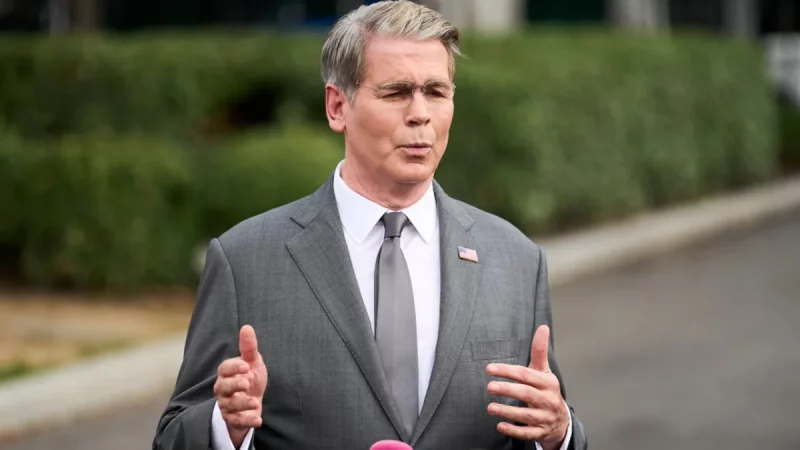
The administration of President Donald Trump is moving toward the creation of a centralized leadership role tasked with overseeing the rapid evolution and deployment of artificial intelligence. Treasury Secretary Scott Bessent has surfaced as a primary contender to serve as the nation’s inaugural "AI czar," a strategic move that reflects the technology’s increasing importance to domestic economic stability and international security. While sources familiar with the matter indicate that discussions are in an advanced stage, the White House has maintained a formal stance of neutrality, cautioning that any staffing decisions not officially announced remain speculative.
The Strategic Evolution of AI Governance
The impetus for a dedicated AI coordinator stems from the realization that artificial intelligence is no longer a peripheral technological interest but a foundational element of modern statecraft. As the US economy pivots toward automated productivity and advanced computational infrastructure, the potential for market disruption and systemic risk has grown.
For Secretary Bessent, the intersection of fiscal policy and technological development has become a focal point. His recent diplomatic engagements underscore this alignment. Earlier this week, Bessent held high-level discussions with Chinese Vice Premier He Lifeng, focusing on the future of US-China collaboration and competition in the AI sector. These talks, which preceded a scheduled summit between President Trump and Chinese President Xi Jinping on September 24, touched upon the establishment of a formal bilateral dialogue.
A primary objective of these discussions is the implementation of a "notification mechanism" for incidents involving AI systems that could present national security risks. By establishing a framework for communication, both nations seek to mitigate the risks of accidental escalation caused by autonomous systems or deep-seated technical misunderstandings in critical infrastructure.
Candidates and Cabinet Dynamics
While Bessent’s name has risen to the top of the list, he is not the only figure being considered for this multifaceted role. Reports indicate that the administration is vetting a shortlist of candidates with deep expertise in policy and technology. Among those under consideration are Michael Kratsios, the Director of the White House Office of Science and Technology Policy, and Scott Kupor, the Director of the Office of Personnel Management.
The structure of the role remains flexible. Officials familiar with the administration’s planning suggest that should Bessent be tapped for the position, it would not necessarily require his resignation from his post as Treasury Secretary. President Trump has a historical precedent for assigning cabinet members dual roles, effectively expanding their portfolios to facilitate cross-departmental coordination. This approach could be particularly effective for AI, as the technology cuts across the mandates of the Department of the Treasury, the Department of Defense, and the Department of Commerce.
Philosophical Stance on Accountability
Bessent has publicly articulated a clear philosophical framework regarding the governance of artificial intelligence. A core tenet of his approach is the preservation of human and corporate accountability. He has consistently argued that legal and moral responsibility for the actions of AI systems must rest with the humans and entities that deploy them, rather than shifting liability onto the software or the algorithm itself.
This stance represents a significant departure from more abstract regulatory proposals that seek to grant AI systems or developers a degree of legal insulation. By maintaining a firm line on liability, Bessent’s approach seeks to ensure that corporations remain incentivized to implement rigorous safety and ethical protocols, knowing that they will be held legally responsible for any adverse outcomes or security breaches caused by their products.
Chronology of AI Policy Integration
The current push for an AI czar follows a period of rapid development and increasing federal oversight:
- Early 2026: Increased federal scrutiny of large-scale language models leads to internal discussions about the need for a centralized AI policy office.
- Mid-2026: Economic indicators show that AI integration is becoming a primary driver of productivity in the financial services sector, drawing the Treasury Department’s closer attention.
- September 2026: Secretary Bessent takes an active role in diplomatic talks with China regarding AI safety, signaling a transition from departmental policy to interagency coordination.
- September 24, 2026: President Trump and President Xi Jinping are slated to meet at the White House, with AI governance and bilateral safety protocols expected to be high on the agenda.
Supporting Data and Economic Context
The economic stakes for the United States are profound. According to recent industry data, the AI sector is projected to contribute significantly to the US GDP over the next decade. However, this growth is accompanied by systemic challenges. Financial institutions are increasingly relying on automated trading algorithms, which—if not properly regulated—could introduce volatility into global markets.
Furthermore, the integration of AI into critical infrastructure, such as power grids and transportation networks, has made cybersecurity a matter of national defense. A report from the Office of Science and Technology Policy noted that the "AI gap" between the US and its competitors is closing, necessitating a more cohesive federal strategy that balances innovation with public safety. The creation of an AI czar is viewed by many analysts as a necessary evolution to ensure that the US maintains its competitive edge without sacrificing domestic stability.
Official Responses and Administrative Stance
In response to inquiries regarding the potential appointment, White House spokesperson Kush Desai issued a measured statement. "Personnel decisions are the purview of the President," Desai said. "Reports regarding any specific individual or position that have not been officially announced by this administration should be treated as speculation."
Despite the lack of an official confirmation, the administrative machinery appears to be moving toward a more centralized approach. The potential for a high-level official to oversee these efforts suggests that the White House is prioritizing a "whole-of-government" approach to the challenges posed by artificial intelligence.
Implications for Global Policy
The appointment of a dedicated AI czar would have significant implications for international relations. As the world’s two largest economies, the US and China are in a race to dominate the development of general-purpose AI. While competition is inevitable, the focus on a notification mechanism for national security incidents indicates a shared interest in avoiding catastrophic failures.
If Bessent assumes this role, his background in finance could steer the US approach toward one that emphasizes economic competitiveness and risk management. This would likely be welcomed by the private sector, which has expressed concerns that overly burdensome regulations could stifle innovation. Conversely, critics might argue that a Treasury-led approach could prioritize market stability over fundamental research or civil liberties.
Conclusion: The Road Ahead
The emergence of Scott Bessent as a candidate for the AI czar position signifies a shift in the administration’s strategy toward viewing AI as a central pillar of national power. As the White House prepares for the upcoming summit with President Xi, the pressure to demonstrate leadership in this domain will only intensify.
The successful implementation of such a role will depend on the appointee’s ability to bridge the divide between rapid technological advancement and the slow, deliberate pace of policy formation. Whether through the leadership of Bessent or another candidate, the creation of an AI czar represents a pivotal moment in the American approach to the digital age, setting the stage for how the United States will navigate the complexities of the most transformative technology of the 21st century. As the administration continues its deliberations, the tech sector and global observers alike remain focused on the potential for a new, coordinated era of artificial intelligence governance.