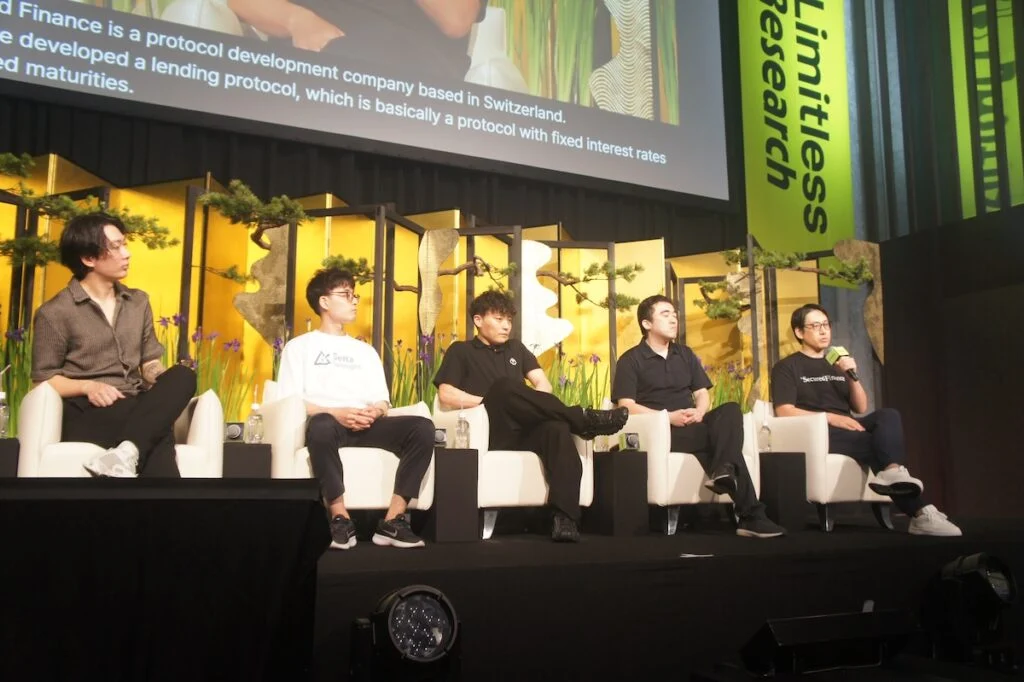
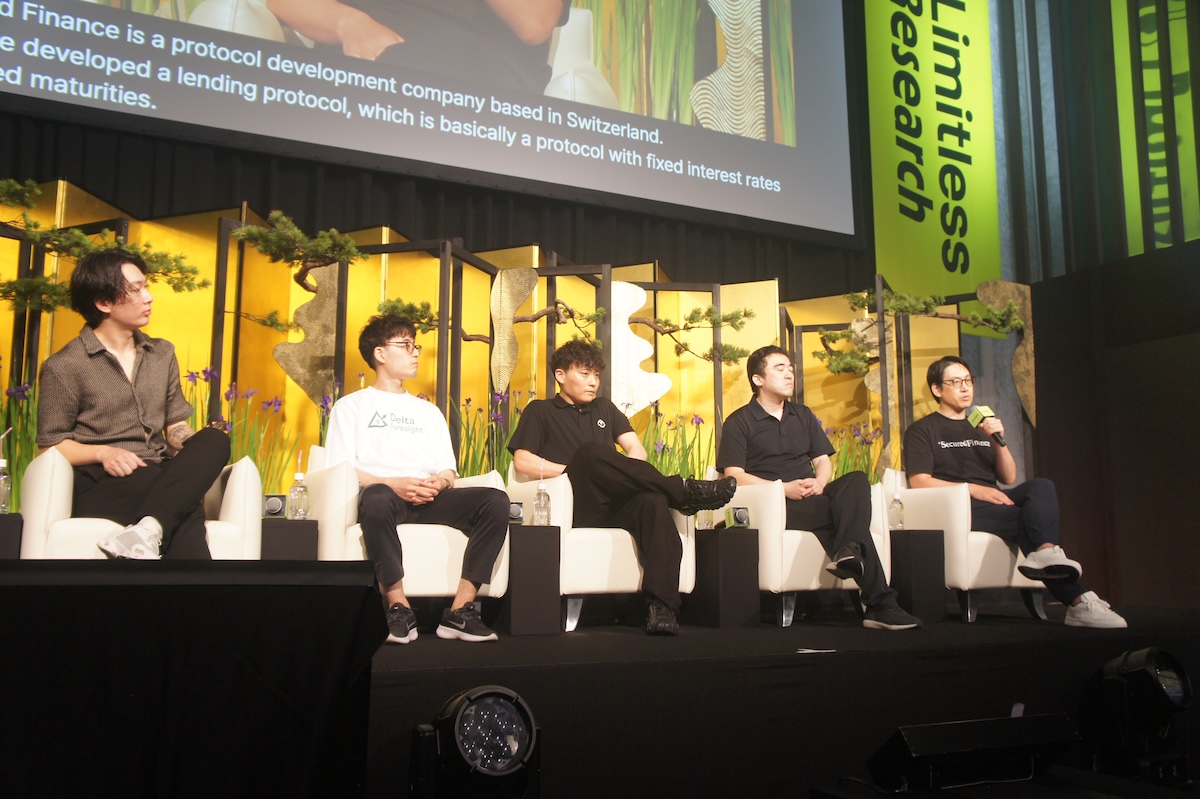
The convergence of artificial intelligence and decentralized finance (DeFi) is no longer a speculative concept but a rapidly maturing reality that is poised to redefine the global financial architecture. At the WebX 2026 conference, one of Asia’s largest blockchain gatherings, a pivotal session titled "Will AI Kill DeFi? Japanese DeFi Founders Discuss In-depth" brought together a panel of industry leaders to dissect the evolving relationship between these two transformative technologies. The consensus among the experts was clear: far from being a threat to decentralized protocols, AI will act as a powerful catalyst, elevating DeFi from a niche experimental sector to the primary infrastructure of the modern financial world.
The panel featured a diverse range of perspectives from both the startup ecosystem and traditional financial institutions. The speakers included Sota Watanabe, Founder and CEO of DeltaForesight; Yuki Ozaki, Founder and CEO of Napier Labs; Keisuke Katsura, Head of the Open Innovation Lab and the DeFi Technology Department at SMBC Nikko Securities; and Masaaki Yoshitome, Founder and CEO of Secured Finance AG. The discussion was moderated by Daik1 End0, popularly known in the industry as DeFi Chef. Together, they explored how the rise of "AI agents"—autonomous programs capable of making financial decisions—will require a 24/7, programmable, and permissionless settlement layer, a role that only DeFi can fulfill.
The Division of Labor: AI for Decision-Making, DeFi for Execution
The core of the discussion centered on a fundamental paradigm shift in how financial transactions are processed. Yuki Ozaki of Napier Labs proposed a structural model that separates the cognitive and mechanical aspects of finance. In this framework, AI serves as the "decision-making" interface, while DeFi and smart contracts serve as the "execution layer."
As AI agents become more sophisticated, they will be capable of analyzing vast amounts of market data, predicting price movements, and identifying arbitrage opportunities at a speed and scale that far exceed human capabilities. However, for these decisions to result in actual financial movement, they require an underlying infrastructure that is equally fast and automated. Traditional banking systems, with their manual settlement processes and restricted operating hours, are incompatible with the instantaneous requirements of AI.
DeFi protocols, built on blockchain technology, provide the necessary environment for these agents to operate. Smart contracts act as immutable rulesets that execute transactions automatically once certain conditions are met. This synergy creates a closed-loop system where AI determines the "what" and "when" of a trade, and DeFi provides the "how," ensuring that assets are moved securely and transparently without the need for human intermediaries.
The Evolution of AI Agents and On-Chain Finance
The timeline of this convergence has been accelerating since the global explosion of Large Language Models (LLMs) in 2023. By 2026, the industry has moved beyond simple chatbots to "Agentic AI"—systems that do not just provide information but take autonomous action. Masaaki Yoshitome of Secured Finance AG emphasized that these agents are essentially becoming "new economic actors."
For an AI agent to participate in the economy, it needs a wallet and a currency. Because AI agents do not possess legal identities in the traditional sense, they cannot easily open accounts at legacy banks. This "identity gap" makes DeFi the natural home for AI-driven capital. On-chain finance allows any entity—human or machine—to interact with global liquidity pools as long as they hold the necessary cryptographic keys.
Supporting data from recent industry reports suggests that the volume of "bot-driven" transactions on decentralized exchanges (DEXs) has already surpassed 60% of total trading volume on major chains like Ethereum and Solana. As AI agents become more autonomous, this percentage is expected to climb, potentially leading to a future where the majority of financial activity is machine-to-machine.
The "Guardrail" Problem: Security and Liability in an Automated Era
While the integration of AI and DeFi offers unprecedented efficiency, it also introduces significant risks. The panel engaged in a rigorous debate regarding the "guardrails" necessary to prevent systemic failure or malicious exploitation. Sota Watanabe of DeltaForesight pointed out that the rise of AI significantly lowers the "cost of attack." Malicious actors can now use AI to scan smart contracts for vulnerabilities at a massive scale, leading to more frequent and sophisticated exploits.
Conversely, AI is also being deployed as a defensive tool. Yuki Ozaki noted that AI-driven auditing and real-time security monitoring are becoming standard in the DeFi space. The battle between AI attackers and AI defenders is defining the new frontier of cybersecurity. However, a major unresolved issue remains: liability.
If an AI agent makes a catastrophic financial decision or exploits a protocol, who is held responsible? Is it the developer of the AI, the provider of the DeFi protocol, the front-end interface, or the user who deployed the agent? Sota Watanabe argued that current legal frameworks are woefully inadequate for addressing these questions. He stressed that for AI and DeFi to achieve mainstream adoption, there must be a clear institutional design that defines the "locus of responsibility."
Institutional Integration: From Legacy Systems to On-Chain Infrastructure
One of the most significant takeaways from the WebX 2026 session was the involvement of SMBC Nikko Securities, one of Japan’s premier financial institutions. Keisuke Katsura’s presence on the panel signaled that traditional finance (TradFi) is no longer viewing DeFi as a competitor, but as a technological upgrade to the aging plumbing of the global economy.
Katsura explained that his department was established not merely as an extension of existing business lines, but as a dedicated unit to reimagine financial infrastructure from the ground up. He highlighted that the efficiency gains from blockchain-based market structures are undeniable. By moving assets onto the chain (tokenization), institutions can reduce settlement times from days (T+2) to seconds (T+0), drastically reducing counterparty risk and freeing up capital.
Furthermore, Katsura emphasized that Japan has a unique opportunity to lead in this space. By leveraging its strong technological base and developing clear, innovation-friendly regulations, Japan can export its financial "value" to the global market. He argued that regulation should not be seen as a hindrance but as a "rule for promotion"—a way to provide users with the security and confidence needed to interact with new technologies.
Comparative Regulatory Landscape: Japan vs. The World
The discussion on regulation led to a comparative analysis of global standards. Masaaki Yoshitome, whose firm Secured Finance is based in Switzerland, noted that while Japan has made significant strides in defining crypto-assets under the Financial Instruments and Exchange Act, it still lags behind jurisdictions like Switzerland in terms of legal clarity for tokenized rights.
In Switzerland, the legal system explicitly recognizes the transfer of rights through the transfer of tokens on a blockchain. In Japan, while the path toward separate taxation for crypto-assets is becoming clearer, the fundamental legal effect of token possession and the transfer of underlying rights remains somewhat ambiguous. The panelists agreed that for Japan to become a global hub for the AI-DeFi era, it must modernize its civil and commercial codes to recognize the legal reality of on-chain transactions.
Chronology of DeFi’s Path to Infrastructure
To understand the current state of the market, it is helpful to look at the timeline of DeFi’s evolution:
- 2020: The DeFi Summer. The birth of yield farming and liquidity mining, proving that decentralized protocols could attract billions in liquidity.
- 2022: The Institutional Shakeout. The collapse of centralized entities like FTX and Celsius highlighted the importance of transparency and "code is law" principles found in DeFi.
- 2024: The Tokenization Wave. Real-world assets (RWAs), such as US Treasuries and private credit, began moving on-chain in significant volumes.
- 2025-2026: The Agentic Era. The shift toward AI agents as the primary users of DeFi protocols, leading to the current discussion at WebX 2026.
Implications and Future Outlook: The On-Chain Economy
The session concluded with a look toward the future. The consensus was that the phrase "DeFi is dying because of AI" is fundamentally incorrect. Instead, AI is the "killer app" that DeFi has been waiting for. For years, DeFi struggled with a user experience (UX) problem—interacting with wallets and gas fees was too complex for the average person. AI agents solve this by acting as a sophisticated buffer, handling the technical complexities on behalf of the user.
The broader implications for the global economy are profound. We are moving toward an "on-chain future" where:
- 24/7 Global Markets: Markets will never close, and liquidity will flow seamlessly across borders, managed by autonomous agents.
- Hyper-Efficiency: The removal of intermediaries will lower transaction costs to near-zero, enabling micro-transactions that were previously impossible.
- Programmable Wealth: Financial strategies will be encoded into AI agents, allowing for personalized, automated wealth management for everyone, not just the ultra-wealthy.
As the WebX 2026 panel demonstrated, the intersection of AI and DeFi is where the next generation of financial giants will be born. The "on-chain" future is no longer a distant vision; it is the infrastructure being built today by the founders and institutions who recognize that in the era of AI, the only logical financial system is one that is decentralized, transparent, and autonomous.