
The landscape of modern wealth creation has undergone a profound structural transformation over the past two decades, characterized primarily by a single, widening chasm: private companies are staying private for much longer. Historically, high-growth enterprises utilized Initial Public Offerings (IPOs) relatively early in their lifecycles, allowing everyday retail investors to participate in their meteoric rises. Today, however, firms like SpaceX, OpenAI, xAI, and Kalshi choose to remain private well into valuations scaling in the tens or hundreds of billions of dollars. By the time these corporate giants finally debut on public exchanges, the vast majority of their enterprise value has already been captured by venture capitalists, institutional funds, and private equity insiders.
Institutional investors routinely allocate between 20 to 30 percent of their diversified portfolios to private market assets, capturing the lion’s share of late-stage growth. Conversely, retail investors—constrained by archaic regulatory frameworks, steep capital minimums, and friction-laden administrative processes—effectively hold zero exposure to these asset classes. Attempt
ing to acquire secondary shares in a high-profile private company through traditional channels has traditionally required navigating an arduous gauntlet. Investors must source a specialist broker, clear extensive Know Your Customer (KYC) protocols, retain legal counsel to draft bespoke transfer documents, and endure weeks of protracted negotiations without transparent pricing mechanisms. Verifying the provenance of the shares can add another month to the timeline. From the initial inquiry to final settlement, a conventional secondary market trade can easily stretch across three to four months, rendering the endeavor practically impossible for the average participant.
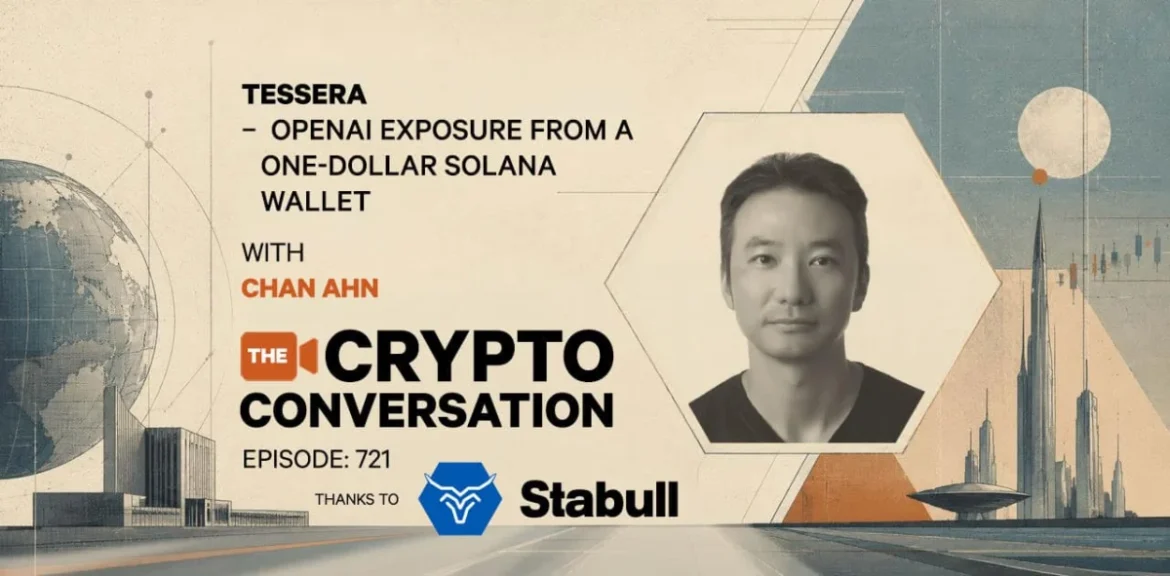
Enter Tessera, a Solana-based decentralized finance (DeFi) platform founded by Chan Ahn, a veteran of traditional finance with over 15 years of experience at institutions including Goldman Sachs, JPMorgan, and Credit Suisse, alongside a PhD in computational finance from Imperial College London. Tessera aims to bridge this systemic wealth gap by issuing tokens that track the economic performance of late-stage private companies, allowing them to be traded permissionlessly on decentralized exchanges.
The Structural Architecture of Tessera
To navigate the complex regulatory and operational hurdles of private equity, Tessera implements a deliberate and transparent structural design. Rather than tokenizing underlying shares directly—a practice that often triggers strict regulatory classifications and compliance bottlenecks—Tessera employs a bankruptcy-remote entity structure based in the Cayman Islands. The platform holds the actual private company stock within these isolated corporate vehicles and subsequently issues tokens that represent loan participation rights.
Holders of these tokens acquire direct economic exposure to the underlying asset’s financial performance, though they receive no direct corporate ownership, voting rights, or dividend privileges. Ahn argues that this framework closely mirrors how the vast majority of retail investors already hold fractional equities through traditional brokerages, where ownership is often pooled or custodied via institutional intermediaries. Crucially, this structural approach has enabled Tessera to secure formal legal opinions confirming that its tokens do not constitute securities under Singaporean legal frameworks.
The practical execution of this model is designed for seamless accessibility. Any individual equipped with a Solana-compatible digital wallet and as little as a single dollar can execute trades on decentralized liquidity pools such as Meteora or Jupiter. While the platform operates permissionlessly, it enforces geographic exclusions to comply with international regulations, omitting users from the United States, China, and other sanctioned jurisdictions.
The viability of this model has already moved past theoretical modeling into live production. When aerospace manufacturer SpaceX underwent a major liquidity event and corporate milestone in June, it triggered a structured redemption cycle on the platform. Tessera’s holding entities began systematically selling down the underlying stock—liquidating approximately one-fifth of the position thus far—and returning the resulting USD Coin (USDC) pro rata to token holders. This operational stress test proved that the tokenized loan participation model could successfully bridge the gap between private equity liquidation and decentralized settlement.
Navigating the AI Listing Wave and Valuation Realities
As artificial intelligence continues to dominate global venture capital and private market valuations, platforms like Tessera have found themselves at the epicenter of intense speculation. Ahn has maintained a remarkably disciplined and analytical approach to the ongoing AI listing wave. While Tessera currently offers users exposure to OpenAI through its tokenized products, it notably excludes competitors such as Anthropic, reflecting a rigorous quantitative evaluation of market valuations.

Ahn outlines a straightforward discounted cash flow (DCF) model that he constructed to stress-test Anthropic’s implied IPO valuation. According to his calculations, achieving the market’s current pricing expectations requires the company to sustain aggressive revenue growth and margin expansion at roughly 20 percent year-over-year for an entire decade. While Ahn remains firmly bullish on artificial intelligence as a transformative, secular technology, he offers a vital caveat for market participants: being fundamentally correct about the trajectory of a technology is not synonymous with being correct about the valuation of a specific security or the timing of its market cycle.
This emphasis on empirical modeling and structural pragmatism extends to Ahn’s broader macroeconomic and technological philosophies. Reflecting on his deep roots in the blockchain sector, Ahn describes a nuanced perspective on digital assets. Having previously built applications directly on the Bitcoin network, he ultimately recalibrated his expectations regarding a broader Bitcoin-based application economy. Rather than viewing these limitations as a structural failure, he interprets them as the very constraints that solidify Bitcoin’s positioning as a premier, apolitical store of value in an increasingly multipolar and fragmented geopolitical world. Looking ahead, his conviction remains steadfast that blockchain infrastructure will eventually dissolve into the background of everyday financial life, with tokenization serving as a critical foundational step toward that reality.
Broader Market Implications and Regulatory Horizons
The emergence of platforms that tokenize private market exposure highlights a broader evolutionary trend within global finance. As companies delay public listings to avoid regulatory scrutiny, short-term volatility, and the administrative burdens of public markets, retail capital has been systematically excluded from the most lucrative phases of corporate value creation. Decentralized finance protocols are increasingly stepping into this vacuum, utilizing global liquidity rails to disintermediate legacy gatekeepers.
However, this democratization of access is not without systemic risks. The reliance on bankruptcy-remote offshore entities, loan participation structures, and automated market makers introduces counterparty and legal risks that remain largely untested across extended market cycles or systemic financial downturns. Regulatory bodies globally continue to monitor the intersection of tokenized real-world assets (RWAs) and decentralized exchanges, with particular scrutiny focused on investor protection, cross-border compliance, and the adequacy of underlying asset custody.
Despite these hurdles, the operational success of platforms like Tessera during corporate redemption events signals a permanent shift in how capital formation and secondary liquidity can be managed. By leveraging high-performance, low-cost blockchain infrastructure such as Solana, financial engineers are rewriting the rules of private market access. Whether this model scales to encompass the entirety of the private equity ecosystem will depend heavily on evolving regulatory frameworks, institutional adoption, and the continued maturation of decentralized financial plumbing. For now, however, the wall separating retail capital from the private echelons of the world’s most valuable companies has officially begun to crack.
