The IOTA network has experienced a transformative period of development, institutional integration, and protocol optimization during the third quarter of 2026, spanning the months of July through September. Designed to make the distributed ledger faster, easier to verify, and simpler to deploy, this quarter’s updates delivered significant architectural milestones across consensus mechanisms, node operations, developer tooling, data services, and global real-world use cases. Most notably, the quarter was defined by the mainnet deployment of the Starfish-Speed consensus upgrade, major strides in institutional real-world asset and identity adoption—such as Argentina’s national organ-transplant authority shifting operations to the chain—and crucial enhancements to developer ergonomics and data indexing.
Chronological Rollout and Consensus Evolution
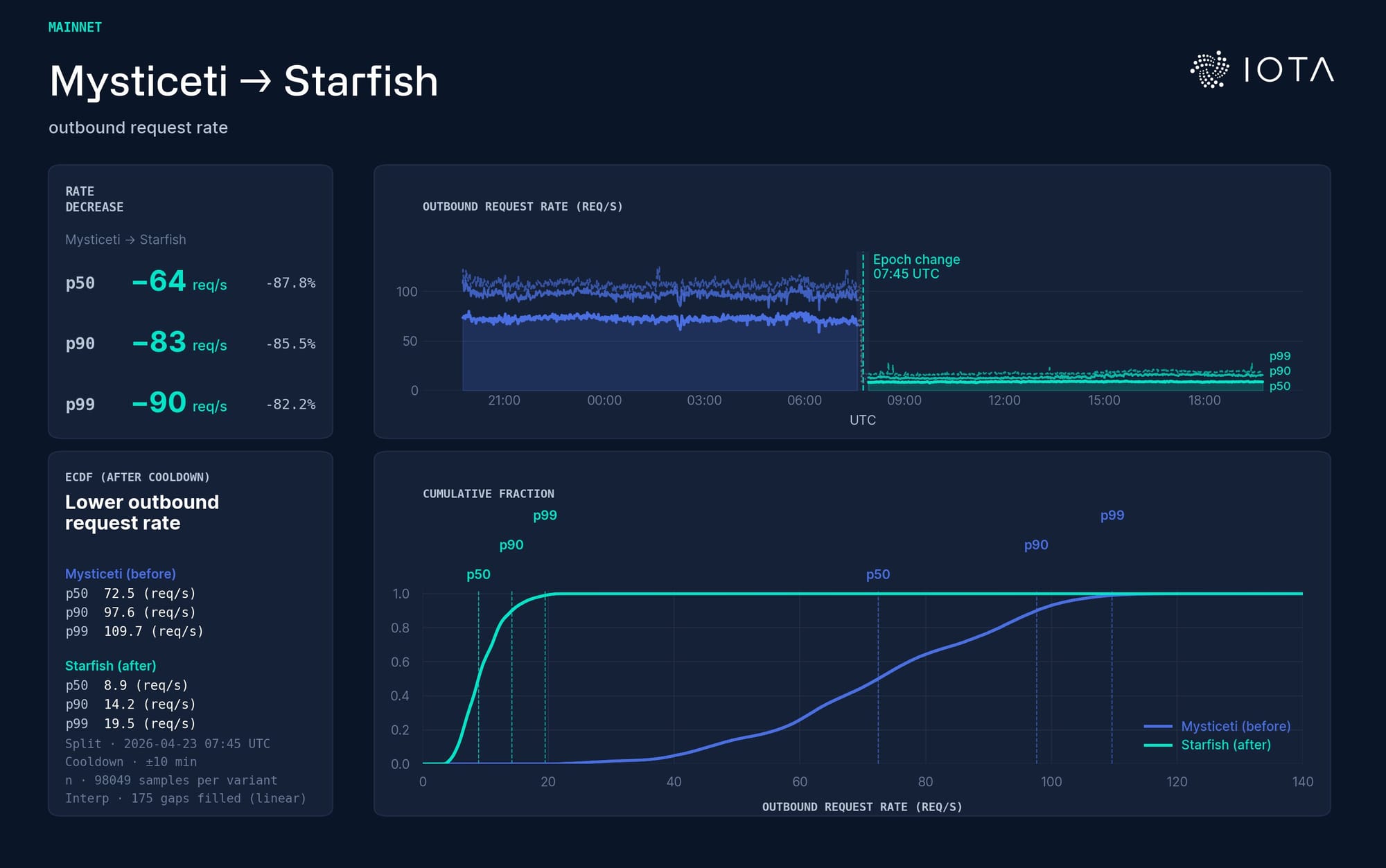
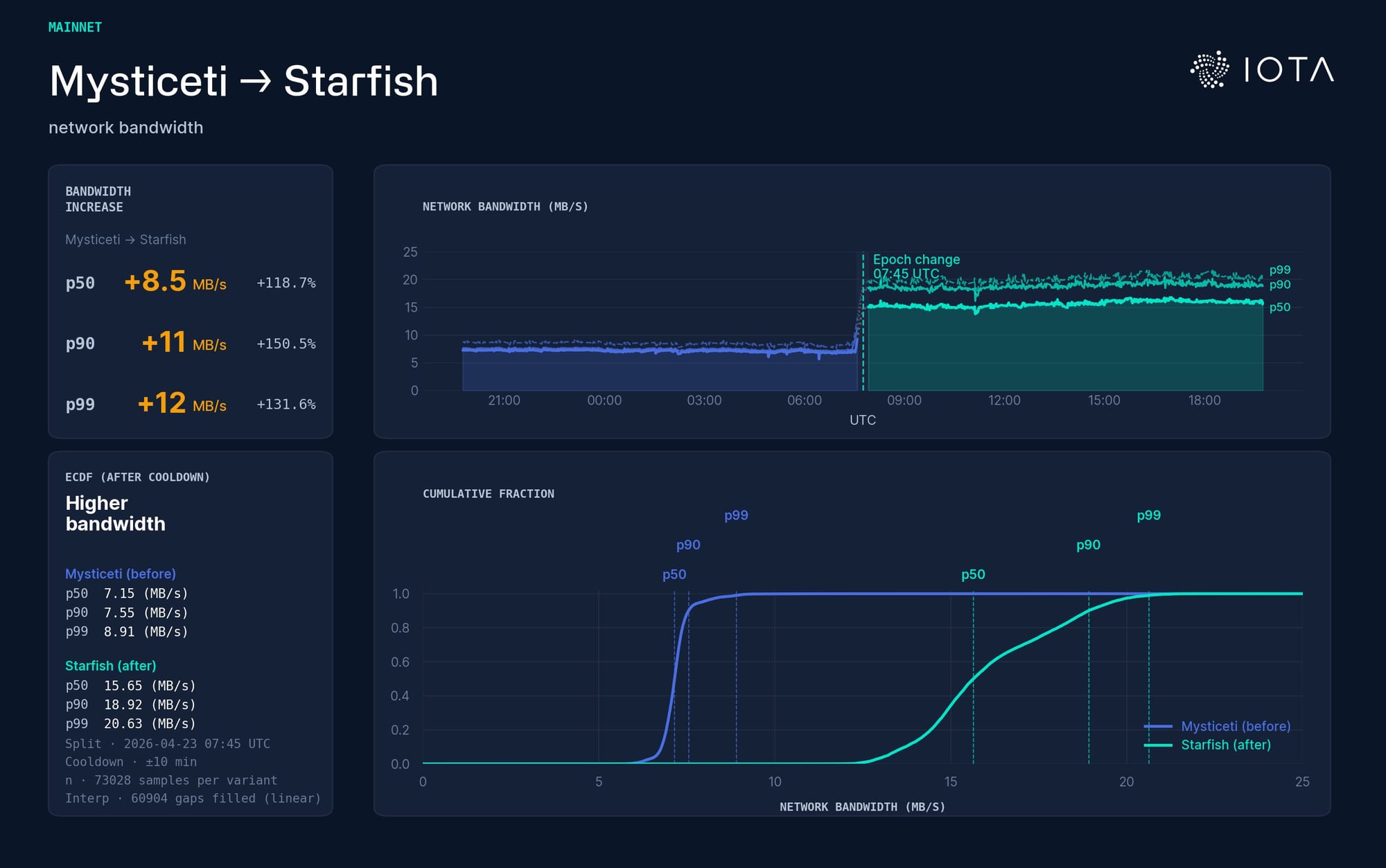
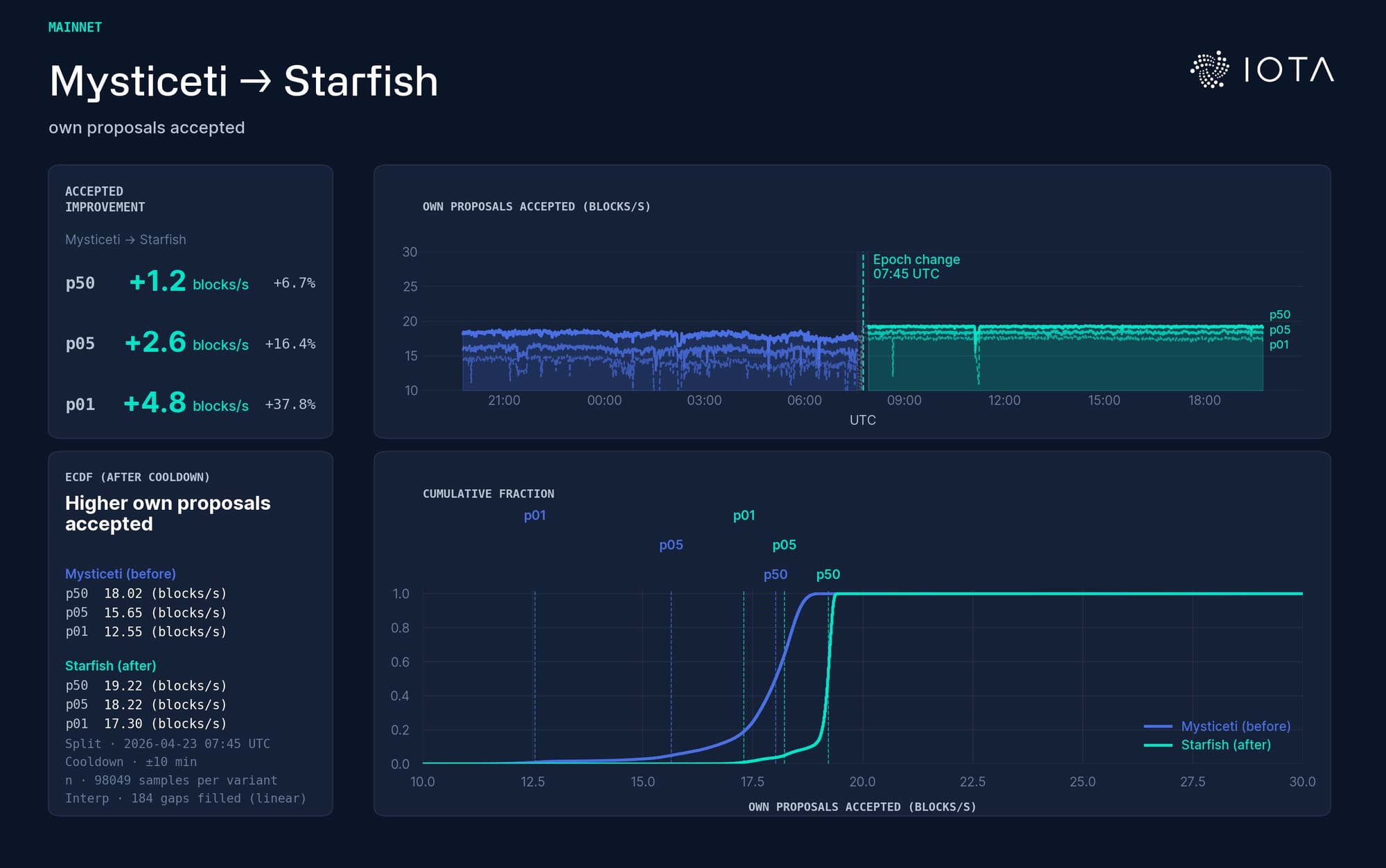
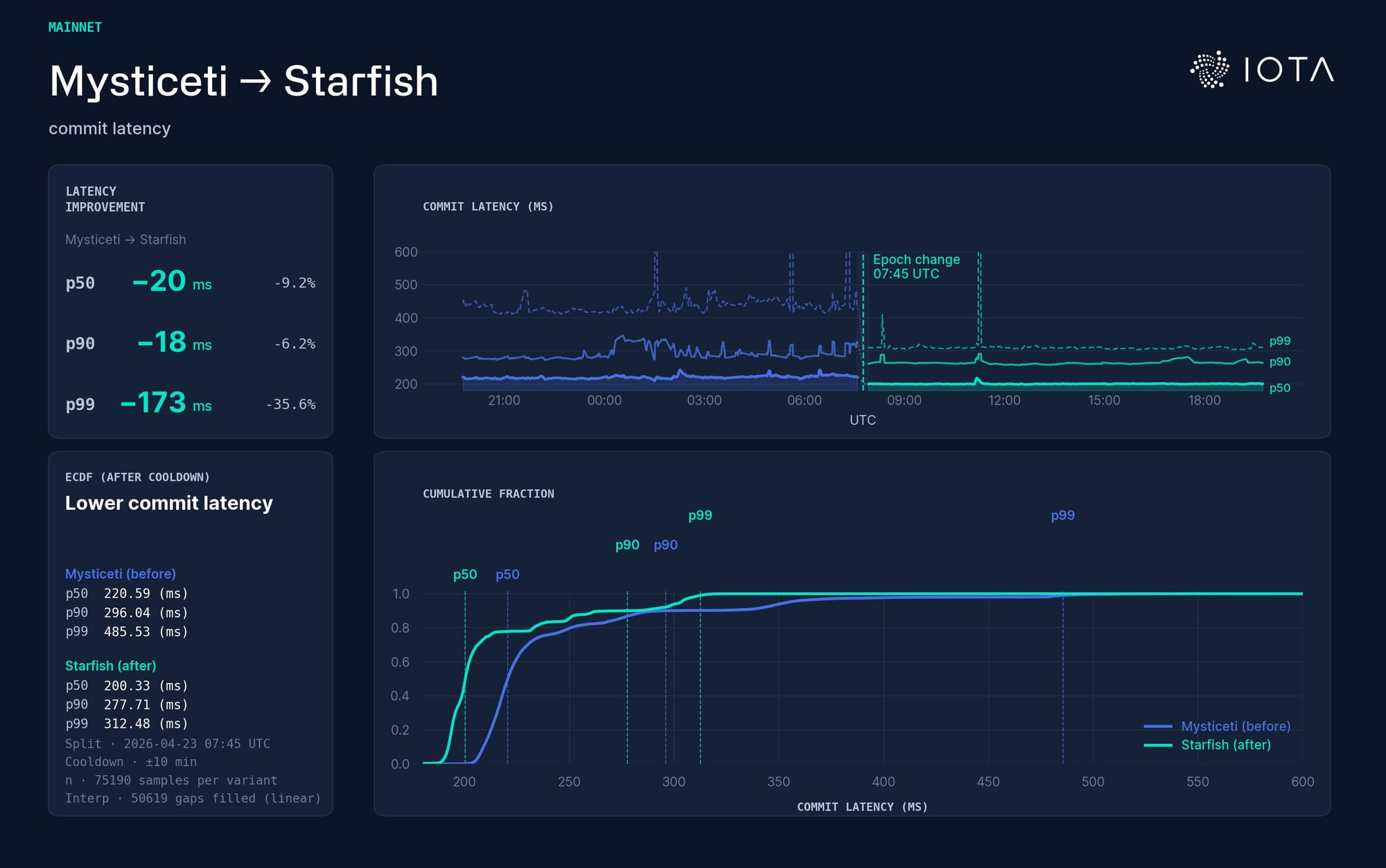
The engineering roadmap for Q3 2026 followed a rigorous, multi-stage testing and deployment pipeline typical of high-security enterprise-grade networks. The quarter’s marquee technical achievement was the successful rollout of Starfish-Speed, an advanced iteration of the native Starfish consensus protocol. Designed to eliminate unnecessary latency in transaction finality, Starfish-Speed enables validators to commit a block one round earlier than previously possible, provided network conditions allow.
The timeline for the Starfish-Speed upgrade demonstrated a methodical approach to network stability: the feature first went live in a controlled devnet environment in July, progressed to the public testnet in August, and was successfully integrated into the mainnet in September. Concurrently, the core development teams subjected consensus mechanisms, underlying networking layers, and API services to exhaustive third-party and internal security reviews. All resulting vulnerability patches and optimizations were simultaneously deployed to the mainnet to ensure robust cryptographic and operational security.
Looking forward, the IOTA Core team has already established its primary engineering focus for the upcoming fourth quarter: P-COOL, a certificate-less transaction flow designed to further streamline protocol efficiency. Public network stress-testing for P-COOL is slated to commence in the next quarter, signaling an ongoing commitment to scaling throughput without sacrificing decentralization.
Node Operations, Trustless Bootstrapping, and Network Performance
Operating and synchronizing an IOTA node became significantly faster, more reliable, and less reliant on centralized trust assumptions during Q3. Historically, node operators depended on third-party publishers for RocksDB snapshots when bootstrapping a node. To eliminate this friction point and security vector, the network has officially discontinued public RocksDB snapshots in favor of formal snapshots.
These formal snapshots are automatically generated on both the testnet and mainnet at the conclusion of the latest epoch and at the start of each month. Crucially, they carry all cryptographic data required for independent verification, allowing operators to bootstrap their nodes trustlessly. Furthermore, node synchronization speeds have accelerated by a factor of 2.6. Syncing nodes are now equipped with real-time diagnostic reporting, providing operators with precise metrics on how far behind the network head they are and estimating the exact time required to fully catch up.
Data verification capabilities have likewise been extended deep into the network’s history. Fullnodes now retain epoch information all the way back to the genesis block. This architectural update empowers light clients to securely verify the entire history of the ledger directly through any fullnode serving the gRPC API, cementing IOTA’s dedication to verifiable decentralization.
Developer Tooling and SDK Maturation
The developer ecosystem reached a major maturation milestone in Q3 2026 with the release of version 1.0.0-beta.1 of the Rust SDK and its associated multi-language bindings. Accompanied by comprehensive documentation across every supported programming language, this stable release provides developers with a reliable foundation for building decentralized applications. Additionally, local transaction simulation has been updated to precisely mirror the exact outputs and behaviors returned by live nodes, drastically reducing debugging times.
For builders utilizing the Move smart contract language, the integration of view functions represents a major efficiency gain. View functions allow applications to query onchain data safely, cheaply, and without altering state. These additions are fully supported by extensive documentation, practical worked examples, and native integration within the IOTA Move VS Code extension.
Day-to-day development friction was further alleviated through structural optimizations. The software package dependency cache was significantly reduced in size, an early-warning system was introduced to alert developers when a package nears deployment size limits, and error codes were overhauled for clarity. The broader academic and developer communities also took note of these advancements; IOTA’s innovative account abstraction model was formally presented to international researchers and industry leaders at the 2026 International Conference on Blockchain Research and Applications.
Data Services, Indexing, and Infrastructure Restructuring
To maintain high performance and prevent data bloat, the public Indexer infrastructure underwent a strategic restructuring during the third quarter. By default, the public Indexer now retains a lean 30-day window of transaction data, ensuring that recent queries execute with maximum speed. For historical data, transactions touching specific IOTA addresses and key lookups automatically fall back to an archival store across both JSON-RPC and GraphQL interfaces, while broader filtered queries are restricted to the active 30-day window.
Setting up and maintaining an independent Indexer has also been streamlined. Operators can now bypass the resource-intensive process of replaying every checkpoint from the genesis block by restoring their Indexer directly from a formal snapshot. Step-by-step instructions for this process have been published in the official IOTA documentation. To ensure high availability for public endpoints, the mainnet public Indexer was placed behind an advanced load balancer, permitting seamless software updates and maintenance without causing API downtime.
To safeguard public infrastructure against abuse and ensure equitable access, rate-limiting was formally standardized across all public gRPC, Indexer, and API endpoints on the devnet, testnet, and mainnet. Endpoints are now capped at a strict threshold of 100 requests per second per IP address, encouraging high-volume commercial applications to deploy dedicated nodes or private indexers.
Explorer, Wallet, and Cross-Chain Bridges
End-user touchpoints received substantial design and functional upgrades. The official IOTA Explorer was overhauled to feature a new network analytics homepage, providing real-time macro insights into ledger activity. Individual account pages were redesigned to prioritize portfolio valuations and transactional activity streams, transaction pages were optimized with advanced filtering tools, and known institutional accounts are now explicitly labeled. Additionally, a dedicated notarization page was introduced to track document integrity proofs.
The IOTA Wallet dashboard was enhanced with a balance visibility toggle, an integrated decentralized application (dApp) gallery, real-time fiat currency valuation tracking for token balances, and an in-app password modification setting. Meanwhile, the IOTA EVM bridge expanded its interoperability suite by adding official native support for the Rabby wallet, accommodating a wider demographic of decentralized finance (DeFi) users.
Cutting-Edge Protocol Research
Behind the scenes, IOTA’s research divisions advanced several novel theoretical frameworks aimed at maximizing execution efficiency and enhancing network decentralization. The research team is currently designing pre-consensus validation messages intended to eliminate redundant transaction validations. These messages will simultaneously measure transaction resource costs across computational, memory, and bandwidth dimensions, paving the way for a highly accurate and equitable gas-charging model. Early calibration runs utilizing reference hardware have yielded highly encouraging performance metrics.
Furthermore, the research group published foundational work on two experimental consensus protocols:
- Bluestreak: A protocol designed to dramatically slash metadata communication overhead in uncertified Directed Acyclic Graph (DAG) consensus models, such as the Starfish architecture deployed on the IOTA Mainnet. By reducing block metadata to a constant size, Bluestreak achieves an estimated 75% reduction in consensus metadata traffic.
- Vantage: A signature-free Byzantine Fault Tolerant (BFT) protocol utilizing multiple data proposers. Vantage matches the low latency characteristics of traditional signature-based consensus designs while completely eliminating the computational overhead of cryptographic signatures.
Real-World Institutional Adoption and Ecosystem Growth
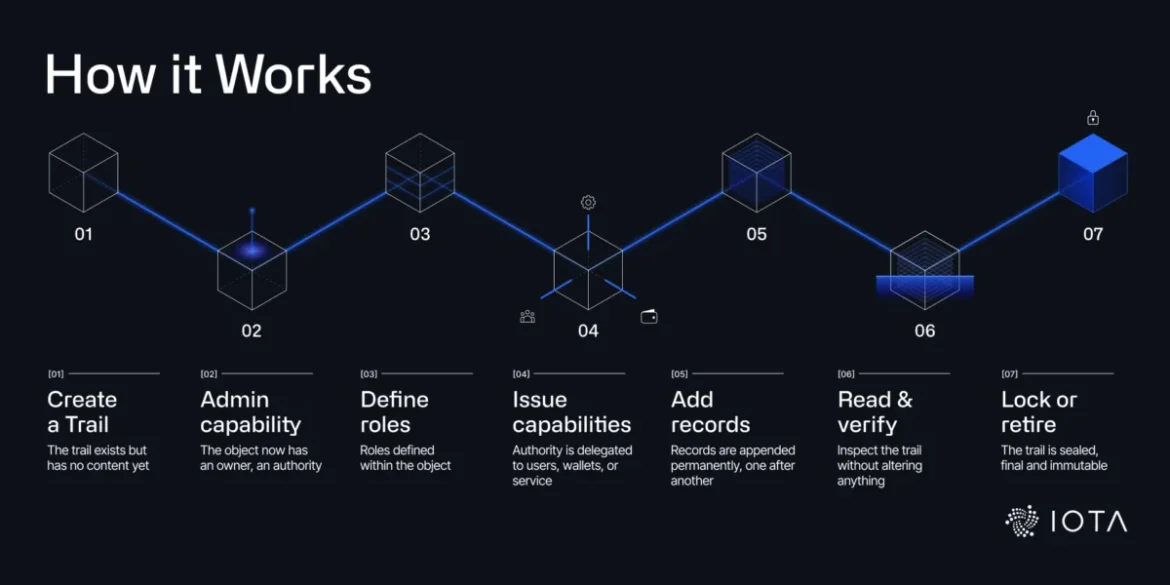
The practical utility of the IOTA network was underscored in Q3 by major real-world deployments. Most notably, Argentina’s national organ-transplant authority, INCUCAI, officially migrated its institutional identities and document-signing infrastructure onto the IOTA Mainnet in collaboration with Extrimian. Through this integration, INCUCAI and all 24 of its provincial regional agencies now issue and manage verifiable digital identities. Official institutional documents are securely notarized on the immutable IOTA ledger while strictly maintaining patient privacy by keeping all sensitive medical data completely offchain.
In the realm of decentralized finance and oracle infrastructure, IOTA Layer 1 was officially connected to Pyth Pro, replacing the legacy Pyth Core infrastructure which was successfully retired on August 18. This upgrade grants builders access to high-frequency, low-latency price feeds across a vastly expanded asset universe. Community engagement also flourished: IOTA representatives participated in the FUTUREMODE 2026 conference in Taipei and delivered keynote addresses at ETHTaipei, educating developers on institutional hybrid-chain strategies and smart contract security frameworks.
Digital outreach metrics reflected strong community growth. Educational campaigns focused on global trade digitization and supply chain transparency—supplemented by an interactive Community AMA with co-founder Dominik Schiener—drove substantial online engagement. X (formerly Twitter) posts generated over 1.05 million impressions with average reach per post surging 64% compared to the second quarter to approximately 15,900. Concurrently, LinkedIn publications accumulated over 83,600 professional impressions.
Trade Digitization via TWIN and Global Standards Alignment
Progress continued at a rapid pace within the Trade Worldwide Information Network (TWIN) ecosystem. The platform’s proprietary document extraction service, which translates unstructured paper trade documents into standardized, machine-readable digital data, was updated to fully align with UN/CEFACT—the United Nations Centre for Trade Facilitation and Electronic Business. Platform updates deployed during the quarter also enhanced the reading speed for shared consignment and shipping document data, successfully reducing cross-release latency by approximately 70%.
Concurrently, engineering teams advanced development on specialized trade finance and automated payment settlement layers designed to leverage the high throughput and security of IOTA’s Layer 1. Further announcements regarding these trade finance capabilities are expected in the upcoming quarter.
Implications and Outlook
The third quarter of 2026 has firmly established IOTA as a high-performance, enterprise-ready distributed ledger capable of supporting both high-frequency decentralized applications and mission-critical government infrastructure. By successfully streamlining node operations, reducing synchronization times by over 60%, deploying Starfish-Speed to the mainnet, and securing high-profile institutional adoptions like Argentina’s INCUCAI, the network has demonstrated steady, measurable execution of its strategic roadmap. As the community looks ahead to the final quarter of 2026—anticipating the stress-testing of the P-COOL transaction flow and continued advancements in cross-border trade infrastructure—IOTA remains strongly positioned at the intersection of academic cryptographic research and practical, real-world utility.